O besedilu
Rosella
- Vir
- Pentameron
- Avtor
- Giambattista Basile
- Jezik branja
- English
- Jezik izvirnika
- Neapolitan
- Čas branja
- 14 min branja
- Obseg
- 11 strani
- Naslov izvirnika
- Jornata III IX ROSELLA
O izvirniku
Pentameron
Baročna, divja starejša plast evropske pravljice, polna obratov in pretiravanj. Bralni jezik je English, izvirnik pa prihaja iz vira Pentameron v jeziku Neapolitan.
Besedilo
Rosella
_The Grand Turk, wishing to bathe in noble blood, has a prince taken captive. His daughter falls in love with the prisoner, and they flee together. Her mother overtakes them, but the prince cuts off her hands, and the Grand Turk dies of grief. The mother’s curse makes the prince forget her daughter; but after various stratagems, the girl restores herself to her husband’s memory, and they live happily together._ _Paola’s tale was heard with great delight, and all the women agreed that the father had been right to want his daughters to acquire useful skills, though the cuckoo had sung on his account, and if they had kneaded the dough, he had certainly swallowed the macaroni. But when Ciommetella’s turn came to tell her story, she began in this fashion._ Whoever lives badly cannot die well; and if anyone escapes this sentence, he is a white crow. For whoever sows darnel cannot reap wheat, and whoever plants spurge cannot gather flowering broccoli. The tale I am about to tell will not prove me a liar. Pray reward me with ears spread wide and mouths agape, while I do my best to give you pleasure.
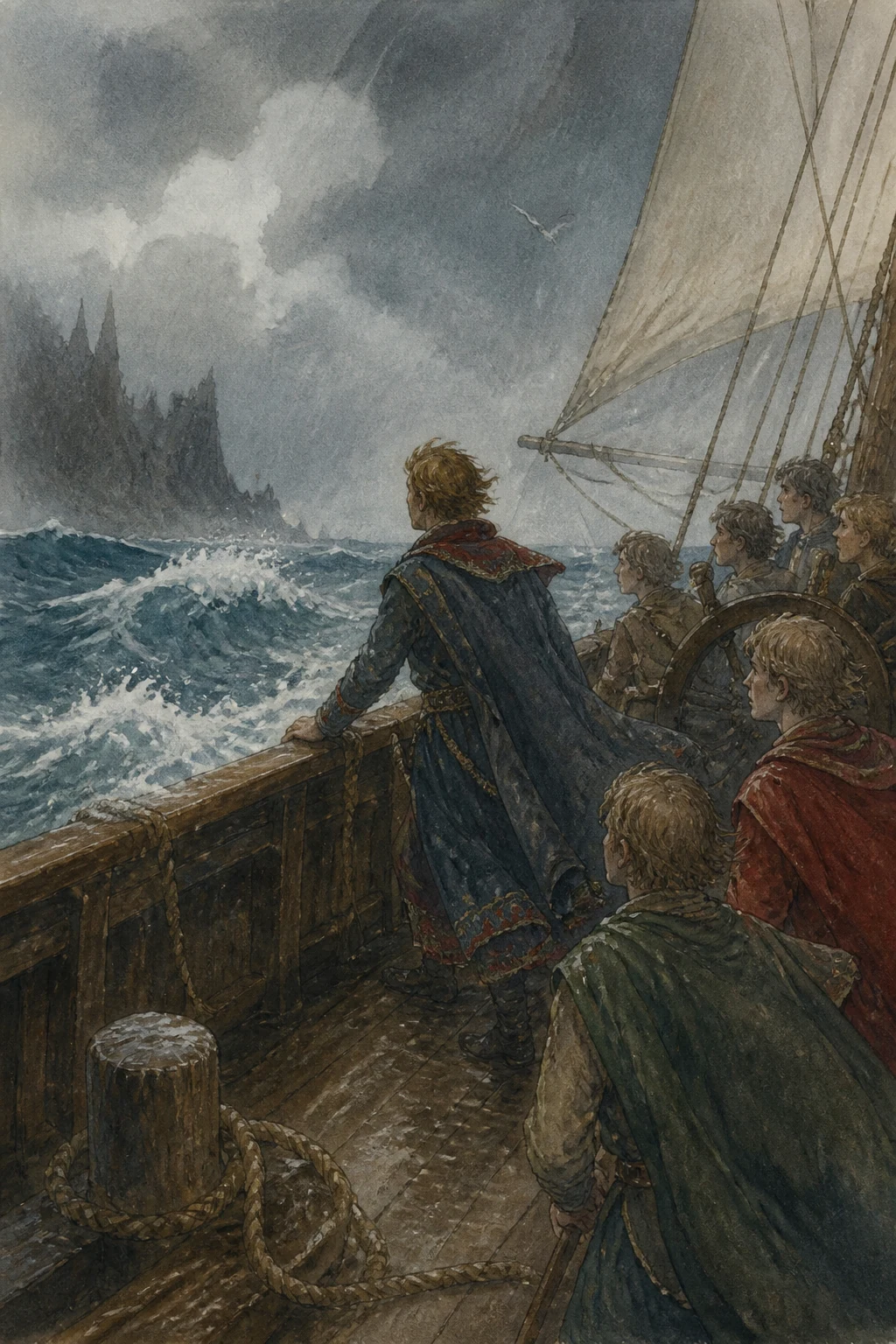
Once upon a time there was a Grand Turk who suffered from leprosy and could find no remedy for it. His physicians, not knowing what course to take, proposed something impossible, hoping thereby to rid themselves of this troublesome patient: they told him that he must bathe in the blood of a prince of high rank. Hearing this savage prescription, and longing to recover his health, the Grand Turk immediately sent a mighty fleet to sea, ordering its commanders to scour every quarter and, by means of spies and lavish promises, contrive to get some prince into their hands. As they sailed along the coast of Fonte-chiaro, they encountered a little pleasure boat carrying Pauluccio, the son of that country’s king. They seized him and whisked him off bodily to Constantinople. Seeing this, the physicians were less moved by pity for the poor prince than by concern for their own skins, for if the bath did no good, they would be left to shit out the penance. Wishing to let time take its course and drag the business out, they persuaded the Grand Turk that the prince was full of choler over the liberty he had lost as though at a game of cards, and that his troubled blood would do more harm than good. The remedy must therefore be postponed until the prince’s melancholy had passed; meanwhile, he must be kept cheerful and given nourishing food to make good blood. On hearing this, the Grand Turk decided to keep him in good spirits by shutting him in a lovely garden which Spring had taken on a perpetual lease, where the fountains vied with the birds and the cool breezes to see which could warble and murmur best. He put his daughter Rosella there with him, leading the prince to believe that he meant to give her to him in marriage. As soon as Rosella saw the prince’s beauty, she was bound fast with a hawser of love; and, making a fine stew of her desires and Pauluccio’s, the two were set like jewels in the ring of a single longing. But when the season came in which cats go courting and the sun takes pleasure in butting heads with the celestial Ram, Rosella discovered that, since it was spring, when the blood is in its best condition, the physicians had decided to cut Pauluccio’s throat and prepare the Grand Turk’s bath. Though her father had kept the matter hidden from her, the fairy powers she had inherited from her mother revealed the treachery being woven against her beloved. Giving him a fine sword, she said, “My sweet lips, if you wish to save your liberty, which is so precious, and your life, which is so sweet, lose no time. Put a hare’s feet beneath you and hurry to the shore. There you will find a boat: go aboard and wait for me. By virtue of this enchanted sword, the sailors will receive you with all the honour you deserve, as though you were the emperor himself.”
Pauluccio, seeing so fair a road opened to his deliverance, took the sword and made for the shore, where he found the boat and was welcomed with great reverence by those who sailed her.
Meanwhile, Rosella wrote a certain spell upon a piece of paper and, unseen and unheard, slipped it into her mother’s pocket. The woman at once fell so soundly asleep that she could feel nothing from head to foot. This done, Rosella took a bundle of jewels, ran to the boat, and they set sail. Just then the Grand Turk came into the garden, and finding neither his daughter nor the prince, he raised an uproar fit to shake the world and ran to find his wife. Unable to wake her either by shouting or by pulling her nose, he supposed that some seizure had robbed her of her senses, and called her ladies to undress her:
but as soon as they removed her skirt, the spell was broken, and she awoke crying, “Alas! That traitress of a daughter has tricked us and run away with the prince! But never mind: I shall soon put a stop to your journey and shorten your strides!” With these words she rushed to the shore, where she cast a leaf into the sea and brought forth a swift felucca, in which she began pursuing the young fugitives. Though her mother approached unseen, Rosella’s magical sight showed her the ruin bearing down upon them, and she said to Pauluccio:
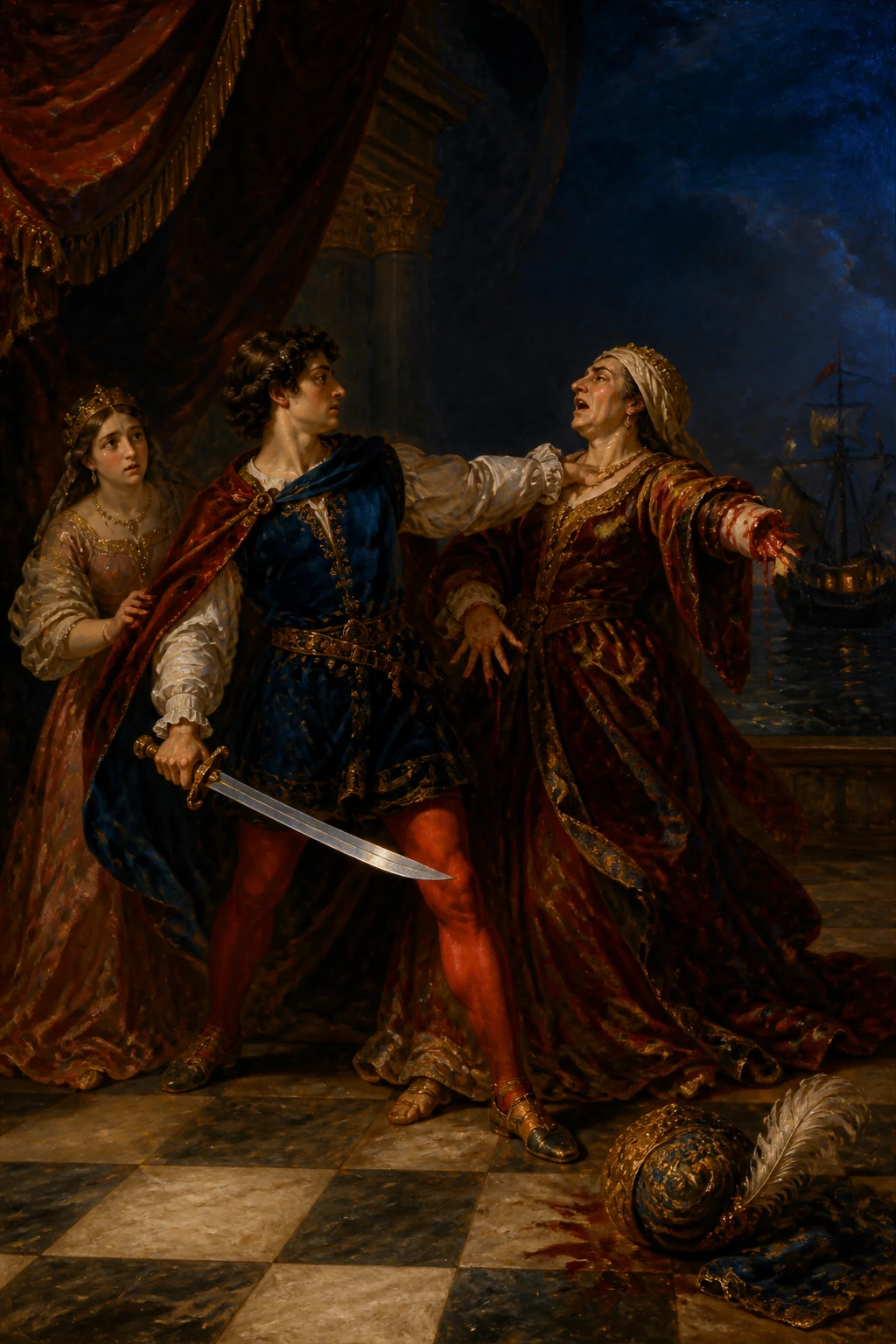
“Quick, my heart! Draw that blade and plant yourself at the stern. The moment you hear chains and grappling hooks coming to seize this boat, slash away blindly, hit whom you may, and the devil take whoever gets in the way! Otherwise we are lost, and our escape has stuck in our throats.” Since his own hide was at stake, the prince kept a sharp lookout; and as soon as the Grand Turk’s wife drew alongside and threw her chains and grappling hooks, he struck a mighty backhand blow which, by good fortune, cut off both the sultana’s hands at a stroke. Screaming like a damned soul, she cursed her daughter: the moment the prince set foot in his own country, he would forget her. Then she hurried back to Turkey, her stumps streaming blood, appeared before her husband, and, showing him that pitiful sight, said:
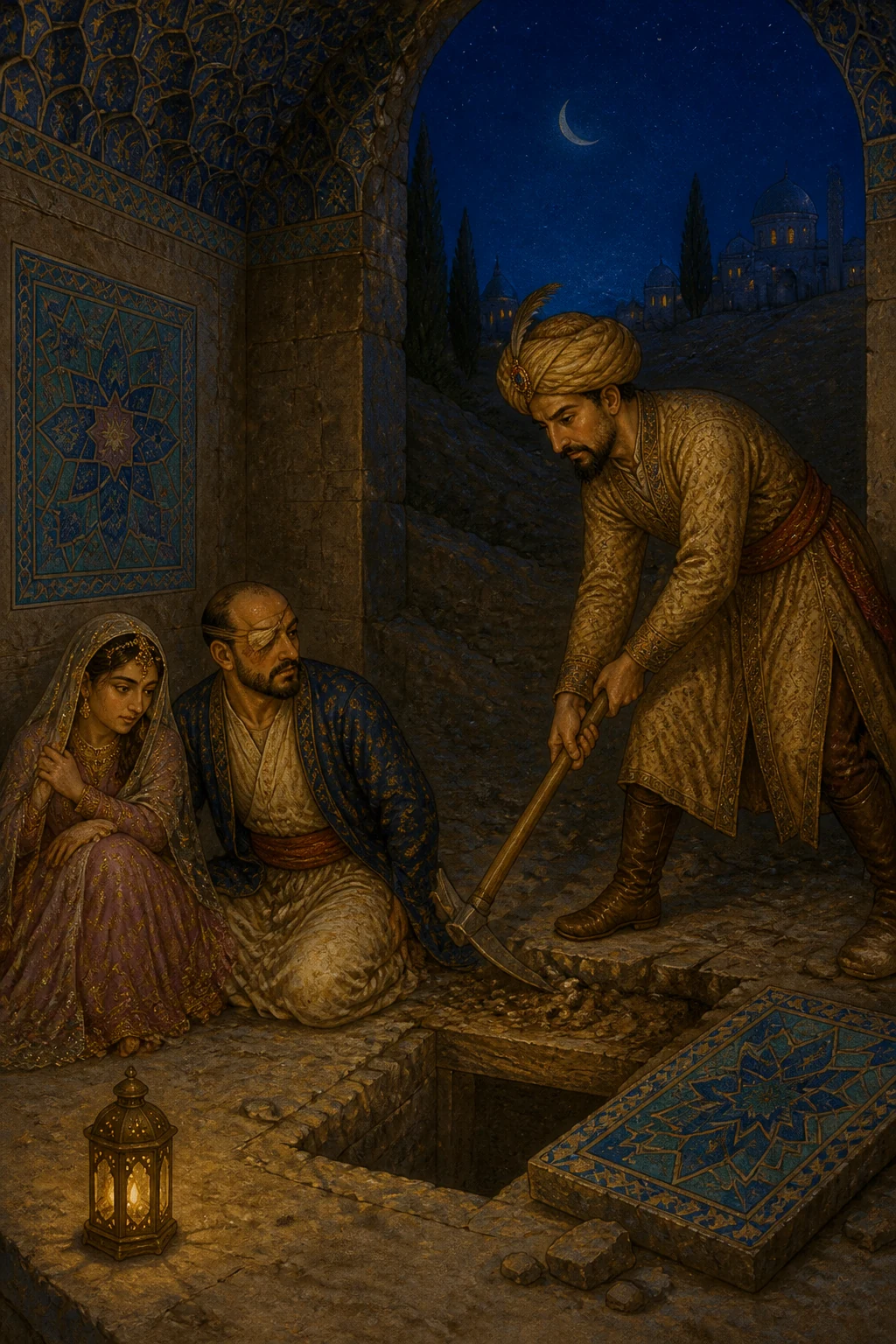
“See, husband, what we have gambled away at Fortune’s table: you your health, and I my life.” With these words her spirit and her breath departed, and she went to pay her dues to the master who had taught her the art. At this, the Grand Turk plunged after her like a waterbird into the sea of despair, followed in his wife’s footsteps, and went, cold as snow, to the house of heat. But when Pauluccio reached Fonte-chiaro, he told Rosella to wait aboard the boat while he went to fetch attendants and carriages to bring her in triumph to his palace. Scarcely had he set foot ashore, however, when Rosella slipped from his mind. On reaching the royal palace, he was welcomed by his father and mother with such affection as no one could imagine, and there were celebrations and illuminations enough to astonish the world. But Rosella, after waiting three days for Pauluccio in vain, remembered the curse and bit her lips for not having thought to guard against it. In despair she went ashore and rented a palace opposite the king’s, hoping to find some way of reminding the prince of what he owed her. The gentlemen of the court, who must poke their noses into everything, spotted this new bird that had flown into the house. Gazing upon a beauty that overstepped every bound, exceeded every measure, surpassed all limits, struck the highest note of wonder, dealt staggering blows of amazement, and carried astonishment beyond itself, they began buzzing about her like gnats. Not a day passed without their parading around her dwelling and prancing before her door. Sonnets came thick and fast, messages poured in torrents, music split the ears, and hand-kissing wore out the bung of courtesy. Each unknown to the others, they all aimed at one target, and all, drunk with love, sought to tap this lovely cask. Rosella, who knew where to moor her boat, showed them all a smiling face, entertained them all, and kept them all in hope. At last, wishing to draw the purse strings tight, she secretly agreed with a gentleman of high standing that, if he gave her a thousand ducats and a complete new gown, he might come that night, when she would release the treasure of her affections to him. The poor window-haunter, whom passion had blindfolded, immediately borrowed the money at interest and obtained on credit from a merchant a rich length of brocade, loop piled upon loop. He could hardly wait for the sun to change places with the moon so that he might gather the fruit of his desires. When night came, he went secretly to Rosella’s house and found her lying in a splendid bed, like Venus in a field of flowers. Looking quite downcast, she told him not to get into bed until he had shut the door. The gentleman, thinking this a small enough service to render so lovely a jewel, went to close it; but no sooner was it shut than it flew wide open again. He pushed, and it opened, so that he kept up this to-and-fro, this push-and-pull, all night long, until the sun sowed golden light upon the fields that dawn had ploughed. He had struggled a whole long night with a cursed door, without ever getting to use his key; and, as a bonus for his labours, Rosella gave him a fine tongue-lashing, calling him a useless lump who could not even shut a door yet presumed to open the cabinet of Love’s delights. Thus the wretched dupe went away to mind his own affairs, bewildered and ashamed, hot about the head and cold about the tail. The second evening she made an appointment with another baron, asking him for another thousand ducats and another gown. He sent all the gold and silver he possessed to the pawnbrokers, to satisfy a desire that carries repentance at the tip of pleasure. When night, like a bashful beggar, drew her cloak over her face to ask an alms of silence, he presented himself at Rosella’s house. She was already in bed, and told him to put out the candle and then come to her;
and the gentleman, taking off his cloak and sword, began blowing at the candle. But the harder he puffed, the brighter it burned, for the blasts from his mouth had the same effect as bellows on a blacksmith’s fire. He spent the whole night blowing, and in trying to consume the candle, consumed himself like one. But when night hid herself away to avoid seeing the manifold follies of mankind, the poor mocked fellow went off with another dose of insults, just like the first. On the third night the third lover appeared, with another thousand ducats borrowed at usury and a gown procured by swindling. Having crept stealthily up to Rosella’s room, he heard her say, “I will not go to bed until my hair has been combed.”
“Leave that to me,” replied the gentleman; and seating her with her head in his lap, believing he was about to steal himself some fine French cloth, he began drawing an ivory comb through her hair. But the harder he tried to untangle those dishevelled locks, the more tangled the whole business became;
so that he laboured the entire night without accomplishing anything properly; and in trying to put one head in order, he threw his own into such confusion that he was ready to dash it against a wall. When the sun came out to hear the birds recite their lesson, and with the flat of his rays swatted the crickets that had infested the schoolroom of the fields, the gentleman received another double-soled thrashing of insults and came down from the house cold and frozen. Later, as they fell into conversation in the king’s antechamber, where reputations are cut and sewn, where woe betide the mother whose daughter is mentioned, where the bellows of flattery are worked, the webs of deceit are woven, the keys of slander are played, and melons are cut open to put ignorance to the test, this last gentleman told the whole story, explaining the trick that had been played on him. The second answered, “Say no more! If Africa wept, Italy did not laugh, for I too have been through that needle’s eye. Still, shared sorrow is half a joy.” At this the third said, “Why, we are all tarred with the same brush, and may shake hands without envying one another, for that traitress has fleeced us all down to the skin. But we ought not to swallow this pill without showing some resentment. We are not men to be mocked and stuffed into a sack. Let us make this barbarous child-strangler repent of it!” So, having agreed among themselves, they went to the king and told him the whole affair. He immediately sent for Rosella and said, “Where did you learn this habit of swindling my courtiers? Do you not think I shall have you entered in the register, you harlot, you strumpet, you little slut?” Without changing colour in the least, Rosella replied, “What I have done was to avenge a wrong done me by someone at your court, though nothing I could do in this world would be enough to repay the injury I have suffered.” The king ordered her to tell him what offence had been committed against her; and, speaking in the third person, she related all she had done for the prince: how she had rescued him from bondage, delivered him from death, saved him from the danger of a sorceress, and brought him safe and sound to his own country, only to be repaid with a turned back and left hanging like a cheese. Such treatment ill befitted her station, for she was a woman of noble blood and the daughter of one who ruled over kingdoms. On hearing this, the king at once had her seated with great honour, begging her to reveal who this witless, ungrateful fellow was who had played so cruel a trick upon her. Taking a ring from her finger, she said, “Whomever this ring goes to find is the faithless traitor who has made a fool of me.” She tossed the ring, and it slipped straight onto the finger of the prince, who was standing there like a post. At once its power passed into his head, and his lost memory returned; his eyes were opened, his blood stirred, and his spirits awoke. Running to embrace Rosella, he could not clasp the chain of his soul enough, nor tire of kissing the vessel of his joys. He begged her forgiveness for the sorrow he had caused her, and she replied:
“There is no need to seek forgiveness for faults that were not begotten by the will. I know why you forgot your Rosella, for I have not forgotten the curse that lost soul, my mother, laid upon you. So I excuse you and pity you.” And thus they exchanged a thousand tender words. The king, learning of Rosella’s lineage and of the debt he owed her for what she had done for his son, was glad to see them united; and, having had Rosella made a Christian, he gave her to the prince in marriage. They lived more contentedly than any couple who ever bore the yoke of matrimony, and found in the end, _That always, given time and straw,_ _The medlars ripen after all._
Izvirnik
Jornata III IX ROSELLA
Naslednje strani prikazujejo izvirno besedilo za primerjavo.
_Lo Gran Turco pe farese no vagno de sango de Signore, fa pigliare no Prencepe, la figlia se ne nnammora, e se nne fujeno; la Mamma l’arriva, e le sò ttagliate le mmano da lo Prencepe; lo Gran Turco nne more de crepantiglia; ma jastemmata la Figlia da la Mamma, lo Prencepe se ne scorda; ma dapò varie astuzie fatte da essa, torna a mmammoria de lo marito, e se gaudeno contiente._ _Fu sentuto co granne sfazione lo cunto de Paola, e dissero tutte, ch’aveva raggione lo patre de volere vertoluse li figlie, si bè cantaje ped’isso lo cuculo, e se chille menaro la pasta, isso nne scervecchiaje li maccarune; ma toccanno a Ciommetella de dire lo sujo, parlaje de sta manera._ Non pò morire bene chi male vive; e si quarcuno scappa da sta sentenza,
è ccuorvo janco; perchè chi semmena luoglio, non pò metere grano; e chi chianta tutomaglie, non pò raccogliere vruoccole spicate. Non me farrà trovare bosciarda lo cunto, co lo quale mo mme ne vengo: pagateme, ve prego, co le spaparanzate de arecchie, l’aperte de vocca, mentre io mme sforzarraggio a dareve sfazione. Era na vota no gran Turco, lo quale avenno la lebbra, non ce trovava remedio nesciuno, tanto che li Miedece non sapenno che spediente pigliarence, pe se levare da cuollo lo stimolo de sto malato, co pproponere na cosa mpossibele, le dissero, ch’era necessario farese no vagno de lo sango de no Prencepe granne. Lo Gran-Turco sentenno sta rizetta sarvateca, e desederanno la sanetate, spedette subbeto na grossa armata pe mmare commannanno, che scorressero ped’ogni pparte, e
pe mmiezo de spie, e de grosse prommesse, procurassero d’avere quarche Prencepe a le mmano, li quale costianno le pparte de Fonte-chiaro, scontrattero na varchetta, che ghieva a spasso, drinto la quale era Pauluccio, figlio de lo Rrè de chillo Pajese, lo quale zeppoliato, portato de zeppa, e pe pesole a Ccostantenopole, la quale cosa vedenno li Miedece, non tanto pe ccompassione de chillo povero Prencepe, quanto pe nteresse lloro, perchè non jovanno lo vagno, n’averriano cacato lloro la penetenzia, volenno dare tiempo a lo tiempo, e ttirare a lluongo lo negozio, dettero a rentennere a lo Gran-Turco ca sto Prencepe steva colereco de la libertate, che s’aveva joquato a tre sette, e che lo sango ’ntrovolato l’averria fatto cchiù ddanno, che
beneficio; e perrò era necessario, che se sospennesse sto remmedio, fi che a lo Prencepe fosse passato l’omore malanconeco. E perzò era necessario tenerelo alliegro, e darele civo de sostanzia, pe ffare buono sango. Lo Gran-Turco sentuto sta cosa, penzaje de farelo stare allegramente, chiudennolo drinto a no bello Ciardino, che se l’aveva pigliato a ccienzo perpetuo la Primmavera, dove le Ffontane facevano a despotare co l’aucielle, e co li viente frische chi meglio sapesse gorgogliare, e mmormorare, mettennoce drinto Rosella la Figlia, co ddarele a rentennere ca nce la voleva dare pe mmogliere. Rosella subbeto, che bedde le bellizze de lo Prencepe, fu annodecata co na gummena d’ammore, e facenno na bella crapiata de le boglie soje co
cchelle de Pauluccio, se ncrastaro tutte duje a n’aniello de no stisso desedderio. Ma venuto lo tiempo, che le Gatte vanno gnesta, e lo Sole se piglia gusto de fare a ttozza-martino co lo piecoro Celeste, Rosella scoperze, ch’essenno la Primmavera, che li sanghe sò de meglio tempera, avenno concruso li Miedece de scannare Pauluccio, e fare lo vagno a lo Gran-Turco, che si bè lo patre nce l’aveva tenuto nascuosto, tutta vota pe la fatazione avuta da la mamma, seppe sto trademiento, che se tesseva a lo ’nnammorato sujo, pe la quale cosa datole na bella spata, le disse: Musso mio, si vuoje sarvare la libertà, che è ttanto cara, e la vita, ch’è ccosa doce, non perdere tiempo: agge li piede a lleparo, e battenne a la marina, dove trovarraje na varca, trase llà drinto, e
aspettame, ca pe bertute de sta spata ncantata, sarraje recevuto co lo nnore, che mmierete da chille marinare, comme si fusse lo ’mperatore. Pauluccio, che se vedde raprire cossì bonna strata a la sarvazione soja, pigliatose la spata, s’abbiaje a la Marina, dove trovata la varca, fu raccuoto co gran leverenzia da chille che la guidavano. Rosella fra tanto fatto no cierto spercanto a na carta, la schiaffaje senza essere vista, nè ssentuta drinto la sacca de la Mamma, la quale subeto scapizzaje a dormire de sorte tale, che non se senteva nè da pede, nè da capo, e fatto chesso, pigliatose na mappata de Gioje, corze a la varca, e fecero vela. Fra chisto miezo venne lo Gran-Turco a lo Ciardino, e non trovanno la Figlia, nè lo Prencepe, mese a rremmore
lo Munno, e ccurzo a ttrovare la mogliere, nè potennola scetare nè pe strille, nè pe tirate de naso, penzaje, che quarche descenzo l’avesse levato lo sintemiento, e chiammate le Dammecelle, la fece spogliare: ma levatale la Gonnella, cessaje lo ’ncanto, e se scetatte gridanno; oimè, ca la traditora de Figliama nce l’ha calata, e se n’è fojuta co lo Prencepe; ma non se cura, ca mo te l’agghiusto li cammine, e l’accorto li passe. Cossì decenno, jette de furia a la marina, dove jettato na fronna d’arvoro a mmaro, fece nascere na felluca sottile, co la quale commenzaje a correre dereto li giuvane fojeticce. Rosella, che si bè la Mamma veneva ’nvesibile, tutta vota coll’uocchie de l’arte mageca vedde la roina, che le veneva ’n cuollo, disse a Pauluccio:
priesto, core mio, caccia mano a sta sferra, chiavate a sta Poppa, comme siente remmore de Catene, e d’ancine pe ’ncroccare sta varca, tira ad uocchie de puorco, a chi cuoglie cuoglie, e zara chi ’nfredda, si nò simmo perdute, e nc’è ’ntorzato lo ffoire. Lo Prencepe perchè nce jeva pe la pellecchia soja, stette sopra l’aviso, e subeto, che ’nzeccata a la varca la Gran-Torchessa jettaje le ccatene co li grance, tiraje no gran revierzo, che pe bona fortuna tagliaje tutto a no cuorpo le mmano de la Sordana, che ghiettanno strille comm’arma dannata, jastemmaje la Figlia, ch’a la primma pedata, ch’avesse puosto lo Prencepe a la Terra soja, se fosse scordato d’essa, e ccorza ’n Torcaria co li mognune tutte scolanno sango, se prensentaje ’nnanze
de lo marito, e mmostrannole chillo dogliuso spettacolo, le disse: ecco marito mio, ch’a la tavola de la fortuna nc’avimmo joquato io, e ttico, tu la sanetate, ed io la vita. Cossì decenno, le scette lo spireto, e lo sciato, e ghiette a pagare la nnorma a lo mastro, che l’aveva ’mmezzato l’arte: pe la quale cosa lo Gran Turco semmozzatose appriesso comm’a Ccaperrone drinto a lo maro de la desperazione, secotaje le ppedate de la mogliera, e se ne jette friddo comm’a neve, a casa-cauda. Ma Pauluccio arrivato a Fonte-chiaro, disse a Rosella, ch’avesse aspettato drinto la Varca, perchè jeva pe gente, e ccarrozze da portarela trionfante a la casa soja. Ma non cossì priesto appe lo pede ’n terra, che le scette de mente Rosella, ed arrevato a lo
Palazzo rejale, fu receputo co ttanta carizze da lo Patre, e da la Mamma, che non se potria mmagenare, facennose feste, e llummenarie da stordire lo munno. Ma Rosella, ch’erano passate tre ghiuorne, aspettanno mpierdeto Pauluccio, se allecordaje de la jastemma, e se mozzecaje le llavra, ca non penzaje a remmediarence: perzò comm’a ffemmena desperata smontata ’n terra, pigliaje no Palazzo ’ncontra la casa de lo Rrè, pe bedere de che manera potesse tornare ’n mammoria de lo Prencepe l’obreco, che l’aveva. Li Segnure de la Corte, che bonno mettere lo naso pe ttutto, allommato st’auciello nuovo venuto a chella casa, e contempranno na bellezza, che passanno tutte li fore, sceva da la mesura, trascorreva li termene, deva a lo nove de la maraviglia,
faceva scassone de stopore, e se chiammava fore de lo strasecolo, commenzaro a farele lo moschito ntuorno, e non era juorno, che non le facessero lo spassiggio attuorno, e lo corvettiamiento pe nnanze la casa. Li soniette jevano a furia, le ’mmasciate a llava, le mmuseche a scervellarecche, li vasamane a ffrusciamiento de mafaro, e l’uno non sapenno de l’autro, tutte tiravano a no verzaglio, e tutte cercavano, comme a ’mbriache d’Ammore, de spinolare sta bella votte. Rosella, che sapeva dove legare sta varca, a tutte faceva bona cera, a tutte deva trattenemiento, tutte manteneva de speranza; all’utemo volenno restregnere li sacche, s’accordaje secretamente co no Cavaliero de gran portata, che dannole mille docate, e no vestito de tutto punto,
fosse venuto la notte ca l’averria liberato lo deposeto de l’affezione soja. Lo nigro mprena-fenestre, ch’aveva la pezza all’uocchie da la passione, pigliaje subeto a nteresse li tornise, e fattose credenza co no mercante, se fece dare no ricco taglio de ’mbroccato riccio sopra a riccio, e non bedde l’ora, che lo Sole facesse a bota-cagnata co la Luna, pe ccogliere lo frutto de li desedderie suoje; e benuta la notte, jette secretamente a la casa de Rosella, e la trovaje corcata a no bello lietto, che pareva na Venere ’n miezo a no campo de sciure, la quale tutta cassesa, le disse, che non se corcasse senza ’n primmo serrare la porta; lo Cavaliero parennole de fare poco cosa pe sservire na gioja accossì bella, jette pe sserrare la porta, la quale non
tante vote era chiusa, che tante se spaparanzava, isso vottava, e essa s’apreva, de manera, che fece sto seca-molleca, e sto tirammolla tutta la notte, ficchè lo Sole semmenaje de luce d’oro li campe, ch’aveva sorcato l’aurora, avenno contrastato na notte quanto è granne, e llonga co na ’mmardetta porta, senza avere adoperato la chiave, e pe sopra-carta de sta commessione, n’appe na brava lengoriata da Rosella, chiammannolo scuto cuorpo, che non era stato da tanto de serrare na porta, e pretenneva d’aprire lo Screttorio de li guste d’Ammore: tanto che lo sfortunato corrivo, confuso, e scornato se nne jeze scarfato de capo, e refreddato de coda a fare li fatte suoje. La seconna sera pigliaje appontamiento co n’autro Barone, cercannole mill’autre docate,
e n’autro vestito, e chillo mannaje a ’mpegnare tutto l’argiento, e l’oro, ch’aveva a l’Abrieje, pe sodesfare a no desederio, che porta ’mponta a lo gusto lo pentemiento, e comme la notte comm’a povera vergognosa se mette co lo manto ’n facce a cercare lemmosena de selenzio, se conzignaje a la casa de Rosella, la quale essennose corcata, le disse, che stotasse la cannela, e po venesse a lo lietto; e lo Cavaliero levatose la Cappa, e la spata, commenzaje a sciosciare la cannela, ma quanto cchiù se spedetiava, cchiù l’allommava, che le bentosetate de la vocca soja facevano l’effetto de lo mantece a lo fuoco de lo ferraro, ne lo quale sciosciamiento spese tutta la notte, e pe stutare na cannela, se strusse comme a ccannela. Ma quanno la notte
pe non bedere le deverse pazzie dell’uommene se nasconne, lo nigro dellegiato co n’autra sceroppata de ’ngiurie, comme all’autro, se ne jette; e benuta la terza notte, se fece ’nnanze lo terzo nnammorato co mill’autre docate pigliate ad usura, e co no vestito abboscato de scruocco, e sagliutosenne guatto guatto dove Rosella, essa le decette: io non me voglio corcare, se non me petteno ’n primmo la capo; lassatello fare a mme, responnette lo Cavaliero, e fattasella sedere co la capo ’nsino credennose arrobbare panno Franzese, commenzaje a stricare li capille co lo pettene d’avolio: ma quanto cchiù se sforzava de sgroppolare chella capo scigliata, cchiù ’ntricava lo pajese; tanto che penzonejaje tutta la notte senza fare cosa pe dderitto, e pe
allestire na testa, desordinaje de sciorte la capo soja, che l’appe a sbattere de pietto a no muro, e ccomme fu sciuto lo Sole a sentire la nnorma tenuta de l’aucielle, e co la sparmata de li ragge mazziato li grille, che avevano nfettato la scola de li Campe, co n’autra ’mbrosoliata a doje sole, se nne scennette da chella casa friddo, e ghielato. Ma trovatose a scommerzione a la ’nnante Cammara de lo Rrè dove se taglia, e ccose, dove trista la mamma, che nce ha la Figlia, dove se menano li mantece de l’adolazione, se trammano le ttele de li ’nganne, e se toccano li taste de la mormorazione, se tagliano li mellune ’n prova de la ’gnoranzia: st’utemo Cavaliero contaje tutto lo socciesso, decenno lo tratto, che l’era stato fatto; a lo quale
respose lo secunno, decenno; sta zitto, ca s’Afreca chianze, Talia non rise, ca io puro so ppassato pe sto culo d’aco, e però trivolo commune è mmiezo gaudio. A chesto respose lo tierzo: Vi ca tutte simmo macchiate de na pece, e ’nce potimmo toccare la mano senza ’nvidia de nesciuno, ca sta tradetora ’nc’ha lavorato tutte a ppilo ’mmierzo, ma n’è bene a gliottere sto pinolo senza quarche resentemiento; non simmo uommene nuje da essere corrivate, e puoste a no sacco; perzò facimmonnella pentire sta Varvera, scorcoglia peccerille; e cossì accordatose nsiemme, jetttero a lo Rrè, contannole tutto lo fatto, lo quale mannaje a chiammare subeto Rosella, decennole: dove aje ’nvezzato sto termene de truffare li Cortesciane mieje? non cride ca te faccio
scrivere a la gabbella, perchia, guaguina, pettolella. E Rrosella senza cagnarese niente de colore, le respose; chello ch’aggio fatto, è stato pe vennecareme de no tuorto fattome da uno de la Corte vostra, si bè non potria fare cosa a lo munno, che bastasse a scompetare la ngiuria, ch’aggio recevuta; e commannata da lo Rrè, che decesse l’offesa, che l’era stata fatta; essa contaje ’n terza perzona, quanto aveva operato ’n servizio de lo Prencepe, comme l’aveva cacciato da schiavetudene, liberatolo da la morte, scapolatolo da lo pericolo de na Maga, e portatolo sano, e ssarvo a la Terra soja, ped’essere pagata co na votata de scena, e co no caso-cavallo; cosa, che non se conveneva a lo stato sujo ped’essere femmena de gran sango, e figlia
de chi commannava Regne: lo Rrè sentenno sta cosa, la facette subbeto sedere co granne nnore, pregannola a scommogliare chi fosse stato lo nsammorato, lo scanoscente, che l’aveva fatto sto bello corrivo; ed essa levatose n’aniello da le ddeta, disse: a chillo jarrà a ttrovare st’aniello, chillo è lo tradetore nfedele, che mm’ha paschiata, e ghiettanno l’aniello se jette a ’mpizzare a lo dito de lo Prencepe, che steva llà presente, comme no stantaro, che passatole subeto la vertù de l’aniello a la capo, le tornaje la mammoria perduta, se l’aperzero l’uocchie, se le resentette lo sango, e scetate li spirete, e correnno ad abbracciare Rosella, non se saziaje de stregnere la catena dell’arma soja, non se stracquava de vasare lo vaso de li contiente suoje, e
cercannole perdonanzia de lo desgusto, che l’aveva dato, essa respose; non serve a ccercare perduono de chille arrure, che non songo ngriate da la volontate. Io saccio la causa, perchè t’iere scordato de Rosella toja, ca non mm’è sciuta da mente la jastemma, che te mannaje chell’arma perza de Mammama, perzò te scuso, e te compiatisco; e cossì passarono mille parole ammorose. Lo Rrè sentuto la jennimma de Rosella, e l’obreco che le portava, pe lo beneficio fatto a lo figlio, appe a ccaro che se jognessero nsiemme, e fatta fare cristiana a Rrosella, nce la deze pe mmogliere, che stettero cchiù satesfatte de quante portaro maje lo juvo de lo Matremmonio, e bedettero a la fine, _Che sempre co lo tiempo, e co la paglia_ _Vide che s’ammaturano le nnespole._
Nadaljuj z branjem