Prevod
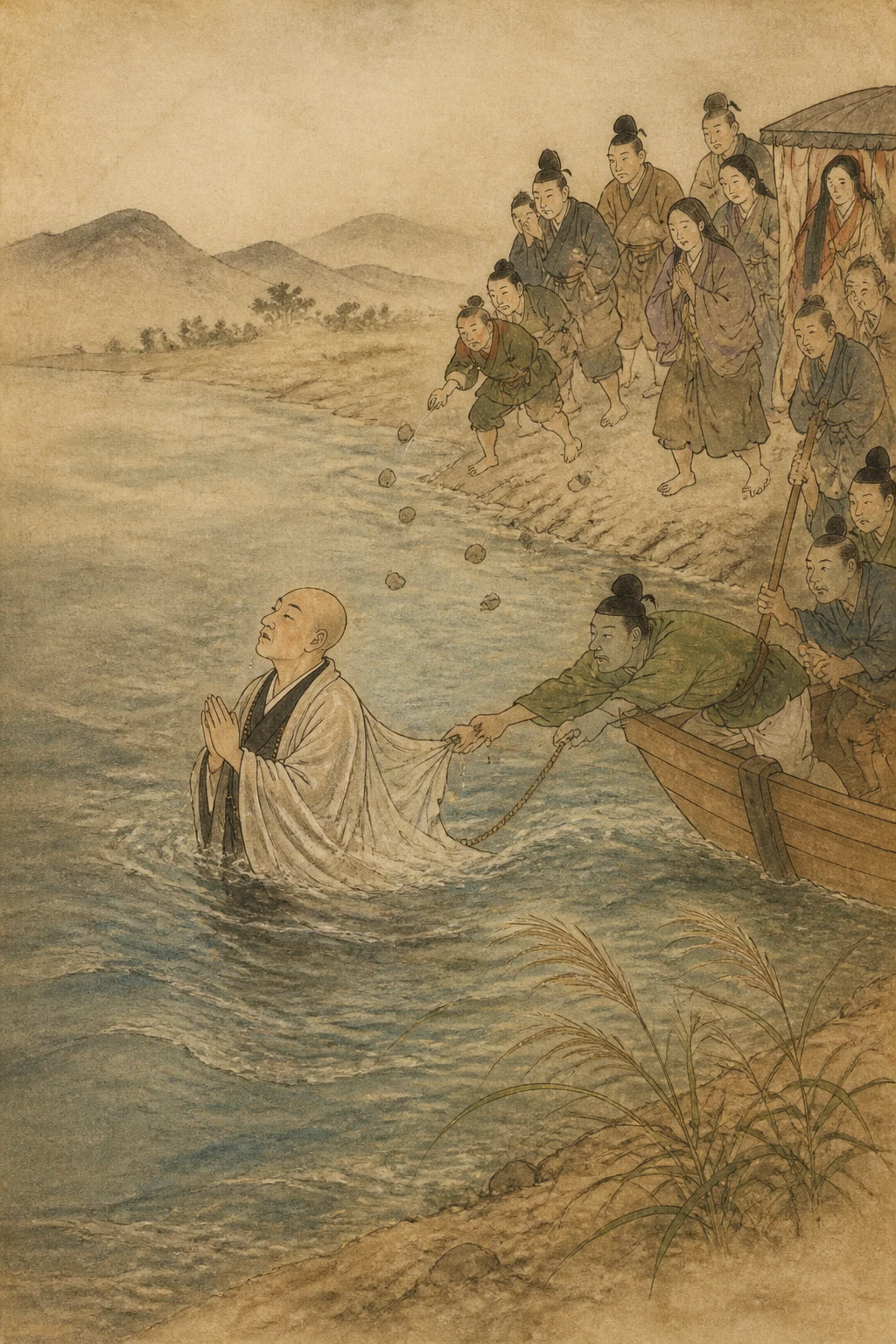
Some hundred years after the Buddha’s passing, that holy man had a disciple. What disposition he had discerned in him we cannot know, but he was forever admonishing him: “Do not go near women. If you do, you will turn through birth and death like a wheel.” The disciple said, “What have you seen in me that you should warn me so often? I too have attained the fruits of enlightenment, and would never dream of approaching a woman.” The other disciples also wondered why their master should speak in this way to one who was held in particular reverence among them. One day, as this monk was crossing a river on his way somewhere, a woman appeared and began to cross as well. Suddenly she was swept away by the current. “Oh, help me! You there, venerable sir!” she cried. Remembering his master’s warning, he thought he would pay no heed. But as she drifted downstream, now rising, now sinking, pity overcame him. He went to her, took her hand, and pulled her across. Her hand was so white, so soft and full, and so lovely that he could not bring himself to release it. “Please let go of my hand now,” the woman said, looking frightened. The monk replied, “Perhaps we share a deep bond from a former life, for I feel an overwhelming affection for you. Will you grant what I ask?” “You have saved the life I was about to lose,” she answered. “Whatever you ask, how could I refuse?” Delighted, he took her by the hand and said, “Come with me,” drawing her into a place thick with bush clover and susuki grass. He pushed her down and was about to force himself upon her, when, caught between her thighs, he looked at her and saw his own revered master. Appalled, he tried to pull away, but Upagupta gripped him tightly between his thighs. “Why are you tormenting this old monk like this? Are you the enlightened holy man who has no thought of intercourse with women?” Overwhelmed with shame, the disciple struggled to escape, but his master held him fast and would not let him go. As Upagupta continued to rebuke him loudly, passersby gathered to watch. The disciple’s horror and humiliation knew no bounds. Only after exposing him to everyone’s gaze did the master rise, take his disciple back to the monastery, ring the bell, and assemble the community. He told the monks what had happened, and their laughter knew no bounds. The disciple felt neither alive nor dead. Yet through thus confessing and repenting of his sin, he attained the fruit of non-returning. By devising this skillful means and deceiving his disciple, the venerable master brought him onto the Buddha’s path.