Prevod
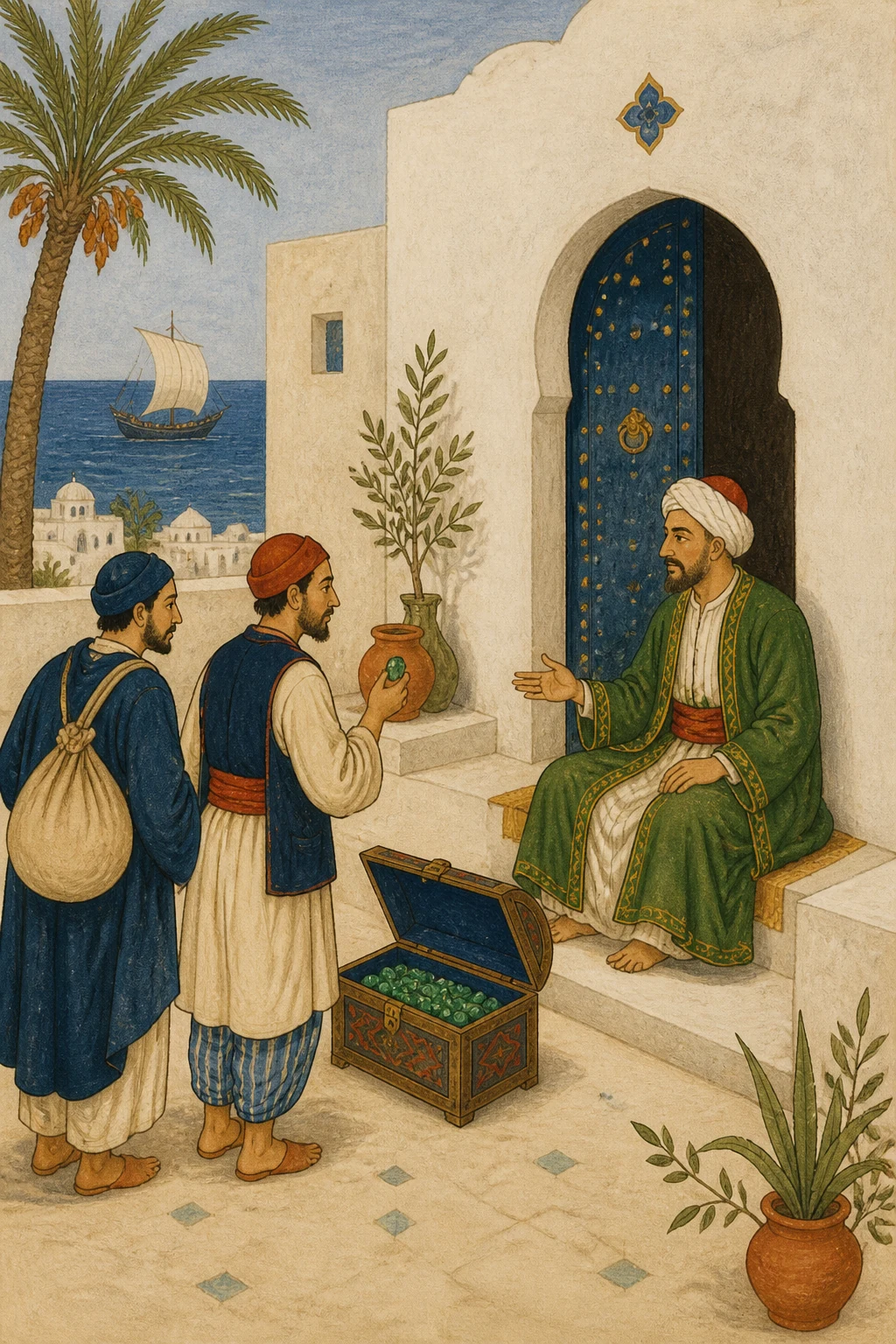
There was once a man who had three sons, all named Mohammed. As he lay dying, he suspected that one of them was not his son. “Mohammed shall inherit,” he said, “and Mohammed shall inherit, but Mohammed shall not inherit.” When their father died and they came to divide his estate, they looked at one another. “Father said, ‘Mohammed shall inherit, and Mohammed shall inherit, but Mohammed shall not inherit.’” They began to quarrel, until at last they brought their case before the ruler. Finding their dispute too difficult to settle, he said, “Judge Hiddl shall decide between you.” So they put their trust in God and set off. Along the road, they came upon a place where a camel had knelt. One of them looked at it and said, “That camel has no tail.” Another spoke up: “That camel is blind in one eye.” Then the third said, “The load it carries is sweet on one side and sour on the other.” They went on their way and met the camel’s owner, who was looking for it. “Have you come across a camel?” he asked. One of them said, “Does your camel have no tail?” “Yes,” he replied. Another said, “Is your camel blind in one eye?” “Yes,” he replied. The third said, “Does your camel carry something sweet on one side and something sour on the other?” “Yes,” he replied. “You have my camel! You have described all its distinguishing marks.” “My good man,” they told him, “we haven’t got your camel.” “Then where did you see it?” he asked. “We haven’t seen it,” they said. He seized them and would not let them go. “We are on our way to Judge Hiddl,” they told him. “Come with us.” When they reached the judge, the camel’s owner stepped forward first.
“Those young men have my camel,” he said. “Give him back his camel,” the judge told them. “God is our witness,” they replied, “we haven’t got his camel.” The camel’s owner spoke up: “But they told me all its distinguishing marks: my camel has no tail, it is blind in one eye, and its load is sweet on one side and sour on the other.” The judge turned to the first brother. “How did you know it had no tail?”
“When a camel drops its dung,” he replied, “it flicks its tail and scatters the droppings. But when I looked at these droppings, I found them all in a single heap. That was how I knew it had no tail.” The judge turned to the second. “And how did you know it was blind in one eye?” “I could tell from its tracks. On the side of its good eye, it had eaten the grass, while on the side of its blind eye, the grass was untouched.” He turned to the third. “And how did you know the camel carried something sour on one side and something sweet on the other?” “Where the sour load had dripped, mosquitoes were swarming; where the sweet load had dripped, flies had gathered.” The judge turned to the camel’s owner. “Is that how your camel is, my good man?” “Exactly so. My camel has no tail, it is blind in one eye, and it carries something sour on one side and something sweet on the other: vinegar and honey.” “Then go and look for your camel,” said the judge. “These men worked out its distinguishing marks by deduction 1. They are men of keen understanding.” Then he turned to the three brothers. “And you—what is your dispute?” “Sir,” they said, “when our father was dying, he said, ‘Mohammed shall inherit, and Mohammed shall inherit, but Mohammed shall not inherit.’
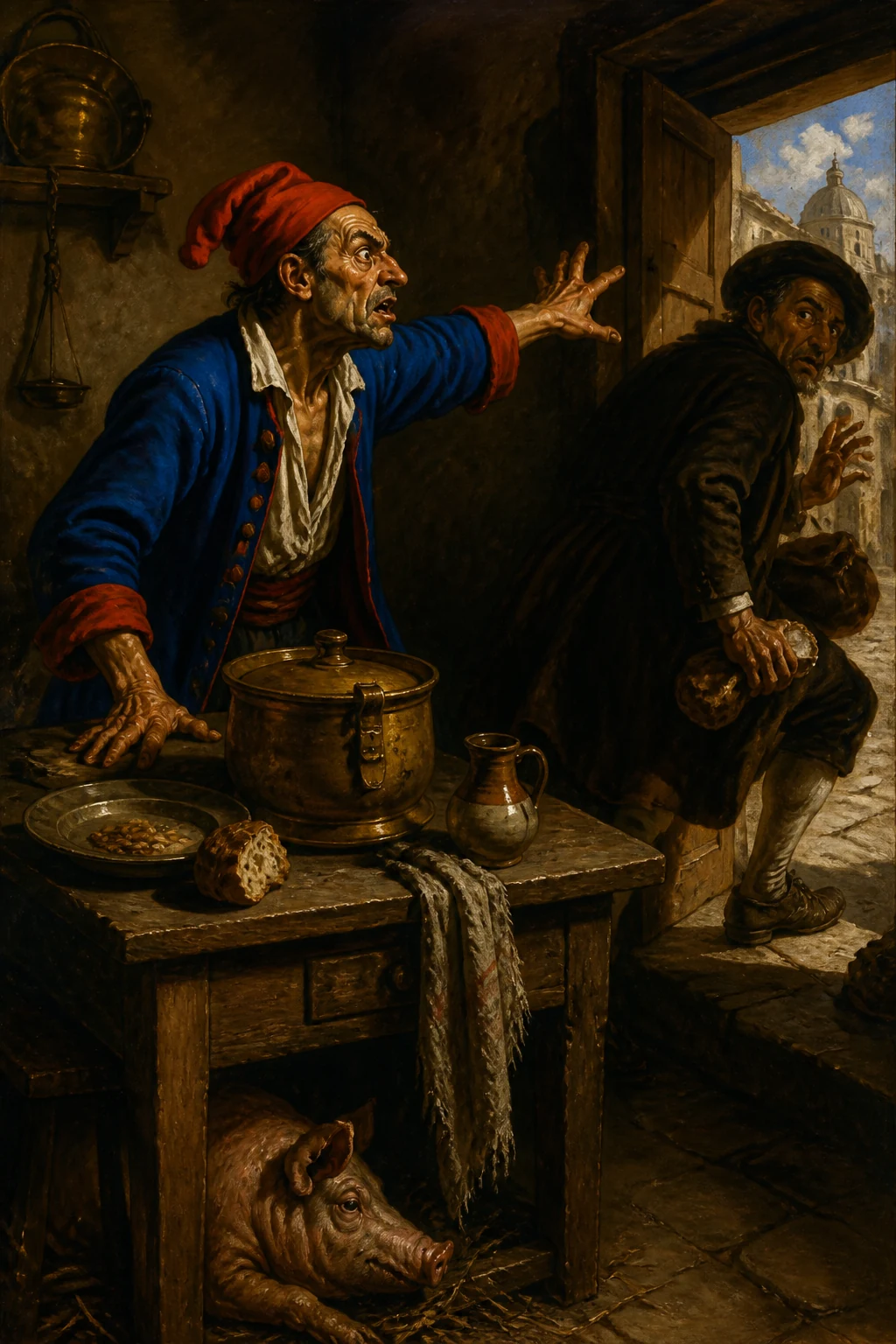
“We don’t know whom he meant, for all three of us are named Mohammed.” “Stay here as my guests tonight,” he told them, “and tomorrow I shall settle your dispute.” He took them upstairs, then called his shepherd and said, “Go and slaughter a lamb for them.” The shepherd slaughtered and skinned a lamb, then brought it to the house to be cooked. Supper was served, and the brothers began to eat. Meanwhile, the judge sat outside the room, listening to what they were saying. One of them spoke up. “This meat is dog meat.” Another said, “The woman who cooked this supper has her monthly bleeding.” The third said, “The judge is a bastard.”
“No, no, man!” the others protested. “Don’t call the judge a bastard! How do you know he is one?” “A man who brings supper but does not eat with his guests is a bastard,” he replied. The judge heard them and went away. He called the shepherd. “Why have you disgraced me when I have guests? Did you slaughter a dog for them?” “No, sir, I swear by your head! I slaughtered nothing but a lamb. But its mother died when it was still young, and a bitch suckled it.”
He went into the house. “Who cooked supper for the guests?” A woman came forward. “I did, sir.” He questioned her. “Are you in the days when you may not pray?” “Yes, I am,” she replied. He went to his mother, seized her, threw her to the ground, and drew his dagger to kill her.
“Tell me who my father is, or I’ll kill you!” Terrified, she said, “My son, your father could not beget children. There was a butcher who used to bring us meat. It was written by God: I lay with him, conceived by him, and bore you.” He let his mother go. The next morning, he went to sit in judgment, and the young men came before him. He asked the one who had said the meat was dog meat, “How did you know it was dog meat?” “Mutton does not have stringy fibres,” he replied, “but dog meat does.” He turned to the second. “And how did you know the woman who cooked supper had her monthly bleeding?” “Because the food was tasteless.” He said nothing to the third. Then he rose and declared, “Mohammed shall inherit, and Mohammed shall inherit, but you, Mohammed, shall not inherit!” “Why?” he asked. “Because only a bastard can recognize a bastard!”