Waltey
Trgovec in duh
Tisoč in ena noč · arabska pripovedna tradicijaO besedilu
Trgovec in duh
- Vir
- Tisoč in ena noč
- Avtor
- arabska pripovedna tradicija
- Jezik branja
- English
- Jezik izvirnika
- Arabic
- Čas branja
- 19 min branja
- Obseg
- 15 strani
- Naslov izvirnika
- حكاية التاجر مع العفريت - الليالي ١ إلى ٣
O izvirniku
Tisoč in ena noč
Zgodbe v zgodbah, polne trgovcev, dvorov, preoblek in nočnih zapletov. Bralni jezik je English, izvirnik pa prihaja iz vira Tisoč in ena noč v jeziku Arabic.
Besedilo
Trgovec in duh
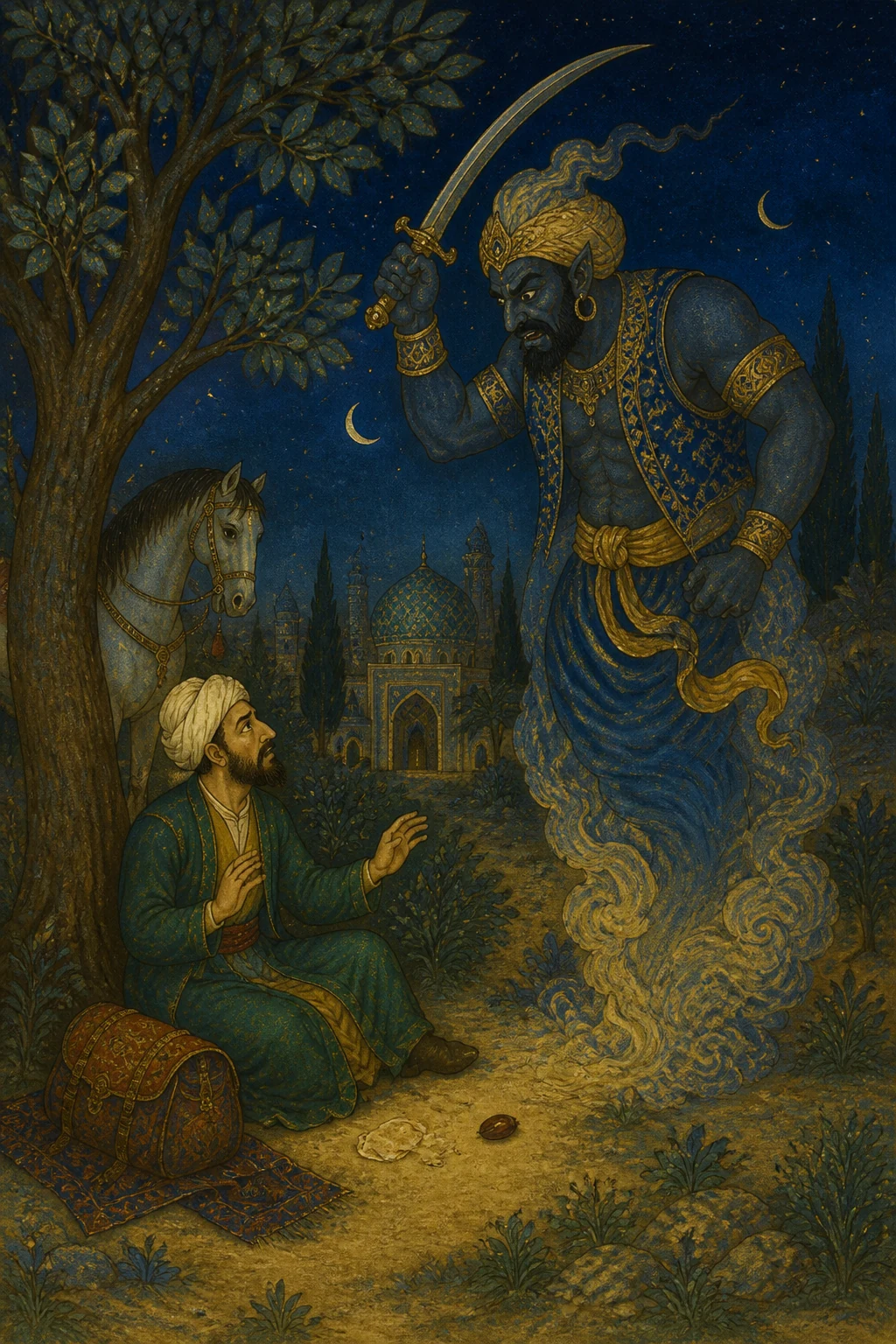
She said: It has reached me, O fortunate king, that there was once a merchant possessed of great wealth, who traded in many lands. One day he mounted his horse and set out to collect debts in another country. The heat grew fierce, so he sat beneath a tree, put his hand into his saddlebag, and ate a piece of bread and a date he had brought with him. When he had finished the date, he threw away the stone. Suddenly a towering ifrit appeared, sword in hand, and approached the merchant, saying, “Rise, so that I may kill you as you killed my son.” The merchant asked, “How did I kill your son?” He replied, “When you ate the date and threw away its stone, it struck my son in the breast, and he died on the spot.” The merchant said to the ifrit, “Know, O ifrit, that I have debts to pay, much wealth, children and a wife, and pledges entrusted to my keeping. Let me go home and give everyone his due; then I shall return to you. I give you my solemn word and covenant that I shall come back, and you may do with me as you wish. God is witness to what I say.” The jinni took his solemn pledge and released him. The merchant returned to his own country, settled all his affairs, and restored to everyone what was rightfully his. He told his wife and children what had happened, and they wept, as did all his household and kin. He made his will and remained with them until the year was over. Then he set out, carrying his shroud beneath his arm, and bade farewell to his family, his neighbors, and all his relations. He departed against his will, while they raised their voices in cries and lamentation. He traveled until he reached that orchard, arriving on the first day of the new year. As he sat there weeping over what was to befall him, an old man approached, leading a gazelle on a chain. He greeted the merchant and wished him well, then asked, “Why are you sitting here alone, in a place that is a haunt of the jinn?” The merchant told him what had happened with the ifrit and why he was sitting there. The old man with the gazelle marveled and said, “By God, my brother, yours is a mighty obligation, and your tale is a wondrous one. Were it written with needles upon the corners of the eyes, it would be a lesson to all who take heed.” Then he sat down beside him and said, “By God, my brother, I shall not leave you until I see what happens between you and that ifrit.” He stayed there talking with him, while the merchant grew faint with terror and dread, overcome by grief and anxious thoughts. As the man with the gazelle sat beside him, a second old man approached, bringing two black female salukis. After greeting them, he asked why they were sitting in that place, which was a haunt of the jinn. They told him the story from beginning to end. He had scarcely settled himself when a third old man approached, leading a dappled mule. He greeted them and asked why they were sitting there, and they told him the story from beginning to end, though there is no profit in repeating it. Suddenly a cloud of dust rose, and a mighty whirlwind swept toward them from the heart of the wilderness. The dust parted, revealing the jinni with a drawn sword in his hand and eyes that shot sparks. He came up to them, dragged the merchant out from among them, and said, “Rise, so that I may kill you as you killed my son, the darling of my heart.” The merchant sobbed and wept, and the three old men raised their voices in weeping, wailing, and lamentation.
Then the first old man, the one with the gazelle, roused himself, kissed the ifrit’s hand, and said, “O jinni, crown of the kings of the jinn, if I tell you my story with this gazelle and you find it marvelous, will you grant me a third share of this merchant’s blood?” He answered, “Yes, old man. If you tell me the story and I find it marvelous, I shall grant you a third share of his blood.” The first old man said, “Know, O ifrit, that this gazelle is my cousin, my own flesh and blood. I married her when she was young and lived with her for some thirty years, but was blessed with no child by her. So I took a concubine, who bore me a son as lovely as the full moon when it rises, with beautiful eyes, finely arched brows, and perfectly formed limbs. He grew little by little until he was fifteen years old. Then business required me to travel to another city, and I set out with a great store of merchandise. Now my cousin, this gazelle, had learned sorcery and divination in her youth. She turned the boy into a calf and his mother into a cow, and handed them over to the herdsman. After a long absence I returned from my journey and asked after my son and his mother. She told me, ‘Your slave girl is dead, and your son has run away. I do not know where he has gone.’ For a year I remained sorrowful at heart and weeping, until the Feast of Sacrifice came. Then I sent word to the herdsman to bring me a fat cow. He brought me one, and it was my concubine, whom this gazelle had bewitched. I tucked up my robes, took a knife in my hand, and prepared to slaughter her, but she cried out and wept bitterly. I drew back and ordered the herdsman to slaughter and skin her. He did so, but found neither fat nor flesh upon her, only skin and bone. I regretted having slaughtered her, though regret was of no avail. I gave her to the herdsman and said, ‘Bring me a fat calf.’ He brought me my son, who had been turned into a calf. When the calf saw me, he broke his tether, ran to me, rubbed himself against me, and cried and wept. Pity took hold of me, and I said to the herdsman, ‘Bring me a cow, and leave this one alone.’
But dawn overtook Shahrazad, and she fell silent, leaving her tale untold. Her sister said to her, “How delightful your story is, how charming, delicious, and sweet!” She answered, “What is this compared with what I shall tell you tomorrow night, if I live and the king spares me!” The king said to himself, “By God, I shall not kill her until I have heard the rest of her tale.” They passed that night in one another’s arms until morning. Then the king went out to his seat of judgment, and the vizier appeared with a shroud beneath his arm. The king judged cases, appointed men to office and dismissed others until the end of the day, but said nothing of the matter to the vizier, who was utterly astonished. Then the court dispersed, and King Shahriyar returned to his palace.
When it was the second night
Dunyazad said to her sister Shahrazad, “Sister, finish for us your story of the merchant and the jinni.” She answered, “With love and pleasure, if the king grants me leave.” The king said, “Tell your tale.” She said: It has reached me, O fortunate king of sound judgment, that when he saw the calf weeping, his heart softened toward him, and he said to the herdsman, “Keep this calf among the cattle.” All this while, the jinni marveled at the strange tale. Then the man with the gazelle continued: “O my lord, king of the jinn, all this happened while my cousin, this gazelle, stood watching and saying, ‘Slaughter this calf, for he is fat.’ But I could not bring myself to slaughter him, and I ordered the herdsman to take him away. He took him and departed. The next day, as I was sitting at home, the herdsman came to me and said, ‘Master, I have news that will delight you, and I ask a reward for bringing it.’ I said, ‘You shall have it.’ He said, ‘O merchant, I have a daughter who learned magic in her childhood from an old woman who lived with us. Yesterday, when you gave me the calf, I brought him home to her. My daughter looked at him, covered her face, and wept. Then she laughed and said, “Father, have I fallen so low in your esteem that you bring strange men into my presence?” I asked her, “Where are these strange men? And why did you weep and laugh?” She answered, “This calf you have brought is the son of my master the merchant. He is bewitched: his stepmother cast a spell upon him and his mother. That is why I laughed. As for my tears, they were for his mother, whom his father slaughtered.” I was utterly astonished, and could hardly wait for morning to come so that I might bring you word.’ When I heard the herdsman’s words, O jinni, I went with him, drunk without wine from the joy and delight that had overtaken me, until we reached his house. The herdsman’s daughter welcomed me and kissed my hand. Then the calf came up and rubbed himself against me. I asked the girl, ‘Is what you say about this calf true?’ She answered, ‘Yes, master. He is your son, the darling of your heart.’ I said to her, ‘Young woman, if you deliver him from this spell, all the cattle and wealth in your father’s keeping shall be yours.’ She smiled and said, ‘Master, I have no desire for wealth, save on two conditions. First, that you give him to me in marriage; and second, that I may bewitch the woman who bewitched him and keep her captive, for otherwise I shall not be safe from her treachery.’
“When I heard the herdsman’s daughter speak, O jinni, I said, ‘In addition to this, you shall have all the wealth in your father’s keeping. As for my cousin, her life is yours to take.’ On hearing my words, she took a bowl, filled it with water, spoke an incantation over it, and sprinkled the calf, saying, ‘If God created you a calf, remain in this shape and do not change. But if you are bewitched, return to your former shape by leave of God Most High.’ At once he shuddered and became a man. I threw my arms about him and said, ‘For God’s sake, tell me all that my cousin did to you and your mother.’ He told me everything that had happened to them, and I said, ‘My son, God has sent you someone to deliver you and secure justice for you.’ Then, O jinni, I married him to the herdsman’s daughter, and she turned my cousin into this gazelle. I came here, saw these people, and asked them about their circumstances. They told me what had happened to this merchant, so I sat down to see what would come of it. That is my story.”
The jinni said, “This is a marvelous tale, and I grant you a third share of his blood.” Then the second old man, the owner of the two salukis, came forward and said, “Know, O lord of the kings of the jinn, that these two dogs are my brothers, and I am the third. Our father died and left us three thousand dinars. I opened a shop and began to buy and sell, while one of my brothers traveled with his merchandise. He was away with the caravans for a year, then returned with nothing. I said to him, ‘Brother, did I not advise you against traveling?’ He wept and answered, ‘Brother, God Almighty decreed this fate for me. There is no use in such talk now, for I have nothing left.’ I took him up to my shop, then brought him to the bathhouse and dressed him in a suit of fine clothes. We ate together, and I said, ‘Brother, I shall reckon the profit my shop has made over the year and divide it between us, leaving the capital untouched.’ I made up my accounts and found that my money had earned two thousand dinars. I praised God Almighty and rejoiced greatly, then divided the profit equally between us. We remained together for a time. Then both my brothers wished to travel again and wanted me to go with them, but I refused, saying, ‘What did you gain from your travels that I should expect to gain?’ They pressed me, but I would not yield. We stayed in our shops, buying and selling for a whole year, and they continued urging me to travel until six full years had passed. At last I agreed to go with them and said, ‘My brothers, let us reckon how much money we have.’ We counted it and found that it amounted to six thousand dinars. I said, ‘Let us bury half of it, so that it may serve us if misfortune overtakes us. Each of us will take a thousand dinars and trade with it.’ They said, ‘An excellent plan.’ I took the money and divided it into two portions, burying three thousand dinars. Of the remaining three thousand, I gave each of us a thousand. We prepared our merchandise, hired a ship, loaded our goods aboard, and traveled for a whole month until we reached a city. There we sold our merchandise, gaining ten dinars for every dinar invested. As we were about to leave, we found a young woman on the seashore, dressed in ragged, tattered clothes. She kissed my hands and said, ‘Master, have you kindness and generosity enough to do me a favor for which I may repay you?’ I answered, ‘Yes, I have kindness and generosity enough, even if you do not repay me.’ She said, ‘Master, marry me and take me to your country. I give myself to you, so show me kindness, for I am one who deserves kindness and generosity and knows how to repay them. Do not let my present condition deceive you.’
“When I heard her words, my heart softened toward her, for a purpose ordained by God Almighty. I took her with me, clothed her, and prepared a comfortable bed for her aboard the ship. I treated her with affection and honor, and then we set sail. My heart grew deeply attached to her, and I never left her by night or day. I became so absorbed in her that I neglected my brothers. They grew jealous and envied my wealth and the abundance of my merchandise. Their eyes coveted all the money, and they discussed killing me and taking my possessions. ‘Let us kill our brother,’ they said, ‘and all the wealth will be ours.’ Satan made their deeds seem fair to them. They came to me as I lay asleep beside my wife, picked us both up, and threw us into the sea. My wife awoke, shook herself, and became an ifritah. She carried me to an island, left me for a little while, and returned at dawn. She said to me, ‘I am your wife, who carried you away and saved you from death by leave of God Most High. Know that I am a jinniyah. When I saw you, my heart loved you for God’s sake. I believe in God and His Messenger, may God bless him and grant him peace. I came to you in the condition in which you saw me, and you married me. Now I have saved you from drowning, but I am angry with your brothers and must kill them.’ I marveled at what she told me and thanked her for what she had done, but said, ‘As for destroying my brothers, that must not be.’ Then I told her everything that had passed between us from beginning to end. When she heard my words, she said, ‘This very night I shall fly to them, sink their ship, and destroy them.’ I said, ‘For God’s sake, do not do it! As the proverb says: “Show kindness to the one who wrongs you; the wrongdoer’s own deed is punishment enough.” Whatever they have done, they are still my brothers.’ She said, ‘They must be killed.’ I pleaded with her for mercy. Then she carried me away through the air and set me down upon the roof of my house. I opened the doors, dug up the money I had hidden underground, and, after greeting the townspeople, reopened my shop and bought merchandise. When night fell, I went into my house and found these two dogs tied up there. When they saw me, they came toward me, weeping and clinging to me. Before I could understand what had happened, my wife said, ‘These are your brothers.’ I asked, ‘Who has done this to them?’ She answered, ‘I sent to my sister, and she did it. They will not be freed from the spell until ten years have passed.’ They have now spent ten years in this state, and I was on my way to her to have them released when I came upon this young man. He told me what had happened to him, and I wished to remain until I saw what would pass between you and him. That is my story.” The jinni said, “It is a marvelous tale, and I grant you a third share of the blood he owes for his offense.”
When it was the third night
She said: It has reached me that the third old man, the owner of the mule, said to the jinni, “I shall tell you a story more marvelous than the other two, and you shall grant me the rest of his blood and pardon his offense, O jinni!” He answered, “Yes.” The old man said, “O sultan and chief of the jinn, this mule was my wife. I went on a journey and was away from her for a whole year. When my travels were over, I returned to her by night and found a black slave lying with her in bed. They were talking, flirting, laughing, kissing, and fondling one another. When she saw me, she sprang up and hurried toward me with a jug of water. She spoke an incantation over it, sprinkled me, and said, ‘Leave this shape and take the shape of a dog.’ At once I became a dog, and she drove me out of the house. I went out through the door and wandered on until I reached a butcher’s shop. I approached and began to eat the bones. When the owner of the shop saw me, he took me home with him. His daughter saw me, covered her face, and said, ‘Do you bring a man here and lead him into our presence?’ Her father asked, ‘Where is the man?’ She answered, ‘This dog is a man whom his wife has bewitched, and I can free him.’ When her father heard her words, he said, ‘For God’s sake, my daughter, set him free.’ She took a jug of water, spoke an incantation over it, and sprinkled a little upon me, saying, ‘Leave this shape and return to your former one.’ I returned to my former shape, kissed her hand, and said, ‘I want you to bewitch my wife as she bewitched me.’ She gave me a little water and said, ‘When you find her asleep, sprinkle this water upon her, and she will become whatever you wish.’ I found her sleeping, sprinkled the water upon her, and said, ‘Leave this shape and take the shape of a mule.’ At once she became a mule, and she is the very one you see before you, O sultan and chief of the kings of the jinn.” Then he turned to her and asked, “Is this true?” She nodded her head, signifying, “Yes, it is true.” When he had finished his tale, the jinni shook with delight and granted him a third share of the merchant’s blood.
But dawn overtook Shahrazad, and she fell silent, leaving her tale untold. Her sister said to her, “Sister, how sweet and delightful your story is, how delicious and charming!” She answered, “What is this compared with what I shall tell you tomorrow night, if I live and the king spares me?” The king said, “By God, I shall not kill her until I have heard the rest of her tale, for it is marvelous.” They passed that night in one another’s arms until morning. Then the king went out to his seat of judgment. The vizier and the soldiers came before him, and the court assembled. The king judged cases, appointed men to office and dismissed others, issued prohibitions and commands until the end of the day. Then the court dispersed, and King Shahriyar returned to his palace. When night came and he had satisfied his desire with the vizier’s daughter, her sister Dunyazad said to her, “Sister, finish your story for us.”
She answered, “With love and pleasure. It has reached me, O fortunate king, that when the third old man told the jinni a story more marvelous than the other two, the jinni was filled with wonder and shook with delight. He said, ‘I grant you pardon for the remainder of his offense and release him for your sake.’ The merchant turned to the old men and thanked them, and they congratulated him on his deliverance. Then each returned to his own country.”
Izvirnik
حكاية التاجر مع العفريت - الليالي ١ إلى ٣
Naslednje strani prikazujejo izvirno besedilo za primerjavo.
فلما كانت الليلة ١
قالت: بلغني أيها الملك السعيد، أنه كان تاجر من التجار كثير المال والمعاملات في البلاد، قد ركب يومًا، وخرج يطالب في بعض البلاد، فاشتَدَّ عليه الحر، فجلس تحت شجرة وحطَّ يده في خُرجه، وأكل كسرة كانت معه وتمرة، فلما فرغ من أكل التمرة رمى النواة، وإذا هو بعفريت طويل القامة وبيده سيف، دنا من ذلك التاجر، وقال له: قُمْ حتى أقتلك مثلما قتلتَ ولدي. فقال له التاجر: كيف قتلتُ ولدَك؟ قال له: لما أكلتَ التمرة ورميتَ نواتها، جاءت النواة في صدر ولدي فقُضِي عليه ومات من ساعته. فقال التاجر للعفريت: اعلم أيها العفريت أني عليَّ دَيْنٌ، ولي مال كثير وأولاد وزوجة، وعندي رهون، فدعني أذهب إلى بيتي، وأعطي كلَّ ذي حقٍّ حقَّه، ثم أعود إليك ولك عليَّ عهد وميثاق أني أعود إليك، فافعل بي ما تريد، والله على ما أقول وكيل. فاستوثق منه الجني وأطلقه، فرجع إلى بلده، وقضى جميع تعلقاته، وأوصل الحقوق إلى أهلها، وأعلم زوجته وأولاده بما جرى له فبكوا، وكذلك جميع أهله ونسائه وأولاده، وأوصى وقعد عندهم إلى تمام السنة، ثم توجَّه وأخذ كفنه تحت إبطه، وودَّعَ أهله وجيرانه وجميع أهله، وخرج رغمًا عن أنفه، فأقاموا عليه العياط والصراخ، فمشى إلى أن وصل إلى ذلك البستان، وكان ذلك اليوم أول السنة الجديدة، فبينما هو جالس يبكي على ما يحصل له، وإذا بشيخ كبير قد أقبل عليه ومعه غزالة مُسَلْسَلَةٌ، فسلَّم على هذا التاجر وحيَّاه، وقال له: ما سبب جلوسك في هذا المكان وأنت منفرد، وهو مأوى الجن؟! فأخبره التاجر بما جرى له مع ذلك العفريت، وبسبب قعوده في هذا المكان، فتعجَّبَ الشيخُ صاحبُ الغزالة، وقال: واللهِ يا أخي ما دَينُك إلا دَيْنٌ عظيم، وحكايتك حكاية عجيبة، لو كُتِبت بالإبر على آماق البصر لَكانت عِبرةً لمَنِ اعتبر. ثم إنه جلس بجانبه وقال: واللهِ يا أخي لا أبرح من عندك حتى أنظر ما يجري لك مع ذلك العفريت. ثم إنه جلس عنده يتحدَّث معه، فغُشِي على ذلك التاجر، وحصل له الخوف والفزع، والغم الشديد والفكر المزيد، وصاحب الغزالة بجانبه، وإذا بشيخ ثانٍ قد أقبل عليهما، ومعه كلبتان سلاقيتان من الكلاب السود، فسألهما بعد السلام عليهما عن سبب جلوسهما في هذا المكان وهو مأوى الجن، فأخبراه بالقصة من أولها إلى آخِرها، فلم يستقرَّ به الجلوس حتى أقبل عليهم شيخٌ ثالث، ومعه بغلة زرزوريَّة، فسلَّمَ عليهم وسألهم عن سبب جلوسهم في هذا المكان، فأخبروه بالقصة من أولها إلى آخِرها وليس في الإعادة إفادة، وإذا بغبرة هاجت، وزوبعة عظيمة قد أقبلت من وسط تلك البرية، فانكشفتِ الغبرةُ؛ وإذا بذلك الجني وبيده سيف مسلول، وعيونه ترمي بالشرر، فأتاهم وجذب ذلك التاجر من بينهم، وقال له: قُمْ حتى أقتلك مثلما قتلتَ ولدي وحشاشةَ كبدي. فانتحب ذلك التاجر وبكى، وأعلن الثلاثة شيوخ بالبكاء والعويل والنحيب.
فانتبه منهم الشيخ الأول، وهو صاحب الغزالة، وقبَّل يد ذلك العفريت وقال له: أيها الجني وتاج ملوك الجان، إذا حكيتُ لك حكايتي مع هذه الغزالة، ورأيتها عجيبةً أتهب لي ثلُث دَمِ هذا التاجر؟ قال: نعم أيها الشيخ، إذا أنت حكيتَ لي الحكايةَ، ورأيتُها عجيبةً وهبتُ لك ثلثَ دمه. فقال ذلك الشيخ الأول: اعلم أيها العفريت أن هذه الغزالة هي بنت عمي، ومن لحمي ودمِي، وكنتُ تزوَّجتُ بها وهي صغيرة السن، وأقمت معها نحو ثلاثين سنة، فلم أُرْزَقْ منها بولدٍ، فأخذتُ لي سريةً، فرُزِقت منها بولدٍ ذكرٍ كأنه البدر؛ إذ بَدَا بعينين مليحتين، وحاجبين مُزَجَّجَيْنِ، وأعضاء كاملة، فكبر شيئًا فشيئًا إلى أن صار ابن خمس عشرة سنة، فطرأت لي سفرةٌ إلى بعض المدائن، فسافرتُ بمتجر عظيم، وكانت بنت عمي هذه الغزالة تعلَّمَتِ السحر والكهانة من صغرها، فسحرَتْ ذلك الولدَ عِجْلًا، وسحرَتِ الجاريةَ أمَّه بقرةً، وسلَّمتهما إلى الراعي، ثم جئتُ أنا بعد مدة طويلة من السفر، فسألتُ عن ولدي وعن أمه، فقالت لي: جاريتك ماتَتْ، وابنك هرب ولم أعلم أين راح. فجلستُ مدةَ سنة وأنا حزين القلب باكي العين إلى أن جاء عيد الضحية، فأرسلتُ إلى الراعي أن يخصني ببقرة سمينة، فجاءني ببقرة سمينة وهي سريتي التي سحرتها تلك الغزالة، فشمَّرْتُ ثيابي، وأخذت السكين بيدي وتهيَّأْتُ لذبحها، فصاحت وبكت بكاءً شديدًا، فقمت عنها وأمرت ذلك الراعي بذبحها وسلخها، فذبحها وسلخها فلم يجد فيها شحمًا ولا لحمًا غير جلد وعظم، فندمتُ على ذبحها حيث لا ينفعني الندم، وأعطيتها للراعي وقلتُ له: ائتني بعجل سمين. فأتاني بولدي المسحور عجلًا، فلما رآني ذلك العجل قطع حبله، وجاءني وتمرَّغ عليَّ، وولول وبكى، فأخذتني الرأفة عليه، وقلت للراعي: ائتني ببقرة ودَعْ هذا.
وأدرك شهرزاد الصباح فسكتَتْ عن الكلام المباح، فقالت لها أختها: ما أطيب حديثك، وألطفه وألَذَّه وأعذبه! فقالت لها: وأين هذا ممَّا أحدِّثكم به الليلةَ القابلة إن عشتُ وأبقاني الملك! فقال الملك في نفسه: والله ما أقتُلها حتى أسمع بقية حديثها. ثم إنهما باتَا تلك الليلة إلى الصباح متعانِقَيْنِ، فخرج الملك إلى محل حكمه، وطلع الوزير بالكفن تحت إبطه، ثم حكم الملك وولَّى وعزل إلى آخِر النهار، ولم يُخبر الوزير بشيء من ذلك؛ فتعجب الوزير غاية العجب، ثم انفَضَّ الديوان، ودخل الملك شهريار قصره.
فلما كانت الليلة ٢
قالت دنيازاد لأختها شهرزاد: يا أختي، أتممي لنا حديثك الذي هو حديث التاجر والجني. قالت: حبًّا وكرامة، إنْ أذِنَ لي الملك في ذلك. فقال لها الملك: احكي. فقالت: بلغني أيها الملك السعيد ذو الرأي الرشيد أنه لما رأى بكاء العجل حنَّ قلبه إليه، وقال للراعي: أبقِ هذا العجل بين البهائم. كلُّ ذلك والجني يتعجَّب من حكاية ذلك الكلام العجيب، ثم قال صاحب الغزالة: يا سيديي ملوك الجان، كل ذلك جرى وابنة عمي هذه الغزالة تنظر وترى وتقول: اذبح هذا العجل فإنه سمين، فلم يَهُنْ عليَّ أن أذبحه، وأمرتُ الراعي أن يأخذه، فأخذه وتوجَّه به، ففي ثاني يوم وأنا جالس وإذا بالراعي مقبل عليَّ، وقال: يا سيدي، إني أقول شيئًا تُسَرُّ به ولي البشارة. فقلت: نعم. فقال: أيها التاجر، إن لي بنتًا كانت تعلَّمَتِ السحر في صغرها من امرأةٍ عجوز كانت عندنا، فلما كنَّا بالأمس وأعطيتني العجلَ دخلْتُ به عليها، فنظرت إليه بنتي وغطَّتْ وجهها وبكت، ثم إنها ضحكت وقالت: يا أبي، قد خَسَّ قدري عندك حتى تُدخِل عليَّ الرجالَ الأجانب؟ فقلت لها: وأين الرجال الأجانب؟ ولماذا بكيتِ وضحكتِ؟ فقالت لي: إن هذا العجل الذي معك ابنُ سيدي التاجر، ولكنه مسحور وسحرته زوجة أبيه هو وأمه، فهذا سبب ضحكي، وأما سبب بكائي فمن أجل أمه حيث ذبحها أبوه. فتعجَّبْتُ من ذلك غاية العجب، وما صدقت بطلوع الصباح حتى جئتُ إليك لأُعلِمك. فلما سمعتُ أيها الجني كلامَ هذا الراعي خرجتُ معه وأنا سكران من غير مُدام من كثرة الفرح والسرور الذي حصل لي، إلى أن أتيت إلى داره، فرحَّبت بي ابنة الراعي وقبَّلَتْ يدي، ثم إن العجل جاء إليَّ وتمرَّغَ عليَّ، فقلت لابنة الراعي: أحقٌّ ما تقولينه عن ذلك العجل؟ فقالت: نعم يا سيدي، إنه ابنك وحشاشة كبدك. فقلتُ لها: أيتها الصبية، إنْ أنت خلَّصتِه، فلك عندي ما تحت يد أبيك من المواشي والأموال. فتبسَّمَتْ وقالت: يا سيدي، ليس لي رغبة في المال إلا بشرطين: الأول أن تزوِّجني به، والثاني أن أسحر مَن سحرَتْه وأحبسها؛ وإلا فلستُ آمن مكرها.
فلما سمعتُ أيها الجني كلامَ بنت الراعي قلتُ: ولك فوق ذلك جميع ما تحت يد أبيك من الأموال زيادة، وأما بنت عمي فدمُها لك مباح، فلما سمعتْ كلامي أخذت طاسة وملأتها ماء، ثم إنها عزمت عليها ورشَّت بها العجل، وقالت له: إن كان الله خلقك عجلًا فدُمْ على هذه الصفة ولا تتغير، وإن كنتَ مسحورًا فعُدْ إلى خلقَتِك الأولى بإذن الله تعالى. وإذا به انتفض، ثم صار إنسانًا، فوقعتُ عليه وقلتُ له: بالله عليك احْكِ لي جميع ما صنعَتْ بك وبأمك بنتُ عمي. فحكى لي جميع ما جرى لهما، فقلت: يا ولدي، قد قيَّضَ الله لك مَن خلَّصك وخلص حقك. ثم إني أيها الجني زوَّجتُه ابنة الراعي، ثم إنها سحرت ابنة عمي هذه الغزالة، وجئتُ إلى هنا فرأيتُ هؤلاء الجماعة فسألتهم عن حالهم، فأخبروني بما جرى لهذا التاجر، فجلستُ لأنظر ما يكون، وهذا حديثي.
فقال الجني: هذا حديث عجيب، وقد وهبتُ لك ثلث دمه، فعند ذلك تقدَّمَ الشيخ الثاني صاحب الكلبتين السلاقيتين، وقال له: اعلم يا سيد ملوك الجان أن هاتين الكلبتين أخواي، وأنا ثالثهما، ومات والدي وخلَّف لنا ثلاثة آلاف دينار، ففتحت أنا دكانًا أبيع فيه وأشتري، وسافر أخي بتجارته، وغاب عنَّا مدةَ سنة مع القوافل، ثمَّ أتى وما معه شيء، فقلت له: يا أخي، أَمَا أشرتُ عليك بعدم السفر؟! فبكى وقال: يا أخي، قدَّر الله — عز وجل — عليَّ بهذا ولم يَبْقَ لهذا الكلام فائدة، ولست أملك شيئًا. فأخذته وطلعت به إلى الدكان، ثم ذهبت به إلى الحمام وألبستُه حُلَّةً من الملابس الفاخرة، وأكلتُ أنا وإياه، وقلت له: يا أخي، إني أحسب ربح دكاني من السنة إلى السنة، ثم أقسمه دون رأس المال بيني وبينك. ثم إني عملتُ حسابَ الدكان من ربح مالي فوجدته ألفَيْ دينار؛ فحمدت الله — عز وجل — وفرحت غاية الفرح، وقسمت الربح بيني وبينه شطرين، وأقمنا مع بعضنا أيامًا، ثم إن أخويَّ طلبَا السفر أيضًا، وأرادَا أن أسافر معهما فلم أَرْضَ، وقلتُ لهما: أي شيء كسبتما في سفركما حتى أكسب أنا؟! فألحَّا عليَّ ولم أُطِعْهما، بل أقمنا في دكاكيننا نبيع ونشتري سنةً كاملة، وهما يعرضان عليَّ السفر حتى مضَتْ ستُّ سنوات كوامل، ثم وافقتهما على السفر وقلت لهما: يا أخويَّ، إننا نحسب ما عندنا من المال. فحسبناه فإذا هو ستة آلاف دينار، فقلت: ندفن نصفها تحت الأرض لينفعنا إذا أصابنا أمرٌ، ويأخذ كلُّ واحد منَّا ألفَ دينار ونتسبب فيها. قالَا: نِعْم الرأي. فأخذت المال وقسَّمتُه نصفين، ودفنت ثلاثة آلاف دينار، وأما الثلاثة آلاف دينار الأخرى، فأعطيت كلَّ واحد منَّا ألف دينار، وجهزنا بضائع، واكترينا مركبًا، ونقلنا فيها حوائجنا، وسافرنا مدة شهر كامل إلى أن دخلنا مدينة، وبِعْنَا بضائعنا، فربحنا في الدينار عشرة دنانير، ثم أردنا السفر فوجدنا على شاطئ البحر جارية عليها خلق مقطع، فقبَّلت يديَّ وقالت: يا سيدي، هل عندك إحسان ومعروف أجازيك عليهما؟ قلت: نعم، إن عندي الإحسان والمعروف ولو لم تجازِني. فقالت: يا سيدي، تزوَّجني وخذني إلى بلادك، فإني قد وهبتك نفسي، فافعل معي معروفًا؛ لأني ممَّن يُصنَع معه المعروف والإحسان ويجازي عليهما، ولا يغرَّنَّك حالي.
فلما سمعت كلامها حن قلبي إليها لأمر يريده الله — عز وجل — فأخذتها وكسوتها، وفرشت لها في المركب فرشًا حسنًا، وأقبلت عليها وأكرمتها، ثم سافرنا، وقد أحبها قلبي محبة عظيمة، وصرت لا أفارقها ليلًا ولا نهارًا، واشتغلت بها عن أخويَّ، فغارَا مني وحسداني على مالي، وكثرة بضاعتي، وطمحت عيونهما في المال جميعه، وتحدَّثَا بقتلي وأخذ مالي، وقالَا: نقتل أخانا ويصير المال جميعه لنا. وزيَّنَ لهم الشيطان أعمالهما، فجاءاني وأنا نائم بجانب زوجتي، وحملاني أنا وزوجتي ورميانا في البحر، فلما استيقظَتْ زوجتي انتفضَتْ فصارت عفريتة، وحملتني وأطلعتني على جزيرة، وغابت عني قليلًا، وعادت إليَّ عند الصباح، وقالت لي: أنا زوجتك التي حملتك ونجَّيْتُك من القتل بإذن الله تعالى، واعلم أني جنية، رأيتك فحَبَّك قلبي لله، وأنا مؤمنة بالله ورسوله ﷺ ، فجئتك بالحال الذي رأيتني فيه فتزوَّجْتَ بي، وها أنا قد نجَّيْتُك من الغرق، وقد غضبتُ على أخوَيْك، ولا بد أن أقتلهما. فلما سمعت حكايتها تعجَّبْتُ، وشكرتها على فعلها، وقلت لها: أما هلاك أخويَّ فلا ينبغي. ثم حكيت لها ما جرى لي معهما من أول الزمان إلى آخره، فلما سمعت كلامي قالت: أنا في هذه الليلة أطير إليهما وأُغرِق مراكبهما وأُهلِكهما. فقلت لها: باللهِ عليك لا تفعلي؛ فإن صاحب المثل يقول: يا محسنًا لمَن أساء، كفى المسيء فعله. وهم أخواي على كل حال. قالت: لا بد من قتلهما. فاستعطفتها، ثم إنها حملتني وطارت فوضعتني على سطح داري، ففتحت الأبواب، وأخرجت الذي خبَّأته تحت الأرض، وفتحت دكاني بعدما سلَّمْتُ على الناس، واشتريت بضائع، فلما كان الليل دخلتُ داري فوجدت هذين الكلبين مربوطين فيها، فلما رأياني قامَا إليَّ وبكيَا، وتعلَّقَا بي، فلم أشعر إلا وزوجتي قالت: هذان أخواكَ. فقلت: مَن فعل بهما هذا الفعل؟ قالت: أنا أرسلتُ إلى أختي ففعلت بهما ذلك، ولا يتخلصان إلا بعد عشر سنوات. فجئتُ وأنا سائر إليها تخلصهما بعد إقامتهما عشر سنوات في هذه الحال، فرأيت هذا الفتى فأخبرني بما جرى له، فأردتُ ألَّا أبرح حتى أنظر ما يجري بينك وبينه، وهذه قصتي. قال الجني: إنها حكاية عجيبة، وقد وهبتُ لك ثلث دمه في جنايته.
فلما كانت الليلة ٣
قالت: بلغني أن الشيخ الثالث صاحب البغلة قال للجني: أنا أحكي لك حكايةً أعجب من حكاية الاثنين، وتهب لي باقي دمه وجنايته أيها الجني! قال: نعم. فقال الشيخ: أيها السلطان ورئيس الجان، إن هذه البغلة كانت زوجتي، سافرتُ وغبتُ عنها سنة كاملة، ثم قضيت سفري وجئت إليها في الليل، فرأيت عبدًا أسودَ راقدًا معها في الفراش، وهما في كلام وغنج وضحك وتقبيل وهراش، فلما رأتني عجلَتْ وقامت إليَّ بكوز فيه ماء، فتكلَّمت عليه ورشتني، وقالت: اخرج من هذه الصورة إلى صورة كلب. فصرتُ في الحال كلبًا، فطردتني من البيت، فخرجتُ من الباب ولم أزل سائرًا حتى وصلتُ إلى دكان جزَّار، فتقدَّمت وصرتُ آكل من العظام، فلما رآني صاحب الدكان أخذني ودخل بي بيته، فلما رأتني بنت الجزار غطَّت وجهها مني وقالت: أتجيء لنا برجل وتدخل علينا به؟! فقال أبوها: أين الرجل؟ قالت: إن هذا الكلب سحرَتْه امرأته وأنا أقدر على تخليصه. فلما سمع أبوها كلامها قال: بالله عليك يا بنتي خلِّصيه. فأخذت كوزًا فيه ماء وتكلَّمَتْ عليه، ورشَّت عليَّ منه قليلًا، وقالت: اخرج من هذه الصورة إلى صورتك الأولى. فصرت إلى صورتي الأولى، فقبَّلْتُ يدها وقلت لها: أريد أن تسحري زوجتي كما سحرتني. فأعطتني قليلًا من الماء، وقالت: إذا رأيتَها نائمةً رُشَّ هذا الماء عليها، فإنها تصير كما أنت طالب. فوجدتُها نائمةً فرشَشْتُ عليها الماء، وقلت: اخرجي من هذه الصورة إلى صورة بغلة، فصارت في الحال بغلة، وهي هذه التي تنظرها بعينك أيها السلطان ورئيس ملوك الجان. ثم التفَتَ إليها وقال: أصحيح؟ فهزَّتْ رأسها وقالت بالإشارة: نعم، هذا صحيح. فلما فرغ من حديثه اهتز الجني من الطرب، ووهب له ثلث دمه.
وأدرك شهرزاد الصباح فسكتَتْ عن الكلام المباح، فقالت لها أختها: يا أختي، ما أحلى حديثك وأطيبه، وألذه وأعذبه! فقالت: وأين هذا ممَّا أحدثكم به الليلة القابلة إن عشتُ وأبقاني الملك؟ فقال الملك: واللهِ لا أقتلها حتى أسمع بقيةَ حديثها؛ لأنه عجيب. ثم باتَا تلك الليلة متعانقَيْن إلى الصباح، فخرج الملك إلى محل حكمه، ودخل عليه الوزير والعسكر، واحتبك الديوان، فحكم الملك وولَّى وعزَلَ، ونهى وأمَرَ إلى آخِر النهار، ثم انْفَضَّ الديوان، ودخل الملك شهريار إلى قصره. فلما أقبل الليل وقضى حاجته من بنت الوزير، قالت لها أختها دنيازاد: يا أختي، أَتمِمي لنا حديثك.
فقالت: حبًّا وكرامة، بلغني أيها الملك السعيد أن الشيخ الثالث لمَّا قال للجني حكايةً أعجب من الحكايتين، تعجَّبَ الجني غايةَ العجب، واهتَزَّ من الطرب، وقال: قد وهبتُ لك باقي جنايته وأطلقتُه لكم. فأقبل التاجر على الشيوخ وشكرهم وهنَّوه بالسلامة، ورجع كل واحد إلى بلده.
Nadaljuj z branjem