O besedilu
Telef in Atalanta
- Vir
- Apolodorjeva knjižnica
- Avtor
- Apolodor
- Jezik branja
- English
- Jezik izvirnika
- Ancient Greek
- Čas branja
- 3 min branja
- Obseg
- 3 strani
- Naslov izvirnika
- Book 3 chapter 9
O izvirniku
Apolodorjeva knjižnica
Strnjen zemljevid grških mitov, rodov, junakov in pošasti. Bralni jezik je English, izvirnik pa prihaja iz vira Apolodorjeva knjižnica v jeziku Ancient Greek.
Besedilo
Telef in Atalanta
1. Arcas and Leaneira, daughter of Amyclas—or Meganeira, daughter of Crocon, or, as Eumelus says, the nymph Chrysopeleia—had two sons, Elatus and Apheidas. They divided the land between them, but Elatus held supreme power. By Laodice, daughter of Cinyras, he fathered Stymphalus and Pereus, while Apheidas fathered Aleus and Stheneboea, whom Proetus married. Aleus and Neaera, daughter of Pereus, had a daughter, Auge, and two sons, Cepheus and Lycurgus.
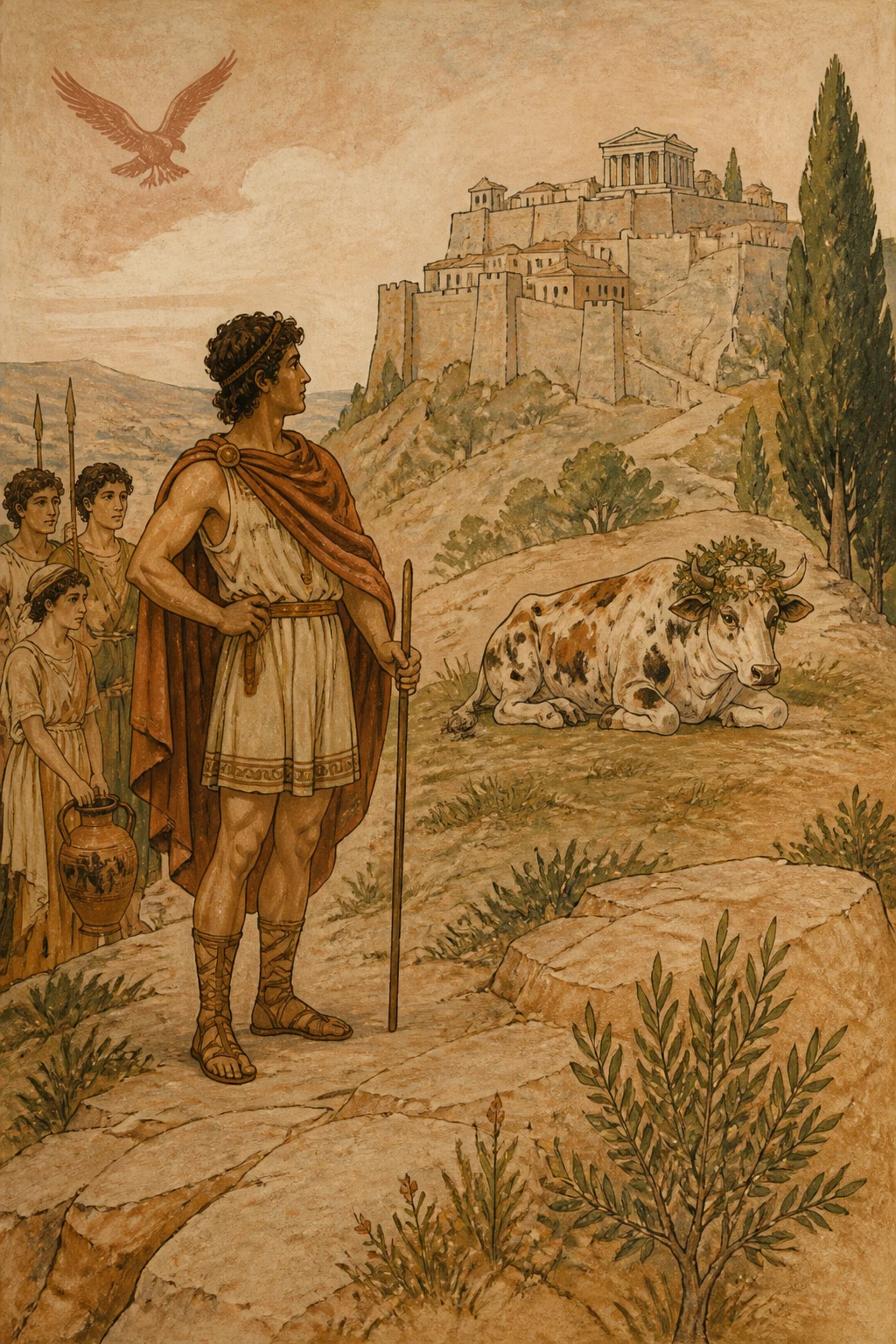
Auge, having been ravished by Heracles, hid her baby in the sacred precinct of Athena, whose priestess she was. But the land remained barren, and the oracles declared that some act of sacrilege had been committed in Athena’s precinct. Her father discovered her guilt and handed her over to Nauplius to be put to death. Teuthras, ruler of the Mysians, received her from him and married her. The baby was exposed on Mount Parthenius, where a doe offered him her teat, and he was therefore named Telephus. He was brought up by the herdsmen of Corythus, and later, seeking his parents, he went to Delphi. Having learned from the god where to go, he came to Mysia and became the adopted son of Teuthras. On Teuthras’s death, he succeeded him as ruler.
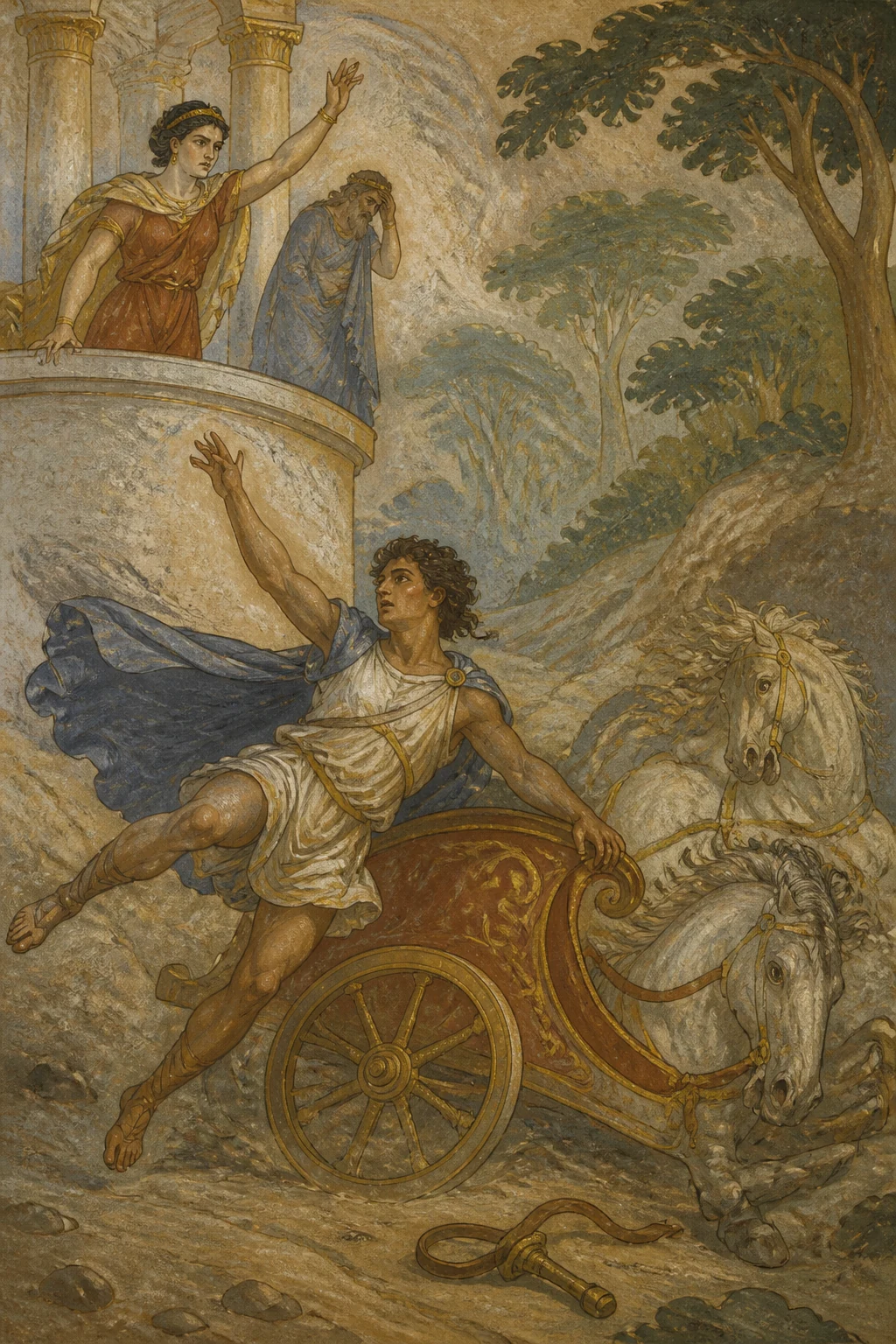
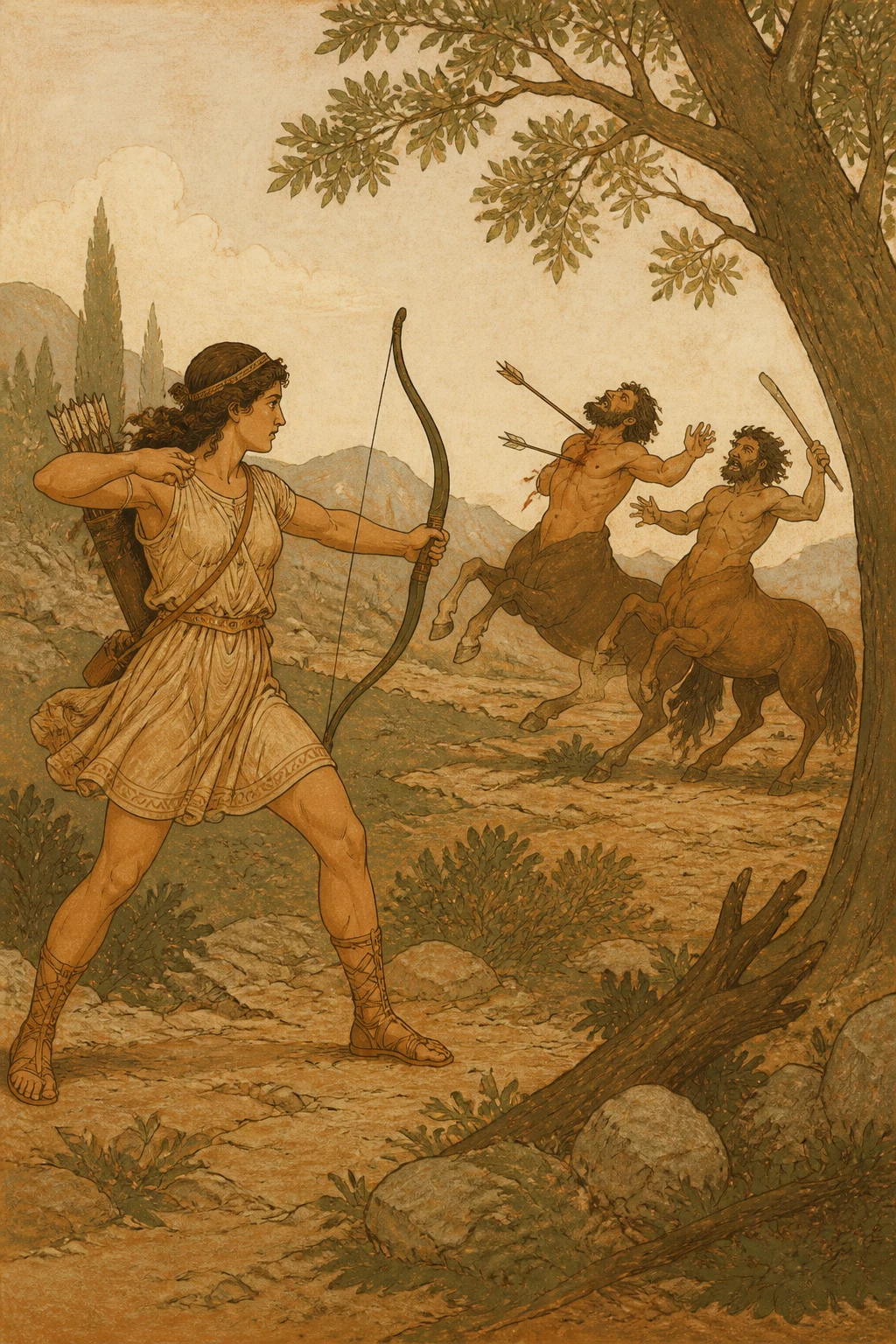
2. Lycurgus and Cleophyle, or Eurynome, had four sons: Ancaeus, Epochus, Amphidamas, and Iasus. Amphidamas had a son, Melanion, and a daughter, Antimache, whom Eurystheus married. Iasus and Clymene, daughter of Minyas, had a daughter, Atalanta. Her father, who wanted sons, exposed her, but a she-bear came often and suckled her, until hunters found her and brought her up among themselves. When Atalanta grew to womanhood, she remained a virgin and spent her days hunting, armed, in the wilderness. The Centaurs Rhoecus and Hylaeus tried to rape her, but she shot them dead with her arrows. She also joined the heroes in the hunt for the Calydonian boar, and at the games held in honor of Pelias she wrestled with Peleus and defeated him. Later she found her parents, and when her father urged her to marry, she went to a racecourse and set up in its midst a stake three cubits high. From there she let her suitors start ahead of her, then ran after them fully armed. Any man she caught was put to death; any she failed to catch would win her hand. Many had already perished when Melanion, who had fallen in love with her, came to compete in the race, bringing golden apples given him by Aphrodite. As Atalanta pursued him, he dropped them, and she stopped to pick them up and so lost the race. Melanion therefore married her. It is said that once, while hunting, they entered the sacred precinct of Zeus and made love there, whereupon they were transformed into lions. Hesiod and some other writers, however, say that Atalanta was the daughter not of Iasus but of Schoeneus, while Euripides calls her the daughter of Maenalus; they also say that her husband was not Melanion but Hippomenes. By Melanion, or by Ares, Atalanta bore Parthenopaeus, who marched against Thebes.
Izvirnik
Book 3 chapter 9
Naslednje strani prikazujejo izvirno besedilo za primerjavo.
Source ID: apollodorus_bib_3_9 Citation: Apollodorus, Bibliotheca 3.9 1. Ἀρκάδος δὲ καὶ Λεανείρας τῆς Ἀμύκλου ἢ Μεγανείρας τῆς Κρόκωνος, ὡς δὲ Εὔμηλος λέγει, νύμφης Χρυσοπελείας, ἐγένοντο παῖδες Ἔλατος καὶ Ἀφείδας. οὗτοι τὴν γῆν ἐμερίσαντο, τὸ δὲ πᾶν κράτος εἶχεν Ἔλατος, ὃς ἐκ Λαοδίκης τῆς Κινύρου Στύμφαλον καὶ Περέα τεκνοῖ, Ἀφείδας δὲ Ἀλεὸν καὶ Σθενέβοιαν, ἣν γαμεῖ Προῖτος. Ἀλεοῦ δὲ καὶ Νεαίρας τῆς Περέως θυγάτηρ μὲν Αὔγη, υἱοὶ δὲ Κηφεὺς καὶ Λυκοῦργος.
Αὔγη μὲν οὖν ὑφʼ Ἡρακλέους φθαρεῖσα κατέκρυψε τὸ βρέφος ἐν τῷ τεμένει τῆς Ἀθηνᾶς, ἧς εἶχε τὴν ἱερωσύνην. ἀκάρπου δὲ τῆς γῆς μενούσης, καὶ μηνυόντων τῶν χρησμῶν εἶναί τι ἐν τῷ τεμένει τῆς Ἀθηνᾶς δυσσέβημα, φωραθεῖσα ὑπὸ τοῦ πατρὸς παρεδόθη Ναυπλίῳ ἐπὶ θανάτῳ παρʼ οὗ Τεύθρας ὁ Μυσῶν δυνάστης παραλαβὼν αὐτὴν ἔγημε. τὸ δὲ βρέφος ἐκτεθὲν ἐν ὄρει Παρθενίῳ θηλὴν ὑποσχούσης ἐλάφου Τήλεφος ἐκλήθη, καὶ τραφεὶς ὑπὸ τῶν Κορύθου βουκόλων καὶ ζητήσας τοὺς γονέας ἧκεν εἰς Δελφούς, καὶ μαθὼν παρὰ τοῦ θεοῦ, παραγενόμενος εἰς Μυσίαν θετὸς παῖς Τεύθραντος γίνεται· καὶ τελευτῶντος αὐτοῦ διάδοχος τῆς δυναστείας γίνεται.
2. Λυκούργου δὲ καὶ Κλεοφύλης ἢ Εὐρυνόμης Ἀγκαῖος καὶ Ἔποχος καὶ Ἀμφιδάμας καὶ Ἴασος. Ἀμφιδάμαντος δὲ Μελανίων καὶ θυγάτηρ Ἀντιμάχη, ἣν Εὐρυσθεὺς ἔγημεν. Ἰάσου δὲ καὶ Κλυμένης τῆς Μινύου Ἀταλάντη ἐγένετο. ταύτης ὁ πατὴρ ἀρρένων παίδων ἐπιθυμῶν ἐξέθηκεν αὐτήν, ἄρκτος δὲ φοιτῶσα πολλάκις θηλὴν ἐδίδου, μέχρις οὗ εὑρόντες κυνηγοὶ παρʼ ἑαυτοῖς ἀνέτρεφον. τελεία δὲ Ἀταλάντη γενομένη παρθένον ἑαυτὴν ἐφύλαττε, καὶ θηρεύουσα ἐν ἐρημίᾳ καθωπλισμένη διετέλει. βιάζεσθαι δὲ αὐτὴν ἐπιχειροῦντες Κένταυροι Ῥοῖκός τε καὶ Ὑλαῖος κατατοξευθέντες ὑπʼ αὐτῆς ἀπέθανον. παρεγένετο δὲ μετὰ τῶν ἀριστέων καὶ ἐπὶ τὸν Καλυδώνιον κάπρον, καὶ ἐν τῷ ἐπὶ Πελίᾳ τεθέντι ἀγῶνι ἐπάλαισε Πηλεῖ καὶ ἐνίκησεν. ἀνευροῦσα δὲ ὕστερον τοὺς γονέας, ὡς ὁ πατὴρ γαμεῖν αὐτὴν ἔπειθεν ἀπιοῦσα εἰς σταδιαῖον τόπον καὶ πήξασα μέσον σκόλοπα
τρίπηχυν, ἐντεῦθεν τῶν μνηστευομένων τοὺς δρόμους προϊεῖσα ἐτρόχαζε καθωπλισμένη· καὶ καταληφθέντι μὲν αὐτοῦ θάνατος ὠφείλετο, μὴ καταληφθέντι δὲ γάμος. ἤδη δὲ πολλῶν ἀπολομένων Μελανίων αὐτῆς ἐρασθεὶς ἧκεν ἐπὶ τὸν δρόμον, χρύσεα μῆλα κομίζων παρʼ Ἀφροδίτης, καὶ διωκόμενος ταῦτα ἔρριπτεν. ἡ δὲ ἀναιρουμένη τὰ ῥιπτόμενα τὸν δρόμον ἐνικήθη. ἔγημεν οὖν αὐτὴν Μελανίων. καί ποτε λέγεται θηρεύοντας αὐτοὺς εἰσελθεῖν εἰς τὸ τέμενος Διός, κἀκεῖ συνουσιάζοντας εἰς λέοντας ἀλλαγῆναι. Ἡσίοδος δὲ καί τινες ἕτεροι τὴν Ἀταλάντην οὐκ Ἰάσου ἀλλὰ Σχοινέως εἶπον, Εὐριπίδης δὲ Μαινάλου, καὶ τὸν γήμαντα αὐτὴν οὐ Μελανίωνα ἀλλὰ Ἱππομένην. ἐγέννησε δὲ ἐκ Μελανίωνος Ἀταλάντη ἢ Ἄρεος Παρθενοπαῖον, ὃς ἐπὶ Θήβας ἐστρατεύσατο.
Nadaljuj z branjem