Prevod
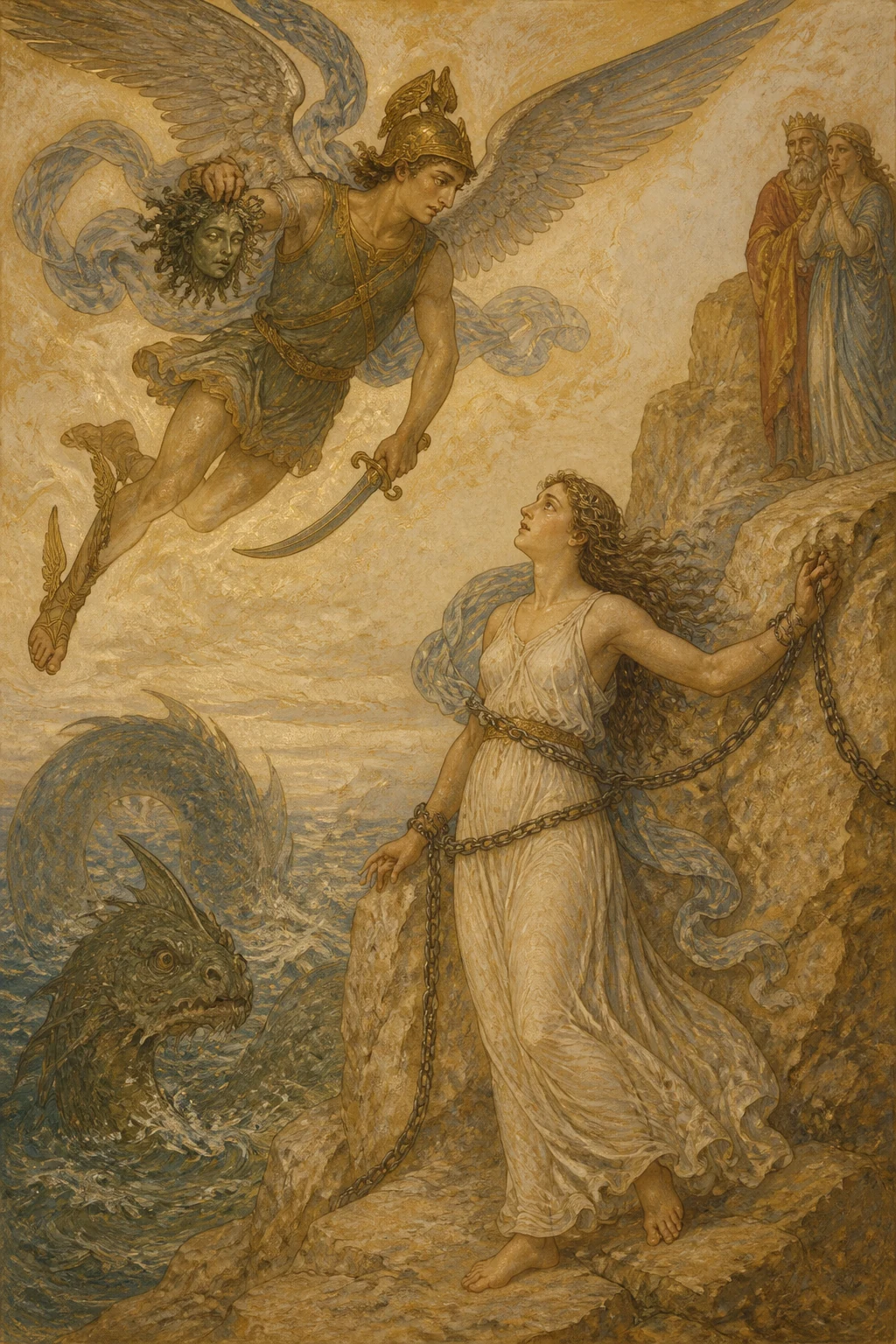
Do you know, from old tales and descriptions, that fateful tower from whose platform the hapless Isaura, Bluebeard’s seventh wife, waited in an agony of cold sweat for her brothers, who were coming to save her from death? Clinging to a battlement as though already instinctively defending herself against the knife, her face the colour of wax and her body trembling, Isaura lacked even the courage to keep scanning the horizon. Her husband and executioner, having discovered the telltale bloodstain on the key to the terrible chamber, had ordered her to the top of the tower to commend herself to God, warning her that in half an hour he would come to cut her throat, without reprieve. Her legs failing her, her eyes clouded with fear, Isaura could do nothing but ask from minute to minute, in a voice that grew ever fainter and weaker: “Sister Ana, do you see nothing? Is no one coming?” And Ana would answer sorrowfully: “I see only the grass growing green and the road gleaming white.” When only a few moments remained before the appointed time, when Isaura clutched the stones with convulsed hands, imagining she felt the cold knife at her throat, Ana gave a wild, delirious cry: “There they come, there they come!” And as the cloud of dust stirred up by the galloping steeds dispersed, Isaura recognised the champions flying to her rescue...
Much has been written and debated about Bluebeard’s tower. The prevailing opinion is that it lies in ruins, and that although the fearful underground passages remain intact, with their dungeons and pits where human bones and skulls are still found to this day by those who dig and search, the Tower of Hope has fallen to the ground.—Being better informed, I can assure you that the tower still stands.—It is so strong and solid, its stones so firmly joined with such indestructible mortar, its ruff of graceful battlements so sturdy, that neither storms nor rain nor wind, nor even the passage of time and neglect, have been able to make an end of it. And there is more. Not only has the tower suffered no damage, but it is now visited by countless pilgrims and travellers from every country in the world, who flock there as to a shrine, drawn by the legend. This holds that by climbing the Tower of Hope and waiting patiently—never ceasing to implore the aid of heaven—everyone will at last see a vision of their future and their destiny approaching, raising the indispensable cloud of dust. You can imagine how crowded the tower’s platform must be, and how those clinging to its battlements—the very ones Isaura embraced in her direst hour—must feel their hearts beating with anxiety, sometimes with grief, sometimes with supreme joy.
Not long ago—this news is of particular interest to us—a party of Spanish travellers, passing near the Tower of Hope, wished to climb it. Before making the ascent they conferred, and with the voluble familiarity and spontaneous frankness characteristic of Spaniards, confided to one another their aspirations and even their wildest dreams. They opened their hearts as one throws a door wide open, and it emerged that a strange affinity and resemblance existed among their longings. They wished to climb the Tower of Hope because, bored and sickened by the present, they placed their trust only in whatever novelties the future might bring. The pilgrims declared themselves dissatisfied with everything that existed, and were unanimous in blaming Spain’s ills and decline on the men at the head of the nation. Only a blind man could fail to see the decadence and pitiful exhaustion of our heroes. On this subject you should have heard the pilgrims, so apt, so witty, so epigrammatic. The frailties, shortcomings, blunders and errors of the celebrated were brought to light with a sauce of hot mustard, with a fusillade of jokes and anecdotes. Lofty reputations were ground to dust, glories dissolved and devoured by the corrosive acid of mocking criticism. The statesmen? Thieves, unscrupulous opportunists. The military leaders? Cowards, and incompetents into the bargain, possessing neither the guerrilla fighter’s instinctive judgement nor the broad strategic vision of a truly great commander. The artists? Wretched imitators who imported their ideas and even their forms from abroad, as dancers import cotton-padded calves. The men of letters? Poor devils, dry and hollow to the very marrow of their bones, and, what was worse, frightful bores... “Insufferable windbags!” cried one of the pilgrims, a young man of about twenty-three who was then wrestling with his third year of law. The phrase summed up the debate; all agreed that a tin cathedral was being erected for posterity to laugh at. Fresh blood was urgently needed, a change of personnel; the time had come to change the pack of cards, to break out a new one, smooth and shining, neither grubby nor worn with use... Let others come, the unknown men, the unrecognised geniuses hidden in the bosom of the nameless multitude!—That was why the Spaniards burned with eagerness to climb the tower and glimpse in the distance the swirl of dust heralding the triumphant arrival of the future...
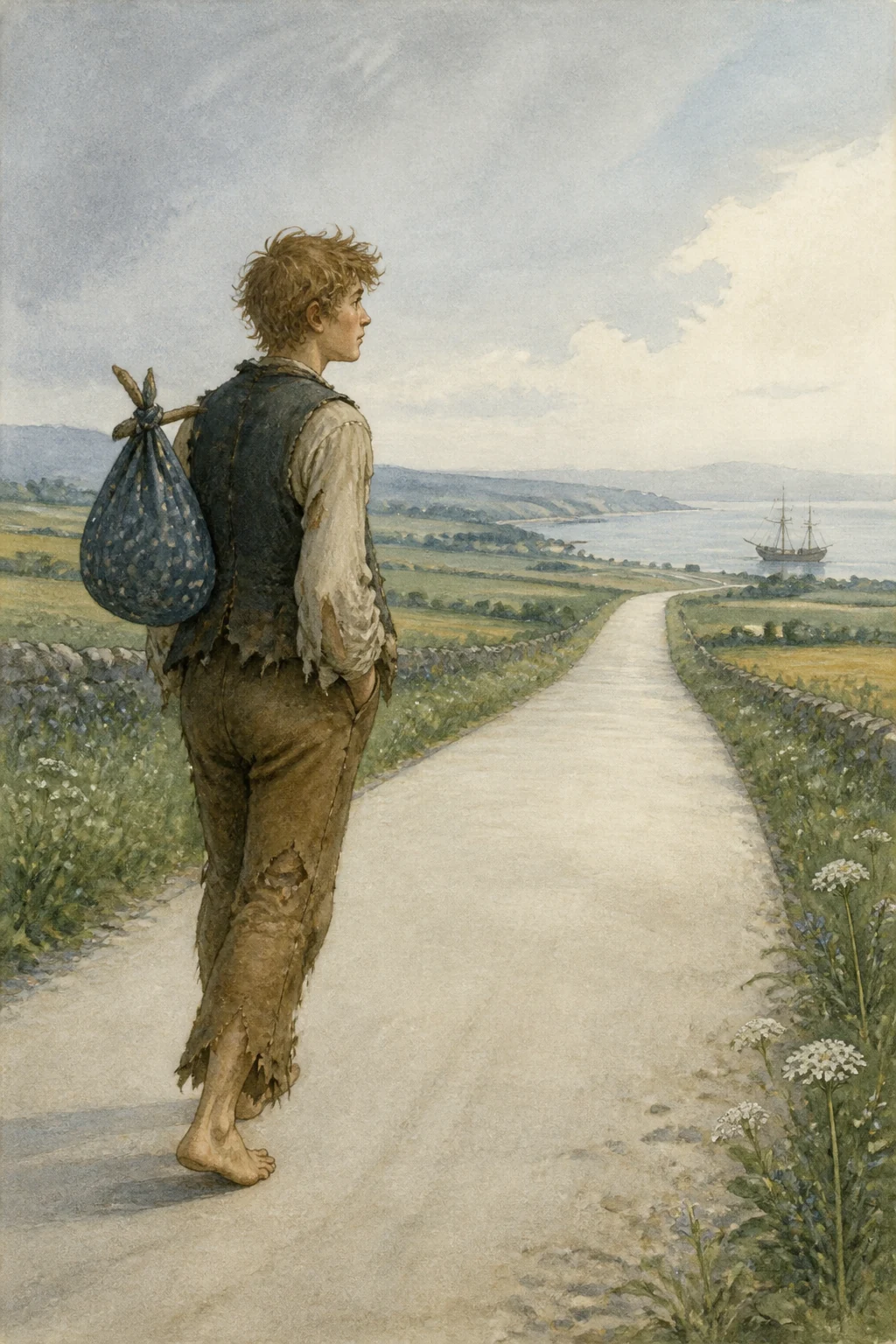
The next morning, at daybreak, scrambling over the stones, clutching at clumps of ivy, making use of ladders and ropes and scraping their hands, they reached the platform and, leaning against the parapet and battlements, anxiously searched the horizon.—At once they could verify the historical and topographical truth contained in the tale of Bluebeard. Beginning at the causeway leading to the castle’s drawbridge, and stretching away until it vanished between two mountains almost blurred out by distance, the silver ribbon of the road wound through fresh green meadows. The Spaniards fixed their eyes on its farthest visible point, just as the terrified Isaura had done; and, repeating her question with scarcely less urgency, the shortsighted asked those who were training powerful binoculars on it: “Well, nothing? Nothing in sight yet?” And the others replied: “Nothing... There is only the grass growing green and the road gleaming white.”
Hours and hours passed, and my Spaniards stayed where they were, spyglasses at the ready, while those without a glass fashioned shades and tubes from newspapers. The sun, climbing towards its zenith, beat down more fiercely than was reasonable, scorching their eyes and melting their brains; thirst set their throats on fire and hunger pinched their stomachs; but the magic of Hope sustained the expedition like an enchanted potion, preventing them from withdrawing. Close to noon, one privileged fellow who possessed a magnificent pair of naval binoculars let out an indescribable shriek. There, there, in the remotest distance, a white speck had just appeared, the nucleus of a star, the mysterious cloud of dust!
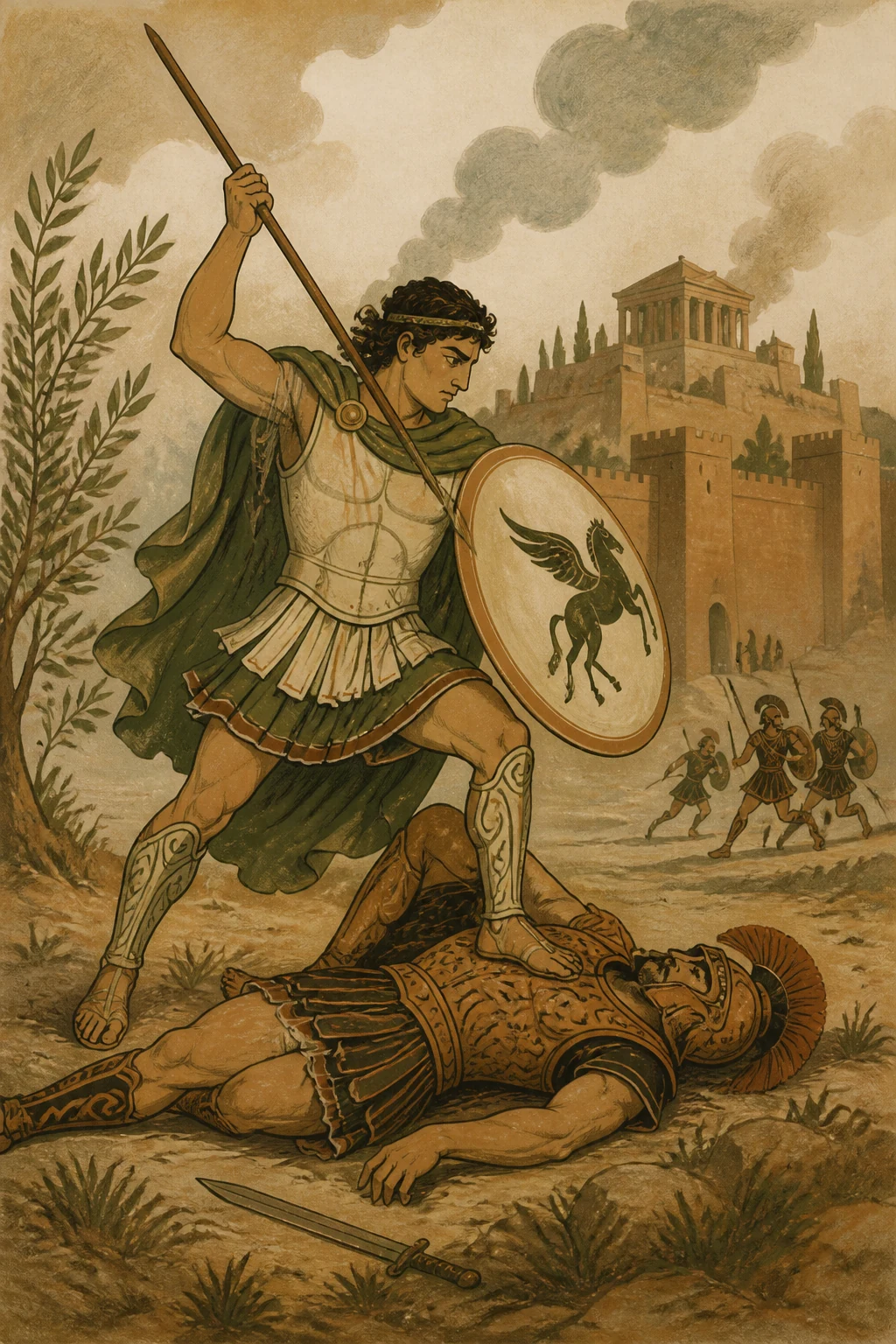
The Spaniards thought they would go mad. The binoculars passed from hand to hand. Yes, yes, there it was, the cloud, growing and spreading! Soon, as the murky veil parted, they could make out what was approaching. It was a brilliant company on horseback, a splendid host, magnificently arrayed and armed from head to foot, ready for battle. Now they could admire the prancing of the fiery chargers, now the damascened armour and coats of mail; now the waving plumes and floating coloured sashes made a gallant show; now the devices on the banners and the blazons on the shields could be distinguished... Those on the platform, drunk with enthusiasm, shouted and cheered, straddling the battlements at the risk of falling to their deaths... All that remained was to see the champions’ faces: what wretched luck—every man had his helmet visor lowered. Great and burning was their desire to know those who held the destiny of their Spanish homeland!...
An immense clamour of feverish enthusiasm rose from the platform when, arriving at the foot of the drawbridge, the approaching heroes raised their visors... And another, quite different cry, of irony and disillusionment, followed the first.—The men of that long-awaited host, that unknown host... were none other than the very same men, by God! The men who for years had been battling on, withstanding the assaults of criticism and the demands of discontent and weariness. All the same, unchanged, already hardened, already veterans... The same military leaders, the same statesmen, the same celebrated artists and men of letters... Not a single new face, by God!—And the Spanish travellers, thoroughly crestfallen, hurried down... That evening they consoled themselves by gathering for a chat, once again grinding the eternal heroes to dust and planning another ascent of the Tower of Hope for the following autumn.