Waltey
Stojša in Mladen
Srpske narodne pripovijetke · Vuk Stefanović KaradžićO besedilu
Stojša in Mladen
- Vir
- Srpske narodne pripovijetke
- Avtor
- Vuk Stefanović Karadžić
- Jezik branja
- English
- Jezik izvirnika
- Српски
- Čas branja
- 17 min branja
- Obseg
- 14 strani
- Naslov izvirnika
- 005 Стојша и Младен
O izvirniku
Srpske narodne pripovijetke
Srbske ljudske pripovedi o junakih, čudežnih bitjih, preizkušnjah in ljudski modrosti. Bralni jezik je English, izvirnik pa prihaja iz vira Srpske narodne pripovijetke v jeziku Српски.
Besedilo
Stojša in Mladen
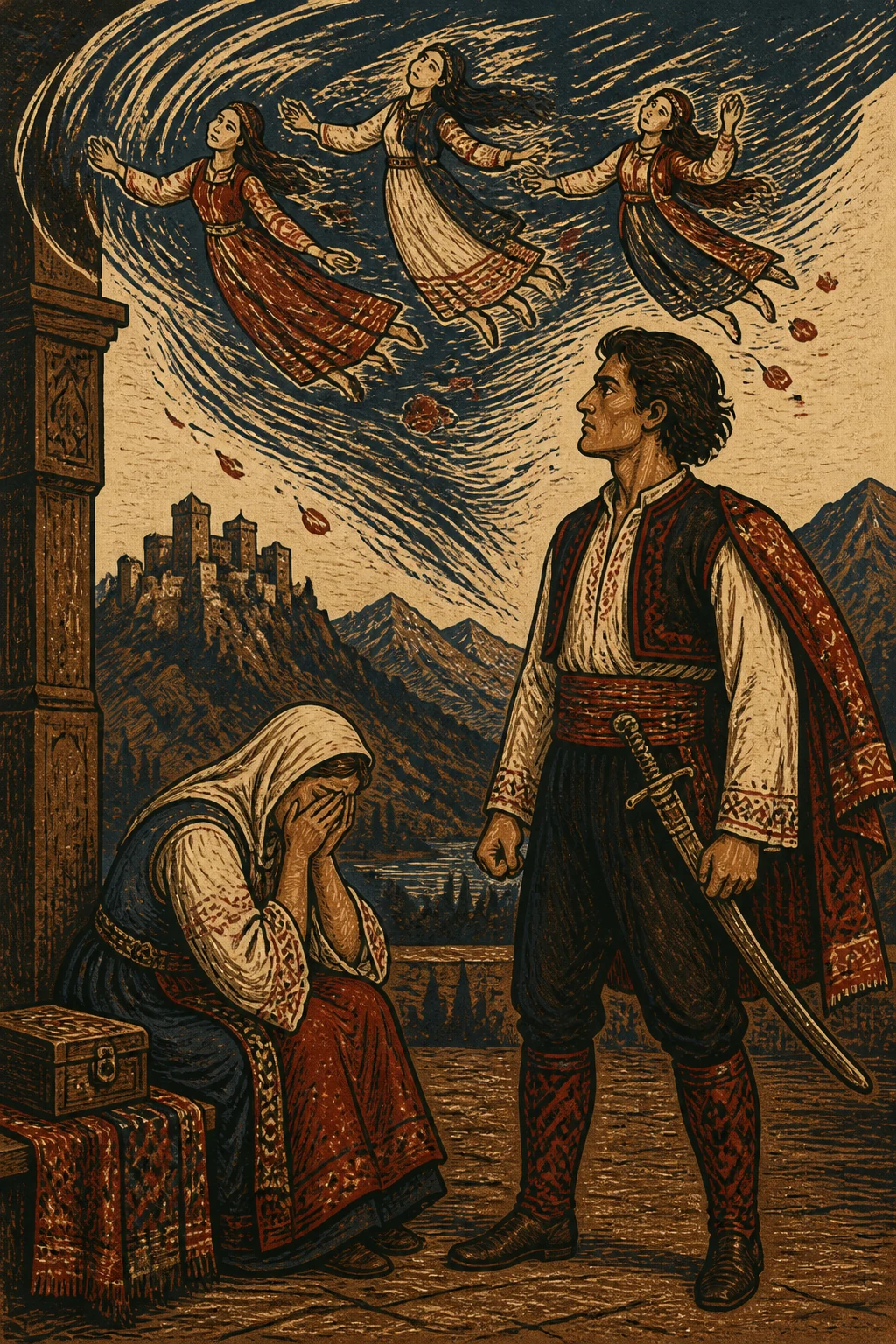
Once there was an emperor who had three daughters, and he kept them so closely secluded that they never went out of doors. When they were old enough to marry, their father allowed them to join the kolo dance for the first time. But scarcely had they joined hands in the circle when a whirlwind sprang up and carried all three away. The emperor was stricken with fear when he saw they had vanished, and at once sent servants in every direction to search for them. When the servants returned and said they could find them nowhere, the emperor fell ill and died of grief. He left the empress with child, and when her time came, she gave birth to a boy and named him Stojša. As Stojša grew, he became a hero whose like was seldom seen. When he was eighteen, he asked his mother, “For God’s sake, Mother, how is it that you never had any children but me?” She sighed and began to weep, but dared not tell him that she had had three daughters who had vanished, for fear that Stojša would go wandering through the world in search of them, and she would lose him too. But when he saw his mother weeping, he pressed her all the harder, begging her to tell him what was wrong. Then his mother told him everything in order: how she had had three daughters as lovely as three roses, how they had vanished, and how people had searched for them in vain in every direction. When Stojša had heard his mother’s tale, he said, “Do not weep, Mother. I shall go and look for them.” At these words his mother beat her breast. “Woe is me, poor unhappy woman! Must a mother lose her son as well?” She tried to dissuade him and begged him not to go, telling him how long ago it had all happened, and that God alone knew whether they were even alive. But he would not be dissuaded. Instead he said, “Tell me, when my father was emperor, where are the weapons he wore, and where is the horse he rode?” Seeing that Stojša would not give up his purpose, his mother told him that when his father had suffered that great sorrow, he had turned his horse out among the herd and thrown his weapons into the attic. Stojša at once found the weapons in the attic, all dusty and rusty, but he cleaned and polished them until they shone as though newly forged. Then he went to the herd and found his father’s horse, brought it home, led it into the cellars, and began to feed and groom it. Within a month the horse was as sleek and swift as a bird, and it was winged and endowed with a dragon’s power besides. When Stojša was ready to leave, he said to his mother, “Have you some token of my sisters’ that I could take with me, Mother, so that, if God grants that I find them, they will believe I am their brother?” His mother answered through her tears, “I have, my heart’s comfort: three kerchiefs they embroidered with their own hands.” She brought out the kerchiefs and gave them to him. Then he kissed his mother’s hand, mounted his horse, and rode out into the world to seek his sisters. After travelling through the world for a long time, he came one day to a great city. Outside it stood a fountain from which everyone in the city fetched water. When Stojša reached the fountain, he drank, then lay down in the shade to rest a little, covering his face with one of the three kerchiefs to keep the flies from biting him. Just then a lady came to fetch water and noticed Stojša lying in the shade beside the fountain. As soon as she saw him and the kerchief, she sighed. All the while she was drawing water she kept looking at him, and even when her vessel was full she could not tear herself away, but went on gazing at him. Stojša noticed this and asked, “What is it, good woman? Why do you look at me so? Is it so long since you have seen a man, or do you recognize something?” She answered, “Brother, I recognize the kerchief you have there. I embroidered it with my own hands.” Then Stojša rose and asked where she came from and who her family were. She told him she was an emperor’s daughter from such-and-such a city, and that there had been three sisters, but a whirlwind had carried all three away. At this Stojša made himself known at once. “I am your brother. Can you remember whether our mother was with child when the whirlwind carried you away?” She remembered at once, burst into tears, and threw her arms around his neck. “My dear brother! All three of us are in the power of dragons. There are three dragon brothers: they carried us away, and each keeps one of us in his palace.” Then they took each other by the hand and went to the dragon’s palace. There his sister welcomed him warmly and gave him food and drink. As evening drew near, she said, “Brother, the fierce, fiery dragon will soon be here, with flames pouring from him. I would shelter you, lest that fiery force scorch you. Come and hide.” But Stojša answered, “My sister, tell me what he eats for his supper.” His sister led him into another room, and there were a roast ox, an ovenful of bread, and a cask of wine. “That is his supper,” she said. At the sight of it, Stojša sat down cross-legged and ate it all to the last crumb, then sprang to his feet and said, “Ah, sister, if only there were more!” When Stojša had finished his supper, his sister said, “Now the dragon will throw his mace down in front of the house, as a sign that he is coming home.” Scarcely had she spoken when the mace came whistling over the house. Stojša rushed outside and, before it could touch the ground, caught it in his hands and hurled it back over the dragon’s head, far into the next district. When the dragon saw this, he marvelled. “What mighty force is coming from my palace?” He turned back, picked up his mace, and carried it home. When he reached the palace, the emperor’s daughter came out to meet him, and he roared at her, “Who is in your palace?” “My brother,” she replied. The dragon asked again, “And what has he come for?” “He has come to see me,” she answered. Then the dragon said angrily, “No, he has not come to see you, but to take you away.” Hearing this exchange from inside the palace, Stojša came out to face the dragon. As soon as the dragon saw him, he rushed at him, but Stojša met him, and they grappled and began to wrestle. At last Stojša threw the dragon down and pinned him beneath him. “What will you do now?” he asked. The dragon answered, “If you were beneath my knees as I am beneath yours, I would know what to do.” But Stojša said, “I shall do you no harm,” and let him go. Then the dragon took him by the hand, led him into the palace, and held a feast for a whole week. When the week was over, Stojša asked the dragon about his other two brothers-in-law, the fiery dragons. The dragon told him which way to go to find the city where the second dragon’s palace stood, and said he would hear of the third there. Then Stojša made ready for his journey, took leave of his sister and brother-in-law, and set out for the second dragon’s home. After travelling for some time, he came to a city, and outside it found a fountain from which everyone in the city fetched water. Stojša drank there, then lay down in the shade to rest a little, covering his face with one of the three kerchiefs to keep the flies from biting him. Before long a lady came to fetch water. As soon as she saw Stojša and the kerchief, she sighed. All the while she was drawing water she kept looking at him, and even when her vessel was full she could not tear herself away, but went on gazing at him. Stojša noticed this and asked, “What is it, good woman? Why do you look at me so? Is it so long since you have seen a man, or do you recognize something?” She answered, “Brother, I recognize the kerchief you have there. I embroidered it with my own hands.” Then Stojša sprang to his feet, made himself known at once as her brother, and told her how he had already visited their other sister. When she found her brother before her, she burst into tears and threw her arms around his neck. Then they took each other by the hand and went to the dragon’s palace. There his sister welcomed him warmly and gave him food and drink. As evening drew near, she said, “Brother, the fierce, fiery dragon will soon be here, with flames pouring from him. I would shelter you, lest that fiery force scorch you. Come and hide.” But Stojša answered, “My sister, tell me what he eats for his supper.” She led him into another room, and there were two roast oxen, two ovenfuls of bread, and two casks of wine. “That is his supper,” his sister told him. At the sight of it, Stojša sat down cross-legged and ate it all to the last crumb, then sprang to his feet and said, “Ah, sister, if only there were more!” When Stojša had finished his supper, his sister said, “Now the mace will fall in front of the house, thrown all the way from the second district, as a sign that the dragon is coming.” Scarcely had she spoken when the mace came whistling over the house. Stojša rushed outside and, before it could touch the ground, caught it in his hands and hurled it far into the third district. When the dragon saw this, he marvelled. “What mighty force is coming from my palace?” He turned back, picked up his mace, and carried it home. When he reached the house, the emperor’s daughter came out to meet him, and he roared at her, “Who is in your house?” “My brother,” she replied. The dragon asked again, “And what has he come for?” “He has come to see me,” she answered. Then the dragon said angrily, “He has not come to see you, but to take you away.” Hearing this exchange from inside the palace, Stojša came out to face the dragon. As soon as the dragon saw him, he rushed at him, but Stojša met him, and they grappled and began to wrestle. At last Stojša threw the dragon down and pinned him beneath him. “What will you do now?” he asked. The dragon answered, “If you were beneath my knees as I am beneath yours, I would know what to do.” But Stojša said, “I shall do you no harm,” and let him go. Then the dragon took him by the hand and led him into the palace, where they feasted for a week. When the week was over, Stojša asked the dragon about his third brother-in-law, and the dragon told him which way to go to find the city where his third brother-in-law’s palace stood. Then Stojša made ready for his journey, took leave of his sister and brother-in-law, and set out to seek the third dragon. After travelling for a long time, he came to another city, and outside it found a fountain from which everyone in the city fetched water. Stojša drank there, then lay down in the shade to rest a little, covering his face with one of the three kerchiefs to keep the flies from biting him. Before long a lady came to fetch water. As soon as she saw Stojša and the kerchief, she sighed. All the while she was drawing water she kept looking at him, and even when her vessel was full she could not tear herself away, but went on gazing at him. Stojša noticed this and asked, “What is it, good woman? Why do you look at me so? Is it so long since you have seen a man, or do you recognize something?” She answered, “Brother, I recognize the kerchief you have there. I embroidered it with my own hands.” At these words Stojša sprang to his feet, made himself known at once as her brother, and told her how he had already visited their other sisters. When she found her brother before her, she burst into tears and threw her arms around his neck. Then they took each other by the hand and went to the palace. There his sister welcomed him warmly and gave him food and drink. As evening drew near, she said, “Brother, the fierce, fiery dragon will soon be here, with flames pouring from him. I would shelter you, lest that fiery force scorch you. Come and hide.” But Stojša answered, “My sister, tell me what he eats for his supper.” She led him into another room, and there were three roast oxen, three ovenfuls of bread, and three casks of wine. “That is his supper,” his sister told him. At the sight of it, Stojša sat down cross-legged and ate it all to the last crumb, then sprang to his feet and said, “Ah, sister, if only there were more!” When Stojša had finished his supper, his sister said, “Now the mace will fall in front of the house, thrown all the way from the third district. That is the sign that the dragon is coming.” Scarcely had she spoken when the mace came whistling over the house. Stojša rushed outside and, before it could touch the ground, caught it in his hands and hurled it far into the fourth district. When the dragon saw this, he marvelled. “What mighty force is coming from my palace?” He turned back, picked up his mace, and carried it home. When he reached the palace, the emperor’s daughter came out to meet him, and he roared at her, “Who is in your palace?” “My brother,” she replied. The dragon asked again, “And what has he come for?” “He has come to see me,” she answered. Then the dragon said angrily, “He has not come to see you, but to take you away.” Hearing this exchange from inside the palace, Stojša came out to face the dragon. As soon as the dragon caught sight of him, he rushed at him, but Stojša met him, and they grappled and began to wrestle. At last Stojša threw the dragon down and pinned him to the ground. “What will you do now?” he asked. The dragon answered, “If you were beneath my knees as I am beneath yours, I would know what to do.” Then Stojša said, “I shall do you no harm,” and let him go. The dragon took him by the hand and led him into the palace, where they feasted for a week. One day they went out for a walk, and as they strolled Stojša noticed a great burrow in the courtyard, leading down into the earth. “What is that, brother-in-law?” he asked. “How can you put up with such a great pit in your palace grounds? Why do you not fill it in?” The dragon answered, “Ah, my brother-in-law, I am too ashamed even to tell you what it is. There is a dragon emperor hereabouts who often makes war on us, and the appointed day for our next battle is drawing near. Whenever we fight, he defeats all three of us, and only those who escape into this burrow survive.” Then Stojša said, “Come, brother-in-law, let us attack him while I am here to help you. Perhaps we can put an end to him.” But the dragon answered, “I dare not do so before the appointed day, not for anything.” When Stojša saw that they dared not attack, he set out alone to seek the dragon emperor. At last, after much asking, he found his way to the palace and saw a hare standing on its roof. He asked the courtiers what the hare was doing on top of the palace. They answered, “If anyone were to take that hare down, it would slaughter itself, skin itself, cut itself up, put itself on the fire, and cook itself. But no one dares do it, on pain of death.” When Stojša heard this, he flew up on his horse and took down the hare. At once the hare slaughtered itself, skinned itself, cut itself up, and set itself by the fire. Then Stojša went up to the dragon’s upper gallery and lay down in the shade. When the courtiers saw what he had done, they urged him to flee. “Run, brave fellow, wherever your eyes may lead you, before the dragon comes! You will fare badly if he finds you here.” But Stojša answered, “What do I care for your dragon? Let him come and have his fill of hare.” A little while later, the dragon arrived. The moment he came, he noticed that the hare was gone and shouted at the courtiers, “Who has done this?” They told him, “A gallant fellow came and took down the hare. There he is, up in the gallery.” Then the dragon said, “Go and tell him to leave my palace, for if I come to him, not one of his bones will remain joined to another.” The courtiers went up to Stojša in the gallery and told him what the dragon had said, but Stojša snapped at them, “Go and tell the dragon that if he begrudges me the hare, he can come out and fight me.” When they told the dragon this, he gave a shriek, with flames pouring from him, and flew up to the gallery. Stojša met him, and they began to wrestle. Stojša would not be thrown, but neither could he throw the dragon. At last Stojša said to him, “What is your name?” The dragon answered, “My name is Mladen.” Then Stojša said, “And I too am my father and mother’s youngest child.” So they released each other, became sworn brothers, and solemnly pledged to live as brothers. After some time Stojša said to the dragon, “Why wait for those dragons who hide in that burrow? Come, let us attack them before the appointed day.” The dragon emperor agreed, and the two of them set out to attack the dragons. When the three dragon brothers heard that Stojša had joined forces with the dragon emperor and become his sworn brother, and that both were now coming against them, they took fright, gathered a mighty army, and marched out to meet them. But the two fell upon the whole army, routed it, and scattered it, and only the three dragons escaped into the burrow. Then the two hurried to fetch straw, thrust it into the burrow, and set it alight, and so all three dragons perished there. After that Stojša made his three sisters ready for the journey and gathered all the treasure the three dragons had left behind. He gave their palaces and all their lands to his sworn brother, then set out with his sisters for his own empire. They reached their mother safe and sound, and she handed the empire over to him, and he ruled for the rest of his days.
Izvirnik
005 Стојша и Младен
Naslednje strani prikazujejo izvirno besedilo za primerjavo.
Био један цар па имао три кћери, и једнако их држао у потаји да нису никад на поље излазиле. Кад нарасту за удају, пусти их отац први пут у коло. Али тек што се ухвате у коло, дуне некакав вихар и све три однесе. Цар се препадне кад види да их нестаде, па брже пошље слуге на све стране да их траже, а пошто се слуге врате и кажу да их нигде нису могле наћи, цар се разболи и од жалости умре. Иза цара остане царица трудна, и кад доде време да се бреме има, она роди мушко чедо, и надене му име Стојша. Кад Стојша мало поодрасте, он настане јунак да је мало онаких било. Кад му буде осамнаест; година, запита матер своју: "За Бога, мајко, како ти ниси више деце родила до само мене?" А она уздахне и заплаче се, али му не смедне казати да је имала три кћери па да их је нестало, бојећи се да не би Стојша тумарио у свет да их тражи; и тако да не би и њега изгубила. Али он кад види мајку где плаче, навали још већма и стане је заклињати да му каже што је. Онда му мата приповеди све по реду како је имала три кћери као три руже, и како их је нестало, и како су их тражили узалуд на све стране. Стојша кад саслуша матер своју, рече јој: "Немој плакати, мајко. Идем ја да их тражим." Мати кад то чује, удари се рукама у прси: "Куку мене кукавици! зар да мајка остане и без сина!" па га стане одвраћати и молити да не иде, казујући му како је то било давно и Бог зна јесу ли већ и живе. Али се он није дао одвратити, него јој рече: "Кажи ми, кад је мој отац био цар, где му је оружје што је пасао, где ли му је коњ што га је јахао." Онда мати видећи да се Стојша оканити неће, рече му да му је отац кад је видео толику жалост, пустио коња у ергелу а оружје на таван бацио. Стојша одмах нађе на тавану оружје све прашно и зарђало, али га он лепо очисти и уреди те сине као ново ковано; па онда отиде у ергелу и нађе очина коња, па га доведе кући и уведе у подруме и стане га хранити и тимарити, те за месец дана оправи се коњ као кака тица, а и онако је био крилат и змајевит. Кад се Стојша већ спреми да иде, рече матери: "Имаш ли, мајко, какав знак од мојих сестара да понесем: ако да Бог те их нађем, да би ми веровале да сам им брат?" Мати му плачући одговори: "Има, храно моја, три мараме што су оне својим рукама везле," па му изнесе мараме и да. Онда он пољуби мајку у руку, па уседне на коња и отиде у свет да тражи своје сестре. Идући тако по свету дуго времена, дође један пут под један велики град. Пред оним градом била је једна чесма с које је сав град носио воду. Стојша кад дође на ону чесму, напије се воде па легне мало у хлад да се одмори покривши се по лицу једном од оне три мараме да га мухе не би клале. У томе дође једна госпа по воду и опази Стојшу крај чесме у хладу. Како опази њега и мараму, а она уздахне, по том точеци воду једнако је уњ гледала, и пошто наточи воду никако није могла да се оданде отргне него је све уњ гледала. Стојша то опази па је запита: "Што је, снахо, што ме тако гледиш? Или давно ниси видела човека или се у што упознајеш?" А она му одговори: "Брате, познајем у тебе мараму што сам је својом руком везла." Онда Стојша устане па је запита откуда је и кога је рода, а она му каже да је царска кћи из тога и из тога града и да су биле њих три сестре па их вихар однео све три. Кад то чује Стојша одмах јој се покаже: "Ја сам твој брат. Можеш ли се сетити да је мати била трудна кад је вас вихор однео?" А она се одмах сети и бризне плакати па њему око врата: "Слатки брате! ми смо све три у змајевским рукама. Има њих три брата змаја, они су нас однели па нас држе сваки у своме двору." Онда се узму за руке, па у змајев двор; у двору сестра брата лепо дочека и угости, а кад буде пред ноћ, она му рече: "Брате, сад ће доћи љутит змај огњевити, све ватра из њега сила, рада бих те заклонити да те она сила не опали, ходи сакриј се." А Стојша јој одговори: "Сестро моја, кажи ти мени шта је његов оброк." Онда га сестра одведе у другу собу, кад тамо, али во печен, пећка хлеба и аков вина," ето то му је оброк" рече сестра, а Стојша кад то види, прекрсти ноге па све опуцка до мрве, па онда скочи на ноге и рече: "Аха, сестро, да бијаше још!" Кад Стојша тако вечера, рече му сестра: "Сад ће змај бацити буздован пред кућу да се зна да иде куци." Тек што она то рече, а буздован зауји више куће, а Стојша брже истрчи пред куцу па му не дадне ни на земљу пасти него га дочека у руке па га завитла преко змаја чак на други хатар. Кад змај то види, зачуди се: "Каква то сила гони од мојега двора!" па се врати натраг и узме буздован па с њим кући. Кад дође пред двор, изиђе царева кчи предањ, а он се продере на њу: "Ко ти је у двору?" А она му одговори: "Мој брат". Змај је опет запита: "А шта је дошао?" А она му одговори: "Дошао да ме види." Онда змај срдито рече: "Бре није он дошао да те види, него да те води." Чујући Стојша из двора овај разговор изиде и он пред змаја, а змај како га види стисне се на њега, а Стојша га дочека те се ухвате у коштац па се понеси. Један пут Стојша обори змаја и припуши га, па му рече: "Шта ћеш сад?" А змај му одговори: "Да си ти мени под коленима као ја теби, ја бих знао шта бих." А Стојша му рече: "Ја теби нећу ништа," па га пусти. Онда га змај узме за руку, па га уведе у двор и учини весеље за недељу дана. Кад прође недеља дана, запита Стојша змаја за друга два зета, змаја огњевита, и змај га упути куда ће ићи док не нађе град, где су двори другога змаја, а онде рече му да ће чути за трећега. После тога оправи се Стојша на пут, опрости се са сестром и зетом, па поде к другоме змају. Тако путујући дође под један град, и пред градом нађе једну чесму, с које је сав град воду носио. Стојша се онде напије воде па легне мало у хлад да се одмори покривши се по лицу једном од оне три мараме да га мухе не би клале. Мало време постоји, ал ето ти једне госпе по воду; како угледа Стојшу и мараму, а она уздахне, по том точећи воду једнако је уњ гледала, и пошто наточи воду, никако није могла да се откине оданде него је све уњ гледала. Стојша то опази па је запита: "Што је, снахо, што ме тако гледиш? Или давно ниси видела човека или се у што упознајеш?" А она му одговори: "Брате, познајем у тебе мараму што сам је својом руком везла." Онда Стојша скочи на ноге па јој се одмах покаже да је њезин брат, и приповеди јој како је био и у друге сестре. А она кад види брата, бризне плакати, па њему око врата. После се узму за руке па у змајев двор; у двору сестра брата лепо дочека и угости, а кад буде пред ноћ, она му реце: "Брате, сад це доци љутит змај огњевити, све ватра из њега сипа, рада бих те заклонити да те оном силом не опали, ходи сакриј се." А Стојша јој одговори: "Сестро моја, кажи ти мени шта је његов оброк?" Она га онда одведе у другу собу, кад тамо, а то два вола печена, две пећке хлеба и два акова вина, "ето то му је оброк" реце сестра Стојши, а он кад то види, прекрсти ноге па све опуцка до мрве, па онда скочи на ноге и рече: "Аха, сестро, да бијаше још!" Кад Стојша тако вечера, рече му сестра: "Сад ће пасти буздован пред кућу чак из другога хатара, да се зна да иде змај." Тек што она то рече, а буздован зауји више куће, а Стојша брже истрчи пред кућу па му не дадне ни на земљу пасти, него га дочека у руке па завитла њим чак на трећи хатар. Змај кад то види, зачуди се: "Каква то сила гони од мојега двора!" па се врати натраг и узме буздован па с њим кући. Кад доде пред кућу, изиђе царева кћи предањ, а он се продере на њу: "Ко ти је у кући?" А она му одговори: "Мој брат." Змај је опет запита: "А шта је дошао?" А она одговори: "Дошао да ме види." Онда змај срдито реце: "Није он дошао да те види, него да те води. "Чујући Стојша из двора овај разговор, изиђе и он пред змаја, а змај како га види, стисне се на њега, а Стојша га дочека па се ухвате у коштац те се понеси. Најпосле Стојша обори змаја и припуши га, па му реце: "Шта ћеш сад?" А змај му одговори: "Да си ти мени под коленима као што сам ја теби, ја бих знао шта бих радио " А Стојша му реце: "Ја теби нећу ништа", па га пусти, а змај га онда узме за руку па с њим у двор, те се стану веселити за недељу дана. Кад прође недеља дана, запита Стојша змаја и за трећега зета, и змај га упути куд ће ићи док не нађе град где су двори и трећега зета. После тога оправи се Стојша на пут, опрости се са сестром и зетом, па поде да тражи трећега змаја. Идући тако дуго времена, дође опет под један град и пред градом нађе једну чесму, с које је сав град воду носио. Стојша се онде напије воде па легне у хлад да се мало одмори покривши се по лицу једном од оне три мараме да га мухе не би клале. Мало времена за тим прође, ал ето ти једне госпе по воду. Како угледа Стојшу и мараму, а она уздахне, по том точећи воду једнако је уњ гледала, и пошто наточи воду, никако није могла да се откине оданде него је све уњ гледала. Стојша то опази пак је запита: "Што је, снахо, што ме тако гледиш? Или давно ниси видела човека, или се у што упознајеш?" А она му одговори: "Брате, познајем у тебе мараму што сам је својом руком везла." Стојша кад то чује, скочи на ноге, па јој се одмах покаже да је њезин брат, и приповеди јој како је већ био у других сестара. Она кад види брата, бризне плакати па њему око врата. После се узму за руке па у двор. У двору сестра брата лепо дочека и угости, а кад буде пред ноћ, онда му рече: "Брате, сад ће доћи љутит змај огњевити, све ватра из њега сипа, рада бих те заклонити, да те оном силом не опали, ходи сакриј се." А Стојша јој одговори: "Сестро моја, кажи ти мени шта је његов оброк." Она га онда одведе у другу собу; кад тамо, а то три вола печена, три пећке хлеба и три акова вина, "ето то му је оброк" рече сестра Стојши, а он кад то види, прекрсти ноге па све опуцка до мрве, па онда скочи на ноге и рече: "Аха, сестро, да бијаше још!" Кад Стојша тако вечера, рече му сестра: "Сад ће пасти буздован пред кућу чак из трећега хатара, то је знак да иде змај." Тек што она то рече, а буздован зауји више куће, а Стојша брже истрчи пред кућу па му не дадне ни на земљу пасти, него га дочека у руке па завитла њим чак на четврти хатар. Кад змај то види, зачуди се: "Каква то сила гони од мојега двора!" Па се врати натраг и узме буздован па с њим кући. Кад доде пред двор, изиђе царева кћи предањ, а он се продере на њу: "Ко ти је у двору?" А она му одговори: "Мој брат." Змај је опет запита: "А шта је дошао?" А она му одговори: "Дошао да ме види." Онда змај срдито реце: "Није он дошао да те види, него да те води." Чујући Стојша из двора овај разговор, изиђе и он пред змаја, а змај како га опази, стисне се на њега, а Стојша га дочека те се ухвате у коштац па се понеси. Један пут Стојша обори змаја и припуши на земљу, па му рече: "Шта ћеш сад?" А змај му одговори: "Да си ти под мојим коленима као ја што сам под твојим, ја бих знао шта бих радио." Онда му Стојша реће: "Ја теби нећу ништа," па га пусти. Онда га змај узме за руку па га уведе у двор и стану се веселити за недељу дана. Један пут изиђу у шетњу, и шегајући се опази Стојша у авлији једну велику јазбину – отишла под земљу, па онда рече: "А шта је то, зете? Како можеш у своме двору трпети толику пропаст? За што то не зарониш?" Змај му одговори: "Е мој шура, не могу ти од срамоте ни казати шта је то. Има овамо један змајевски цар, па с нама често има рат, и сад скоро имамо рок да се ударимо; па кад се год побијемо, сву нас тројицу надбије, и што утече у ову јазбину оно остане." Онда му рече Стојша: "Хајде зете, да ударимо нањ, док сам и ја овде да вам помогнем, еда бисмо га како сатрли." А змај одговори: "Ја не смем ни по што пре рока." Кад Стојша види да они не смеју да ударе, онда се он сам дигне да тражи цара змајевскога. Пошто једва један пут напита, доде пред дворе и опази наврх двора зеца где стоји. Онда запита дворане шта онај зец наврх двора ради. А дворани му одговоре: "Да се ко наде да скине онога зеца, зец би се сам заклао, сам одерао, сам исекао, сам приставио, па се сам скувао; али то не сме нико учинити за своју главу." Стојша кад то чује, он узлети на коњу па скине зеца, а зец се сам одмах закоље, сам се одере, сам исече и сам се пристави к ватри. Онда Стојша изиђе на змајев чардак па легне у хлад, а дворани кад виде шта учини, стану му говорити да бежи: "Бежи, јуначе, куд те двоје очи воде, док није дошао змај, јер ћеш зло проћи ако те затече." А Стојша им одговори: "Шта ја марим за вашега змаја, нека дође нек се наједе зеца." Кад мало час, ето ти змаја; како дође одмах опази да зеца нема па повиче на дворане: "Ко је то урадио?" А они му кажу: "Дошао један делија те скинуо зеца, и ено га горе на цардаку." Онда им змај рече: "Идите и кажите му нек ми иде из двора, јер ако му дођем, неће му ни кост с кошцу остати." Дворани изиђу на чардак к Стојши па му кажу шта вели змај, а Стојша се осече на њих: "Идите кажите змају, ако му је жао зеца, нека ми изиђе на мејдан." Кад они то кажу змају, а змај цикне, све ватра сипа из њега, па полети с на чардак, а Стојша га дочека, па се понеси: нити се Стојша даје оборити, нити може змаја да обори; најпосле рече Стојша змају: "Како ти је име?" А змај му одговори: "Моје је име Младен." Онда му Стојша рекне: "И ја сам најмлађи у оца и мајке;" па се онда пусте и збрате, и тврду веру даду један другоме да ће братински живети. После некога времена рече Стојша змају: "Шта чекаш оне змајеве што беже у ону јазбину? Хајде ти да ми ударимо на њих и прије рока." Змајевски цар пристане, и тако поду њих двојица, да ударе на змајеве. Кад она три брата змаја чују да се Стојша удружио и збратио са змајевским царем, и да сад обадвојица иду на њих, они се уплаше па скупе силну војску, те изиду с војском преда њих, а ови ударе на целу војску, и све разбију и растерају, само она три змаја утеку у ону јазбину. Онда ова двојица брже вуци сламу, па гурај у ону јазбину, па онда запале, и тако сва три змаја онде пропадну. После тога Стојша оправи све три сестре, и крене све благо иза сва три змаја, а змају побратиму остави њихове дворе и сву њихову државу, па се дигне са својим сестрама у своје царство, и сретно доду к матери, па му мати преда царство, те је царовао до свога века.
Nadaljuj z branjem