Waltey
Tri zlata granatna jabolka
Legende sau basmele românilor · Petre IspirescuO besedilu
Tri zlata granatna jabolka
- Vir
- Legende sau basmele românilor
- Avtor
- Petre Ispirescu
- Jezik branja
- English
- Jezik izvirnika
- Română
- Čas branja
- 17 min branja
- Obseg
- 14 strani
- Naslov izvirnika
- 033 Cele trei rodii aurite
O izvirniku
Legende sau basmele românilor
Romunske ljudske pravljice o začaranih kraljestvih, preizkušnjah in junakih, zapisane iz ustnega izročila. Bralni jezik je English, izvirnik pa prihaja iz vira Legende sau basmele românilor v jeziku Română.
Besedilo
Tri zlata granatna jabolka
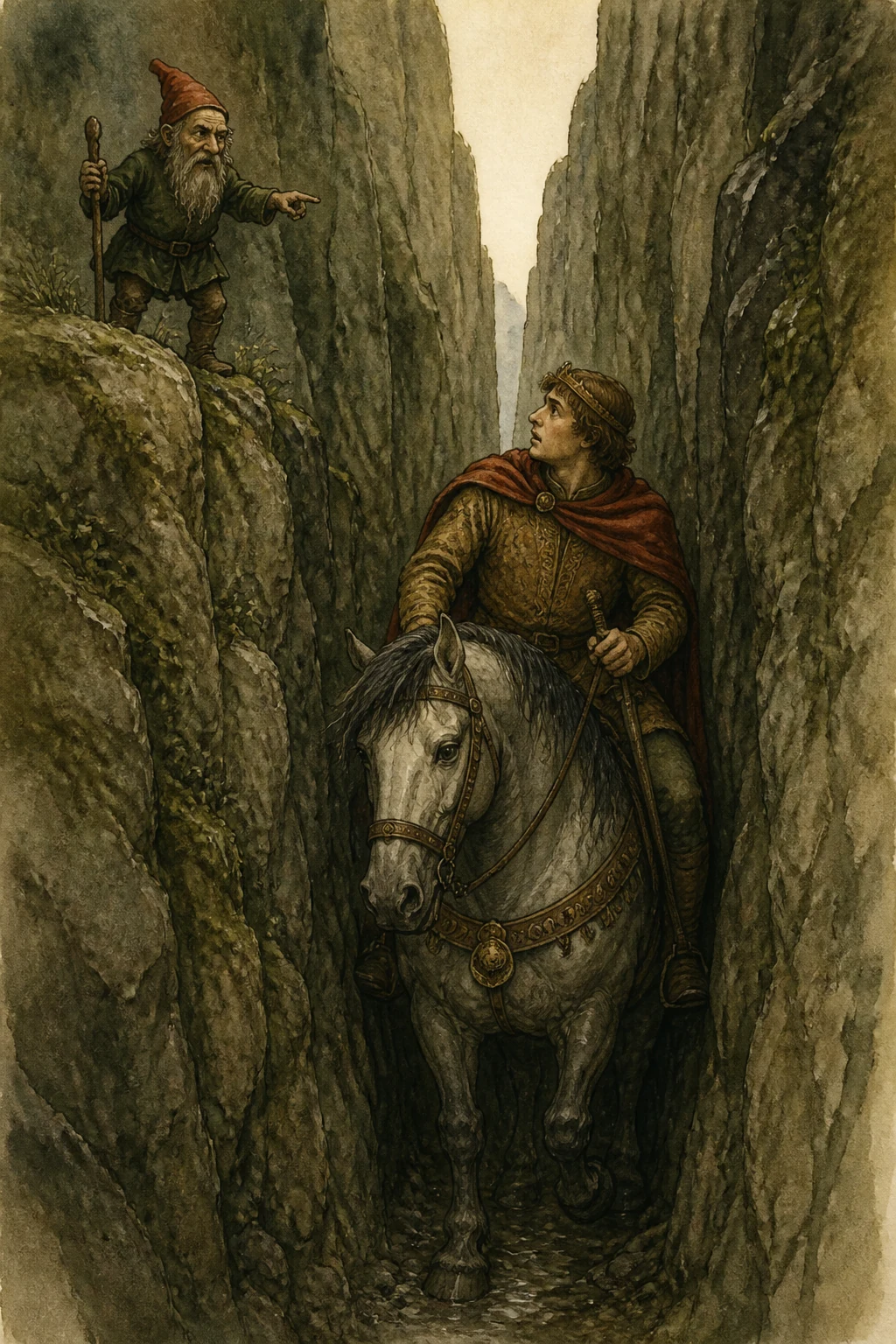
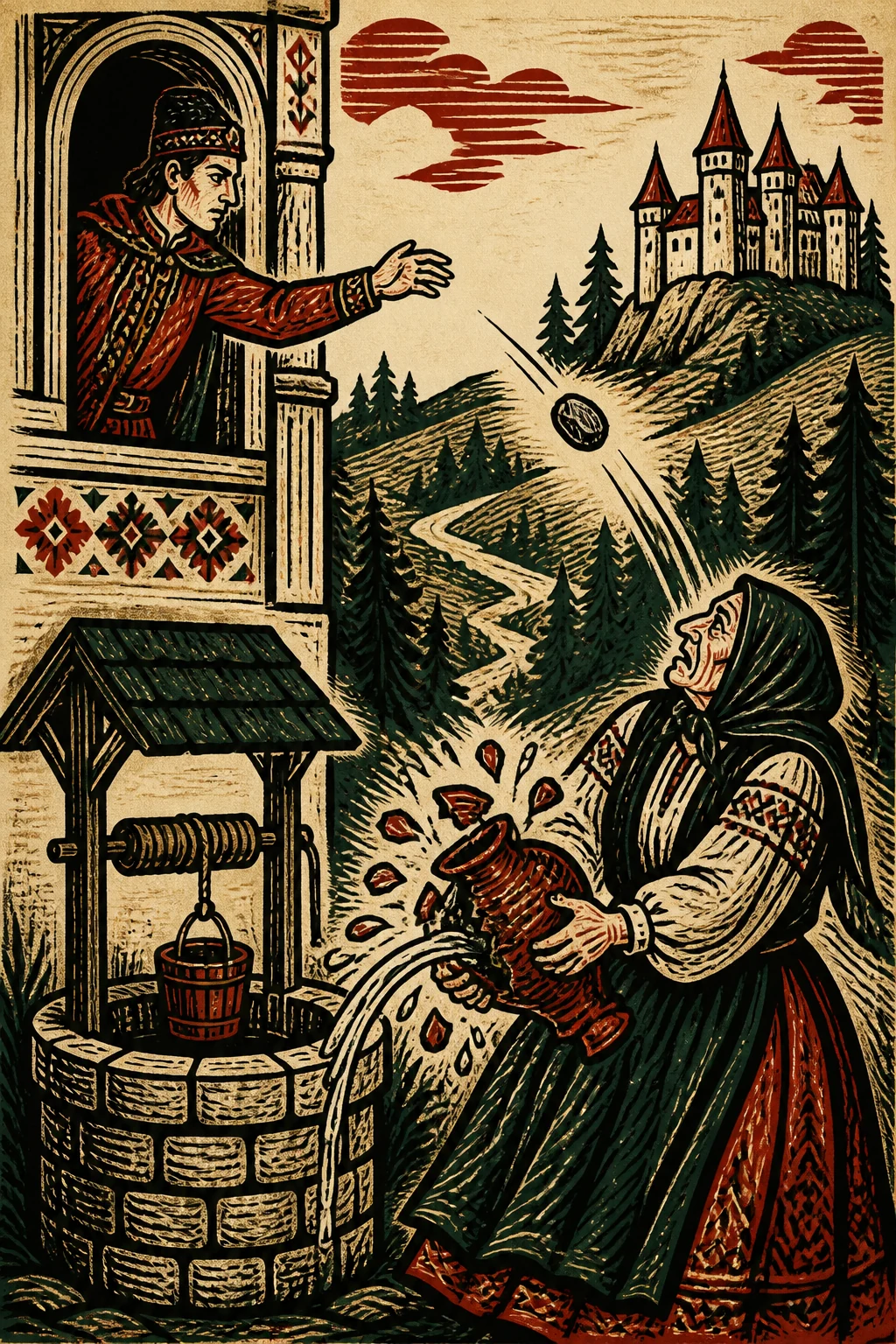
Once upon a time, as never before, and so on. There was once an emperor who had a son. One day, as the young man sat at the window, he saw an old woman coming to the well with a gourd to fetch water. Whatever came over him, he picked up a stone and threw it toward the well, striking the gourd squarely and shattering it. The old woman, who had noticed where the stone came from, looked up at the emperor’s window and saw his son laughing. Then she said, “May you never marry, my dear boy, until you have found the three golden pomegranates!” And she went home sorrowful, without her gourd and without her water. On hearing this curse, the emperor’s son fell silent, and after thinking for a long time about the golden pomegranates, he was seized with a longing to see them and possess them. So he went to his father and said, “Father, have three suits of iron clothes made for me, for I must set out on a long journey.” All the emperor’s efforts to dissuade his son were in vain. When he saw at last that he could not stop him, he gave the order, and the clothes were made at once. The emperor’s son took them, mounted his horse, and rode away. A whole year passed as he traveled. He reached wildernesses where no human being lived, and as he wandered hither and thither, two suits of clothes wore out and he cast them aside. Not knowing what to do, he decided to go a little farther and, if he discovered nothing, to turn back. He had scarcely taken a few more steps when he glimpsed a hut. He darted toward it like an arrow and soon arrived. An old hermit woman, seeing him, said, shaking her head, “Well, young man, how did you come here, where not even a bird on little wings is seen, let alone a man on two legs?” “Mother,” said the emperor’s son, “I am looking for the three golden pomegranates. Do you know where they may be found?” “I do not know, my dear boy. Until now I had never heard of such a marvel. But perhaps my sister knows; she lives a little farther on. If you have the courage to go on, you can ask her.” He did not wait to be told twice, but hurried away in that direction and traveled on and on, along a long, untrodden road, until he came to another hut. From it there emerged another old hermit woman, even more withered than the first, who likewise said to him, “How did you come here, man on two legs, where not even a bird on little wings comes?” “Mother,” said the emperor’s son, “I am looking for the three golden pomegranates, and my desire to have them has brought me here. Do you know where they are?” On hearing these words, the old woman began to weep. Then she answered, “I too had a son who heard of those accursed pomegranates. He wandered in search of them, and one day he came home lame; in the end he lost his life for their sake. Had I known then, my dear boy, how someone might find them without danger, I should not have lost my child.” When our young man heard this, he began begging her to tell him how to obtain them. The old woman advised him where to go and how to behave, and made him swear upon his youth that, if he succeeded, he would return by the same road and show her the pomegranates for which her son had perished. After promising to return, he thanked her for her good advice and vanished from before her like a wraith. After another week’s journey, or more, he saw a dragon with one lip reaching to the sky and the other to the earth. As soon as he came up to it, he said, “Good day, brother,” and went on his way.
And the dragon answered, “Good fortune to you, brother.” Next he came to a moldy well, full of mud. He set to work at once, cleaned it out, refreshed its water, and continued on his way until he reached some locked gates, thick with dust and cobwebs. He cleared away the cobwebs, shook off the dust, flung the gates wide, and passed through. On his way he met a woman baker who was wiping out an oven with her own hair. As soon as he saw her, he wished her good day and, cutting a piece from his clothing, said, “Here, dear sister, wipe your oven with this.” She took it and thanked him. Behind the oven, the emperor’s son saw a garden like paradise, where he wandered for a while. At last he spotted the three pomegranates hanging from a branch in a tree. He took courage, drew his little knife, cut off the twig from which they hung, and fled back the way he had come. He had scarcely taken two steps when the whole garden began to shriek and call upon the baker, the gates, the well, and the dragon for help. “Oh, indeed!” answered the baker. “In all the time I have been condemned to remain here, no one ever took pity on me and came to spare me my daily scorching.” “You had better think again,” answered the gates. “Since the day we were made, no one ever came to shake the dust off us or open us, and we had grown stiff from standing so.” “You must excuse me,” said the well. “Since the day I was dug, no human hand ever came to clear my waters, until I had begun to stink.” “Indeed not!” answered the dragon as well. “Ever since I was condemned to stand with my mouth gaping and my eyes fixed upon the stars, no one ever so much as wished me good day or called me brother. This man has freed us from the affliction that lay upon us, and we shall mind our own affairs.” The emperor’s son, who had done exactly as the old woman had taught him, returned to her and, after thanking her once more and giving her a little something, set off for his father’s empire.
On the way, unable to restrain himself any longer, he took out his little knife and cut open one of the pomegranates, to taste it and discover how good it was. And what should he see? All at once a maiden as lovely as a fairy sprang from the pomegranate and immediately began crying in a sweet voice, “Water, water, I am dying!” The emperor’s son looked everywhere for water, but in vain: there was none. The maiden fell down and died. He himself nearly fell beside her, but managed to keep his feet. As he traveled on, he could not resist the urge to taste a pomegranate, and drew his little knife and cut open another. At once a maiden as lovely as a fairy emerged from it too, and died like the first, because he had no water to give her. Grieved by this strange misfortune, he went on toward his father’s empire with the one remaining pomegranate, gazing at it as longingly as at a ripe cherry. He traveled until he reached a beautiful plain where he began to recognize signs of human life. Here his spirits revived a little, and he sat down to rest. He could not stop thinking of the pomegranates and the beautiful maidens who had died. As he pondered, the desire to taste the pomegranate he still possessed flared up in him, until, unable to restrain himself any longer, he decided to cut this one open too. But fearing that the same thing might happen as with the others, he found a well, filled his cap with water, and there, in the shade of a great tree, cut open his last pomegranate. And what should he see? Out came a maiden as beautiful as the sun, with golden hair. “Water! Water!” she cried. He gave her water to drink and sprinkled her with it, and so the maiden’s life was saved. The emperor’s son walked around her, marveling at her beauty and grace. Then he took her by the hand and said, “Be my wife,” and she agreed. He would not have her walk to his father’s house, lest she grow weary, for she was so slight that he could have swallowed her in a glass of water, and so slender that she seemed to have been drawn through a ring.
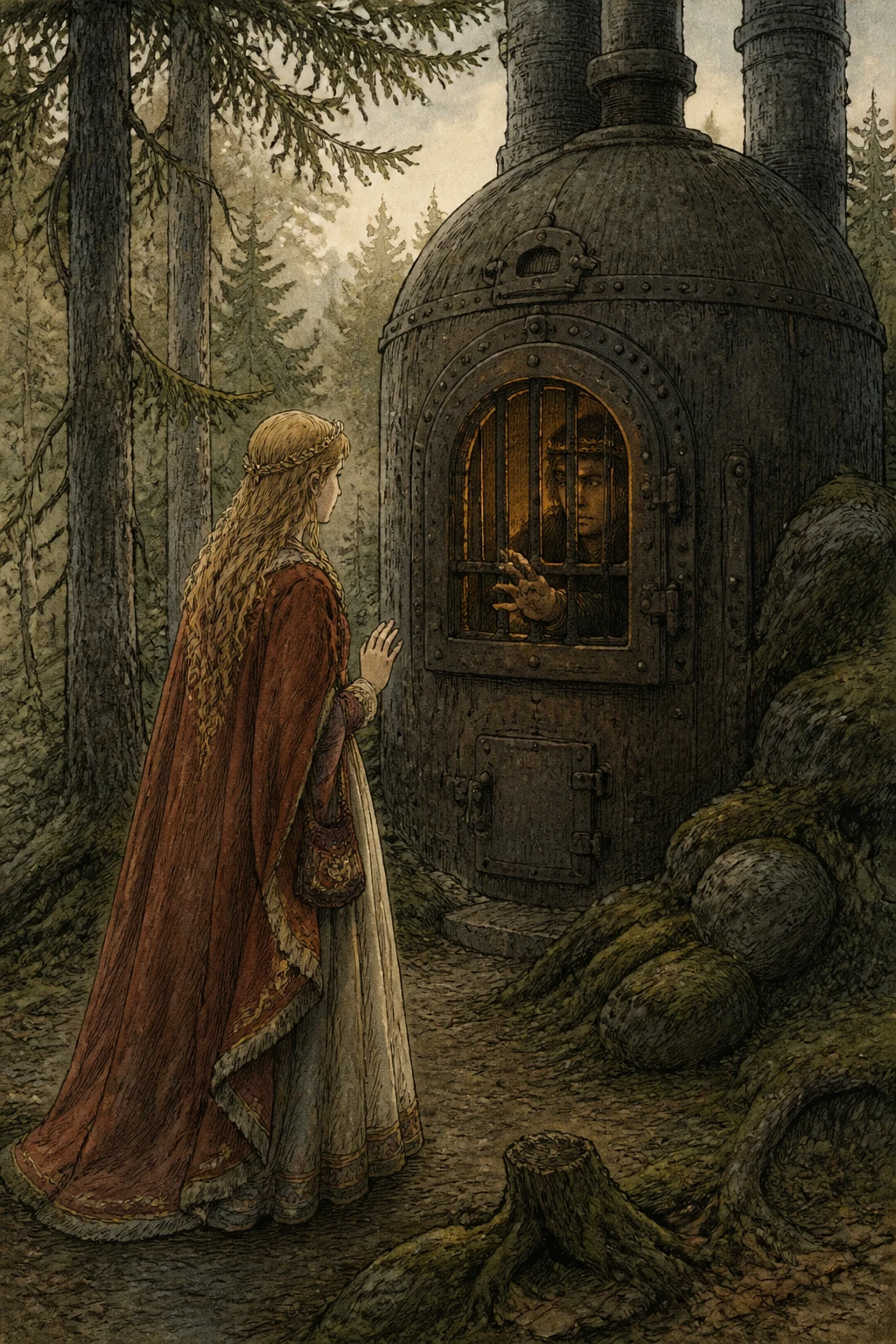
He advised her to climb into the tree beside the well and told her to wait there until he returned from his father with royal carriages and horsemen to fetch her, for he recognized the country and knew he was no longer very far away. The beautiful maiden told the tree to bend down, and it did; then she sat among its branches and it rose again. The emperor’s son stood open-mouthed, gazing at her and marveling at the way the tree had lowered and raised itself. Then off he ran—mind you kept out of his way, for his heels fairly sizzled with the speed of his flight. Not long after the emperor’s son had gone, a Gypsy girl came to fetch water from the well. When she saw the face shining in the water, she thought it was her own, and, smashing her pitcher, ran home to her mother. “Do not send me for water anymore,” she said. “A beauty such as mine does not carry water.” “Go and fetch water, you black girl! What is all this nonsense?” her mother said, showing her the broom handle. She went, but came back again just as before, empty-handed and saying the same things. Her mother realized there was something uncanny about the place, gave her an enchanted pin to keep in her hair, and taught her what to do if she happened to meet anyone there. Then she sent her off again. As soon as the Gypsy girl reached the well, she looked up and saw where that angelic face reflected in the water came from. “Take me up there too, please,” she said, gazing wistfully at that queen of beauty. The golden-haired maiden told the tree to bend down and took the Gypsy girl up to keep her company, and the tree rose back into place. As they sat talking, the Gypsy girl coaxed the maiden, saying that if she wished to sleep a little, she could lay her head in her lap and she would comb through her hair. The maiden agreed and laid her head in the Gypsy girl’s lap. Just as she was falling asleep, the Gypsy girl drove the poisoned pin into her head. The maiden turned into a little bird, all of pure gold, and began flying to and fro among the branches. Then the Gypsy girl said, “Ah, you fairy creature, how you have escaped me! I thought you were asleep. But never mind, you shall not get away from me. I will find a way to deal with you.” Before many days had passed, the emperor’s son arrived with troops, horsemen, and royal carriages to fetch her. As soon as the Gypsy girl saw him, she said, “Well, my prince, you have kept me waiting so long that the sun has burned my pretty face and the wind has battered my hair.” At the sight of her, the prince was filled with doubt and could not believe she was the fairy maiden he had left there. Yet her words almost persuaded him, and at last he yielded and took her with him. He could not have said why or how, but his heart seemed to tell him that this was not she. Still, seeing no one else, he left with her, wondering how to keep his father from thinking he had told him lies. When they reached the imperial court, the emperor came out to meet them. He was dumbfounded to see, instead of the queen of beauty with a face like the sun and golden hair, a dark girl as black as the bottom of a cauldron. Though she assured him that the sun had burned her pretty face and the wind had battered her hair, the emperor could not bring himself to believe it. But there was nothing he could do. For better or worse, he lodged her in a wing of the palace and kept putting off the wedding. From the very next day, a little bird came into the imperial garden every morning and sang so yearningly that it broke your heart. Then it called at the top of its voice, “Gardener! Is the emperor asleep?” “He is asleep,” the gardener answered. “May his sleep be sweet and sweeter still, and may he rise from his pillow,” the little bird added. “But is that crow of an empress asleep?” “She is asleep,” he answered. “May she sleep a sleep of wrath, from now until eternity.” And whichever tree it perched upon to sing withered on the spot. The gardener told the emperor the whole story of the bird and how the trees withered wherever it perched, and the emperor grew thoughtful. Within a few days almost every tree in the garden had withered; only one remained. Then the emperor ordered a snare to be set on every little branch, and so it was done. The next day, at the first light of dawn, the gardener came to the emperor with the golden bird, which had been caught in a snare. The emperor ordered a cage of pure gold to be made, put the bird inside it, and, so fond was he of it, kept it at his window. When the Gypsy girl heard the story of the bird, it was as though a red-hot iron had pierced her heart. She pretended to be ill and bribed all the physicians, who told the emperor that unless he killed the golden bird and gave it to the empress to eat, she would never recover. Filled with sorrow, the emperor could not consent to this, but at his son’s entreaties he gave her the bird. He remained inconsolable, however, and hated the Gypsy girl more and more. So they took the bird, killed it, boiled it, and brought it to the empress. After pretending to recover, she began preparing for the wedding. From the little bird’s blood, a tall and beautiful fir tree sprang up beneath the emperor’s window. It was a marvel that in a single night it had grown so great and stately. The emperor summoned the gardener and ordered him to take the utmost care of the tree. When the Gypsy girl heard of it, she could find no peace and plotted against it. The she-devil understood that she had not yet escaped danger altogether. Again she pretended to be ill, and again she bribed the physicians, who told the emperor that unless he cut down the fir tree, boiled it, and had a bath prepared for the empress with the water, she would not recover. The emperor was grieved to his very soul, seeing that his son’s betrothed was a bearer of ill fortune: ever since she had arrived, he had been unable to keep anything he loved. He allowed the fir tree to be cut down too, so that no one would have any further reason to trouble him, and resolved that henceforth, if he found anything else to his liking, he would no longer bow to anyone’s wishes. While the fir tree was being felled, with everyone watching, an old beggar woman stopped to look on with the rest. As she was leaving, she picked up a chip that had fallen from a splinter of the tree and took it home. She noticed a pin stuck in the wood and pulled it out. Since the chip was fairly large and broad, she made it into a lid for the one pot she possessed. The next day she went out begging as usual, but when she returned, she stood astonished to find her hut swept and tidied until it was a pleasure to behold. The old woman could not understand what sort of marvel this was, or who could have come to do her such a kindness. The same thing happened for several days. At last she decided to keep watch and discover who was cleaning for her and putting everything in her hut in order. And so she did. One day, after setting out, she hid herself and peeped through a crack in the door. She saw a maiden, whiter than snow and with golden hair, spring from the pot lid. “Who are you, my child,” she asked, “that you do me such kindness?” “A girl with neither home nor family,” she answered. “If you will let me stay with you, I shall do you many a kindness.” They agreed, and the maiden stayed. Indeed, the old woman was proud of her, for not even in emperors’ houses could one find a girl so beautiful and so capable. The old woman went on begging as she had always done, but one day the maiden asked her to buy some linen and red and green silk at the market. With the money she had gathered from begging, the poor old soul bought them for her. The maiden embroidered her whole story upon two kerchiefs. When she had finished them, she told the old woman to take them to the emperor and, when he was seated on his throne with his son beside him, to lay the kerchief embroidered in green upon the emperor’s knees, and the one embroidered in red upon his son’s. The old woman obeyed and set off, but the soldiers would not let her in. Then she made such a clamor that the emperor ordered them to admit her. Once inside, she did as the maiden had instructed, then went out to wait and see what would happen. As soon as the emperor and his son saw the kerchiefs, they understood everything. The emperor ordered his son’s betrothed to be summoned and said to her, “Since you are to become empress, you must learn to judge disputes between women when the judges cannot make sense of a case. Today a woman came before us with a complaint. She says that, having a fine-bred rooster, she traveled through many lands at great expense and bought a hen of equally fine stock. Her neighbor was not content merely to kill the hen, but also stole the rooster and gave it to one of her own hens. Now she seeks justice. What do you say to this?” After thinking for a little while, the wretch answered, “The woman who killed the hen and stole the rooster should be put to death, and the rooster should be returned to its owner, together with the condemned woman’s hen and whatever eggs it has laid.” “You have judged well,” answered the emperor. “I am the woman with the rooster, and you are the one who stole it. Prepare yourself for the punishment you yourself have deemed fitting.” The Gypsy girl began to weep, to beg, and to lament, but it was all in vain. He handed her over to the soldiers, who punished her without mercy for the wickedness she had done. Afterward they all went to the old woman’s house, and the emperor’s son, with his father at his side, brought the maiden away with every honor. Once they had brought her to the palace, the young couple were married at once, and for three days there was great rejoicing throughout the empire, because the golden-haired maiden, for whom the emperor’s son had traveled so far, had been found alive and unharmed. And when the story of the Gypsy girl’s wicked deeds became known, everyone condemned her. Then I mounted a saddle, and so on.
Izvirnik
033 Cele trei rodii aurite
Naslednje strani prikazujejo izvirno besedilo za primerjavo.
fostil °data ca nici °data, etc. A fostii °data unfit imperatd, si avea unit feciord; acesta seclendd la ferestra, vede o baba bdtrana care venea cu tivga sd ia apd de la fantdna. Ce-I veni lul, ia o piatra, si aruncand'o catre fantOnd, nemeresce drepta in tivgd, si acesta se sparge ; bah', care simtise de unde venise piatra, isI arunca ochil la ferestra imperatului si vede pe fluid de imperatd fahazd ; atunci baba dise : Pima nu vei gdsi cele trel rohi aurite, sd nu to Insori, dragulu mamii ; si se intOrse acasa trista si fard tivgd si lard apd. Fluid de impefatd, auclindd acestd blestomil, statu, si dupa ce se gandi multu timpil la rodiile aurite, se aprinse dorinta in eld de a le vedea si a le avea ; deci se duse la tats -sed si-i clise : Tata, sd-mi fad trel rinduri de baine de ferd, caci amd sa facd a caletorie mare. Si tots silinta ce puse impe- -ratuld a opri pe fluiu sell de la acesta, fu in zadard. Dana veclu si vOu ca nu -lit p6te opri, porunci si numai de catil i se si facu hainele ; dupd ce le lua, fluid imperatului incaleca si pled. Unit and de dile trecuse de cand caletorea ; ajunsese prin pustietAti nelocuite de Omeni; si tad ratacindd in susii si in josd, cloud rinduri de 'mine se rupserd si le lepddase. Nesciindd ce sd facd, hotdri a mai merge eitd-va, si data nu va putea descoperi nimicil, sd se Intorca. Abia mai facu pasi si eta ca zari o colibd. Se repecli intr'acolo iute ca sageta si indata si ajunse. Gaud, o mituse sibastra cum ild veclu, IT si clise cendil capi-va
Da bine, flecaule, cum ai ajunsii p'aicl pe unde nu se vede pasere en aripiore, dar anca-mi-te omu cu picibre ? Mama, dise fiulti de imperatii, cautil cele trel rodii aurite ; nu scil D-ta Incotro se potil afla Nu sciii, dragulti mamii; aid n'amii papa acumil de ass minune; &al pole soru-mea sa scie, care ,qede putinfi mai departe de aid ; de al curajii sä mai mergi, pot! sa e intrebi pe (Musa. N'a0epta sa'-i dica de doue orl, si o tuli inteacolo repede §i merse, si merse, tale lungs neumblata, pans ce dete de a alta coliba, de unde asemenea eai o mature sihastra, betrana §i mai scoralcita, care §i ea 1! dise : Cum ai ajunsii p'aici, omit cu pidere pe unde nu vine nici paseri cu ariplore ? Mama, dise Gulti imp6ratului, cautti cele trel rodii aurite, qi dorinta de a le avea m'a adusti p'aid ; nu scil D-ta in cotro se ea? La auclirea acestoril orbe betrana Incepu sa planga, apol: /I respunse : Amu avutti si eft unit feciorfi, care audise despre acele blestemate rodii, §i care totil umblandit dupa ele, Inteuna din dile se intorse schiopil §i In cele din urma rupse qi capulu pentru ele ; data a§1 fi sciuta atunci, draguld mamei, cum sa le gasesca tine -va fara primejdie, nu-mi perdeamil Cum audi flecaulti nostru, incepu a se ruga sa-i spue cum sä faca sa le is ; era b6trena ilu povetui cum sa umble §i cum sa se porte qi data va isbuti, l'a juratti pe tineretele lui ca sa se intOrca tofu pe acolo, ca sa-i arate qi ei acele rodii, dupa care s'a prapaditti fiulti sea. Dupa ce i-a fagaduitii ca se va IntOrce, i-a multumitti pentru sfaturile cele bune ce a primitii de la (Musa, qi ca o naluca peri dinaintea ei, cand, dupa o caletorie Inca d'o septemana =i mai bine, vedu unti balauril cu o buza in certi qi cu alta In parnintil. Indata ce ajunse la densulti dise : Build dioa, frate, §i trecu Inainte. audits si mai isi iT eopilavuld.
Iar balaurulii 1I respunse : Noroch bums, frate. Ajunse apol la o Muting mucegaith si plink' de nomolu ; elu se apnea indata de curati si primeni apa din lantana si-s1 cauth de drumh pink' dete :de nisce porti incuiate, pline de prafil si de paeajeni ; curati acei paeajeni, scutura prafulii, dete porta de parete si trecu inainte. In drumulu seu intalni o brutaresa care stergea unii cuptorii cu litele sale ; cum o vedu, ii Bete buns diva, si tainduil o bucata din haina sa, ii dise : Tine asta, leieuta, de sterge cuptorulil. Eara ea, luand'o ii multumi. La spatele cuptorulu!, fiulti imperatulul vedu o gradina ca nal rain, in care se rataei cath-va In cele de pe urrna vedu cele trel rodil cumh atarna de o crack' in pornii ; isi faeu coraju, scose eutitasulti si tae eraculita de care eraii atirnate, si o tuli d'a fuga inapol. N'apuca sa fad dete pasi si tOta gradina incepu sa tipe si sa theme in ajutorti pe brutaresa, portile, fantana si pe Ba aia-i vorba, respunse brutaresa, ca de cand suntit urgisita a sta aci, nu s'a indurath nimeni sa vie a me scuti de arsatura de tote Odle. Ca alth gandh respunse portile, ca de eanclii suntemii f acute, n'a venith nimeni sa ne maI scuture, sa ne deschida, de intelenisemil asa. Ba sa me ertati, dice fintana, ca de candil sunth fdeuta, mans de omh n'a venith se-mi curete apele, in cath ajunsesemil a me imputi. Ba ca chiar, respunse si Balaurulu, ca de child suntit osindith a sta cu gura eascata si cc ochii stieliti la stele, nimeni nu mi -a &LA macarii o bung dioa, si sa-mi dick' frafe. Acestit omu ne-a scapath de urgia ce era pe no!, si ne vomit cauta de treba. Fiulu imperatului care Meuse tocmai cum invetase betrana, se intorse pe la &Ansa si dupa ce-1 maI multumi dete si ei eke ce-va, pled sa se int6rea la imperatia tataluI balauril. n'amii, ilu limp!. pi-f sta.
Pe drumil, ce-I veui lui, veclendii ca nu mai pote rebda scose cutitasulti si tae una din rodil, ca sa guste si sd se incredinteze de bunatatea lortl. Gaud, ce sa vecli? de odata ese din rodie o fata, ca o cling de frumosa, si indata incepu a striga cu unil glasu mangaiostl : Apa, apa, ca morn. intorse fiuhl imporatului ochii in tote partile sa \Tricia apa ; darn giaba, apa nu era ; iara fata cdclu si muri ; p'aci, p'aci era sa caela si du, darn se tinu. Toth mergendil elil, nu putu sa tie pans sa nu guste dintr'o rodie, si scose cutitasulii de tae Inca una ; de odata, ese si dinteensa o fata ca o cling, si more ca si cea dintafil ; fiindil ca n'avu apa sa-I dea. Mahnitil de ciudati intamplare, mergea catre imp6ratia tatalui seri cu rodia care ii mai remasese, si se uita la (Musa ca la unii ciresil coptil ; si merse pand ce ajunse la o campie frumosa pe unde incepu a cunosce urme de Omeni. Aici ii mai veni inima la loch, si se puse josil sa se odihnesca Gandulii lui nu se lua de la rodil si de la fetele cele frumOse ce murisera ; si tofu gandindu-se, se aprinse in elil dorinta de a gusta din rodia, care o mai avea, in &AM ne mai putendu-se tine, °tart sa o tae si pe acesta; dart' temendu-se sa nu i se intample ca si cuceletalte, cauta o lantana, lua apa in caciuld, si acolo la umbra unui copaciii mare, tale si rodia care ii mai remasese ; candii, ce sa vecli ? unde esi o fata ca sorele de frumosa, si cu peruhl de auril. Apt! apa striga ea. Si elil ii dete de Mu si o stropi cu apa, si asa scapa fata cu vial/ Fiubl imperatului ii da tarcolu, si se tail minuna de frumusetea si gingasia el. Apol o lua de mans si II Oise, sotie sa-mi fil, si ea priimi. Elfi nu voi sa o duct pe josil acasa la tats -seii, ca sa nu .ostenesca, fiindir ca o vedea ca era asa putintica la trupil in catil aru fi b6ut-o interim:1 paharil de aria, si asa de sublirica de par'ca era trasa prin inelii. I niteld.
Elit o povetui .sa. se urce in pomule de linga fantana. si ii dise astepte acolo pand se va iutorce de la tatdle see cu card imperatesti si cu cal:dreg, ca sa o ia; fiinde ca ele curioscuse locurile ca nu mai este asa departe. Fata cea frumesa, cline copaciului sa se lase josil, si du se ldsa, apol se puse in elft, si se ridica. Fiulii imperatului remase cu gura cdscata uitdndu-se la ea .5i la minunea cum de se ldsase 5i se ridicase copaciule, apoi rupend-o d'a fuga sa to pazesci pirle-o, ca II sfiriia cAlcaile de lute ce se ducea. Nu trecu multi de cand se duse flute de imperate, si o fata de tiganii veni sa ia apa din fantand, dar cand veclu chipule care stralucea in apa, creq.0 ca e all ei, si spargend urciorule se intorse fuga la murna-sa Nu me mai duce la apa, clise ea, o frumusete asa ca a mea nu aduce apa. Du-te la apd arapino, ce tote spul ast-fel de flecuri, II 4ise ma -sa, aratandu-I cocenule maturel. Ea se duse, .5i iard se Morse, ca si intahl, fare isprava si tote cu astil-felii de vorbe. Md-sa intelese ca acolo nu e lucru curat si ii dete unit ace vrajite sa -le tie in perii, si o invetd ce sd filed cu ele la intemplare de are dm. peste tine -va p'acolo, si o trimise era. Tiganca, cumii ajunse la fautd.na, cdta in susil si veclu de uncle venea in fanand acele chipii angerescii. Sue-me si pe mine acolo, rogu-te, cjise tiganca, uitandu-se galese care tuna frumusetilore. Earl fata cu perulii de aura clise copaciului de se lasd, lea pe tiganca ca sä-1 tie de uritil, si copaciulu se ridica la locii. Stande ele la vorbti, tiganca se lingusi si ruga pe fate, ca de voesce sä derma nitelit, sa pue capule in pola ei, si ea ii va cauta in cape. Fata se induplecd si se puse cu capule in pola tig'ancei, si cand era sa o Pure somnule, 14;anca ii infipse acule otrAvite in cape, era fata se tam o *Arica cu totule si cu totulii deaur, si incepu a sbura de colo pand colo, p'in crdcile pomului. acu se-lit
Atunci liganca dise : Ah ! fata de Iele ce mi-al fosti, cumil scOpatil, ell socoteamii ca dormi, darA fie, to n'o sd'in1 scapi, ity via eft lie de bacii. Nu trecu multe dile si eca fiulft de Imperatq cu este si calareti si cu cars imporatesci veni ca s'o ridice ; era tiganca cumil 1111 vedu II (Ilse : Da, bine Imperate, m'ai lAsatii sa to ateptil atata, in egg sorele mi -a arse fetisera si vAntulil mi-a bAtutil Imperatta cumi o vedu, remase la IndoialA si nu-1 venea sa crecla ca ea este clina pe care o lAsase ela acolo. dupO vorbele ce-I clise, pare ca arti ft creclutti, §i deci se Induplica si o lud. Nu sal cum, nu scia ce fehi, dna, par'ca-i spunea inima ca n'o sä fie ea ; in sfaritil, data nu vedu pe alti tine -va plea cu ea; si nu scia cum sa faca sa nu crecla tats -seti ca spusese minciuni. Gaud ajunse la curtea ImperatescA, le e0 imperatuli inainte, si remase InmArmuritil cAnd veclu in loci de clina frumuselelorti, cu fata ca sorele si cu pe'rulfi de aura, pe o arapina negra ca fundulii caldgrel. $i mAcaril ca ritda or' ilft lucredinta ca sorele ii arsese fetisera ci yintulil f i batuse per4orulft Imperatului totil nu-1 venea sa crecia. /nsA n'avu ce face ; de bine, de red II puse intro parte a palatului ci to-tit amana. cununiile. D'a doua di chiar in gradina Imperatesca in tote diminetile, venea o pAsaried si canta cu doril de-ti rupea inima ; apoi striga cAtft II lua gura : GrAdinaril ! Derme Imperatulti ? Dorme, ii respundea gradinarult). SA &mug somnii dulce si mai duke, de pe elpeteiti sa s'aridice, adAoga pAserica. DarA cioroica de Imperatesa derme? Dorme, II respundea. SA dorms somnulti de urgie, de acum vecie. Si pe care pomil se punea de club., pe loci se gi usca. mi-al i periprulii. Dail, pant 'n
Gradinarulti spuse imperatului teta siretenia cu paserea si cum sä usca pomii pe care se punea ea de data, imperatubl se lua de ganduri. Mai top pomii din gradina se uscara in cate-va dile ; mai rernasese unulfi. Atunci imperatulil porunci sa se puns pe fiecare craculita cite unii latu, si asa se facu ; era a doua di in reversatii de dori, veni la imperatulfi cu paserea de aura care dedese In lap. imperatulfi porunci facu o colivie cu totulu si cu totulit de aura, duse paserea in ea si, de dragulti ei, tinea pe ferestra lui. Tiganca curia audi de istoria cu paserea ii trecu unu feril arsu prin inima. Se facu bolnava, mitui pe top' vracii earl. spusera imperatului el pana nu va taia paserea de aura si sk dea imperatesei sä manance din ea, nu se va insanatosi. Plinil de scarba imperatulii, nu se putea invoi la asta ; dark dupa rugaciunea fiului sell, o dete ; remase Ins& nemangaiatit si din ce in ce ura mai multi pe tiganca. Luara, deci, paserea si o taiara, o fersera si o duse imperatesei ; era ea, dupi ce se prefacu ca se insanatosesce, incepu a se gati de cununie. Din sangele paserelei, crescu la ferestra imperatului una brae" inaltfi si frumosfi, si era o minune cum de fate° nepte crescuse asa de mare si falnicil. imperatuld chema pe gradinaril porunci sa alba cea mai mare ingrijire de acelit Eara tiganca cum audi, n'avu odilina si-i puse gandk req. Pricepuse, draceica, ca Inca nu scapase cu totulii si cu totulti de primejdie. Se film era bolnava, mitui era pe vraci, cari spusera finperatului ca pana nu va taia bradulic ferba si cu apa aceea faca bae, nu va trece imperatesel. Imperatuld se supera pana la sufletil, vecienda ca logodnica fiului sea e piaza sea; flinch"' ca de dud a venitil ea, n'a avutfi parte de nici una lucru ce i-a fostfi lui dragil. Lasa sa tae si bradulu ca sk nu mai alba nicl unfi a-lic mai supera tine -va cu ce-va, si se botart ca de de-I si-I porna. sa-I cuvinta sa-la
aci innaInte sa nu mai faca pe voia nimenui, data aril mai da peste ce-va care se -i placa. Pe cand taia bradulii, la care -Lora lumen se ulta cu o betrana cersetore se opri si ea sä privesca linga cea-lalta lume, si cand vru sa piece, lua cu dansa o surcea ce cAcluse de la o tandara a bradului si o duse acad. Baga insa de sem& ca era unit acu infipta in surcea ; ea flu scose ; si flinchu ca surceaoa era ore-cumil maricica si lata o facu capacil la +51a care o avea si ea dupa sufletuhl el. A doua cti pleca in prostAla ca tota-d'auna ; dard cand se intOrse acasa, remase incremenita ve4endil coliba maturata si deretecata de-fi era drags inima sa privesci. Nu intelegea baba ce asta -fele minune sa fie asta, adica tine sa fi venita sa-I facA ei de bine. Cate-va clile urmA tau. asta-fela ; in sfarsitil hotari sa panisiesca, (lora va da peste cela ce-i deretica si-i pune tote alea la randuiala lora p'in coliba si asa si facu. inteo di dupa ce pled, ea se ascunse, si ultandu-se pe furisil, pe crapatura usil, veq.0 cum din capacula Olei sari o fata mai alba de call neoa si cu perula de aura. Cine esti, mama, clise ea, de imi fad astil-fell de bine ? 0 fata fara triste, clise ea: data me primesci sa seclu la D-ta, multi' bine ti-oiii face si ea dumitale. Se invoira si remase; ba inca baba se mandrea, ca asa fata nici in casa imperatiloru nu se gasea, frumosa si vrednica. Baba mergea merea in prostela, cum invetase ea ; dara intr'o clise fata cumpere din targa plmJa si matase rosie si verde; baba bleb"), din paralele ce adunase din cersitil, ii cumpera. Fata isi cusu tad istoria pe cloud sangulii ; Si dupa ce le ispravi, clise babel sa se duca cu densele la imperatula, si cand va fi pe tronu alaturea cu fiulit geil, sangulia cusuta cu verde sa o puns pe genuchil imperatului ; era cea cusuta cu rosu pe a fiului sea. Baba asculta si se duse; dart ostasii n'o lasa sä intre. tunci ea facu sgomotu, si imperatula porunci sa o lase a di ii sa-I jindii, A-
intra. Ea, cum infra, facu cum ii disese fata, si esi ca sa astepte sd vada isprava. Cum vedura sanguliile, imperatulu si intelesera totutu. Porunci sa theme pe logodnica imperatului si-i dise Pentru ca o sa te fad imperatesa, trebue sa te deprindt a si judeca pe femei, sand judecatorii nu se domirescit la cute unit lucru : Astacli ni s'a aratath cu plangere o femee, care !,lice ca, avendu unit cocosit de soli'', cu mare cheltuiala a alergatit prin teri de a cumperatit si o gaina, asijd.erea de soiii; ca vecina el nu s'a multumitil ca i-a omoratit gaina, dara i-a furatil si cocosulti si Pa datti la o Ong d'ale ei, si asa cere dreptate. Ce did despre acesta ? - respunse hahnita, dupd ce se gandi putin, ca femeea care a omoritfi gaina si a turatil cocosul, cu mOrte sa se °more, si cocosuld sä se intorca stapanului impretina cu gaina asanditei si cu male ce va fi facutil. fine ai judecatti, respunse impdratulti : Eu suntit femeea cu cocosulti, si tu esti care l'ai furatit ; gatesce-te la (3:sanda care tu insuTi ai gasit-o cu tale. Tiganca incepu a plunge, a se ruga, a se jeli ; dara tote full de geba. 0 dete pe mana ostasiloril care fara mils tiresplatird nelegiuirea ce facuse. Dupd acesta se duserd cu totil la casa babel, si fiulti de imperatti cu tats -seit Inainte, ridicara pe fata cu tots cinstew, si dup.' ce o aduse la palatti, Indata 11 si cununara, si mare veselie fu in tots 1146ratia trel dile d'a randulti, pentru C. s'a gasitii vie si nevatamala fata cu perulii de aura, dupi care atata a umbla.tit fiulti de imperatit; si top cu totuld oropsea pe tiganca cand s'a auditit istoria nelegiuirilorti sale. Incalecaiu p'o sea, etc.
Nadaljuj z branjem