O besedilu
Skila in Kirka
- Vir
- Ovidove preobrazbe
- Avtor
- Ovid
- Jezik branja
- English
- Jezik izvirnika
- Latin
- Čas branja
- 4 min branja
- Obseg
- 4 strani
- Naslov izvirnika
- Scylla and Circe
O izvirniku
Ovidove preobrazbe
Pesniški tok antičnih preobrazb, kjer bogovi, ljudje in narava stalno menjavajo obliko. Bralni jezik je English, izvirnik pa prihaja iz vira Ovidove preobrazbe v jeziku Latin.
Besedilo
Skila in Kirka
And now Etna, heaped upon the Giant’s throat, and the fields of the Cyclopes, which knew neither rake nor plough and owed nothing to oxen yoked together, lay behind the Euboean dweller in the swelling waters. He had left Zancle too, and the walls of Rhegium opposite, and the shipwrecking strait which, hemmed between two shores, marks the boundary of Ausonian and Sicilian lands.
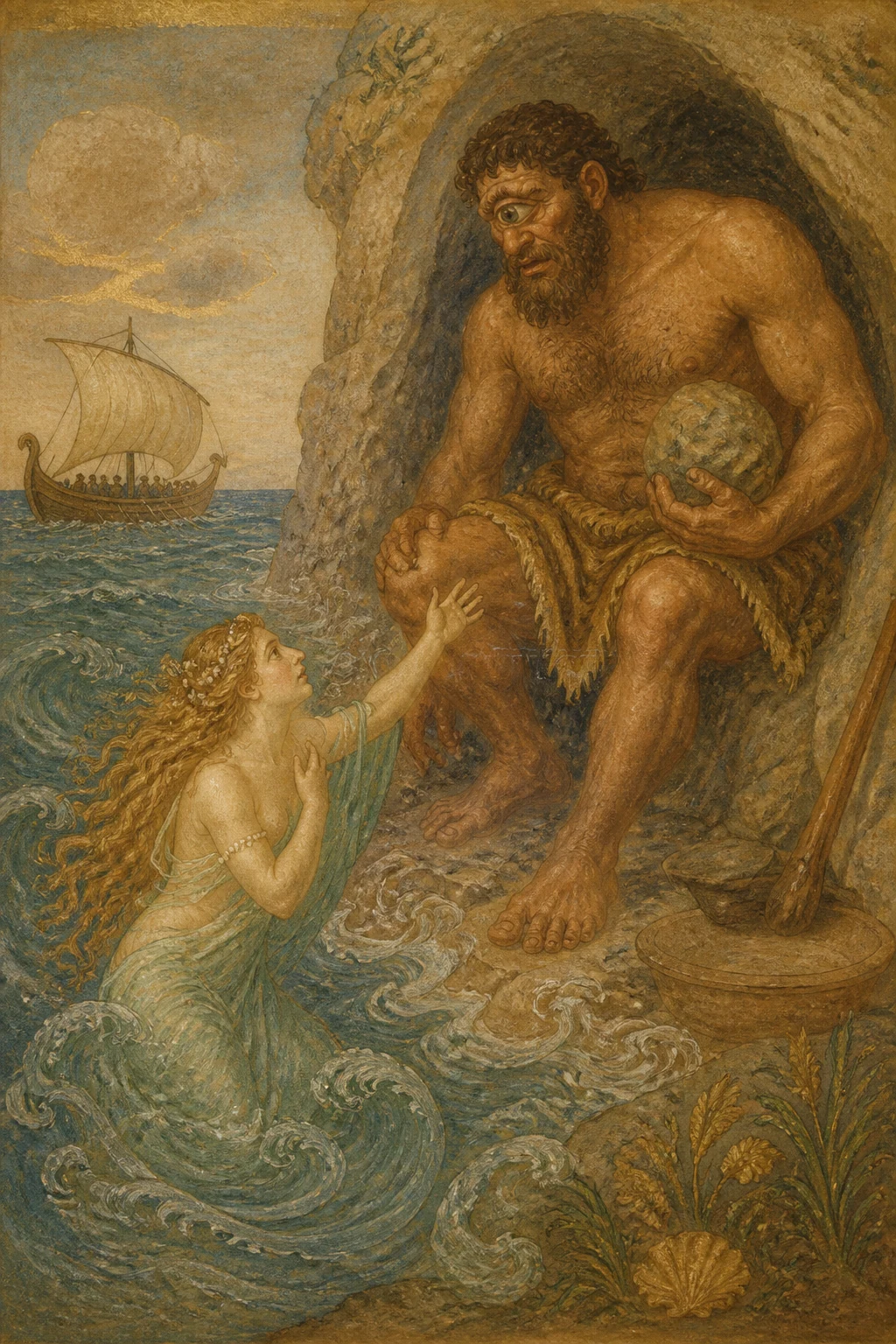
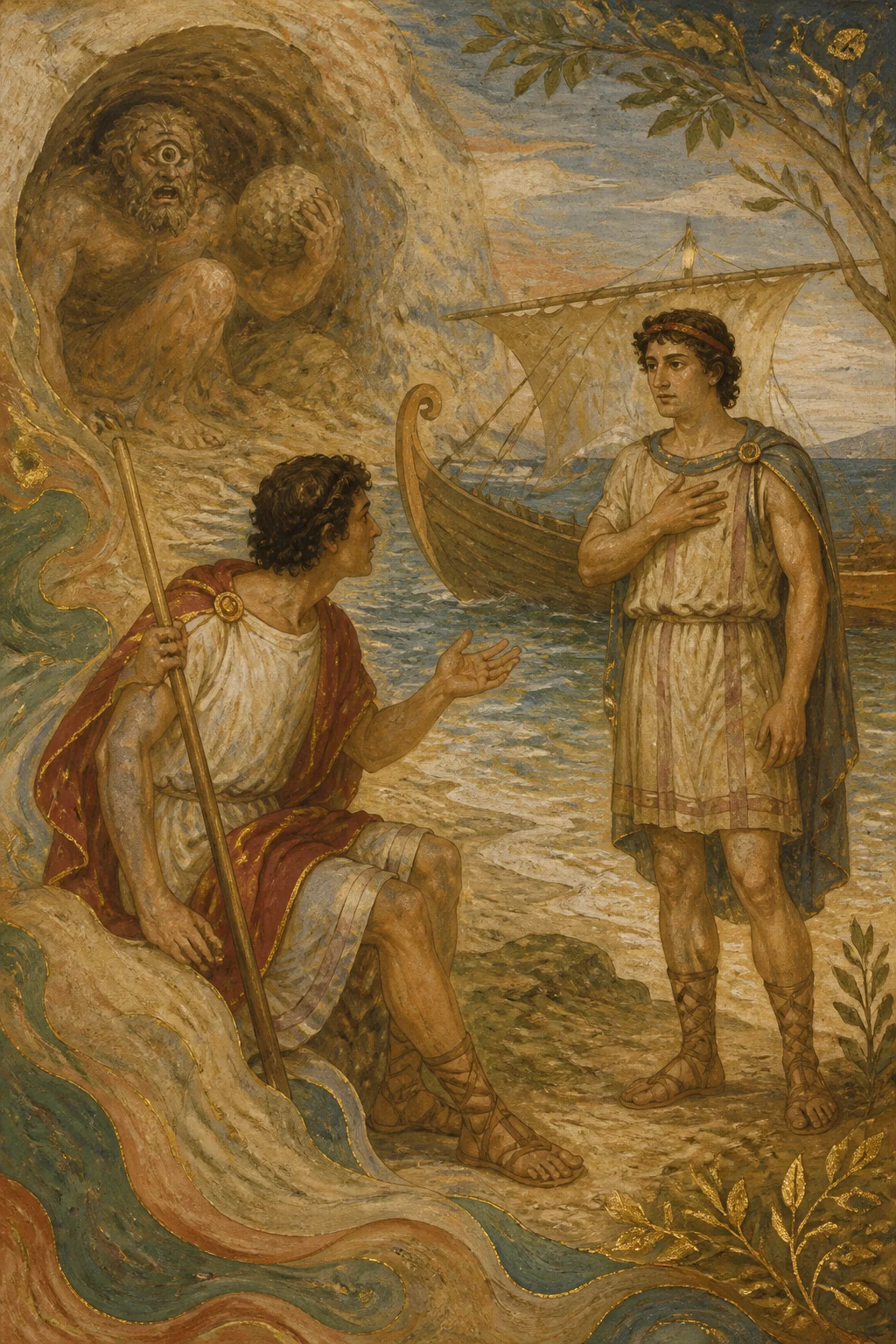
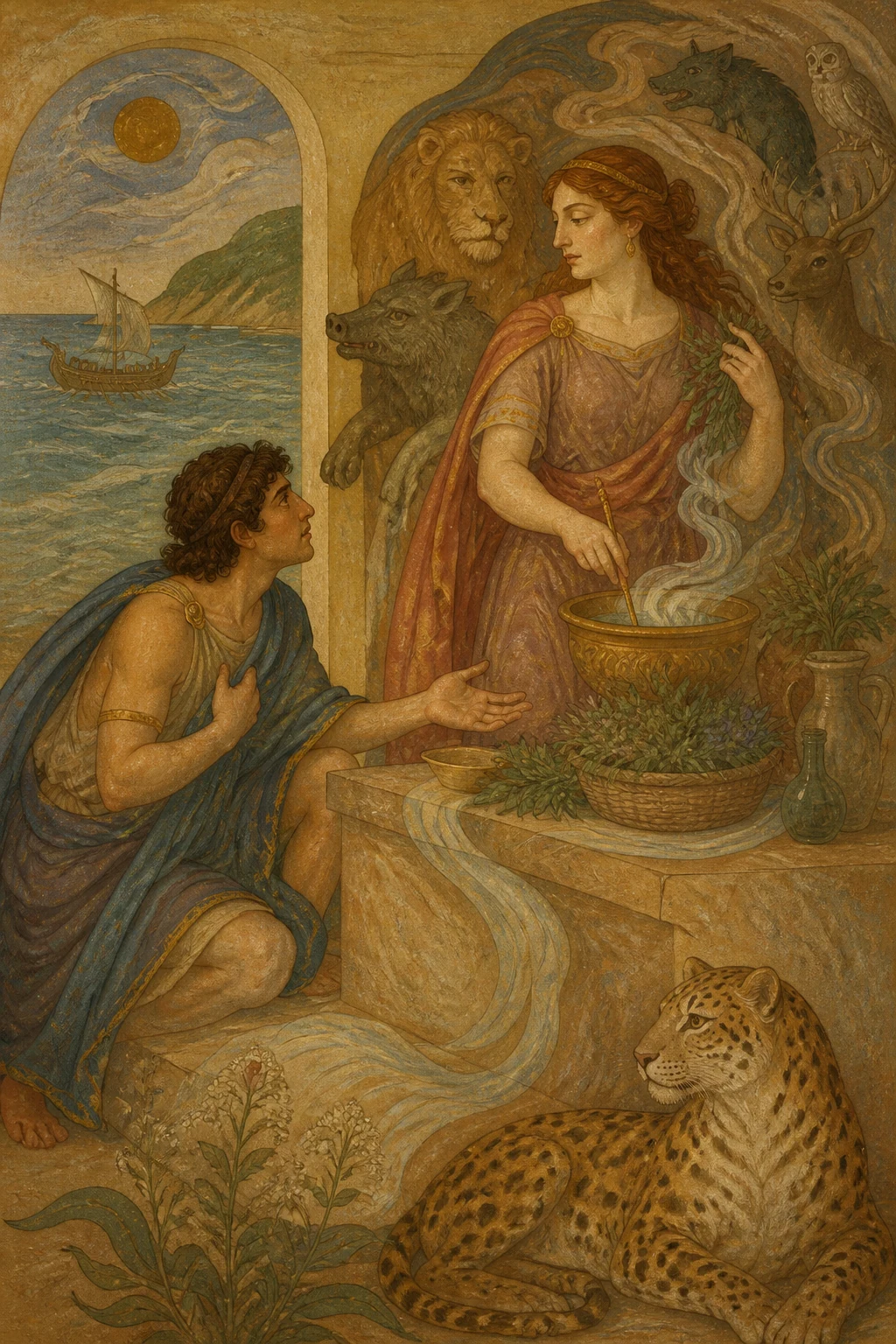
From there, with mighty strokes through the Tyrrhenian waters, Glaucus reached the herb-clad hills and the halls of Circe, daughter of the Sun, filled with beasts of every kind. As soon as he saw her, and greetings had been exchanged, “Goddess, have pity on a god, I beg you! You alone can ease my pain,” he said, “if only I seem worthy! No one knows better than I, daughter of the Sun, how great is the power of herbs: they transformed me.
And so that the cause of my madness may not be unknown to you: on the Italian shore, facing the walls of Messene, I saw Scylla. I am ashamed to tell of my promises, my prayers, my flatteries, and all the words she scorned. But you, if spells have any power, utter a spell with your sacred lips; or, if herbs can conquer more, use the proven strength of potent herbs.
I do not ask you to cure me or to heal these wounds: I need no end to love; only let her share its fire.” But Circe—for no woman’s nature is more inclined to such flames, whether the cause lies in herself or Venus brings this on her, offended by her father’s revelations— replied in these words: “Better to pursue a willing woman, one who longs for the same thing, caught in a passion equal to yours.
You deserved to be courted yourself—indeed, you could have been— and if you offer any hope, believe me, you will be. Have no doubts, but put your trust in your beauty. Look: though I am a goddess, daughter of the radiant Sun, though my herbs and spells alike have such great power, I long to be yours. Scorn the woman who scorns you; return the love of one who seeks you, and avenge us both with a single deed!”
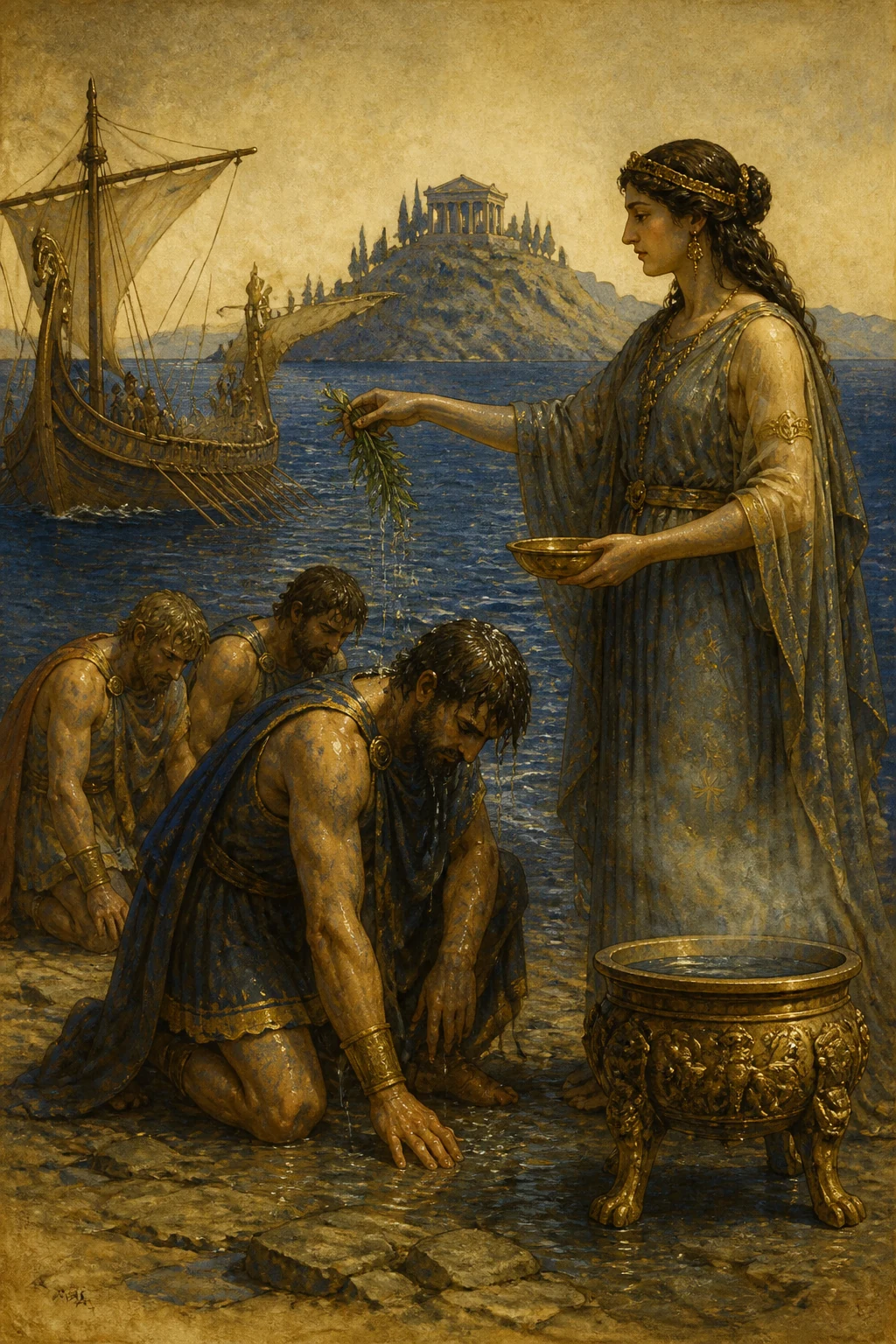
As she tried to win him with such words, “Sooner,” said Glaucus, “will trees grow in the sea and seaweed on the mountain peaks than my love change while Scylla lives!” The goddess was outraged, and since she could not harm him —nor, loving him, would she wish to—she turned her anger on the girl preferred to her. Stung by the rejection of her love, she at once ground loathsome plants with dreadful juices, and mingled spells of Hecate with the herbs she crushed.
Then, dressing herself in sea-blue robes, through the throng of fawning beasts she passed from the heart of her palace, and, making for Rhegium, opposite the rocks of Zancle, stepped into the waters seething with the tide. On these she set her feet as though on solid ground, and sped across the surface of the sea with dry feet. There was a little inlet, rounded in a curving arc, a welcome retreat for Scylla. There she would escape the heat of sea and sky when the sun burned fiercest at the zenith and from overhead had shortened shadows to their least.
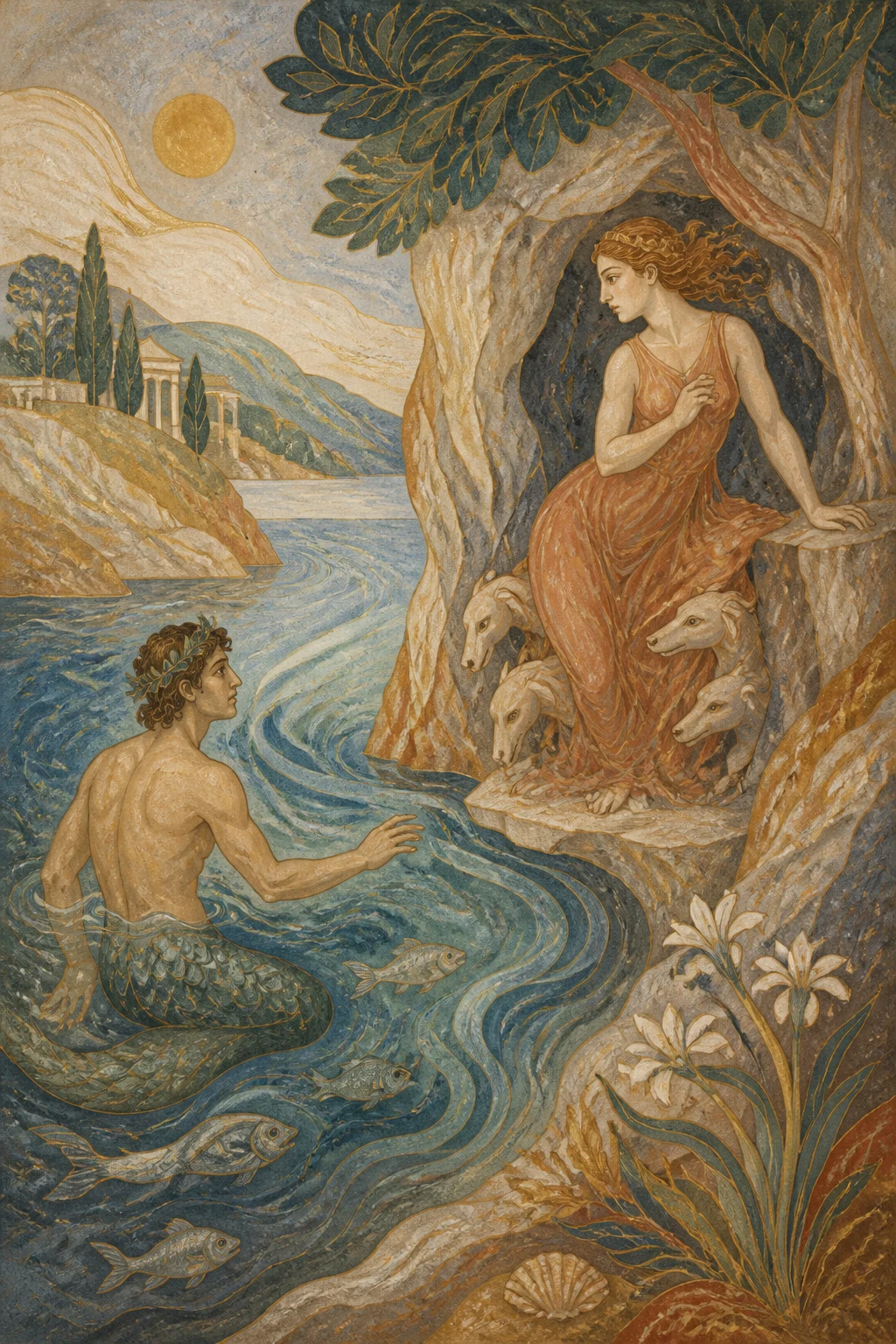
The goddess poisoned it beforehand, fouling it with potions that bred monstrous forms. There she sprinkled juices pressed from a deadly root, and in the maze of strange words her magic lips murmured a dark spell three times nine. Scylla came, and had waded waist-deep into the water, when she saw her loins disfigured by barking monsters. At first, not believing these were parts of her own body, she recoiled, drove them away, and feared the savage jaws of the dogs; yet those she fled she dragged along with her.
Searching for her thighs, her legs, her feet, she found in their place gaping mouths like those of Cerberus. She stood on a pack of ravening dogs, their backs held fast beneath her severed loins and her jutting belly. Glaucus wept for his beloved, and shunned marriage with Circe, who had used the power of herbs with such ruthless malice. Scylla stayed there, and at her first opportunity, in hatred of Circe, robbed Ulysses of his companions.
Later she would have sunk the Trojan ships as well, had she not first been changed into a reef, which still stands in stony form today: even as a reef, sailors shun her.
Izvirnik
Scylla and Circe
Naslednje strani prikazujejo izvirno besedilo za primerjavo.
Source ID: ovid_metamorphoses_story_091 Citation: Ovid, Metamorphoses 14.1-14.74 Original language: Latin Source: PerseusDL canonical-latinLit Source URL: https://github.com/PerseusDL/canonical-latinLit/blob/master/data/phi0959/phi006/phi0959.phi006.perseus-lat2.xml Segmentation certainty: medium 1: Iamque Giganteis iniectam faucibus Aetnen 2: arvaque Cyclopum, quid rastra, quid usus aratri 3: nescia nec quicquam iunctis debentia bubus, 4: liquerat Euboicus tumidarum cultor aquarum, 5: liquerat et Zanclen adversaque moenia Rhegi 6: navifragumque fretum, gemino quod litore pressum
7: Ausoniae Siculaeque tenet confinia terrae. 8: Inde manu magna Tyrrhena per aequora raptus 9: herbiferos adiit colles atque atria Glaucus 10: Sole satae Circes, variarum plena ferarum. 11: Quam simul adspexit, dicta acceptaque salute, 12: “diva, dei miserere, precor! nam sola levare 13: tu potes hunc,” dixit “videar modo dignior esse! 14: Quanta sit herbarum, Titani, potentia, nulli 15: quam mihi cognitius, qui sum mutatus ab illis.
16: Neve mei non nota tibi sit causa furoris: 17: litore in Italico, Messenia moenia contra, 18: Scylla mihi visa est; pudor est promissa precesque 19: blanditiasque meas contemptaque verba referre. 20: At tu, sive aliquod regnum est in carmine, carmen 21: ore move sacro, sive expugnantior herba est, 22: utere temptatis operosae viribus herbae. 23: Nec medeare mihi sanesque haec vulnera mando, 24: fineque nil opus est: partem ferat illa caloris.”
25: At Circe (neque enim flammis habet aptius ulla 26: talibus ingenium, seu causa est huius in ipsa, 27: seu Venus indicio facit hoc offensa paterno) 28: talia verba refert. “Melius sequerere volentem 29: optantemque eadem parilique cupidine captam. 30: Dignus eras ultro (poteras certeque) rogari, 31: et, si spem dederis, mihi crede, rogaberis ultro. 32: Neu dubites adsitque tuae fiducia formae: 33: en ego, cum dea sim, nitidi cum filia Solis, 34: gramine cum tantum, tantum quoque carmine possim, 35: ut tua sim, voveo; spernentem sperne, sequenti 36: redde vices unoque duas ulciscere facto!”
37: Talia temptanti “prius” inquit “in aequore frondes” 38: Glaucus “et in summis nascentur montibus algae, 39: sospite quam Scylla nostri mutentur amores!” 40: Indignata dea est, et laedere quatenus ipsum 41: non poterat (nec vellet amans), irascitur illi, 42: quae sibi praelata est, venerisque offensa repulsa 43: protinus horrendis infamia pabula sucis 44: conterit et tritis Hecateia carmina miscet 45: caerulaque induitur velamina perque ferarum 46: agmen adulantum media procedit ab aula, 47: oppositumque petens contra Zancleia saxa 48: Rhegion ingreditur ferventes aestibus undas,
49: in quibus ut solida ponit vestigia terra 50: summaque decurrit pedibus super aequora siccis. 51: Parvus erat gurges, curvos sinuatus in arcus, 52: grata quies Scyllae; quo se referebat ab aestu 53: et maris et caeli, medio cum plurimus orbe 54: sol erat et minimas a vertice fecerat umbras. 55: Hunc dea praevitiat portentificisque venenis 56: inquinat, hic pressos latices radice nocenti 57: spargit et obscurum verborum ambage novorum 58: ter noviens carmen magico demurmurat ore.
59: Scylla venit mediaque tenus descenderat alvo, 60: cum sua foedari latrantibus inguina monstris 61: adspicit ac primo credens non corporis illas 62: esse sui partes refugitque abigitque timetque 63: ora proterva canum, sed quos fugit, attrahit una 64: et corpus quaerens femorum crurumque pedumque, 65: Cerbereos rictus pro partibus invenit illis: 66: statque canum rabie subiectaque terga ferarum 67: inguinibus truncis uteroque exstante coercet.
68: Flevit amans Glaucus nimiumque hostiliter usae 69: viribus herbarum fugit conubia Circes; 70: Scylla loco mansit cumque est data copia primum, 71: in Circes odium sociis spoliavit Ulixen; 72: mox eadem Teucras fuerat mersura carinas, 73: ni prius in scopulum, qui nunc quoque saxeus exstat, 74: transformata foret: scopulum quoque navita vitat.
Nadaljuj z branjem