Prevod
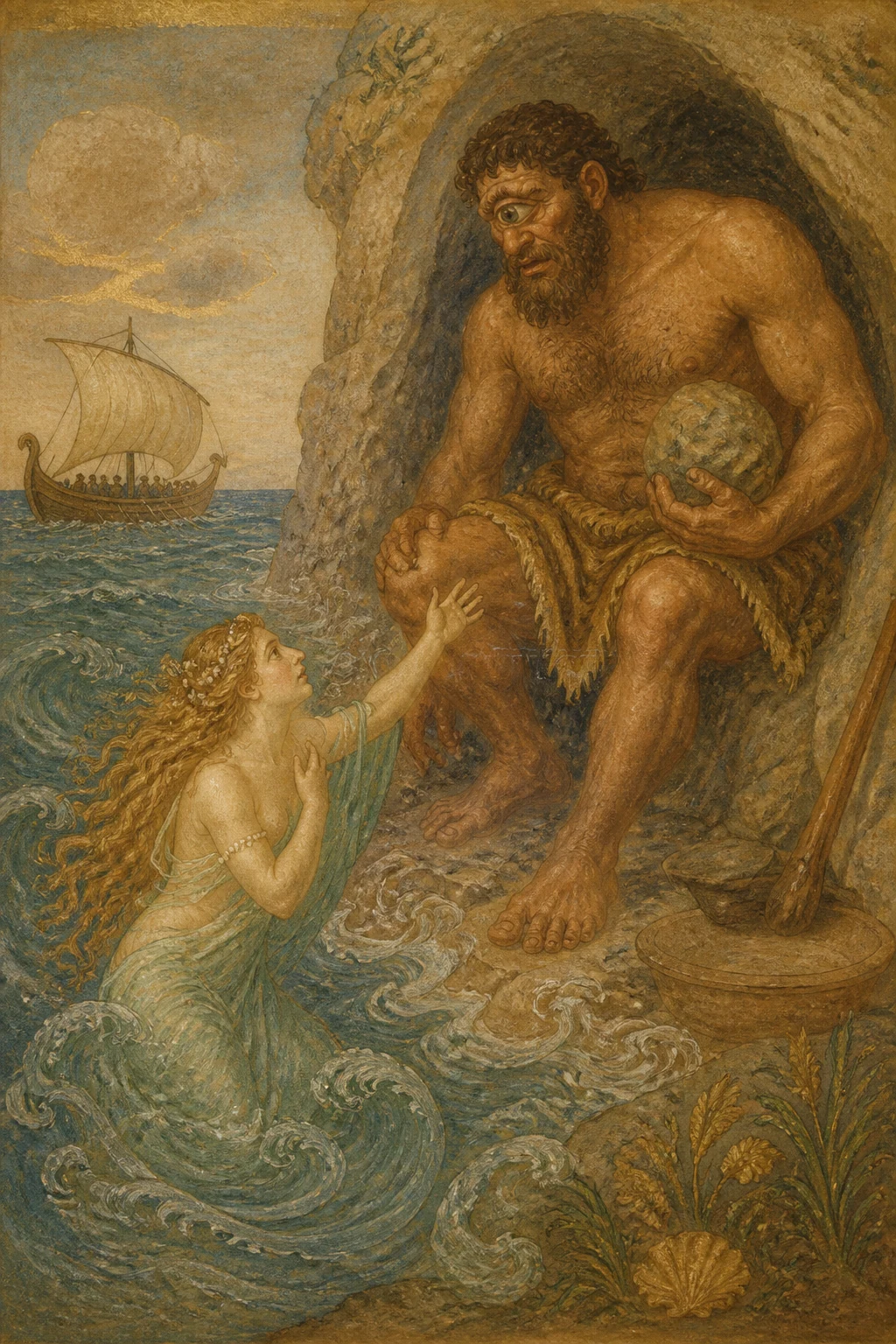
And now Etna, heaped upon the Giant’s throat, and the fields of the Cyclopes, which knew neither rake nor plough and owed nothing to oxen yoked together, lay behind the Euboean dweller in the swelling waters. He had left Zancle too, and the walls of Rhegium opposite, and the shipwrecking strait which, hemmed between two shores, marks the boundary of Ausonian and Sicilian lands.
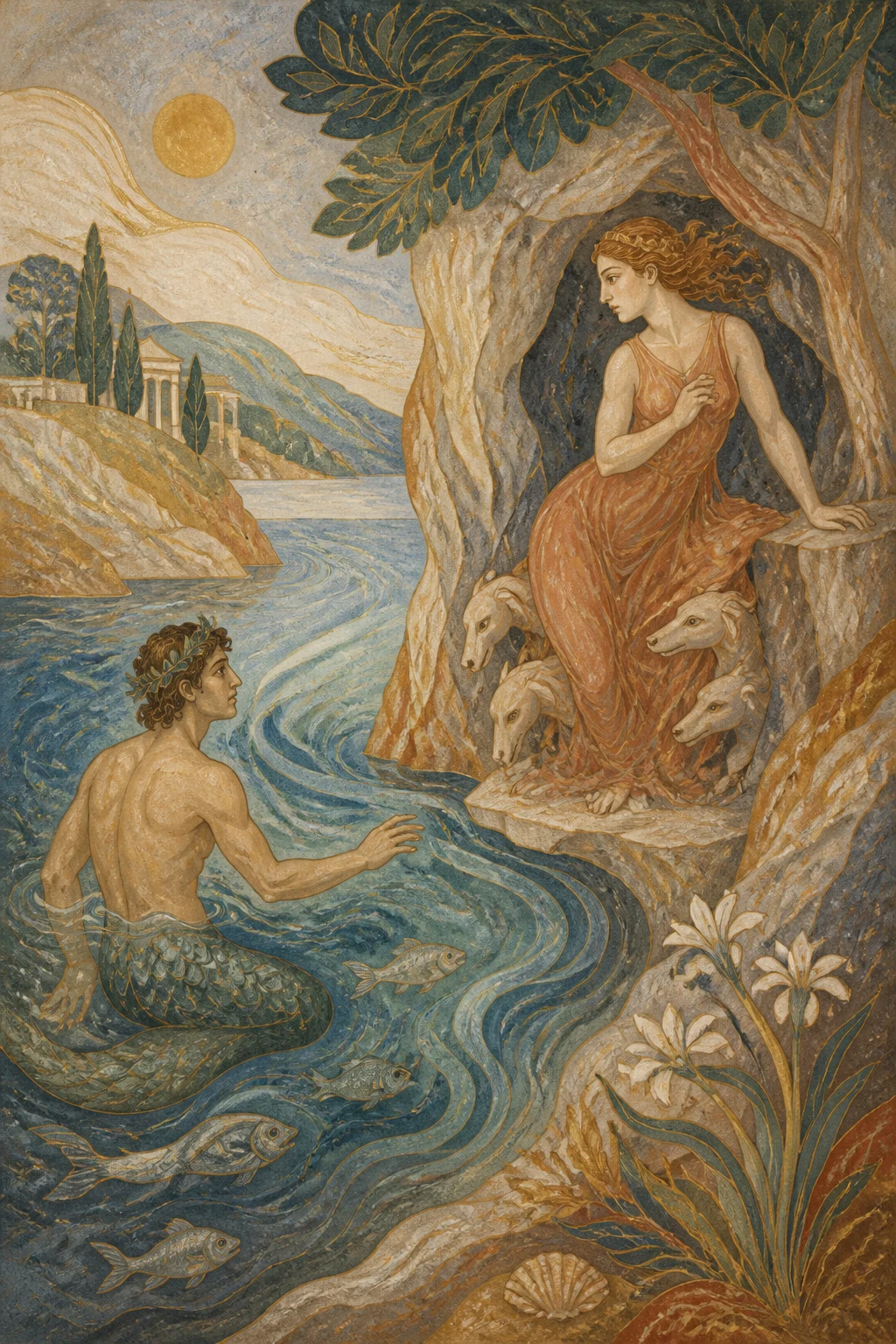
From there, with mighty strokes through the Tyrrhenian waters, Glaucus reached the herb-clad hills and the halls of Circe, daughter of the Sun, filled with beasts of every kind. As soon as he saw her, and greetings had been exchanged, “Goddess, have pity on a god, I beg you! You alone can ease my pain,” he said, “if only I seem worthy! No one knows better than I, daughter of the Sun, how great is the power of herbs: they transformed me.
And so that the cause of my madness may not be unknown to you: on the Italian shore, facing the walls of Messene, I saw Scylla. I am ashamed to tell of my promises, my prayers, my flatteries, and all the words she scorned. But you, if spells have any power, utter a spell with your sacred lips; or, if herbs can conquer more, use the proven strength of potent herbs.
I do not ask you to cure me or to heal these wounds: I need no end to love; only let her share its fire.” But Circe—for no woman’s nature is more inclined to such flames, whether the cause lies in herself or Venus brings this on her, offended by her father’s revelations— replied in these words: “Better to pursue a willing woman, one who longs for the same thing, caught in a passion equal to yours.
You deserved to be courted yourself—indeed, you could have been— and if you offer any hope, believe me, you will be. Have no doubts, but put your trust in your beauty. Look: though I am a goddess, daughter of the radiant Sun, though my herbs and spells alike have such great power, I long to be yours. Scorn the woman who scorns you; return the love of one who seeks you, and avenge us both with a single deed!”
As she tried to win him with such words, “Sooner,” said Glaucus, “will trees grow in the sea and seaweed on the mountain peaks than my love change while Scylla lives!” The goddess was outraged, and since she could not harm him —nor, loving him, would she wish to—she turned her anger on the girl preferred to her. Stung by the rejection of her love, she at once ground loathsome plants with dreadful juices, and mingled spells of Hecate with the herbs she crushed.
Then, dressing herself in sea-blue robes, through the throng of fawning beasts she passed from the heart of her palace, and, making for Rhegium, opposite the rocks of Zancle, stepped into the waters seething with the tide. On these she set her feet as though on solid ground, and sped across the surface of the sea with dry feet. There was a little inlet, rounded in a curving arc, a welcome retreat for Scylla. There she would escape the heat of sea and sky when the sun burned fiercest at the zenith and from overhead had shortened shadows to their least.
The goddess poisoned it beforehand, fouling it with potions that bred monstrous forms. There she sprinkled juices pressed from a deadly root, and in the maze of strange words her magic lips murmured a dark spell three times nine. Scylla came, and had waded waist-deep into the water, when she saw her loins disfigured by barking monsters. At first, not believing these were parts of her own body, she recoiled, drove them away, and feared the savage jaws of the dogs; yet those she fled she dragged along with her.
Searching for her thighs, her legs, her feet, she found in their place gaping mouths like those of Cerberus. She stood on a pack of ravening dogs, their backs held fast beneath her severed loins and her jutting belly. Glaucus wept for his beloved, and shunned marriage with Circe, who had used the power of herbs with such ruthless malice. Scylla stayed there, and at her first opportunity, in hatred of Circe, robbed Ulysses of his companions.
Later she would have sunk the Trojan ships as well, had she not first been changed into a reef, which still stands in stony form today: even as a reef, sailors shun her.