Prevod
Dan po bitki pri Germantownu je Warner, ki je nosil modro uniformo, blizu tistega krvavega bojišča srečal svojega osovraženega soseda, torijca Dabneyja.
Moža sta se hkrati pognala drug v drugega z nožema in Warner je sovražnika kmalu spravil v položaj, v katerem bi mu lahko zadal smrtni udarec, a Dabney je začel na ves glas prositi za milost. »Moj brat je pri Paoliju prosil za milost,« mu je odvrnil Warner, »pa si ga zabodel v srce.«
»Ženo in otroka imam. Prizanesi mi zaradi njiju.« »Moj brat je imel ženo in dva otroka. Morda bi rad njih prosil za svoje življenje.«
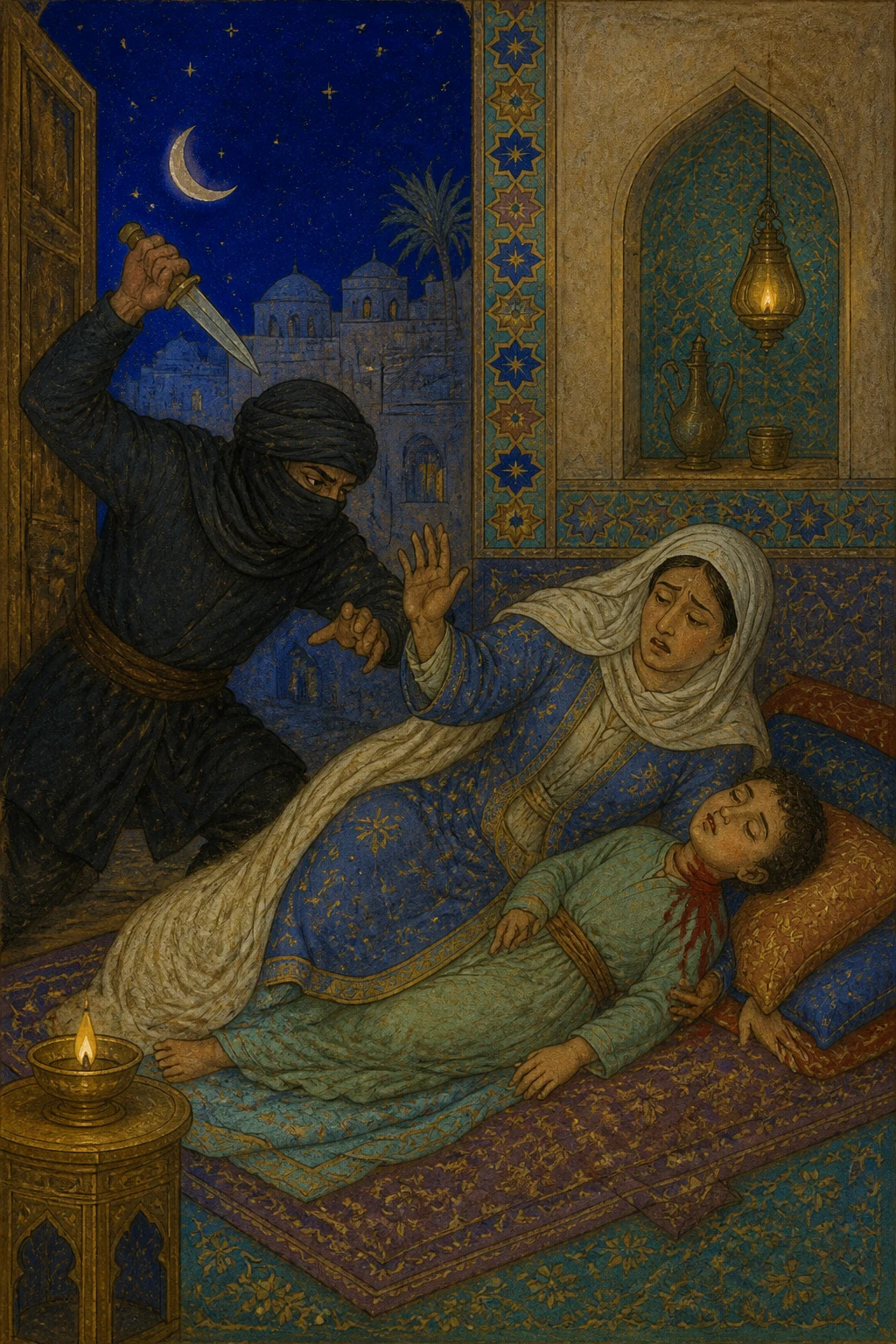
Čeprav je bil predlog izrečen v posmeh, se ga je Dabney oprijel s tolikšno vnemo, da je Warner nazadnje privolil in svojega trdno zvezanega nasprotnika odpeljal v hišo, kjer je živela žalujoča družina. Vdova je otrokoma brala Sveto pismo, toda njena žalost je bila še preveč sveža, da bi v njem našla tolažbo. Ko so Dabneyja vrgli v sobo, se je plazil pred njenimi nogami in milo prosil za usmiljenje. Njen obraz se ni omehčal, v mirni žalosti njenega glasu pa je bilo čutiti nekakšen prezir, ko je rekla: »Naj bo, kakor odloči Bog. Zaprla bom Sveto pismo, ga odprla na slepo, in ko bo ta deček naključno položil prst na eno od vrstic, bo ta odločila, ali boš živel ali umrl.«
Knjigo so odprli in otrok je položil prst na vrstico: »Ta človek mora umreti.« Warner je izvlekel nož in ujetniku pomignil proti vratom. Nameraval ga je odpeljati v gozd in ga žrtvovati duhu svojega brata.
»Ne, ne!« je zakričal nesrečnik. »Dajte mi še eno priložnost, še eno! Naj knjigo odpre deklica.« Žena hladno privoli in ko se knjiga drugič odpre, prebere: »Ljubite svoje sovražnike.« Drugih besed ni. Nož res uporabijo, a le zato, da prerežejo ujetnikove vezi, in ta odide s sklonjeno glavo ter nikoli več ne dvigne orožja proti svojim rojakom. In vsi so veseli, da se je tako izteklo, ko moža prinesejo domov — ne mrtvega, čeprav so ga pri Paoliju pustili med trupli, temveč živega, z gotovostjo, da bo ob ženini skrbni negi okreval. Ko pretočijo solze radosti, mu žena pove zgodbo o sodbi Svetega pisma in vsi člani družine padejo na kolena ter se zahvalijo, da Dabneyjeva kri ni nad njihovimi glavami.
Izvirnik
It was on the day after the battle of Germantown that Warner, who wore the blue, met his hated neighbor, the Tory Dabney, near that bloody field.
By a common impulse the men fell upon each other with their knives, and Warner soon had his enemy in a position to give him the death-stroke, but Dabney began to bellow for quarter. “My brother cried for quarter at Paoli,” answered the other, “and you struck him to the heart.”
“I have a wife and child. Spare me for their sakes.”
“My brother had a wife and two children. Perhaps you would like to beg your life of them.”
Though made in mockery, this proposition was caught at so earnestly that Warner at length consented to take his adversary, firmly bound, to the house where the bereaved family was living. The widow was reading the Bible to her children, but her grief was too fresh to gather comfort from it. When Dabney was flung into the room he grovelled at her feet and begged piteously for mercy. Her face did not soften, but there was a kind of contempt in the settled sadness of her tone as she said, “It shall be as God directs. I will close this Bible, open it at chance, and when this boy shall put his finger at random on a line, by that you must live or die.”
The book was opened, and the child put his finger on a line: “That man shall die.”
Warner drew his knife and motioned his prisoner to the door. He was going to lead him into the wood to offer him as a sacrifice to his brother's spirit.
“No, no!” shrieked the wretch. “Give me one more chance; one more! Let the girl open the book.”
The woman coldly consents, and when the book is opened for the second time she reads, “Love your enemies.” There are no other words. The knife is used, but it is to cut the prisoner's bonds, and he walks away with head hung down, never more to take arms against his countrymen. And glad are they all at this, when the husband is brought home--not dead, though left among the corpses at Paoli, but alive and certain of recovery, with such nursing as his wife will give him. After tears of joy have been shed she tells him the story of the Bible judgment, and all the members of the family fall on their knees in thanksgiving that the blood of Dabney is not upon their heads.