Prevod
Sredi prejšnjega stoletja je velika skupina Indijancev Saranac prebivala v gozdovih ob zgornjem toku reke Saranac, skozi katere je vodila indijanska pot za prenašanje čolnov, ki so ji pravili Pot orlovega gnezda. Kadar so napadali Tahawije na pobočjih gore Tahawus (Razkolnica neba), sta mlada, postavna bojevnika, imenovana Volk in Orel, v prijateljskem tekmovanju merila moči, kdo bo odnesel več skalpov, in pleme je bilo razdeljeno v občudovanju obeh. Eden pa ni delil te naklonjenosti: stari sahem, eden od čarovnikov, ki so ušli, ko je Veliki duh te zlobneže zaprl v votla drevesa ob poti. Tisti, ki so imeli manj sreče, so v prizadevanju, da bi se rešili, pomolili roke skozi lubje, ki se je zapiralo okoli njih, in še danes jih je tam videti kot usahla debla in veje. Oquaraha ni omehčal ne ta prikaz nevarnosti ne kanček milosti, ki mu je dopuščal, da je še živel. Nasprotno, postal je še bolj zagrenjen, ko je videl — kakor si je domišljal — da pleme bolj ceni drzna in mogočna bojevnika kakor sključenega svetovalca z zlobnimi mislimi.
V luni zelenih listov sta se mladeniča odpravila na lov na lose in naslednjega dne se je Volk vrnil sam. Pojasnil je, da sta se med lovom ločila; ure in ure je klical prijatelja in ga tako dolgo iskal, da je naposled sklenil, da se je gotovo vrnil pred njim. Toda v taboru ga ni bilo. Tedaj je sahem vstal s pomračenim obrazom. »Slišim razcepljen jezik,« je zavpil. »Volk je zavidal Orlu in njegovi zobje so se zarili v Orlovo srce.«
»Volk ne zna lagati,« je odgovoril mladenič. »Kje je Orel?« je jezno zakričal sahem in zgrabil svojo sekiro. »Volk je povedal,« je odvrnil mladenič.
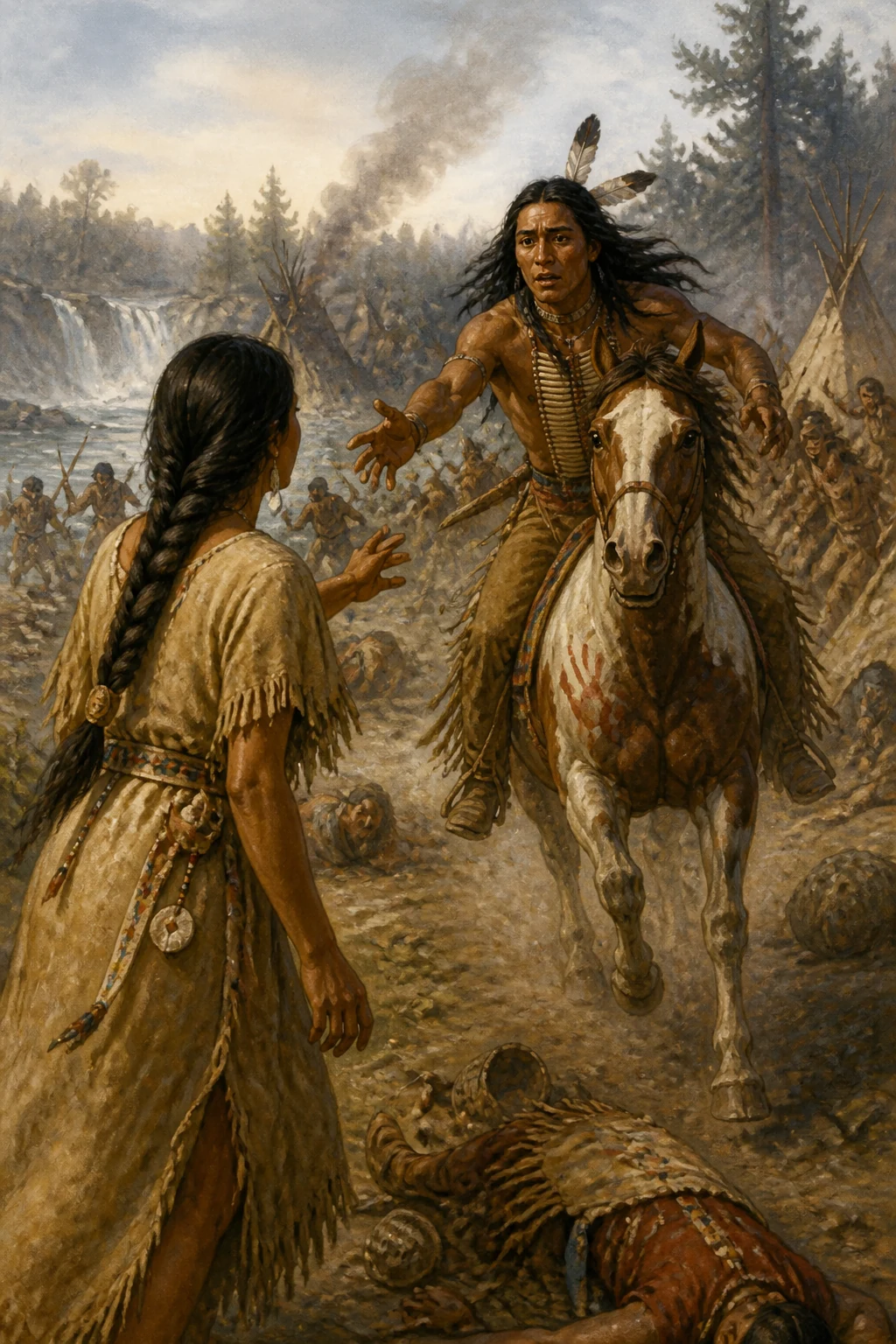
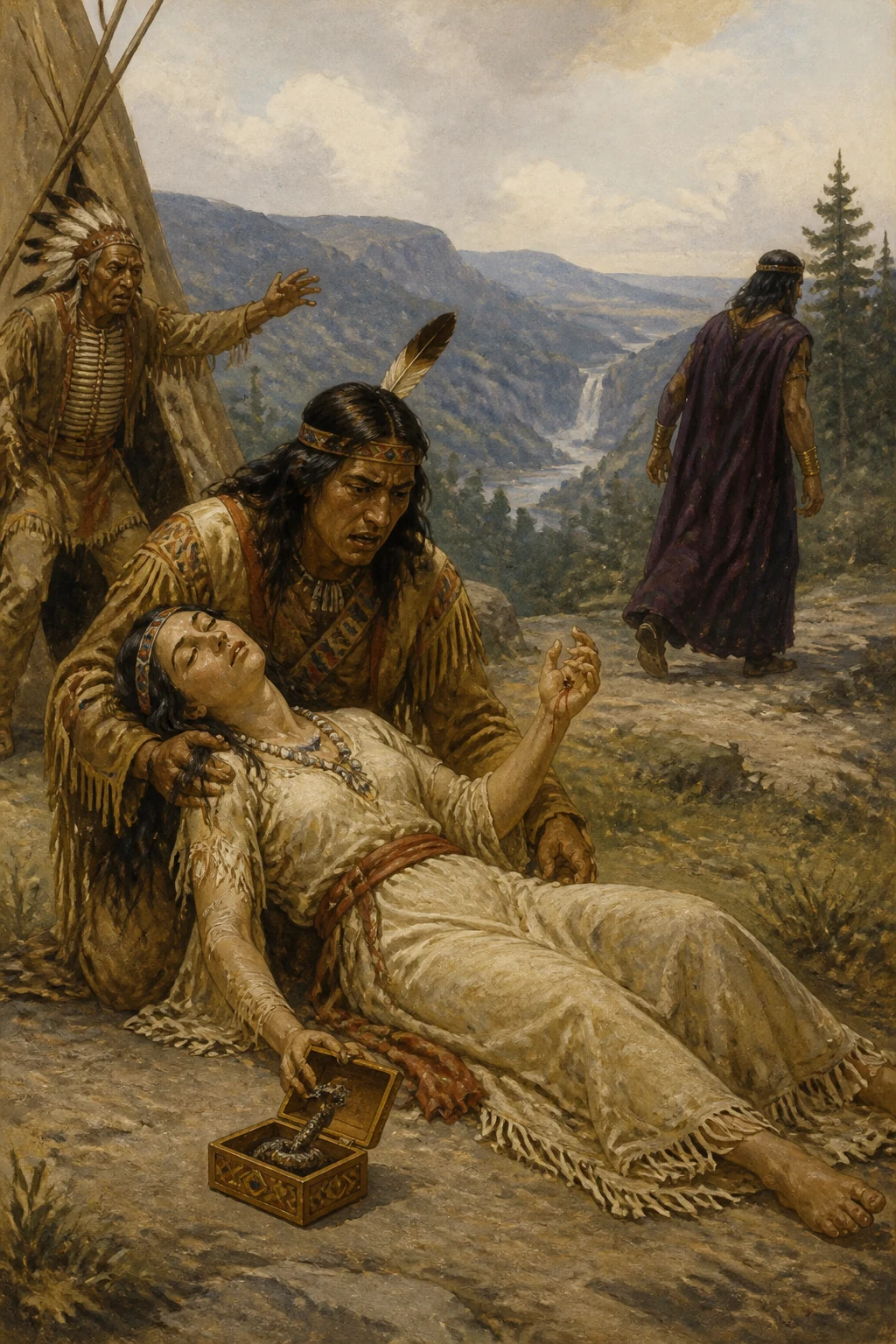
Stari sahem je stopil proti njemu, ko pa je dvignil sekiro, da bi zamahnil, se je Volkova žena vrgla pred moža in jeklo se ji je zarilo v možgane. Trenutek zatem je sahem padel z Volkovim nožem v srcu in v taboru je nemudoma zavladal nemir. Še preden je minil dan, je tabor razpadel, ljudje pa so se razdelili v nasprotujoče si skupine, saj jih ni bilo več mogoče obdržati skupaj v miru. Volk je s polovico ljudi odšel po Zveneči reki navzdol proti novim loviščem in zemlja, ki je ločevala družine, je pordečela, kadar koli je ena stran naletela na drugo.
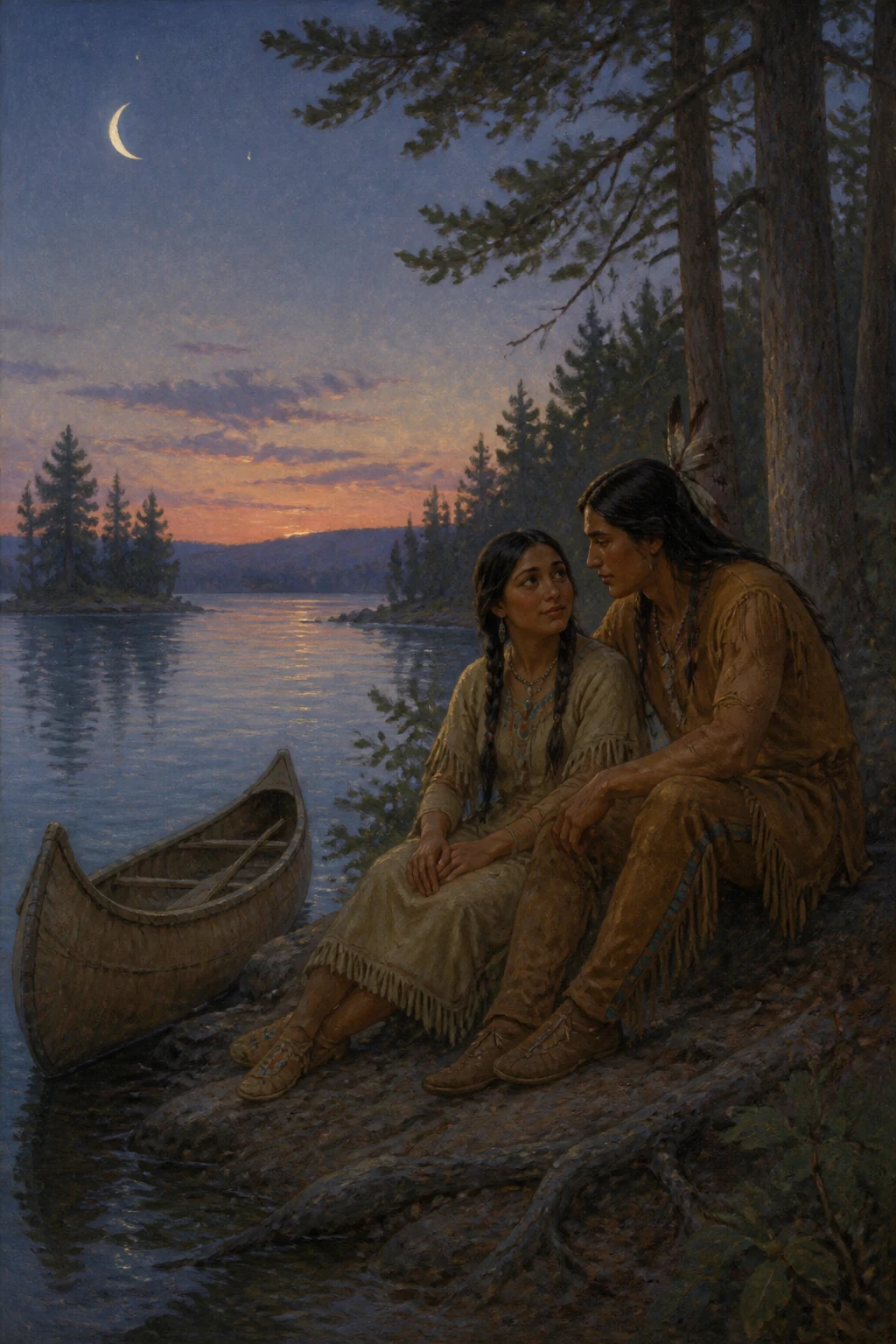
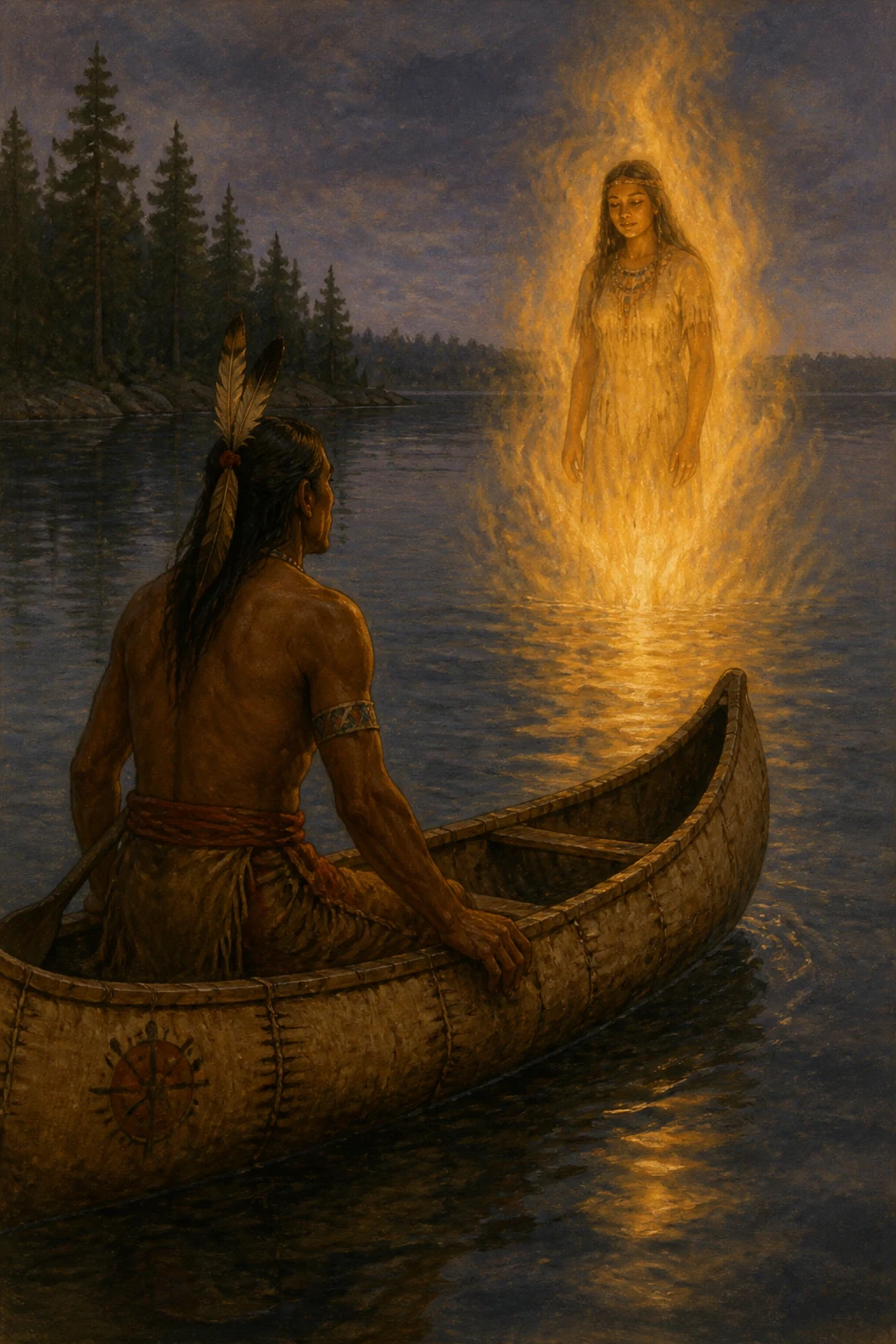
Minila so leta, ko je nekega jutra zgornje pleme zagledalo kanu, ki se je približeval čez Jezero srebrnega neba. Iz njega je stopil starec: bil je Orel. Potem ko ga je Volk zapustil, je padel v skalno razpoko in nemočno obležal, dokler ga niso našli lovci na poti v Kanado. Pridružil se je Britancem v boju proti Francozom in se poročil z Indijanko s severa, zdaj pa se je vrnil, da bi umrl med ljudmi, ki jih je ljubil v mladosti. Globoko ga je žalostilo, da so njegovega prijatelja obtožili, da mu je storil kaj hudega, in da je ta obtožba razdelila nekoč srečno pleme. Bojevnike in saheme obeh vej so sklicali na posvet in v njegovi navzočnosti so prisegli mir, tako da je lahko, ko je prišel njegov čas, umrl pomirjen. Ta mir so vselej spoštovali.
Izvirnik
In the middle of the last century a large body of Saranac Indians occupied the forests of the Upper Saranac through which ran the Indian carrying-place, called by them the Eagle Nest Trail. Whenever they raided the Tahawi on the slopes of Mount Tahawus (Sky-splitter), there was a pleasing rivalry between two young athletes, called the Wolf and the Eagle, as to which would carry off the more scalps, and the tribe was divided in admiration of them. There was one who did not share this liking: an old sachem, one of the wizards who had escaped when the Great Spirit locked these workers of evil in the hollow trees that stood beside the trail. In their struggles to escape the less fortunate ones thrust their arms through the closing bark, and they are seen there, as withered trunks and branches, to this day. Oquarah had not been softened by this exhibition of danger nor the qualification of mercy that allowed him still to exist. Rather he was more bitter when he saw, as he fancied, that the tribe thought more of the daring and powerful warriors than it did of the bent and malignant-minded counsellor.
It was in the moon of green leaves that the two young men set off to hunt the moose, and on the next day the Wolf returned alone. He explained that in the hunt they had been separated; he had called for hours for his friend, and had searched so long that he concluded he must have returned ahead of him. But he was not at the camp. Up rose the sachem with visage dark. “I hear a forked tongue,” he cried. “The Wolf was jealous of the Eagle and his teeth have cut into his heart.”
“The Wolf cannot lie,” answered the young man.
“Where is the Eagle?” angrily shouted the sachem, clutching his hatchet.
“The Wolf has said,” replied the other.
The old sachem advanced upon him, but as he raised his axe to strike, the wife of the Wolf threw herself before her husband, and the steel sank into her brain. The sachem fell an instant later with the Wolf's knife in his heart, and instantly the camp was in turmoil. Before the day had passed it had been broken up, and the people were divided into factions, for it was no longer possible to hold it together in peace. The Wolf, with half of the people, went down the Sounding River to new hunting-grounds, and the earth that separated the families was reddened whenever one side met the other.
Years had passed when, one morning, the upper tribe saw a canoe advancing across the Lake of the Silver Sky. An old man stepped from it: he was the Eagle. After the Wolf had left him he had fallen into a cleft in a rock, and had lain helpless until found by hunters who were on their way to Canada. He had joined the British against the French, had married a northern squaw, but had returned to die among the people of his early love. Deep was his sorrow that his friend should have been accused of doing him an injury, and that the once happy tribe should have been divided by that allegation. The warriors and sachems of both branches were summoned to a council, and in his presence they swore a peace, so that in the fulness of time he was able to die content. That peace was always kept.