Waltey
Radovedne podlasice
097 THE INQUISITIVE WEASELS
Živalske zgodbe Clare Dillingham Pierson · Clara Dillingham PiersonO besedilu
Radovedne podlasice
- Vir
- Živalske zgodbe Clare Dillingham Pierson
- Avtor
- Clara Dillingham Pierson
- Jezik branja
- Slovenščina
- Jezik izvirnika
- English
- Čas branja
- 10 min branja
- Obseg
- 8 strani
- Naslov izvirnika
- 097 THE INQUISITIVE WEASELS
O izvirniku
Živalske zgodbe Clare Dillingham Pierson
Devetindevetdeset avtorskih zgodb o živalih na kmetiji, travniku, v gozdu, ob ribniku in ponoči. Bralni jezik je Slovenščina, izvirnik pa prihaja iz vira Živalske zgodbe Clare Dillingham Pierson v jeziku English.
Besedilo
Radovedne podlasice
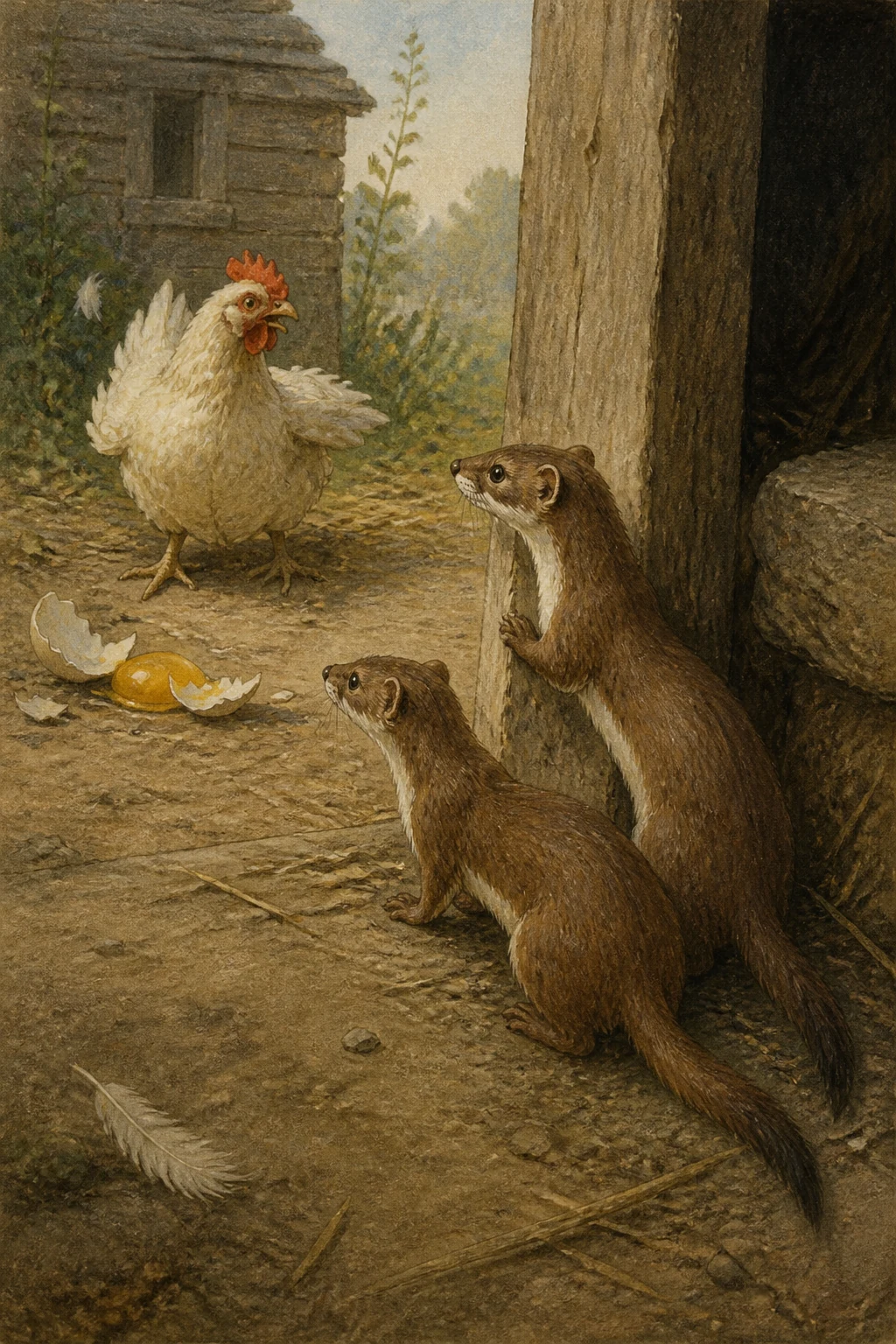
Podlasice pri večini gozdnih prebivalcev niso bile prav nič priljubljene. Tudi prebivalci ribnika in travnika jih niso marali, tisti, ki so živeli na kmečkem dvorišču, pa jih sploh niso mogli trpeti. Vsakič, ko je prišla na obisk kakšna Podlasica, je šlo tam kaj narobe. Nekoč se je, veste, dorkinška Kokoš tako prestrašila, da je razbila svoje čudovito bleščeče jajce, drugič pa so se zgodile še hujše reči. Navadno je po odhodu Podlasice manjkal piščanec ali dva.
Podlasice pa so imele svojo družino zelo rade in so druga drugi zaupale svoje najskrivnejše skrivnosti. To jim je pomenilo skoraj toliko kot deliti hrano, saj so bile silno radovedne in so hotele o vsem vedeti prav vse. Skrbele so za svoje zadeve, a tudi za zadeve vseh drugih. Če si kaj povedal eni Podlasici, si lahko bil prepričan, da bodo še pred koncem noči vse Podlasice v soseščini vedele vse o tem. Kadar so imele priložnost, so povedale tudi drugim. Bile so strašne opravljivke. Če so videle, da kdo počne kaj vsaj malce nenavadnega, so o tem razmišljale in govorile, se spraševale, kaj to pomeni, nazadnje pa sklenile, da pomeni nekaj prav izjemnega, in se silno razburile. Takrat so našle nešteto izgovorov za obiske in vselej nekako uspele povedati, kaj so videle, kaj so slišale in kaj je to po njihovem trdnem prepričanju pomenilo.
Hodile so povsod in znale so se premikati tiho in neopazno. Bile so drobne, približno tako dolge kot Podgane, vendar veliko vitkejše, njihove noge pa so bile tako kratke, da se je zdelo, kakor da njihova telesa skoraj ležijo na tleh. Ves njihov kožuh je bil rjav, razen na trebuhu in po notranji strani nog, kjer je bil čisto bel. Včasih je bil kožuh na njihovih tačkah enake barve kot na hrbtu, včasih pa enake kot na trebuhu. Kakor je pač naneslo. Zlahka si predstavljate, kako so se lahko plazile po rjavi zemlji ali po odpadlem listju in suhi travi, ne da bi jih kdo opazil. Pozimi so postale bele in se na snegu niso videle. Le čisto zadnja konica njihovih kratkih repov je ostala svetlo rjava, vendar je bila tako drobcena, da jo je bilo komaj mogoče opaziti. Če je kakšen Jastreb iz zraka zagledal le tisto rjavo pikico na snegu pod seboj, jo je najbrž imel za list ali košček lubja in ji ni posvečal več pozornosti.
Matere Podlasice so zelo skrbno pazile na svoje otroke in bile zelo pogumne. Naj je bila nevarnost še tako velika, ostale so ob svojih mladičih in se bojevale zanje. In kako delavne so bile! Prav nič jim ni bilo mar, ali je dan ali noč; v obeh primerih so enako vneto kopale rove ali lovile. Ko so bile utrujene, so zaspale, ko so se prebudile, pa so se takoj lotile dela.
Več družin je živelo v visokem bregu ob robu gozda, prav tam, kjer se tla spuščajo proti močvirju. Tam so živele leto za letom in ves čas dograjevale svoje rove. Vsak rov je imel le en vhod, navadno skrit pod listjem ali kamnom. Ti vhodi so bili komaj tako veliki kot Burundukove luknje in jih je bilo lahko skriti. »Lepo je imeti imeniten, velik dom,« so govorile Podlasice, »ampak me gradimo za udobje, ne za razkazovanje.«
Vsi rovi Podlasic so se začeli enako, z ravnim, ozkim hodnikom. Iz njega so se nato odcepili drugi hodniki in vsakih nekaj korakov je bila sobica, v kateri se je bilo mogoče obrniti ali odpočiti. V nekaterih so shranjevale hrano, v drugih pa ni bilo nič drugega kot kosti in ostanki njihovih obrokov. Vsak rov je imel eno lepo, veliko sobo, večjo od gnezda Gozdnega Pečarja, z mehkim ležiščem iz listja in dlake. Nekatere sobe so bile tako blizu površja, da si je Podlasica v nekaj minutah lahko izkopala pot navzgor, če je potrebovala še en izhod. To so bili najlepši kraji za skrivalnice, ki so najljubša igra Podlasic, le da bi vsaka Podlasica raje iskala kot se skrivala. Okoli teh domov nikoli ni bilo niti malo izkopane zemlje in to je edina skrivnost, ki je Podlasice ne izdajo nikomur zunaj družine: nikoli ne povedo, kaj naredijo z zemljo, ki jo izkopljejo. Preprosto izgine.
Podlasice rade lovijo v skupinah. Pravijo, da nič ni zabavno, če nimaš nikogar, s komer bi se o tem pogovoril. Neke noči so se štiri odpravile skupaj na pot, takoj ko se je stemnilo. To so bili mladi fantje in nameravali so prvič obiskati kmetov kokošnjak. Odpravili so se tja, vendar so seveda hoteli med potjo videti prav vse. Nekaj časa so tekli naravnost naprej, nato pa zavili vstran, kakor počnejo Mravlje, vtikali nosove v Burundukove luknje ali plezali na drevesa iskat ptičja gnezda, pojedli vso hrano, ki so jo našli, in se o vsem tiho pomenkovali.
»Prav sramotno je, kako ta Burunduk skrbi za svoj dom,« je rekel eden od njih, ko se je vrnil iz rova pod drevesom. »Napol pojedeno hrano pušča kar na tleh, popolnoma nemarno. Sicer je bil samo oreh. Če bi bilo kaj takega, kar imam rad, bi ga sam pojedel.«
Nato so opravljali Burunduke in govorili, da so sicer vedno videti urejeni in snažni, a nikoli ne veš, kakšni gospodinjci so v resnici; in da bi bilo očitno bolje, ko bi več ostajali doma in manj tekali po gozdu. Burunduk je vse to slišal z drevesa, kamor se je skril, in najraje bi jim glasno povedal, kaj si misli o obiskovalcih, ki brez trkanja vstopajo v tuje domove in se potikajo po njih, da bi videli, kako je vse pospravljeno. Vendar je bil toliko pameten, da tega ni storil. Vedel je, da je najbolje biti tiho, kadar štiri lačne Podlasice lovijo svojo večerjo. Prav je imel. In velikokrat je bolje, da jezni ljudje molčijo, tudi če jih ni strah, da jih bo kdo pojedel.
Ko so odšli, je splezal dol. »Še sreča,« je rekel, »da sem se prebudil lačen in si privoščil prigrizek. Če ne bi bil buden in ne bi mogel zbežati, kdo ve, kje bi bil zdaj. Nekatere reči so hujše od tega, da te imajo za slabega gospodinjca.«
Ravno ko je Burunduk končeval svoj prigrizek, je eden od Podlasic šepnil drugim, naj se ustavijo. »Nekdo prihaja,« je rekel. »Počakajmo in poglejmo, kaj počne.«
Bil je Črnorepi Skunk, ki je počasi prihajal po poti, vohljal sem in tja in se tu in tam ustavil, da je pojedel nekaj grižljajev. »Se vam ne zdi, da se vede zelo čudno?« je eden od Podlasic vprašal druge.
»Zelo,« je odgovoril drugi. »Pa tudi videti ni čisto tak kot navadno. Ne vem, ali sem ga že kdaj videl tako držati rep.« »Rad bi vedel, kam gre,« je rekel tretji. »Najbrž misli, da ga ne bo nihče videl.«
»Pojdimo za njim,« je rekel četrti Podlasica, ki dotlej še ni spregovoril. Dokler je bil Skunk blizu, so se skrivali za podrtim deblom čuge, iz katerega je poganjalo veliko drobnih čug. Tu in tam so pokukali med njihove mehke, resaste iglice, da bi videli, kaj počne. Bili so silno vznemirjeni. »Nos tišči k tlom,« je rekel eden. »Gotovo je nekaj našel.«
Nato je drugi pomolil svojo glavico med čugami in pogledal Skunka. »Navsezadnje očitno ni ničesar našel,« je rekel. »Ne slišim, da bi jedel.«
»Zelo čudno,« so zamrmrali drugi. Toda Črnorepi Skunk je zavohal Podlasice in vedel, da so v bližini. Slišal je tudi šelestenje za deblom čuge. Vedel je, kakšni opravljivci so Podlasice, in uganil, da ga opazujejo, zato se je odločil, da jim bo dal nekaj, o čemer bodo lahko razmišljali. Vedel je, da se pogosto spopadejo tudi s kom večjim od sebe, vendar se sam ni bal nikogar. Prav tako se ni želel tepsti z njimi, kajti če bi se jim približal dovolj, da bi v boju zares užival, bi ga najbrž grdo pogrizli, in kadar Podlasica v nekoga zasadi zobe, je ni lahko pripraviti do tega, da bi ga izpustila. »Nekaj mi pravi,« si je rekel, »da bodo jutri v svojih rovih spali štirje zelo utrujeni mladi Podlasice.«
»Odhaja,« je zašepetal eden od Podlasic. »Kam neki gre?« »To bomo morali ugotoviti,« so rekli drugi in se tiho splazili iz svojih skrivališč.
Skunk je šel natanko tja, kamor je hotel. Kadar je našel hrano, jo je pojedel. Za Podlasice, ki so mu sledili, ni ostalo nič. Postali so zelo lačni, a kadar je kateri začel razmišljati, da bi si šel poiskat prigrizek, je Skunk zagotovo naredil kaj čudnega. Včasih je legel in se smejal. Tedaj so Podlasice kukali iz skrivališča in šepetali med seboj.
»Kaj neki ga tako spravlja v smeh?« so se spraševali. »Gotovo premišljuje o nečem izjemnem, kar namerava storiti. Ne smemo ga izgubiti izpred oči.«
Nekoč je srečal svojega brata, Pegastega Skunka, in nekaj minut sta šepetala. Nato se je Pegasti Skunk zasmejal, in ko je odhajal, je Črnorepi Skunk zaklical za njim: »Glej, da nikomur ne poveš. Nočem, da se razve, kaj počnem.«
Tedaj so se štirje mladi Podlasice dregnili med seboj in rekli: »No, vidite! Ves čas smo vedeli!« Potem nihče ni več omenjal lakote. Pomembno jim je bilo le še slediti Črnorepemu Skunku. Nekoč so se v močvirju tako bali, da bi jih opazil, da so zdrsnili v jarek in nekaj poti preplavali. Bili so dobri plavalci in jih to ni posebno motilo, vendar vam že to pove, kako vztrajno so sledili Skunku. Enkrat jih je vodil na kmetijo in spomnili so se svojega načrta, da obiščejo kokošnjak. Bili so zelo, zelo lačni in vsak je pogledal druge, da bi videl, kaj menijo o tem, da bi pustili Skunka oditi in se ustavili pri obilni večerji. Vendar tega nihče ni predlagal. Eden od Podlasic je zašepetal: »Zdaj bomo zagotovo videli, kaj naklepa. Moral bi vedeti, da ne more početi slabih ali porednih reči, ne da bi ga razkrinkali. In ker bomo vse odkrili sami, bomo o tem seveda lahko tudi govorili.«
Ovčar, pes čuvaj, je rahlo spal in se pognal izza hišnega vogala pogledat, kakšni tujci so prišli, ko pa je videl, kdo so, je povesil rep in odšel. Bil je že dovolj star, da je vedel marsikaj, in preveč pameten, da bi se spopadel bodisi s Skunkom bodisi s Podlasico. Skunke vsi puščajo pri miru in tudi Podlasice je pametno pustiti pri miru, saj kljub svoji majhnosti hudo grizejo.
Zdaj se je Črnorepi Skunk obrnil proti gozdu in se napotil k svoji luknji. Mimo njih je proti domu poletela Mala Uharica in večkrat so jim nad glavami švignili Netopirji. Ko so šli mimo netopirje jame, so po zvokih lahko presodili, da jih je v njej deset ali dvanajst in da se obešajo k dnevnemu počitku. Na vzhodnem nebu se je kazala medla svetloba, dnevne ptice pa so se prebujale in si začele čistiti perje.
»Kaj mislite, da to pomeni?« so šepetali Podlasice. »Kaže, da gre domov. Mislite, da si je premislil?« Ko je Črnorepi Skunk prišel do svoje luknje, se je ustavil in pogledal naokrog. Podlasice so se skrili pod odpadlo listje. »Dobro jutro vam želim,« je rekel Skunk in pogledal proti kraju, kjer so se skrivali. »Upam, da niste preveč utrujeni. Zame je bil tale sprehod prav lahek, bojim pa se, da je bil za Podlasice nekoliko dolg. Poleg tega sem našel veliko hrane in zase izbiral gladke poti. Dobro jutro! Prav prijetno mi je bilo v vaši družbi!«
Ko je v luknji izginila še konica njegovega repa, so se Podlasice splazili izpod listja in se spogledali. »Mislimo, da je ves čas vedel, da mu sledimo,« so rekli. »Čudno se je vedel samo zato, da bi nas vlekel za nos. Malopridnež!«
Pa vendar je, kot vidite, počel le tisto, kar je počel vsako noč, in samo zato, ker so ga opazovali in govorili o njem, se jim je zdelo, da se je odpravil po nekih skrivnostnih opravkih.
Izvirnik
097 THE INQUISITIVE WEASELS
Naslednje strani prikazujejo izvirno besedilo za primerjavo.
The Weasels were very unpopular with most of the forest people, the pond and meadow people did not like them, and those who lived in the farmyard couldn't bear them. Something went wrong there every time that a Weasel came to call. Once, you know, the Dorking Hen was so frightened that she broke her wonderful shiny egg, and there were other times when even worse things had happened. Usually there was a Chicken or two missing after the Weasel had gone.
The Weasels were very fond of their own family, however, and would tell their best secrets to each other. That meant almost as much with them as to share food, for they were very inquisitive and always wanted to know all about everything. They minded their own business, but they minded everybody's else as well. If you told a thing to one Weasel you might be sure that before the night was over every Weasel in the neighborhood would know all about it. They told other people, too, when they had a chance. They were dreadful gossips. If they saw a person do something the least unusual, they thought about it and talked about it and wondered what it meant, and decided that it meant something very remarkable and became very much excited. At such times, they made many excuses to go calling, and always managed to tell about what they had seen, what they had heard, and what they were perfectly certain it meant.
They went everywhere, and could go quietly and without being noticed. They were small people, about as long as Rats, but much more slender, and with such short legs that their bodies seemed to almost lie on the ground. All their fur was brown, except that on their bellies and the inside of their legs, which was pure white. Sometimes the fur on their feet matched their backs and sometimes it matched their bellies. That was as might happen. You can easily see how they could steal along over the brown earth or the dead leaves and grass without showing plainly. In winter they turned white, and then they did not show on the snow. The very tip of their short tails stayed a pale brown, but it was so tiny as hardly to be noticed. Any Hawk in the air, who saw just that bit of brown on the snow beneath him, would be likely to think it a leaf or a piece of bark and pay no more attention to it.
The Weasel mothers were very careful of their children and very brave. It made no difference how great the danger might be, they would stay by their babies and fight for them. And such workers as they were! It made no difference to them whether it was day or night, they would burrow or hunt just the same. When they were tired they slept, and when they awakened they began at once to do something.
Several families lived in the high bank by the edge of the forest, just where the ground slopes down to the marsh. They had lived there year after year, and had kept on adding to their burrows. There was only one doorway to each burrow and that was usually hidden by some leaves or a stone. They were hardly as large as Chipmunk's holes and easily hidden. "It is a good thing to have a fine, large home," said the Weasels, "but we build for comfort, not for show."
All the Weasel burrows began alike, with a straight, narrow hall. Then more halls branched off from this, and every little way there would be a room in which to turn around or rest. In some of these they stored food; in others they had nothing but bones and things which were left from their meals. Each burrow had one fine, large room, bigger than an Ovenbird's nest, with a soft bed of leaves and fur. Some of the rooms were so near the top of the ground that a Weasel could dig his way up in a few minutes if he needed another door. They were the loveliest sort of places for playing hide-and-seek, and that is a favorite Weasel game, only every Weasel wants to seek instead of hiding. There was never a bit of loose earth around these homes, and that is the one secret which Weasels will not tell out of the family--they never tell what they do with the earth they dig out. It just disappears.
Weasels like to hunt in parties. They say there is no fun in doing anything unless you have somebody with whom to talk it over. One night four of them went out together as soon as it was dark. They were young fellows and had planned to go to the farmer's Hen-house for the first time. They started to go there, but of course they wanted to see everything by the way. They would run straight ahead for a little while, then turn off to one side, as Ants do, poking into a Chipmunk's hole or climbing a tree to find a bird's nest, eating whatever food they found, and talking softly about everything.
"It is disgraceful the way that Chipmunk keeps house," said one of them, as he came back from going through a burrow under a tree. "Half-eaten food dropped right on the floor of the burrow in the most careless way. It was only a nut. If it had been anything I cared for, I would have eaten it myself."
Then they gossiped about Chipmunks, and said that, although they always looked trim and neat, there was no telling what sort of housekeepers they were; and that it really seemed as though they would do better to stay at home more and run about the forest less. The Chipmunk heard all this from the tree where he had hidden himself, and would have liked to speak right out and tell them what he thought of callers who entered one's home without knocking and sneaked around to see how things were kept. He knew better than to do so, however. He knew that when four hungry Weasels were out hunting their supper, it was an excellent time to keep still. He was right. And there are many times when it is better for angry people to keep still, even if they are not afraid of being eaten.
After they had gone he came down. "It was lucky for me," he said, "that I awakened hungry and ate a lunch. If I hadn't been awake to run away there's no telling where I would be now. There are some things worse than having people think you a poor housekeeper."
Just as the Chipmunk was finishing his lunch, one of the Weasels whispered to the others to stop. "There is somebody coming," said he. "Let's wait and see what he is doing."
It was the Black-tailed Skunk, who came along slowly, sniffing here and there, and once in a while stopping to eat a few mouthfuls.
"Doesn't it seem to you that he acts very queerly?" said one of the Weasels to the rest.
"Very," replied another. "And he doesn't look quite as usual. I don't know that I ever saw him carry his tail in just that way."
"I'd like to know where he is going," said another. "I guess he doesn't think anybody will see him."
"Let's follow him," said the fourth Weasel, who had not spoken before.
While he was near them they hid behind a hemlock log out of which many tiny hemlocks were growing. Once in a while they peeped between the soft fringy leaves of these to see what he was doing. They were much excited. "He is putting his nose down to the ground," one would say. "It must be that he has found something."
Then another would poke his little head up through the hemlocks and look at the Skunk. "He couldn't have found anything after all," he would say. "I can't hear him eating."
"It is very strange," the rest would murmur.
Now it just happened that the Black-tailed Skunk had scented the Weasels and knew that they were near. He had also heard the rustling behind the hemlock log. He knew what gossips Weasels are, and he guessed that they were watching him, so he decided to give them something to think about. He knew that they would often fight people larger than themselves, but he was not afraid of anybody. He did not care to fight them either, for if he got near enough to really enjoy it they would be likely to bite him badly, and when a Weasel has set his teeth into anybody it is not easy to make him let go. "I rather think," said he to himself, "that there will be four very tired young Weasels sleeping in their burrows to-morrow."
"He's walking away," whispered one of the Weasels. "Where do you suppose he is going?"
"We'll have to find out," said the others, as they crept quietly out of their hiding-places.
The Skunk went exactly where he wanted to. Whenever he found food he ate it. The Weasels who followed after found nothing left for them. They became very hungry, but if one of them began to think of going off for a lunch, the Skunk was certain to do something queer. Sometimes he would lie down and laugh. Then the Weasels would peep at him from a hiding-place and whisper together.
"What do you suppose makes him laugh?" they would ask. "It must be that he is thinking of something wonderful which he is going to do. We must not lose sight of him."
Once he met the Spotted Skunk, his brother, and they whispered together for a few minutes. Then the Spotted Skunk laughed, and as he passed on, the Black-tailed Skunk called back to him: "Be sure not to tell any one. I do not want it known what I am doing."
Then the four young Weasels nudged each other and said, "There! We knew it all the time!"
After that, nobody spoke about being hungry. All they cared for was the following of the Black-tailed Skunk. Once, when they were in the marsh, they were so afraid of being seen that they slipped into the ditch and swam for a way. They were good swimmers and didn't much mind, but it just shows how they followed the Skunk. Once he led them over to the farm and they remembered their plan of going to the Hen-house. They were very, very hungry, and each looked at the others to see what they thought about letting the Skunk go and stopping for a hearty supper. Still, nobody spoke of doing so. One Weasel whispered: "Now we shall surely see what he is about. He ought to know that he cannot do wrong or mischievous things without being found out. And since we discover it ourselves, we shall certainly feel free to speak of it."
Collie, the watch-dog, was sleeping lightly, and came rushing around the corner of the house to see what strangers were there, but when he saw who they were, he dropped his tail and walked away. He was old enough to know many things, and he knew too much to fight either a Skunk or a Weasel. Every one lets Skunks alone, and it is well to let Weasels alone also, for although they are so small they bite badly.
Now the Black-tailed Skunk turned to the forest and walked toward his hole. The Screech-Owl passed them flying homeward, and several times Bats darted over their heads. When they went by the Bats' cave they could tell by the sound that ten or twelve were inside hanging themselves up for the day. A dim light showed in the eastern sky, and the day birds were stirring and beginning to preen their feathers.
"What do you think it means?" whispered the Weasels. "He seems to be going home. Do you suppose he has changed his mind?"
When he reached his hole the Black-tailed Skunk stopped and looked around. The Weasels hid themselves under some fallen leaves. "I bid you good-morning," said the Skunk, looking toward the place where they were. "I hope you are not too tired. This walk has been very easy for me, but I fear it was rather long for Weasels. Besides, I have found plenty to eat and have chosen smooth paths for myself. Good-morning! I have enjoyed your company!"
When even the tip of his tail was hidden in the hole, the Weasels crawled from under the leaves and looked at each other.
"We believe he knew all the time that we were following him," they said. "He acted queerly just to fool us. The wretch!"
Yet after all, you see, he had done only what he did every night, and it was because they were watching and talking about him that they thought him going on some strange errand.
Nadaljuj z branjem