Waltey
Največji zajček se nauči gledati
057 THE BIGGEST LITTLE RABBIT LEARNS TO SEE
Živalske zgodbe Clare Dillingham Pierson · Clara Dillingham PiersonO besedilu
Največji zajček se nauči gledati
- Vir
- Živalske zgodbe Clare Dillingham Pierson
- Avtor
- Clara Dillingham Pierson
- Jezik branja
- Slovenščina
- Jezik izvirnika
- English
- Čas branja
- 7 min branja
- Obseg
- 6 strani
- Naslov izvirnika
- 057 THE BIGGEST LITTLE RABBIT LEARNS TO SEE
O izvirniku
Živalske zgodbe Clare Dillingham Pierson
Devetindevetdeset avtorskih zgodb o živalih na kmetiji, travniku, v gozdu, ob ribniku in ponoči. Bralni jezik je Slovenščina, izvirnik pa prihaja iz vira Živalske zgodbe Clare Dillingham Pierson v jeziku English.
Besedilo
Največji zajček se nauči gledati
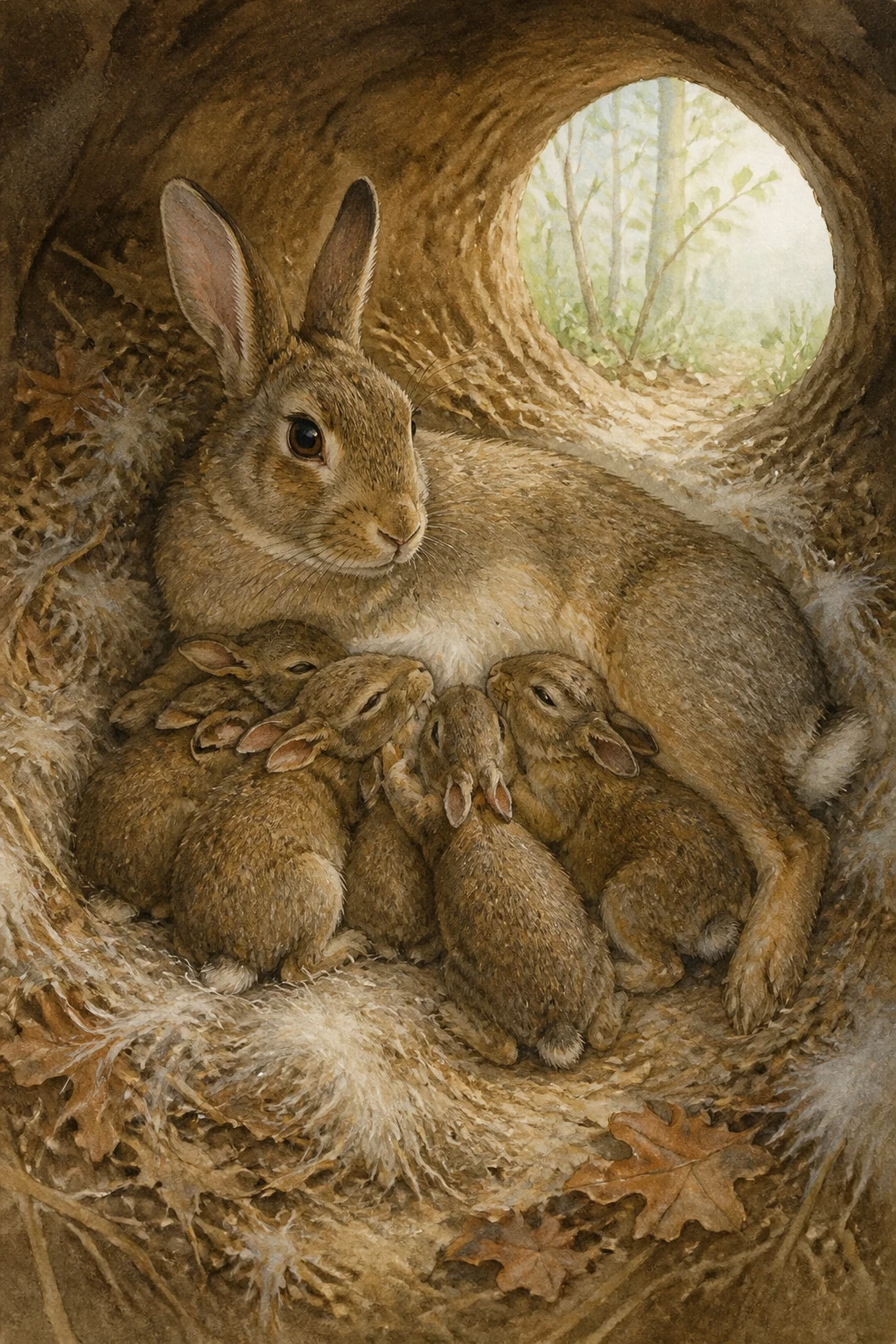
Sedem malih zajčkov je ležalo v gnezdu na dnu rova in se ves ljubi dan zvijalo, kobacalo in tiščalo mehke smrčke drug k drugemu. Življenje jim je bilo nadvse prijetno in bili so zadovoljni. Njihov prvi spomin je bil, kako so ležali na posteljici iz dlake, sena in suhega listja ter čutili tik ob sebi nekaj velikega, toplega in mehkega. Čez čas so spoznali, da je to njihova mama zajklja. Ona jim je pripravila gnezdo in ga obložila z dlako, ki si jo je populila s prsi. Ni ji bilo toliko do tega, da bi bila lepa, kakor do tega, da bi bilo njenim mladičkom udobno.
Prav mama zajklja jih je tudi hranila s toplim mlekom iz svojega telesa, dokler niso bili dovolj veliki, da bi lahko odšli iz rova. Takrat bodo grizljali lubje in nežne mlade poganjke, ki rastejo iz drevesnih korenin, pa vse tisto sveže zelenje, ki ga imajo zajci tako radi. Večkrat jim je pripovedovala o tej hrani in nenehno so se spraševali, kakšnega okusa neki je. Zdaj so se že počutili prav velike in močne. Po golih telescah jim je rasla mehka dlaka in jim prekrivala celo podplate. Rasla jim je tudi po notranji strani lic in zato so se počutili imenitne, saj je očka zajec dejal, da ne pozna nobene druge živali, ki bi imela dlako znotraj lic. Rekel je, da so lahko na to zelo ponosni, in tako so tudi bili, čeprav bi težko povedali, zakaj naj bi si kdo želel dlako znotraj lic.
Kako so se znali zaplesti med seboj! Vsak zajček je imel štiri noge, dve kratki spredaj in dve dolgi zadaj, da je lahko delal dolge skoke z enega kraja na drugega. Torej je bilo tam kar osemindvajset nog, ki so se odrivale, se zapletale v seno, brcale in včasih kar mahale po zraku, kadar so se njihovi drobni lastniki po naključju prekucnili na hrbet in se niso mogli več obrniti. Tedaj je prišla mama zajklja in jih s smrčkom malo porinila sem in malo tja, ne da bi katerega zabolelo, ter spet spravila gnezdo v red.
»Veliko dela je s pospravljanjem za otroki,« je govorila in ob tem utrujeno vzdihovala, »a ne bo več dolgo, ko bodo imeli svoje domove in bodo počeli prav isto.«
Mama zajklja je imela še kako prav, saj si vsi iz njihovega rodu že zelo mladi ustvarijo svoj dom in takrat se začnejo življenjske skrbi.
Nekega lepega jutra, ko so bili otroci sami v rovu, je največji zajček začutil nekaj čudnega na obrazu, pod dolgimi uhlji in malo pred njimi ter nad svojim radovednim smrčkom. Sprva se je skoraj prestrašil, saj česa takega še nikoli ni občutil. Potem pa je uganil, kaj to pomeni. Na obrazu je imel dve izboklinici in mama zajklja mu je povedala, da sta to očesi. »Ko boš večji,« mu je rekla, »se ti bodo oči odprle in takrat boš videl.« Zajčji otroci so namreč kot dojenčki vedno slepi.
Ko mu je mama to povedala, jo je največji zajček vprašal: »Kaj misliš s tem, da bom 'videl'? Je to kaj podobnega hranjenju?«
Mama zajklja pa je rekla: »Ne, stvari ne moreš okusiti, dokler se jih ne dotakneš, vidiš pa jih lahko tudi od daleč.« »Potem je to kakor vohanje,« je rekel največji zajček.
»Ne, tudi vohanju ni podobno, saj je veliko stvari, na primer kamenje, ki jih ne moreš zavohati, pa jih vseeno vidiš.« »Potem je pa gotovo kakor poslušanje,« je rekel največji zajček.
»Ojej!« je vzkliknila mama, ki je bila že utrujena od vprašanj, na katera ni bilo mogoče odgovoriti. »Niti malo ni podobno poslušanju. Nikoli ne bi mogel slišati črnega oblaka, ki pluje čez nebo, videl pa bi ga, če bi bil zunaj rova. Nihče ti ne more razložiti, kaj pomeni videti, dokler se ti ne odprejo oči, takrat pa boš to spoznal sam, ne da bi moral spraševati.«
Po teh besedah je največji zajček nekaj časa mirno ležal, nato pa vprašal: »Kaj je črn oblak in zakaj pluje čez nebo? In kaj je nebo in zakaj pusti oblaku, da pride? In kaj je —« A odgovora ni dobil, saj je mama, kolikor hitro je mogla, stekla iz rova.
In zdaj so se mu oči zares odpirale in bo lahko videl! Srček mu je od vznemirjenja močno razbijal in s prednjima tačkama si je drgnil obraz, da bi se mu oči hitreje odprle. Ah! Tam je bilo: nekaj okroglega in svetlega na drugem koncu rova, pred tem pa so se zibale nekakšne čudne, tanke reči. Spraševal se je, ali je tisto dobro za pod zob, a si ni upal splaziti bliže in preveriti. Ni vedel, da je okrogla, svetla reč le košček neba, ki ga je videl skozi vhod v rov, in da so tanke, zibajoče se reči veje odmrlega drevesa, ki se majejo v vetru. Nato si je ogledal bratce in sestrice, ki so ležali ob njem. Sploh ne bi vedel, kaj so, če jih ne bi hkrati tudi otipaval.
»Vidim!« je vzkliknil. »Vidim vse, kar se da videti! Prehitel sem vas! Ali si ne želite, da bi tudi vi lahko videli?« To ni bilo prav prijazno od njega, toda že čez trenutek so imeli bratci in sestrice razlog za veselje, da še ne vidijo. Še ko je govoril in gledal proti svetlobi, je zagledal rjavo glavo z dvema okroglima očesoma, ki je pokukala noter, nato pa je proti njemu priteklo veliko bitje, za katero je bil prepričan, da mora biti pes. Kako se je prestrašil! Smrček je zaril med slepe bratce in sestrice ter se poskušal skriti mednje. Mislil je, da se bo zgodilo nekaj strašnega.
»Ko bi le prišla mama zajklja,« je zacvilil in kar najtesneje stisnil oči. »Ko bi le prišla mama zajklja.« »Saj sem vendar tukaj,« mu je odgovorila. »Česa se pa bojiš?«
Največji zajček je odprl oči in pred njim je bilo bitje, ki ga je tako prestrašilo — njegova lastna mama! Lahko si mislite, kako vesela je bila, ko je videla, da ima eden njenih otrok odprte oči.
»Poklicala bom nekaj svojih zajčjih prijateljev,« je rekla, »da si jih boš lahko ogledal, če obljubiš, da se ne boš bal.« Naslednji dan so se odprle oči še štirim zajčkom, dan zatem pa so že vsi lahko videli drug drugega in svetli košček neba na koncu rova. Kmalu zatem se je zajčja družina odpravila na kosilo v gozd in takrat so otroci prvič videli očeta. Kadar jih je mama pustila same v rovu, je vhod pogosto zagrnila s travo in listjem, da bi ga skrila pred njim, saj zajčji očetje svojih otrok ne vzljubijo, dokler niso dovolj veliki, da se podajo v širni svet, zato nikakor ne smejo izvedeti, kje so skriti mladički. Oče jih je potem naučil glodati trdo lubje, da si z njim brusijo zobe, kajti zajcem zobje nenehno rastejo in bi postali predolgi, če bi jedli samo mehko hrano. Naučil jih je tudi pravilno obračati uhlje, da bi kar najbolje slišali, in jim povedal, da morajo, kadar jih kdo preganja, zbežati v rov ali v najbližjo goščavo. »Potem se potuhnite na listju, ki je enake barve kot vaš kožušček,« je rekel, »pa vas morda sploh ne bodo opazili.«
»Zakaj pa moramo zbežati?« je vprašal največji zajček. »Ker bi vas sicer lahko kdo ujel.« »Kdo pa bi nas lahko ujel?« je vprašal največji zajček.
»Oh, morda jastreb ali podlasica.« »Kakšen pa je jastreb?« »Kakor velika ptica, ki jadra po nebu,« je rekel očka zajec. »Zdaj pa me ne sprašuj ničesar več.«
»Ali je jastreb podoben tisti ptici nad nami?« je vprašal največji zajček. Oče je samo enkrat pogledal navzgor. »Da!« je rekel. »Bežite!« In ravno ko je jastreb švignil proti tlom, je zagledal devet repkov z belimi konicami, ki so izginili v bližnji rov.
Izvirnik
057 THE BIGGEST LITTLE RABBIT LEARNS TO SEE
Naslednje strani prikazujejo izvirno besedilo za primerjavo.
Seven little Rabbits lay on their nest at the bottom of the burrow, and wriggled and squirmed and pushed their soft noses against each other all day long. Life was very easy for them, and they were contented. The first thing that they remembered was lying on their bed of fur, hay, and dried leaves, and feeling a great, warm, soft Something close beside them. After a while they learned that this Something was their Mamma Rabbit. It was she who had gotten the nest ready for them and lined it with fur that she tore from her own breast. She didn't care so much about looking beautiful as she did about making her babies comfortable.
It was their Mamma Rabbit, too, who fed them with warm milk from her own body until they should be old enough to go out of the burrow. Then they would nibble bark and tender young shoots from the roots of the trees, and all the fresh, green, growing things that Rabbits like. She used to tell them about this food, and they wondered and wondered how it would taste. They began to feel very big and strong now. The soft fur was growing on their naked little bodies and covering even the soles of their feet. It was growing inside their cheeks, too, and that made them feel important, for Papa Rabbit said that he did not know any other animals that had fur inside their cheeks. He said it was something to be very proud of, so they were very proud, although why one should want fur inside of one's cheeks it would be hard to say.
What tangles they did get into! Each little Rabbit had four legs, two short ones in front, and two long ones behind to help him take long jumps from one place to another. So, you see, there were twenty-eight legs there, pushing, catching in the hay, kicking, and sometimes just waving in the air when their tiny owners chanced to roll over on their backs and couldn't get right side up again. Then Mamma Rabbit would come and poke them this way and that, never hurting any of them, but getting the nest in order.
"It is a great deal of work to pick up after children," she would say with a tired little sigh, "but it will not be long before they have homes of their own and are doing the same thing."
Mamma Rabbit was quite right when she said that, for all of their people set up housekeeping when very young, and then the cares of life begin.
One fine morning when the children were alone in their burrow, the biggest little Rabbit had a queer feeling in his face, below and in front of his long ears, and above his eager little nose. It almost scared him at first, for he had never before felt anything at all like it. Then he guessed what it meant. There were two bunchy places on his face, that Mamma Rabbit had told him were eyes. "When you are older," she had said to him, "these eyes will open, and then you will see." For the Rabbit children are always blind when they are babies.
When his mother told him that, the biggest little Rabbit had said, "What do you mean when you say I shall 'see'? Is it anything like eating?"
And Mamma Rabbit said, "No, you cannot taste things until you touch them, but you can see them when they are far away."
"Then it is like smelling," said the biggest little Rabbit.
"No, it is not like smelling, either, for there are many things, like stones, which one cannot smell and yet can see."
"Then it surely is like hearing," said the biggest little Rabbit.
"Oh dear!" exclaimed his mother, who was tired of having questions asked which could not be answered. "It is not a bit like hearing. You could never hear a black cloud coming across the sky, but you could see it if you were outside your burrow. Nobody can make you understand what seeing is until your eyes are open, and then you will find out for yourself without asking."
This made the biggest little Rabbit lie still for a while, and then he said: "What is a black cloud, and why does it come across the sky? And what is the sky, and why does it let the cloud come? And what is--" But he did not get any answer, for his mother ran out of the burrow as fast as she could.
And now his eyes were surely opening and he should see! His tiny heart thumped hard with excitement, and he rubbed his face with his forepaws to make his eyes open faster. Ah! There it was; something round and bright at the other end of the burrow, and some queer, slender things were waving across it. He wondered if it were good to eat, but he dared not crawl toward it to see. He did not know that the round, bright thing was just a bit of sky which he saw through the end of the burrow, and that the slender, waving ones were the branches of a dead tree tossing in the wind. Then he looked at his brothers and sisters as they lay beside him. He would not have known what they were if he had not felt of them at the same time.
"I can see!" he cried. "I can see everything that there is to see! I'm ahead of you! Don't you wish that you could see, too?"
That was not a very kind thing to say, but in a minute more his brothers and sisters had reason to be glad that they couldn't see. Even while he was speaking and looking toward the light, he saw a brown head with two round eyes look in at him, and then a great creature that he thought must surely be a dog ran in toward him. How frightened he was then! He pushed his nose in among his blind brothers and sisters and tried to hide himself among them. He thought something dreadful was about to happen.
"I wish Mamma Rabbit would come," he squeaked, shutting his eyes as closely as he could. "I wish Mamma Rabbit would come."
"Why, here I am," she answered. "What are you afraid of?"
The biggest little Rabbit opened his eyes, and there was the creature who had frightened him so, and it was his own mother! You can imagine how glad she was to see that one of her children had his eyes open.
"I will call in some of my Rabbit friends," she said, "and let you see them, if you will promise not to be afraid."
The next day four of the other little Rabbits had their eyes open, and the day after that they all could see each other and the shining piece of sky at the end of the burrow. It was not so very long afterward that the Rabbit family went out to dine in the forest, and this was the first time that the children had seen their father. Often when their mother left them alone in the burrow she had pulled grass and leaves over the opening to hide it from him, for Rabbit fathers do not love their children until they are old enough to go out into the great world, and it would never do for them to know where their babies are kept. Then their father taught them how to gnaw tough bark to wear their teeth down, for Rabbits' teeth grow all the time, and if they were to eat only soft food, their teeth would get too long. He taught them, too, how to move their ears in the right way for keen hearing, and told them that when chased they must run for the burrow or the nearest thicket. "Then crouch down on some leaves that are the color of your fur," he said, "and you may not be seen at all."
"Why should we run?" said the biggest little Rabbit.
"Because you might be caught if you didn't."
"What might catch us?" asked the biggest little Rabbit.
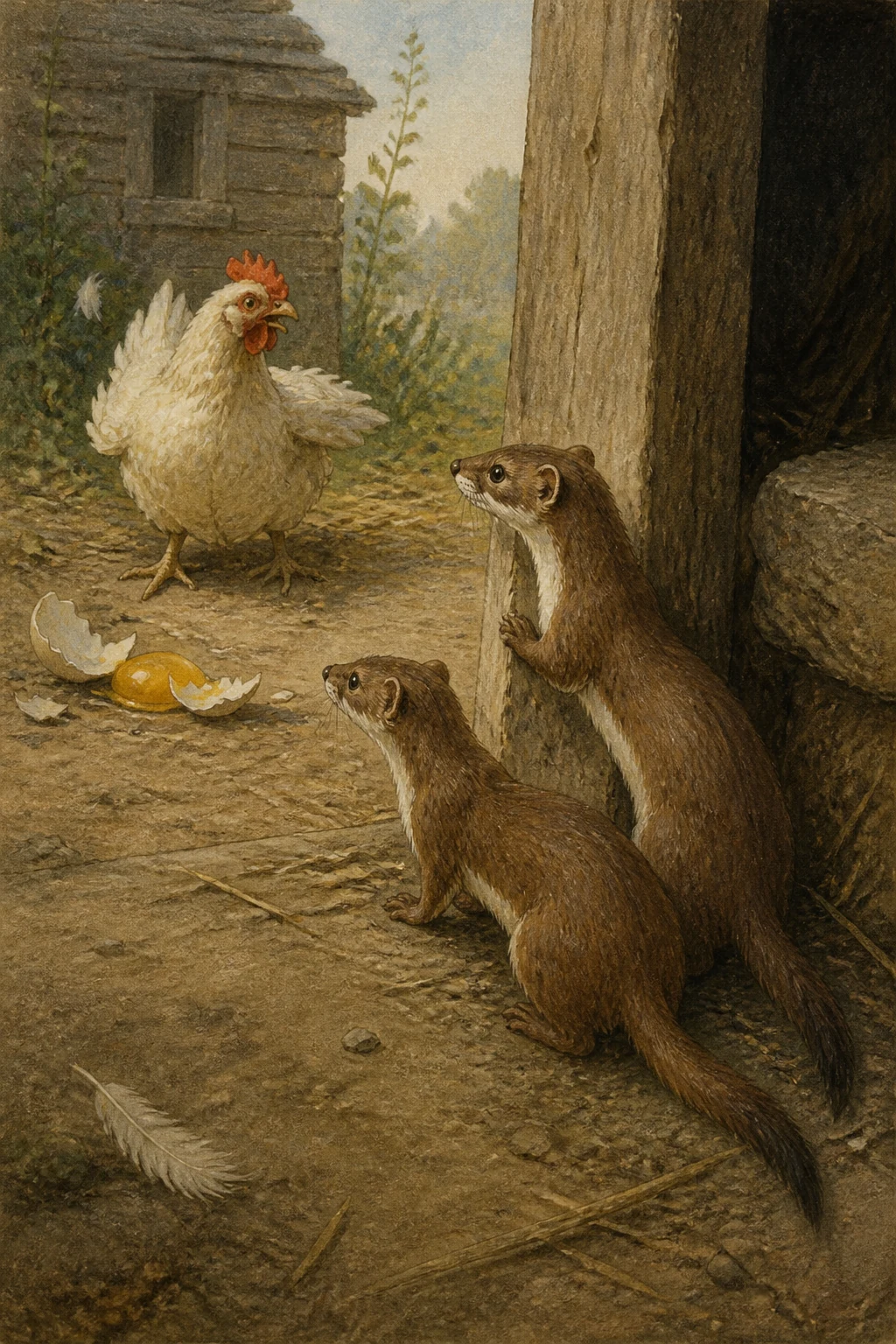
"Oh, a Hawk, perhaps, or a Weasel."
"What does a Hawk look like?"
"Like a great bird floating in the sky," said Papa Rabbit. "Now, don't ask me a single question more."
"Does a Hawk look like that bird above us?" asked the biggest little Rabbit.
His father gave one look upward. "Yes!" he said. "Run!"
And just as the Hawk swooped down toward the ground, he saw nine white-tipped tails disappear into a burrow near by.
Nadaljuj z branjem