Prevod
The son of Laius had solved the riddles that no earlier mind could fathom, and hurled headlong, the dark prophetess lay dead, forgetful of her own bewildering words. But gracious Themis did not let such things go unavenged. At once another scourge was loosed upon Aonian Thebes, a beast that country folk were forced to feed with many of their cattle and their own lives. We young men from the neighbouring country gathered and ringed the broad fields with hunters.
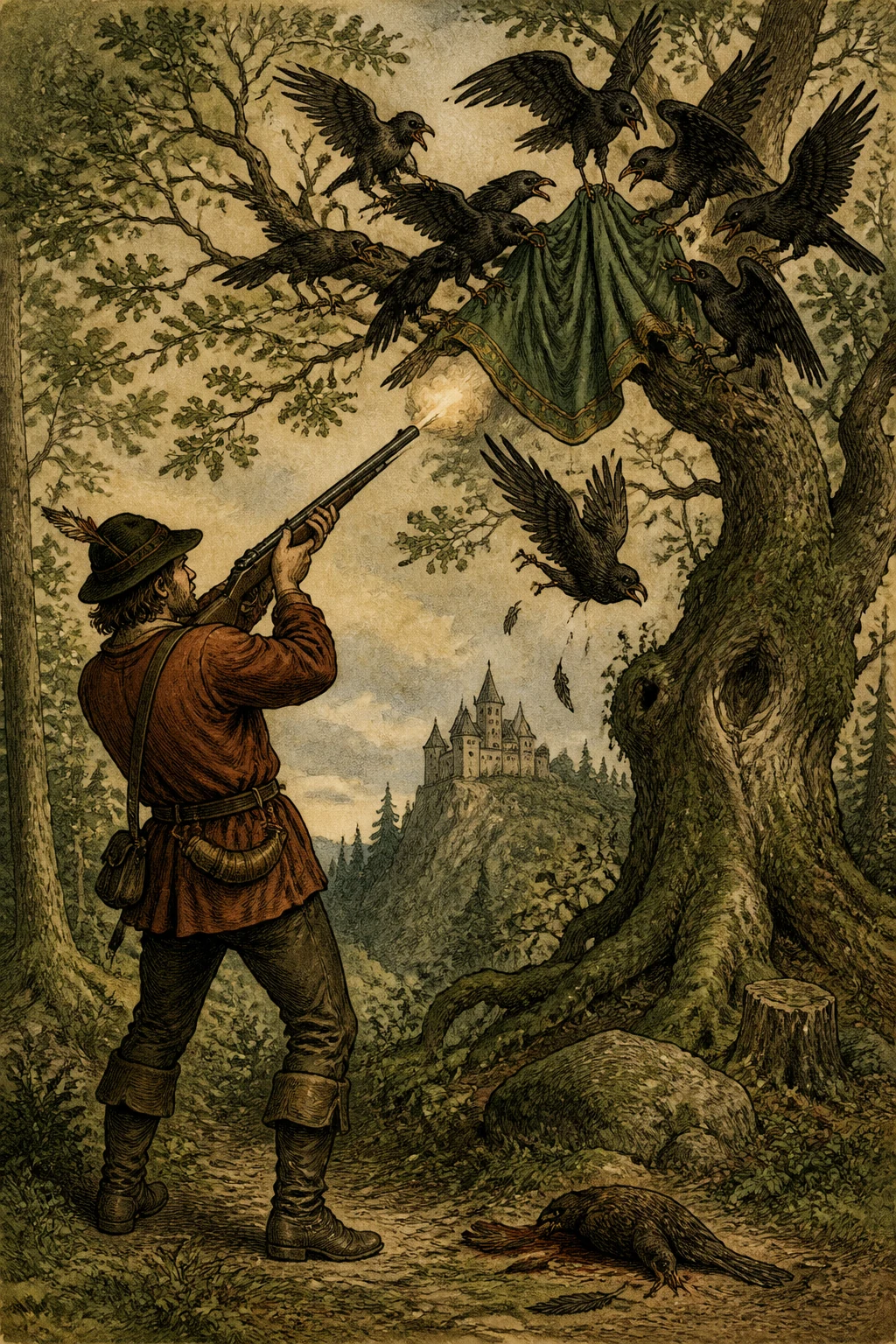
Swiftly, with a light leap, she cleared the nets and passed above the highest cords of the snares we had set. The hounds were unleashed; but she escaped their pursuit, and, no slower than a swift bird, made sport of them. Then all clamoured for me to bring out my own Laelaps (that was the name of the hound I had been given). He had long been struggling to free himself, straining against the leash that held his neck.
Scarcely had I let him go when we could no longer tell where he was. The warm dust bore the prints of his feet, but he himself had vanished from sight. No spear was swifter, nor bullets flung from a whirling sling, nor a light arrow shot from a Gortynian bow. A hilltop rose in the midst of the fields below; I climbed it and watched that strange race unfold. Now the beast seemed caught, now she seemed to slip away from his very jaws. Cunningly, she did not flee straight ahead into the open, but dodged her pursuer's mouth and wheeled round, denying her enemy a headlong charge.
He pressed close, keeping pace with his match; he seemed to have her, yet failed to seize her, his jaws snapping vainly at the air. I turned to my javelin for help. While my right hand balanced it, while I tried to slip my fingers into its throwing-loop, I glanced aside. When I turned my eyes back to the same spot, there in the middle of the field—marvellous to tell— I saw two marble figures: one seemed to flee, the other to pursue.
Clearly a god had wished both to remain unbeaten in the race, if indeed a god had been watching over them.” Here he stopped and fell silent. “But what guilt lies in the javelin itself?” Phocus asked. And he told the story of the javelin's guilt: “My sorrow, Phocus, began in joy: let me tell you of that first. Ah, how sweet to remember that happy time, son of Aeacus, when, through our first years of marriage, I was blessed in my wife, and she was blessed in her husband.
Mutual tenderness and wedded love bound us together; she would not have preferred the bed of Jove to my love, nor could any woman have won me, even had Venus herself appeared: equal flames burned in our hearts. Usually, when the sun's first rays struck the hilltops, I would go eagerly into the woods to hunt, as young men do. No servants came with me, no horses, no keen-scented hounds, nor did I take knotted nets: my javelin kept me safe. But when my hand had had its fill of slaughtering game, I would seek the cool shade and the breeze that drifted out of chilly valleys.
In the midday heat I sought that gentle breeze; I waited for it: it was my rest from toil. “Breeze,” I used to sing—I remember it well—“come, refresh me, steal into the folds against my breast, most welcome guest, and, as you always do, soothe the heat in which I burn.” Perhaps I added—for so my fate was drawing me on— still more endearments, and perhaps I would say, “You are my great delight; you restore and comfort me; you make me love the woods and lonely places, and my lips are always eager to catch your breath.”
Someone, I know not who, lent a mistaken ear to these ambiguous words, and thought the breeze's name, so often called, was a nymph's name, believing I was in love with a nymph. At once this rash informer went to Procris with his invented charge, whispering what he had heard. Love is a credulous thing: overcome by sudden grief, she fell, so I was told; and when at last she came to herself, she called herself wretched, her fate unjust, and lamented my faithlessness. Roused by a groundless charge, she feared what did not exist, feared a name without a body, and grieved, poor woman, as though her rival were real.
Yet often she doubted, and in her misery hoped she was mistaken; she refused to trust the tale and would not condemn her husband for a crime unless she saw it for herself. The next dawn's light had driven away the night. I went out into the woods, and, successful in the hunt, lay in the grass and said, “Come, Breeze, and soothe my weariness.” Suddenly, amid my words, I thought I heard some sort of groan; yet I went on, “Come, dearest!”
Then fallen leaves made a faint rustling once again; I thought it was a beast, and sent my javelin flying. It was Procris; clutching the wound in her breast, she cried, “Ah, me!” When I knew the voice of my faithful wife, I rushed headlong towards it, frantic. I found her half alive, her scattered garments stained with blood, drawing—ah, wretched me!—her own gift from her wound.
Gently I lifted in my arms that body dearer to me than my own, and, tearing the clothing from her breast, I bound the dreadful wound and tried to staunch the blood, begging her not to die and leave me guilty of her death. Her strength was gone, and she was dying, yet she forced herself to speak these few words: “By the vows of our marriage bed, by the gods above and my own, I beg you, by whatever I have done to deserve your love, and by the love that still endures, even now as I die, and is the cause of my death, do not let Aura take my place in our marriage bed.”
She spoke, and only then did I understand that a name had misled her, and explained her mistake. But what good was explaining? She sank away, and with her blood her little strength ebbed out. As long as she could still see anything, she gazed at me, and breathed her unhappy spirit into my mouth; yet her face seemed calmer as she died, her fears at rest.” In tears the hero told this tale to his weeping listeners; and now Aeacus entered with his two sons and the newly raised troops, whom Cephalus received together with their sturdy weapons.