Prevod
Here Arethusa’s tale ended. The goddess of the harvest yoked twin serpents to her chariot and curbed their mouths with reins, then rode through the air between heaven and earth and sent her light chariot to the city of Tritonia for Triptolemus. She gave him seed and bade him sow it partly in virgin soil, partly in fields reclaimed after long neglect. Already the young man had ridden high above Europe and the land of Asia; now he turned toward Scythia’s shores.
Lyncus was king there, and he entered the king’s house. Asked where he came from, the purpose of his journey, his name, and his homeland, he said, “My homeland is glorious Athens; my name is Triptolemus. I came neither by ship across the waves nor on foot over land: the open sky gave me passage. I bring the gifts of Ceres, which, scattered over broad fields, will yield fruitful harvests and wholesome food.”
The barbarian envied him, and, wishing to claim for himself the credit for so great a gift, welcomed him as a guest, then, when sleep weighed him down, attacked him with a blade. As he tried to pierce his breast, Ceres turned him into a lynx and bade the Athenian youth drive her sacred team through the air once more.” The eldest of us had finished her artful song.
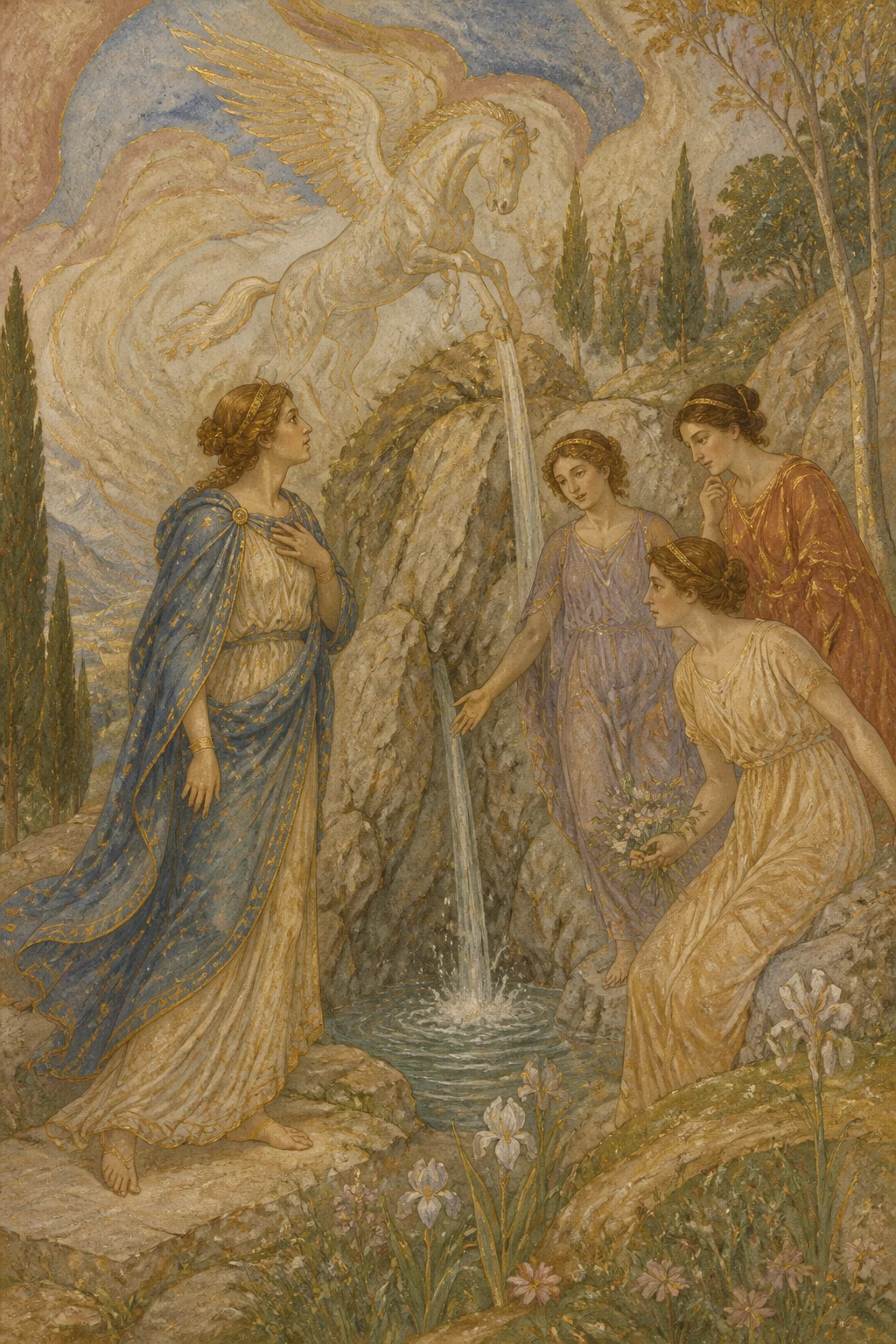
Then the nymphs declared with one voice that the goddesses who dwell on Helicon had won. When the defeated sisters hurled abuse at us, she said, “Since it is not enough that you have earned punishment by challenging us, but you add insults to your offense, and we are not free to bear this patiently, we shall exact our vengeance and follow wherever anger leads.” The daughters of Emathia laughed and scorned her threatening words.
But as they tried to speak and, with loud cries, insolently shake their fists, they saw feathers sprouting from their nails and plumage covering their arms. Each saw the other’s mouth harden into a rigid beak, and new birds flock into the woods. And as they tried to beat their breasts, their moving arms lifted them, and they hung in the air as magpies, the scolds of the woodland.
Even now these birds retain their old eloquence, their raucous chatter and insatiable urge to talk.”