Prevod
Once upon a time there was a farmer who had three sons. He was poor, old, and feeble, and his sons would not turn their hands to anything. A fine, large wood belonged to the farm, and their father wanted the lads to cut timber there and see if they could pay off some of the debt.
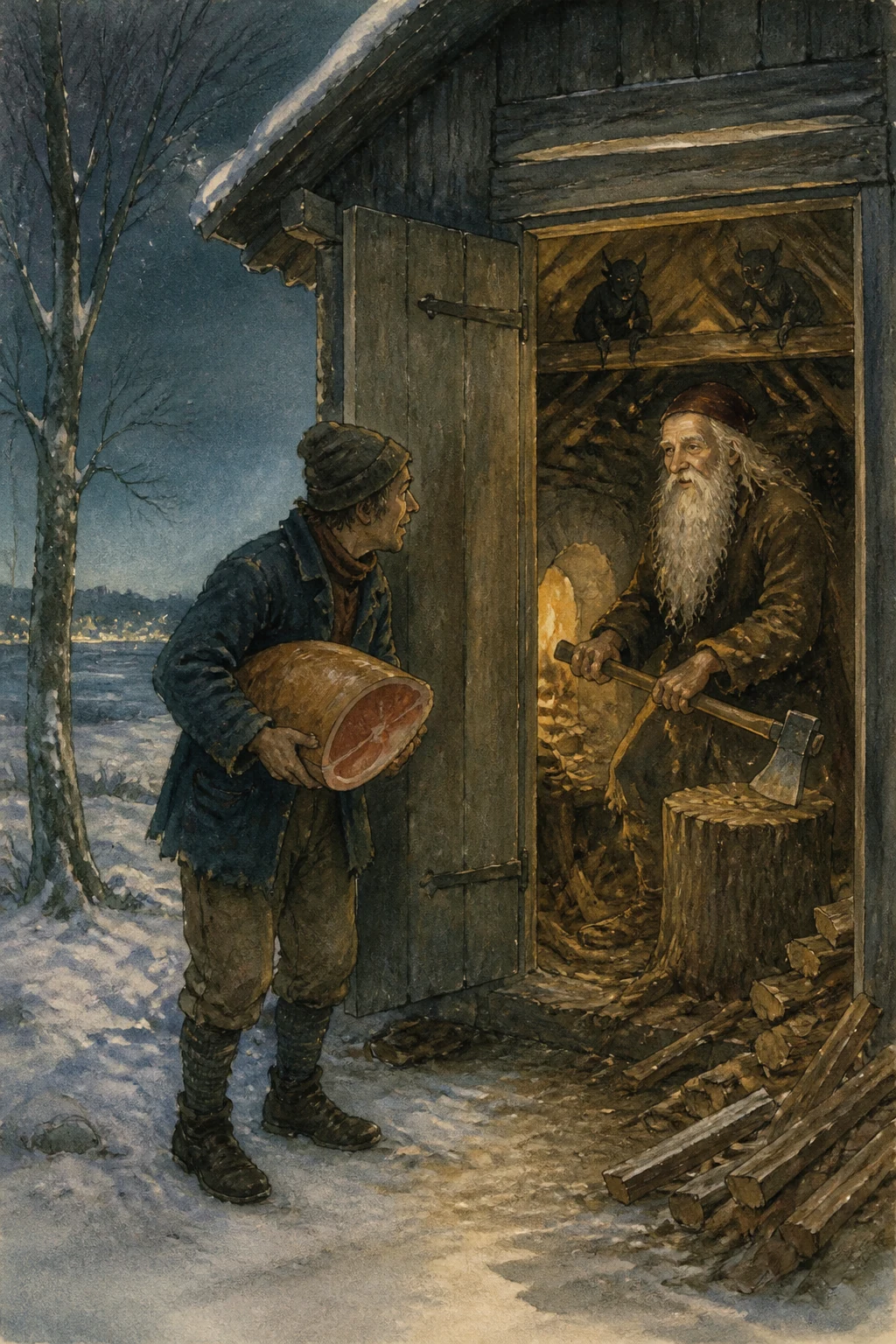
At long last he persuaded them to set to work, and the eldest was to go out cutting first. When he reached the wood and began to chop at an old spruce hung with shaggy lichen, a great, hulking troll came up to him. “If you chop in my wood, I’ll kill you!” said the troll. When the lad heard that, he flung down his axe and ran home as fast as his legs would carry him.
He arrived quite out of breath and told his father what had happened, but his father called him a chicken-heart. Trolls had never frightened him away from cutting timber when he was young, he said.
The next day it was the second son’s turn to go, and things went just the same. He had scarcely struck a few blows at the spruce when the troll came up to him too and said, “If you chop in my wood, I’ll kill you!” The lad hardly dared look at him. He flung down his axe and took to his heels like his brother, and every bit as fast. When he came home, his father was angry again and said that trolls had never frightened him when he was young.
On the third day Askeladden wanted to go. “Oh, you!” said the two eldest. “No doubt you’ll finish the job—you who’ve never so much as set foot outside the door.” Askeladden made no answer to that, but merely asked for a good supply of food to take with him. His mother had nothing to go with his bread, so she put the pot on to make him some curds. He packed them in his knapsack and set off.
He had been chopping only a little while when the troll came up to him too and said, “If you chop in my wood, I’ll kill you!” But the lad was quick: he darted over to his knapsack, took out the cheese, and squeezed it till the whey spurted out. “Hold your tongue,” he said to the troll, “or I’ll squeeze you as I’m squeezing the water out of this white stone!” “No, please, spare me!” said the troll. “I’ll help you chop.” On those terms the lad agreed to spare him, and the troll was such a fine woodcutter that between them they felled and cut up dozens of trees that day.
As evening drew near, the troll said, “Come home with me now; my house is nearer than yours.” So the lad went along, and when they reached the troll’s home, the troll was to light the fire on the hearth while the lad fetched water for the porridge pot. But there stood two iron pails so large and heavy that he could not even lift them from the ground. So the lad said, “It’s hardly worth taking these thimbles;
I’ll go and fetch the whole well.” “No, my dear fellow!” said the troll. “I can’t spare my well. You light the fire, and I’ll fetch the water.”
When he came back with the water, they cooked a great potful of porridge. “Now then,” said the lad, “what do you say to an eating match?” “Oh, yes!” answered the troll, for that was something he felt sure he could win. So they sat down at the table, but the lad secretly tied his leather knapsack in front of him, and spooned more into it than he ate himself.
When the knapsack was full, he took out his sheath knife and slit a hole in it. The troll watched him, but said nothing. When they had eaten for a good while longer, the troll laid down his spoon. “No, I can’t manage another mouthful!” he said. “You must keep eating!” answered the lad. “I’m scarcely half full yet.
Do as I did and cut a hole in your belly, and then you can eat as much as you like.” “But won’t it hurt dreadfully?” asked the troll. “Oh, nothing worth speaking of,” answered the lad.
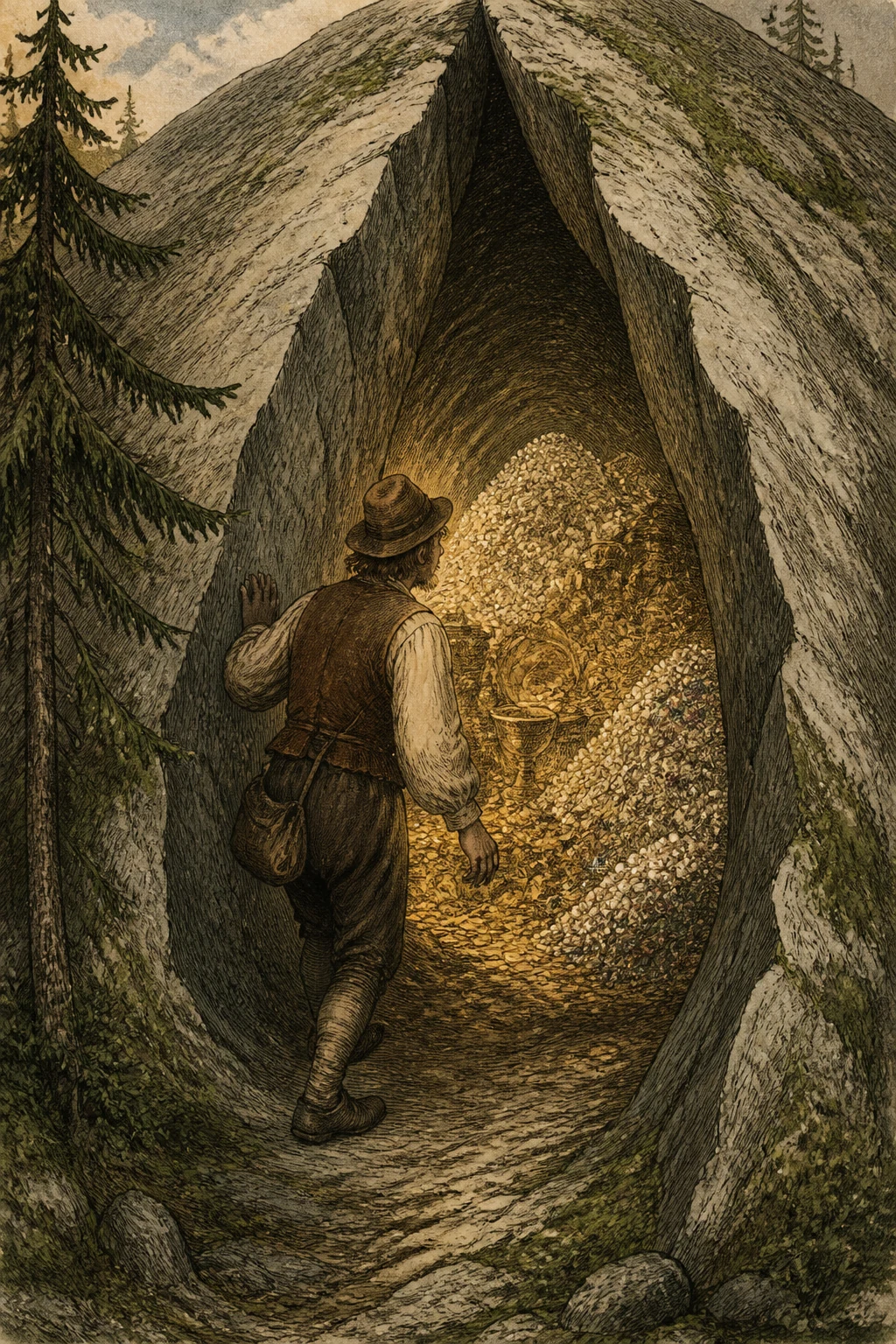
So the troll did as the lad told him, and of course that was the death of him. But the lad took all the silver and gold he could find inside the mountain and carried it home. With that, he could certainly pay off some of the debt.