Prevod
From there, wrapped in a saffron cloak, Hymenaeus departed through the boundless sky toward the shores of the Cicones, summoned, all in vain, by the voice of Orpheus. He came indeed, but brought neither the solemn words nor a joyful face nor any happy omen. Even the torch he held kept sputtering with smoke that drew tears, and no amount of shaking coaxed a flame. The outcome was worse than the omen: for as the new bride wandered through the grass, accompanied by a band of naiads, she died from a serpent’s bite in her ankle.
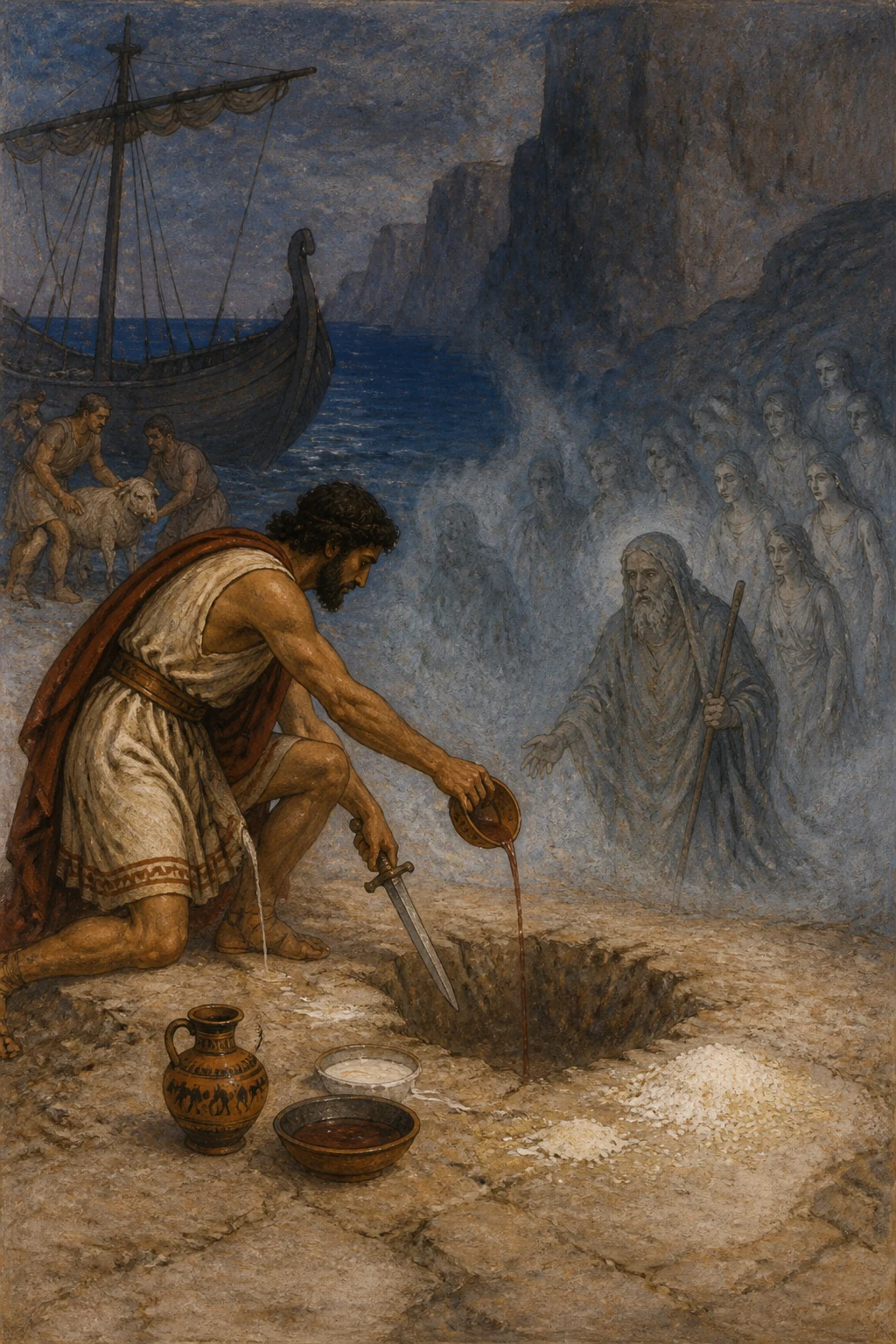
When the bard of Rhodope had mourned her long enough in the upper air, determined to try the shades as well, he dared descend to the Styx through the gate of Taenarus. Through the weightless throngs, the phantoms of the buried dead, he approached Persephone and the lord of the shades, who rules that joyless kingdom. Striking his lyre to accompany his song, he spoke: “O powers of the world that lies beneath the earth, to which all of us born mortal must return, if I may, and if you will allow me to set aside the evasions of a lying tongue and speak the truth, I have not come to gaze upon dark Tartarus, nor to bind the three throats, bristling with snakes, of the monster sprung from Medusa.
My wife is the reason for my journey: a viper she trod on poured its poison into her and stole her years of promise. I wished to find the strength to bear it; I will not deny I tried. Love conquered me. This god is well known in the world above; whether he is known here too, I cannot say. Yet I believe he is; and if the story of that ancient abduction is no lie, Love joined you too. By these places full of terror, by this vast chaos and the silence of your boundless realm, I beg you: unweave Eurydice’s fate, too swiftly spun.
We are all owed to you, and after a brief delay, sooner or later, we hasten to this one abode. We all journey here; this is our final home, and yours is the longest reign over the human race. She too, when she has lived her rightful span of years, will be yours: I ask not for a gift, but for a loan. But if the Fates deny this mercy to my wife, I am resolved not to return: rejoice in the death of two.”
As he spoke, moving the strings in time with his words, the bloodless spirits wept. Tantalus no longer reached for the retreating water, and Ixion’s wheel stood still; the birds ceased tearing at the liver, the daughters of Belus left their urns, and you, Sisyphus, sat upon your stone. Then for the first time, they say, the cheeks of the Furies grew wet with tears, overcome by his song. Neither the royal consort nor the ruler of the depths could bear to refuse his plea, and they called Eurydice. She was among the newly arrived shades, and walked slowly because of her wound.
Orpheus of Rhodope received her, and with her this condition: he must not turn his eyes behind him until he had left the valleys of Avernus, or the gift would be revoked. They took an upward path through the hushed silence, steep, dark, and thick with murky mist. They were not far from the edge of the upper world when, fearing she might falter and longing to see her, the lover turned his eyes, and at once she slipped back.
He stretched out his arms, struggling to hold her and be held, but, wretched, caught nothing but the yielding air. And now, dying a second time, she made no complaint against her husband: what could she complain of but being loved? She spoke a last “farewell,” which he could scarcely hear, and fell back once more to the place she had left. Orpheus was as stunned by his wife’s second death as the terrified man who saw the hound’s three necks, the middle one bearing chains, and whose terror did not leave him until his former nature left him too, as stone spread through his body; or Olenus, who took another’s guilt upon himself and wished to be thought the guilty one, and you, unhappy
Lethaea, who trusted in your beauty: once two hearts most closely joined, now stones upon moist Ida. The ferryman drove him back as he pleaded in vain to cross once more. Yet for seven days he sat unkempt upon the bank, without the gift of Ceres; anguish, grief, and tears were all his nourishment. Lamenting the cruelty of the gods of Erebus, he withdrew to lofty Rhodope and Haemus, lashed by the north winds.
For the third time the sun had ended the year in the sign of the watery Fishes, and Orpheus had shunned all love of women, whether because it had ended unhappily for him or because he had pledged his faith. Yet many women burned to join themselves to the bard, and many grieved at his rejection. He it was who taught the peoples of Thrace to turn their love to tender boys, and, before manhood came, to pluck the brief springtime of their years and its earliest flowers.