Prevod
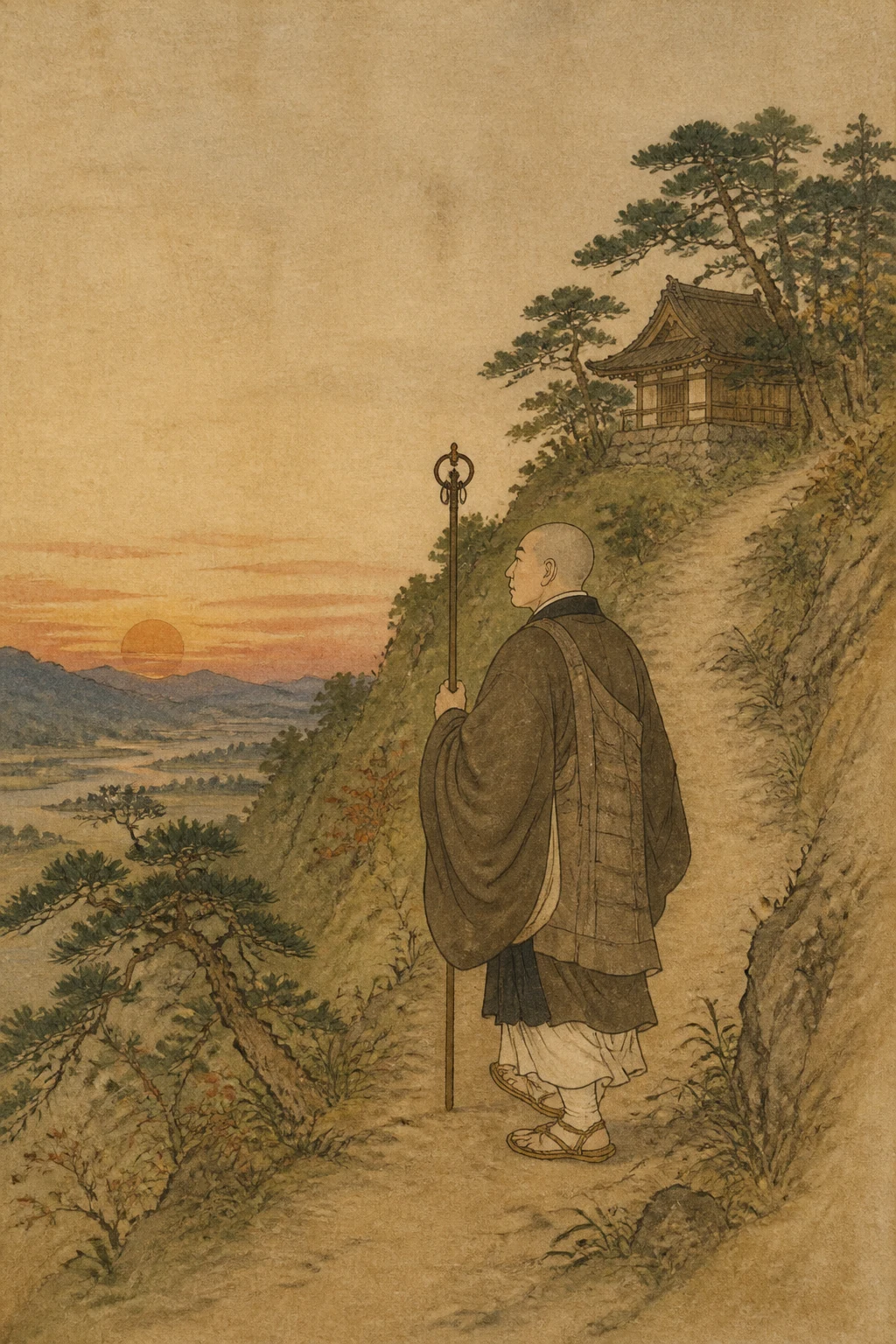
In talent and learning he had no equal within the temple. Then, suddenly, he conceived a longing to devote himself to the Way and sought to leave, but Kōshō, the senior prelate who was then the temple’s superintendent, was deeply loath to lose him and would not let him go. At his wits’ end, he took as his wife the daughter of someone in the village to the west and began visiting her, until people gradually started whispering. To make the matter known to everyone, he stood behind the woman at the gate of her house with his arms about her neck. Those who passed by were appalled and bitterly disappointed. His purpose was to make people think he had become a worthless fellow. Yet, although he lived with this wife, he never once lay with her. He would enter the worship hall and spend the whole night without sleep, shedding tears as he practiced his devotions. When the superintendent heard of this, he revered him all the more and summoned him back. Again at his wits’ end, the monk fled and became the son-in-law of the district governor of Katsuge. He deliberately refrained even from carrying prayer beads, but in his heart his devotion to the Way grew ever firmer. Now the district governor of Soejimo took notice of this holy man and came to revere him deeply. As the holy man wandered from place to place without a settled dwelling, the governor followed him, providing food, clothing, baths, and whatever else he needed. The holy man wondered why the governor and his wife attended him so faithfully, and asked what moved them to do so. The governor replied, “What reason could there be? I serve you in this way simply because I hold you in reverence. There is, however, one thing I have wished to ask.” “What is it?” the holy man asked. “How might I be with you at the hour of your death?” The holy man answered, as though the matter lay entirely within his power, “That will be very easy indeed.” The governor rubbed his hands together in delight. Years passed. One winter day, as snow was falling, the holy man arrived at the governor’s house toward evening. The governor was delighted, and, as was their custom, he and his wife prepared the food with their own hands rather than leaving it to the servants, and served it to him. After bathing, the holy man lay down to sleep. Before dawn, the governor and his wife rose early again and began preparing a variety of dishes. An exquisite fragrance arose from the place where the holy man lay, filling the entire house. They thought he must be burning some fine incense. Although he had said that he would leave early, before dawn, he did not rise even when daylight came. The governor said to his disciple, “His gruel is ready. Go and tell him.” But the disciple replied, “The holy man has a fierce temper. If I speak at the wrong moment, he may strike me. He will surely rise soon,” and remained where he was. In time the sun came up. Thinking it strange, since he never ordinarily slept so late, they approached and called to him, but there was no sound. When they drew back his covering, they found that he had already died, seated upright facing west, his palms joined in prayer. Their astonishment knew no bounds. The governor and his wife, together with the disciple and the others, wept in grief, even as they bowed before him in reverence. They understood then that the fragrance before dawn had marked the coming of his escort from the Pure Land. “It was because I asked to be with him at the end that he came here,” the governor said, and, weeping, he saw to the funeral arrangements.