Waltey
Dva budistična dostojanstvenika
Uji Shūi Monogatari · anonimna srednjeveška zbirkaO besedilu
Dva budistična dostojanstvenika
- Vir
- Uji Shūi Monogatari
- Avtor
- anonimna srednjeveška zbirka
- Jezik branja
- English
- Jezik izvirnika
- 日本語
- Čas branja
- 5 min branja
- Obseg
- 4 strani
- Naslov izvirnika
- 078 御室戸僧正事/一乗子僧正事
O izvirniku
Uji Shūi Monogatari
Srednjeveške japonske pripovedi o menihih, duhovih, čudežih, prevarah in vsakdanjih presenečenjih. Bralni jezik je English, izvirnik pa prihaja iz vira Uji Shūi Monogatari v jeziku 日本語.
Besedilo
Dva budistična dostojanstvenika
This, too, happened long ago. The Bishop of Ichijōji and the Bishop of Mimuroto were men of great distinction in the Mii lineage. The Bishop of Mimuroto was the fourth son of Takaie, Governor-General of Dazaifu; the Bishop of Ichijōji was the fifth son of Grand Counsellor Tsunesuke. The former was named Ryūmyō, the latter Zōyo. Both were holy men, living Buddhas. The Bishop of Mimuroto was too stout to go on ascetic pilgrimages. Instead, he remained constantly before his principal image, performing his devotions day and night, so that the sound of his bell never ceased. If someone happened to visit him, the gate was always barred. When the visitor knocked, someone would eventually come out and ask who was there. On being told that such-and-such a person had come, or that the visitor was a messenger from the retired emperor, the attendant would say, “I shall announce you,” and withdraw. While the visitor stood outside, the bell would ring incessantly. After a considerable while, the bar would be removed and one leaf of the gate opened just wide enough to admit a single person. Looking inside, the visitor would see a courtyard thick with grass, without so much as a trodden path. Making his way through the dew, he would enter and step up into a broad veranda one bay deep. Beside the folding door stood a paper screen, so blackened with soot that there was no telling in what age it had last been papered. After a short while, a monk in black robes would shuffle out and say, “Please remain here a little. His Reverence is at his devotions.” The visitor would wait, and after another long interval a voice from within would say, “Please come in.” When he slid aside the soot-darkened screen, incense smoke would come curling out. There sat the bishop in utterly limp, worn robes and a stole torn in places, saying nothing. Wondering what to make of this, the visitor would sit facing him. The bishop remained with his hands folded and his head slightly bowed. After a while he would say, “It is now a favourable time for my devotions. You had best return home at once.” The visitor would leave without having said what he had come to say, and the gate would immediately be barred again. Such was this man, wholly devoted to prayer in seclusion.
Concerning the Bishop of Ichijōji
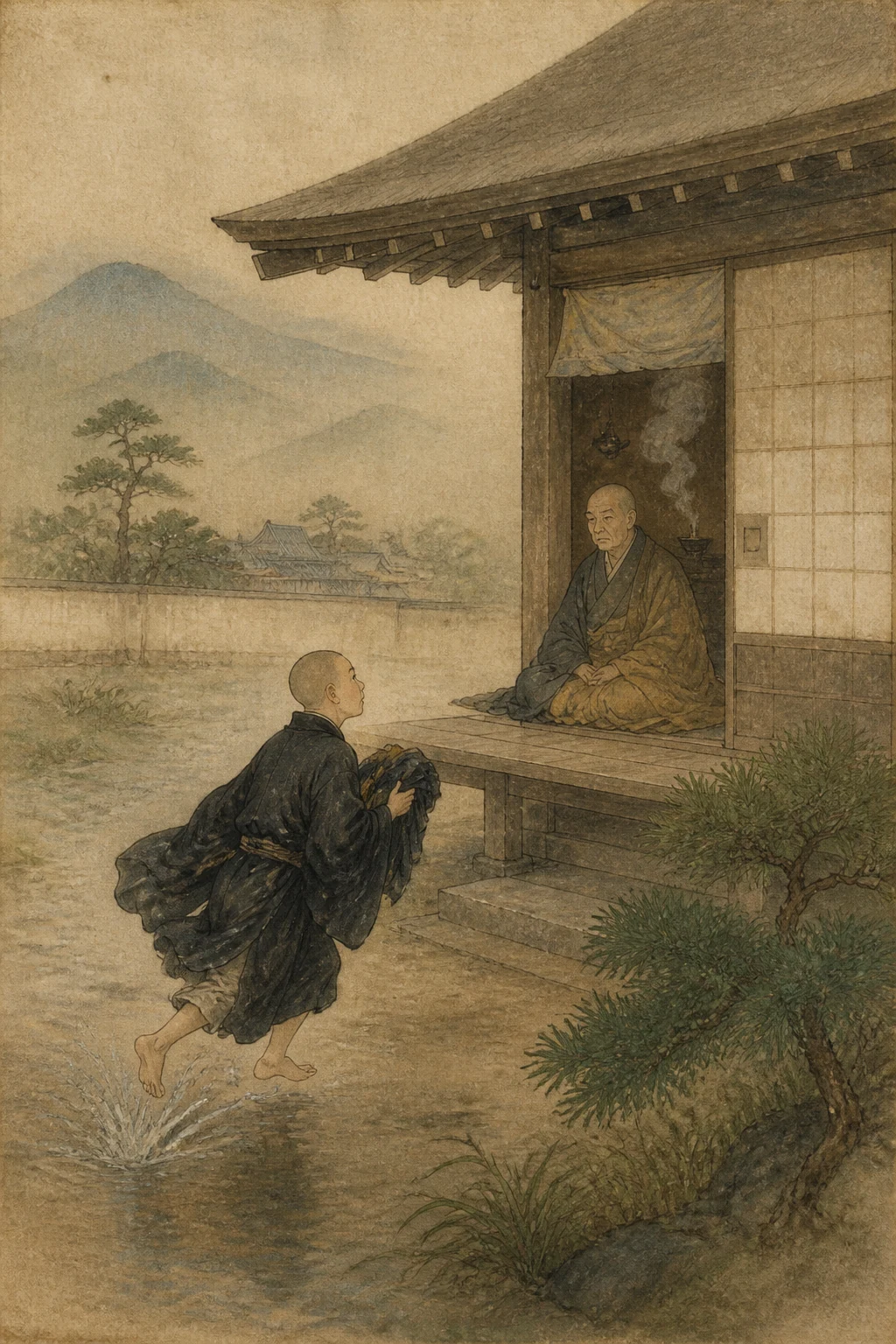
The Bishop of Ichijōji had twice traversed the sacred mountains of Ōmine. He had seen serpents and dragon steeds, and practised austerities of an extraordinary kind. His residence was a scene of bustle audible a street or two away, with dengaku and sarugaku performers thronging about, and armed attendants and men of the palace guards constantly coming and going. Merchants would enter to sell saddles, swords, and all manner of things. Since he paid whatever price they asked, they gathered there as though at a marketplace, and the treasures of the world came flowing into his house. Now he was fond of a boy called Jushi Koin. At a rice-planting celebration in Toba, this boy performed acrobatic feats. Previously, such feats had been done on upright poles, but for this occasion the bishop arranged for the performers to stand on one another’s shoulders, as they do nowadays, and make their entrance across a narrow bridge. Everyone who saw it was astonished. The bishop grew so excessively attached to the boy that he said, “There is no sense in this. Become a monk and stay beside me day and night, never leaving me.” The boy replied, “What should I do then? I should like to remain as I am a little longer.” But the bishop, out of his fondness for him, insisted, “No, you must become a monk,” and the boy reluctantly took the tonsure. Some time later, spring rain was falling steadily, and the bishop, feeling at a loose end, called someone and asked, “Are that monk’s old costumes still here?” When told that they were still in the storehouse, he said, “Fetch them.” They were brought, and he told Koin, “Put these on.” Koin demurred, saying, “I should look unseemly,” but the bishop pressed him: “Just put them on.” So he went aside, dressed, and emerged wearing his cap. He looked no different from his former self. The bishop gazed at him in admiration. Koin, too, stood there with a changed expression. “Do you still remember how to run through your feats?” the bishop asked. “I no longer remember,” he replied. “But I practised the Bamboo Leaf movement so thoroughly that I still remember a little of it.” Then, in the space left by opening the screens, he took a running leap, held his cap, and crossed in a single beat. The bishop burst into tears. “Come here,” he said, calling him close and stroking him. “Why did I ever make you take the tonsure?” he wept. “That was why I said I wanted to wait a little longer,” Koin replied. The bishop had him take off the costume and led him away behind the screens. What happened after that, I do not know.
Izvirnik
078 御室戸僧正事/一乗子僧正事
Naslednje strani prikazujejo izvirno besedilo za primerjavo.
御室戸僧正事
これも今はむかし一乗寺僧正御室戸僧正三井の門流にやんことなき人おはしけり御室戸僧正は隆家帥の第四の子也一乗寺僧正は経輔大納言の第五の子也御室戸をは隆明といふ一乗寺をは増誉といふ此二人おのおのたうとくていき仏なり御室戸はふとりて修行するに及はすひとへに本尊の御
まへをはなれすして夜昼おこなふ鈴の音絶時なかりけりをのつから人の行むかひたれは門をは常にさしたる門をたたく時たまたま人の出きてたれそととふしかしかの人のまいらせ給たりもしは院の御つかひにさふらふなといへは申さふらはむとておくへ入てむこにあるほと鈴のをとしきり也さてとはかりありて門の関木をはつして扉かたつかたを人ひとり入程あけたりみいるれは庭には草しけくしてみちふみあけたる跡もなし露を分て入てのほりたれは広庇一間有妻戸にあかり障子たてたるすすけとほりたる事いつの世にはりたりともみえすしはし斗ありて墨染きたる僧足をともせて出きてしはしそれにおはしませおこなひの程に候といへは待居たる程にとはかりありて内よりそれへいらせ給へとあれはすすけたる障子を引あけたるに香の煙くゆり出たりなへとほりたる衣に
袈裟なとも所々やふれたる物もいはてゐられたれは此人もいかにと思てむかひゐたるほとにこまぬきてすこしうつふしたるやうにてゐられたりしはしある程におこなひの程よくなり候ぬさらはとく帰らせ給へとあれはいふへき事もいはていてぬれは又門やかてさしつこれはひとへに居おこなひの人なり
一乗子僧正事
一乗寺僧正は大峰は二度とほられたり蛇をみらる又竜の駒なとをみなとしてあられぬありさまをしておこなひたる人也その坊は一二町はかりよりひしめきて田楽猿楽なとひしめき随身衛府のおのこともなと出入ひしめく物うり共入きて鞍太刀さまさまの物を売をかれかいふままにあたいをたひたれは市をなしてそつとひけるさて此僧正のもとに世の宝はつとひあつまりたりけりそれに呪師小院といふ童を愛せられたり鳥羽の田植にみつきしたりけるさきさきはくひに乗つつみつきを
しけるをこの田うへに僧正いひあはせてこの比するやうに肩にたちたちしてこははより出たりけれは大かたみる物もおとろきおとろきしあひたりけりこの童あまりにてうあひしてよしなし法師になりて夜るひるはなれすつきてあれとありけるを童いかか候へからんいましはしかくて候ははやといひけるを僧正なをいとおしさにたたなれとありけれは童しふしふに法師に成てけりさて過るほとに春雨うちそそきてつれつれなりけるに僧正人をよひてあの僧の装束はあるかととはれけれはおさめ殿にいまた候と申けれは取てこといはれけりもてきたりけるをこれをきよといはれけれはこの呪師小院みくるしう候なんといなみけるをたたきよとせめの給けれはかたかたへ行てさうそきてかふとしていてきたりけりつゆむかしにかはらす僧正うちみてかいをつくられけり小院又おもかはりしてたてりけるに僧正いまたはしりてはおほゆやとあり
けれはおほえさふらはすたたしかたささはのてこそよくしつけて候し事なれはすこしおほえ候といひてせうのなかわりてとほるほとをはしりてとふかふともちて一拍子にわたりたりけるに僧正こゑをはなちてなかれけりさてこちこよとよひよせてうちなてつつなにしに出家せさせけんとてなかれけれは小院もされはこそいましはしと申候し物をといひて装束ぬかせて障子のうちへくしていられにけりそののちはいかなる事かありけんしらす
Nadaljuj z branjem