Prevod
I write this traditional tale to atone for a grievous sin I committed against history and literature as a young man. I was eighteen and taking my first faltering steps as a writer and poet. My fondest dream was to hear, amid the applause of a good-natured audience, the discordant cries of “Author! Author!” At that age everything seemed as easy as falling off a log, and I imagined that with four ill-stitched verses and a dozen still more loosely cobbled little articles I had planted a victorious standard in Flanders—or another in Jerez. Devil take me if I so much as glanced at the classics, or knew from personal experience that old parchments were breeding grounds for moths. I would very nearly have dared give the greatest literary expert a generous head start and still expected to beat him, though I was then one of those blockheads who, despite eating bread instead of acorns, drag Don Quixote through the mud, calling it a preposterous book with neither head nor tail. Why? Just because. This “just because” is a lame excuse, an argument of unquestionable and capricious brutality, I grant you; but it is the argument all men advance when they have no argument.
Since ignorance is bold, I took to writing for the stage; and may God forgive me if every one of my dramatic monstrosities was not a ruffian’s stab at common sense, the Muses, and history. And yet there were simpletons in the audience who called the murderous poet onto the stage and, instead of throwing the benches at his head, showered him with little wreaths of imitation laurel. It is true that in those days I was not the only wretch whose phenomenal productions brought discredit upon our national theater, distinguished by the fine comedies of Pardo and Segura. There is some comfort in knowing that not all the cloth goes to make one pair of saddlebags.
One of my dramatic follies was entitled Rodil, a sort of scorpion with four tails, or acts; and fool that I was, I was so stupid that I not only thought my offspring the eighth wonder of the world but, worse luck, allowed a friend of mine, who had little of Solomon about him, to have it put into print. What a wretched waste of ink and paper!
The thing was neither a drama nor anything remotely resembling one. Flat-footed verse, foolish lyricism, outlandish dialogue, an implausible plot, incidents dragged in by force, impossible characters, the proprieties of language kicked to pieces, history rearranged to suit my fancy, and... well, it was a monstrosity deserving a magnificent thrashing. Thus, by way of disowning such an offspring, I write this traditional tale, in which I shall at least respect the rights of history, and Rodil’s shade will have no grounds to accuse mine of slander and box its ears when the two happen to collide in the Valley of Jehoshaphat.
“Enough preamble! Get to the deed!” exclaimed the presiding judge of a court, interrupting a lawyer who was indulging in flourishes and circumlocutions in a plea concerning the parentage or paternity of a suckling infant. The lawyer then rattled off: “The deed is done, and the child is here; the man who did the deed denies it: there you have the deed.”
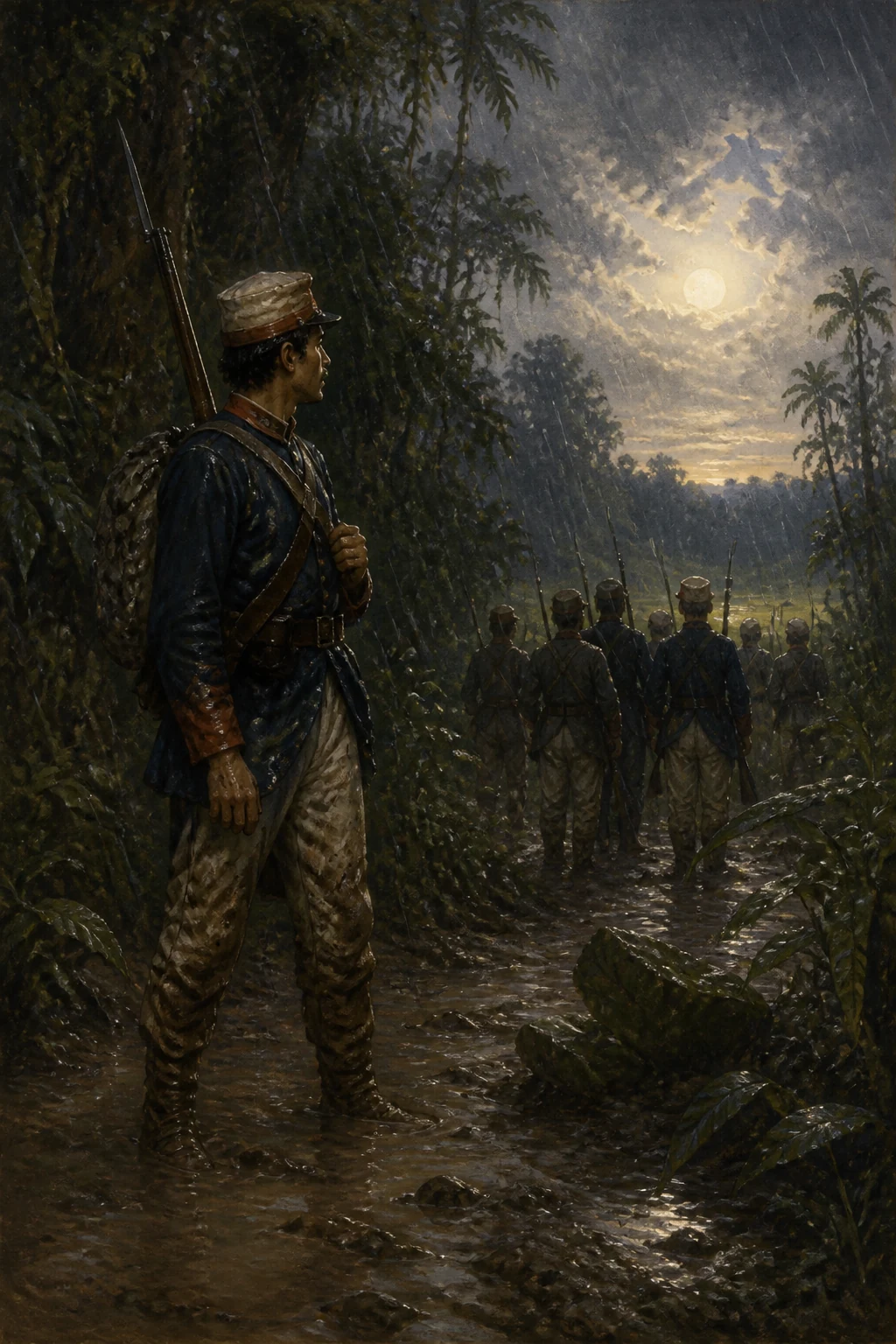
I The Battle of Ayacucho secured the independence of South America. Nevertheless, as though Providence were playing a prank, Spain continued for thirteen more months to rule an area of half a square league. Sergeant Moyano’s treachery in February 1824 had handed the royalists a stronghold that was well garrisoned and amply supplied with ammunition. The banner of Castile flew over Callao, and it must be admitted that Rodil’s obstinacy in defending this last bastion of the monarchy bordered on heroic recklessness. The historian Torrente, who calls Rodil the new Leonidas, says that he did too much for his glory as a soldier. Stevenson and even García Camba agree that Rodil was cruel to the point of barbarity, and that he need not have maintained so desperate a resistance to preserve his reputation and safeguard the honor of Spanish arms.
With no hope of reinforcements arriving from Spain, nor of any reaction within the country in favor of colonial rule, and watching his comrades disappear day by day, decimated by scurvy and republican bullets, the indomitable obstinacy of Callao’s commander nevertheless did not falter for a moment.
We have made many inquiries into the origin of the name Callao, borne by the republic’s principal port, and among the various explanations the most widely accepted is that it comes from the abundance on its beach of the small pebbles sailors call zahorra or callao.
As the years pass, the figure of Rodil takes on legendary proportions. More than a man, he seems to us a fantastic being, a will of bronze embodied in a frame of steel. Ever watchful, he never allowed his men to discover what hours he devoted to rest, and at the most unexpected moment he would appear like a ghost on the bastions and in his soldiers’ barracks. Not even the relentless pestilence that carried off six thousand of Callao’s inhabitants assailed him for an instant, for Rodil had taken the precaution of having draining sores opened in his arms.
Rodil was a Galician, born in Santa María del Trovo. A student of law at the University of Santiago de Galicia, he left its halls with other students and in 1808 enlisted in the battalion of university cadets. In April 1817 he arrived in Peru with the rank of first adjutant in the Infante Regiment. Promoted shortly afterward to major, he was entrusted with forming the Arequipa Battalion. Rodil took his recruits to the lonely little island of Alacrán, off Arica, where he spent months drilling them until Osorio took him to Chile. There, commanding the unit he had created, Rodil fought in the battles of Talca, Cancharrayada, and Maipú.
He returned to Peru, took an active part in the campaign against the patriots, and was wounded on July 7, 1822, in the engagement at Pucarán. When Brigadier Don José Ramón Rodil assumed the political and military governorship of Callao in 1824, he had been awarded the crosses of Somorso, Espinosa de los Monteros, San Payo, Tumanes, Medina del Campo, Tarifa, Pamplona, and Cancharrayada, crosses attesting to the battles in which he had enjoyed the good fortune to find himself among the victors. With Callao besieged by Bolívar’s troops under General Salom and by the patriot fleet, which had 171 cannon at its disposal, the resistance was truly titanic. History records the capitulation of January 23, 1826, honorable to Rodil, when the brave Spanish commander, in full dress uniform and with the prescribed military honors, left the castle to embark aboard the British war frigate Briton. General La Mar, who was, to borrow a happy expression from the Inca Garcilaso, a gentleman most gentlemanly in all his dealings, paid a just tribute on this occasion to Rodil’s courage and loyalty. From March 1, 1824, when he replaced Casariego in command of Callao, until January 1826, scarcely a day had passed without his fighting.
During the siege Rodil had to display extraordinary activity, boundless cunning, and unshakable energy in suppressing plots. In a single day he had thirty-six conspirators shot, an act of cruelty that surrounded him with a terrifying, even superstitious awe. One of those executed on that occasion was Frasquito, an Andalusian lad much loved for his jokes and wit, who served as Rodil’s secretary.
General Canterac—who met so sad a death in 1835 while attempting to quell a barracks mutiny in Madrid—was commissioned by the viceroy, the Count of the Andes, to conclude the Treaty of Ayacucho, which stipulated the immediate surrender of the castles. On receiving the letter or dispatch in which Canterac copied out the article of capitulation concerning Callao, Rodil exclaimed furiously: “By thunder! Let them capitulate, since they let themselves be beaten—not I! Trying your lawyer’s tricks on me? As long as I have powder and shot, I want no haggling with those b...lasted insurgents.”
II During the siege he fired upon the patriot camp at Bellavista 9,553 cannonballs, 454 bombs, 908 shells, and 34,713 rounds of grapeshot, killing seven officers and 102 enlisted men among the besiegers, and wounding six officers and sixty-two soldiers. The patriots, for their part, were not sparing in their reply, firing 20,327 cannonballs, 317 bombs, and an incalculable quantity of grapeshot upon the fortresses.
At the beginning of the siege Rodil had a garrison of 2,800 soldiers in the castles; on the day of capitulation he had only 376 men fit to handle a weapon. The rest had succumbed to the ravages of disease and republican bullets. In the streets of Callao, where a year earlier there had been more than 8,000 refugees or supporters of the king, scarcely 700 souls remained to witness the end of the siege. According to García Camba, 6,000 fell victim to scurvy and 767 died in combat.
In the first months of the siege Rodil expelled 2,389 people from the stronghold. The government in Lima resolved to admit no more of those expelled, and there followed the savage spectacle of wretched women who could neither proceed to the camp at Miranaves nor return to the town, since both sides drove them back with gunfire. The unfortunate creatures found themselves between two fires, suffering anguish beyond the power of any human pen to describe. Here is what Rodil says on the subject in the curious manifesto he published in Spain, without in the least managing to excuse an act devoid of all humanity.
“Since I needed to reduce the population in order to curtail the consumption of supplies that could not be replenished, I ordered those who could not subsist on their own provisions or labor to leave Callao. This order was carried out prudently, gradually, and successfully. News of the first departures encouraged those who lacked the means to live in the town, and in four months I rid myself of 2,389 useless mouths. On the fourteenth departure, the enemy realized that keeping them would be harmful to me, and made an inhuman attempt to refuse them admission. I firmly drove them back.”
It is needless to pass judgment on these lines: every generous heart has already done so. If the besiegers’ conduct was barbarously unworthy and foreign to the compassionate character of the Peruvians, the judgment of history will find the conduct of the stronghold’s governor no less reprehensible.
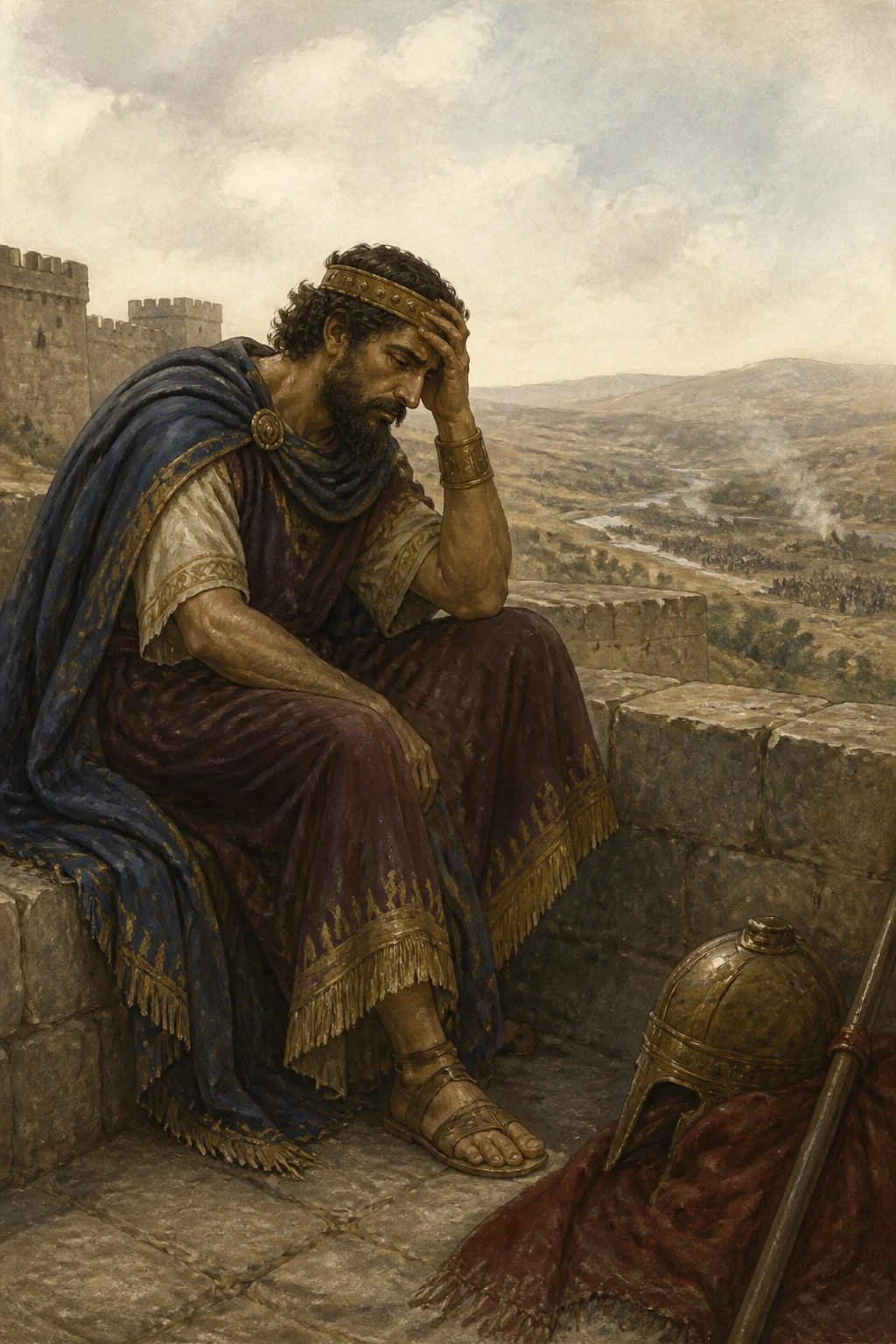
Rodil was determined to prolong the resistance, but his courage faltered when, in the first days of January 1826, he found himself abandoned by his intimate friend Major Ponce de León, who went over to the patriot ranks, and by Major Riera, governor of the castle of San Rafael, who surrendered that fortress to the republicans. Both knew the secret of the mines that were to explode when the patriots launched a full-scale assault. They knew in the minutest detail the entire plan of defense devised by the dauntless brigadier. The treachery of his friends and lieutenants had made further defense impossible.
On January 11 negotiations began which ended with the capitulation of the 23rd, honorable to the vanquished and magnanimous on the part of the victor.
The flags of the Infante Don Carlos and Arequipa regiments, units much beloved by Rodil, were granted him to take back to Spain. Of the nine Spanish flags captured at Callao, General La Mar ordered one sent to the government of Colombia, four kept in Lima Cathedral, and the other four in the church of Our Lady of Mercy, patroness of Peruvian arms.
Are such precious relics still preserved? I cannot answer that question, reader. III Upon Rodil’s return to his homeland, his countrymen treated him with special distinction; of all those who had served in Peru, he alone escaped the epithet ayacucho, bestowed in Spain upon Espartero’s political friends. Rodil played a very prominent part in the civil war between the Cristinos and the Carlists; and since we have not set out to write a biography of this personage, we shall merely say that he held the most important and honorable offices. He was commander in chief of the army that secured the crown of Portugal upon the brow of Doña María de la Gloria. He afterward commanded the army that defended Isabel II’s right to the Spanish throne, though he met with little success in the military operations of this struggle, which ended only when Espartero eclipsed Rodil’s prestige.
He was viceroy of Navarre, Marquis of Rodil, and successively captain general of Extremadura, Valencia, Aragon, and New Castile; deputy to the Cortes, minister of war, president of the Council of Ministers, senator of the Upper Chamber, grandee of the realm, knight with collar and star of the Order of the Tower and Sword, holder of the Grand Cross of the orders of Isabella the Catholic and Charles III, and knight with sash of the orders of San Fernando and San Hermenegildo. Political and even personal antagonism always existed between him and Espartero, reaching such extremes that in 1845, when the Duke of Victory was a minister, he had Rodil court-martialed and stripped of his offices, honors, titles, and decorations. At the next turn of the tables, when Espartero fell, the new ministry pardoned Rodil and restored his rank of captain general and his other privileges.
The Marquis of Rodil never again took an active part in Spanish politics, and died in 1861. Espartero died in January 1879, aged over eighty.
IV Disheartened and convinced of the futility of their efforts and sacrifices, Rodil’s companions began conspiring against their commander. This anonymous squib gives a clear idea of the mood among the castle’s inhabitants:
As we were, so we remain; as we are, we shall remain. Enemies we have, it’s true; friends... we’re waiting still for you. President Marquis de Torre-Tagle and his vice president, Don Diego Aliaga, the counts of San Juan de Lurigancho, Castellón, and Fuente González, and other figures of the colonial nobility had died of the scurvy and dysentery that develop in any ill-provisioned stronghold. Officers and men were reduced to rations of horsemeat, and the besieged, who had gold to spare, paid fabulous prices for a small loaf or a piece of fruit. The Marquis de Torre-Tagle, already dying of scurvy, obtained three Ceuta lemons in exchange for as many small plates of solid gold, and a time came when rats were sold as a delicious delicacy.
Meanwhile, letters and proclamations from the patriots mysteriously found their way into Callao, encouraging the conspirators. Today Rodil would uncover a conspiracy and immediately, without formalities or trial, order those involved to be shot; tomorrow he would have to repeat the punishments of the day before. Often finding a traitor in the very man who had most elaborately professed his loyalty to the king’s cause, Rodil suffered the torment of distrusting even the collar of his own shirt.
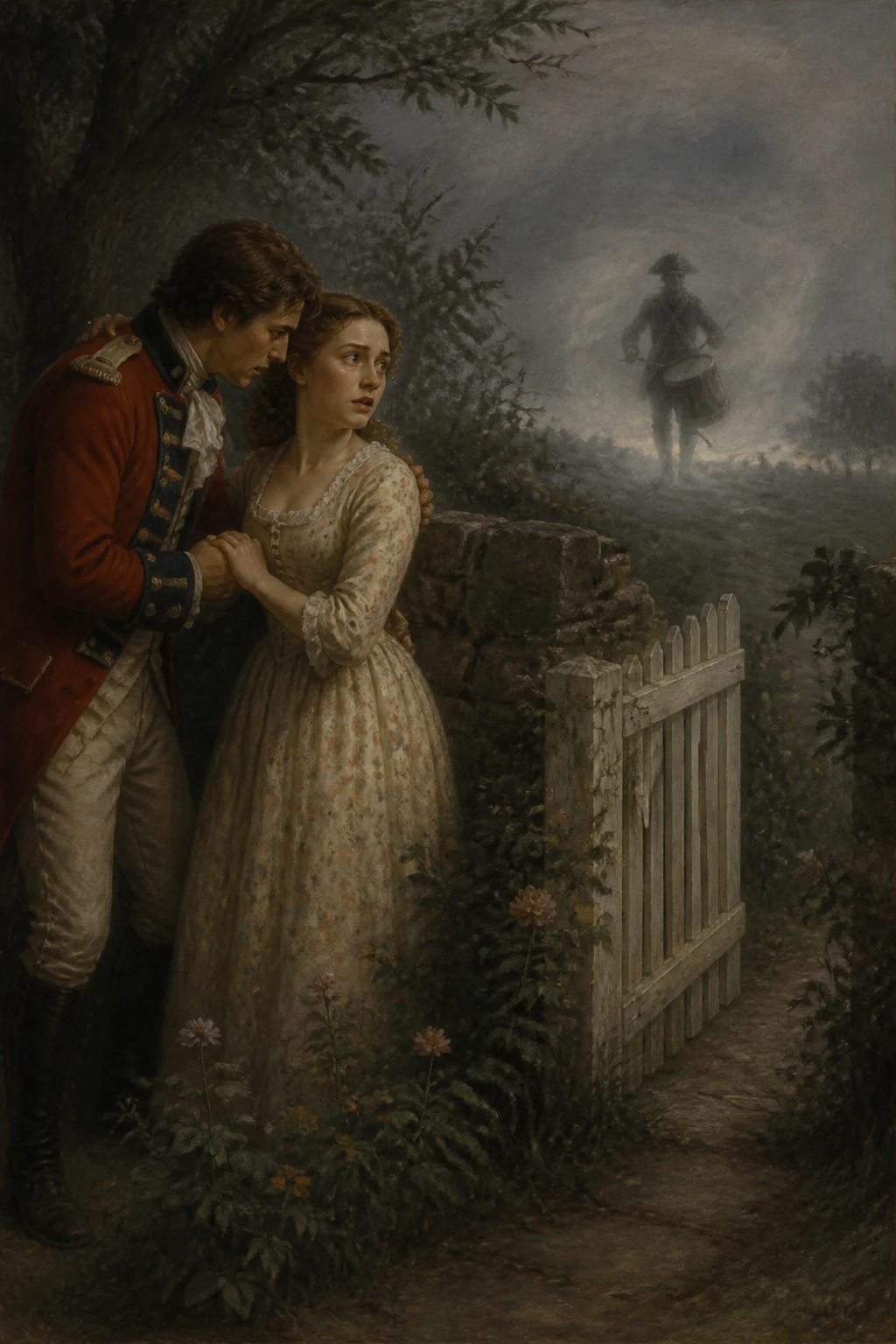
The women shut up in Callao were the most active conspirators. General Salom’s soldiers would come by night to within musket range and shout:
“Off to Lima, girls! The fatherland will put flesh on your bones and color in your cheeks!”—words that held an appetizing promise for the poor daughters of Eve, whom hunger and anxiety had left gaunt and hollow-eyed.
V Despite the frequent executions, the seed of sedition did not die out, and a day came when souls from the other world turned revolutionary. Little did the poor things know that Don Ramón Rodil was a man to stand his ground against the whole of purgatory!
What happened was that one morning two sentries on a bastion or stretch of rampart facing Bellavista were found unconscious and foaming at the mouth. The pair were two rough Galicians, fellows of little learning and less judgment, as stupid as they were brave, capable of felling a bull with a blow between the horns and putting a bullet through the rump of the very cock that crowed during the Passion; but the poor devils were men of their time—in other words, superstitious and fanatical to the utmost degree.
When they came to, one declared that at the hour when Peter denied the Master a Franciscan friar, his hood pulled low, had appeared before him as though spewed up by the earth, and in that nasal voice said to be fashionable in the next world had asked, “Little brother! Has the nun gone by?”
The other soldier declared much the same, saying that a woman in the habit of a Poor Clare nun had appeared to him and said, “Little brother! Has the friar gone by?”
Both added that, being unaccustomed to speaking with people from the other life, they had forgotten the watchword and neglected to challenge the apparitions, for their flesh had turned to gooseflesh, their hair had stood on end, the words had stuck in their throats, and they had dropped like logs.
To cure them of their fright, Don Ramón Rodil ordered them to run the gauntlet. The commander of Real Felipe, who was not one to swallow any old tale or take fright at goblins or the devil himself in a crown, began pondering the ghosts, and the notion lodged firmly in his head that the whole affair reeked of a revolutionary plot. With such skill did he set to work, and to such expedients did he resort, that eight days later he established that the friar and the nun were merely flesh-and-blood conspirators who used their disguises to approach the wall and exchange letters with the patriots by means of a rope.
Day was breaking when Rodil in person put a dozen suspects behind bars in the castle’s casemate, while at the same time ordering the friar and nun shot, leaving their habits to serve as shrouds.
Although since that day no ghosts have returned to wander or seek adventures along the walls of the now almost ruined Real Felipe, the people, ever inclined toward the supernatural and marvelous, nevertheless continue to believe implicitly that the friar and the nun came to Callao by direct express from the land of skulls, solely for the pleasure of giving an almighty fright to the pair of simpletons standing sentry on the castle bastion.