Prevod
The town of Tintay, situated on a hill above the Pachachaca in the province of Aymaraes, was in 1613 the seat of the district of Colcabamba. Nearly six thousand Indians lived in the town, and to convey its importance, it is enough to say that it had four churches.
Every January, the cacique of Tintay fulfilled his obligation to travel to Cuzco and deliver the collected tribute to the corregidor, and the Indians celebrated his return with three days of hearty revelry.
In February of that year, the cacique returned to his town bitterly aggrieved at the Spanish authorities, who had treated him with scant respect. Perhaps for this reason the festivities were livelier than usual; and on the last day, when drunkenness reached its height, the cacique gave free rein to his anger with these words:
—Our fathers poured their libations from golden cups, while we, their degenerate sons, drink from earthenware bowls. The viracochas are masters of all that is ours, because we have debased ourselves so far that the courage to break the yoke has died in our souls. Slaves, dance and sing to the clanking of your chains. Slaves, drink from crude vessels, for those of precious metal are not for you.
The cacique’s reproach inflamed the Indians, and one of them, smashing the earthenware vessel he held in his hand, exclaimed: —Let all who wish to drink from a golden cup follow me!
The people surged forth like a river bursting its banks and, storming the churches, seized the golden chalices set aside for the holy sacrifice.
The priest of Tintay, a venerable old man, appeared at the door of the parish church with a crucifix in his hand, admonishing the desecrators and barring their way. But the Indians, maddened by drink, threw him to the ground, trampled over his body, and entered the sanctuary with dreadful cries.
There, upon the high altar and in the sacred chalice, they committed sacrilegious profanations. But amid the dancing and uproar, the voice of the minister of the Most High rang out, terrible, mighty, irresistible, crying:
—Accursed! Accursed! Accursed! The sacrilegious orgy continued until midnight, and at last, worn out with fatigue, the impious revelers gave themselves over to sleep.
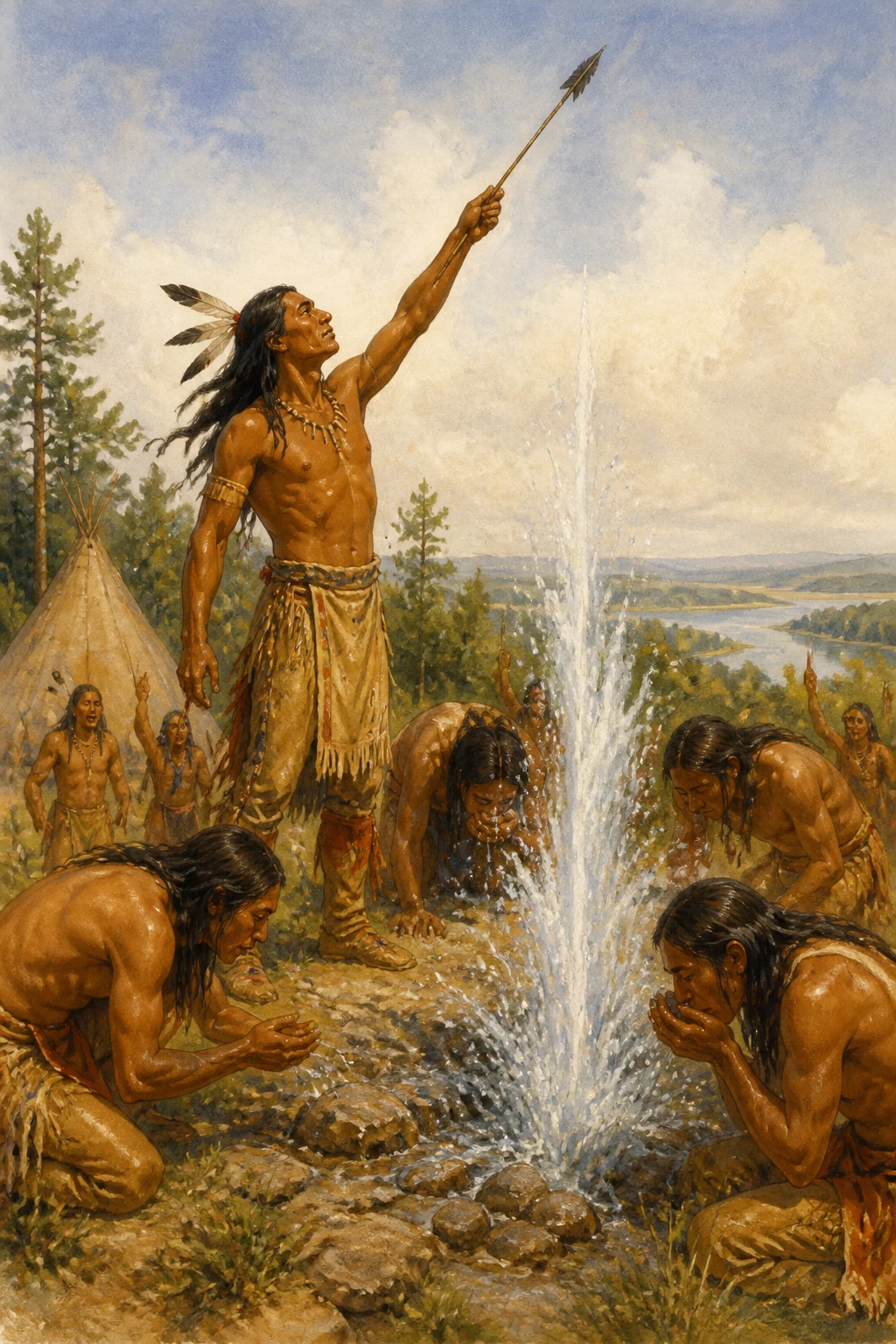
At dawn, many awoke suffering the torments of a consuming thirst, and their wives and children went out to fetch water from the neighboring streams.
Behold the power of God! The streams were dry. Today (1880), Tintay is a poor, gloomy-looking village of three hundred and forty-four inhabitants, with little vegetation in the surrounding countryside. The water in its streams is slightly brackish and unwholesome for travelers.
Among the ruins, in 1804, an image of the Lord of the Exaltation was found perfectly preserved. On September 14, the faithful come from ten leagues around to attend its solemn feast.