Prevod
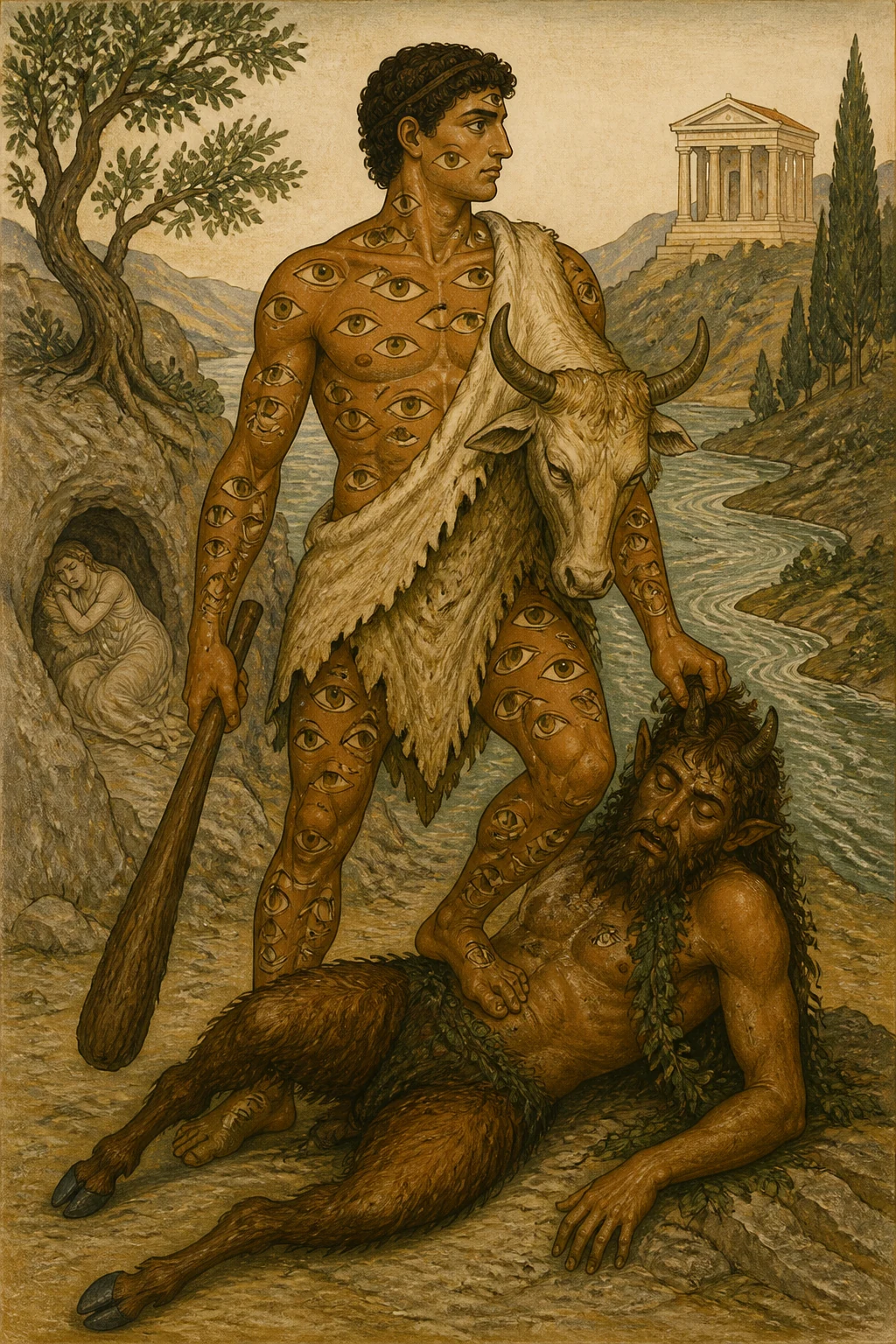
When someone had thus told of the doom of the Lycian men, another recalled the satyr whom Leto’s son, having beaten him in a contest on Minerva’s flute, punished. “Why are you tearing me from myself?” he cried. “Ah, I repent! Ah, the flute is not worth this!” As he cried, his skin was stripped from the whole surface of his body, until he was nothing but a wound. Blood streamed everywhere; his sinews lay bare, and his veins quivered and pulsed without any skin to cover them. You could have counted his throbbing entrails and the glistening organs in his breast.
The country folk, the woodland deities, the fauns, his brother satyrs, and Olympus, dear to him even then, wept for him, as did the nymphs and everyone who on those mountains pastured woolly flocks and horned cattle. The fertile earth grew wet, and, drenched, received their falling tears and drank them into its deepest veins. Then, having turned them into water, it sent them out into the open air.
From there, hurrying between sloping banks toward the rushing sea, the river bears the name Marsyas, the clearest stream in Phrygia.
Izvirnik
Source ID: ovid_metamorphoses_story_042 Citation: Ovid, Metamorphoses 6.382-6.400 Original language: Latin Source: PerseusDL canonical-latinLit Source URL: https://github.com/PerseusDL/canonical-latinLit/blob/master/data/phi0959/phi006/phi0959.phi006.perseus-lat2.xml Segmentation certainty: medium 382: Sic ubi nescio quis Lycia de gente virorum 383: rettulit exitium, satyri reminiscitur alter, 384: quem Tritoniaca Latous harundine victum 385: adfecit poena. “Quid me mihi detrahis?” inquit: 386: “a piget a non est” clamabat “tibia tanti.”
387: Clamanti cutis est summos direpta per artus, 388: nec quicquam nisi vulnus erat; cruor undique manat, 389: detectique patent nervi, trepidaeque sine ulla 390: pelle micant venae; salientia viscera posses 391: et perlucentes numerare in pectore fibras. 392: Illum ruricolae, silvarum numina, fauni 393: et satyri fratres et tunc quoque carus Olympus 394: et nymphae flerunt, et quisquis montibus illis 395: lanigerosque greges armentaque bucera pavit.
396: Fertilis inmaduit madefactaque terra caducas 397: concepit lacrimas ac venis perbibit imis; 398: quas ubi fecit aquam, vacuas emisit in auras. 399: Inde petens rapidum ripis declivibus aequor 400: Marsya nomen habet, Phrygiae liquidissimus amnis.