O besedilu
Mala sužnja
- Vir
- Pentameron
- Avtor
- Giambattista Basile
- Jezik branja
- English
- Jezik izvirnika
- Neapolitan
- Čas branja
- 9 min branja
- Obseg
- 7 strani
- Naslov izvirnika
- Jornata II VIII LA SCHIAVOTTELLA
O izvirniku
Pentameron
Baročna, divja starejša plast evropske pravljice, polna obratov in pretiravanj. Bralni jezik je English, izvirnik pa prihaja iz vira Pentameron v jeziku Neapolitan.
Besedilo
Mala sužnja
_Lisa is born from a rose petal and dies through a fairy’s curse. Her mother places her in a chamber, charging her brother never to open it; but his jealous wife, determined to see what is inside, finds Lisa alive, dresses her as a slave, and torments her in a thousand ways. At last her uncle recognizes her, sends his wife away, and makes a wealthy marriage for his niece._ _“Truly,” said the Prince, “every man should follow his own calling: the lord should play the lord, the footman the footman, and the constable the constable. For just as a servant lad makes himself ridiculous by trying to play the prince, so a prince who plays the servant lad loses his good name.” So saying, he turned to Paola and told her to let her tale run its course. She first gave her lips a good sucking and her head a scratch, then began as follows._ Jealousy, to tell the truth, is a most loathsome dish: a dizziness that sets the head spinning, a fever that heats the veins, a seizure that chills the limbs, a flux that churns the bowels; in short, a sickness that steals sleep, embitters food, clouds peace, and cuts life in half. It is a serpent that bites, a worm that gnaws, gall that poisons, snow that numbs, a nail that pierces; it breaks up the marriage of love’s delights, sets the dogs of amorous contentment fighting, and raises an unending tempest upon the sea of Venus’s pleasures. Never yet did it bring forth anything good, as you will confess with your own tongues when you hear the tale that follows.
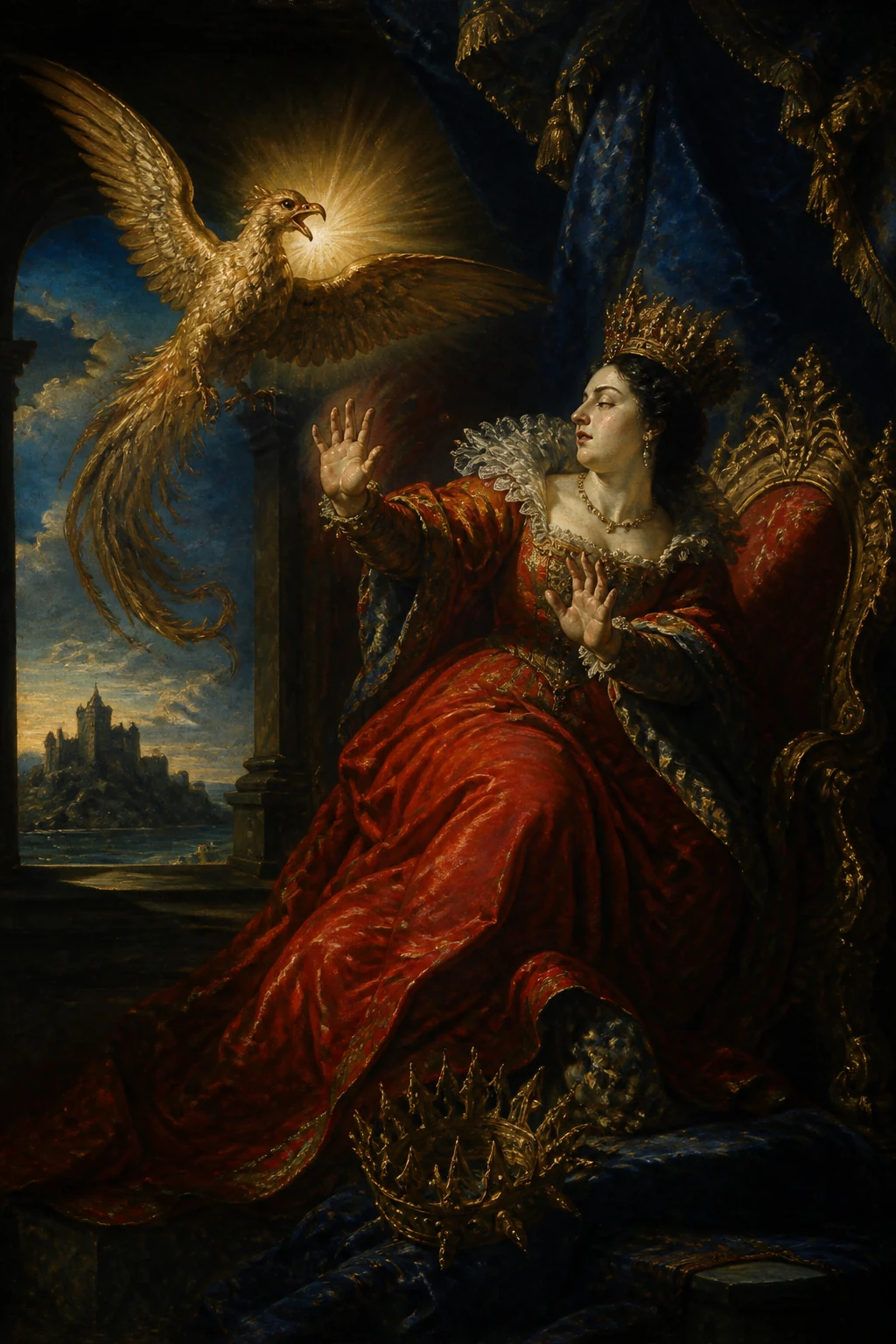
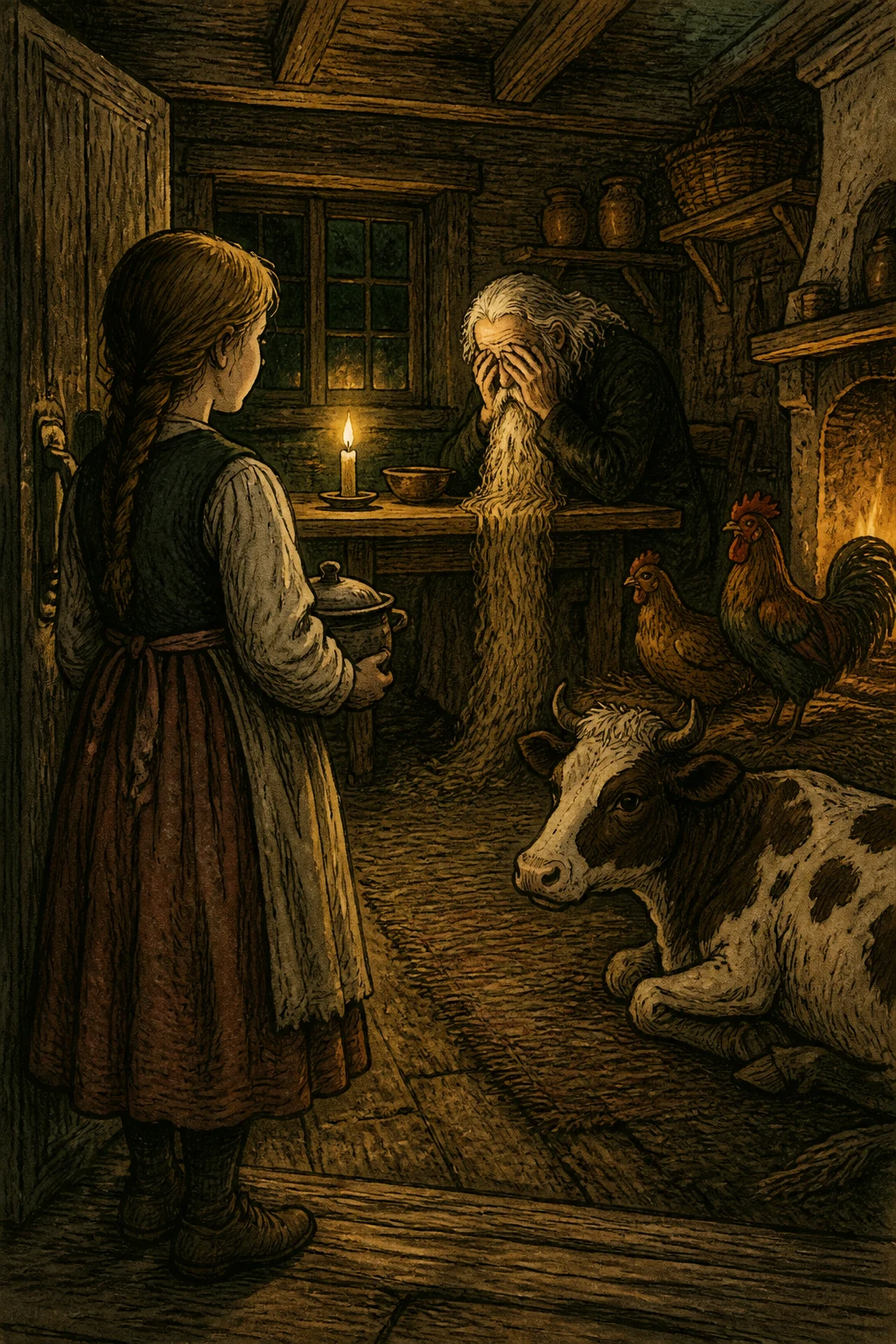
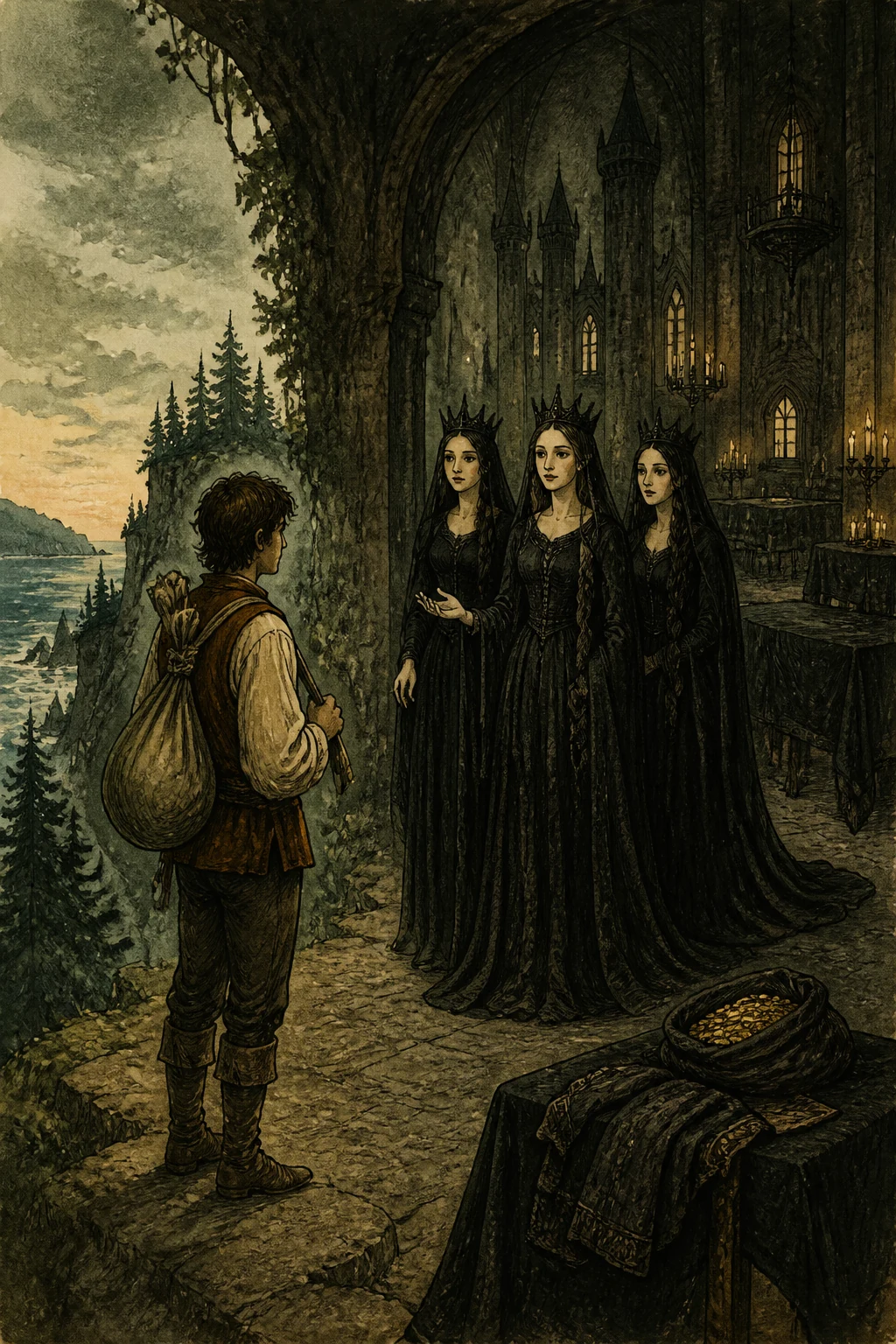
There was once a Baron of Serva-scura who had an unmarried sister. She was forever going with other girls her age to leap and frolic in a garden, and one day, finding a beautiful rose in full bloom, they made a wager: whoever could leap clean over it without touching a single petal should win a certain sum. A whole troop of girls went bounding over it, but every one blundered into it, and not one cleared it cleanly. When the turn came to Cilla, the Baron’s sister, she drew back a little to give herself a run, then dashed forward and sprang right over the rose. She did knock off a petal, but she was so quick and clever that, before anyone could properly see, she snatched it from the ground and swallowed it, winning the wager. Before three days had passed, however, she felt herself with child. She nearly died of grief, knowing for certain that she had indulged in no tricks or wanton doings, and unable to imagine how her belly could have swollen. So she ran to some fairies who were friends of hers, and they told her not to be afraid, for it was all the work of the rose petal she had swallowed. On hearing this, Cilla took care to hide her belly as well as she could, and when the time came to lay down her burden, she secretly gave birth to a beautiful little girl. She named her Lisa and sent her to the fairies, each of whom bestowed a gift upon her. But the last of them, hurrying to see the little creature, twisted her foot so badly that in her pain she cursed the child: when Lisa was seven years old, her mother, while combing her hair, would forget the comb and leave it stuck in her head, and of this she would die. When the time arrived and all came to pass, the unhappy mother, distraught at this misfortune, lamented bitterly, then shut her daughter inside seven crystal coffins, one enclosed within another. These she placed in the farthest chamber of the palace, keeping the key herself. But grief over what had happened brought her to the very dregs of life, and she called her brother to her, saying, “My brother, little by little I feel death’s grappling hook drawing me away. So I leave you all my possessions, to be their lord and master. Only you must give me your word never to open that farthest chamber of this house, and keep this key safely in your desk.” Her brother, who loved her beyond measure, gave her his solemn promise, and at that very moment she said farewell, for her hour had come. Before the year was out, the Baron married, and one day, having been invited to a hunt, he left the house in his wife’s care, begging her above all not to open that chamber, whose key he kept in his desk. But scarcely had he turned his back when she, drawn by suspicion, driven by jealousy, and goaded by curiosity—which is a woman’s foremost dowry—took the key and opened the chamber. Through the coffins she could see the girl gleaming within, and when she opened them she found what seemed to be a sleeping maiden. Lisa had grown as any other girl would, and the coffins had grown larger along with her. At the sight of this beautiful creature, the jealous woman exclaimed, “Well done, my holy man! The key at your belt, and your little rogue hidden away! So this was why you took such care that the chamber should not be opened: no one was to see the idol you worshipped inside these coffins!” With these words she seized Lisa by the hair and dragged her out. The comb fell to the floor, and Lisa came to herself, crying, “Mother! Mother!” “Oh, I’ll give you mother—and father too!” answered the Baroness. Furious as a slave, savage as a bitch with pups, venomous as a serpent, she at once cut off Lisa’s hair, shearing her head as bare as a gourd, and dressed her in rags. Every day she heaped lumps upon her scalp, purple bruises about her eyes, and marks upon her face, leaving her mouth looking as though she had been eating raw pigeons. When her husband returned and saw the girl so cruelly treated, he asked who she was. His wife replied that she was a slave sent by her aunt, a creature who positively invited a beating and needed constant chastisement. Now the Baron had occasion to go to a fair, and he asked everyone in the household, down to the cats, what they wished him to buy. One asked for this, another for that, until at last he came to the little slave girl. But his wife behaved in a most unchristian fashion, saying, “Go on, put this thick-lipped slave on the list as well! Let us all be treated alike—everyone wants to piss in the chamber pot! Leave the wretched thing alone, and don’t give such airs to an ugly little wretch.” The Baron, who was a courteous man, insisted that the little slave should ask for something, and she said, “I want nothing but a doll, a knife, and a pumice stone. And if you forget them, may you never be able to cross the first river you come to on your way.” The Baron bought everything except what his niece had asked for. When he came to cross a river, which was carrying rocks and trees from the mountains down to the sea, laying foundations of fear and raising walls of wonder, he found it quite impossible to get across. Then he remembered the little slave’s curse, turned back, and bought every last thing she had requested. When he reached home, he handed out the presents, one to each person. As soon as Lisa had received her little gifts, she went into the kitchen, set the doll before her, and began to weep and lament, telling that bundle of rags the whole story of her sufferings as though she were speaking to a living person. When she saw that it made no answer, she would take up the knife and sharpen it on the pumice stone, saying, “Mind you, if you don’t answer me, I’ll stab myself this instant, and that will end the business!” Then the doll would swell little by little, like the bag of a set of bagpipes when breath is blown into it, until at last it answered, “Yes, I’ve heard you—I’m not deaf!”
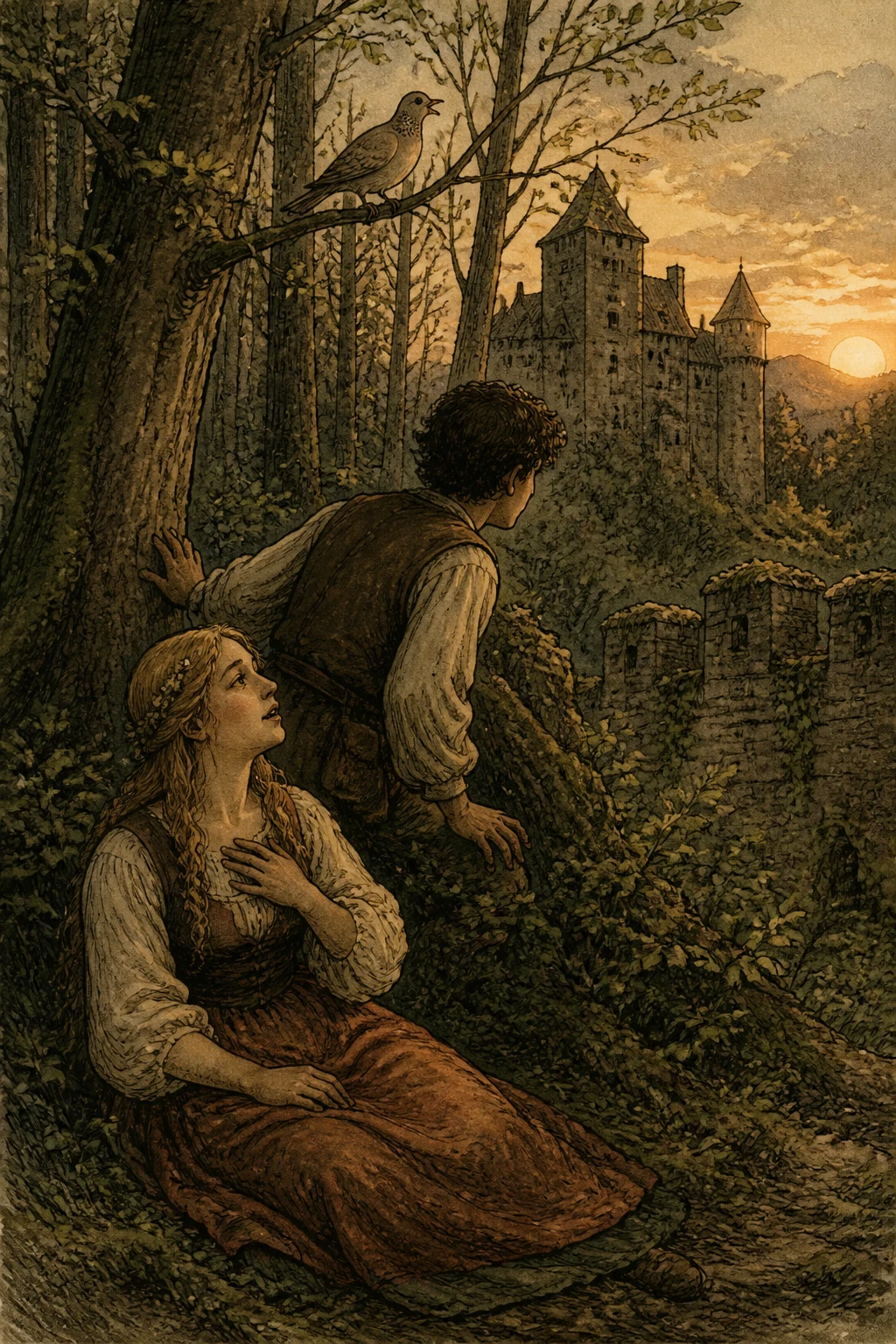
This performance went on for several days. Now the Baron had a privy that shared a wall with the kitchen, and one day, hearing this same lamentation, he put his eye to the keyhole of the door. There he saw Lisa telling the doll how her mother had leaped over the rose and swallowed the petal; how she herself had been born and received the fairies’ gifts; how the fairy had cursed her, and the comb had been left in her head; how she had died and been shut inside seven coffins, then hidden in the chamber; how her mother had died and left the key to her brother; how he had gone hunting, and his jealous wife had entered the forbidden room against her husband’s orders, cut off Lisa’s hair, and treated her as a slave, inflicting torment upon torment. As she spoke and wept, she cried, “Answer me, doll, or I’ll kill myself with this knife!” She sharpened it on the pumice stone and was about to pierce herself when the Baron kicked the door open with two blows and snatched the knife from her hand. Having heard the story more fully, he embraced her as his niece and took her away from the house, entrusting her to a kinswoman of his so that she might recover a little, for the cruelty of that Medea-hearted woman had reduced her to half her former self. Within a few months she had become as beautiful as a goddess, and he brought her home, announcing that she was his niece. He gave a great banquet, and when the tables had been cleared, he had Lisa tell the story of all her past sufferings and his wife’s cruelty, which brought tears to the eyes of every guest. Then he drove his wife away, sending her back to her family, and found his niece a handsome husband after her own heart. Thus her fortune was made in full measure, _For when we least expect it,_ _Heaven showers down its blessings._
Izvirnik
Jornata II VIII LA SCHIAVOTTELLA
Naslednje strani prikazujejo izvirno besedilo za primerjavo.
_Lisa nasce da la fronna de na rosa, e pe ghiastemma de na Fata more; e pposta da la mamma a na cammara, lassanno ditto a lo frate, che no l’apera; ma la mogliere gelosa volenno vedere, che nc’eje, nce trova Lisa viva, e bestutala da Schiava le fa mille strazie, recanosciuta all’utemo da lo Zio, caccia la mogliere, e mmarita ricca la nepote._ _Veramente (disse lo Prencepe) ogne ommo deve fare ll’arte soja, lo signore da signore, lo staffiero da staffiero, e lo sbirro da sbirro; che si comme lo ragazzo volenno fare da Prencepe deventa redicolo, cossì lo Prencepe facenno da ragazzo scapeta de reportazione: così decenno, votatose a Paola, le disse, che se lassasse correre, la quale fattase ’mprimmo na bona zucata de
lavra, e na grattata de capo, cossì accommenzaje._ È na pessema fercola (si vale a dicere lo vero) la Gelosia, vertecene, che fa votare la capo, freve, che scauda le bene, azzedente, che rrefredda li miembre, vesenterio, che scommove lo cuorpo, male finalmente, che leva lo suonno, amareja lo civo, ntrovola la cojete e smesa la vita; essenno serpa, che mmozzeca, carola, che rroseca, fele, che ’ntosseca, neve che ’nteseca, chiuovo, che smafara, sparte matrimonio de li guste d’ammore, scazzella cane de lo contiente ammoruse, e continua tropeja, ne lo mare de li piacire de Vennere, la quale maje sguigliaje cosa de bene, comme confessarite co la lengua vostra sentenno lo cunto, che ssecota.
Era na vota lo Barone de Serva-scura, che avenno na sora zita, la quale sempre jeva coll’autre giovane de l’età soja a sautariare pe no giardino, e trovanno fra l’autre bote na bella Rosa spampanata, facettero ’nguaggio, che chi la sautasse netta senza toccarele na fronna, guadagnasse no tanto; sautannoce na mano de femmene cavallune pe coppa, tutte nce mmorravano, e nnesciuna la scarvaccava netta; ma toccanno a Ccilla, ch’era la sore de lo Barone, pigliato no poco de vantaggio arreto dette na tale corzera, che ssautaje de pesole pe ccoppa la Rosa, ma facennole cadere na fronna, fu accossì accorta, e destra, che pigliannola fra lumme, e llustro da terra, se la gliottette, guadagnanno lo ’nguaggio; ma non passaro tre ghiuorne, che
se sentette prena, de la quale cosa appe a mmorire de dolore, sapenno cierto de n’avere fatto ’mbroglie, nè bescazzie, nè le poteva cadere ’n mente comme le fosse ’ntorzata la panza; pe la quale cosa corze a certe Ffate ammiche soje, le quale le dissero, che non dubetasse, ca era stata la fronna de rosa, che s’aveva gliottata. Cilla sentuto chesto attese a nasconnere quanto potte la panza, e benuta l’ora de scarrecare lo pisemo, figliaje secretamente na bella figliola, a la quale puosto nomme Lisa, la mannaje a le Ffate; la qual’ogn’una le dette la fatazione soja; ma l’utema de chelle volenno correre a bedere sta peccerella, sbotatose desastrosamente lo pede, pe lo dolore la jastemmaje, che a li sette anne pettenannola la mamma, se
le scordasse lo pettene dinto a li capille ’mpizzato a la capo, de la quale cosa moresse. E arrivato lo tiempo, e socciesso la cosa, la negra mamma desperata pe sta desgrazia, dapò avere fatto n’ammaro trivolo, la chiuse dinto a ssette casce de cristallo, una ’nserrata dinto all’autra, mettennola all’utema cammera de lo palazzo, tenennosenne la chiave. Ma essenno pe lo dolore de sto socciesso redotta a la scolatura de la vita; chiammaje lo frate, decennole: Frate mio, io mme sento a poco a poco tirare da la vorpara de la morte, perzò te lasso tutte le scartapelle meje, che nne signe signore, e patrone; sulo m’aje da dare parola de n’aprire maje chell’utema cammara de sta casa, stipannote sta chiave dinto a lo scrittorio. Lo frate, che l’amava sbisciolatamente,
nce ne deze la fede, ed essa a lo stisso tiempo disse, addio, ca le ffave so cchiene. Ma ’n capo dell’anno essennose sto Signore ’nzorato, ed essenno nvitato a na caccia, reccommannaje la casa a la mogliere, pregannola sopra tutto a n’aprire chella cammara, de la quale teneva la chiave dinto a lo scrittorio. Ma n’appe accossì priesto votato le spalle, ch’essa tirata da lo sospetto, vottata da la gelosia, e scannata da la curiosetate, ch’è primma dote de la femmena, pigliata la chiave, aperze la cammara, ed aperte le ccasce, pe dove vedeva stralucere la figliola, trovaje cosa, che pareva, che dormesse: la quale era cresciuta quanto ogne autra femmena ’nzieme co le ccasce, che s’erano ’ngrannute, secunno jeva crescenno. La femmena gelosa,
visto sta bella criatura, dicette subeto: bravo previta mia; chiave ’ncinto, e mmartino dinto: chessa era la diligenzia, che non s’apresse la cammara, azzò, non se vedesse lo Maometto, che adorava dinto a le ccasce; Accossì decenno, la pigliaje pe li capille, tirannola fore; pe la quale cosa cascannole ’n terra lo pettene, se venne a risentire, gridanno mamma mia, mamma mia; va ca te voglio dare mamma, e ttata, respose la Baronessa; e nfelata comm’a schiava, arraggiata comm’a ccana figliata, ’ntossecata comm’a sserpe, le tagliaje subeto li capille, e facennole na ’ntosata de zuco, le mese no vestito stracciato, ed ogne ghiuorno la carrecava de vrognole a lo caruso, molegnane all’uocchie, mierche ’nfacce, facennole la vocca comm’avesse manciato pecciune
crude. Ma tornato lo marito da fore, e bedenno sta figliola accossì mmaletrattata, addemmannaje chi fosse; ed essa le responnette, ch’era na schiava, che l’aveva mannato la zia, la quale era n’esca de mazze, besognava martoriarela sempre. E benenno accasione a lo Signore de ire a na fera, disse a tutte le gente de la casa pe fi a le gatte, che cosa volevano, che l’accattasse, e cercato chi na cosa, e chi n’autra, all’utemo venne a la schiavottella: ma la mogliere non fece cosa da cristejana, decenno: miette puro ’ndozzana sta schiava mossuta, e ffacimmo tutte pe na regola, tutte vorrimmo pisciare a l’aurinale; lassala stare mal’ora, e non dammo tanta presonzione a na brutta fiamma. Lo Signore, ch’era cortese, voze nn’ogne cunto che la
schiavottella cercasse quarche cosa, la quale decette; io non voglio autro, che na pipata, no cortiello, e na preta pommece; e si te ne scuorde, non puozze maje passare lo primmo sciummo, che truove pe strata; e comprato, lo Barone tutte le ccose fore che cchelle, che l’aveva cercato la nepote, a lo passare de lo sciummo, che ccarriava prete, ed arvole da la montagna a la marina, pe ghiettare fonnamiente de paura, ed auzare mura de maraviglia, non fu possibele che sto segnore potesse passare; pe la qual cosa allecordatose de la jastemma de la schiavottella, tornaje arreto, ed accattaje pontualmente ogne ccosa, e tornato a la casa, spartette una peduna le ccose, che aveva accattato; ed avuto Lisa ste ccoselle, se ne trasette a la cocina, e
puostose ’nante la Pipata, se mese a chiagnere, e trevolejare, contanno a chillo arravuoglio de pezze tutta la storia de li travaglie suoje, comme se parlasse co na persona viva; e bedenno, che non le responneva, pigliava lo cortiello; ed affinannolo co la pommece, deceva; vi ca si no mme respunne, mo mme ’npizzo, e scompimmo la festa; e la pipata abbottannose a poco a poco, comme otra de zampogna, quanno l’è dato lo sciato, all’utemo responneva: Si ca t’aggio ’ntiso cchiù de no surdo.
Ora duranno sta museca pe na mano de juorne, lo Barone, ch’aveva no retratto sujo muro a mmuro co la cocina, sentenno na vota sto medesemo taluorno, e ’mpizzato l’uocchio pe la chiavatura de la porta, vidde Lisa, che contava a la pipata lo sautare de la mamma ’ncoppa la rosa, lo magnarese la fronna, lo ffigliare, la fatazione datale, la jastemma de la Fata, la restata de pettene ’n capo, la morte, l’anchiusa a ssette casce, la stipata dinto la cammara, la morte de la mamma, la lassata de chiave a lo frate, la juta a ccaccia, la gelosia de la mogliere, la trasuta dinto, dove stava contra l’ordene de lo frate, la tagliata de li capille, lo trattamiento de schiava co tante e ttante strazie, che l’aveva fatto, e cossì decenno, e chiagnenno deceva
respunneme pipata, si no m’accido co sto cortiello, ed affilannolo a la preta pommece, se voleva spertosare, quanno lo Barone date duje cauce a la porta, le levaje lo cortiello da mano, e ssentuto meglio la storia, ed abbracciannola comm’a nnepote, la portaje fora de casa, dannola a na certa parente soja a refarese no poco, ch’era deventata meza, pe li male trattamiente de chillo core de Medea, e ’n capo de poche mise essennose fatta comme na Dea, la fece venire a la casa soja, decenno essere na nepote soja, e dapò fatto no gran banchetto, e levato le ttavole, fatto contare da Lisa la storia de tutte l’affanne passate, e la crodeletate de la mogliere, che fece chiagnere a ttutte li convitate, cacciaje la mogliere mannannola a la casa de li pariente,
e dette no bello marito a la nepote secunno lo core sujo, la quale toccaje a lleviello, _Ca quanno l’ommo manco se lo ppenza_ _Le grazie soje chiovelleca lo Cielo._
Nadaljuj z branjem