Prevod
_Lisa is born from a rose petal and dies through a fairy’s curse. Her mother places her in a chamber, charging her brother never to open it; but his jealous wife, determined to see what is inside, finds Lisa alive, dresses her as a slave, and torments her in a thousand ways. At last her uncle recognizes her, sends his wife away, and makes a wealthy marriage for his niece._ _“Truly,” said the Prince, “every man should follow his own calling: the lord should play the lord, the footman the footman, and the constable the constable. For just as a servant lad makes himself ridiculous by trying to play the prince, so a prince who plays the servant lad loses his good name.” So saying, he turned to Paola and told her to let her tale run its course. She first gave her lips a good sucking and her head a scratch, then began as follows._ Jealousy, to tell the truth, is a most loathsome dish: a dizziness that sets the head spinning, a fever that heats the veins, a seizure that chills the limbs, a flux that churns the bowels; in short, a sickness that steals sleep, embitters food, clouds peace, and cuts life in half. It is a serpent that bites, a worm that gnaws, gall that poisons, snow that numbs, a nail that pierces; it breaks up the marriage of love’s delights, sets the dogs of amorous contentment fighting, and raises an unending tempest upon the sea of Venus’s pleasures. Never yet did it bring forth anything good, as you will confess with your own tongues when you hear the tale that follows.
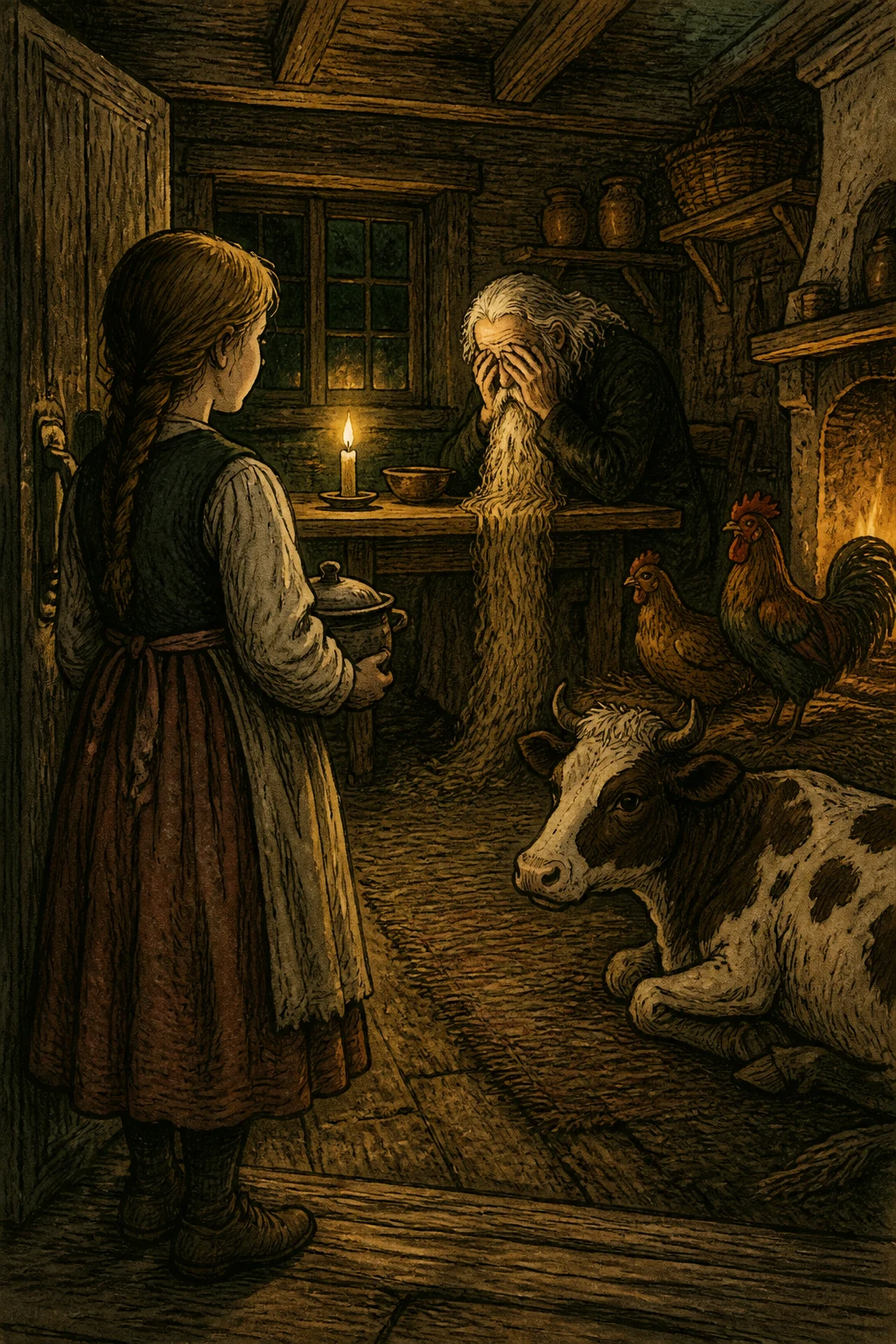
There was once a Baron of Serva-scura who had an unmarried sister. She was forever going with other girls her age to leap and frolic in a garden, and one day, finding a beautiful rose in full bloom, they made a wager: whoever could leap clean over it without touching a single petal should win a certain sum. A whole troop of girls went bounding over it, but every one blundered into it, and not one cleared it cleanly. When the turn came to Cilla, the Baron’s sister, she drew back a little to give herself a run, then dashed forward and sprang right over the rose. She did knock off a petal, but she was so quick and clever that, before anyone could properly see, she snatched it from the ground and swallowed it, winning the wager. Before three days had passed, however, she felt herself with child. She nearly died of grief, knowing for certain that she had indulged in no tricks or wanton doings, and unable to imagine how her belly could have swollen. So she ran to some fairies who were friends of hers, and they told her not to be afraid, for it was all the work of the rose petal she had swallowed. On hearing this, Cilla took care to hide her belly as well as she could, and when the time came to lay down her burden, she secretly gave birth to a beautiful little girl. She named her Lisa and sent her to the fairies, each of whom bestowed a gift upon her. But the last of them, hurrying to see the little creature, twisted her foot so badly that in her pain she cursed the child: when Lisa was seven years old, her mother, while combing her hair, would forget the comb and leave it stuck in her head, and of this she would die. When the time arrived and all came to pass, the unhappy mother, distraught at this misfortune, lamented bitterly, then shut her daughter inside seven crystal coffins, one enclosed within another. These she placed in the farthest chamber of the palace, keeping the key herself. But grief over what had happened brought her to the very dregs of life, and she called her brother to her, saying, “My brother, little by little I feel death’s grappling hook drawing me away. So I leave you all my possessions, to be their lord and master. Only you must give me your word never to open that farthest chamber of this house, and keep this key safely in your desk.” Her brother, who loved her beyond measure, gave her his solemn promise, and at that very moment she said farewell, for her hour had come. Before the year was out, the Baron married, and one day, having been invited to a hunt, he left the house in his wife’s care, begging her above all not to open that chamber, whose key he kept in his desk. But scarcely had he turned his back when she, drawn by suspicion, driven by jealousy, and goaded by curiosity—which is a woman’s foremost dowry—took the key and opened the chamber. Through the coffins she could see the girl gleaming within, and when she opened them she found what seemed to be a sleeping maiden. Lisa had grown as any other girl would, and the coffins had grown larger along with her. At the sight of this beautiful creature, the jealous woman exclaimed, “Well done, my holy man! The key at your belt, and your little rogue hidden away! So this was why you took such care that the chamber should not be opened: no one was to see the idol you worshipped inside these coffins!” With these words she seized Lisa by the hair and dragged her out. The comb fell to the floor, and Lisa came to herself, crying, “Mother! Mother!” “Oh, I’ll give you mother—and father too!” answered the Baroness. Furious as a slave, savage as a bitch with pups, venomous as a serpent, she at once cut off Lisa’s hair, shearing her head as bare as a gourd, and dressed her in rags. Every day she heaped lumps upon her scalp, purple bruises about her eyes, and marks upon her face, leaving her mouth looking as though she had been eating raw pigeons. When her husband returned and saw the girl so cruelly treated, he asked who she was. His wife replied that she was a slave sent by her aunt, a creature who positively invited a beating and needed constant chastisement. Now the Baron had occasion to go to a fair, and he asked everyone in the household, down to the cats, what they wished him to buy. One asked for this, another for that, until at last he came to the little slave girl. But his wife behaved in a most unchristian fashion, saying, “Go on, put this thick-lipped slave on the list as well! Let us all be treated alike—everyone wants to piss in the chamber pot! Leave the wretched thing alone, and don’t give such airs to an ugly little wretch.” The Baron, who was a courteous man, insisted that the little slave should ask for something, and she said, “I want nothing but a doll, a knife, and a pumice stone. And if you forget them, may you never be able to cross the first river you come to on your way.” The Baron bought everything except what his niece had asked for. When he came to cross a river, which was carrying rocks and trees from the mountains down to the sea, laying foundations of fear and raising walls of wonder, he found it quite impossible to get across. Then he remembered the little slave’s curse, turned back, and bought every last thing she had requested. When he reached home, he handed out the presents, one to each person. As soon as Lisa had received her little gifts, she went into the kitchen, set the doll before her, and began to weep and lament, telling that bundle of rags the whole story of her sufferings as though she were speaking to a living person. When she saw that it made no answer, she would take up the knife and sharpen it on the pumice stone, saying, “Mind you, if you don’t answer me, I’ll stab myself this instant, and that will end the business!” Then the doll would swell little by little, like the bag of a set of bagpipes when breath is blown into it, until at last it answered, “Yes, I’ve heard you—I’m not deaf!”
This performance went on for several days. Now the Baron had a privy that shared a wall with the kitchen, and one day, hearing this same lamentation, he put his eye to the keyhole of the door. There he saw Lisa telling the doll how her mother had leaped over the rose and swallowed the petal; how she herself had been born and received the fairies’ gifts; how the fairy had cursed her, and the comb had been left in her head; how she had died and been shut inside seven coffins, then hidden in the chamber; how her mother had died and left the key to her brother; how he had gone hunting, and his jealous wife had entered the forbidden room against her husband’s orders, cut off Lisa’s hair, and treated her as a slave, inflicting torment upon torment. As she spoke and wept, she cried, “Answer me, doll, or I’ll kill myself with this knife!” She sharpened it on the pumice stone and was about to pierce herself when the Baron kicked the door open with two blows and snatched the knife from her hand. Having heard the story more fully, he embraced her as his niece and took her away from the house, entrusting her to a kinswoman of his so that she might recover a little, for the cruelty of that Medea-hearted woman had reduced her to half her former self. Within a few months she had become as beautiful as a goddess, and he brought her home, announcing that she was his niece. He gave a great banquet, and when the tables had been cleared, he had Lisa tell the story of all her past sufferings and his wife’s cruelty, which brought tears to the eyes of every guest. Then he drove his wife away, sending her back to her family, and found his niece a handsome husband after her own heart. Thus her fortune was made in full measure, _For when we least expect it,_ _Heaven showers down its blessings._