Waltey
Lisica in krokar
Tisoč in ena noč · arabska pripovedna tradicijaO besedilu
Lisica in krokar
- Vir
- Tisoč in ena noč
- Avtor
- arabska pripovedna tradicija
- Jezik branja
- English
- Jezik izvirnika
- Arabic
- Čas branja
- 8 min branja
- Obseg
- 7 strani
- Naslov izvirnika
- حكاية الثعلب والغراب - الليالي ١٥٠ إلى ١٥١
O izvirniku
Tisoč in ena noč
Zgodbe v zgodbah, polne trgovcev, dvorov, preoblek in nočnih zapletov. Bralni jezik je English, izvirnik pa prihaja iz vira Tisoč in ena noč v jeziku Arabic.
Besedilo
Lisica in krokar
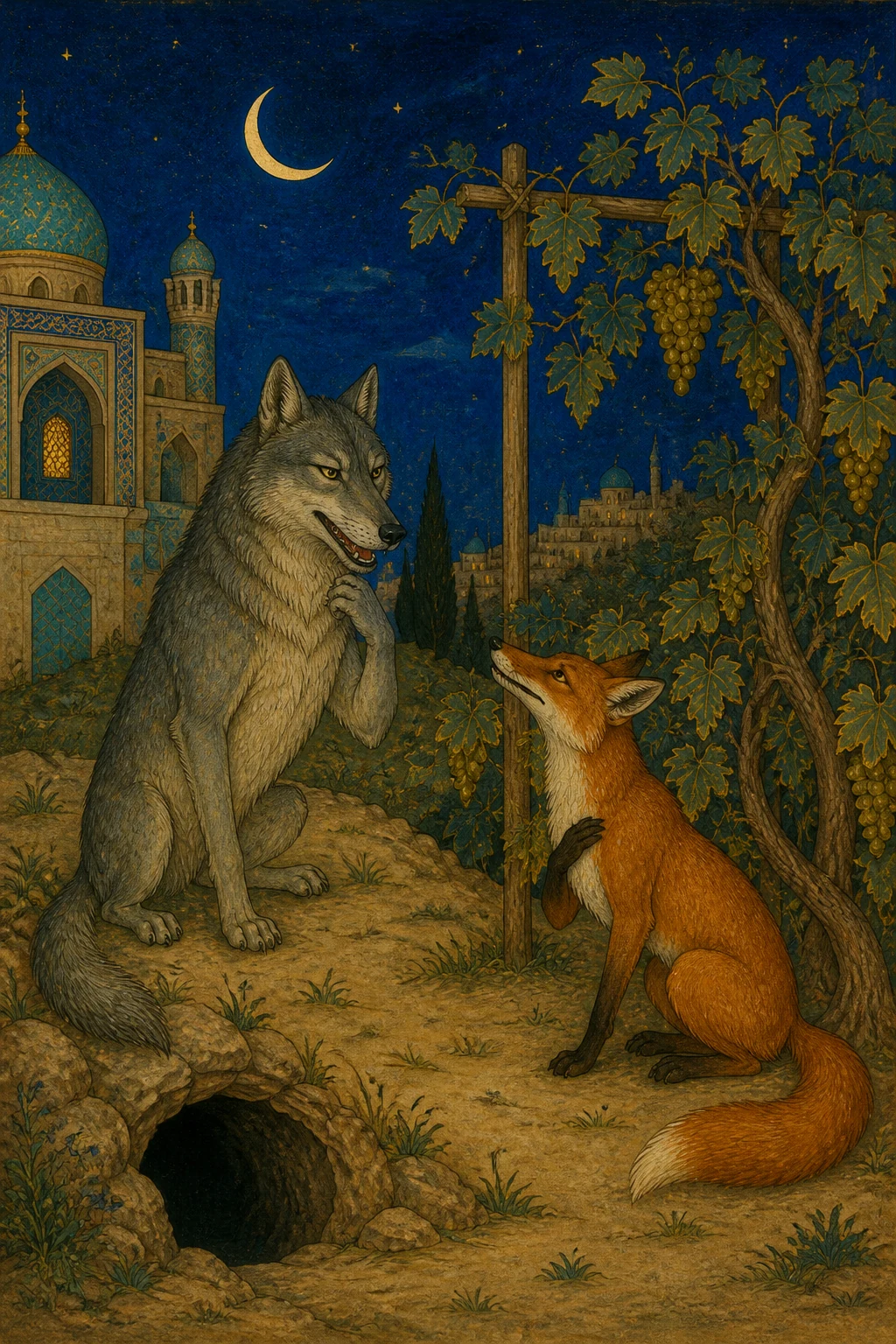
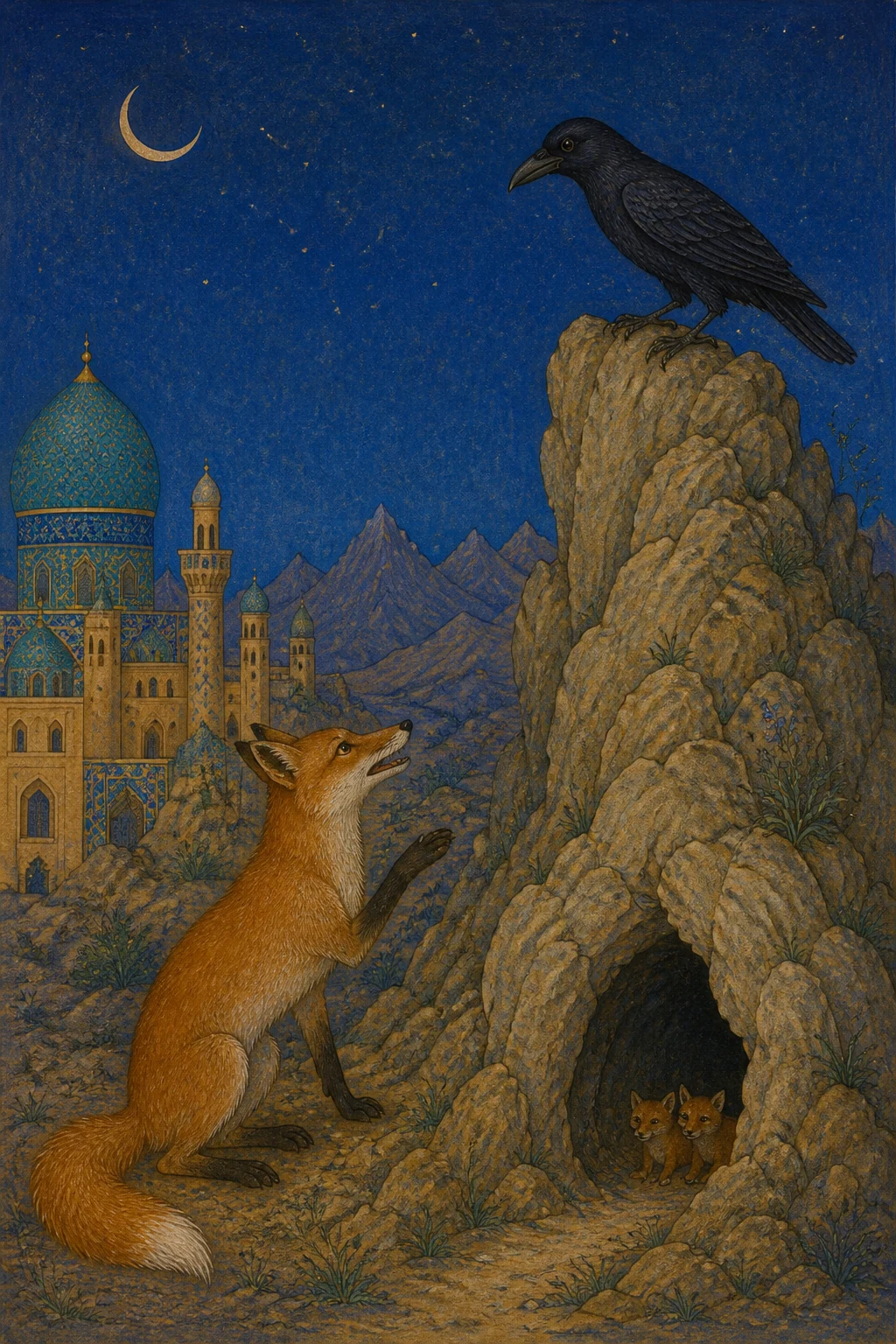
It is told that a fox made his home in a den in a mountain. Whenever he had a cub and it had grown strong, he would eat it out of hunger, for if he did not eat his young, hunger would torment him. A crow used to roost on the summit of that mountain, and the fox said to himself, “I should establish a friendship with this crow and make him my companion in solitude and my helper in finding food, for he can reach things that I cannot.” So the fox approached the crow until he was near enough for him to hear his words, greeted him, and said, “My neighbor, a Muslim neighbor has two claims upon his Muslim neighbor: the claim of neighborliness and the claim of Islam. Know that you are my neighbor, and you have a claim upon me which I am bound to honor, especially since we have lived beside one another so long. Moreover, I cherish an affection for you in my heart which has moved me to approach you kindly and seek your brotherhood. What answer will you give me?” The crow replied, “Know that the best words are the truest. Yet a tongue may sometimes speak what is not in the heart, and I fear that your brotherhood may be only on your lips, while enmity lies within. For you are an eater, and I am one who may be eaten; thus our affections must remain apart, and we cannot form a bond. What has prompted you to seek what we cannot attain and desire what cannot be? You belong to the beasts, and I to the birds. Such a brotherhood cannot hold.” The fox said, “One who knows where true friends are to be found, and chooses wisely among them, may gain the benefits of brotherhood. I have come to desire your company and have chosen you as my companion, so that we may help one another achieve our aims and our friendship may bear the fruit of success. I know tales of the blessings of friendship, and if you wish to hear them, I will tell them to you.” The crow said, “You have my leave to relate them. Tell them to me, so that I may understand their purpose.”
The fox said, “Listen, my friend. There is a tale of a flea and a mouse which bears out what I have told you.” “How was that?” asked the crow. The fox replied, “They say that a mouse lived in the house of a wealthy merchant. One night a flea found his way into the merchant’s bed and discovered a tender body. Being thirsty, he drank some of the man’s blood. The merchant felt the pain of the bite, woke from sleep, sat upright, and called for some of his servants. They hurried to him, rolled up their sleeves, and began searching for the flea. When the flea realized he was being hunted, he fled, came upon the mouse’s hole, and slipped inside. When the mouse saw him, she said, ‘What has brought you into my home? You are neither of my kind nor of my species, and you have no assurance that I will not treat you harshly or harm you.’ The flea replied, ‘I fled to your home and saved myself from death. I have come to seek your protection, not to covet your dwelling, nor will any harm come to you through me that might drive you from your home. I hope to repay your kindness with every good turn, and in time you will praise the outcome of what I say.’ When the mouse heard the flea’s words…” But morning overtook Shahrazad, and she fell silent, leaving her tale untold.
When the one hundred and fifty-first night came
She said, “It has reached me, O fortunate King, that when the mouse heard the flea’s words, she said, ‘If matters are as you say, make yourself at ease here and fear no harm. You shall find only what pleases you, and nothing shall befall you that does not befall me. I freely offer you my friendship. Do not regret the merchant’s blood you have missed, nor grieve for the nourishment you drew from him. Be content with whatever sustenance comes readily to you, for that is safer. I once heard a preacher, O flea, recite these verses:
I chose contentment and a life apart, and passed my days on whatever came to hand: a crust of bread, a draught of water, coarse salt, and a threadbare robe. If God grants ease in my livelihood, well and good; if not, I am content with what He has bestowed.’ When the flea heard the mouse’s words, he said, ‘My sister, I have heard your counsel and submit to your wishes. I could not bring myself to disobey you, and shall hold to this good resolve until my life is done.’ The mouse replied, ‘Sincerity of affection is proof enough of a good intention.’ So a bond of friendship was formed between them. Thereafter the flea would visit the merchant’s bed, taking no more than he needed, and spend the day with the mouse in her home. One night the merchant came home with a great many dinars and began turning them over in his hands. Hearing the clink of the coins, the mouse poked her head out of her hole and watched them until the merchant put them beneath a pillow and went to sleep. Then she said to the flea, ‘Do you see this opportunity, this splendid stroke of luck? Have you some device by which we might obtain those dinars?’ The flea replied, ‘There is no good in pursuing an aim unless one has the strength to achieve it. If one is too weak, one falls into the very danger one fears and fails to attain one’s desire. However firmly one lays one’s schemes, one may be like the sparrow that pecks at the grain, falls into the net, and is caught by the hunter. You have not the strength to take the dinars and carry them out of the house, while I have no power to do so either; indeed, I cannot carry so much as a single dinar. The coins, then, are your affair.’ The mouse said, ‘I have made seventy exits from this hole of mine, through which I can leave whenever I wish, and I have prepared a secure place for storing treasures. If you can contrive to get the merchant out of the house, I have no doubt of success, provided fortune favors me.’ The flea replied, ‘I undertake to get him out of the house for you.’
Then the flea went to the merchant’s bed and bit him so fiercely that he had never felt the like before. He withdrew to a place where he would be safe from the merchant, who woke and searched for him but found nothing. The merchant lay down on his other side, and the flea gave him a second bite, worse than the first. In distress, the merchant left his bed and went out to a raised bench beside his door, where he slept without waking until morning. Meanwhile the mouse set about carrying away the dinars until she had left not a single one. When morning came, the merchant began accusing people and entertaining all manner of suspicions.” Then the fox said to the crow, “Know, O discerning, wise, and experienced crow, that I have told you this only so that you may receive the reward of your kindness to me, just as the mouse was rewarded for her kindness to the flea. Consider how handsomely he repaid her, and how generously he rewarded her.” The crow replied, “One who would do a kindness may choose whether or not to do it. Kindness is no duty toward one who seeks a bond that will end in severance. If I were kind to you, though you are my enemy, I should bring about my own destruction. You, fox, are full of cunning and deceit, and one whose nature is treachery cannot be trusted to keep a covenant. Where a covenant cannot be trusted, there is no safety. I recently heard that you betrayed your companion the wolf and plotted against him until you destroyed him through your treachery and wiles. You did all this to him though he was of your own kind and you had been his companion for a long time, yet you showed him no mercy. How, then, can I trust you to wish me well? If this is how you treat a companion of your own kind, how will you treat an enemy of another kind? Your dealings with me are like those of the falcon with the birds of prey.” The fox asked, “What is the story of the falcon and the birds of prey?” The crow replied, “They say there was once a falcon, tyrannical and headstrong…” But morning overtook Shahrazad, and she fell silent, leaving her tale untold.
Izvirnik
حكاية الثعلب والغراب - الليالي ١٥٠ إلى ١٥١
Naslednje strani prikazujejo izvirno besedilo za primerjavo.
فلما كانت الليلة ١٥٠
وحُكِي أن ثعلبًا سكن في بيت في الجبل، وكان كلما ولد ولدًا واشتدَّ ولده أكله من الجوع، وإن لم يأكل ولده أضرَّ به الجوع، وكان يأوي إلى ذروة ذلك الجبل غراب، فقال الثعلب في نفسه: أريد أن أعقد بيني وبين هذا الغراب مودة، وأجعله لي مؤنسًا على الوحدة معاونًا على طلب الرزق؛ لأنه يقدر من ذلك على ما لا أقدر عليه. فدنا الثعلب من الغراب حتى صار قريبًا منه بحيث يسمع كلامه، فسلَّم عليه ثم قال له: يا جاري، إن للجار المسلم على الجار المسلم حقَّين؛ حق الجيرة، وحق الإسلام، واعلم بأنك جاري ولك عليَّ حقٌّ يجب قضاؤه، خصوصًا مع طول المجاورة، على أن في صدري وديعة من محبتك دعتني إلى ملاطفتك، وبعثتني على التماس أخوَّتك، فما عندك من الجواب؟ فقال الغراب للثعلب: اعلم أن خير القول أصدقه، وربما تتحدث بلسانك ما ليس في قلبك، وأخشى أن تكون أخوَّتك باللسان ظاهرًا، وعداوتك في القلب؛ لأنك آكل وأنا مأكول، فوجب لنا التباين في المحبة، ولا يمكن مواصلتنا، فما الذي دعاك إلى طلب ما لا ندرك، وإرادة ما لا يكون، وأنت من جنس الوحوش وأنا من جنس الطير، وهذه الأخوة لا تصح. فقال له الثعلب: إن من علم موضع الأخلاء فأحسن الاختيار فيما يختاره منها ربما يصل إلى منافع الإخوان، وقد أحببت قربك، واخترت الأنس بك؛ ليكون بعضنا عونًا لبعض على أغراضنا، وتُعقَب مودتنا نجاحًا، وعندي حكايات في حسن الصداقة إن أردت أن أحكيها حكيتها لك. فقال الغراب: أذنت لك في أن تبثها، فحدثني بها حتى أعرف المراد منها.
فقال له الثعلب: اسمع يا خليلي، يُحكَى عن برغوث وفأرة ما يُستدَل به على ما ذكرته لك. فقال الغراب: وكيف كان ذلك؟ فقال الثعلب: زعموا أن فارة كانت في بيت رجل من التجار كثير المال، فأوى البرغوث ليلةً إلى فراش ذلك التاجر، فرأى بدنًا ناعمًا، وكان البرغوث عطشانًا فشرب من دمه، ووجد التاجر من البرغوث ألمًا، فاستيقظ من النوم واستوى قاعدًا، ونادى بعض أتباعه فأسرعوا إليه، وشمَّروا عن أيديهم يطوفون على البرغوث؛ فلما أحس البرغوث بالطلب ولَّى هاربًا، فصادف جحر الفأرة فدخله، فلما رأته الفأرة قالت له: ما الذي أدخلك عليَّ ولستَ من جوهري ولا من جنسي، ولست بآمن من الغلظة عليك ولا مضارتك؟ فقال لها البرغوث: إني هربت إلى منزلك وفزت بنفسي من القتل، وأتيتك مستجيرًا بك، ولا طمع لي في بيتك، ولا يلحقك مني شر يدعوك إلى الخروج من منزلك، وإني أرجو أن أكافئك على إحسانك إليَّ بكل جميل، وسوف تحمدين عاقبة ما أقول لك. فلما سمعت الفأرة كلام البرغوث … وأدرك شهرزاد الصباح فسكتَتْ عن الكلام المباح.
فلما كانت الليلة ١٥١
قالت: بلغني أيها الملك السعيد أن الفأرة لما سمعت كلام البرغوث، قالت: إذا كان الكلام على ما أخبرت، فاطمئن هنا وما عليك بأس، ولا تجد إلا ما يسرُّك، ولا يصيبك إلا ما يصيبني، وقد بذلت لك مودتي، ولا تندم على ما فاتك من دم التاجر، ولا تأسف على قُوتِكَ منه، وارضَ بما تيسَّرَ لك من العيش؛ فإن ذلك أسلم لك، وقد سمعت أيها البرغوث بعض الوعاظ ينشد هذه الأبيات:
سَلَكْتُ الْقَنَاعَةَ وَالْإِنْفِرَادَ وَقَضَّيْتُ دَهْرِي بِمَاذَا اتَّفَقْ
بِكِسْرَةِ خُبْزٍ وَشَرْبَةِ مَاءٍ وَمِلْحٍ جَرِيشٍ وَثَوْبٍ خَلَقْ
فَإِنْ يَاسَرَ اللهُ فِي عِيشَتِي وَإِلَّا قَنَعْتُ بِمَا قَدْ رَزَقْ
فلما سمع البرغوث كلام الفأرة قال: يا أختي، قد سمعت وصيتك، وانقدتُ إلى طاعتك، ولا قوةَ لي على مخالفتك إلى أن ينقضي العمر بتلك النية الحسنة. فقالت له الفأرة: كفى بصدق المودة في صلاح النية. ثم انعقد الود بينهما، وكان البرغوث بعد ذلك يأوي إلى فراش التاجر ولا يتجاوز بلغته، ويأوي بالنهار مع الفأرة في مسكنها، فاتفق أن التاجر جاء ليلةً إلى منزله بدنانير كثيرة، فجعل يقلِّبها، فلما سمعت الفأرة صوت الدنانير أطلعت رأسها من جحرها، وجعلت تنظر إليها حتى وضعها التاجر تحت وسادة ونام، فقالت الفأرة للبرغوث: أَمَا ترى الفرصة والحظ العظيم، فهل عندك حيلة توصلنا إلى بلوغ الغرض من تلك الدنانير؟ قال البرغوث: إنه لا حسن لمن طلب الغرض إلا أن يكون قادرًا عليه، فإن كان ضعيفًا عنه وقع فيما يحذره ولم يدرك مراده مع الضعف، وإن استحكمت قوة المحتال كالعصفور الذي يلتقط الحب فيقع في الشبكة فيقتنصه صائده، وليس لك قوة على أخذ الدنانير ولا على إخراجها من البيت، وأنا لا طاقة لي على ذلك، بل ولا على حمل دينار واحد منها، فشأنك والدنانير. فقالت الفأرة: إني أعددت في جحري هذا سبعين منفذًا أخرج منها متى أردت الخروج، وأعددت للذخائر موضعًا حريزًا، وإن تحيَّلت أنت على إخراجه من البيت فلست أشك في الظفر إن ساعدني القدر. فقال لها البرغوث: قد التزمت لك بإخراجه من البيت.
ثم انطلق البرغوث إلى فراش التاجر ولدغه لدغة قوية لم يكن للتاجر جرى مثلها، ثم تنحى البرغوث إلى موضع يأمن فيه على نفسه من التاجر، وانتبه التاجر يفتش على البرغوث فلم يجد شيئًا، فرقد على جنبه الآخر، فلدغه البرغوث لدغة أشد من الأولى، فقلق التاجر وفارق مضجعه، وخرج إلى مصطبة على باب داره فنام هناك، ولم ينتبه إلى الصباح، ثم إن الفأرة أقبلت على نقل الدنانير حتى لم تترك منها شيئًا، فلما أصبح الصباح صار التاجر يتهم الناس ويظن الظنون. ثم قال الثعلب للغراب: واعلم أني لم أقل لك هذا الكلام أيها الغراب البصير العاقل الخبير، إلا ليصل إليك جزاء إحسانك إليَّ كما وصل للفأرة جزاء إحسانها إلى البرغوث، فانظر كيف جازاها أحسن المجازاة، وكافأها أحسن المكافأة. فقال الغراب: إن شاء المحسن يحسن أو لا يحسن، وليس الإحسان واجبًا لمَن التمس صلةً بقطيعة، وإن أحسنتُ إليك مع كونك عدوي، أكون قد تسبَّبْتُ في قطيعة نفسي، وأنت أيها الثعلب ذو مكر وخداع، ومَن شيمته المكر والخديعة لا يُؤمن على عهد، ومَن لا يؤمن على عهد لا أمان له، وقد بلغني من قريب أنك غدرت بصاحبك الذئب، ومكرت به حتى أهلكته بغدرك وحيلتك، وفعلت به هذه الأمور مع أنه من جنسك، وقد صحبته مدة مديدة فما أبقيت عليه، فكيف أثق منك بنصيحة؟ وإذا كان هذا فعلك مع صاحبك الذي من جنسك، فكيف يكون فعلك مع عدوك الذي من غير جنسك؟ وما مثالك معي إلا مثال الصقر مع ضواري الطير. فقال الثعلب: وما حكاية الصقر مع ضواري الطير؟ فقال الغراب: زعموا أن صقرًا كان جبَّارًا عنيدًا … وأدرك شهرزاد الصباح فسكتَتْ عن الكلام المباح.
Nadaljuj z branjem