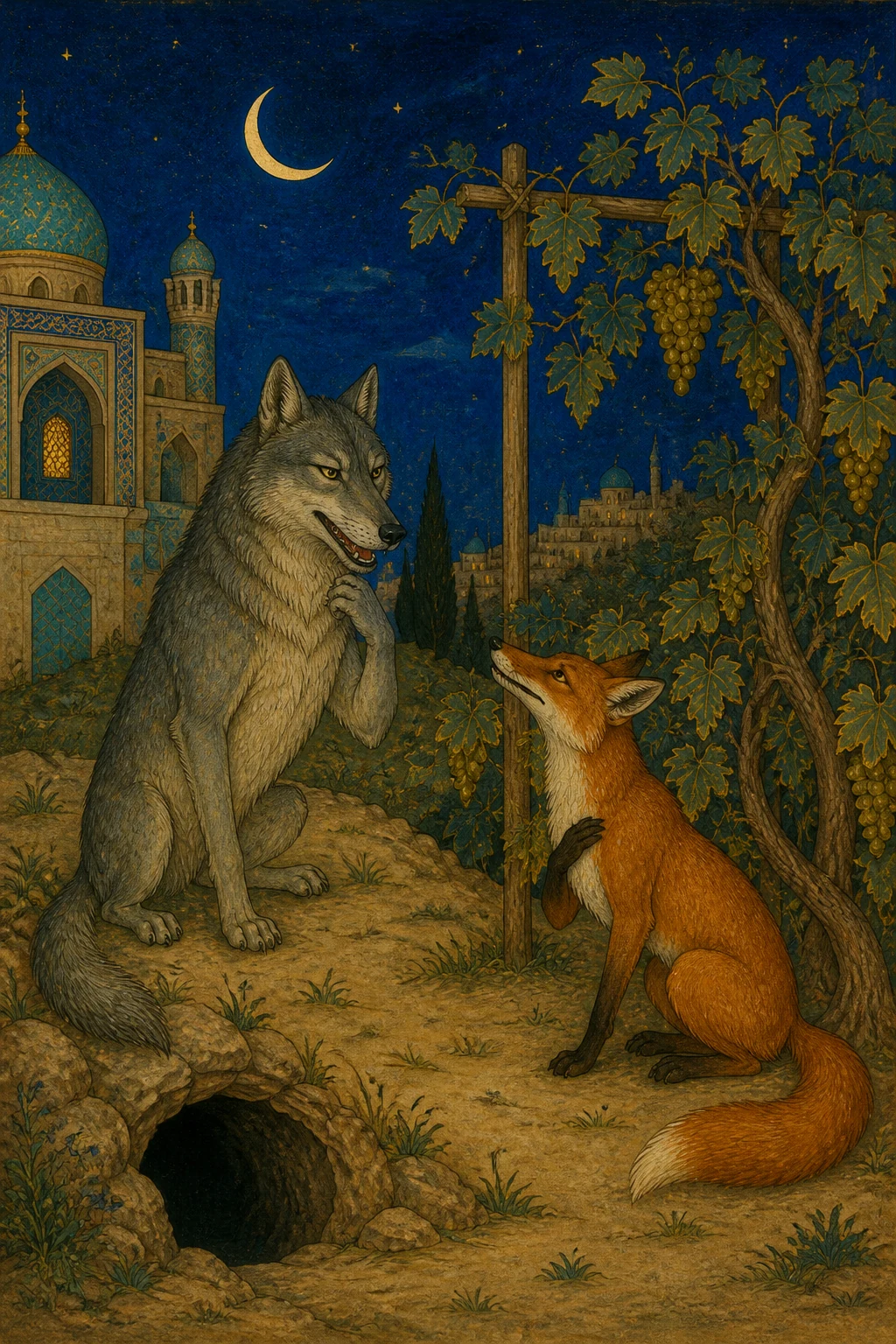
Waltey
Lisica in volk
Tisoč in ena noč · arabska pripovedna tradicijaO besedilu
Lisica in volk
- Vir
- Tisoč in ena noč
- Avtor
- arabska pripovedna tradicija
- Jezik branja
- English
- Jezik izvirnika
- Arabic
- Čas branja
- 23 min branja
- Obseg
- 19 strani
- Naslov izvirnika
- حكاية الثعلب والذئب - الليالي ١٤٩ إلى ١٥٠
O izvirniku
Tisoč in ena noč
Zgodbe v zgodbah, polne trgovcev, dvorov, preoblek in nočnih zapletov. Bralni jezik je English, izvirnik pa prihaja iz vira Tisoč in ena noč v jeziku Arabic.
Besedilo
Lisica in volk
She said, “It has reached me, O fortunate king, that the wolf said to the fox, ‘Speak of what does not concern you, and you will hear what does not please you.’ The fox replied, ‘I hear and obey. I shall keep clear of whatever displeases you. As the sage has said: Tell nothing you have not been asked about, answer no summons that was not addressed to you, and leave what does not concern you for what does. Offer no counsel to the wicked, for they will repay it with evil.’ When the wolf heard the fox’s words, he smiled at him, but inwardly plotted against him, saying to himself, ‘I must find a way to destroy this fox.’ The fox, meanwhile, bore the wolf’s ill-treatment patiently, saying to himself, ‘Arrogance and falsehood bring destruction and lead to trouble. It has been said: The arrogant lose, the ignorant repent, and the wary escape unharmed. Fairness is the mark of the noble, and good manners the finest acquisition. Wisdom counsels that I humor this tyrant; sooner or later he must meet his downfall.’ Then the fox said to the wolf, ‘The Lord pardons His servant and accepts his repentance when he has sinned. I am but a feeble servant, and in offering you advice I overstepped my bounds. Had you known the pain your blow caused me, you would have known that even an elephant could neither bear nor withstand it. Yet I do not complain of the pain of that blow, because of the joy it brought me. Though it struck me sorely, its outcome was happiness. As the sage has said: The tutor’s blows are harsh and bitter at first, but in the end sweeter than clarified honey.’ The wolf replied, ‘I forgive your offense and overlook your lapse. Beware of my strength, and acknowledge yourself my servant, for you know how I subdue my enemies.’ The fox prostrated himself before him and said, ‘May God prolong your life, and may you ever prevail over your enemies!’”
The fox continued to fear the wolf and to appease him. One day he went to a vineyard and noticed a breach in its wall. Finding it suspicious, he said to himself, “There must be a reason for this breach. It has been said: Whoever sees a hole in the ground and neither avoids it nor takes care before approaching it is deceiving himself and courting destruction. It is well known that some people set up a fox’s likeness in a vineyard and place grapes before it on dishes, so that a fox will see it, approach, and meet his doom. I suspect a trap in this breach. As the saying goes, caution is half of cleverness. Prudence bids me examine this opening and look about; perhaps I shall find something deadly there. I must not let greed drive me to throw myself into destruction.” He drew near and circled it cautiously. On examining it, he discovered a great pit that the vineyard’s owner had dug to catch the wild beasts that spoiled his vines, with a flimsy covering laid over it. He drew back and said, “Praise be to God, who made me beware of it! I hope my enemy the wolf, who has made my life so bitter, will fall into it. Then I shall have the vineyard to myself and live here in safety.” He shook his head, laughed aloud, sang for joy, and recited these verses:
“Would that I might see the wolf within this pit today! Long has he grieved my heart and forced me to drink bitterness. Would that I might live on while he meets his appointed death! Then the vineyard would be free of him, its spoils all mine to take.” When he had finished his verses, he hurried away to the wolf and said, “God has opened an easy way for you into the vineyard, with no toil at all. Such is your good fortune! May you enjoy what God has granted you, the plunder and abundant provision He has made yours without hardship.” The wolf asked, “What proof have you of this tale?” The fox replied, “I went to the vineyard and found that its owner had died. I entered the garden and saw the fruit glowing upon the trees.” The wolf did not doubt the fox’s words. Overcome by greed, he rose and went to the breach, blinded by his desire, while the fox stood limp as though dead and quoted this verse:
“Do you covet union with Layla? It is covetous hopes that cost men their heads.” When the wolf reached the breach, the fox said, “Enter the vineyard. You have been spared the trouble of breaking down its wall. May God complete His favor!” The wolf walked forward to enter, and when he reached the middle of the covering, he fell into the pit. The fox trembled with delight and joy; all his sorrow and distress vanished. He sang merrily and recited these verses:
“Time has taken pity on my plight and mourned my long anguish. It has granted my desire and swept away what I feared. Now I shall forgive his former offenses, even the wrong that turned the hair upon my head to gray. The wolf has no escape from utter ruin; the vineyard is mine alone, with no foolish partner to share it.” Then he peered into the pit and saw the wolf weeping in sorrow and remorse for his own plight, and the fox wept with him. The wolf raised his head and said, “Are you weeping out of pity for me, Abu al-Husayn?” “No,” replied the fox, “by Him who cast you into this pit! I weep over all the years you have lived, and grieve that you did not fall into this hole before today. Had you fallen in before we met, you would have spared yourself and me much trouble. But you were preserved until your appointed end and destined hour.” The wolf said, “Go, you evildoer, to my mother and tell her what has happened to me. Perhaps she can devise a way to save me.” The fox replied, “Your boundless greed and ravenous appetite have brought you to destruction, for you have fallen into a pit from which you will not escape alive. Did you not know, ignorant wolf, the proverb: Whoever fails to consider the consequences cannot be safe from disaster?” The wolf said, “Abu al-Husayn, you used to profess love for me, seek my friendship, and fear my great strength. Do not bear me a grudge for what I did to you. Whoever has the power to punish and yet forgives will have his reward from God. As the poet said:
“‘Sow kindness, even in unpromising soil; no kindness is ever lost, wherever it is sown. Though long years pass over it, none shall reap its harvest but the one who sowed it.’” The fox replied, “Most ignorant of predators and most foolish of beasts upon the earth! Have you forgotten your tyranny, your insolence, and your pride? You paid no heed to the claims of companionship, nor took to heart the poet’s words:
“‘Do not oppress others when you have the power, for the oppressor stands upon the brink of vengeance. Your eyes may sleep, but the wronged man lies awake, calling down curses upon you, and God’s eye never sleeps.’” The wolf said, “Abu al-Husayn, do not hold my past sins against me. Forgiveness is expected of the generous, and kindness is among the finest treasures one can store. How well the poet said:
“‘Hasten to do good while it lies within your power, for you will not always have that power.’” The wolf went on humbling himself before the fox, saying, “Perhaps you can find some means of saving me from death.” The fox replied, “Cunning, deceitful, treacherous wolf! Hope for no escape. This is the reward and retribution for your wicked deeds.” Then he grinned from ear to ear and recited these two verses:
“Do not keep trying to deceive me; you will gain nothing by it. What you seek from me is impossible. You have sown—now reap disaster.” The wolf said, “Most forbearing of beasts, I trust you too much to believe you would leave me in this pit.” Then tears poured from his eyes, and he recited these two verses:
“O you whose favors to me have been many, whose gifts exceed all counting! Never has time brought down a calamity upon me but I found you there to take me by the hand.” The fox replied, “Foolish enemy, how have you come to pleading and meekness, abasement and submission, after all your haughtiness and pride, oppression and tyranny? I kept your company for fear of your violence, and flattered you without any hope of your kindness. Now calamity has shaken you, and vengeance has descended upon you.” And he recited these verses:
“O seeker after deceit, you have fallen into the snare of your own vile purpose. Taste now the bitter fruit of this dreadful ordeal, and be cut off from the company of wolves.” The wolf said, “Forbearing one, do not speak with the tongue of hatred or gaze at me through its eyes. Keep faith with our bond of friendship before our chance of meeting is lost. Go and find me a rope, tie one end to a tree, and lower the other to me so that I may cling to it. Perhaps I can escape my plight, and I shall give you every treasure I possess.” The fox replied, “You have talked at length to no purpose, for none of this will save you. Do not hope for rescue from me. Remember your past misdeeds and the treachery and cunning you harbor against me. How will you fare when the stones begin to rain down upon you? Know that you are leaving this world, departing and passing from it, and afterward you will go to ruin and an evil dwelling.” The wolf said, “Abu al-Husayn, be quick to return to friendship, and do not persist in rancor and hatred. Know that whoever saves a soul from destruction has given it life, and whoever gives it life is as though he had given life to all mankind. Do not pursue wickedness, for the wise abhor it. What wickedness could be plainer than to leave me in this pit, swallowing the bitter pangs of death and looking upon destruction, when you can rescue me from my distress?” The fox replied, “You harsh and brutal creature! Your fair outward show and foul inward purpose remind me of the hawk and the partridge.” “What is the story of the hawk and the partridge?” asked the wolf. The fox said, “One day I entered a vineyard to eat its grapes. While I was there, I saw a hawk swoop upon a partridge. He seized it, but the partridge escaped, went into its nesting hole, and hid. The hawk followed and called to it, ‘Ignorant creature! I saw you hungry in the wilderness and took pity on you. I gathered grain for you and caught you so that you might eat, but you fled from me. I can see no reason for your flight except that you are fated to go without. Come out and take the grain I have brought you. Eat it with pleasure and may it do you good!’ The partridge believed the hawk’s words and came out to him, whereupon the hawk sank his talons into it and held it fast. The partridge said, ‘Is this what you said you had brought me from the wilderness, bidding me eat it with pleasure and profit? You lied to me! May God make the flesh you eat of me a deadly poison in your belly!’ When the hawk ate it, his feathers fell out, his strength failed, and he died on the spot.”
Then the fox said, “Know, wolf, that whoever digs a pit for his brother will soon fall into it himself. It was you who first betrayed me.” The wolf replied, “Spare me these speeches and proverbs, and do not remind me of my past misdeeds. My present misery is enough for me. I have fallen into a plight that would move even an enemy to pity, let alone a friend. Find some way for me to escape, and come to my aid, even if it costs you hardship. A friend may endure the greatest toil for his friend, and face danger to save him. It has been said: A loving friend is better than a brother of your own blood. If you contrive to rescue me, I shall gather tools enough to equip you, and teach you ingenious tricks by which you can enter fertile vineyards and harvest fruitful trees. So be happy and at ease.” The fox laughed and said, “How well the learned have spoken of the deeply ignorant, such as you!” “What have the learned said?” asked the wolf. The fox replied, “They have said that one who is gross in body and coarse in nature is far from understanding and close to ignorance. For what you say, cunning fool, that a friend may endure hardship to rescue his friend, is true enough. But tell me, in your ignorance and lack of sense, how could I be your friend when you are treacherous? Do you think me your friend, when I am an enemy rejoicing in your misfortune? Those words should strike harder than arrows, if you have any understanding. As for your saying that you will give me tools to equip me and teach me tricks for entering fertile vineyards and gathering fruit from their trees, why, deceitful traitor, do you not know a trick to save yourself from death? How little you can help yourself, and how far I am from accepting your advice! If you have any tricks, use them to escape this plight, from which I pray God you may never be delivered. Look to yourself, ignorant creature: if you know a trick, save your own life with it before offering to teach others. You are like a man who fell ill and was visited by another suffering from the same disease, who came to cure him. ‘Would you like me to treat your illness?’ the visitor asked. The sick man replied, ‘Why not begin by treating yourself?’ So he left him and went away. You, wolf, are just like that. Stay where you are and endure what has befallen you.”
When the wolf heard the fox’s words, he knew he could expect no kindness from him. He wept for himself and said, “I have been heedless of my own affairs. If God delivers me from this anguish, I shall repent of my tyranny over those weaker than myself. I shall put on woolen garments and climb into the mountains, remembering God Most High and fearing His punishment. I shall withdraw from all other beasts and give food to those who fight in God’s cause and to the poor.” Then he wept and sobbed, and the fox’s heart softened toward him. It seemed that, on hearing his pleas and words of repentance for his insolence and pride, the fox was moved to pity. He leaped up in his excitement, stood at the brink of the pit, then sat back on his hind legs and let his tail hang down into it. At once the wolf rose, stretched out a paw, caught the fox’s tail, and dragged him down beside him. Then the wolf said, “Merciless fox! How could you gloat over me, when you were my companion and under my power? Now you have fallen into the pit with me, and your punishment has come swiftly. The sages have said: If a man reproaches his brother for having suckled at a bitch, he will suckle at her himself. How well the poet said:
“‘When time presses its heavy breast upon one people, it kneels upon another too. Tell those who gloat over us: Awaken! Those who gloat will meet the fate we met.’” Then the wolf said to the fox, “I must hasten to kill you before you witness my death.” The fox said to himself, “I have fallen into the clutches of this tyrant, and this plight calls for cunning and deceit. It has been said: A woman fashions her jewels for the day of adornment. And the proverb says: I have saved you, my tears, only for my hour of distress. Unless I find a trick to deal with this savage oppressor, I shall surely perish. How well the poet said:
“‘Live by guile, for you live in an age whose sons are like the lions of Bisha. Turn the spear of cunning until the millstone of livelihood turns. Gather the fruit, but if it eludes you, content yourself with grass.’” Then the fox said to the wolf, “Do not hasten to kill me, lest you repent, O mighty beast, lord of strength and terrible prowess! If you give me time and consider carefully what I tell you, you will understand my purpose. If you hurry to kill me, you will gain nothing, and we shall both die here.” The wolf replied, “Deceitful trickster! What hope have you for my safety and your own, that you ask me to spare you a little time? Tell me what your purpose was.” The fox said, “My purpose was one for which you ought to reward me handsomely. I heard the promises you made, your confession of past offenses, and your sorrow for the repentance and good deeds you had neglected. I heard your vow to cease harming your companions and others, to give up eating grapes and all other fruit, to practice humility, trim your claws, break your fangs, wear wool, and offer sacrifices to God Most High if He saved you from your plight. Pity overcame me, though I had been eager for your death. When I heard your repentance and the vows you made if God delivered you, I felt bound to rescue you. So I lowered my tail for you to cling to and escape. But you would not abandon your violence and brutality, nor seek your own safety gently. Instead you gave me such a wrench that I thought my soul had left my body. Now you and I stand alike on the brink of death and destruction. Only one thing can save us, and if you accept it from me, we shall both escape. Afterward you must fulfill your vows, and I shall be your companion.” “What must I accept from you?” asked the wolf. The fox replied, “Stand upright, and I shall climb onto your head until I am near the surface. Once I reach it, I shall get out and bring you something to cling to, and then you too can escape.” The wolf said, “I do not trust your words, for the sages have said: Whoever places trust where there is hatred is mistaken. And it has been said: Whoever trusts the untrustworthy is deluded; whoever tries what has already been tried will come to regret it. Whoever fails to distinguish between different circumstances and give each its due, but treats everything alike, will have little good fortune and many calamities. How well the poet said:
“‘Let your suspicions be none but dark, for distrust is among the surest forms of wisdom. Nothing casts a man into destruction like doing good and thinking well of others.’ And another said:
“‘Hold fast to distrust, and it will save you; one who lives watchfully suffers fewer calamities. Meet your enemy with a bright and smiling face, but marshal in your breast an army to fight him.’ And another said:
“‘Your bitterest enemy is the nearest of those you trust. Beware of men, and keep a hidden reserve in their company. To think well of the days is helpless folly; expect their worst and be on your guard.’” The fox replied, “Distrust is not praiseworthy in every circumstance. To think well of others is a mark of perfection, and its outcome is deliverance from terrors. You ought, wolf, to contrive some escape from your plight. It is better that we both survive than that we both die, so put aside your suspicion and rancor. If you trust me, one of two things must happen: either I bring you something to cling to and you escape, or I betray you, save myself, and leave you here. But that is impossible, for I cannot be sure that I shall not suffer the same trial as you as punishment for my treachery. As the proverb says: Faithfulness is fair, and treachery foul. You ought to trust me, for I am not ignorant of the turns of fortune. Do not delay our means of escape; our circumstances are too desperate for lengthy talk.” The wolf said, “Though I have little faith in your loyalty, I understand that you intended to rescue me when you learned of my repentance. I have said to myself: If his claim is true, he has made amends for the harm he did; if it is false, his reward rests with his Lord. So I accept your proposal. If you betray me, your treachery will cause your destruction.” Then the wolf stood upright in the pit and raised the fox upon his shoulders until he was level with the ground. The fox leaped from the wolf’s shoulders onto the earth and fell senseless. The wolf said, “My dear friend, do not forget me or delay my rescue!” The fox laughed and guffawed, saying, “Deluded fool! Nothing brought me into your clutches but playing with you and mocking you. When I heard your repentance, joy carried me away, and I sang and danced until my tail dangled into the pit. You pulled it, and I fell beside you. Then God Most High delivered me from your grasp. Why should I not help bring about your destruction, when you belong to Satan’s party? Know that last night I dreamed I was dancing at your wedding. I told the dream to an interpreter, who said, ‘You will fall into a predicament and escape it.’ Now I know that falling into your hands and escaping was the fulfillment of my dream. You know, ignorant dupe, that I am your enemy. How can your folly and ignorance make you hope I will rescue you, after all the harsh words you have heard from me? How could I seek to save you, when the learned have said: In the death of the wicked there is rest for mankind and cleansing for the earth? Were I not afraid that keeping faith with you would cause me greater suffering than betraying you, I might consider your rescue.” When the wolf heard the fox’s words, he bit his paw in remorse. And dawn overtook Shahrazad, and she fell silent, leaving off her permitted tale.
Then, when it was the one hundred and fiftieth night,
She said, “It has reached me, O fortunate king, that when the wolf heard the fox’s words, he bit his paw in remorse. Then, having no other choice, he softened his speech and said in a subdued voice, ‘You foxes are among the sweetest-tongued of creatures and the most delicate in your jests. This is a joke of yours, but not every moment is suited to play and jest.’ The fox replied, ‘Ignorant creature! Jesting has limits that the jester must not overstep. Do not imagine that God will give you power over me again after delivering me from your grasp.’ The wolf said, ‘Surely you ought to wish to rescue me, for the sake of our former brotherhood and companionship. If you save me, I shall certainly reward you well.’ The fox replied, ‘The sages have said: Do not befriend an ignorant scoundrel, for he will disgrace you, not adorn you. Nor befriend a liar, for if he sees good in you, he will conceal it, and if he sees evil, he will spread it abroad. The sages have also said: There is a remedy for everything but death; everything may be mended but a corrupt nature; everything may be warded off but destiny. As for the reward you claim I shall deserve from you, in your way of rewarding others you remind me of the snake fleeing from the snake charmer. A man saw her in terror and asked, “What is the matter, snake?” She replied, “I have escaped from the snake charmer, and he is searching for me. If you save me from him and hide me about your person, I shall reward you handsomely and show you every kindness.” Seeking merit and hoping for a reward, the man took her and tucked her into the breast of his robe. When the snake charmer had passed and gone his way, and her fear was over, the man asked, “Where is my reward? I have saved you from what you feared and dreaded.” The snake replied, “Tell me, which part of your body shall I bite? You know that we give no other reward.” Then she bit him, and he died of the bite. You, fool, remind me of that snake with the man. Have you not heard the poet’s words:
“‘Never trust a man whose heart you have filled with rage, supposing that his rage has passed. Though vipers are soft to the touch, they show a pliant grace while concealing deadly venom.’” The wolf said, “Eloquent one, fair of face, do not forget my standing or the fear men have of me. You know that I storm strongholds and lay vineyards waste. Do as I command, and attend to me as a servant attends his master.” The fox replied, “Ignorant fool, pursuing your false hopes! I marvel at your stupidity and impudence in ordering me to serve you and stand in attendance as though I were your slave. Soon you will see what befalls you when stones split your head and break your treacherous fangs.” Then the fox stood on a mound overlooking the vineyard and kept crying out to its people until they saw him and hurried toward him. He stayed where he was until they came close to him and to the pit in which the wolf lay, then turned and fled. The vineyard’s people looked into the pit, and when they saw the wolf, they assailed him with heavy stones. They went on beating him with stones and wood and stabbing him with spearheads until they killed him, then departed. The fox returned to the pit and stood over the place where the wolf had been slain. Seeing him dead, he shook his head in great delight and recited these verses:
“Time has carried off the wolf’s life and snatched it away. Away with it, and perdition to that ruined soul! How often, Abu Sirhan, you strove to destroy me! Today disasters have descended and blazed upon you. You fell into a pit where none has ever entered but the winds of death have raged about him.” Then the fox remained alone in the vineyard, at peace and fearing no harm. Such was the tale of the wolf and the fox.
Izvirnik
حكاية الثعلب والذئب - الليالي ١٤٩ إلى ١٥٠
Naslednje strani prikazujejo izvirno besedilo za primerjavo.
فلما كانت الليلة ١٤٩
قالت: بلغني أيها الملك السعيد أن الذئب قال للثعلب: لا تتكلم فيما لا يعنيك، تسمع ما لا يرضيك. فقال له الثعلب: سمعًا وطاعة، فأنا بمعزل عمَّا لا يرضيك، فقد قال الحكيم: لا تخبر عمَّا لا تُسأل عنه، ولا تُجِب ما لا تُدعَى إليه، وذَرِ الذي لا يعنيك إلى ما يعنيك، ولا تبذل النصيحة للأشرار فإنهم يجزونك عليها شرًّا. فلما سمع الذئب كلام الثعلب تبسَّم في وجهه، ولكنه أضمر له مكرًا، وقال: لا بد أن أسعى في هلاك هذا الثعلب. وأما الثعلب فإنه صبر على أذى الذئب، وقال في نفسه: إن البطر والافتراء يجلبان الهلاك، ويوقعان في الارتباك، فقد قيل: من بطر خسر، ومن جهل ندم، ومن خاف سلم، والإنصاف من شيم الأشراف، والآداب أشرف الاكتساب، ومن الرأي مُداراة هذا الباغي، ولا بد له من مصرع. ثم إن الثعلب قال للذئب: إن الربَّ يعفو ويتوب على عبده إن اقترف الذنوب، وأنا عبد ضعيف، وقد ارتكبت في نصحك التعسيف، ولو علمتَ بما حصل لي من ألم لطمتك، لَعلمتَ أن الفيل لا يقوم به ولا يقدر عليه، ولكني لا أشتكي من ألم هذه اللطمة بسبب ما حصل لي بها من السرور، فإنها وإن كانت قد بلغت مني مبلغًا عظيمًا عاقبتها سرور، وقد قال الحكيم: ضرب المؤدِّب أوله صعب شديد، وآخره أحلى من العسل المصفَّى. فقال الذئب: غفرت ذنبك، وأقلت عثرتك، فكن من قوَّتي على حذر، واعترف لي بالعبودية، فقد علمت قهري لمن عاداني. فسجد له الثعلب، وقال له: أطال الله عمرك، ولا زلت قاهرًا لمن عاداك.
ولم يزل الثعلب خائفًا من الذئب مصانعًا له، ثم إن الثعلب ذهب إلى كَرْم يومًا ما، فرأى في حائطه ثلمة فأنكرها، وقال في نفسه: إن هذه الثلمة لا بد لها من سبب، وقد قيل: مَن رأى خرقًا في الأرض فلم يجتنبه ويتوقَّ عن الإقدام عليه، كان بنفسه مُغَرًّا، وللهلاك متعرِّضًا. وقد اشتهر أن بعض الناس يعمل صورة الثعلب في الكَرْم حتى يقدم إليه العنب في الأطباق؛ لأجل أن يرى ذلك الثعلب فيقدم إليه فيقع في الهلاك، وإني أرى هذه الثلمة مكيدة، وقد قيل: إن الحذر نصف الشطارة. ومن الحذر أن أبحث عن هذه الثلمة وأنظر، لعلي أجدها أمرًا يؤدي إلى التلف، ولا يحملني الطمع على أن ألقي نفسي في الهلكة. ثم دنا منها وطاف بها وهو محاذر، فرآها، فإذا هي حفرة عظيمة قد حفرها صاحب الكَرْم ليصيد فيها الوحش الذي يفسد الكَرْم، ورأى عليها غطاءً رقيقًا، فتأخَّرَ عنها وقال: الحمد لله حيث حذرتها، وأرجو أن يقع فيها عدوي الذئب الذي نغَّص عيشي، فأستقل بالكرم وحدي، وأعيش فيه آمنًا. ثم هزَّ رأسه وضحك ضحكًا عاليًا، وأطرب بالنغمات، وأنشد هذه الأبيات:
لَيْتَنِي أَبْصَرْتُ هَذَا الْـ ـوَقْتَ فِي ذِي الْبِئْرِ ذِئْبَا
طَالَمَا قَدْ سَاءَ قَلْبِي وَسَقَانِي الْمُرَّ غَصْبَا
لَيْتَنِي مِنْ بَعْدِ ذَا أَبْـ ـقَى وَيَقْضِي الذِّئْبُ نَحْبَا
ثُمَّ يَخْلُو الكَرْمُ مِنْهُ وَأَرَى لِي فِيهِ نَهْبَا
فلما فرغ من شعره انطلق مسرعًا حتى وصل إلى الذئب، وقال: إن الله سهَّل لك الأمور إلى الكَرْم بلا تعب، وهذا من سعادتك، فهنيئًا لك بما فتح الله عليك، وسهَّل لك من تلك الغنيمة والرزق الواسع بلا مشقة. فقال الذئب للثعلب: وما الدليل على ما وضعت؟ قال: إني انتهيت إلى الكَرْم فوجدت صاحبه قد مات، ودخلت البستان فرأيت الأثمار زاهية على الأشجار. فلم يشكَّ الذئب في قول الثعلب، وأدركه الشره، فقام حتى انتهى إلى الثلمة وقد غرَّه الطمع، ووقف الثعلب متهافتًا كالميت، وتمثَّلَ بهذا البيت:
أَتَطَمْعُ مِنْ لَيْلَى بِوَصْلٍ وَإِنَّمَا تَضُرُّ بِأَعْنَاقِ الرِّجَالِ الْمَطَامِعُ
فلما انتهى الذئب إلى الثلمة، قال له الثعلب: ادخل إلى الكرم فقد كُفيت مئونة هدم حائط البستان، وعلى الله تمام الإحسان. فأقبل الذئب ماشيًا يريد الدخول إلى الكرم، فلما توسَّط غطاء الثلمة وقع فيها، فاضطرب الثعلب اضطرابًا شديدًا من السرور والفرح، وزال عنه الهم والترح، وأطرب بالنغمات وأنشد هذه الأبيات:
رَقَّ الزَّمَانُ لِحَالَتِي وَرَثَى لِطُولِ تَحَرُّقِي
وَأَنَالَنِي مَا أَشْتَهِي وَأَزَالَ مِمَّا أَتَّقِي
فَلَأَصْفَحَنْ عَمَّا جَنَا هُ مِنَ الذُّنُوبِ السُّبَّقِ
حَتَّى جِنَايَتُهُ بِمَا فَعَلَ الْمَشِيبُ بِمَفْرَقِي
فَالذِّئْبُ لَيْسَ لَهُ خَلَا صٌ مِنْ هَلَاكٍ مُوبِقِ
وَالْكَرْمُ لِي وَحْدِي وَمَا لِي مِنْ شَرِيكٍ أَحْمَقِ
ثم إنه تطلَّع في الحفرة، فرأى الذئب يبكي ندمًا وحزنًا على نفسه، فبكى الثعلب معه، فرفع الذئب رأسه إلى الثعلب وقال له: أمن رحمتك لي بكيت يا أبا الحصين؟ قال: لا، والذي قذفك في هذه الحفرة، إنما بكيت لطول عمرك الماضي، وآسفًا على كونك لم تقع في هذه الثلمة قبل اليوم، ولو وقعت فيها قبل اجتماعي بك لَكنت أرحت واسترحت، ولكن أُبقِيت إلى أجلك المحتوم، ووقتك المعلوم. فقال له الذئب: رُح أيها المسيء في فعله لوالدتي، وأخبرها بما حصل لي، لعلَّها تحتال على خلاصي. فقال له الثعلب: لقد أوقعك في الهلاك شدة طمعك، وكثرة حرصك، حيث سقطت في حفرة لستَ منها بسالم، ألم تعلم أيها الذئب الجاهل أن صاحب المثل يقول: مَن لم يفكِّر في العواقب لم يأمن المعاطب؟ فقال الذئب للثعلب: يا أبا الحصين، إنما كنت تُظهِر محبتي، وترغب في مودتي، وتخاف من شدة قوتي، فلا تحقد عليَّ بما فعلتُ معك، فمَن قدر وعفا كان أجره على الله، وقد قال الشاعر:
ازْرَعْ جَمِيلًا وَلَوْ فِي غَيْرِ مَوْضِعِهِ مَا ضَاعَ قَطُّ جَمِيلٌ أَيْنَمَا زُرِعَ
إِنَّ الْجَمِيلَ وَإِنْ طَالَ الزَّمَانُ بِهِ فَلَيْسَ يَحْصُدُهُ إِلَّا الَّذِي زَرَعَ
فقال له الثعلب: يا أجهل السباع وأحمق الوحوش في البقاع، هل نسيتَ تجبُّرَك وعتوَّك وتكبُّرك؟ وأنت لم ترعَ حقَّ المعاشرة، ولم تنتصح بقول الشاعر:
لَا تَظْلِمَنَّ إِذَا مَا كُنْتَ مُقْتَدِرًا إِنَّ الظَّلُومَ عَلَى حَدٍّ مِنَ النَّقَمِ
تَنَامُ عَيْنُكَ وَالْمَظْلُومُ مُنْتَبِهٌ يَدْعُو عَلَيْكَ وَعَيْنُ اللهِ لَمْ تَنَمِ
فقال له الذئب: يا أبا الحصين، لا تؤاخذني بسابق الذنوب، فالعفو من الكرام مطلوب، وصنع المعروف من أحسن الذخائر، وما أحسن قول الشاعر:
بَادِرْ بِخَيْرٍ إِذَا مَا كُنْتَ مُقْتَدِرًا فَلَيْسَ فِي كُلِّ حِينٍ أَنْتَ مُقْتَدِرَا
وما زال الذئب يتذلل للثعلب ويقول له: لعلك تقدر على شيء تخلِّصني به من الهلاك. فقال له الثعلب: أيها الذئب الماكر المخادع الغادر، لا تطمع في الخلاص، فإن هذا جزاء لقبيح فعلك وقصاص. ثم ضحك بالشدقين وأنشد هذين البيتين:
لَا تُكْثِرَنَّ خِدَاعِي فَلَنْ تَنَالَ مَنَالَا
مَا رُمْتَ مِنِّي مُحَالٌ زَرَعْتَ فَاحْصُدْ وَبَالَا
فقال الذئب للثعلب: يا حليم السباع، أنت عندي أوثق من أن تتركني في هذه الحفرة. ثم أفاض دمع العين، وأنشد هذين البيتين:
يَا مَنْ أَيَادِيهِ عِنْدِي غَيْرُ وَاحِدَةٍ وَمَنْ مَوَاهِبُهُ تَنْمُو عَنِ الْعَدَدِ
مَا نَابَنِي مِنْ زَمَانِي قَطُّ نَائِبَةٌ إِلَّا وَجَدْتُكَ فِيهَا آخِذًا بِيَدِي
فقال الثعلب: أيها العدو الأحمق، كيف صرت إلى التضرُّع والخشوع، والذلة والخضوع، بعد الأنفة والتكبُّر، والظلم والتجبُّر؟ لقد صحبتك خائفًا من عدوانك، وتملقت لك لا رغبة في إحسانك، والآن نزلت بك الرجفة وحلَّت بك النقمة. وأنشد هذين البيتين:
يَا أَيُّهَا الْمُلْتَمِسُ الْخَدِيعَةْ وَقَعْتَ فِي نِيَّتِكَ الشَّنِيعَةْ
فَذُقْ وَبَالَ الْمِحْنَةِ الْفَظِيعَةْ وَكُنْ مَعَ الذِّئَابِ فِي قَطِيعَةْ
فقال له الذئب: أيها الحليم، لا تكن بلسان العداوة ناطقًا وبعينها محدِّقًا، وكن وافيًا بعهد ائتلافي قبل أن يفوت وقت التلاقي، وقم وتسبَّب لي في حبلٍ تشدُّ طرْفَه في شجرة، وتدلِّي طرفه الآخر إليَّ حتى أتعلَّق به، لعلي أنجو مما أنا فيه، وأدفع لك جميع ما حوته يدي من الذخائر. فقال له الثعلب: لقد أكثرتَ من المحاورة فيما ليس فيه خلاصك، فلا ترجُ مني نجاةَ نفسك، واذكر ما سلف من سوء فعلك، وما تُضمِره لي من الغدر والمكر، وأين أنت من الرجم بالحجارة؟ واعلم بأن ذاتك للدنيا مفارقة، ومنها زائلة، وعنها راحلة، ثم تصير إلى الدمار وسوء الدار. فقال له الذئب: يا أبا الحصين، كن قريب الرجوع إلى الوداد، ولا تصرَّ على ضغائن الأحقاد، واعلم أن مَن خلَّص نفسًا من الهلاك فقد أحياها، ومَن أحياها فكأنما أحيا الناس جميعًا، ولا تتبع الفساد؛ فإن الحكماء تكرهه، ولا فساد أظهر من كوني في تلك الحفرة أتجرع غصص الموت، وأنظر إلى الهلاك وأنت قادر على خلاصي من الارتباك. فقال له الثعلب: أيها الفظ الغليظ، إني أشبِّهك في حسن علانيتك وقبح نيتك بالباز مع الحَجَل. قال له الذئب: وما حديث الباز والحجل؟ قال الثعلب: دخلتُ يومًا كَرْمًا لآكل من عنبه، فبينما أنا فيه إذ رأيت بازًا انقضَّ على حجل، فلما اقتنصه انفلت منه الحجل ودخل وَكْره واختفى فيه، فتبعه الباز وناداه: أيها الجاهل إني رأيتك في البرية جائعًا فرحمتك، والتقطت لك حبًّا وأمسكتك لتأكل فهربت مني، ولم أعرف لهروبك وجهًا إلا الحرمان، فاظهر وخذ ما آتيتك من الحب فكُلْه هنيًّا مريئًا. فلما سمع الحجل قول الباز صدَّقه وخرج إليه، فأنشب مخالبه فيه ومكَّنها منه. فقال له الحَجَل: أهذا الذي ذكرتَ أنك أتيتني به من البرية وقلت لي كله هنيًّا مريئًا، فكذبتَ عليَّ؟ جعل الله ما تأكله من لحمي في جوفك سمًّا قاتلًا. فلما أكله وقع ريشه، وسقطت قوته، ومات لوقته.
ثم قال له الثعلب: اعلم أيها الذئب أن مَن حفر لأخيه قليبًا وقع فيه قريبًا، وأنت غدرتَ بي أولًا. فقال الذئب للثعلب: دعني من هذا المقال وضرب الأمثال، ولا تذكر لي ما سلف مني من قبيح الفعال، يكفيني ما أنا فيه من سوء الحال؛ حيث وقعت في ورطة يرثي لي منها العدو فضلًا عن الصديق، وانظر لي حيلة أتخلَّص بها، وكن فيها غياثي، وإن كان عليك في ذلك مشقة، فقد يحتمل الصديق لصديقه أشد النصب، ويقاسي فيما فيه نجاته العطب، وقد قيل: إن الصديق الشفيق خير من الأخ الشقيق، وإن تسببتَ في نجاتي لَأجمعن لك من الآلة ما يكون لك عدة، ثم لَأعلمنك من الحِيَل الغريبة ما تفتح به الكروم الخصبة، وتجني الأشجار المثمرة، فطِبْ نفسًا وقرَّ عينًا. فقال له الثعلب وهو يضحك: ما أحسن ما قالته العلماء في كثير الجهل مثلك! قال الذئب: وما قالت العلماء؟ قال الثعلب: ذكر العلماء أن الغليظ الجثة، الغليظ الطبع، يكون بعيدًا من العقل قريبًا من الجهل؛ لأن قولك أيها الماكر الأحمق «قد يتحمَّل الصديقُ المشقةَ في تخليص صديقه»؛ صحيحٌ كما ذكرتَ، ولكن عرِّفني بجهلك وقلة عقلك كيف أصادقك مع خيانتك؟ أحسبتني لك صديقًا وأنا لك عدو شامت؟ وهذا الكلام أشد من رشق السهام إن كنت تعقل. وأما قولك إنك تعطيني من الآلات ما يكون عدة لي، وتعلمني من الحِيَل ما أصل به إلى الكروم المخصبة، وأجتني به الأشجار المثمرة، فما لك أيها المخادع الغادر لا تعرف لك حيلة تتخلص بها من الهلاك؟ فما أبعدك من المنفعة لنفسك، وما أبعدني من القبول لنصيحتك! فإن كان عندك حِيَلٌ فتحيَّلْ لنفسك في الخلاص من هذا الأمر، الذي أسأل الله أن يبعد خلاصك منه، فانظر أيها الجاهل إن كان عندك حيلة، فخلص نفسك بها من القتل قبل أن تبذل التعليم لغيرك، ولكنك مثل إنسان حصل له مرض فأتاه رجل مريض بمثل مرضه ليداويه، فقال له: هل لك أن أداويك من مرضك؟ فقال له الرجل: هلَّا بدأتَ بنفسك في المداواة! فتركه وانصرف. وأنت أيها الذئب كذلك، فالزم مكانك، واصبر على ما أصابك.
فلما سمع الذئب كلام الثعلب علم أنه لا خير له عنده، فبكى على نفسه وقال: قد كنت في غفلة من أمري، فإن خلَّصني الله من هذا الكرب لأتوبنَّ من تجبُّري على مَن هو أضعف مني، ولَألبسنَّ الصوف، ولأصعدنَّ الجبلَ ذاكرًا الله تعالى، خائفًا من عقابه، وأعتزل سائرَ الوحوش، ولأُطعِمنَّ المجاهدين والفقراء. ثم بكى وانتحب، فرَقَّ له قلب الثعلب، وكأنه لما سمع تضرُّعه، والكلام الذي يدل على توبته من العتو والتكبُّر، أخذته الشفقة عليه، فوثب من فرحته، ووقف على شفير الحفرة، ثم جلس على رجليه وأدلى ذَنَبه في الحفرة، فعند ذلك قام الذئب ومدَّ يده إلى ذَنَب الثعلب وجذبه إليه، فصار في الحفرة معه، ثم قال له الذئب: أيها الثعلب القليل الرحمة، كيف تشمت بي وقد كنتَ صاحبي وتحت قهري؟ وقد وقعت معي في الحفرة، وتعجلت لك العقوبة، وقد قالت الحكماء: لو عايَرَ أحدكم أخاه برضاع كلبة لارتضعها. وما أحسن قول الشاعر:
إِذَا مَا الدَّهْرُ جَرَّ عَلَى أُنَاسٍ كَلَاكِلَهُ أَنَاخَ بِآخَرِينَا
فَقُلْ لِلشَّامِتِينَ بِنَا: أَفِيقُوا سَيَلْقَى الشَّامِتُونَ كَمَا لَقِينَا
ثم قال الذئب للثعلب: فلا بد أن أعجِّل قتلك قبل أن ترى قتلي. فقال الثعلب في نفسه: إني وقعت مع هذا الجبار، وهذا الحال يحتاج إلى المكر والخداع، وقد قيل: إن المرأة تصوغ حليها ليوم الزينة. وفي المثل: ما ادَّخرتُكِ يا دمعتي إلا لشدَّتي. وإن لم أتحيَّل في أمر هذا الوحش الظالم هلكتُ لا محالةَ، وما أحسن قول الشاعر:
عِشْ بِالْخِدَاعِ فَأَنْتَ فِي زَمَنٍ بَنُوهُ كَأُسْدِ بِيشَهْ
وَأَدِرْ قَنَاةَ الْمُكْرِ حَتَّى تَسْتَدِيرَ رَحَى الْمَعِيشَهْ
وَاجْنِ الثِّمَارَ فَإِنْ تَفُتْكَ فَرَضِّ نَفْسَكَ بِالْحَشِيشَهْ
ثم إن الثعلب قال للذئب: لا تعجل عليَّ بالقتل فتندم أيها الوحش الصنديد، صاحب القوة والبأس الشديد، وإن تمهلت وأمعنت النظر فيما أحكيه لك عرفتَ قصدي الذي قصدته، وإن عجَّلتَ بقتلي فلا فائدةَ لك فيه، ونموت جميعًا ها هنا. فقال له الذئب: أيها الخادع الماكر، وما الذي ترجوه من سلامتي وسلامتك حتى تسألني التمهُّلَ عليك؟ فأخبرني بقصدك الذي قصدته. فقال له الثعلب: أما قصدي الذي قصدته فما ينبغي أن تحسن عليه مجازاتي؛ لأني سمعت ما وعدت من نفسك، واعترافك بما سلف منك، وتلهُّفك على ما فاتك من التوبة وفعل الخير، وسمعت ما نذرته على نفسك من كفِّ الأذى عن الأصحاب وغيرهم، وتركك أكل العنب وسائر الفواكه، ولزومك الخشوع، وتقليم أظفارك، وتكسير أنيابك، وأن تلبس الصوف، وتقرب القربان لله تعالى إنْ نجَّاك مما أنت فيه؛ أخذتني الشفقة عليك، مع أنني كنت على هلاكك حريصًا، فلما سمعت منك توبتك وما نذرته على نفسك إن نجاك الله لزمني خلاصك مما أنت فيه، فأدليت إليك ذَنَبي لكيما تتعلق به وتنجو، فلم تترك الحالة التي أنت عليها من العنف والشدة، ولم تلتمس النجاة والسلامة لنفسك بالرفق، بل جذبتني جذبةً ظننتُ منها أن روحي قد خرجت، فصرت أنا وأنت في منزلة الهلاك والموت، وما ينجِّيني أنا وأنت إلا شيء إنْ قبلته مني خلصت أنا وأنت، وبعد ذلك يجب عليك أن تفي بما نذرته، وأكون رفيقك. فقال له الذئب: وما الذي أقبله منك؟ قال له الثعلب: تنهض قائمًا، ثم أعلو أنا فوق رأسك حتى أكون قريبًا من ظاهر الأرض، فإني حين أصير فوقها أخرج وآتيك بما تتعلق به، وتخلص أنت بعد ذلك. فقال له الذئب: لست بقولك واثقًا؛ لأن الحكماء قالوا: مَن استعمل الثقة في موضع الحقد كان مخطئًا. وقيل: مَن وثق بغير ثقة كان مغرورًا، ومَن جرَّب المجرَّب حلَّتْ به الندامة، ومَن لم يفرِّق بين الحالات فيعطي كلَّ حالة حظها، بل حمل الأشياء كلها على حالة واحدة؛ قلَّ حظه، وكثُرت مصائبه، وما أحسن قول الشاعر:
لَا يَكُنْ ظَنُّكَ إِلَّا سَيِّئًا إنَّ سُوءَ الظَّنِّ مِنْ أَقْوَى الْفِطَنْ
مَا رَمَى الْإِنْسَانَ فِي مَهْلَكَةٍ مِثْلُ فِعْلِ الْخَيْرِ وَالظَّنُّ الْحَسَنْ
وقول الآخَر:
أَلْزِمْ يَقِينَكَ سُوءَ الظَّنِّ تَنْجُ بِهِ مَنْ عَاشَ مُسْتَيْقِظًا قَلَّتْ مَصَائِبُهُ
وَالْقَ الْعَدُوَّ بِوَجْهٍ بَاسِمٍ طَلْقٍ وَانْصُبْ لَهُ فِي الْحَشَى جَيْشًا يُحَارِبُهُ
وقول الآخر:
أَعْدَى عَدُوِّكَ أَدْنَى مَنْ وَثِقْتَ بِهِ فَحَاذِرِ النَّاسَ وَاصْحَبْهُمْ عَلَى دَخَلِ
وَحُسْنُ ظَنِّكَ بِالْأَيَّامِ مُعْجِزَةٌ فَظُنَّ شَرًّا وَكُنْ مِنْهَا عَلَى وَجَلِ
فقال له الثعلب: إن سوء الظن ليس محمودًا في كل حال، وحسن الظن من شيم الكمال، وعاقبته النجاة من الأهوال، وينبغي لك أيها الذئب أن تتحيَّل على النجاة مما أنت فيه، ونسلم جميعًا خير من موتنا، فارجع عن سوء الظن والحقد؛ لأنك إن أحسنتَ الظن بي لا أخلو من أحد أمرين؛ إما أن آتيك بما تتعلَّق به وتنجو مما أنت فيه، وإما أن أغدر بك فأخلص وأدعك، وهذا مما لا يمكن؛ فإني لا آمن أن أُبتلَى بشيء مما ابتُلِيتَ به، فيكون ذلك عقوبةَ الغدر، وقد قيل في الأمثال: الوفاء مليح والغدر قبيح. فينبغي أن تثق بي، فإني لم أكن جاهلًا بحوادث الدهر، فلا تؤخر حيلة خلاصنا؛ فالأمر أضيق من أن نطيل فيه الكلام. فقال الذئب: إني مع قلة ثقتي بوفائك قد عرفت ما في خاطرك، من أنك أردت خلاصي لما عرفت توبتي، فقلت في نفسي: إن كان محقًّا فيما زعم فإنه استدرك ما أفسد، وإن كان مبطلًا فجزاؤه على ربه. وها أنا أقبل منك ما أشرتَ به عليَّ، فإن غدرتَ بي كان الغدر سببًا لهلاكك. ثم إن الذئب انتصَبَ قائمًا في الحفرة، وأخذ الثعلب على أكتافه حتى ساوى به ظاهر الأرض، فوثب الثعلب عن أكتاف الذئب حتى صار على وجه الأرض، ووقع مغشيًّا عليه. فقال له الذئب: يا خليلي لا تغفل عن أمري، ولا تؤخر خلاصي. فضحك الثعلب وقهقه وقال: أيها المغرور، لم يوقعني في يدك إلا المزح معك، والسخرية بك، وذلك أني لما سمعت توبتك استخفني الفرح فطربت ورقصت، فتدلى ذَنَبي في الحفرة فجذبتني فوقعت عندك، ثم أنقذني الله تعالى من يدك، فما لي لا أكون عونًا على هلاكك وأنت من حزب الشيطان؟ واعلم أنني رأيت البارحة في منامي أني أرقص في عرسك، فقصصت الرؤيا على مُعبِّرٍ فقال لي: إنك تقع في ورطة وتنجو منها. فعلمت أن وقوعي في يدك ونجاتي هو تأويل رؤياي، وأنت تعلم أيها المغرور الجاهل أني عدوك، فكيف تطمع بقلة عقلك وجهلك في إنقاذي إياك مع ما سمعت من غلظ كلامي؟ وكيف أسعى في نجاتك وقد قالت العلماء: إن في موت الفاجر راحة للناس، وتطهيرًا للأرض؟ ولولا مخافة أن أحتمل من الألم في الوفاء لك ما هو أعظم من ألم الغدر؛ لتدبَّرت في خلاصك. فلما سمع الذئب كلام الثعلب، عضَّ على كفِّه ندمًا. وأدرك شهرزاد الصباح، فسكتَتْ عن الكلام المباح.
فلما كانت الليلة ١٥٠
قالت: بلغني أيها الملك السعيد، أن الذئب لما سمع كلام الثعلب عض على كفِّه ندمًا، ثم ليَّن له الكلام، ولم يجد بدًّا من ذلك، وقال له بلسان خافت: إنكم معاشر الثعالب من أحلى القوم لسانًا، وألطفها مزاحًا، وهذا منك مزاح، ولكن ما كل وقت يحسُن اللعب والمزاح. فقال الثعلب: أيها الجاهل، إن للمزاح حدًّا لا يجاوزه صاحبه، فلا تحسب أن الله يمكِّنك مني بعد أن أنقذني من يديك. فقال له الذئب: إنك لجدير أن ترغب في خلاصي لما بيننا من سابق المؤاخاة والصحبة، وإن خلَّصتني فلا بد أن أحسن مكافأتك. فقال الثعلب: قد قالت الحكماء: لا تؤاخِ الجاهل الفاجر فإنه يشينك ولا يزينك، ولا تؤاخِ الكذاب فإنه إن بدا منك خير أخفاه، وإن بدا منك شر أفشاه. وقالت الحكماء: لكل شيء حيلة إلا الموت، وقد يُصلَح كل شيء إلا فساد الجوهر، وقد يُدفَع كل شيء إلا القدر. وأما من جهة المكافأة التي زعمت أني أستحقها منك، فإني شبهتك في مكافأتك بالحية الهاربة من الحاوي؛ إذ رآها رجل وهي مرعوبة فقال لها: ما شأنك أيتها الحية؟ قالت: هربت من الحاوي فإنه يطلبني، ولئن أنجيتني منه وأخفيتني عندك لَأحسنن مكافأتك، وأصنع معك كل جميل. فأخذها اغتنامًا للأجر، وطمعًا في المكافأة، وأدخلها في جيبه. فلما فات الحاوي ومضى إلى حال سبيله وزال عنها ما كانت تخافه، قال لها الرجل: أين المكافأة؟ فقد أنجيتك مما تخافين وتحذرين. فقالت له الحية: أخبرني في أي عضو أنهشك؟ وقد علمت أننا لا نتجاوز هذه المكافأة. ثم نهشته نهشة مات منها، وأنت أيها الأحمق شبهتك بتلك الحية مع ذلك الرجل، أما سمعت قول الشاعر:
لَا تَأْمَنَنَّ فَتًى أَسْكَنْتَ مُهْجَتَهُ غَيْظًا وَتَحْسَبُ أَنَّ الْغَيْظَ قَدْ زَالَا
إِنَّ الْأَفَاعِيَ وَإِنْ لَانَتْ مَلَامِسُهَا تُبْدِي الْعِطَافَ وَتُخْفِي السُّمَّ قَتَّالَا
فقال له الذئب: أيها الفصيح صاحب الوجه المليح، لا تجهل حالي وخوف الناس مني، وقد علمت أني أهجم على الحصون، وأقلع الكروم، فافعل ما أمرتك به، وقم بي قيام العبد بسيده. فقال له الثعلب: أيها الأحمق الجاهل المحاول بالباطل، إني تعجبت من حماقتك وصلابة وجهك فيما تأمرني به من خدمتك، والقيام بين يديك حتى كأنني عبدك، ولكن سوف ترى ما يحل بك من شرخ رأسك بالحجارة، وكسر أنيابك الغدَّارة. ثم وقف الثعلب على تلٍّ يشرف على الكرم، ولم يزل يصيح لأهل الكرم حتى بصروا به، وأقبلوا عليه مسرعين، فثبت لهم الثعلب حتى قربوا منه ومن الحفرة التي فيها الذئب، ثم ولى الثعلب هاربًا، فنظر أصحاب الكرم في الحفرة، فلما رأوا فيها الذئب وقعوا عليه بالحجارة الثقال، ولم يزالوا يضربونه بالحجارة والخشب، ويطعنونه بأسنَّة الرماح حتى قتلوه وانصرفوا، فرجع الثعلب إلى تلك الحفرة ووقف على مقتل الذئب فرآه ميتًا، فحرَّك رأسه من شدة الفرحات، وأنشد هذه الأبيات:
أَوْدَى الزَّمَانُ بِنَفْسِ الذِّئْبِ فَاخْتُطِفَتْ بُعْدًا وَسُحْقًا لَهَا مِنْ مُهْجَةٍ تَلِفَتْ
فَكَمْ سَعَيْتَ أَبَا سَرْحَانَ فِي تَلَفِي فَالْيَوْمَ حَلَّتْ بِكَ الْآفَاتُ وَالْتَهَبَتْ
وَقَعْتَ فِي حُفْرَةٍ مَا حَلَّهَا أَحَدٌ إِلَّا وَفِيهَا رِياحُ الْمَوْتِ قَدْ عَصَفَتْ
ثم إن الثعلب أقام بالكرم وحده مطمئنًّا لا يخاف ضررًا. وهذا ما كان من حديث الذئب والثعلب.
Nadaljuj z branjem