Prevod
_Through the kindness of a Fairy, a peasant’s daughter becomes the wife of a King; but when she proves ungrateful to the one who has done her so much good, the Fairy gives her the face of a goat. Despised by her husband on this account, she suffers a thousand indignities; but, humbled through the efforts of a good old man, she recovers her former face and returns to her husband’s favor._ _No sooner had Ciulla finished telling her tale, which was sweet as sugar, than Paola, whose turn it was to join the dance, began to speak._ All the wrongs a man commits have some excuse: resentment that provokes him, necessity that drives him, love that blinds him, or fury that carries him headlong. But ingratitude is the one offense that has no reason, false or true, to cling to. It is therefore so vile a vice that it dries up the fountain of mercy, quenches the fire of love, bars the road to kindness, and fills the person whose kindness goes unacknowledged with disgust and regret, as you shall see in the tale I am about to tell you.
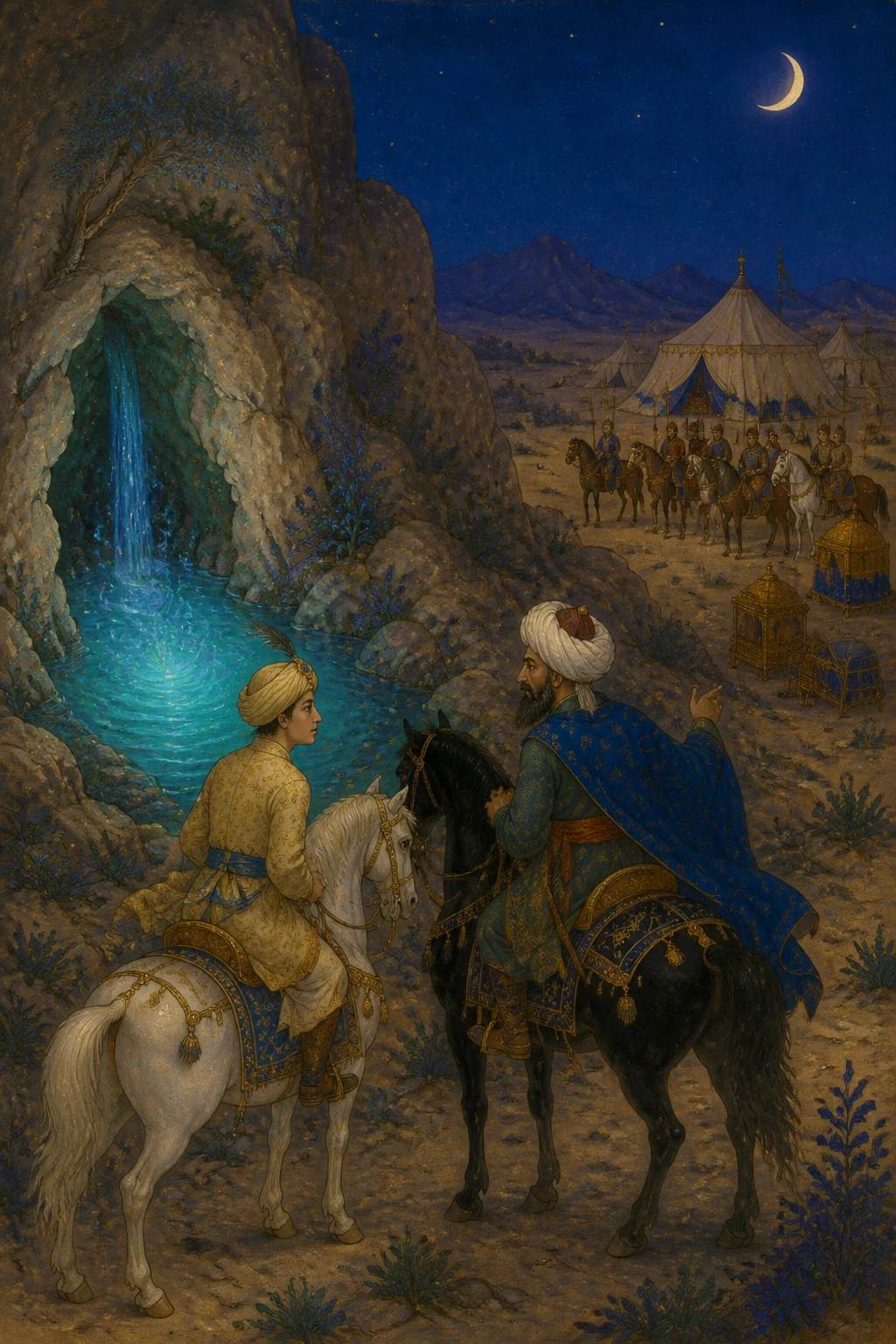
A peasant had twelve daughters, each so close in age to the next that one could scarcely have carried another on her back, for every year their mother, that fine housewife Ceccuzza, brought him another squalling baby. And so, to keep his household honestly, the poor man went out every morning to work as a hired digger. You could not have said whether he shed more sweat on the ground or spat more spit into his hands; enough that, with the little his labors earned, he kept all those chicks and fledglings from starving. Now one day, while he was digging at the foot of a mountain that spied upon the other mountains, thrusting its head above the clouds to see what was happening in the air, he came upon a cave so deep and dark that the Sun itself was afraid to enter. Out of it came a green Lizard as big as a crocodile. The poor peasant was so terrified that he had not the strength to run, and expected his days to close with the opening of that hideous creature’s mouth. But the great Lizard came up to him and said, “Do not be afraid, my good man. I am not here to do you any harm; I have come only for your benefit.”
Hearing this, Masaniello—for that was the laborer’s name—knelt before her and said, “Madam, whatever your name may be, I am in your power. Act as a person of good heart, and take pity on this poor carcass, who has twelve little mouths to feed.” “That is why,” replied the Lizard, “I have been moved to help you. Bring me the youngest of your daughters tomorrow morning, for I wish to raise her as my own and hold her as dear as life itself.” At these words the wretched father was more dismayed than a thief caught with the stolen goods upon him. Hearing the great Lizard ask for a daughter, and the tenderest of them all, he concluded there must be a catch to this kindness: she wanted the child as a little pill to settle her hunger. And he said to himself, “If I give her this daughter, I give her my soul; if I refuse, she will take my body. If I grant her wish, I am robbed of the apple of my eye; if I oppose her, she will suck my blood. If I consent, she takes a part of me; if I refuse, she takes the whole. What am I to decide?
“What course shall I take? What remedy can I turn to? Oh, what an evil day I have had! What misfortune has rained down on me from Heaven!” While he was speaking thus, the great Lizard said, “Make up your mind quickly, and do as I have told you, or you will leave your hide here. This is my will, and so it shall be.”
Hearing this decree, with no one to whom he could appeal, Masaniello went home in the deepest gloom, his face so yellow that he looked jaundiced. When Ceccuzza saw him so pale, drooping, choked up, and woolly-headed, she said, “What has happened to you, husband?
“Have you quarreled with someone? Has a warrant been issued against you? Or has our donkey died?” “None of those things,” answered Masaniello. “But a horned Lizard has thrown me into a pretty pickle. She has threatened that, unless I bring her our youngest daughter, there will be a nasty business. My head is spinning like a reel, and I do not know which way to turn. Love pulls me one way, and the burden of keeping this household pulls me the other. I love my Renzolla beyond all measure, and I love my life beyond all measure too. If I do not give her this ounce of my own flesh, she will take the whole pound of my wretched self. So advise me, my Ceccuzza, or I am done for.” Hearing this, his wife said:
“Who knows, husband, whether this Lizard may not be a two-tailed lizard of good luck for our house? Who knows whether this Lizard may not spell the certain end of all our misery? You see, most of the time we ourselves bring the axe down on our own feet, and when we ought to have an eagle’s eye for the good fortune coming our way, our eyes are clouded and our hands cramped when we try to grasp it. So go and take her the child, for my heart tells me some happy fate awaits this poor little girl.” These words satisfied Masaniello, and next morning, as soon as the Sun with its brush of rays had whitewashed the sky, blackened by the shadows of night, he took the little girl by the hand and led her to the cave. The great Lizard was keeping watch for the peasant, and the moment she caught sight of him she came out of her hiding place. Taking the little girl, she gave the father a bag of great silver coins and said, “Go and marry off your other daughters with this money, and be happy, for Renzolla has found both a mother and a father. Lucky girl, to have met with such good fortune!”
Overjoyed, Masaniello thanked the Lizard and went home to his wife, telling her what had happened and showing her the money. With it they married off all their other daughters, and still had enough sauce left to help them swallow the troubles of life with relish. Meanwhile, once the Lizard had Renzolla, she conjured up a beautiful palace and placed her inside it, raising her in such magnificence and royal splendor that a queen might have envied her. You may be sure she lacked nothing, not even ant’s milk. She ate like a count and dressed like a prince, and had a hundred attentive maidens to wait upon her.
With such fine treatment, in next to no time she grew as tall as an oak. Now it happened that the King went hunting in those woods, and night overtook him before he knew it. Not knowing where to turn, he saw a candle shining inside the palace, and sent a servant there to ask its owner to give him shelter. When the servant arrived, the Lizard appeared before him in the shape of a beautiful young woman. On hearing his message, she said the King would be a thousand times welcome, and there would be no lack of bread or knives. When the King heard this answer, he came and was received with every honor. A hundred pages came down to meet him with lighted torches, looking like a rich man’s grand funeral procession; another hundred pages brought drinks to the table, looking like so many hospital orderlies carrying little pots of sauce to the sick;
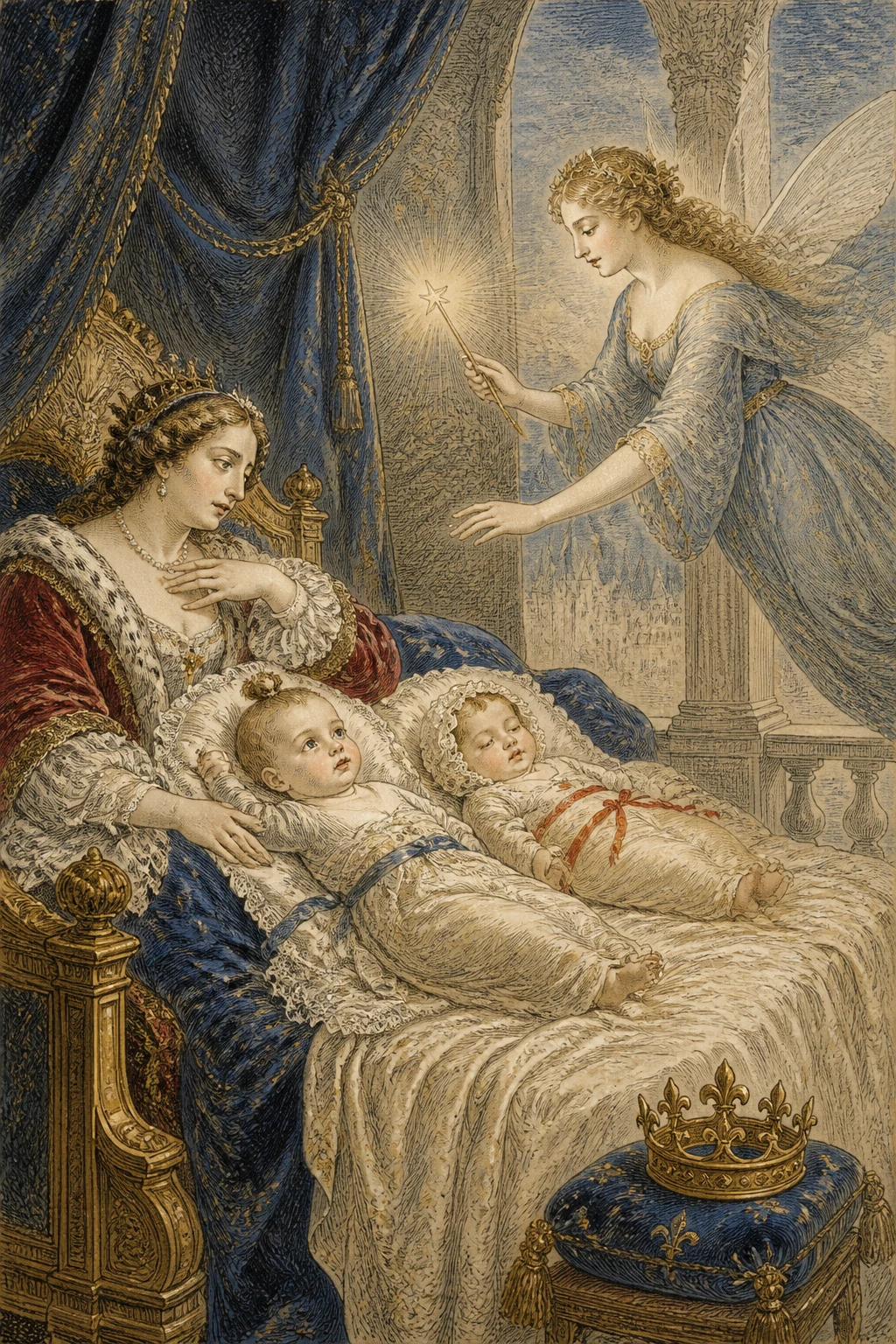
and another hundred made music—or a din—with their instruments. But above all, Renzolla served the King his drink with such grace that he drank more love than wine. When the feasting was over and the tables had been cleared, the King went to bed, and Renzolla herself drew the stockings from his feet and the heart from his breast with such charming courtesy that, at the touch of that lovely hand, he felt love’s poison rise from his ankle bones to infect his very soul. To save himself from death, he sought the sovereign antidote of her beauty, and, calling the Fairy who had her under her protection, asked for her hand in marriage. The Fairy, who desired nothing but Renzolla’s happiness, not only gave her freely, but bestowed on her a dowry of seven hundred thousand gold pieces. Rejoicing in his good fortune, the King set out with Renzolla, who, rude and unmindful of all the Fairy had done for her, slipped away with her husband without so much as a single blessed word of thanks. Seeing such ingratitude, the Fairy cursed her, wishing that her face might take on the likeness of a goat’s. Scarcely had she spoken than Renzolla’s mouth stretched into a muzzle with a beard a handspan long, her cheeks narrowed, her skin grew hard, her face sprouted hair, and her basket-coiled braids turned into pointed horns. At this sight the poor King shriveled up in horror. He could not understand what had happened, for a beauty radiant as two suns had become so misshapen. Sighing and weeping, he kept saying, “Where is the hair that bound me fast? Where are the eyes that pierced me through? Where is the mouth that was a trap for my soul, a snare for my spirits, a little prison for my heart? What now? Am I to be husband to a goat, and earn the title of billy-goat? Am I to be reduced to this, and go out to pasture with the herds at Foggia? No, no! Must this heart break for a goat’s face—a goat that will wage war on me by dropping olives?”
Speaking thus, when he reached his palace he shut Renzolla in a kitchen with a chambermaid, giving each of them ten pounds of flax to spin and setting them a week to finish the task. Obeying the King, the chambermaid began to comb the flax, make it into bundles, set it on the distaff, turn the spindle, form the skeins, and work like a dog, so that by Saturday evening she had finished her allotted task. But Renzolla, believing herself still the same girl she had been in the Fairy’s house, for she had not looked in a mirror, threw the flax out of the window, saying, “The King must have time on his hands, to give me these tiresome chores! If he wants shirts, let him buy them, and not think he found me washed up in the gutter. Let him remember that I brought seven hundred thousand gold pieces into his house, and that I am his wife, not his serving wench. He must have a good deal of the donkey in him to treat me in this fashion.”
Nevertheless, when Saturday morning came and she saw that the chambermaid had spun all her share of the flax, she grew very frightened that she herself might receive a thorough wool-carding. So she set off for the Fairy’s palace and told her of her misfortune. The Fairy embraced her with great affection and gave her a sack full of spun flax to present to the King, so that she might appear a capable housewife and a diligent homemaker. But Renzolla took the sack and went off to the royal palace without a word of thanks for the favor, leaving the Fairy spitting stones at the ill manners of this lovesick fool. When the King received the spun flax, he gave them two dogs, one to her and one to the chambermaid, telling them to rear and tend them. The chambermaid raised hers on little morsels and treated it like a child. But Renzolla said, “That was the worry my grandfather left me! Have the Turks taken over the place? Am I to comb dogs and take dogs out to shit?”
And with these words she flung the dog out of the window, which was quite another matter than jumping through a hoop. Some months later the King asked to see the dogs, and Renzolla, finding herself in a tangle again, ran back to the Fairy. At the door she found a little old man who served as porter, and he said to her, “Who are you, and whom do you want?” Taken aback by this abrupt question, Renzolla replied, “Don’t you know me, goat-beard?” “You draw your knife on me?” answered the old man. “The thief threatens the constable! ‘Stand back, or you’ll blacken me,’ said the tinker. You rush forward so as not to fall behind! I, a goat-beard?
“You are the goat-beard, and half as much again! For your presumption, you deserve that and worse. Wait a moment, you shameless, conceited creature: I shall open your eyes, and you will see what your pride and pretensions have brought you to.” With that he ran into a little room, fetched a mirror, and held it before Renzolla. Seeing that hideous hairy face, she nearly burst with anguish. Rinaldo himself, when he gazed into the enchanted shield and saw how changed he was from what he had once been, felt less distress than she did at finding herself so disfigured that she could not recognize herself. Then the old man said to her, “You ought to remember, Renzolla, that you are a peasant’s daughter, and that the Fairy raised you to such a station that you became a queen. But you, foolish, discourteous, ungrateful girl, gave her little thanks for so great a kindness, thrusting her aside without showing her even a single sign of affection.
“So take that, and make the most of it! Pocket this and come back for the change! You have certainly come off well from this business: look at the face you have brought away with you! See what your ingratitude has reduced you to, for the Fairy’s curse has changed not only your face, but your condition too. Yet if you will take the advice of this white beard, go in and find the Fairy, throw yourself at her feet, tear your hair, scratch your face, beat your breast, and beg her forgiveness for the ill manners you have shown her. She has a tender heart and will be moved to pity by your misfortunes.” Renzolla, feeling that he had struck the right chord and hit the nail on the head, did as the old man advised. The Fairy embraced and kissed her, and restored her former shape. Then she dressed her in a gown laden with gold and took her to the King in a magnificent coach, attended by a whole troop of servants. Seeing her so beautiful and splendid, he held her as dear as his own life, beating his breast for all the torment he had made her suffer and pleading in excuse that, because of that accursed goat’s face, he had treated her as no more than livestock.
Thus Renzolla lived contentedly, loving her husband, honoring the Fairy, and showing gratitude to the old man, having learned at her own expense _That courtesy is always well repaid._