Prevod
Once upon a time there were a man and his wife who had an only son, and his name was Hans. His mother thought it was time he went out into service, and told her husband to take him away and find him a place.
“You must see to it that he becomes a master of all masters!” she said, and she packed some food and a roll of tobacco in a sack for them. Well, they went to many masters, but every one of them said he could make the lad as good as himself, but no better. When the man came home to his wife with that answer, she said, “Well, I don’t care where you put him, but this much I tell you: you must see to it that he becomes a master of all masters!” So she packed food and a roll of tobacco in the sack again, and the man and his son had to set off.
When they had gone some way, they came out onto a stretch of ice, where they met a man driving a black horse. “Where are you bound?” he asked. “I’m out looking for someone to apprentice my son to, someone who can teach him properly, for my wife comes of such fine folk that she wants him trained to be a master of all masters,” said the man.
“You could hardly have met anyone better,” said the driver, “for I’m the man to do it, and just such an apprentice is what I’m looking for. Climb up behind!” he said to the lad. And away they went, up through the air.
“No, no, wait a little!” cried the lad’s father. “I ought to know your name, and where you live!” he said. “Oh, I’m at home in the north and south and east and west, and my name is Bonde Veirsky,” said the master. “Come back in a year, and I’ll tell you whether he’ll be as good as you wish,” he said.
Then away they went, and were gone. When the man came home, his wife asked what had become of their son. “Oh, God knows what became of him,” said the man. “They went up into the air,” and he told her how it had all happened. But when his wife heard that he had found out nothing definite about either when the boy’s apprenticeship would be over or where he was, she sent her husband off again, with a sack of food and a roll of tobacco.
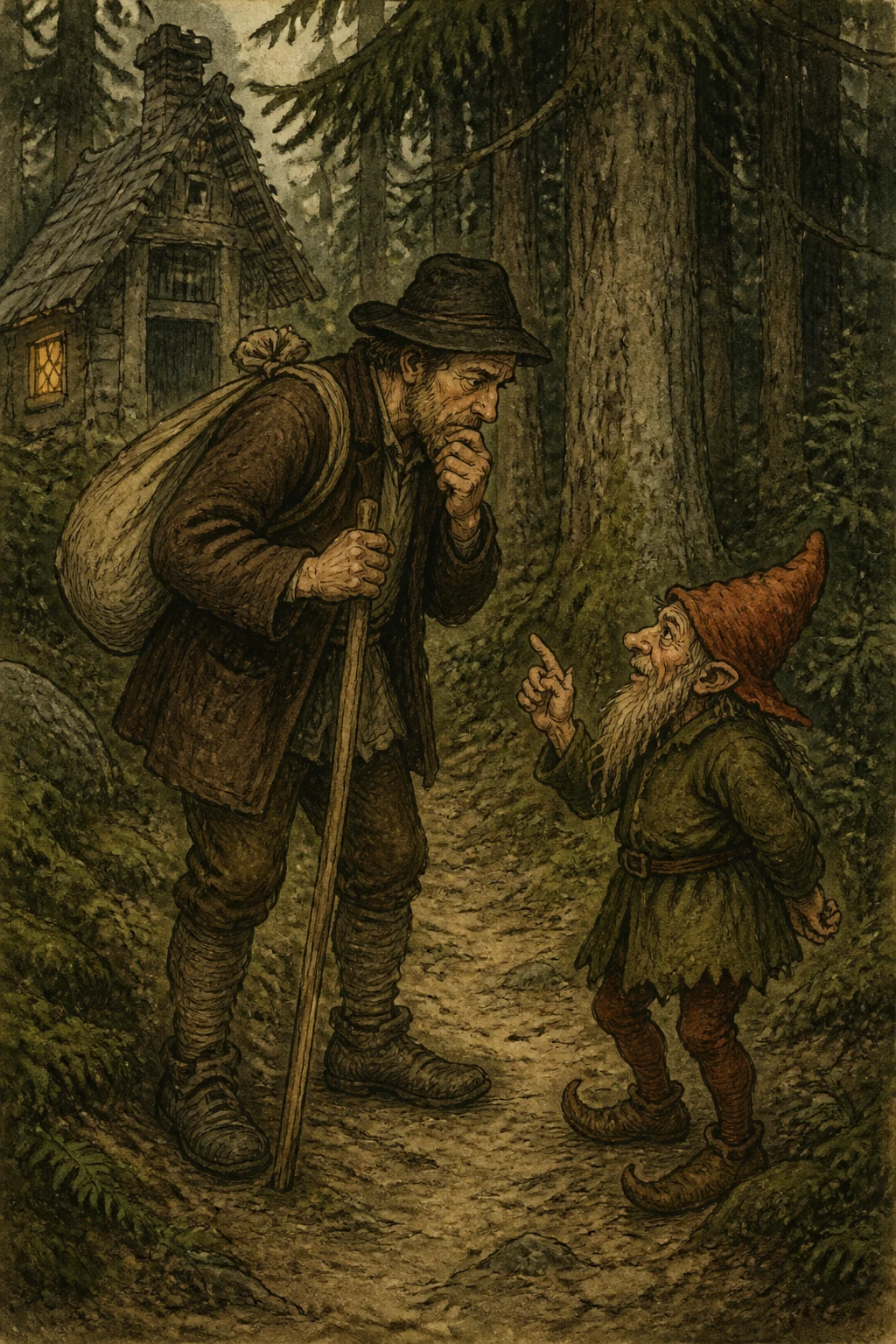
When he had gone some way, he came to a great forest, and all day long, however far he walked, there was no end to it. When darkness fell, he caught sight of a bright light and went towards it. At long last he came to a little cottage beneath a mountain, and outside stood an old woman, drawing water from the well with her nose, so long was it. “Good evening, Mother,” said the man. “Good evening to you,” said the old woman. “No one has called me Mother for a hundred years,” she said. “May I have shelter here tonight?” asked the man. “No,” said the old woman.
But then the man took out his roll of tobacco, scorched a little of it, and gave the old woman some snuff. She was so pleased that she began to dance, and the man was welcome to stay the night after all. Presently he asked her about Bonde Veirsky. She knew nothing of him, she said, but she ruled over all four-footed beasts, and perhaps one of them might know him. So she summoned them with a whistle she had and questioned them, but not one knew anything about Bonde Veirsky.
“Well, there are three of us sisters,” said the old woman. “Perhaps one of the other two knows where he is. I’ll lend you something to ride, and you’ll be there by evening, though the nearest lives three hundred miles away.”
The man set off, and arrived by evening. When he got there, this old woman too was standing drawing water from the well with her nose. “Good evening, Mother,” said the man. “Good evening to you,” said the old woman. “No one has called me Mother for a hundred years,” she said. “May I have shelter here tonight?” asked the man. “No,” said the old woman. But then the man took out his roll of tobacco, scorched a little of it, and gave the old woman some snuff on the back of her hand. She was so pleased that she began to dance, and the man was welcome to stay the night after all. Presently he asked her about Bonde Veirsky. No, she knew nothing of him—but she ruled over all the fish, she said, and perhaps one of them might know something about him. So she summoned them with a whistle she had and questioned them, but not one knew anything about Bonde Veirsky. “Well, I have another sister,” said the old woman. “Perhaps she knows something about him. She lives six hundred miles from here, but I’ll lend you something to ride, and you’ll be there by evening.”
The man set off, and arrived by evening, just as the old woman was raking the fire. She was doing it with her nose, so long was it. “Good evening, Mother!” said the man. “Good evening to you,” said the old woman. “Why, no one has called me Mother for a hundred years,” she said. “May I have shelter here tonight?” asked the man. “No,” said the old woman. But then the man brought out his roll of tobacco again and began scorching it, and gave the old woman a whole hand’s breadth of snuff. She was so pleased that she began to dance, and the man was welcome to stay. Presently he asked her about Bonde Veirsky.
She knew nothing of him, she said, but she ruled over all the birds, and she summoned them with her whistle. When she had questioned them all, she found the eagle was missing, but a little later it arrived, and when she asked it, it said it had come straight from Bonde Veirsky. Then the old woman told it to take the man there. But the eagle wanted something to eat first, and then it wanted to rest until the next day, for it was so tired after its long journey that it could scarcely rise from the ground. When it had eaten its fill and rested, the old woman pulled a feather out of its tail and put the man in its place, and away it flew with him. But they did not reach Bonde Veirsky’s home until about midnight. When they arrived, the eagle said, “There are carcasses lying outside the door, but pay no heed to them. Everyone inside is sleeping so soundly that nothing can wake them. Go straight to the table drawer and take three pieces of bread, and if you hear someone snoring, pluck three feathers from his head. That won’t wake him.” The man did as he was told, and when he had taken the pieces of bread, he plucked out one feather. “Oof!” cried Bonde Veirsky. Then he plucked out another, and again Bonde Veirsky cried, “Oof!” But when he plucked out the third, Bonde Veirsky gave such a roar that the man thought the very walls would split, yet he slept on just the same. Then the eagle told the man what to do next, and he did it: he went to the cowshed door, where he stumbled against a boulder. He picked it up, and beneath it lay three wood chips, which he picked up too. Then he knocked at the cowshed door, and it opened at once. He dropped the three crumbs of bread, and a hare came out and ate them. He caught it. The eagle told him to pull three feathers out of its tail and put the hare, the stone, the wood chips, and himself in their place, and it would carry them home.
When the eagle had flown a long way, it settled on a rock. “Do you see anything?” it asked. “Yes, I see a flock of crows flying after us,” said the man. “Then we had better travel a little farther!” said the eagle, and off it flew.
After a while it asked, “Do you see anything now?” “Yes, the crows are close behind us now,” said the man. “Drop the three feathers you plucked from his head,” said the eagle.
The man did so, and the instant he dropped them, the feathers turned into a flock of ravens, which chased the crows home again. Then the eagle flew a long way farther with the man, until at last it settled on a rock to rest. “Do you see anything?” it asked. “I’m not quite sure,” said the man, “but I think I see something coming far away.” “Then we had better travel a little farther,” said the eagle. “Do you see anything now?” it asked after a while. “Yes, he’s close behind us now,” said the man.
“You must drop the wood chips you found beneath the stone by the cowshed door,” said the eagle. The man did so, and the instant he dropped them, they grew into a great thick forest, so that Bonde Veirsky had to go home for axes to chop his way through. Then the eagle flew a long way farther, but when it grew tired, it settled in a pine tree. “Do you see anything?” it asked. “Well, I’m not quite sure,” said the man, “but I think I can make out something far away.” “Then we had better travel a little farther,” said the eagle, and off it flew. “Do you see anything now?” it asked after a while.
“Yes, he’s close behind us now,” said the man. “Then you must drop the boulder you found by the cowshed door,” said the eagle. The man did so, and it became a great high mountain of rock, which Bonde Veirsky had to break his way through. But when he had reached the middle of the mountain, he broke one of his legs, and had to go home to mend it.
While all this was going on, the eagle flew the man and the hare home. When they arrived, the man went to the churchyard and sprinkled consecrated earth over the hare, and it turned back into Hans, his son.
When market time drew near, the lad turned himself into a dun horse and told his father to take him to market. “When someone comes to buy me, you must ask a hundred dollars for me, but you mustn’t forget to take off the halter, or Bonde Veirsky will keep me, for he’s the one who’ll come to buy,” he said. And so it happened: a horse-dealer came along who was very eager to buy the horse, and the man got a hundred dollars for it. But when the bargain was struck and Hans’s father had his money, the horse-dealer wanted the halter. “No, that wasn’t part of the bargain,” said the man, “and you can’t have the halter, for I have more horses to bring to town.” Then they went their separate ways. But they had not gone far before Hans turned back into himself, and when the man reached home, there he sat on the bench beside the stove. The next day he turned himself into a brown horse and told his father to take him to market. “When someone comes to buy me, you must ask two hundred dollars, for he’ll pay it and treat you to a drink besides. But whatever you drink and whatever you do, don’t forget to take off my halter, or you’ll never see me again,” said Hans. And so it happened: the man got two hundred dollars for the horse and a drink besides, and when they parted, he only just remembered to take off the halter. But they had not gone far along the road before the lad turned back into himself, and when the man reached home, Hans was already sitting on the bench beside the stove.
On the third day it was much the same. The lad turned himself into a great black horse and told his father that someone would come and offer three hundred dollars, and get him well and truly drunk into the bargain. But whatever he did, and however much he drank, he must not forget to take off the halter, or Hans would never escape from Bonde Veirsky as long as he lived. No, he certainly would not forget, said the man.
When he came to market, he got the three hundred dollars, but Bonde Veirsky plied him with so much drink that he forgot to take off the halter, and Bonde Veirsky went off with the horse.
When he had gone some way along the road, he wanted to stop for more brandy. So he put a barrel of red-hot nails beneath his horse’s nose and a trough of oats beneath its tail, hooked the halter rope over a crank handle, and went in to the innkeeper.
The horse stood there stamping and kicking, snorting and sniffing. Then a girl came along who felt sorry for it. “Oh, you poor thing! What sort of master have you got, to treat you like this?” she said, and slipped the halter rope off the crank handle so that the horse could turn round and taste the oats.
“That would be me!” shouted Bonde Veirsky, rushing out through the door. But the horse had already shaken off its halter and plunged into the goose pond, turning into a little fish as it did so. Bonde Veirsky went after him and turned into a great pike. Then Hans turned into a dove, and Bonde Veirsky turned into a hawk, swooping and striking at the dove. Now a princess was standing at a window in the royal palace, watching this struggle. “If you knew as much as I do, you’d come in through my window!” the princess said to the dove.
The dove came flying in through the window, turned back into Hans, and told her how matters stood. “Turn yourself into a gold ring and slip onto my finger,” said the princess.
“No, that won’t do,” said Hans, “for then Bonde Veirsky will make the king ill, and no one will be able to make him well again until Bonde Veirsky comes to cure him, and he’ll demand the gold ring in payment.” “I’ll say it came from my mother, and that I won’t part with it for anything,” said the princess.
So Hans turned himself into a gold ring and slipped onto the princess’s finger, and there Bonde Veirsky could not get hold of him. But then things happened just as the lad had said: the king fell ill, and no doctor could cure him until Bonde Veirsky came, and he demanded the ring on the princess’s finger as his fee. So the king sent word to the princess to hand over the ring. But she said she would not part with it, for it had come from her mother. When the king heard this, he grew angry and said he would have the ring, no matter whom it had come from.
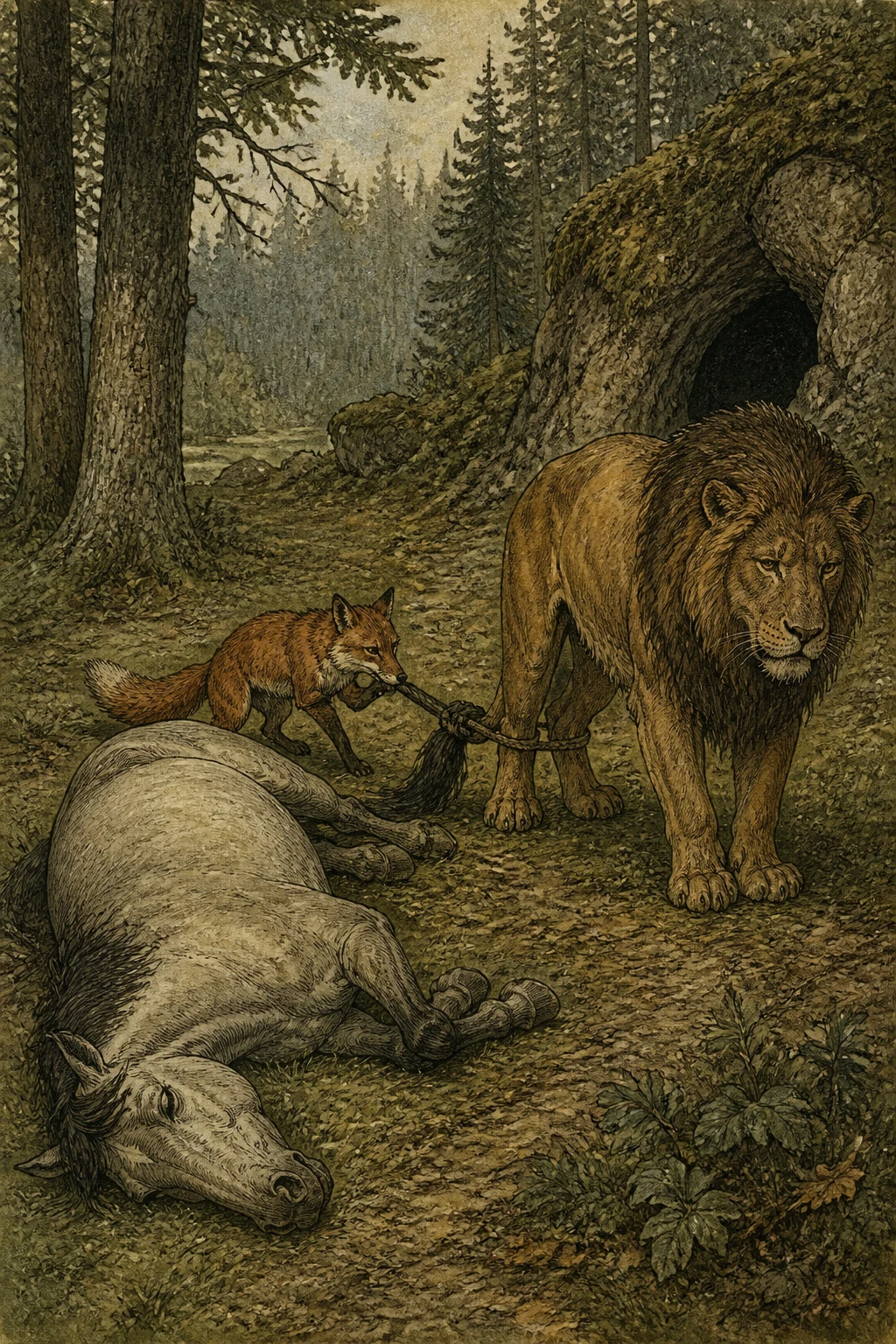
“Well, there’s no use getting angry,” said the princess. “I can’t get it off. If you want the ring, you’ll have to take my finger too.” “I’ll help, and we’ll soon have it off,” said Bonde Veirsky. “No, thank you, I’ll try for myself,” said the princess, and she went over to the hearth and rubbed ashes on her finger. Then the ring slipped off and vanished in the ashes. Bonde Veirsky turned himself into a crested hen, scratching and kicking after the ring in the hearth until the ashes flew about their ears. But Hans turned himself into a fox and bit off the hen’s head; and if the Evil One was in Bonde Veirsky, that was the end of him.