O besedilu
Keiks in Alkiona
- Vir
- Ovidove preobrazbe
- Avtor
- Ovid
- Jezik branja
- English
- Jezik izvirnika
- Latin
- Čas branja
- 18 min branja
- Obseg
- 15 strani
- Naslov izvirnika
- Ceyx and Alcyone
O izvirniku
Ovidove preobrazbe
Pesniški tok antičnih preobrazb, kjer bogovi, ljudje in narava stalno menjavajo obliko. Bralni jezik je English, izvirnik pa prihaja iz vira Ovidove preobrazbe v jeziku Latin.
Besedilo
Keiks in Alkiona
Meanwhile Ceyx, troubled by the portents that had attended his brother and followed his brother’s fate, his heart full of anxiety, prepared to consult the sacred oracles, those comforts of humankind, and visit the god at Claros; for the godless Phorbas, with his Phlegyans, made the way to Delphi’s temple unsafe. But first he told you of his plan, most faithful Alcyone; at once a chill sank into the marrow of your bones, a pallor like boxwood spread across your face, and your cheeks were drenched with streaming tears.
Three times she tried to speak, three times tears flooded her face, and, as sobs broke into her loving protests, she said, “What fault of mine, dearest, has changed your heart? Where is the care you used to feel for me? Can you now leave Alcyone behind without a thought? Does a long journey please you now? Am I dearer to you far away? But surely, I suppose, your journey is by land, and I shall only grieve, not fear as well, and my sorrow will be free from dread.
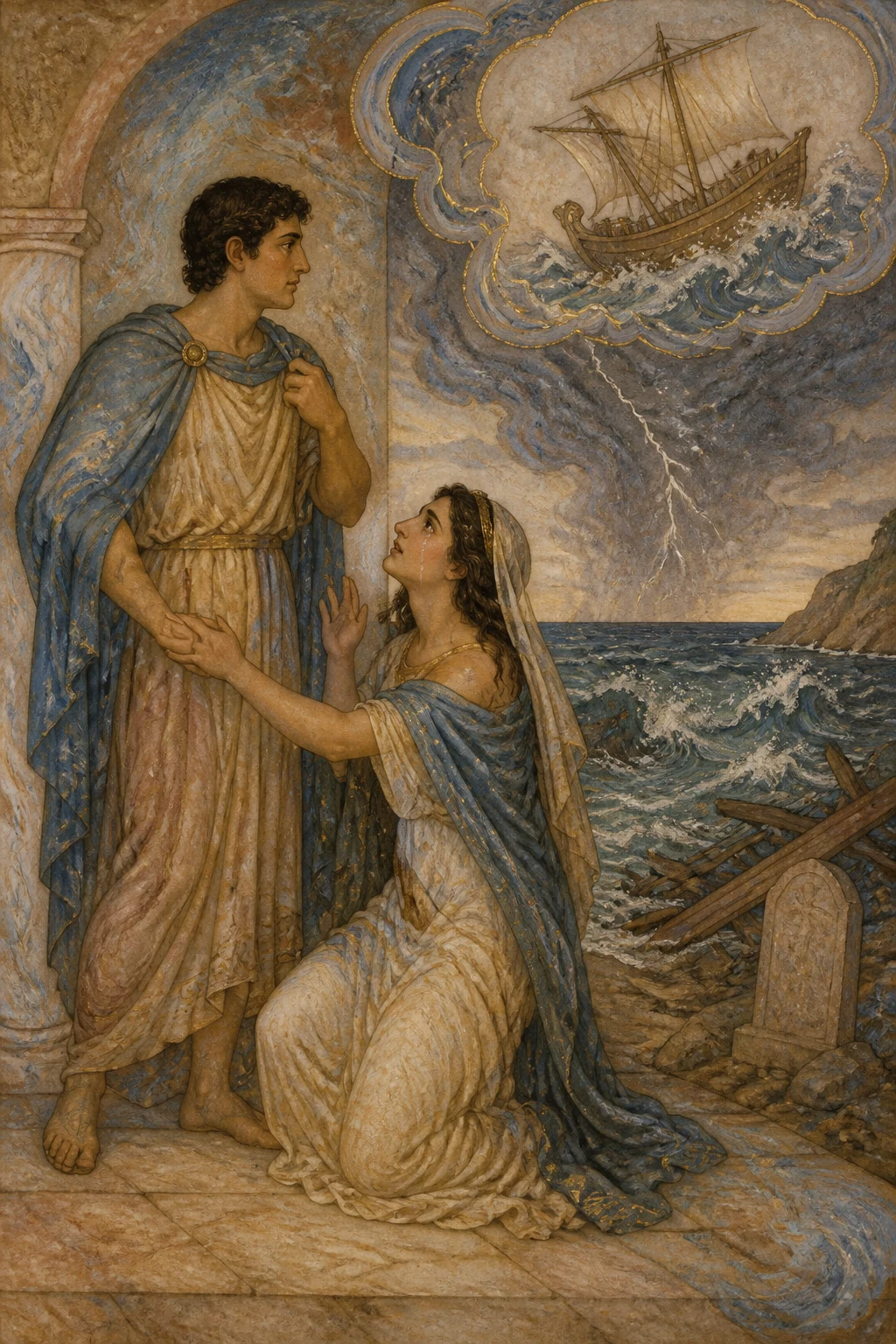
The waters terrify me, and the sea’s grim image: only lately I saw shattered timbers on the shore, and often I have read names on tombs that held no bodies. And do not let false confidence steal into your heart because the son of Hippotas is your father-in-law, who keeps the mighty winds imprisoned and calms the waters at his will! Once the winds are loosed and take possession of the sea, nothing is forbidden them; all the earth and all the ocean lie at their mercy. They harry even the clouds of heaven, and their savage collisions strike out fiery lightning.
The better I know them—for I do know them, and often saw them as a child in my father’s house—the more I think them to be feared. But if no prayers can bend your purpose, my dear husband, and you are all too firmly set on going, take me with you too. At least we shall be tossed together, and I shall fear only what I suffer; together we shall endure whatever comes, together be borne over the broad seas.”
These words and tears of Aeolus’s daughter moved her star-born husband, for the fire of love burned no less fiercely in him. Yet he would neither abandon his intended voyage nor let Alcyone share its dangers, and answered with many words to soothe her frightened heart. Still, he could not win her approval; to his words he added this further comfort, which alone prevailed upon his loving wife: “Every delay will seem long to us, but I swear to you by my father’s fires, if only fate allows me to return, I shall be back before the moon has twice filled out her circle.”
Once these promises had offered hope of his return, he immediately ordered the ship drawn from its sheds, launched upon the sea, and fitted with all its rigging. At the sight of it again, as though foreseeing what would come, Alcyone shuddered and let her rising tears flow, embraced him, and at last, utterly wretched, with sorrowful lips said, “Farewell,” and collapsed, her whole body giving way.
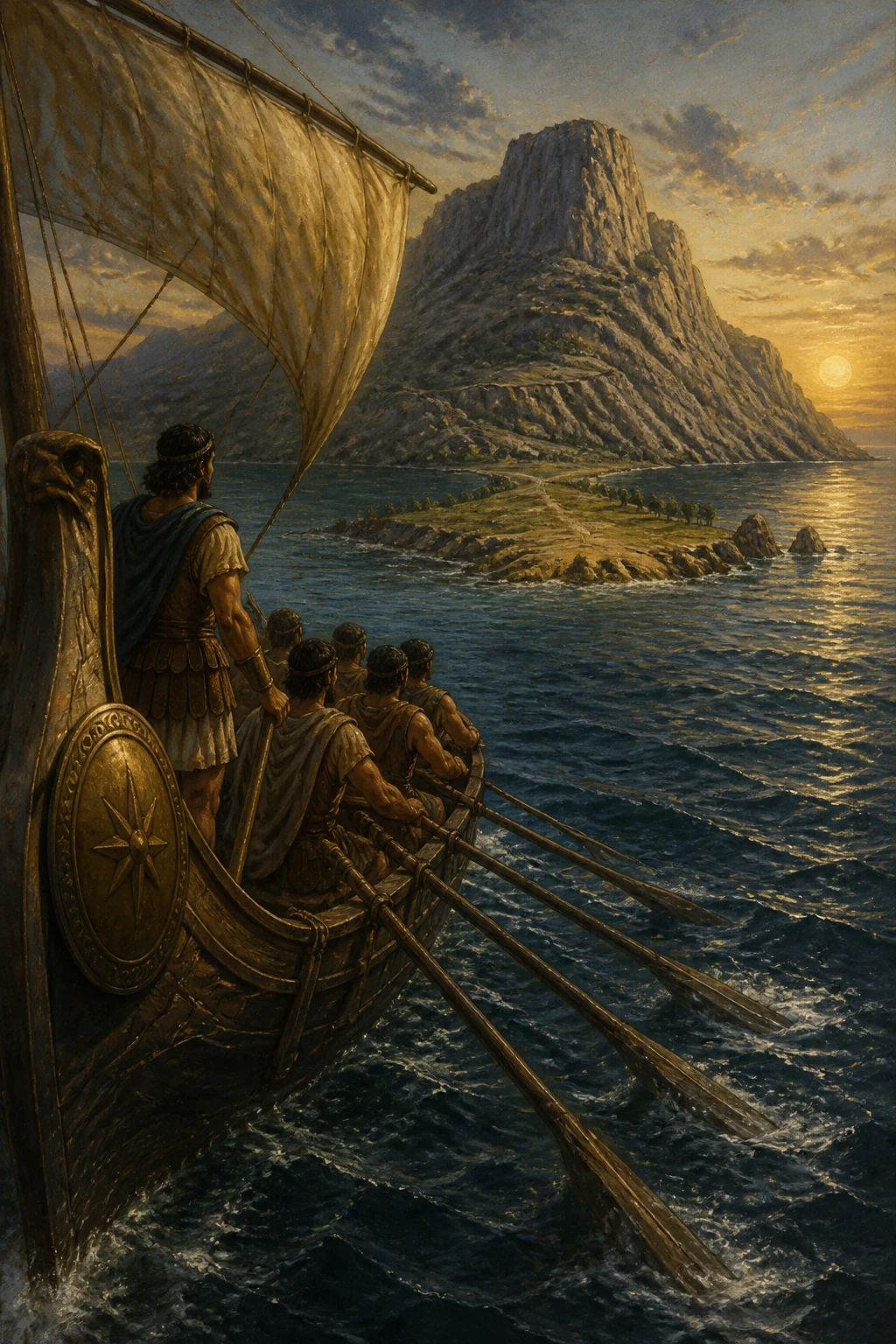
But while Ceyx sought excuses to delay, the young men drew the oars in double ranks towards their sturdy breasts and cleaved the sea with even strokes. She lifted her wet eyes, and at first saw her husband standing on the stern as it drew away, waving his hand to her, and returned his signals; when the land had fallen farther behind and her eyes could no longer distinguish his face, she followed the departing ship with her gaze as long as she could.
When distance hid even the ship from sight, she still watched the sails fluttering at the masthead; when she could no longer see the sails, she anxiously sought her empty bed and laid herself upon it; the bed and the place renewed Alcyone’s tears and reminded her what part of herself was missing. They had left the harbour, and a breeze stirred the ropes: the sailors turned the hanging oars against the ship’s side, raised the yard to the top of the mast, and spread the canvas down its whole length to catch the coming breeze.
The ship had covered less than half the sea, or certainly no more, and both shores were far away, when, towards nightfall, the sea began to whiten with swelling waves, and the headlong east wind blew more fiercely. “Lower the high yard, now!” the helmsman shouted. “Furl every inch of sail beneath it!” He gave the orders, but opposing gales thwarted them, and the roar of the sea let no voice be heard.
Yet of their own accord some hurried to draw in the oars, some to secure the ship’s sides, some to take the sails from the wind. One bailed out the waves, pouring the sea back into the sea; another hauled at the yard. While all this was done in confusion, the savage storm grew stronger, and from every quarter fierce winds waged war and churned the raging waters. The helmsman himself was afraid, and admitted that he did not know the ship’s condition, or what to order or what to choose: so great was the weight of disaster, so far beyond his skill.
For the men’s cries rang out, the rigging shrieked, heavy waves crashed against waves, and heaven thundered. The sea rose in billows and seemed to reach the sky, touching the shrouding clouds with spray; now, as it churned up tawny sand from the depths, it took on that same colour, now grew blacker than the waters of Styx, and sometimes flattened out, white with hissing foam.
The Trachinian ship itself was driven through these changes: now, lifted high, it seemed to look down from a mountain’s summit into valleys and the depths of Acheron; now, when it sank and the curving sea rose round it, it seemed to gaze from a hellish gulf towards the highest heaven. Often its side, struck by a wave, gave out a tremendous crash, and rang beneath the blows as loudly as when an iron battering ram or catapult shatters battered towers.
And as fierce lions, gathering strength in their charge, hurl their breasts against weapons and outstretched spears, so, when the wave had given itself to the rising winds, it rushed against the ship’s defences and towered far above them. Now the wedges loosened, and, stripped of their coating of wax, the seams gaped open, giving passage to the deadly waters. Then torrents of rain fell from the bursting clouds: you might have thought the whole sky was descending into the sea, and the swollen sea climbing into the regions of the sky.
The sails were soaked with rain, and the waters of heaven mingled with the waters of the sea; no stars lit the heavens, and blind night was crushed beneath its own darkness and the storm’s. Yet flashing thunderbolts tore that darkness apart and gave light: the lightning’s fires set the clouds ablaze. Now waves too leapt inside the hollow fabric of the hull; and as a soldier, braver than all his fellows, after many assaults upon a defended city’s walls, at last achieves his hope, and, fired by love of glory, alone among a thousand men gains possession of the rampart, so, after nine waves had battered the ship’s high sides, the tenth surged higher and rushed upon her;
nor did it cease its assault on the exhausted hull until it poured down into the ship as into a conquered city. Some of the sea was still attempting to invade the ship, and some was already inside. All were as frantic as a city whose walls are being undermined by enemies outside while others already hold those walls within. Skill failed, courage sank, and with every advancing wave another death seemed to rush upon them and break in.
One could not hold back his tears; another stood stunned; another called those blessed who had burial to await them; another worshipped the gods with prayers, vainly raising his arms to the sky he could not see and begging for help; one thought of his brother and father, another of his home and children and all that he had left behind. Alcyone filled Ceyx’s heart; on Ceyx’s lips was no name but Alcyone; and though he longed for her alone, he was glad that she was absent. He wished to look back towards his native shores and turn his last gaze homewards, but did not know where they lay: the sea seethed in such a whirl, and the shadow cast by pitch-black clouds hid all the sky, doubling the darkness of night.
The mast broke beneath the onslaught of the rain-laden whirlwind; the rudder broke too, and a triumphant wave, exulting over these spoils, reared its curving crest and looked down upon the other waves. Then, as heavily as if someone had torn all Athos or Pindus from its foundations and hurled it into the open sea, it plunged down, and with its weight and impact together drove the ship into the depths. With her, most of the men, borne down by the mass of water and never restored to the air, met their fate; others clung to pieces and broken limbs of the hull. Ceyx himself, with the hand that once held a sceptre, grasped a fragment of the ship and called upon his father-in-law and his father—alas, in vain! But most often on the swimmer’s lips
was Alcyone his wife: he remembered her and spoke her name, and wished that the waves might carry his body before her eyes, and that in death he might be buried by her loving hands. As he swam, whenever the waves allowed him to open his mouth, he called on absent Alcyone and murmured her name into the waves themselves. Then a black arch of water broke above the waves, and its crashing flood overwhelmed his submerged head.
Lucifer was dim that dawn, so changed you could not have known him; and since he was not allowed to leave the sky, he hid his face in thick clouds. Meanwhile the daughter of Aeolus, unaware of these great sorrows, counted the nights, and hurried to prepare the clothes that he would wear, and those she herself would put on when he returned, vainly promising herself his homecoming.
She devoutly offered incense to all the gods, but above all she worshipped at Juno’s temples, coming to the altars for a husband who no longer lived, and praying that he might be safe, that he might return, and that he might love no other woman more than her; but of all her prayers, this last alone could now be granted. But the goddess could no longer bear to be petitioned for one already dead; and to keep hands polluted by bereavement from her altars, she said, “Iris, most faithful messenger of my words, go swiftly to the drowsy halls of Sleep, and bid him send to Alcyone dreams in the likeness of dead Ceyx, telling her the truth of his fate.”
She spoke. Iris put on her robes of a thousand colours and, tracing her curving bow across the sky, sought the cloud-hidden dwelling of the king she had been told to visit. Near the Cimmerians lies a cave in a deep recess, a hollow mountain, the home and sanctuary of sluggish Sleep: there Phoebus can never enter with his rays, at rising, noon, or setting. Mists mingled with darkness breathe from the ground, and a twilight of uncertain light.
No watchful cock with its crested head calls forth the dawn with crowing there; no anxious dogs, nor geese more vigilant than dogs, break the silence with their cries. No wild beasts, no cattle, no branches stirred by the breeze, no clamour of human tongues makes any sound. Speechless stillness dwells there; yet from the foot of a rock a stream of Lethe’s water flows, its murmuring waves gliding over whispering pebbles and inviting sleep.
Before the cavern’s entrance bloom abundant poppies and countless herbs, from whose milky sap dewy Night gathers slumber and scatters it over the darkened earth. No door creaks upon its turning hinge: there is none anywhere in the house, no guardian at the threshold. But in the cavern’s midst stands a high couch of ebony, soft with feathers, covered in plain, dark cloth: there the god himself lies, his limbs relaxed in languor.
Around him everywhere lie empty dreams, mimicking countless shapes, as many as the ears of grain a harvest bears, the leaves a forest carries, or the grains of sand cast on a shore. As soon as the maiden entered and swept aside the dreams that blocked her path, the holy house shone with the brilliance of her robe; the god, scarcely raising his sunken eyes through the weight of sluggishness, sank back again and again, his nodding chin striking his breast, until at last he shook himself awake. Propped upon his elbow, he asked why she had come, for he knew her. She replied: “Sleep, rest of all things, Sleep, gentlest of the gods, peace of the mind, from whom care flees, who soothe bodies
wearied by hard service and restore them for their toil, command dreams whose mimicry matches the true forms of things to visit Alcyone in Hercules’ Trachin, in the likeness of her king, and fashion an image of his shipwreck. Juno commands it.” When she had delivered her message, Iris departed, for she could no longer endure the power of slumber; and as she felt sleep stealing through her limbs, she fled and returned along the rainbow by which she had come.
Then the father, from among his thousand sons, roused Morpheus, a master craftsman in the imitation of human forms: no other could reproduce more skilfully a person’s walk, expression, and manner of speaking. He added their clothes too, and the words most characteristic of each; but he imitated human beings alone. Another became a beast, a bird, or a long-bodied serpent: the gods call him Icelos, while mortal people name him Phobetor. A third, with a different art, is Phantasos: he assumes the deceptive shapes of earth, rocks, water, trees, and all things without life.
These show their forms by night to kings and rulers; others wander among the common people. The old god passed these by, and from all the brothers Sleep chose Morpheus alone to carry out the commands of Thaumas’s daughter; then, surrendering once more to gentle languor, he laid down his head and buried it in his deep couch. Morpheus flew through the darkness on wings that made no sound, and in a brief span of time reached the Thessalian city; laying aside his wings, he took on Ceyx’s appearance, and in that borrowed form, pallid as a corpse and naked, stood before his wretched wife’s bed. The man’s beard seemed wet,
and water dripped heavily from his sodden hair. Then, leaning over the bed, tears streaming down his face, he said, “Do you recognise Ceyx, most wretched wife? Or has my face changed? Look at me now! You will know me, and find your husband’s ghost in place of your husband. Your prayers brought me no help, Alcyone: I am dead! Do not deceive yourself with hopes of my return!
The cloud-laden south wind caught our ship on the Aegean and, tossing her in a mighty gale, broke her apart; and the waves filled my mouth as it called your name in vain. No doubtful witness brings you this news, nor do you hear it through wandering rumours: I myself, shipwrecked, stand before you and tell you my fate. Rise now, shed tears, put on mourning, and do not send me unlamented to the empty realms of Tartarus.”
To these words Morpheus added a voice that she would believe to be her husband’s; he seemed to shed real tears as well, and his hands moved with Ceyx’s gestures. Alcyone groaned, wept, and moved her arms in sleep; reaching for his body, she embraced the air and cried, “Stay! Where are you hurrying? We shall go together!” Disturbed by her own voice and the image of her husband, she shook off sleep and first looked round to see whether the man she had just seen was there; for the servants, roused by her cry, had brought a light. When she could find him nowhere, she struck her face, tore the clothes from her breast, and beat her breast itself; she did not trouble to loosen her hair,
but tore it, and when her nurse asked the cause of her grief, she said, “Alcyone is no more, no more! She has died with her Ceyx! Spare me your words of comfort! He has perished in a shipwreck! I saw him, knew him, and stretched my hands towards him as he left, longing to hold him back. He was a ghost—but still a clear and unmistakable ghost, the true image of my husband! He did not, if you ask, have his familiar features, nor did his face shine as it once did: to my sorrow I saw him pale and naked, his hair still wet. Here he stood, pitiful, on this very spot!” And she looked for any trace of his footprints.
“This was it, this was what my foreboding heart feared, when I begged you not to leave me and follow the winds. But surely, since you went away to die, I wish you had taken me too! How much better it would have been for me to go with you: then I should have spent no part of life apart from you, nor would our deaths have divided us. Now I have died far away, far away I too am tossed by the waves, and the sea possesses me without my being there. My heart would be crueller than the sea itself if I strove to prolong my life and struggled to survive such grief.
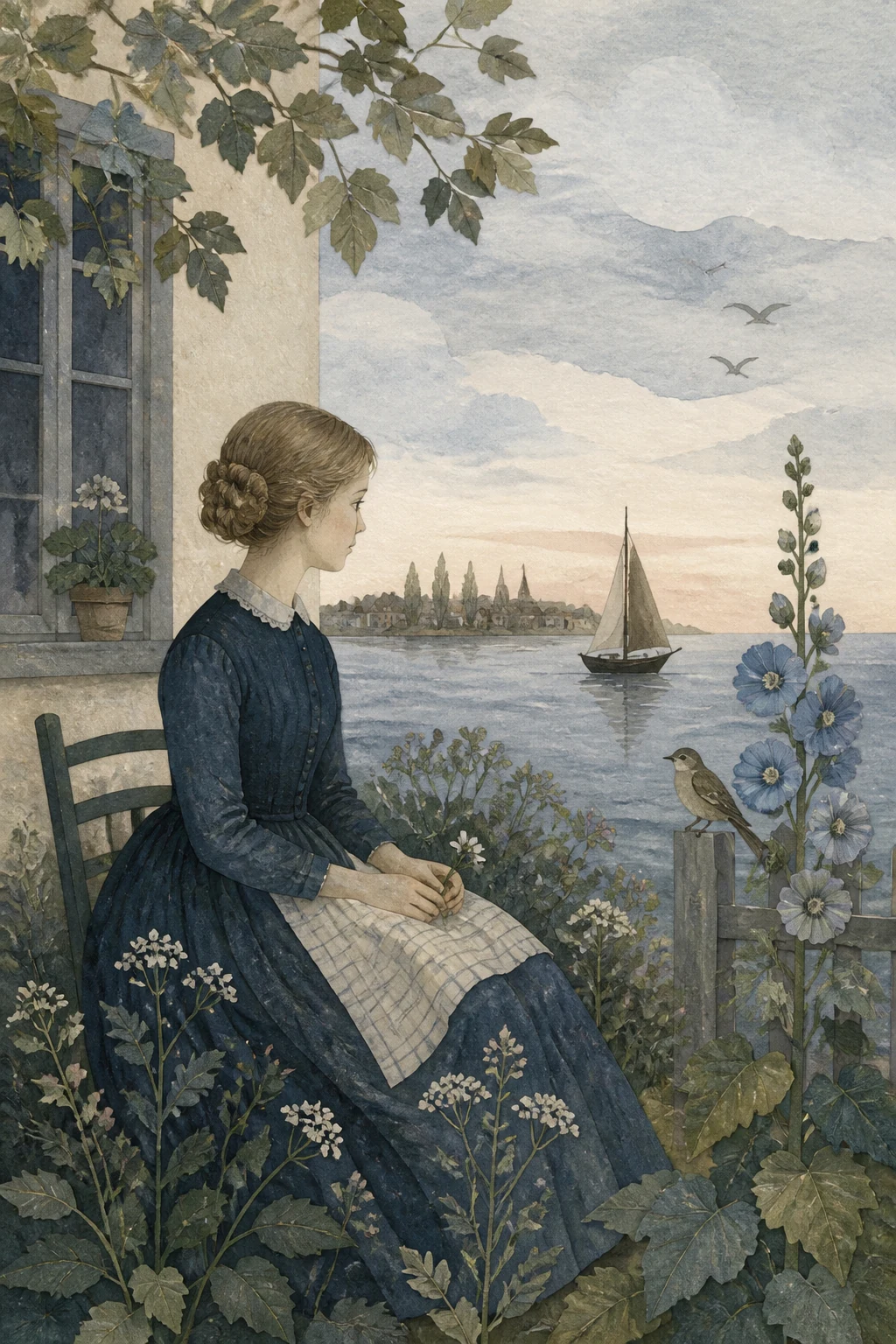
But I shall not struggle, nor shall I forsake you, poor husband; at least now I shall come to join you, and in the tomb, if not one urn, one inscription shall unite us: if I cannot touch your bones with mine, at least my name shall touch your name.” Grief would let her say no more; lamentation broke into every word, and groans were drawn from her stricken heart. Morning came. She left the house for the shore and sorrowfully returned to the place from which she had watched him depart.
As she lingered there, saying, “Here he loosed the mooring ropes; here on this shore he kissed me as he left,” recalling all that had happened there, with her eyes marking each spot, she looked out over the sea, and far off in the clear water saw something like a body. At first she could not tell what it was; but when the waves had brought it a little nearer, though it was still far away, it was plainly a body.
Not knowing whose it was, but moved by the omen of one drowned, she wept as though for a stranger and said, “Alas, poor soul, whoever you are—and your wife too, if you have one!” Driven by the waves, the body drew nearer; the more intently she watched it, the less and less was she mistress of herself. Now it had come close to the shore, now she could recognise what she saw: it was her husband. “It is he!” she cried, and at once tore her face, her hair, her clothes, and stretched trembling hands towards Ceyx. “Is this, dearest husband, is this how you return to me, poor love?” she said. Beside the water stood a man-made breakwater, which broke the sea’s first waves and weakened the force of the water’s onrush.
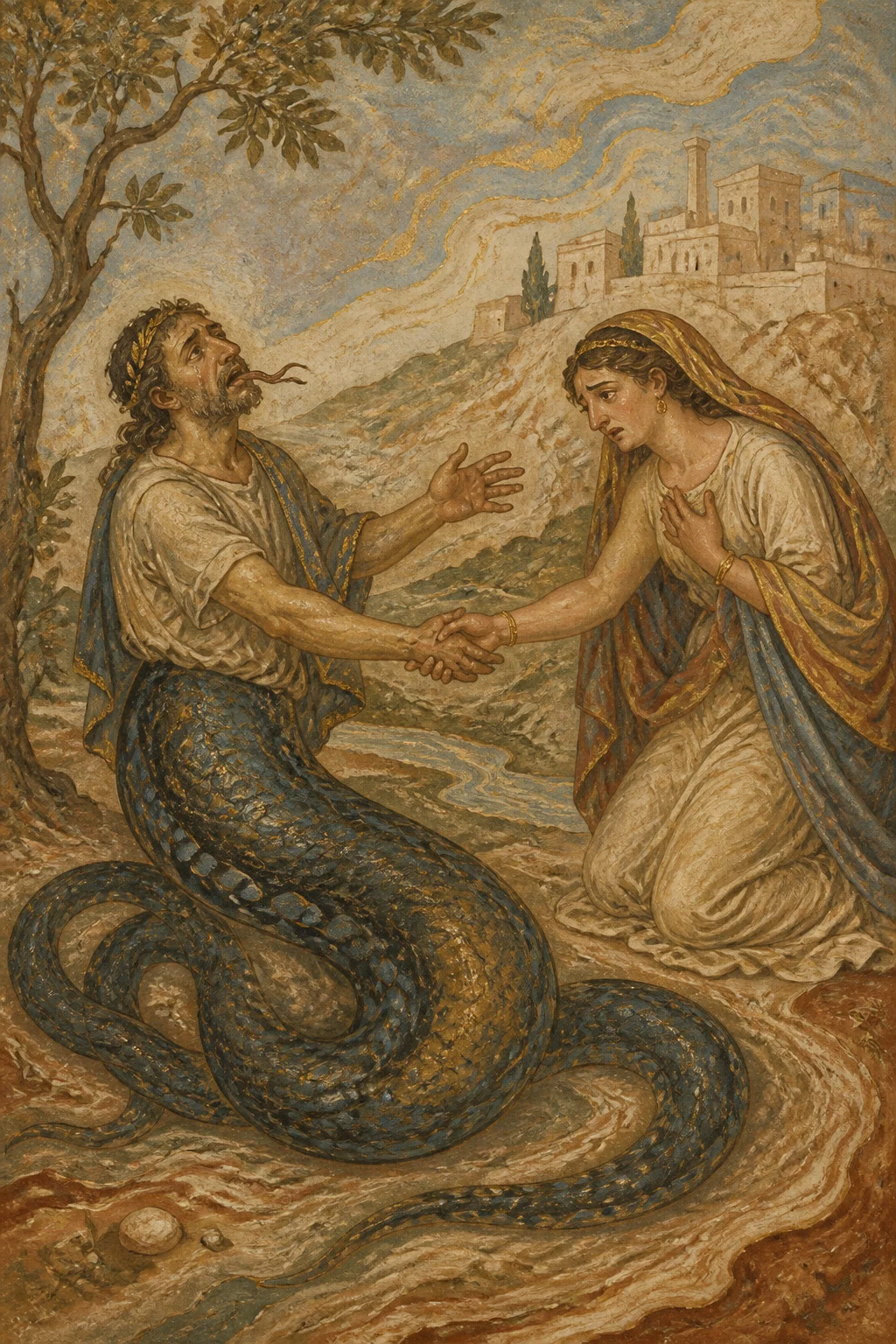
She leapt onto it—and it was a wonder that she could: she was flying, beating the light air with newly grown wings, a sorrowful bird skimming the surface of the waves. And as she flew, her mouth, clicking with its slender beak, gave out a mournful sound, full of lamentation. But when she touched the silent, bloodless body, she clasped the limbs she loved with her new wings and vainly gave him cold kisses with her hard beak.
Whether Ceyx felt this, or only seemed to raise his face with the movement of the waves, the onlookers were unsure; but he had felt it. At last the gods took pity, and both were changed to birds. Their love endured, subject to the same fate, nor was their marriage bond dissolved when they became birds: they mate and become parents, and for seven peaceful days in winter Alcyone broods on her nest afloat upon the sea.
Then the sea’s waves lie still: Aeolus keeps the winds confined, forbidding them to leave, and makes the sea safe for his grandchildren.
Izvirnik
Ceyx and Alcyone
Naslednje strani prikazujejo izvirno besedilo za primerjavo.
Source ID: ovid_metamorphoses_story_079 Citation: Ovid, Metamorphoses 11.410-11.748 Original language: Latin Source: PerseusDL canonical-latinLit Source URL: https://github.com/PerseusDL/canonical-latinLit/blob/master/data/phi0959/phi006/phi0959.phi006.perseus-lat2.xml Segmentation certainty: medium 410: Interea fratrisque sui fratremque secutis 411: anxia prodigiis turbatus pectora Ceyx, 412: consulat ut sacras, hominum oblectamina, sortes, 413: ad Clarium parat ire deum; nam templa profanus 414: invia cum Phlegyis faciebat Delphica Phorbas.
415: Consilii tamen ante sui, fidissima, certam 416: te facit, Alcyone; cui protinus intima frigus 417: ossa receperunt, buxoque simillimus ora 418: pallor obit, lacrimisque genae maduere profusis. 419: Ter conata loqui ter fletibus ora rigavit, 420: singultuque pias interrumpente querellas 421: “quae mea culpa tuam,” dixit “carissime, mentem 422: vertit? Ubi est quae cura mei prior esse solebat?
423: Iam potes Alcyone securus abesse relicta? 424: Iam via longa placet? Iam sum tibi carior absens? 425: At, puto, per terras iter est, tantumque dolebo, 426: non etiam metuam, curaeque timore carebunt. 427: Aequora me terrent et ponti tristis imago: 428: et laceras nuper tabulas in litore vidi, 429: et saepe in tumulis sine corpore nomina legi. 430: Neve tuum fallax animum fiducia tangat, 431: quod socer Hippotades tibi sit, qui carcere fortes 432: contineat ventos et, cum velit, aequora placet!
433: Cum semel emissi tenuerunt aequora venti, 434: nil illis vetitum est, incommendataque tellus 435: omnis et omne fretum est. Caeli quoque nubila vexant 436: excutiuntque feri rutilos concursibus ignes. 437: Quo magis hos novi (nam novi et saepe paterna 438: parva domo vidi), magis hos reor esse timendos. 439: Quod tua si flecti precibus sententia nullis, 440: care, potest, coniunx, nimiumque es certus eundi, 441: me quoque tolle simul. Certe iactabimur una, 442: nec nisi quae patiar, metuam: pariterque feremus, 443: quidquid erit, pariter super aequora lata feremur.”
444: Talibus Aeolidis dictis lacrimisque movetur 445: sidereus coniunx: neque enim minor ignis in ipso est. 446: Sed neque propositos pelagi dimittere cursus, 447: nec vult Alcyonen in partem adhibere pericli, 448: multaque respondit timidum solantia pectus. 449: Non tamen idcirco causam probat; addidit illis 450: hoc quoque lenimen, quo solo flexit amantem: 451: “Longa quidem est nobis omnis mora: sed tibi iuro 452: per patrios ignes, si me modo fata remittant, 453: ante reversurum, quam luna bis impleat orbem.”
454: His ubi promissis spes est admota recursus, 455: protinus eductam navalibus aequore tingi 456: armarique suis pinum iubet armamentis. 457: Qua rursus visa, veluti praesaga futuri, 458: horruit Alcyone lacrimasque emisit obortas 459: amplexusque dedit, tristique miserrima tandem 460: ore “vale” dixit conlapsaque corpore toto est. 461: Ast iuvenes, quaerente moras Ceyce, reducunt 462: ordinibus geminis ad fortia pectora remos 463: aequalique ictu scindunt freta. Sustulit illa 464: umentes oculos, stantemque in puppe relicta 465: concussaque manu dantem sibi signa maritum
466: prima videt redditque notas; ubi terra recessit 467: longius atque oculi nequeunt cognoscere vultus, 468: dum licet, insequitur fugientem lumine pinum. 469: Haec quoque ut haud poterat, spatio submota, videri, 470: vela tamen spectat summo fluitantia malo; 471: ut nec vela videt, vacuum petit anxia lectum 472: seque toro ponit; renovat lectusque locusque 473: Alcyonae lacrimas et, quae pars, admonet, absit.
474: Portibus exierant, et moverat aura rudentes: 475: obvertit lateri pendentes navita remos 476: cornuaque in summa locat arbore totaque malo 477: carbasa deducit venientesque accipit auras. 478: Aut minus, aut certe medium non amplius aequor 479: puppe secabatur, longeque erat utraque tellus, 480: cum mare sub noctem tumidis albescere coepit 481: fluctibus et praeceps spirare valentius eurus.
482: “Ardua iamdudum demittite cornua” rector 483: clamat “et antemnis totum subnectite velum.” 484: Hic iubet: impediunt adversae iussa procellae, 485: nec sinit audiri vocem fragor aequoris ullam. 486: Sponte tamen properant alii subducere remos, 487: pars munire latus, pars ventis vela negare. 488: Egerit hic fluctus aequorque refundit in aequor, 489: hic rapit antemnas. Quae dum sine lege geruntur, 490: aspera crescit hiems, omnique e parte feroces 491: bella gerunt venti fretaque indignantia miscent.
492: Ipse pavet nec se, qui sit status, ipse fatetur 493: scire ratis rector, nec, quid iubeatve velitve: 494: tanta mali moles tantoque potentior arte est. 495: Quippe sonant clamore viri, stridore rudentes, 496: undarum incursu gravis unda, tonitribus aether. 497: Fluctibus erigitur caelumque aequare videtur 498: pontus et inductas adspergine tangere nubes; 499: et modo, cum fulvas ex imo vertit harenas, 500: concolor est illis, Stygia modo nigrior unda, 501: sternitur interdum spumisque sonantibus albet.
502: Ipsa quoque his agitur vicibus Trachinia puppis, 503: et nunc sublimis veluti de vertice montis 504: despicere in valles imumque Acheronta videtur, 505: nunc, ubi demissam curvum circumstetit aequor, 506: suspicere inferno summum de gurgite caelum. 507: Saepe dat ingentem fluctu latus icta fragorem 508: nec levius pulsata sonat, quam ferreus olim 509: cum laceras aries ballistave concutit arces.
510: Utque solent sumptis incursu viribus ire 511: pectore in arma feri protentaque tela leones, 512: sic ubi se ventis admiserat unda coortis, 513: ibat in arma ratis multoque erat altior illis. 514: Iamque labant cunei, spoliataque tegmine cerae 515: rima patet praebetque viam letalibus undis. 516: Ecce cadunt largi resolutis nubibus imbres, 517: inque fretum credas totum descendere caelum, 518: inque plagas caeli tumefactum adscendere pontum.
519: Vela madent nimbis, et cum caelestibus undis 520: aequoreae miscentur aquae; caret ignibus aether, 521: caecaque nox premitur tenebris hiemisque suisque. 522: Discutiunt tamen has praebentque micantia lumen 523: fulmina: fulmineis ardescunt ignibus ignes. 524: Dat quoque iam saltus intra cava texta carinae 525: fluctus; et ut miles, numero praestantior omni, 526: cum saepe adsiluit defensae moenibus urbis, 527: spe potitur tandem laudisque accensus amore 528: inter mille viros murum tamen occupat unus, 529: sic, ubi pulsarunt noviens latera ardua fluctus, 530: vastius insurgens decimae ruit impetus undae;
531: nec prius absistit fessam oppugnare carinam, 532: quam velut in captae descendat moenia navis. 533: Pars igitur temptabat adhuc invadere pinum, 534: pars maris intus erat. Trepidant haud segnius omnes, 535: quam solet urbs, aliis murum fodientibus extra 536: atque aliis murum, trepidare, tenentibus intus. 537: Deficit ars animique cadunt, totidemque videntur, 538: quot veniunt fluctus, ruere atque inrumpere mortes.
539: Non tenet hic lacrimas, stupet hic, vocat ille beatos, 540: funera quos maneant: hic votis numen adorat 541: bracchiaque ad caelum, quod non videt, inrita tollens 542: poscit opem, subeunt illi fraterque parensque, 543: huic cum pignoribus domus et quodcumque relictum est. 544: Alcyone Ceyca movet, Ceycis in ore 545: nulla nisi Alcyone est; et cum desideret unam, 546: gaudet abesse tamen. Patriae quoque vellet ad oras 547: respicere inque domum supremos vertere vultus, 548: verum ubi sit, nescit; tanta vertigine pontus 549: fervet, et inducta piceis e nubibus umbra 550: omne latet caelum, duplicataque noctis imago est.
551: Frangitur incursu nimbosi turbinis arbor, 552: frangitur et regimen, spoliisque animosa superstes 553: unda, velut victrix, sinuataque despicit undas, 554: nec levius, quam siquis Athon Pindumve revulsos 555: sede sua totos in apertum everterit aequor, 556: praecipitata cadit pariterque et pondere et ictu 557: mergit in ima ratem; cum qua pars magna virorum, 558: gurgite pressa gravi neque in aera reddita, fato 559: functa suo est: alii partes et membra carinae 560: trunca tenent: tenet ipse manu, qua sceptra solebat, 561: fragmina navigii Ceyx socerumque patremque 562: invocat heu! frustra. Sed plurima nantis in ore
563: Alcyone coniunx: illam meminitque refertque, 564: illius ante oculos ut agant sua corpora fluctus, 565: optat et exanimis manibus tumuletur amicis. 566: Dum natat, absentem, quotiens sinit hiscere fluctus, 567: nominat Alcyonen ipsisque inmurmurat undis. 568: Ecce super medios fluctus niger arcus aquarum 569: frangitur et rupta mersum caput obruit unda. 570: Lucifer obscurus nec quem cognoscere posses 571: illa luce fuit, quoniamque excedere caelo 572: non licuit, densis texit sua nubibus ora.
573: Aeolis interea tantorum ignara malorum 574: dinumerat noctes, et iam, quas induat ille 575: festinat vestes, iam quas, ubi venerit ille, 576: ipsa gerat, reditusque sibi promittit inanes. 577: Omnibus illa quidem superis pia tura ferebat, 578: ante tamen cunctos Iunonis templa colebat 579: proque viro, qui nullus erat, veniebat ad aras 580: utque foret sospes coniunx suus utque rediret, 581: optabat, nullamque sibi praeferret; at illi 582: hoc de tot votis poterat contingere solum.
583: At dea non ultra pro functo morte rogari 584: sustinet; utque manus funestas arceat aris, 585: “Iri, meae” dixit “fidissima nuntia vocis, 586: vise soporiferam Somni velociter aulam 587: exstinctique iube Ceycis imagine mittat 588: somnia ad Alcyonen veros narrantia casus.” 589: Dixerat: induitur velamina mille colorum 590: Iris, et arcuato caelum curvamine signans 591: tecta petit iussi sub nube latentia regis.
592: Est prope Cimmerios longo spelunca recessu, 593: mons cavus, ignavi domus et penetralia Somni: 594: quo numquam radiis oriens mediusve cadensve 595: Phoebus adire potest. Nebulae caligine mixtae 596: exhalantur humo dubiaeque crepuscula lucis. 597: Non vigil ales ibi cristati cantibus oris 598: evocat auroram, nec voce silentia rumpunt 599: sollicitive canes canibusve sagacior anser.
600: Non fera, non pecudes, non moti flamine rami 601: humanaeve sonum reddunt convicia linguae: 602: muta quies habitat; saxo tamen exit ab imo 603: rivus aquae Lethes, per quem cum murmure labens 604: invitat somnos crepitantibus unda lapillis. 605: Ante fores antri fecunda papavera florent 606: innumeraeque herbae, quarum de lacte soporem 607: nox legit et spargit per opacas umida terras.
608: Ianua nec verso stridores cardine reddit: 609: nulla domo tota, custos in limine nullus. 610: At medio torus est ebeno sublimis in antro, 611: plumeus, unicolor, pullo velamine tectus: 612: quo cubat ipse deus membris languore solutis. 613: Hunc circa passim varias imitantia formas 614: somnia vana iacent totidem, quot messis aristas, 615: silva gerit frondes, eiectas litus harenas.
616: Quo simul intravit manibusque obstantia virgo 617: somnia dimovit, vestis fulgore reluxit 618: sacra domus, tardaque deus gravitate iacentes 619: vix oculos tollens iterumque iterumque relabens 620: summaque percutiens nutanti pectora mento, 621: excussit tandem sibi se; cubitoque levatus, 622: quid veniat (cognovit enim), scitatur. At illa: 623: “Somne, quies rerum, placidissime, Somne, deorum, 624: pax animi, quem cura fugit, qui corpora duris 625: fessa ministeriis mulces reparasque labori, 626: somnia, quae veras aequent imitantia formas, 627: Herculea Trachine iube sub imagine regis
628: Alcyonen adeant simulacraque naufraga fingant. 629: Imperat hoc Iuno.” Postquam mandata peregit, 630: Iris abit (neque enim ulterius tolerare soporis 631: vim poterat), labique ut somnum sensit in artus, 632: effugit et remeat per quos modo venerat arcus. 633: At pater e populo natorum mille suorum 634: excitat artificem simulatoremque figurae 635: Morphea: non illic quisquam sollertius alter 636: exprimit incessus vultumque sonumque loquendi.
637: Adicit et vestes et consuetissima cuique 638: verba; sed hic solos homines imitatur, at alter 639: fit fera, fit volucris, fit longo corpore serpens: 640: hunc Icelon superi, mortale Phobetora vulgus 641: nominat. Est etiam diversae tertius artis 642: Phantasos: ille in humum saxumque undamque trabemque 643: quaeque vacant anima, fallaciter omnia transit. 644: Regibus hi ducibusque suos ostendere vultus 645: nocte solent, populos alii plebemque pererrant.
646: Praeterit hos senior cunctisque e fratribus unum 647: Morphea, qui peragat Thaumantidos edita, Somnus 648: eligit: et rursus molli languore solutus 649: deposuitque caput stratoque recondidit alto. 650: Ille volat nullos strepitus facientibus alis 651: per tenebras intraque morae breve tempus in urbem 652: pervenit Haemoniam positisque e corpore pennis 653: in faciem Ceycis abit sumptaque figura 654: luridus, exanimi similis, sine vestibus ullis, 655: coniugis ante torum miserae stetit: uda videtur 656: barba viri, madidisque gravis fluere unda capillis.
657: Tum lecto incumbens, fletu super ora profuso, 658: haec ait: “Agnoscis Ceyca, miserrima coniunx? 659: An mea mutata est facies? Nunc respice! nosces 660: inveniesque tuo pro coniuge coniugis umbram. 661: Nil opis, Alcyone, nobis tua vota tulerunt: 662: occidimus! Falso tibi me promittere noli! 663: Nubilus Aegaeo deprendit in aequore navem 664: auster et ingenti iactatam flamine solvit, 665: oraque nostra, tuum frustra clamantia nomen, 666: implerunt fluctus. Non haec tibi nuntiat auctor 667: ambiguus, non ista vagis rumoribus audis: 668: ipse ego fata tibi praesens mea naufragus edo.
669: Surge, age, da lacrimas lugubriaque indue nec me 670: indeploratum sub inania Tartara mitte.” 671: Adicit his vocem Morpheus, quam coniugis illa 672: crederet esse sui: fletus quoque fundere veros 673: visus erat, gestumque manus Ceycis habebat. 674: Ingemit Alcyone, lacrimas movet atque lacertos 675: per somnum, corpusque petens amplectitur auras 676: exclamatque “mane! quo te rapis? ibimus una!”
677: Voce sua specieque viri turbata soporem 678: excutit et primo, si sit, circumspicit, illic, 679: qui modo visus erat: nam moti voce ministri 680: intulerant lumen. Postquam non invenit usquam, 681: percutit ora manu laniatque a pectore vestes 682: pectoraque ipsa ferit, nec crines solvere curat: 683: scindit et altrici, quae luctus causa, roganti 684: “nulla est Alcyone, nulla est!” ait. “Occidit una 685: cum Ceyce suo! Solantia tollite verba!
686: Naufragus interiit! Vidi agnovique manusque 687: ad discedentem cupiens retinere, tetendi. 688: Umbra fuit, — sed et umbra tamen manifesta virique 689: vera mei! Non ille quidem, si quaeris, habebat 690: adsuetos vultus, nec quo prius, ore nitebat: 691: pallentem nudumque et adhuc umente capillo 692: infelix vidi. Stetit hoc miserabilis ipse 693: ecce loco!” (et quaerit, vestigia siqua supersint) 694: “Hoc erat, hoc, animo quod divinante timebam, 695: et ne me fugeres, ventos sequerere, rogabam.
696: At certe vellem, quoniam periturus abibas, 697: me quoque duxisses! Multum fuit utile tecum 698: ire mihi: neque enim de vitae tempore quicquam 699: non simul egissem, nec mors discreta fuisset. 700: Nunc absens perii, iactor quoque fluctibus absens, 701: et sine me me pontus habet. Crudelior ipso 702: sit mihi mens pelago, si vitam ducere nitar 703: longius et tanto pugnem superesse dolori.
704: Sed neque pugnabo, nec te, miserande, relinquam 705: et tibi nunc saltem veniam comes, inque sepulcro 706: si non urna, tamen iunget nos littera: si non 707: ossibus ossa meis, at nomen nomine tangam.” 708: Plura dolor prohibet, verboque intervenit omni 709: plangor, et attonito gemitus a corde trahuntur. 710: Mane erat, egreditur tectis ad litus et illum 711: maesta locum repetit, de quo spectarat euntem.
712: Dumque moratur ibi, dumque “hic retinacula solvit, 713: hoc mihi discedens dedit oscula litore” dicit, 714: quae dum tota locis (s. dumque notata oculis) reminiscitur acta fretumque 715: prospicit: in liquida, spatio distante, tuetur 716: nescio quid quasi corpus, aqua. Primoque, quid illud 717: esset, erat dubium; postquam paulum appulit unda, 718: et, quamvis aberat, corpus tamen esse liquebat, 719: qui foret, ignorans, quia naufragus, omine mota est 720: et, tamquam ignoto lacrimam daret, “heu! miser” inquit 721: “quisquis es, et siqua est coniunx tibi !” Fluctibus actum 722: fit propius corpus; quod quo magis illa tuetur, 723: hoc minus et minus est mentis sua, iamque propinquae
724: admotum terrae, iam quod cognoscere posset, 725: cernit: erat coniunx. “Ille est!” exclamat et una 726: ora, comas, vestem lacerat tendensque trementes 727: ad Ceyca manus “sic, o carissime coniunx, 728: sic ad me, miserande, redis?” ait. Adiacet undis 729: facta manu moles, quae primas aequoris undas 730: frangit et incursus quae praedelassat aquarum. 731: Insilit huc, mirumque fuit potuisse: volabat 732: percutiensque levem modo natis aera pennis 733: stringebat summas ales miserabilis undas.
734: Dumque volat, maesto similem plenumque querellae 735: ora dedere sonum tenui crepitantia rostro. 736: Ut vero tetigit mutum et sine sanguine corpus, 737: dilectos artus amplexa recentibus alis 738: frigida nequiquam duro dedit oscula rostro. 739: Senserit hoc Ceyx, an vultum motibus undae 740: tollere sit visus, populus dubitabat: at ille 741: senserat, et tandem superis miserantibus, ambo 742: alite mutantur. Fatis obnoxius isdem 743: tunc quoque mansit amor, nec coniugiale solutum est 744: foedus in alitibus: coeunt fiuntque parentes, 745: perque dies placidos hiberno tempore septem
746: incubat Alcyone pendentibus aequore nidis. 747: Tunc iacet unda maris: ventos custodit et arcet 748: Aeolus egressu praestatque nepotibus aequor.
Nadaljuj z branjem