Waltey
Libija in prenašanje ladje Argo
Argonavtika · Apolonij RodoškiO besedilu
Libija in prenašanje ladje Argo
- Vir
- Argonavtika
- Avtor
- Apolonij Rodoški
- Jezik branja
- English
- Jezik izvirnika
- Ancient Greek
- Čas branja
- 13 min branja
- Obseg
- 10 strani
- Naslov izvirnika
- Libya and the Carrying of the Argo
O izvirniku
Argonavtika
Morska odprava za zlatim runom, med junaštvom, čarovnijo in Medejino odločitvijo. Bralni jezik je English, izvirnik pa prihaja iz vira Argonavtika v jeziku Ancient Greek.
Besedilo
Libija in prenašanje ladje Argo
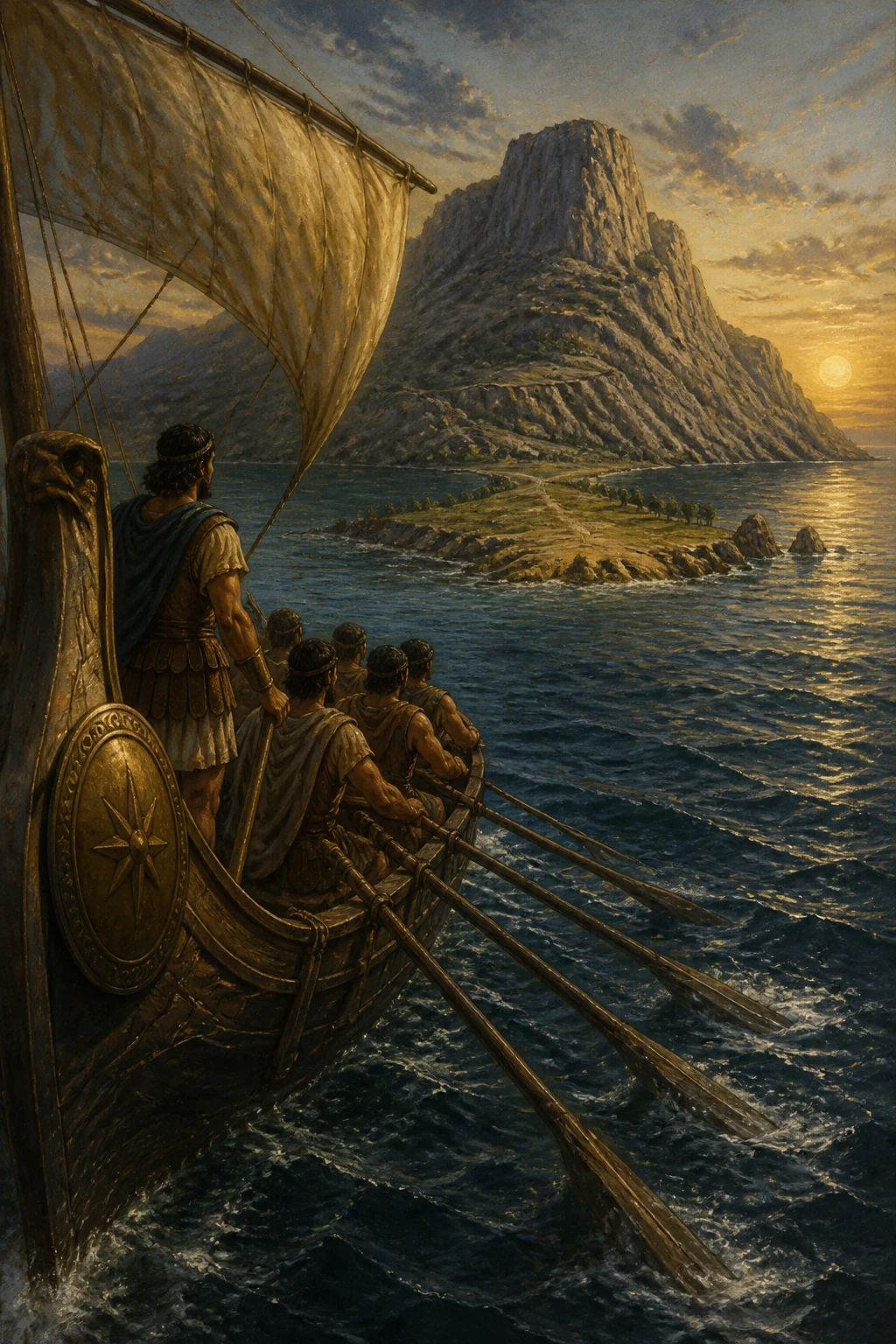
On the seventh day they left Drepane. At dawn a strong, steady wind came from Zeus, and, driven by its breath, they sped onward. But it was not yet the heroes’ destiny to set foot on Achaean soil: they must first endure hardship on the far shores of Libya.
Already, with sails spread wide, they had left behind the gulf named for the Ambracians, the land of the Curetes, and the narrow islands that lie in a row beside the Echinades. The land of Pelops was just coming into view when a deadly blast of the north wind snatched them from their course and swept them over the Libyan Sea for nine whole nights and as many days, until they came deep within the Syrtis, from which ships find no passage home once they have been forced into that gulf.
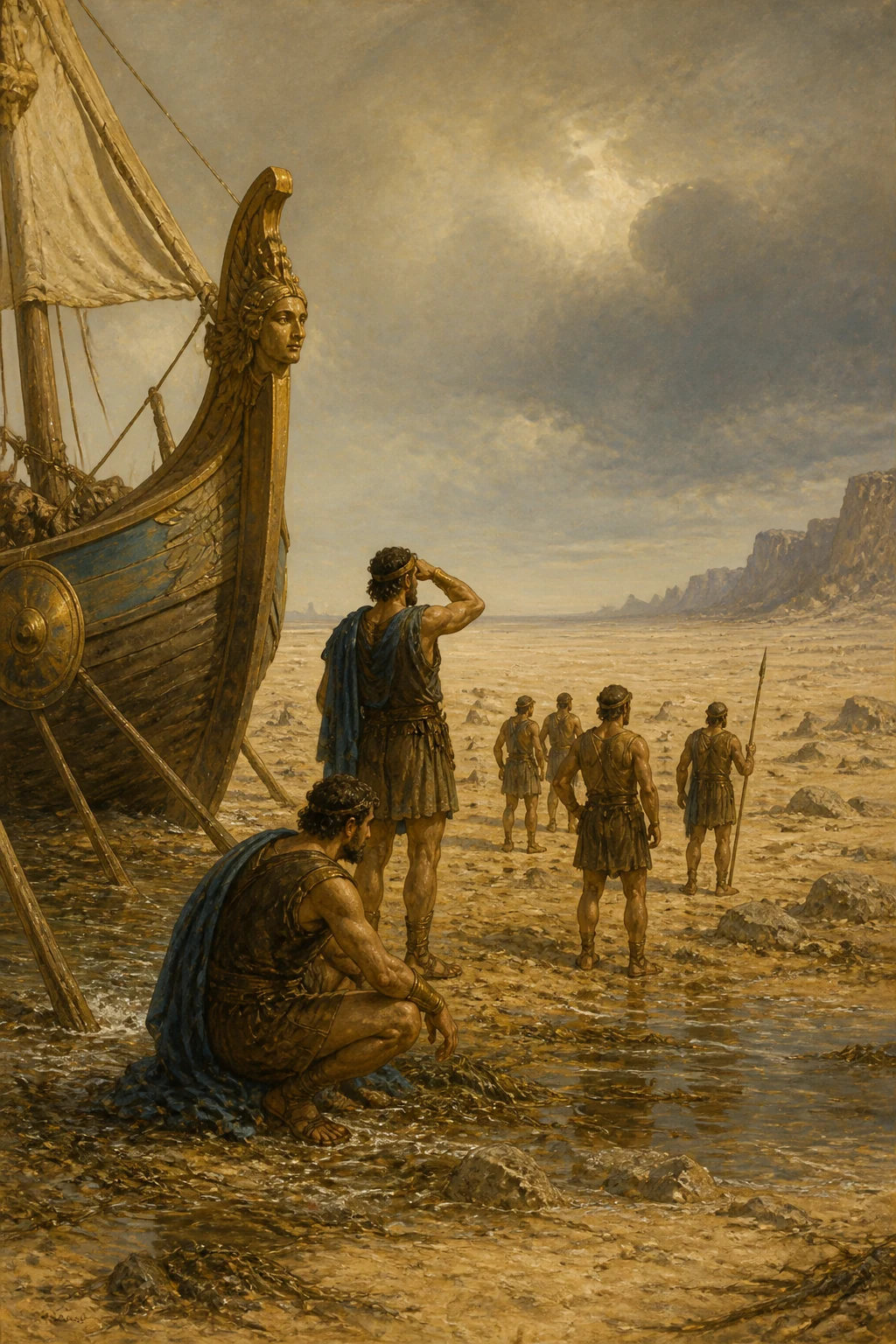
Everywhere are shallows, everywhere thick beds of weed rise from the bottom, and soundless foam washes over them. Sand stretches away into the haze; no creature crawls there, no bird takes wing. Here the flood tide—for the water often retreats from the land, then surges back with a roar, sweeping fiercely over the shore—quickly thrust them onto the innermost beach, leaving scarcely any water beneath the keel.
They leapt from the ship, and anguish seized them as they looked upon the sky and the vast expanse of land, as boundless as the sky itself, stretching unbroken into the distance. They could make out no watering place, no path, no shepherd’s dwelling far away. Everything lay under a motionless calm.
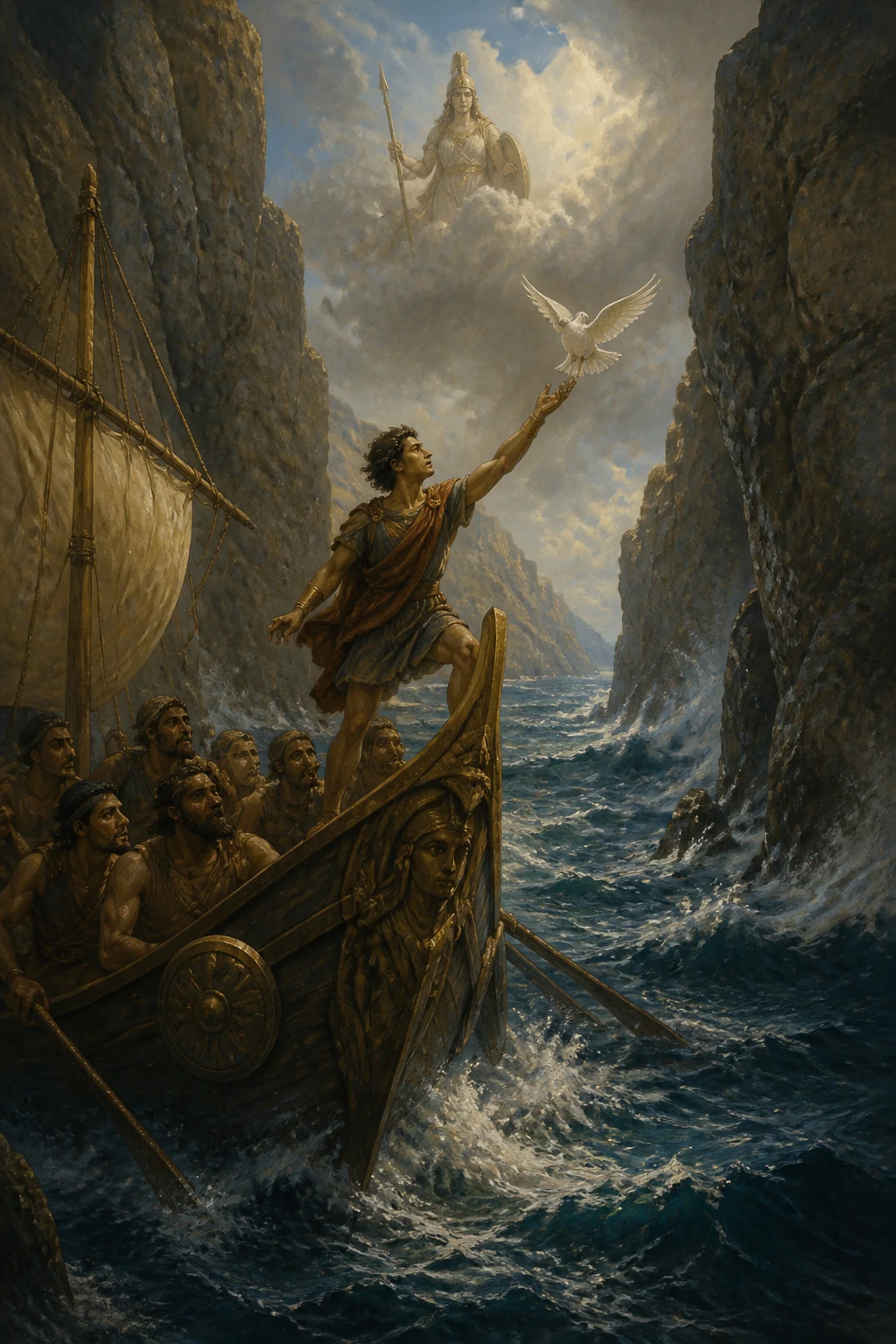
In their distress they questioned one another: “What land is this? Where have the storms driven us? If only we had dared to press straight through the passage between the rocks, heedless of that deadly terror! Even if we had gone against the will of Zeus, better to have died attempting some great deed.
“But now what can we do, held here by the winds, even if we remain only a little while? How far the deserted shore of this desolate continent stretches!” So they spoke. Then Ancaeus himself, their helmsman, overcome by the hopelessness of their plight, said in grief: “We are doomed to a dreadful death indeed. There is no escape from this disaster. The bitterest suffering awaits us, stranded in this wilderness, even if winds should begin to blow from the land. Wherever I look far out to sea, I see nothing but shallows; the water curls and washes uselessly over the grey sands.
“Long ago our sacred ship would have been miserably shattered far from shore, had not the flood tide itself carried her from the open sea high onto the land. Now it is rushing back to sea, and only unnavigable water lies pooled around us, barely covering the ground.
“And so I tell you that every hope of sailing, every hope of homecoming, is cut off. Let another show his skill: he is welcome to sit at the helm and seek our deliverance. But Zeus has no wish to crown our labours with a day of homecoming.”
So he spoke through tears, and all who understood ships agreed with him in his despair. Every heart grew cold, and pallor spread over their cheeks. As men wander through a city like lifeless phantoms, awaiting the end that war or plague will bring, or some immeasurable downpour that drowns the countless labours of their oxen; or when wooden images of the gods sweat blood of their own accord, and lowing sounds are heard within the temples; or when the sun brings night from heaven at midday and the bright stars shine through the sky—so the heroes wandered then, dragging their feet along the endless beach. Soon dark evening came upon them. With tears they threw their arms around one another in a sorrowful farewell, so that each might fall upon the sands apart from the rest and breathe his last.
They went their separate ways, each choosing a place to lie farther off. Covering their heads with their cloaks, they lay without food or drink all that night and the following day, awaiting a most pitiful death. Apart from them, the maidens gathered around Aeetes’ daughter and lamented with her.
As helpless, unfledged nestlings huddle in a rocky cleft and cry shrilly in their loneliness; or as swans raise their song on the banks of fair-flowing Pactolus, and the dewy meadow and the lovely river streams resound around them—so the maidens, laying their golden hair in the dust, mourned all night with a piteous dirge.
And there they would all have passed out of life, the noblest of heroes, their task unfulfilled, unsung and unknown to humankind. But the guardian heroines of Libya took pity on them as they wasted away in helplessness: those who once met Athena when she sprang in splendour from her father’s head and bathed her in the waters of Triton.
It was midday, and the sun’s fiercest rays were scorching Libya. They stood close beside the son of Aeson and gently drew the cloak from his head with their hands. He turned his eyes away in reverence for the goddesses. To him alone they appeared openly, and addressed him in his bewilderment with gentle words: “Unhappy man, why has such helpless despair overwhelmed you?
“We know that you journey in search of the golden fleece. We know all your sufferings, all the mighty labours you have endured on land and in your wanderings over the watery sea.
“We are the solitary goddesses of this land, endowed with speech, its heroines, Libya’s guardians and daughters. Rise, then, and grieve no longer in this misery. Rouse your companions. As soon as Amphitrite unyokes Poseidon’s well-wheeled chariot, repay your mother for the toil she endured while she carried you so long within her womb. Then you may yet return to the sacred land of Achaea.”
With these words they vanished where they stood, their voices fading with them. Jason looked about him, then sat upright on the ground and said: “Be gracious, glorious goddesses who dwell in the wilderness. I do not clearly understand your words about our homecoming. Yet I will gather my companions and tell them, in case we may discover some sign of deliverance. The counsel of many is better.”
He spoke, and sprang up, caked with dust, calling loudly to his companions like a lion roaring through the forest in search of his mate. Far away the mountain glens tremble at its deep voice, and the cattle in the pastures and their herdsmen shudder with fear. But to the heroes there was nothing dreadful in the voice of their companion calling to his friends.
They gathered near him, downcast. He seated them in their sorrow beside the mooring place, together with the women, and told them everything: “Listen, friends. As I lay in anguish, three goddesses stood very close above my head. Like maidens, they were clothed in goatskins that covered their backs and waists from the neck down. With a gentle hand they drew away my cloak and uncovered me. They bade me rise and go to rouse you, and make a fitting repayment to our mother for the toil she endured while she carried us so long within her womb, whenever Amphitrite should unyoke Poseidon’s well-wheeled chariot. I cannot fully understand this prophecy. But they said they were heroines, Libya’s guardians and daughters, and declared that they knew every hardship we had suffered before, both on land and on the sea.
“Then I could no longer see them there: some mist or cloud came between us and hid them from sight.” So he spoke, and all were astonished as they listened. Then the most wondrous of signs appeared to the Minyans.
A huge horse sprang from the sea onto the land, a mighty creature with its neck held high beneath a golden mane. Swiftly shaking the streaming brine from its limbs, it set off at a run, its feet as swift as the wind. At once Peleus joyfully addressed his assembled companions: “I declare that Poseidon’s chariot has now been unyoked by the hands of his dear wife. And by our mother I understand none other than the ship herself, for she has carried us within her womb and suffered ceaselessly through grievous labours.
“Come, then: with unshaken strength and tireless shoulders let us lift her high and carry her into the sandy land, following the course of that swift-footed horse. It will not vanish beneath the dry earth, and I believe its tracks will show us some inlet of the sea beyond.”
So he spoke, and his inspired counsel pleased them all. This is the Muses’ tale; I sing in obedience to the daughters of Pieria. And I have heard this account in all its truth: that you, far mightiest sons of kings, by your own strength and courage lifted the ship and all you carried within her onto your shoulders, and bore her high above the earth across Libya’s deserted sands for twelve whole days and nights. Who could tell the misery and suffering they endured in that labour?
Surely they were of immortal blood, to undertake such a task under the pressure of necessity. Far onward they carried her, until, to their great joy, they reached the waters of Lake Tritonis. There they waded in and set her down from their sturdy shoulders.
Then, darting about like maddened dogs, they searched for a spring, for parching thirst had been added to their exhaustion and pain. Nor did they wander in vain. They came to the sacred ground where, only yesterday, the earthborn serpent Ladon had guarded the golden apples in the realm of Atlas, while the nymphs, the Hesperides, busied themselves around him, singing sweetly.
But now, struck down by Heracles, he lay beside the trunk of the apple tree. Only the tip of his tail still twitched; from his head to his dark spine he lay lifeless. Where the arrows had left the Lernaean Hydra’s bitter venom in his blood, flies settled and dried upon his festering wounds.
Nearby the Hesperides were lamenting shrilly, their white hands laid upon their golden heads. The heroes came upon them suddenly, all together, and as they hurried forward the nymphs turned at once to dust and earth where they stood. Orpheus recognized the divine portent and sought to comfort them with prayers: “Beautiful and gracious divinities, be merciful, sovereign ladies, whether you are numbered among the goddesses of heaven or those beneath the earth, or are called the nymphs of lonely places. Come, nymphs, sacred daughters of Ocean, appear before our eyes and show us some stream pouring from a rock, or some holy spring welling from the earth, goddesses, where we may quench the thirst that burns us without respite. If ever we return in our voyaging to the land of Achaea, we will gladly offer you countless gifts, libations and feasts, honouring you among the foremost goddesses.”
So he prayed in an earnest voice, and they took pity on the suffering men nearby. First they made grass spring from the earth; above the grass tall shoots sprang up, and then flourishing trees rose straight and high above the ground.
Hespere became a poplar, Erytheis an elm, and Aegle the sacred trunk of a willow. Then from those trees they appeared again, unmistakably as they had been before—a marvel beyond telling. Aegle answered the desperate men in gentle words: “Indeed, that ruthless man has come here to bring you great relief in your sufferings! He robbed our guardian serpent of life and went away carrying the goddesses’ golden apples. To us he has left bitter grief.
“Yesterday a man came here, terrible in his violence and his stature. His eyes flashed beneath his grim brow, and he was merciless. Around him he wore the raw, untanned hide of a monstrous lion. He carried a stout branch of olive wood and a bow, with which he shot this creature dead.
“He too arrived parched with thirst, for he was travelling on foot across the land. He rushed about this place searching for water, but nowhere was he likely to find it. Now there is a rock here beside Lake Tritonis. Whether by his own thought or at some god’s prompting, he struck it near its base with his foot, and water gushed out in a flood.
“Then, planting both hands and his chest upon the ground, he drank deeply from the cleft rock, sprawling like a grazing beast, until he had filled his great belly.” So she spoke, and joyfully they ran in the direction Aegle had shown them, until they found the welcome spring.
As ants that burrow in the earth swarm in crowds about a narrow hole, or as flies alight around a little drop of sweet honey and cluster greedily upon it, so the Minyans crowded together around the spring in the rock.
And one of them, refreshed, said with moistened lips: “Ah, even far away, Heracles has saved his companions, worn out with thirst! If only we could find him as he journeys across the mainland!”
So he spoke, and those best suited to the task volunteered, setting off in different directions to search. For the night winds had swept the shifting sand across his tracks. The two sons of Boreas set out, trusting in their wings; Euphemus relied on his swift feet, and Lynceus on the keenness of his far-reaching sight. Canthus hastened after them as the fifth.
The gods’ decree and his own courage urged him on that journey, so that he might learn with certainty from Heracles where he had left Polyphemus, the son of Eilatus. For he longed to question him closely about his friend.
But Polyphemus, after founding a famous city among the Mysians, had set out far across the mainland in search of the Argo, yearning to return home. At last he reached the country of the Chalybes who dwell beside the sea, and there Fate overcame him.
His tomb stands beneath a spreading white poplar, a little way from the sea. But on that day Lynceus alone thought he glimpsed Heracles far across the boundless land, as a man at the beginning of the month sees—or thinks he sees—the moon through a veil of haze.
He returned to his companions and told them that no other searcher could overtake him now. Swift-footed Euphemus and the two sons of Thracian Boreas also returned, their labour spent in vain.
Izvirnik
Libya and the Carrying of the Argo
Naslednje strani prikazujejo izvirno besedilo za primerjavo.
ἤματι δʼ ἑβδομάτῳ Δρεπάνην λίπον· ἤλυθε δʼ οὖρος ἀκραὴς ἠῶθεν ὑπὲκ Διός· οἱ δʼ ἀνέμοιο πνοιῇ ἐπειγόμενοι προτέρω θέον. ἀλλὰ γὰρ οὔπω αἴσιμον ἦν ἐπιβῆναι Ἀχαιίδος ἡρώεσσιν, ὄφρʼ ἔτι καὶ Λιβύης ἐπὶ πείρασιν ὀτλήσειαν. ἤδη μέν ποθι κόλπον ἐπώνυμον Ἀμβρακιήων, ἤδη Κουρῆτιν ἔλιπον χθόνα πεπταμένοισιν λαίφεσι καὶ στεινὰς αὐταῖς σὺν Ἐχινάσι νήσους ἑξείης, Πέλοπος δὲ νέον κατεφαίνετο γαῖα· καὶ τότʼ ἀναρπάγδην ὀλοὴ βορέαο θύελλα μεσσηγὺς πέλαγόσδε Λιβυστικὸν ἐννέα πάσας νύκτας ὁμῶς καὶ τόσσα φέρʼ ἤματα, μέχρις ἵκοντο
προπρὸ μάλʼ ἔνδοθι Σύρτιν, ὅθʼ οὐκέτι νόστος ὀπίσσω νηυσὶ πέλει, ὅτε τόνγε βιῴατο κόλπον ἱκέσθαι. πάντῃ γὰρ τέναγος, πάντῃ μνιόεντα βυθοῖο τάρφεα· κωφὴ δέ σφιν ἐπιβλύει ὕδατος ἄχνη· ἠερίη δʼ ἄμαθος παρακέκλιται· οὐδέ τι κεῖσε ἑρπετόν, οὐδὲ ποτητὸν ἀείρεται. ἔνθʼ ἄρα τούσγε πλυμμυρίς—καὶ γάρ τʼ ἀναχάζεται ἠπείροιο ἦ θαμὰ δὴ τόδε χεῦμα, καὶ ἂψ ἐπερεύγεται ἀκτὰς λάβρον ἐποιχόμενον—μυχάτῃ ἐνέωσε τάχιστα ἠιόνι, τρόπιος δὲ μάλʼ ὕδασι παῦρον ἔλειπτο.
οἱ δʼ ἀπὸ νηὸς ὄρουσαν, ἄχος δʼ ἕλεν εἰσορόωντας ἠέρα καὶ μεγάλης νῶτα χθονὸς ἠέρι ἶσα, τηλοῦ ὑπερτείνοντα διηνεκές· οὐδέ τινʼ ἀρδμόν, οὐ πάτον, οὐκ ἀπάνευθε κατηυγάσσαντο βοτήρων αὔλιον, εὐκήλῳ δὲ κατείχετο πάντα γαλήνῃ. ἄλλος δʼ αὖτʼ ἄλλον τετιημένος ἐξερέεινεν· τίς χθὼν εὔχεται ἥδε; πόθι ξυνέωσαν ἄελλαι ἡμέας; αἴθʼ ἔτλημεν, ἀφειδέες οὐλομένοιο δείματος, αὐτὰ κέλευθα διαμπερὲς ὁρμηθῆναι πετράων. ἦ τʼ ἂν καὶ ὑπὲρ Διὸς αἶσαν ἰοῦσιν βέλτερον ἦν μέγα δή τι μενοινώοντας ὀλέσθαι.
νῦν δὲ τί κεν ῥέξαιμεν, ἐρυκόμενοι ἀνέμοισιν αὖθι μένειν τυτθόν περ ἐπὶ χρόνον; οἷον ἐρήμη πέζα διωλυγίης ἀναπέπταται ἠπείροιο. ὧς ἄρʼ ἔφη· μετὰ δʼ αὐτὸς ἀμηχανίῃ κακότητος ἰθυντὴρ Ἀγκαῖος ἀκηχέμενος ἀγόρευσεν· Ὠλόμεθʼ αἰνότατον δῆθεν μόρον, οὐδʼ ὑπάλυξις ἔστʼ ἄτης· πάρα δʼ ἄμμι τὰ κύντατα πημανθῆναι τῇδʼ ἐπʼ ἐρημαίῃ πεπτηότας, εἰ καὶ ἀῆται χερσόθεν ἀμπνεύσειαν· ἐπεὶ τεναγώδεα λεύσσω τῆλε περισκοπέων ἅλα πάντοθεν· ἤλιθα δʼ ὕδωρ ξαινόμενον πολιῇσιν ἐπιτροχάει ψαμάθοισιν.
καί κεν ἐπισμυγερῶς διὰ δὴ πάλαι ἥδʼ ἐκεάσθη νηῦς ἱερὴ χέρσου πολλὸν πρόσω· ἀλλά μιν αὐτὴ πλημμυρὶς ἐκ πόντοιο μεταχθονίην ἐκόμισσεν. νῦν δʼ ἡ μὲν πέλαγόσδε μετέσσυται, οἰόθι δʼ ἅλμη ἄπλοος εἰλεῖται, γαίης ὕπερ ὅσσον ἔχουσα. τούνεκʼ ἐγὼ πᾶσαν μὲν ἀπʼ ἐλπίδα φημὶ κεκόφθαι ναυτιλίης νόστου τε. δαημοσύνην δέ τις ἄλλος φαίνοι ἑήν· πάρα γάρ οἱ ἐπʼ οἰήκεσσι θαάσσειν μαιομένῳ κομιδῆς. ἀλλʼ οὐ μάλα νόστιμον ἦμαρ Ζεὺς ἐθέλει καμάτοισιν ἐφʼ ἡμετέροισι τελέσσαι.
ὧς φάτο δακρυόεις· σὺν δʼ ἔννεπον ἀσχαλόωντι ὅσσοι ἔσαν νηῶν δεδαημένοι· ἐν δʼ ἄρα πᾶσιν παχνώθη κραδίη, χύτο δὲ χλόος ἀμφὶ παρειάς. οἷον δʼ ἀψύχοισιν ἐοικότες εἰδώλοισιν ἀνέρες εἱλίσσονται ἀνὰ πτόλιν, ἢ πολέμοιο ἢ λοιμοῖο τέλος ποτιδέγμενοι, ἠέ τινʼ ὄμβρον ἄσπετον, ὅς τε βοῶν κατὰ μυρία ἔκλυσεν ἔργα, ἢ ὅταν αὐτόματα ξόανα ῥέῃ ἱδρώοντα αἵματι, καὶ μυκαὶ σηκοῖς ἔνι φαντάζωνται, ἠὲ καὶ ἠέλιος μέσῳ ἤματι νύκτʼ ἐπάγῃσιν οὐρανόθεν, τὰ δὲ λαμπρὰ διʼ ἠέρος ἄστρα φαείνοι· ὧς τότʼ ἀριστῆες δολιχοῦ πρόπαρ αἰγιαλοῖο
ἤλυον ἑρπύζοντες. ἐπήλυθε δʼ αὐτίκʼ ἐρεμνὴ ἕσπερος. οἱ δʼ ἐλεεινὰ χεροῖν σφέας ἀμφιβαλόντες δακρυόειν ἀγάπαζον, ἵνʼ ἄνδιχα δῆθεν ἕκαστος θυμὸν ἀποφθίσειαν ἐνὶ ψαμάθοισι πεσόντες. βὰν δʼ ἴμεν ἄλλυδις ἄλλος ἑκαστέρω αὖλιν ἑλέσθαι· ἐν δὲ κάρη πέπλοισι καλυψάμενοι σφετέροισιν ἄκμηνοι καὶ ἄπαστοι ἐκείατο νύκτʼ ἔπι πᾶσαν καὶ φάος, οἰκτίστῳ θανάτῳ ἔπι. νόσφι δὲ κοῦραι ἀθρόαι Αἰήταο παρεστενάχοντο θυγατρί.
ὡς δʼ ὅτʼ ἐρημαῖοι πεπτηότες ἔκτοθι πέτρης χηραμοῦ ἀπτῆνες λιγέα κλάζουσι νεοσσοί· ἢ ὅτε καλὰ νάοντος ἐπʼ ὀφρύσι Πακτωλοῖο κύκνοι κινήσωσιν ἑὸν μέλος, ἀμφὶ δὲ λειμὼν ἑρσήεις βρέμεται ποταμοῖό τε καλὰ ῥέεθρα· ὧς αἱ ἐπὶ ξανθὰς θέμεναι κονίῃσιν ἐθείρας παννύχιαι ἐλεεινὸν ἰήλεμον ὠδύροντο. καί νύ κεν αὐτοῦ πάντες ἀπὸ ζωῆς ἐλίασθεν νώνυμνοι καὶ ἄφαντοι ἐπιχθονίοισι δαῆναι ἡρώων οἱ ἄριστοι ἀνηνύστῳ ἐπʼ ἀέθλῳ· ἀλλά σφεας ἐλέηραν ἀμηχανίῃ μινύθοντας ἡρῷσσαι, Λιβύης τιμήοροι, αἵ ποτʼ Ἀθήνην,
ἦμος ὅτʼ ἐκ πατρὸς κεφαλῆς θόρε παμφαίνουσα, ἀντόμεναι Τρίτωνος ἐφʼ ὕδασι χυτλώσαντο. ἔνδιον ἦμαρ ἔην, περὶ δʼ ὀξύταται θέρον αὐγαὶ ἠελίου Λιβύην· αἱ δὲ σχεδὸν Αἰσονίδαο ἔσταν, ἕλον δʼ ἀπὸ χερσὶ καρήατος ἠρέμα πέπλον. αὐτὰρ ὅγʼ εἰς ἑτέρωσε παλιμπετὲς ὄμματʼ ἔνεικεν, δαίμονας αἰδεσθείς· αὐτὸν δέ μιν ἀμφαδὸν οἶον μειλιχίοις ἐπέεσσιν ἀτυζόμενον προσέειπον· κάμμορε, τίπτʼ ἐπὶ τόσσον ἀμηχανίῃ βεβόλησαι; ἴδμεν ἐποιχομένους χρύσεον δέρος· ἴδμεν ἕκαστα ὑμετέρων καμάτων, ὅσʼ ἐπὶ χθονός, ὅσσα τʼ ἐφʼ ὑγρὴν πλαζόμενοι κατὰ πόντον ὑπέρβια ἔργʼ ἐκάμεσθε.
οἰοπόλοι δʼ εἰμὲν χθόνιαι θεαὶ αὐδήεσσαι, ἡρῷσσαι, Λιβύης τιμήοροι ἠδὲ θύγατρες. ἀλλʼ ἄνα· μηδʼ ἔτι τοῖον ὀιζύων ἀκάχησο· ἄνστησον δʼ ἑτάρους. εὖτʼ ἂν δέ τοι Ἀμφιτρίτη ἅρμα Ποσειδάωνος ἐύτροχον αὐτίκα λύσῃ, δή ῥα τότε σφετέρῃ ἀπὸ μητέρι τίνετʼ ἀμοιβὴν ὧν ἔκαμεν δηρὸν κατὰ νηδύος ὔμμε φέρουσα· καί κεν ἔτʼ ἠγαθέην ἐς Ἀχαιίδα νοστήσαιτε. ὧς ἄρʼ ἔφαν, καὶ ἄφαντοι ἵνʼ ἔσταθεν, ἔνθʼ ἄρα ταίγε φθογγῇ ὁμοῦ ἐγένοντο παρασχεδόν. αὐτὰρ Ἰήσων παπτήνας ἀνʼ ἄρʼ ἕζετʼ ἐπὶ χθονός, ὧδέ τʼ ἔειπεν· Ἵλατʼ ἐρημονόμοι κυδραὶ θεαί· ἀμφὶ δὲ νόστῳ
οὔτι μαλʼ ἀντικρὺ νοέω φάτιν. ἦ μὲν ἑταίρους εἰς ἓν ἀγειράμενος μυθήσομαι, εἴ νύ τι τέκμωρ δήωμεν κομιδῆς· πολέων δέ τε μῆτις ἀρείων. ἦ, καὶ ἀναΐξας ἑτάρους ἐπὶ μακρὸν ἀύτει, αὐσταλέος κονίῃσι, λέων ὥς, ὅς ῥά τʼ ἀνʼ ὕλην σύννομον ἣν μεθέπων ὠρύεται· αἱ δὲ βαρείῃ φθογγῇ ὑποτρομέουσιν ἀνʼ οὔρεα τηλόθι βῆσσαι· δείματι δʼ ἄγραυλοί τε βόες μέγα πεφρίκασιν βουπελάται τε βοῶν· τοῖς δʼ οὔ νύ τι γῆρυς ἐτύχθη ῥιγεδανὴ ἑτάροιο φίλους ἐπικεκλομένοιο.
ἀγχοῦ δʼ ἠγερέθοντο κατηφέες· αὐτὰρ ὁ τούσγε ἀχνυμένους ὅρμοιο πέλας μίγα θηλυτέρῃσιν ἱδρύσας, μυθεῖτο πιφαυσκόμενος τὰ ἕκαστα· κλῦτε, φίλοι· τρεῖς γάρ μοι ἀνιάζοντι θεάων, στέρφεσιν αἰγείοις ἐζωσμέναι ἐξ ὑπάτοιο αὐχένος ἀμφί τε νῶτα καὶ ἰξύας, ἠύτε κοῦραι, ἔσταν ὑπὲρ κεφαλῆς μάλʼ ἐπισχεδόν· ἂν δʼ ἐκάλυψαν πέπλον ἐρυσσάμεναι κούφῃ χερί, καί μʼ ἐκέλοντο αὐτόν τʼ ἔγρεσθαι, ἀνά θʼ ὑμέας ὄρσαι ἰόντα· μητέρι δὲ σφετέρῃ μενοεικέα τῖσαι ἀμοιβὴν ὧν ἔκαμεν δηρὸν κατὰ νηδύος ἄμμε φέρουσα ὁππότε κεν λύσῃσιν ἐύτροχον Ἀμφιτρίτη
ἅρμα Ποσειδάωνος. ἐγὼ δʼ οὐ πάγχυ νοῆσαι τῆσδε θεοπροπίης ἴσχω πέρι. φάν γε μὲν εἶναι ἡρῷσσαι, Λιβύης τιμήοροι ἠδὲ θύγατρες· καὶ δʼ ὁπόσʼ αὐτοὶ πρόσθεν ἐπὶ χθονὸς ἠδʼ ὅσʼ ἐφʼ ὑγρὴν ἔτλημεν, τὰ ἕκαστα διίδμεναι εὐχετόωντο. οὐδʼ ἔτι τάσδʼ ἀνὰ χῶρον ἐσέδρακον, ἀλλά τις ἀχλὺς ἠὲ νέφος μεσσηγὺ φαεινομένας ἐκάλυψεν. ὧς ἔφαθʼ· οἱ δʼ ἄρα πάντες ἐθάμβεον εἰσαΐοντες. ἔνθα τὸ μήκιστον τεράων Μινύῃσιν ἐτύχθη.
ἐξ ἁλὸς ἤπειρόνδε πελώριος ἔκθορεν ἵππος, ἀμφιλαφής, χρυσέῃσι μετήορος αὐχένα χαίταις· ῥίμφα δὲ σεισάμενος γυίων ἄπο νήχυτον ἅλμην ὦρτο θέειν, πνοιῇ ἴκελος πόδας. αἶψα δὲ Πηλεὺς γηθήσας ἑτάροισιν ὁμηγερέεσσι μετηύδα· ἅρματα μὲν δή φημι Ποσειδάωνος ἔγωγε ἤδη νῦν ἀλόχοιο φίλης ὑπὸ χερσὶ λελύσθαι· μητέρα δʼ οὐκ ἄλλην προτιόσσομαι, ἠέ περ αὐτὴν νῆα πέλειν· ἦ γὰρ κατὰ νηδύος ἄμμε φέρουσα νωλεμὲς ἀργαλέοισιν ὀιζύει καμάτοισιν.
ἀλλά μιν ἀστεμφεῖ τε βίῃ καὶ ἀτειρέσιν ὤμοις ὑψόθεν ἀνθέμενοι ψαμαθώδεος ἔνδοθι γαίης οἴσομεν, ᾗ προτέρωσε ταχὺς πόδας ἤλασεν ἵππος. οὐ γὰρ ὅγε ξηρὴν ὑποδύσεται· ἴχνια δʼ ἡμῖν σημανέειν τινʼ ἔολπα μυχὸν καθύπερθε θαλάσσης. ὧς ηὔδα· πάντεσσι δʼ ἐπήβολος ἥνδανε μῆτις· Μουσάων ὅδε μῦθος· ἐγὼ δʼ ὑπακουὸς ἀείδω Πιερίδων, καὶ τήνδε πανατρεκὲς ἔκλυον ὀμφήν, ὑμέας, ὦ πέρι δὴ μέγα φέρτατοι υἷες ἀνάκτων, ᾗ βίῃ ᾗ τʼ ἀρετῇ Λιβύης ἀνὰ θῖνας ἐρήμους νῆα μεταχρονίην ὅσα τʼ ἔνδοθι νηὸς ἄγεσθε, ἀνθεμένους ὤμοισι φέρειν δυοκαίδεκα πάντα
ἤμαθʼ ὁμοῦ νύκτας τε. δύην γε μὲν ἢ καὶ ὀιζὺν τίς κʼ ἐνέποι, τὴν κεῖνοι ἀνέπλησαν μογέοντες; ἔμπεδον ἀθανάτων ἔσαν αἵματος, οἷον ὑπέσταν ἔργον, ἀναγκαίῃ βεβιημένοι. αὐτὰρ ἐπιπρὸ τῆλε μάλʼ ἀσπασίως Τριτωνίδος ὕδασι λίμνης ὡς φέρον, ὡς εἰσβάντες ἀπὸ στιβαρῶν θέσαν ὤμων. Λυσσαλέοις δἤπειτʼ ἴκελοι κυσὶν ἀίσσοντες πίδακα μαστεύεσκον· ἐπὶ ξηρὴ γὰρ ἔκειτο δίψα δυηπαθίῃ τε καὶ ἄλγεσιν, οὐδʼ ἐμάτησαν πλαζόμενοι· ἷξον δʼ ἱερὸν πέδον, ᾧ ἔνι Λάδων εἰσέτι που χθιζὸν παγχρύσεα ῥύετο μῆλα χώρῳ ἐν Ἄτλαντος, χθόνιος ὄφις· ἀμφὶ δὲ νύμφαι
Ἑσπερίδες ποίπνυον, ἐφίμερον ἀείδουσαι. δὴ τότε δʼ ἤδη τῆμος ὑφʼ Ἡρακλῆι δαϊχθεὶς μήλειον βέβλητο ποτὶ στύπος· οἰόθι δʼ ἄκρῃ οὐρῇ ἔτι σκαίρεσκεν· ἀπὸ κρατὸς δὲ κελαινὴν ἄχρις ἐπʼ ἄκνηστιν κεῖτʼ ἄπνοος· ἐκ δὲ λιπόντων ὕδρης Λερναίης χόλον αἵματι πικρὸν ὀιστῶν μυῖαι πυθομένοισιν ἐφʼ ἕλκεσι τερσαίνοντο. ἀγχοῦ δʼ Ἑσπερίδες κεφαλαῖς ἔπι χεῖρας ἔχουσαι ἀργυφέας ξανθῇσι λίγʼ ἔστενον· οἱ δʼ ἐπέλασσαν ἄφνω ὁμοῦ· ταὶ δʼ αἶψα κόνις καὶ γαῖα, κιόντων ἐσσυμένως, ἐγένοντο καταυτόθι. νώσατο δʼ Ὀρφεὺς θεῖα τέρα, τὰς δέ σφι παρηγορέεσκε λιτῇσιν·
δαίμονες ὦ καλαὶ καὶ ἐύφρονες, ἵλατʼ, ἄνασσαι, εἴτʼ οὖν οὐρανίαις ἐναρίθμιοί ἐστε θεῇσιν, εἴτε καταχθονίαις, εἴτʼ οἰοπόλοι καλέεσθε νύμφαι· ἴτʼ ὦ νύμφαι, ἱερὸν γένος Ὠκεανοῖο, δείξατʼ ἐελδομένοισιν ἐνωπαδὶς ἄμμι φανεῖσαι ἤ τινα πετραίην χύσιν ὕδατος, ἤ τινα γαίης ἱερὸν ἐκβλύοντα, θεαί, ῥόον, ᾧ ἀπὸ δίψαν αἰθομένην ἄμοτον λωφήσομεν. εἰ δέ κεν αὖτις δή ποτʼ Ἀχαιίδα γαῖαν ἱκώμεθα ναυτιλίῃσιν, δὴ τότε μυρία δῶρα μετὰ πρώτῃσι θεάων λοιβάς τʼ εἰλαπίνας τε παρέξομεν εὐμενέοντες.
ὧς φάτο λισσόμενος ἀδινῇ ὀπί· ταὶ δʼ ἐλέαιρον ἐγγύθεν ἀχνυμένους· καὶ δὴ χθονὸς ἐξανέτειλαν ποίην πάμπρωτον· ποίης γε μὲν ὑψόθι μακροὶ βλάστεον ὅρπηκες· μετὰ δʼ ἔρνεα τηλεθάοντα πολλὸν ὑπὲρ γαίης ὀρθοσταδὸν ἠέξοντο. Ἑσπέρη αἴγειρος, πτελέη δʼ Ἐρυθηὶς ἔγεντο· Αἴγλη δʼ ἰτείης ἱερὸν στύπος. ἐκ δέ νυ κείνων δενδρέων, οἷαι ἔσαν, τοῖαι πάλιν ἔμπεδον αὔτως ἐξέφανεν, θάμβος περιώσιον, ἔκφατο δʼ Αἴγλη μειλιχίοις ἐπέεσσιν ἀμειβομένη χατέοντας· ἦ ἄρα δὴ μέγα πάμπαν ἐφʼ ὑμετέροισιν ὄνειαρ δεῦρʼ ἔμολεν καμάτοισιν ὁ κύντατος, ὅστις ἀπούρας
φρουρὸν ὄφιν ζωῆς παγχρύσεα μῆλα θεάων οἴχετʼ ἀειράμενος· στυγερὸν δʼ ἄχος ἄμμι λέλειπται. ἤλυθε γὰρ χθιζός τις ἀνὴρ ὀλοώτατος ὕβριν καὶ δέμας· ὄσσε δέ οἱ βλοσυρῷ ὑπέλαμπε μετώπῳ· νηλής· ἀμφὶ δὲ δέρμα πελωρίου ἕστο λέοντος ὠμόν, ἀδέψητον· στιβαρὸν δʼ ἔχεν ὄζον ἐλαίης τόξα τε, τοῖσι πέλωρ τόδʼ ἀπέφθισεν ἰοβολήσας. ἤλυθε δʼ οὖν κἀκεῖνος, ἅ τε χθόνα πεζὸς ὁδεύων, δίψῃ καρχαλέος· παίφασσε δὲ τόνδʼ ἀνὰ χῶρον, ὕδωρ ἐξερέων, τὸ μὲν οὔ ποθι μέλλεν ἰδέσθαι.
ἥδε δέ τις πέτρη Τριτωνίδος ἐγγύθι λίμνης· τὴν ὅγʼ ἐπιφρασθείς, ἢ καὶ θεοῦ ἐννεσίῃσιν, λὰξ ποδὶ τύψεν ἔνερθε· τὸ δʼ ἀθρόον ἔβλυσεν ὕδωρ. αὐτὰρ ὅγʼ ἄμφω χεῖρε πέδῳ καὶ στέρνον ἐρείσας ῥωγάδος ἐκ πέτρης πίεν ἄσπετον, ὄφρα βαθεῖαν νηδύν, φορβάδι ἶσος ἐπιπροπεσών, ἐκορέσθη. ὧς φάτο· τοὶ δʼ ἀσπαστὸν ἵνα σφίσι πέφραδεν Αἴγλη πίδακα, τῇ θέον αἶψα κεχαρμένοι, ὄφρʼ ἐπέκυρσαν.
ὡς δʼ ὁπότε στεινὴν περὶ χηραμὸν εἱλίσσονται γειομόροι μύρμηκες ὁμιλαδόν, ἢ ὅτε μυῖαι ἀμφʼ ὀλίγην μέλιτος γλυκεροῦ λίβα πεπτηυῖαι ἄπλητον μεμάασιν ἐπήτριμοι· ὧς τότʼ ἀολλεῖς πετραίῃ Μινύαι περὶ πίδακι δινεύεσκον. καί πού τις διεροῖς ἐπὶ χείλεσιν εἶπεν ἰανθείς· ὦ πόποι, ἦ καὶ νόσφιν ἐὼν ἐσάωσεν ἑταίρους Ἡρακλέης δίψῃ κεκμηότας. ἀλλά μιν εἴ πως δήοιμεν στείχοντα διʼ ἠπείροιο κιόντες.
ἦ, καὶ ἀμειβομένων, οἵ τʼ ἄρμενοι ἐς τόδε ἔργον, ἔκριθεν ἄλλυδις ἄλλος ἐπαΐξας ἐρεείνειν. ἴχνια γὰρ νυχίοισιν ἐπηλίνδητʼ ἀνέμοισιν κινυμένης ἀμάθου. Βορέαο μὲν ὡρμήθησαν υἷε δύω, πτερύγεσσι πεποιθότε. ποσσὶ δὲ κούφοις Εὔφημος πίσυνος, Λυγκεύς γε μὲν ὀξέα τηλοῦ ὄσσε βαλεῖν· πέμπτος δὲ μετὰ σφίσιν ἔσσυτο Κάνθος. τὸν μὲν ἄρʼ αἶσα θεῶν κείνην ὁδὸν ἠνορέη τε ὦρσεν, ἵνʼ Ἡρακλῆος ἀπηλεγέως πεπύθοιτο, Εἰλατίδην Πολύφημον ὅπῃ λίπε· μέμβλετο γάρ οἱ οὗ ἕθεν ἀμφʼ ἑτάροιο μεταλλῆσαι τὰ ἕκαστα.
ἀλλʼ ὁ μὲν οὖν Μυσοῖσιν ἐπικλεὲς ἄστυ πολίσσας νόστου κηδοσύνῃσιν ἔβη διζήμενος Ἀργὼ τῆλε διʼ ἠπείροιο· τέως δʼ ἐξίκετο γαῖαν ἀγχιάλων Χαλύβων· τόθι μιν καὶ Μοῖρʼ ἐδάμασσεν. καί οἱ ὑπὸ βλωθρὴν ἀχερωίδα σῆμα τέτυκται τυτθὸν ἁλὸς προπάροιθεν. ἀτὰρ τότε γʼ Ἡρακλῆα μοῦνον ἀπειρεσίης τηλοῦ χθονὸς εἴσατο Λυγκεὺς τὼς ἰδέειν, ὥς τίς τε νέῳ ἐνὶ ἤματι μήνην ἢ ἴδεν, ἢ ἐδόκησεν ἐπαχλύουσαν ἰδέσθαι.
ἐς δʼ ἑτάρους ἀνιὼν μυθήσατο, μή μιν ἔτʼ ἄλλον μαστῆρα στείχοντα κιχησέμεν· οἱ δὲ καὶ αὐτοὶ ἤλυθον, Εὔφημός τε πόδας ταχὺς υἷέ τε δοιὼ Θρηικίου Βορέω, μεταμώνια μοχθήσαντε.
Nadaljuj z branjem