Prevod
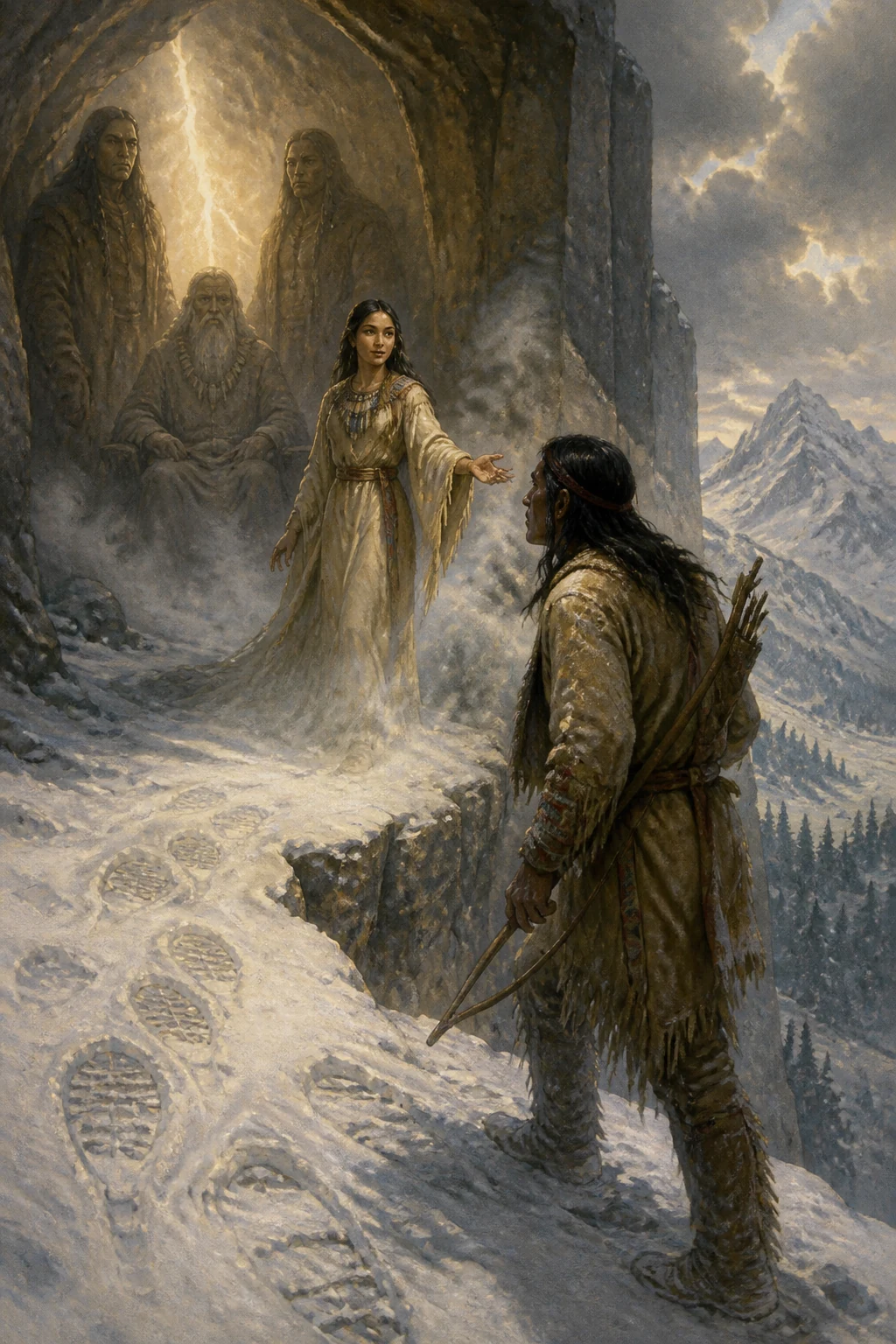
Indijanec, ki je živel daleč na severu, je bil tako vdan lovu, da nikoli ni preživel doma niti enega celega dne. To je žalostilo njegova sinova, ki sta se najraje igrala z njim in vadila z njegovim orožjem, kadar jima je to dovolil. Mati jima je zabičala, da očetu nikakor ne smeta povedati za mladeniča, ki je obiskoval njihovo kočo, kadar ga ni bilo doma. Šele ko sta že precej odrasla in spoznala, kakšne so dolžnosti žena, sta se odločila, da je ne bosta ubogala. Ko je lovec izvedel za ženino nezvestobo, jo je z udarcem ubil. Toda njen duh jih je tako hudo preganjal, da v starem domu niso več mogli živeti v miru in spokojnosti. Zapustili so tisti kraj in potovali proti jugu, dokler niso prispeli do Sault Sainte Marie.
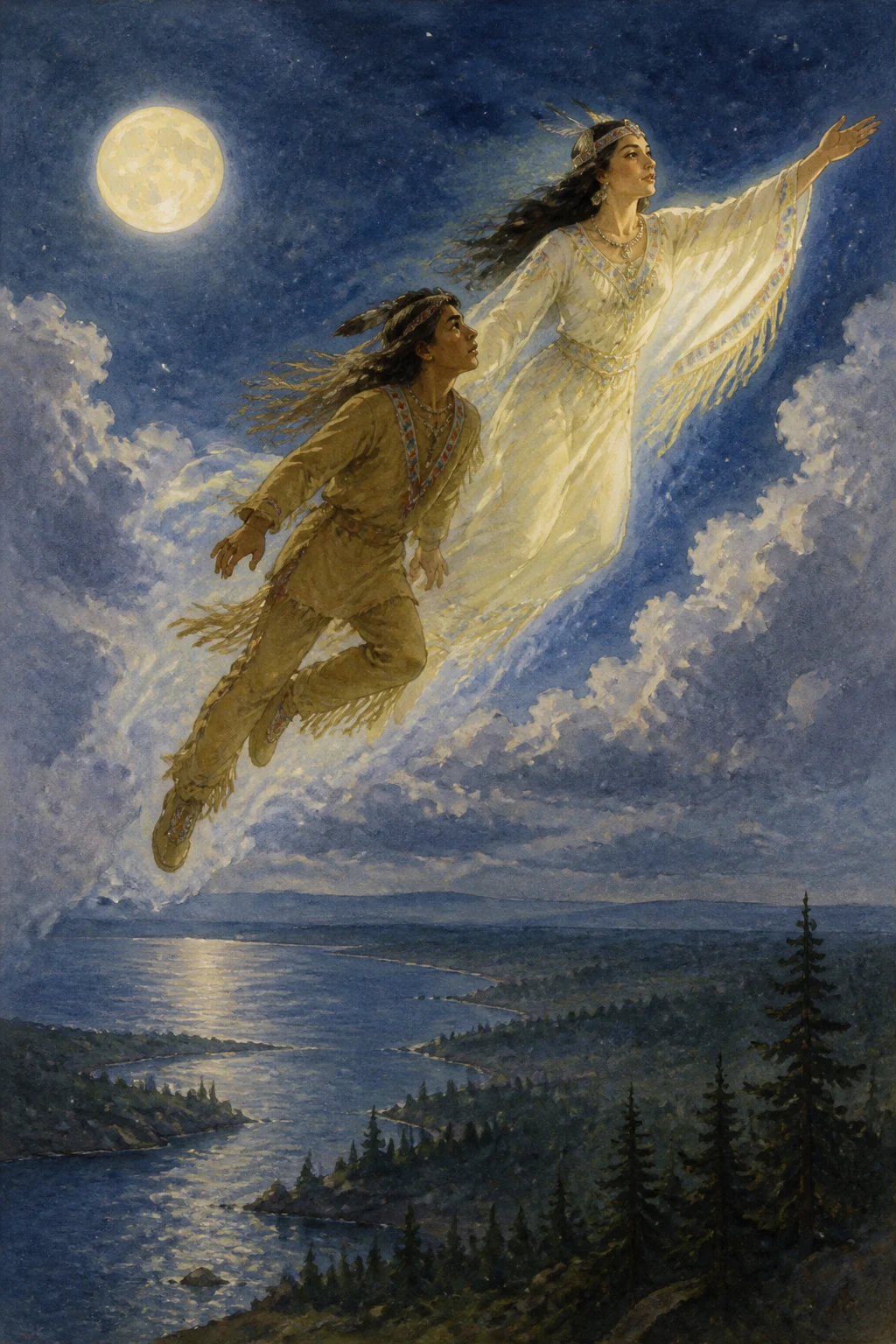
Ko so stali ob slapovih, se je proti njim po tleh prikotalila glava — glava mrtve žene. Prav takrat so na vodni gladini zagledali žerjava, ki se je vrtinčil v najmočnejših vrtincih. Eden od fantov mu je zaklical: »O dedek, preganja nas duh; prenesi nas čez slapove!« Žerjav je priletel k njim. »Oprimite se mojega hrbta in se ne dotikajte moje glave,« jim je dejal ter jih varno odnesel na nasprotni breg.
Tedaj pa je glava zavreščala: »Pridi, dedek, in prenesi še mene, saj sem izgubila svoja otroka in me tare huda žalost!« Ptič je priletel tudi k njej. »Pazi, da se ne dotakneš moje glave,« ji je dejal. Glava je obljubila, da ga bo ubogala, toda na pol poti je podlegla radovednosti in se dotaknila ptičeve glave, da bi videla, kaj je narobe z njim. Žerjav se je sunkovito stresel in odvrgel svoje breme, ki je padlo v brzice. Tok je glavo odnašal in jo zaletaval ob skale, dokler ji ni izbil možganov in jih raztresel po vodi. »V življenju nisi bila v nobeno korist,« je zaklical žerjav. »V smrti pa ne bo tako. Postani riba!« In koščki možganov so se spremenili v ikre, iz katerih so se kmalu izlegle nežne bele ribe, katerih meso cenijo tako Indijanci ob jezerih kakor belci. Družina si je v bližini postavila kočo in si žerjava izbrala za totem oziroma rodovno znamenje. Mnogi njihovi potomci ga nosijo še danes.
Izvirnik
An Indian who lived far in the north was so devoted to the chase that he was never at home for the whole of a day, to the sorrow of his two boys, who liked nothing so much as to sport with him and to be allowed to practise with his weapons. Their mother told them that on no account were they to speak to him of the young man who visited the lodge while their father was away, and it was not until they were well grown and knew what the duty of wives should be that they resolved to disobey her. The hunter struck the woman dead when he learned of her perfidy. So greatly did her spirit trouble them, however, that they could no longer abide in their old home in peace and comfort, and they left the country and journeyed southward until they came to the Sault Sainte Marie.
As they stood beside the falls a head came rolling toward them on the earth--the head of the dead woman. At that moment, too, a crane was seen riding on the surface of the water, whirling about in its strongest eddies, and when one of the boys called to it, “O Grandfather, we are persecuted by a spirit; take us across the falls,” the crane flew to them. “Cling to my back and do not touch my head,” it said to them, and landed them safely on the farther shore.
But now the head screamed, “Come, grandfather, and carry me over, for I have lost my children and am sorely distressed,” and the bird flew to her likewise. “Be careful not to touch my head,” it said. The head promised obedience, but succumbed to curiosity when half-way over and touched the bird's head to see what was the matter with him. With a lurch the crane flung off his burden and it fell into the rapids. As it swept down, bumping against the rocks, the brains were pounded out and strewn over the water. “You were useless in life,” cried the crane. “You shall not be so in death. Become fish!” And the bits of brain changed to roe that presently hatched to a delicate white fish, the flesh whereof is esteemed by Indians of the lakes, and white men, likewise. The family pitched a lodge near the spot and took the crane as their totem or name-mark. Many of their descendants bear it to this day.