Prevod
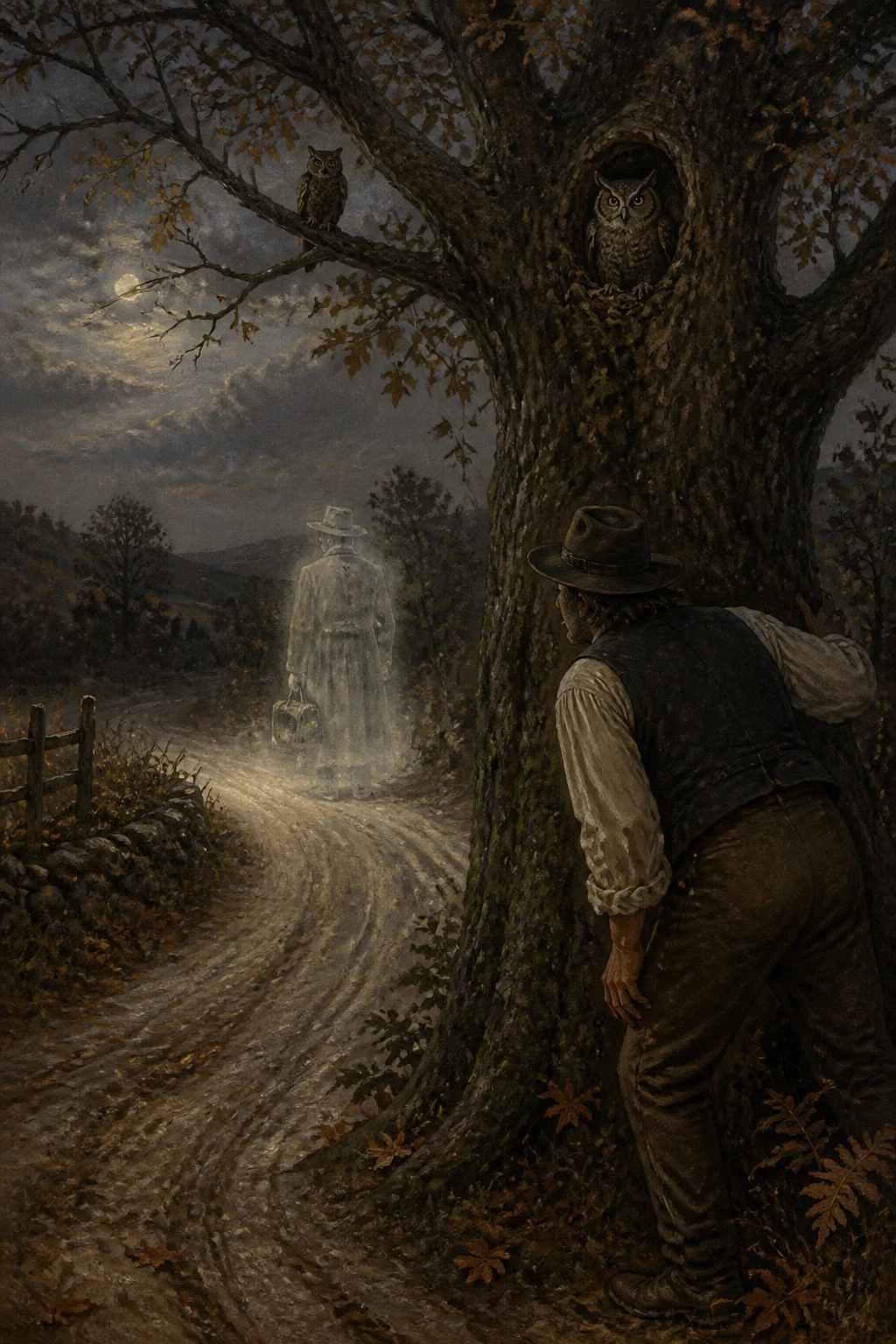
Leta 1853 je judovski krošnjar, čigar cula je bila lahka, mošnja pa polna, prosil, ali bi smel prenočiti v hiši Daniela Bakerja blizu Lebanona v Misuriju. Prošnji so ugodili in tedaj so Samuela Moritza videli zadnjič; ko pa so nekateri sosedje zmajevali z glavami in se čudili, od kod Bakerju toliko denarja, so drugi odgovarjali, da je krošnjarjem nemogoče slediti in da se nikogar ne tiče, če je Moritz hotel zgodaj zjutraj nadaljevati pot ali pa se vrniti v St. Louis po blago. Nekega večera leta 1860, ko se je po grapah vlekla megla in je na zahodu visel mlad mesec, se je častiti gospod Cummings, duhovnik iz tistih krajev, s kočijo vračal domov. Ko je prispel do mostu blizu kmetije »starega« Bakerja, je na njem zagledal moža s culo na hrbtu in palico v roki, ki je nepremično strmel v nekaj pod mostom. Duhovnik ga je vedro pozdravil in ga vprašal, ali bi se rad peljal z njim, mož pa mu je pogledal v obraz in pokazal proti robu mostu. Gospod Cummings je pogledal navzdol, a ni videl ničesar; ko je spet dvignil pogled, je mož s culo izginil. V istem hipu je njegov konj prhnil in planil v dir, tako da se je moral duhovnik povsem posvetiti temu, da je žival spet obvladal; ko se je ozrl nazaj, je videl, da mož še vedno stoji na mostu in gleda čez njegov rob. Duhovnik je sosedom povedal, kaj se mu je pripetilo, in ko se je naslednje jutro z dvema od njih vrnil tja, so našli truplo starega Bakerja, ki je za vrat viselo z mostnega trama natanko pod mestom, kjer je stala prikazen — kajti morala je biti prikazen, saj v prahu, četudi ga je navlažila rosa, ni bilo niti ene stopinje. Ko so možje snemali truplo, so zrahljali zemljo na poševnem bregu in prod, ki se je usul, je razkril okostje z nekaj ostanki oblačil, za katere so ugotovili, da so pripadali Samuelu Moritzu. Je starega Bakerja vest, blaznost ali usoda privedla do tega, da se je obesil nad grobom svoje žrtve?
Izvirnik
In 1853 a Hebrew peddler, whose pack was light and his purse was full, asked leave to pass the night at the house of Daniel Baker, near Lebanon, Missouri. The favor was granted, and that was the last seen of Samuel Moritz; although, when some neighbors shook their heads and wondered how it was that Baker was so well in funds, there were others who replied that it was impossible to keep track of peddlers, and that if Moritz wanted to start on his travels early in the morning, or to return to St. Louis for goods, it mattered to nobody. On an evening in 1860 when there was a mist in the gullies and a new moon hung in the west, Rev. Mr. Cummings, a clergyman of that region, was driving home, and as he came to a bridge near “old man” Baker's farm he saw a man standing on it, with a pack on his back and a stick in his hand, who was staring intently at something beneath the bridge. The clergyman greeted him cheerily and asked him if he would like to ride, whereat the man looked him in the face and pointed to the edge of the bridge. Mr. Cummings glanced down, saw nothing, and when he looked up again the man with the pack had disappeared. His horse at the same moment gave a snort and plunged forward at a run, so that the clergyman's attention was fully occupied until he had brought the animal under control again; when he glanced back and saw that the man was still standing in the bridge and looking over the edge of it. The minister told his neighbors of this adventure, and on returning with two of them to the spot next morning they found the body of old man Baker swinging by the neck from a beam of the bridge exactly beneath where the apparition had stood--for it must have been an apparition, inasmuch as the dust, damped though it had been with dew, showed no trace of footprint. In taking down the body the men loosened the earth on a shelving bank, and the gravel rolling away disclosed a skeleton with some bits of clothing on it that were identified as belongings of Samuel Moritz. Was it conscience, craziness, or fate that led old man Baker to hang himself above the grave of his victim?