Waltey
Junak, rojen s knjigo v roki
Legende sau basmele românilor · Petre IspirescuO besedilu
Junak, rojen s knjigo v roki
- Vir
- Legende sau basmele românilor
- Avtor
- Petre Ispirescu
- Jezik branja
- English
- Jezik izvirnika
- Română
- Čas branja
- 32 min branja
- Obseg
- 26 strani
- Naslov izvirnika
- 009 Voinicul cel cu cartea în mână născut
O izvirniku
Legende sau basmele românilor
Romunske ljudske pravljice o začaranih kraljestvih, preizkušnjah in junakih, zapisane iz ustnega izročila. Bralni jezik je English, izvirnik pa prihaja iz vira Legende sau basmele românilor v jeziku Română.
Besedilo
Junak, rojen s knjigo v roki
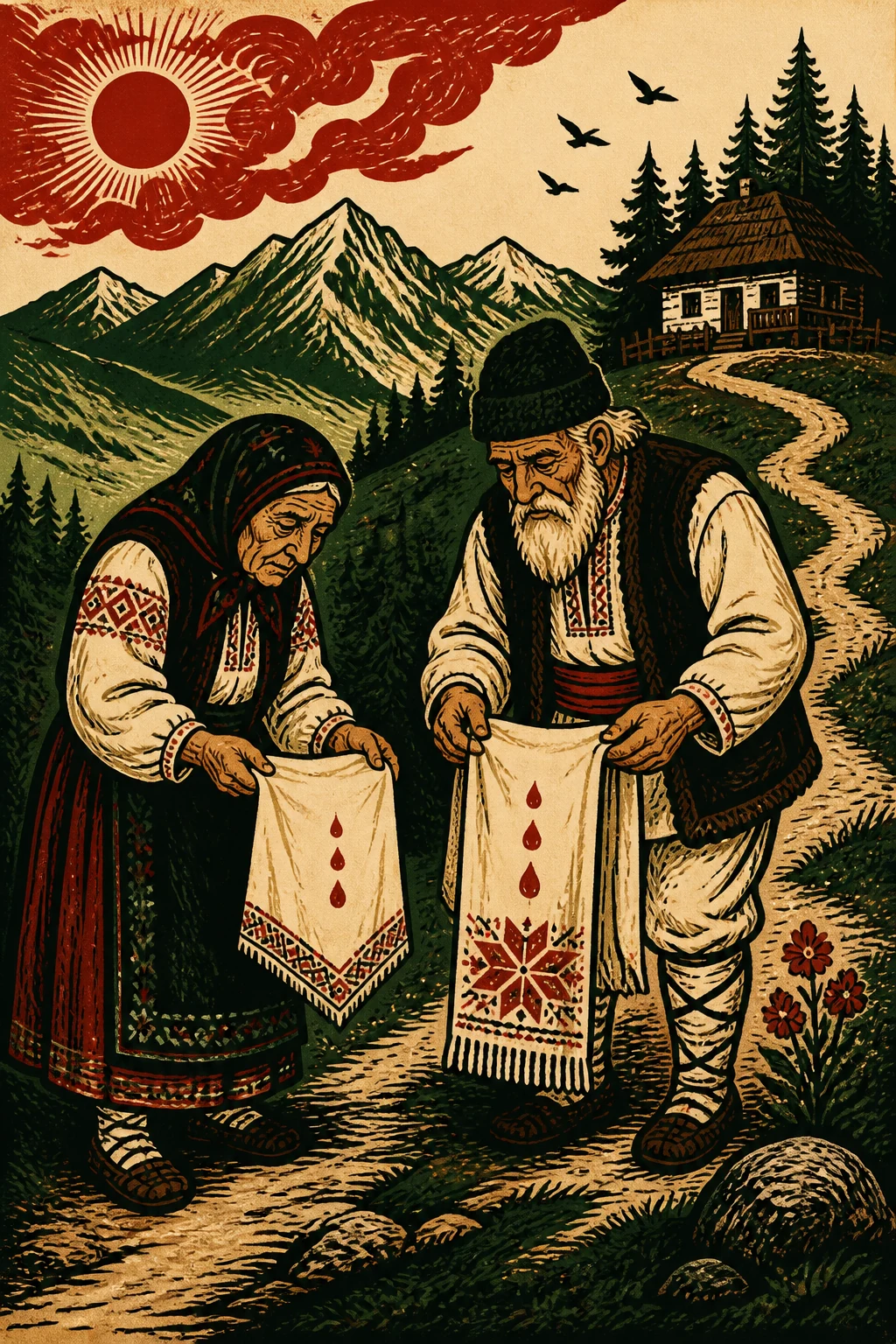
Once upon a time, as never before, and so on. There were once an old woman and an old man. They had reached old age without ever having a child. What had they not tried? What had they left undone, hoping to have even one little child of their own? They went to women who worked charms, to skilled sorcerers, to readers of the stars, but there was still no sign of the old woman falling with child. Now that they were growing old, they began to worry. “What shall we do, wife,” said the old man one day, “if we fall upon days of sickness or hardship? You know I have done everything in my power, yet God has not seen fit to grant us a little child to be the staff of our old age.” “Ah, husband, who is to blame? You know I have gone far and wide, to wise women and healers, and done whatever anyone told me, but to have some comfort in this wretched old age of ours—and a heavy burden it is!—has proved beyond us.” “Come, let us each go a different way, wherever God may guide us, for there is no use in our staying together, two poor souls in want.” “Let us part, husband, if you think it best. But tell me, who will close your eyes at your last hour?” “You are right, wife. Wait, then: take the kerchief I wore on our wedding day, and I shall take the striped towel you brought me as part of your dowry. Let us look at them every day, and when we see three drops of blood upon them, let us return home. That shall be the sign that death has drawn near to one of us.” “So let us do, husband.” No sooner said than done. They made ready for the road and each took a bag over one shoulder. At the bottom of hers the old woman put her husband’s kerchief, while the old man put his wife’s striped towel in his, and one set off eastward and the other westward. For nine days and nine nights they travelled on and on, and on again, asking good folk and bad, great and small, what they might do to have a child. Whatever people told them to try, they answered that they had tried it already, all in vain. They hoped someone might tell them something they did not yet know, but they found no such person. On the tenth day, the old man rose and went outside to wash before setting out once more. When he took up the towel to dry his face, what should he see? Three drops of blood upon it. “I must go home,” he said to himself, “for God knows what may have happened to my old wife.” He hurried off down the road, giving no thought to food or rest, and made his way home again. “What has happened to you, wife?” he asked as soon as he saw his other half. “What should have happened to me, husband? I went on my way, asking here and there, begging everyone to teach me something that might help us have a child. But my questions and pleas were all in vain; I was only wasting my breath. As I went on, I came to a great, vast forest, such as I had never seen, and lost myself in its thick woods until I no longer knew how to find my way back to other folk. Then, all at once, I saw an old man before me, withered with age, forgotten by death and God alike. I told him what I was seeking and how I had lost my way. Old and laden with years as he was, he sat down and talked with me, and in a gentle voice showed me the road home and told me to return, for God had heard our heart’s desire.”
“And was that what the sign on my towel meant?” “It seems it was.” Then they resolved never to part again, but to stay and bear their sorrows together. Not long afterward, the old woman told her husband that she felt herself with child. Oh, if only God could have seen the old man’s joy when he heard such glad news! He bustled to and fro in his delight, no longer knowing what to put his hand to or what to do. So the days passed, one after another, until nine months were up, when, with the help of the Mother of God, the old woman gave birth to a darling, plump little boy, with a book in his hand. On the third evening, when the Fates came, the old man happened to be awake. You see, he could scarcely sleep for joy, and for three days he had not closed his eyes, forever bustling about his wife, nursing her and tending her as she lay abed. So when the Fates arrived, he was not asleep, but sat huddled in a corner, as though he were Mătrăcuca, the lady’s sister. When the Fates began to pronounce their blessings, he was all ears and heard everything. The eldest Fate said, “This child shall be a Făt-Frumos, a handsome hero, and he shall become rich.” The middle one said, “When this child is twelve years old, the evil spirits shall carry him away.” The youngest said, “If he escapes the evil spirits, this child shall become an emperor.” That was all the old man needed to hear for it to feel as though a sharp knife had pierced his heart. You see, he could not reconcile himself to what the second Fate had said. A great dread seized him, and from that very moment he began devising ways to save his little boy from such a calamity and keep the spirits from carrying him away:
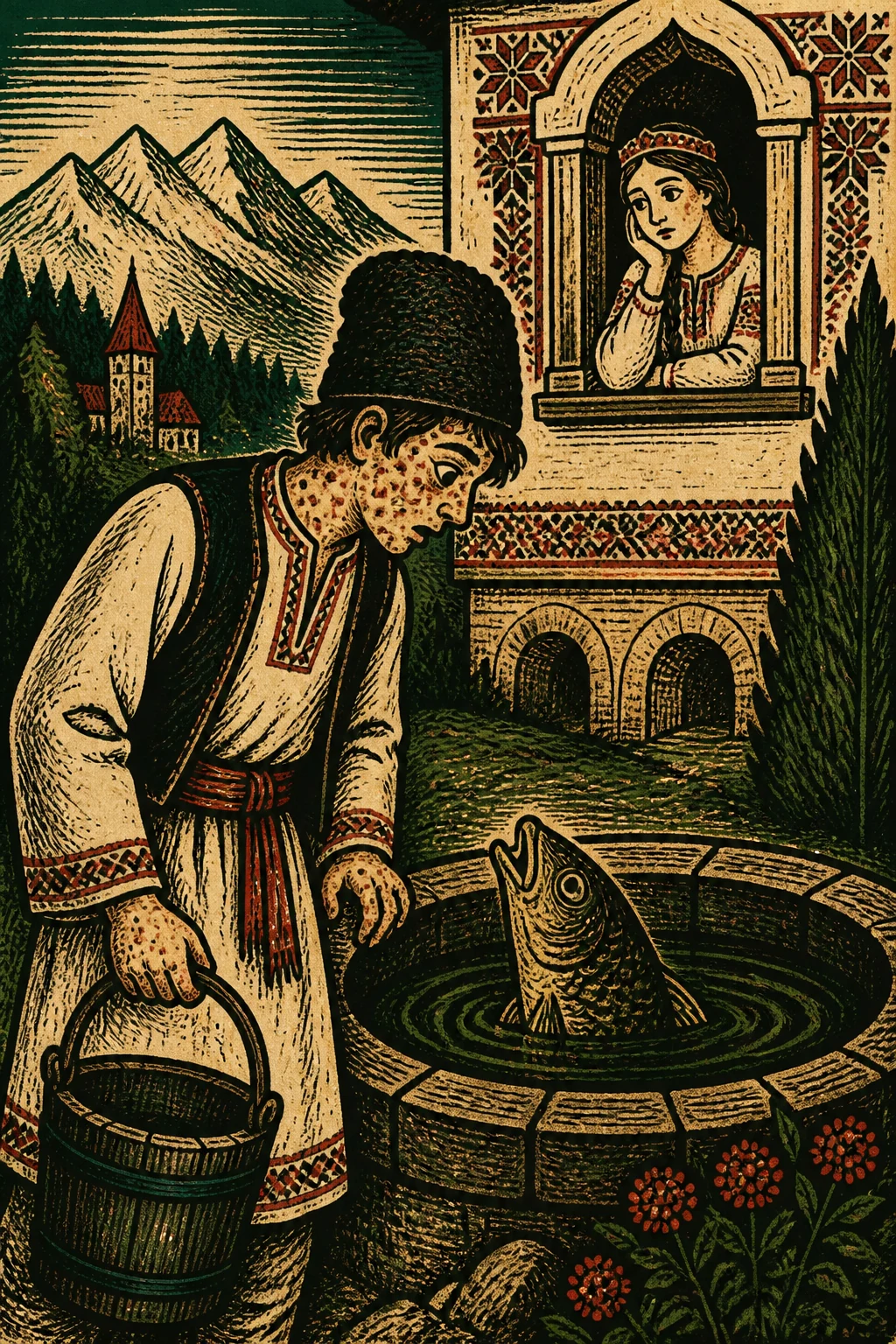
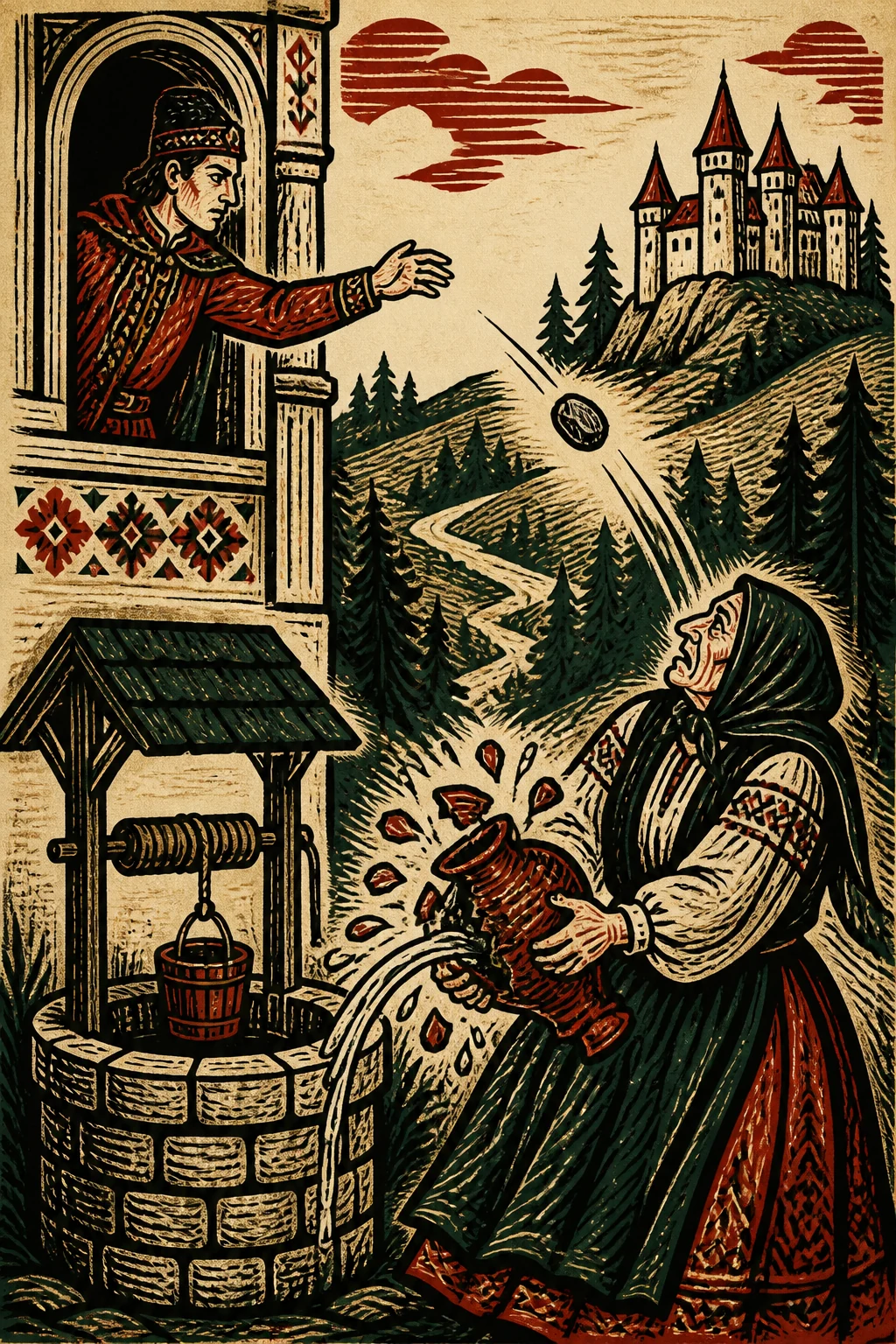
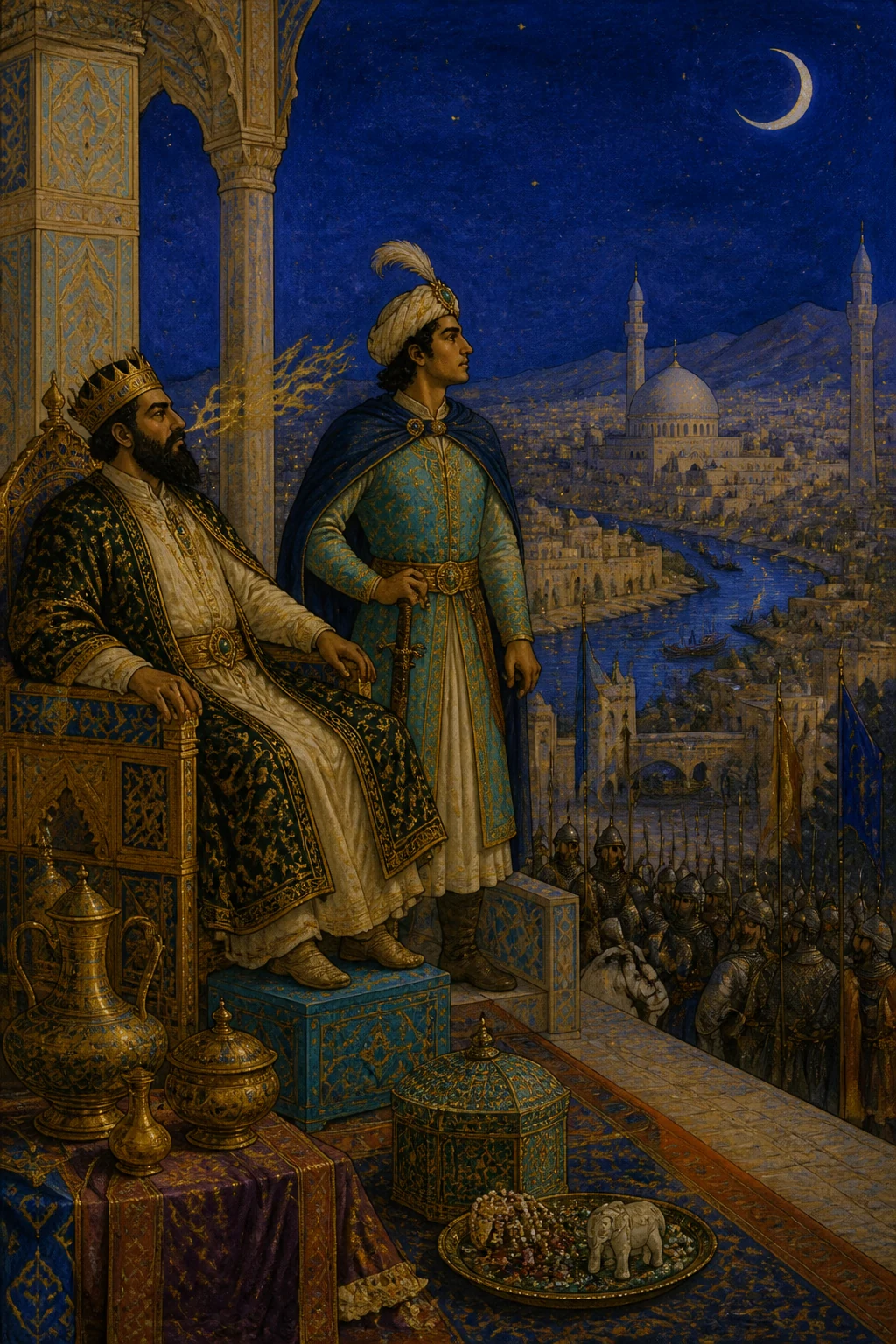
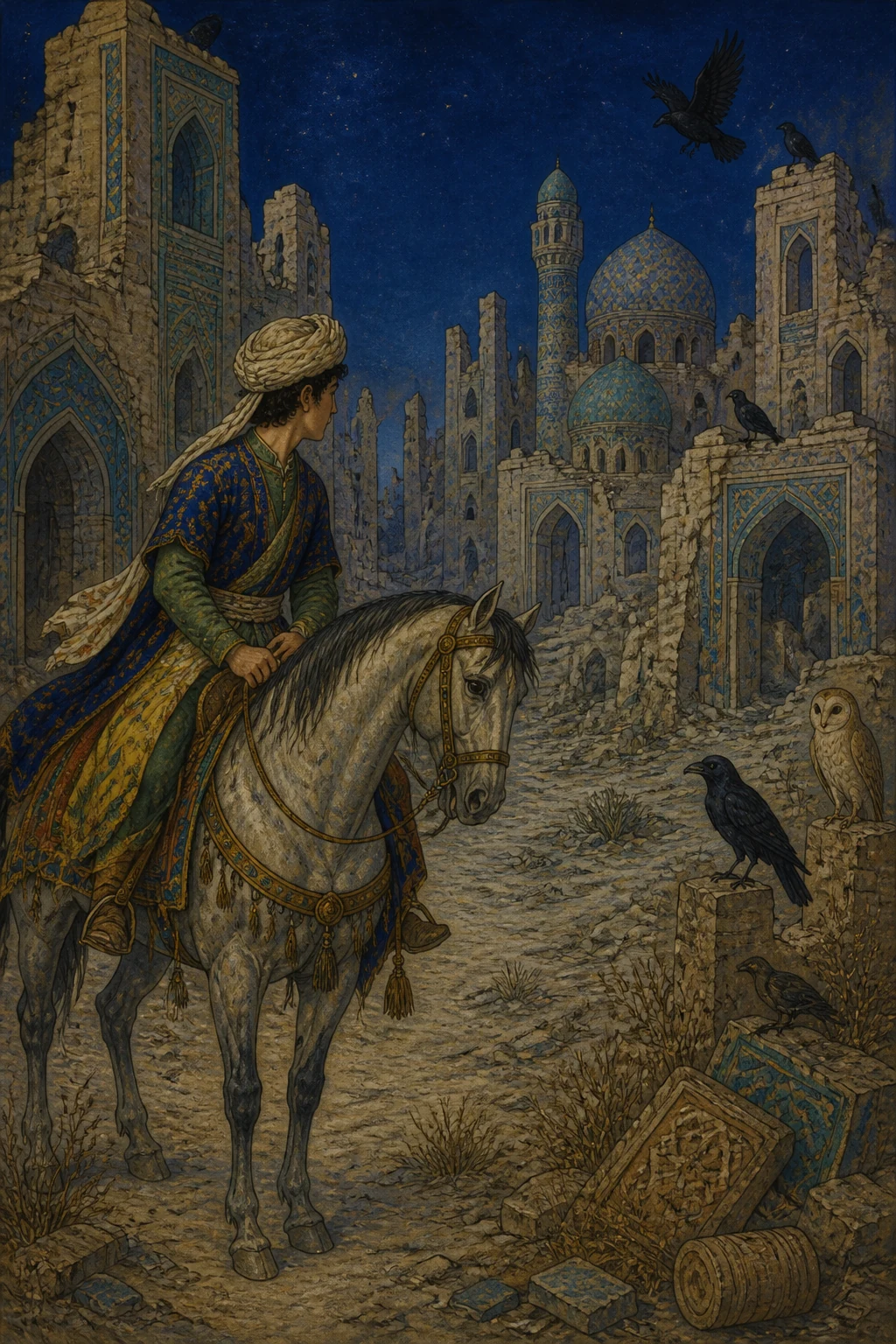
Meanwhile, the child grew, obeyed his parents, and never let go of the book with which he had been born. He read and read, and learned so much that everyone marvelled at his diligence and his knowledge. By the time he was nine, there was nothing he did not know. He had become a living book himself, and all the neighbours came to ask his advice about their troubles. Whether the old man rejoiced in his son or not was hard to say, but the old woman was beside herself with joy to see him so handsome and so accomplished. The old man, you see, had a thorn in his heart; he knew what he knew, but told no one. The older the boy grew, the handsomer and more learned he became. The whole village honoured him and heeded his words as though he were some great personage; but as time went by, the old man grew ever sadder. When the boy was nearly twelve, the old man could contain himself no longer and had to unburden his heart. He thought it best to tell his family what was to happen to their son. And so, one evening, as they all sat by the fire, talking of this and that to pass the time, the old man told them everything he had heard from the Fates. The old woman, the boy’s mother, very nearly died of grief when she heard such tidings; but the old man and his son sprang up, sprinkled her with water, and only with great difficulty brought her round. The boy, meanwhile, fell deep in thought. He pondered and planned until, after a few days, he told his father what he had devised. His father, who listened to his words as though reading a book of wisdom, went through the village and sent word to all the neighbours that on a certain evening, the very evening when his son was to turn twelve, they should gather at the church to pray for the boy and save him from the evil spirits. He spoke to the old priest as well, and every one of them promised to grant his request. And so they did. On the evening when the old man’s son was to turn twelve, all the villagers, men, women, and children, gathered at the church with the old priest to pray. When the old man arrived with his wife and son, the boy still holding his book, the neighbours placed them in their midst, and the prayers began. They prayed and prayed, when all at once they found the church filling with a thick mist. Then they all fell to their knees and offered up such fervent prayers that they would have softened the heart of the wickedest spirit. The mist dispersed, and they were left unharmed. The next evening, while they were praying, at just the same hour, they suddenly found the church full of mice, bats, and owls, which began flitting and scurrying about, climbing over people and nipping them wherever they could. Everyone was frightened, even the old priest himself. Then the boy, his book in his hand, fell to his knees and began to pray with all his heart. The old man, the priest, and all the neighbours in the church did the same. The mice and all those other creatures vanished. On the third evening they gathered again and began their prayers. They prayed and prayed until, towards midnight, the church suddenly began to shake, and terrible cracks and crashes, booms and rumblings like thunder were heard. Once more they fell to their knees, and once more they prayed with all their faith in God. But what should happen, right in the midst of their prayers? A monk came down from the church tower, seized the old man’s son beneath the arms, snatched him from among them, and rose into the air with him. Before the people could make sense of it, the two had vanished from their sight like a phantom. Perhaps he was still up in the tower; perhaps he was behind the church; perhaps he was here, perhaps there. But no: the monk had carried him away, and away he was. Everyone was utterly stunned with fright, and the old man and his wife most of all. Once they had recovered a little from their terror and quiet had returned to the church, the people went out and each returned home. Though the monk had carried him off, the old man’s son would not let go of his book. He kept reading, loudly and steadily; and when he reached the middle of the book, the monk could scarcely hold him any longer. He tried to wrench the book from the boy’s hand, but the boy held it fast. As they struggled in the air over the book, the monk lost his grip, and the old man’s son fell into a deep ravine. God alone knows how long he lay there before he recovered from the stupor into which the fall had plunged him. When he came to himself, the book was still in his hand. He thanked the Lord for delivering him from the evil spirits and keeping him alive; but now he had another trouble: he did not know where he was. He rose and set off. On and on he went, until at last he managed to climb out of the ravine. Then he took whatever road the Lord’s mercy might lead him along. Heading towards the setting sun, he walked and walked from morning until evening, without coming upon a village or seeing a single soul. At last he reached a tree and stayed beneath it for the night. Having neither eaten nor drunk, he could not sleep. As he struggled with hunger, thirst, and weariness, he wondered which way to go to find people. The next day he set off westward again, as he had planned, until he came upon heaps of human skulls and bones. A cold shiver of fear ran through him, and he began reading from his little book, which helped drive away the horror threatening to overwhelm him. Taking his courage in both hands, he went on; but the farther he went, the more numerous the heaps of human bones became. He pretended not to notice them and kept going until he reached a great city of which nothing remained but ruins. Very few walls were still standing. He walked a little farther and came upon a magnificent palace. When he reached it, he knocked at the gate. He meant to ask for something to eat, for he no longer knew how many days he had gone without food, and for leave to sleep there, since it had been so long since he had rested properly. But no one answered. He knocked again. Still not a soul replied. At last he knocked a third time, a little harder. This time a thin, piping voice called from within, “Who is there?” He answered that he was a man like any other, and asked for shelter. When the little gate opened, what do you think he saw? The mere shadow of a man: an old fellow with a beard down to his knees, lean, wizened, and hunched, as though he ate only once a week. He crossed himself at the sight of Făt-Frumos and said that he had not seen a human being since he was a young lad. This old man was the palace gatekeeper, left there to guard it until someone should be found who could break the spell upon that place. Once Făt-Frumos was inside, the old man set a clean table for him and laid upon it bread as white as snow and a dish of vegetables, good to eat though prepared without much art. The boy ate like a wolf, for he himself could no longer remember when he had last eaten. When he had eaten his fill, he began talking to the old man. “Tell me, father, how is it that in all the days I have been travelling I have not met a single living soul in these parts, but only heaps upon heaps of human bones scattered here and there? And here in this palace I find only you with any life left in your bones, while all around it seems like the kingdom of death.” “Ah, my dear boy, the story of this kingdom is a long one. I shall tell you a little of it. You see, my child, this kingdom too was once great and powerful. The emperor and empress of this land had no children. Instead of praying to God to grant them an heir, they took to dabbling in enchantments. They searched far and wide until they found a sorcerer. What he did and how he did it I cannot tell, but sure enough, the empress conceived, and after nine months she bore a daughter more beautiful than any fairy in heaven. She is still alive today. So beautiful is she that, once you have seen her, you could never forget her as long as you lived. When the Fates came on the third day, they decreed that she could not marry until someone was found who could spend a night in her chamber and come out unharmed. It seems God was punishing the child for her parents’ sin. And that was not all: the Fates extended the punishment to the whole kingdom. They said that from the day the first suitor came and failed to escape alive, all the towns and villages would crumble, as you have seen, and all the people would rot away until only their bones remained. This was to frighten young men away from coming to woo her. You see, the sorcerer who enabled the empress to bear a child was punished too, for it is he who comes at night to torment and torture the poor young men who dare remain in the princess’s chamber. Many young men have ventured to make the attempt, and all have perished.” On hearing this, Făt-Frumos told the gatekeeper that he too would like to see the emperor’s daughter. “Put it out of your mind, my dear boy; do not put your soul in jeopardy. Cross yourself and leave this place, lest you lose your life. What a pity it would be, with all your youth before you!” “So be it!” the boy said to himself, thinking of all he had suffered. “What have I to live for, alone in these wildernesses?” And he insisted on being taken to the princess’s chamber. When the gatekeeper saw that there was no way to dissuade him, he took him to the emperor’s daughter. The moment they saw each other, they were drawn to one another. Plainly they had been made for each other. And why should it not have been so? The poor princess would gladly have had the boy remain in her chamber that night, but her heart ached for his youth: how could so fine a young man be allowed to perish? Together with the gatekeeper, she tried once more to persuade him not to stay. But it was no use, for Făt-Frumos was one of those who, once they have made up their minds to do something, cannot be turned from it by the devil himself. And so, when evening came, he went in with his little book in his hand and kept watch. Whatever he did that night, he lived to see daylight. The next morning they found him still holding his book, wan and as yellow as beeswax, as though he had laboured at heaven knows what heavy tasks for heaven knows how many nights, without food or drink. The princess awoke from her sleep, and when she saw him there alive and whole, she said, “You shall be my husband.” Then all at once, as if out of the clear sky, the people in the towns and villages began coming back to life, as did the servants about the palace; everything that had been alive on the day the first suitor came began to stir and rise as though from a deep sleep. People returned to their work, the army began beating drums and blowing trumpets, and came to the imperial court to pay homage and offer its service. Where until then there had been silence and death, now the shouts and bustle of the crowds of people and animals going about their business were deafening. The gatekeeper was bewildered by what he saw. He did not know which way to look or what to marvel at first. Făt-Frumos and the princess came out and showed themselves to the people. The multitude shouted for joy so loudly that their cries reached heaven, and from every mouth came the words, “Long live our emperor and empress!” Once Făt-Frumos had married the princess, he took his seat upon the imperial throne and set the army, the nobles, and the common people in order according to his own understanding. Everyone was pleased with his arrangements. They lived happily together as husband and wife, until one day he remembered his father and mother and grew sad, for he knew nothing of what had become of them. The empress noticed his sadness, and loving him dearly, could not bear to see him downcast even for an instant. She began to question him. When he told her, she urged him to go and bring them back, so that they might all live together in perfect contentment. That was just what Făt-Frumos wished. Yet he could not bear to leave his wife alone. The poor fellow knew well enough what loneliness meant. But as his longing for his parents grew stronger, he resolved to go. Before he left, the empress, his wife, gave him a ring which, she said, had been handed down to her from her ancestors. She told him that it had the power, whenever he took it from his finger, looked at it, and made a wish, to raise a palace whose like could not be found anywhere in the world. She also gave him the palace coachman, an old, faithful servant, swift to do his duty, who was not to leave his master’s side for so much as the time it takes to strike a spark. Thus supplied and ready for the road, he set out for the village where his parents lived, after taking leave of the empress, the nobles, and the soldiers. His route led through the realm of Emperor Sefer, through the land of the fairies, and God knows where else. His journey lasted three years, three months, and three days before he reached his parents’ village. As he passed through Emperor Sefer’s realm, the officers of the court welcomed him and sent him on his way with affection. And as he passed through the land of the fairies, they vied with one another to show him honour and escort him on his journey. When he reached his parents’ village, he drew up his coach before their humble hut. His father and mother did not recognise him. Seeing this, he asked them to give him lodging. The old people welcomed him, begging his pardon that they could offer him no more than they had, which was their poor hut. He agreed and stayed there. During the night he rose and slipped quietly outside. Looking at the ring, he wished for a splendid palace to stand in place of that hut. Scarcely had he finished the thought when a magnificent palace rose before him, adorned with every beauty, with splendid gardens and clear springs, so lovely that you could have gazed at them for ever without having your fill. And as for the inside—ah, that was something indeed! The chambers, the benches, the bedding: nothing but the costliest things. When the old man and his wife awoke the next morning and found themselves surrounded by gold, they were frightened. They rubbed their eyes and looked all around, scarcely able to believe what they saw. They thought they must be dreaming. Then Făt-Frumos came in, roused them from their bewilderment, and made himself known, telling them that he was their son who had been carried away, and that he had become an emperor. When they heard this, the old man and his wife all but died and came to life again for joy. They embraced him and kissed him on either cheek, while he kissed their hands. Word soon spread through the village that the old man and his wife had become rich beyond belief, and people came flocking to see the wonder with their own eyes. When the news reached the lord of the estate, he too went to see the palace and was left staring. This man was envious and evil-hearted. He could not bear, you see, to be outdone by anyone, whether in wealth or worldly success. So he went there to see the wonder for himself, and when he saw Făt-Frumos, he would dearly have liked him for a son-in-law, for he had three daughters. He invited Făt-Frumos to visit his own house, so that they might become friends. Făt-Frumos, pure-hearted and suspecting no harm, went out of politeness. Once he was there, the lord of the estate brought up the subject of marriage and said he would gladly give him whichever of his daughters he wished to take. Făt-Frumos told them plainly that he was already married and meant to return to his wife before long. Indeed, when they asked him, he even told them by what power he had raised that beautiful palace. The envious lord of the estate then plotted with his daughters how they might steal the ring from Făt-Frumos’s finger. A few days later, they invited him to dine with them, so that they might make merry and enjoy one another’s company; for, as they said, who knew whether they would ever meet again? Făt-Frumos, never dreaming of their plot, went. After they had feasted and drunk to their hearts’ content, just as they were about to rise from the table, the spiteful landowner called for one more glass apiece—a stirrup cup, as the saying goes. Into the glass he gave Făt-Frumos he secretly mixed some sleep-inducing herbs. No sooner had he drunk it than the devil had him. He fell into a stupor akin to death. His head lolled from side to side as though his neck were broken. They lifted him gently and laid him in a bed, where he remained until the following day. While he slept soundly, they slipped the ring from his finger and hid it. When Făt-Frumos awoke the next morning, he was ashamed of what he had done. He reproached himself bitterly for having behaved as he had never behaved in his life before, drinking away his very senses. He thought, you see, that he had drunk like a wretch, and that was why he had become so drunk. As soon as he awoke, he went home, without noticing that the ring was missing from his finger. But when he reached home, where was the palace? Nowhere to be found. It had vanished as though it had never existed, and in its place stood his parents’ hut once more. He reproached himself again for his foolishness, but now, as the saying goes, he might as well have tried to pluck out a blind man’s eyes. So he resolved to return to his own kingdom and have no more dealings with such evil-hearted people. He urged his parents to come with him and live as though in paradise. But they were content to let their bones remain in the little corner of the world where they had been born, and wished their son a good life, free of devilish troubles. Poor Făt-Frumos, saddened by the loss of his ring and saddened that his parents would not come to live with him, sat with his head resting on his hand, wondering how he might make everything turn out well. All at once the coachman the empress had given him appeared before him. “What troubles you, master, that you are so sad and cannot be comforted? Have you perhaps received bad news from the kingdom?” “No bad news has come from the kingdom, my good fellow. But this and this and this has happened to me.” And he told him everything from beginning to end. “Come now, master, do not grieve so much over such a trifle.” “What are you saying, man? A trifle? Do you call it a trifle that I have lost the ring, so precious a treasure? And do you think it a small matter for me to part from my parents without any hope of seeing them again?” “No, master; but let us understand one another. If Your Majesty’s parents do not wish to come and live beside you, you can still make their lives comfortable here by leaving them a handsome sum of money, of which, thank the Lord, you have plenty. As for the ring, our lady the empress took care of that too. When we left, she gave me this ring, with strict orders to hand it to you only when I saw that sorrow was about to overcome you. And now, it seems to me, the time has come. Here it is!” At once he drew from his breast a ring like the one Făt-Frumos had lost and handed it to him, adding that this ring had the power, whenever he looked at it and wished, to summon two black men before him, who would carry out whatever he commanded. Just then the very lord of the estate who had caused all the trouble happened to be passing, going about his business in a carriage drawn by four fine horses. As soon as Făt-Frumos took the ring in his hand, he looked at it and wished for the two black men to appear. Instantly there stood before him two men as black as the bottom of a cauldron, nimble and swift as leopards. “What is your command, master?” they asked. “Seize that fine gentleman passing in his carriage, and do not let him go until he produces the ring he treacherously slipped from my finger.” He had realised, you see, that there had been something unclean about his drunkenness that day; but as he had not known what to do about it, he had held his tongue. And off those two went, my friend, like dragons, like raging lions, so swiftly that you could not have caught them with a slingstone. In an instant they were there: one seized the horses by the reins and brought them to a dead stop, while the other caught the envious lord of the estate by the chest and, in the twinkling of an eye, hauled him down to the ground.
And how they began to twist his arms and pummel him, until you could not help pitying him! When the Moors demanded the ring, he denied having it, like the scoundrel he was. The devil had taken possession of his heart and would not let him bring the ring to light for anything. But do you think the Moors let him off so easily? Not a bit of it. They set about him afresh. He passed from one pair of hands to another like a ball. They battered and tormented him until you would have thought he must perish in their hands, yet still he would not breathe a word. When the Moors saw that he had set his mind against giving up the ring, they laid him on the ground. One held him down while another drew a knife from his belt, sharpened it on his boot, and made as if to skin him alive. Seeing that this was no jest, and that his life hung by a thread, he confessed, to save himself from death, that the ring was in his keeping. He took it out and handed it to the Moors. His men, the coachman and the hired hand, would have liked to leap to their master’s rescue. But who could get near them? The Moors had only to give them a shove, and they went head over heels, scarcely able to get up again. Făt-Frumos watched, swelling with satisfaction to see the wretched miser getting the thrashing he deserved. Făt-Frumos slipped the ring onto his finger beside the other and resolved to return to his own kingdom. He gave his parents some three purses of gold, for they would not go with him, made ready for the journey, climbed into his carriage, and set off. But their parting! Even the wood and stones might have wept at the grief of the old man and his wife. For they understood that they would never see one another again. Perhaps in heaven, but here on earth, certainly not. And Făt-Frumos travelled on and on, along a long and distant road—for what lies ahead makes the tale finer still—until he reached a lovely glade, with a little stream running along its edge. There he chose to rest. And a fine spot he had found, for it was so beautiful that you could scarcely bear to leave it. But that vermin of an estate owner had set his heart on having Făt-Frumos’s ring for himself, and nothing else would satisfy him. He followed him, thinking that by cunning, guile, and pretence he might deceive Făt-Frumos and leave him empty-handed. When he saw that Făt-Frumos meant to rest, he too stopped a little way off, behind a thicket, and waited for him to fall asleep. Făt-Frumos, never dreaming of such villainy, spread some costly rugs he had with him upon the grass, sat down on them, ate, and lay down to sleep. His faithful coachman kept watch for a good while; but when he saw that not so much as a ripple stirred upon the water, and being weary himself from the journey, he too laid down his head and was soon overcome by sleep. When the fellow saw that both were fast asleep, he came out of the bushes and, softly, softly, like a cat stalking mice, crept up to Făt-Frumos, slipped the rings from his finger, and made off. When Făt-Frumos awoke and found his rings missing, he thought the coachman must have taken them for safekeeping, lest he lose them in his sleep, and asked him about them. The coachman answered that, heaven forbid, he had done no such thing. Then Făt-Frumos understood that some thief had stolen them, and he was bitterly distressed. In this unhappy state he ordered the horses harnessed to the carriage and set off. He had no idea who could have taken the rings, nor anyone he could call to account for them. As he travelled on, fretting and grieving, he wondered what he would tell the empress when she asked him about the rings. For he could not bear the thought of anyone taking him for a useless, blundering sleepyhead. Just as his regret was tormenting him more fiercely than ever, they were passing through a great, dense forest. Suddenly he heard some marvellous fiddlers playing as though they were eating fire, and drawing nearer all the while. Before long the musicians came past his carriage and, still playing, bade Făt-Frumos good day. He returned their greeting and began to question them. “Well now, my good fellows, where have you come from, and where are you going?” The fiddlers answered, “We are going to play at your empress’s wedding.” “What do you mean, play at my empress’s wedding?” asked Făt-Frumos, his heart leaping with fear. “Well, you see, a neighbouring emperor, finding that you had been gone so long without returning, marched upon your kingdom with an army, to force the empress to marry his son. The empress resisted stoutly, and twice the armies met in battle, and twice that emperor was victorious. In the end, the empress gave up hope that you would ever return. And rather than see the towns and villages laid waste, and so many soldiers perish, she consented to the emperor’s demand. The wedding is tomorrow.” “How can such a thing be?” “It can be, and it is. But since you are on your way home, if you wish to arrive before the wedding, let the carriage follow and come along with us.” Făt-Frumos did not wait to be told twice. He climbed down from the carriage and set off with the fiddlers. One of them took him on his back, gathered himself, and sprang straight into the high heavens, travelling like a whirlwind. He would have gone as swiftly as thought, but feared that Făt-Frumos might burst with fright. All at once Făt-Frumos began to shout, “Stop, fellow! Let me fetch my cap—it has fallen off my head!” “What is this talk of stopping? Let the wretched cap be! By now it is a six-month journey on foot from here to the place where it fell.” They travelled on a little farther, then came down at the steps of his own palace. As soon as he arrived, the empress, all the nobles, and the whole army came out to meet him. When they had exchanged greetings and welcomed him home, they told him how the neighbouring emperor had risen against them, how his army had twice defeated the army of their kingdom, and how they were preparing for a third battle. Then the empress told him that she had contrived the business with the fiddlers to bring him home more quickly, and that she knew how he had lost the rings and all that had befallen him. While they were still speaking, a messenger appeared before them and handed the rings in question to the empress, and to the emperor the cap that had fallen from his head. She told him that two of the fiddlers he had seen in the forest had been given orders: one to bring him home, the other to fetch the rings. The emperor was overjoyed, yet deeply angered that their neighbour should have dared to make war upon his empress. When the people heard that Făt-Frumos had returned, they came flocking to enlist. Young and old rose up, and he gathered an army as countless as the leaves and blades of grass. Făt-Frumos put them in order and taught them how to go into battle. The people obeyed him and loved him dearly. And the nobles? They were not to be outdone. For he was just, merciful, and brave. Marching to war with so great and terrible a force, he overran the kingdom of their insolent neighbour. In battle he captured the enemy emperor together with his son and brought them before the empress. Then, extending his rule over that kingdom too, and setting everything in order so that his subjects might live happily, he settled down to enjoy life. And they lived out their days, troubled by no one. And I mounted a saddle, and so on.
Izvirnik
009 Voinicul cel cu cartea în mână născut
Naslednje strani prikazujejo izvirno besedilo za primerjavo.
fost o data ca nici odata, etc. A. fost o data o baba si unit unchiasti. Ei pana la vremea de b6tranete nu avura nici unit copil. Ce nu facurd ? Ce nu dresera ? Si ca sa aiha si el macaril o miarta de conici catu. Ba mersera pe la descantatorese, ba pe la mesteri vrajitori, ba- pe la cititori de stele, si ca sä remae baba grea, nici gandil n'avea. Ajunsi la vreme de betranete incepura a se Ingrijura. Ce ne facemii nol, babo, 4ise intr'o di unchiasulil, de vomit ajunge niscal-va chile de neputinla on de nevoe. Tu sell ca amti facutil totil ce mi-a statil prin putinfa, si ca sa ne dea Dumnecleti si noua unit' copilasti, care sa fie toiag,ulti betranefelor nostre, nu s'a indurattl. De 1 Unchiasti, tine e de vial? Tu scil ca amil umblatil si crucisti, si cur meclisii Fe la mesterese, pe la vraci, am facutil ce m'ati invetali unil si altii, si ca sa avernii si not o mangaere pentru pardalnicele de betranete, ca grele mai sunt 1 a fostil peste pote. Ia, sa apucam not doff in cloud parri, sa ne du cemil uncle ne-o lumina Dumne;leil, caci toll de giaba starnil not la unit loch amandoul, dou6 nevoi. SA ne despartimil, unchia.sti, data tu asa gasesci de cuviinta. Dud bine, tine sa inchida ocbii in cesulil cell de pe urma ? CA bine clici tu, Babo ; staff dard ; is sa el tu basmaoa mea care unit avut-o in cliva de cununie, si eu stergarul cell vargeteli1 ce mi-al adusil de zestre. In tote ;Hide sa ne uitam pal, tote d7
la densele; si cand vomit vedea pe ele cite trei picaturi de singe, sa ne intercemit acasa. Acesta sa fie semnulii ca men.tea s'a apropiat de unulti din not Asa sa facemti, unchiasti. Cum clisera si facura. Se gatird de drumit, is1 luara fie-care desagula d'a umeri, in care baba puse pe fundil basmaoa barbatului ei, era uuchiasulti stergarul eel vergatel at neveste-sei, si apucara unulit spre rasarite era altulfi spre apusil. Noa dile si nod nopti, se dusera, se dusera, si era se dusera, intrebara si pe bunti si pe reit, pe mare si pe micit , ce aril face el ca sa peota avea unit copil. Cea ce le spusera sa faca ei, resptinsera ci au tot facutil, dara in desertti. Ei cdutati sa le spue cine-va alt -ceva ce nu sciati el, dara nu-si gasira °multi. A decea di sculandu-se uuchiasulu, esi afard sa se spele, ca sa pornesca la drumit mal departe Cand lua stergarul sa se sterga pe ochi, ce sa vada ? Trel picaturi de singe pe densul. Elu isi disc : Trebue sa me intorcil acasa, cad Dumnedeti scie ce va fi ARit baba mea. Intinse unchiasulfi la drumit. Nu mai cauta nici de mancare, nici de odihnd, si se intorse acasa, cum plecase. Ce ti s'a intamplattl, babo dise &A, cum isi vedu jumatatea. Ce sa mi se intemple unchiasti ? Eaca eit imi cautamil de tale, si intrebamil in drepta si in stanga, ru-andu-me de toll sa me Inv* ce-va ca se putem avea unit copilii. Dara intrebdrile si rugaciunile mele le fa'ceamti in secil, cad imi receamil gura de surda. Si tot mergend inainte am ajuns intr'o padure mare, mare, fara semanil si m'am ratacitti prin bungetuld acelei paduri, de nu mai sciamti pe unde sa esti la omenl. Cand, odata vedil inaintea mea unit mose, fleosti de be_ uitat de merle si de Dumnedel Ed i i spuiit dupa ce umblu si cum m'am ratacitii. Mosul, incarcatu de dile cum era, se pune josii,sta de vorba cu mine si cu unit graiii, blajinu, imi aratil drumulti pe unde sa esti, acasa, si imi dice sa me intorcil; cad ravna rostra a ascultat'o Dumnedeti.
$i asta a fostil semnulti de pe ctergarulu mat ? Se vede ca asta. Atunci Yi el se hotarird ca sa nu se mai desparta, si sa remde iLdnance amarulii impreund. Nu trecu multu dupa asta, §i baba spuse unchiaplui ca se simte IngrecatA. Aoleo ! Unde era Dumnedeti sA vadd bucuria unchiapilui cand audi d'o asemenea veste bung ! Umbla de colo pAnd cold, de bucurie, si nu mai scia pe ce sA pue mana si ce sa facd. $i asa trecura chide ima dupa alta pind la nod Wig, cand baba, cu ajutorulii maicii Domnului, ndscu unit dolofanil de copilii, de drdv,ulelti, si cu o carte in maul A treia sera cand venird ursitorele, se intampld ca unchinulti sd fie deteptil. Pe densulil, vedi, mai prindea somnulti de bucurie, si de trei eiile nu-I mai dase ochii in gene, tote umblandit pe langa baba ca s'o ingrijesofi si s'o caute la bold. D'aia §i cand ventra ursitorele, elti nu dormea, ci sta starcitit inteunti coltt, ca cand aril ft fostil Matracuca, sora dOmnei. Gaud incepura ursitorele sa ursesca, elit se fAcu numai urechi, si audi tote. Cea mai mare din ursitOre, dise : eAcestil copilii are sa fie unit Fetit-frumosil, §i are sa ajunga bogatti.D Cea mijlocie dise : 1113e acestil copilil, cand va fi elil de doi-spre-dece ani, are rApescd duhurile rele.» Cea mica dise «Dad va scapa de duhurile rele, acestil copal are sä ajunga imperatil,D Atita ii trebui unchiaplui sa audd, ca sa -1 dea un cutitit ascutitil prin inima. Elil, vecli, nu se impaca cu ceea ce disese ursitorea d'a doa. 0 grije mare ilt coprinse, si de pe acum chiar, incepu a planui cum sa Ned s6-0 scape copilasulii de unit asemenea reit. sail nu-lii .i saga :
Ping una, alta, copilulti crescea, asculta pe paring si cartea cu care se nascuse din main! n'o lasa. Cetea, cetea mered pe densa si inveta, de se mira tots lumea de silinta si invetatura densului. Cand se fdcu ca de nod an!, scia sate in lung. si in sore- Eld insusi ajunsese sa fie o carte, si tog megiasil venead la densulti intrehaft despre pasurile lord. Unchiasuld se bucura nu se bucura de fiiuld set', dar baba scid ca nu mai putea de bucurie, veclendu-ld si frumosii, si cu atata procopsela Inteensuld. Uuchiasuld, ved.i, era cu euiuld la inima ; scia eld ce scia dara la nimeni nu spunea. Bdiatulti de ce crescea, d'aia se facea mai frumosil si ma! invdtatd. Totti satuld ild cinstea si ild asculta ca pe tine scie tine; era unchiasuld, de ce trecea timpuld, d'aia se Intrista. Cand era aprope de a iplini baiatuld do!-spre-dece an!, nu mai putu unchiasulti sa lie, trebui sa resale. Elu gasi de cuviinta sä spue si alorti sel, ceea ce era sa se intample fiului lord. i ast-feld intr'o sera cand stall cu tofil la foci'_ si povestead si vercli si uscate, ca sä le treed timpuld, unchiasuld se apuca de spuse tad ce audise de la ursitOre. P'aci, p'aci era sä mOra baba, mama bdiatului, de intri, stare, cand aucli unele ca acele; sarira 'Lisa unchia.suld si fluid sed, o sdropira cu apd, qi d'abia, d'abia o mai inviorard. lard bdiatuld se puse pe ganduri. i mai planui elu, ce planui, pinti ce, dupa cite -va spune tatalui seu ceea-ce isvodise elti sa fata. Tata-seti carele asculta la gura lui ca la o carte, se duse numai de prin satil si dete gura la tog megiasii cif in sera cutare, si cutare adeca cand era sa implinesca fiti-sed spre-clece am, el sa se adune toti cu totuld la biserica, ca sa faca rugaciune pentru fluid s6d, spre a-lii scapa de duhurile cele rele. Vorbi si cu mos popa ; .si tog cu totuld se fagAduira ca va implini cererea nnchiasului. Si asa si facura. In sera aceea, clad era bdiatuld unchiasului sa inplinesca doi-spre-4ece an!, toli omenii din satd, barbati, femei si coimpreund cu mos popa, se adunard 13 biserica pentru mil eatti cloy! pil, dile,
rugaciune. Si viindil mophl cu baba si cu fiulii loru, tote cu cartea in mans, meginii ii bAgara la mijlocil, si rugAeiunile incepura. Se rugara, ce se rugara, cand, de o data se pomenira ca se umple biserica de o ceta grOsa. Atunci cAdura cu totii in genuche scosera nisce rugaciuni ferbing, de aril fi muiatu inima nu sell carul dubil reu. Cep, se risipi si ei r5masera Wert'. A doua sera, cand eraii la rugaciune, tofu pe acea vreme, unde se pomenira ca se umple biserica de sorecl, de Mini, si de bufnite, §i incepura a thitai, de colo pins colo prin biserica, a se sui pe omeni si a-I ciupi de pe unde apuca. Tort se speriarA, pinA §i chiar mogt popa. Atunci baiatulil cu cartea in mans, caclu in genucbi, si incepu a se ruga cu focil. X'a facura si unchiaul si MO§Lla popa, si toff megiasii care se aflail in biserica. Siorecii si Lite acelea perird. A treia sera dacA se adtmara, qi se pusera la ruga, se nugara, se rugard, pins ce catre miedulu noptii °data incepu a se cutremura biserica si se aucjird nisce pocnete si tunete, bubuituri si duduituri_ ingrozitOre, ca de tunetil. Cadurasi de astil data in genuchi, se rugard si de asta data cu iota credinta in dumnecleii. rug, ce sa vedeti D-vOstra tocrnai in toiulil rugaciunei, unde se cobori unil calugaril din turnulii bisericii, apuca pe baiatulil unchiacului de subtiori, flu rapesce din mijloculii lora §i se inalta cu densulii in sus. N'a- }award omenil sa bage de sema, si perird din ochii for ca o nalucA. Ba ca o fi ramasil prin turnu, ba ca o fi pe dupa biseric5, ha ea o fi pe col°, ba pe dincolo. s'a dus cu ealugaruhl rApise, si dusil a fostil. Tote remasera ca cacluti din ceril de spaim5, dar unchia- .Nlil §i baba, mai cu asupra. Dupe ce se mai astimparara din spaimA, si dupa ce biserica se linicti, omenii eird si se duse fie-care intr'ale sale. Ffulil unchiaplui, de si rapitu de calug,arii, dara cartea din mans n'o lasa. Citea mereil si in gnra mare ; iara cand fu de ajunse pe la mijloculit cartii, calugarulil nu-lit mai si unchiasului, Bahianele. Atli Eli ce-la
putea tine. Vru sa-i smucesca cartea din mina ; dara baiatui o tinea vertosii. Luptendu-se cu baiatulti prin vasduhu ca sa-1 is cartea, calugarulti ilu scapa, si final unchiasului cadu intr'o prapastie adanca. Dumne;leii scie cat a ramasti elu acolo, pins' s'a desmetieau din ametela ce-1 veni caclendii. Cand se pomeni, ele era tori cu cartea in !Dana. Multumi Domnului ca l'a scosil din mana duhurilolii rele si ca este viii ; dara altii necaza acumti I nu scia unde se afla. Se sc6la elu d'acolo, si o pornesce la drumil Si aide, si aide 'Ana ce d'abia esi din prapastie. Apoi o lua intr'acolo unde mila Domnului l'o duce. Si apucandil spre sore scapata, se duse, se duse, Ii de vara pan& 'n sera, fait sa dea de vr'un sate si fard sa vacla puiti de omit; si mai mergendii ce mai merse, dete de unit copaciit si mase acolo. Nemancat si neboutil nu putea sa dOrma Si luptandu-se cu femea, cu setea si cu nesomnulit, se socotea unde s'aril duce, Ca sa ask la lume. A doua cli o apnea 6rasi spre sore scapata, dupa cum planuia elu, pana ce dete reste nisce gramecji de capetani si ose de Omen!. Si apucandu-lit nisce racori reel de fried, incepu a citi pe carticica lui, si inlatura Ore cumit groza ce sta gata coprincla. t i lua deci inima in dint! si porni inainte ; de ce mergea mai nainte, d'aceia grameclile de ose de omit se inmulteal Eli' se Wu ca nu le baga de semi, si totit innainte mergea, pins ce ajunse la unit °rash mare, din care numai daramaturi ramasese. Prea putine ziduri mai erait in piciere. Si mai merse ce mai merse, si dete de nisce palaturi forte frurnose. Acolo dacti ajunse, batu in pOrta. Eta cugeta sa cent ceva de mancare, ca nu mancase nu scia de cite chile, si sa-16 lase sa mae acolo, ca era vreme de cand nu se odihnise ca lumea. Dart nu-i respunse nimeni. Ma! batu o data. Dard ca sa respuncla tine -va, ba. In sfarsit0 bate si a treia art ; dart nitelit mai taricelti De asta data se aucli un glas pitigaiatti din launtru intreba : tine este ? a-lit sa -id
Elu respunse ca este omit ca tots omenii, si cere sa-1> 1 gasduiasca. Daca II deschise portita, ce credeti ca mi-ti vedu ? 0 umbra de omit, unit betranii cu barba pans la genucbi, slabii ci pipirnicitti si cocqattl, de parca manca numai vinerea. Elu se cruci cand vedu pe Fet-frumosii, §i-T spuse ca n'a vedutii omit de cand era copilandru. Acestil betrarul era portarulii -curtil lasatit acolo sa pazesca palatulil pina s'o gasi cine-va care se desfaca facutulti locului aceluia. Daca intra Fet-frumosiiinnauntru, befranuld II puse o masa curata, si pe masa nisce pine alba ca zapada si nisce leguma lima de mancare, insa gatita gra multe mqtqugiri. Baiatul, inibuca lupesce, caci nici elu nu mai scia de cand nu mancase. Dupa ce manca, si se satura, se puse la vorba cu Bine, tatutule, ca ce sa fie asta de n'amii intalnitu eft, tale de atatea dile de cand viu, nici unit sufietehl de omit p'aici pe la voi, faro numai gramedi, gramedl de Ose de 6meni, risipite colea si colea ? S'apoi §i aid la palaturile acestea, numai pe tine to gasescil cu sufletulii in ose, incolo par'ca ar0 fi in imperatia mortii ? El, tatiprule, povestea imparetiei acesteea este mare. Eu spune o catinica din ea. Sit vedi dumneta nepotelu acesta imperatie a fostil §i ea °data mare si puter- -nica. Imparatulu si imperatesa locului n'aveail copii. Ei, in locci sa se roge lui Dumnedeu ca sa le dea unit mostenitora, sä apucara all umble cu farmece. Umblara el', ce umblara, si Bete peste unii fermecatora Acesta ntr sciit ce facu, nu scitl ce drese, ca numai eta ca imperatesa remane grea, §i dupa noa luni nascu ua fag mai frumesa de catil nu sciii care dins din cerii. Ea traesce §i acumil. Este atatti de frumosa, in catft s'o vedi sa n'o uiti in Vita viata ta. La ire zile candii venira ursitorele, o ursira ca ea sa nu se pole marita pina ce nu se va gasi cine-va eare sa petreca o nopte in camara el, si sa scape teferil. Pasa-mi-te si unchiasulfi. mosului, mesterit. si Ii-oid
Dumneden pedepsea pe copilu, pentru pecatuln parintilor_ Nu numai gnu, dark ursitorele intinse pedepsa acesia si asupra imperatiei. Ele clise ca din diva cand va veni celit dintaiu petitorn si nu va isbuti sa scape, tote orasele si tote satele sa se darime precum vedutil i tu, si toti ornenii sä putreclesca, sa le ramae numai Osele. Acosta ca sa ingroclesca pe juni, ca sa nu vie in petitil. Vedi D-ta, si termecatorulii acela care a facutii pe imp6ratesa sa nasca, fu pedepsitil, cad lui este care vine nOptea de muncnsce si chinuesce pe bietif tineri, carii se incumetii a remanea In camara domnitei. Multi tineri s'ail incumesil pina acumii a face cercare, si toti ail peritii. Audindti unele ca acestea Fetil-frumosii, clise portarului, ca aru dori sa vada si eln pe fata de imperatii. Fugi d'acolo, tatisorule, nu -ti mai bags sufletuln in pecatti. Fag truce si to departe7a de locurile acestea, ca sa nu-ti perdi viata. Pecatii de tineretile tale. Fie ! isi dise baiatubl, gandindu-se la cele ce patise ping acumii, tutu n'am eu la ce mai trai singurii prin pustietatile acestea, si stgrui ca duck in camara domnitei. Portarulii daca vedu ca nu este chip sa-Iii opresca de a merge, ilu duse la fata imperatului. El, cum se vedura se placura. Se vede ca ei erail &cup unulii pentru altulu. Si de unde sa nu fie asa I Biata fata imperatulni aru fi doritu sa remae In noptea a ceea baiatulii in camara el ; dark ii era mils de tineretile lui, emu de sa se prapadesca o asa bunatate de june. Si impreuna cu portarulil mai cercard Inca °data fad a nu remanea. Dark fu peste 'Ate ; cAci F6til-frumosik era de aceia cari, candu Isi pune fu &add sa faca ce-va, nici draculii nu i-o scOte din capii. Si a.sa, cum veni sera, elu se duse cu carticica lui in mans, si statu in priveghere. Ce ram elii, ce nu facu, ca veclu AIWA' Pei. A doa di flu gasira totu cu cartea in mang, si serbedii, si galbenii ca turta de cell, de pare ca muncise Umbra sä-lii le-al sa-lit
cine scie la ce lucruri grele, si tine scie eke nopti, nen3ancatti si nebeutit Se destepta si fata de unde dormea ea, si cum flu veclu 1n came si in ose, ii ciise : to sa sotulit meti. Atunci odata, ca din seninti, incepura a invia omen' de prin orase 0 de prin sate, slugile de prin curie, si tote cate erati cu sufletti in clioa cand veni celti intaiii petitoril, incepu sä misce si sa se scale ca dintr'unti &amnia adancti. Oamenii Incepura in -lucrulti lorf, ostirea a da in timpinesi in surle, si a veni la curtea imOratesca sa se inchine cu slujba. De unde pinti aci era Were, morte ; acumii to 4surcjeati strigatele si sgomotulti ce facea multimea de omeni si de erg*, mergendii fie-care la lucruhl sett Portarulti se buimacise la cele ce vedea. Nu scia incotro intorca privirea si la ce sa se cite mai F6tti-frumostisi cu domnita esira si se aratara la fume. Multimea striga de bucurie de se auclea in ceril strigatulf si din fie-care gura esea vorbele : Sa ne traiasca imperatulti si Imperatesa nostra! Fetti-frumosii, data se cununa cu fata, se asecia in scaunulti imperatieT, tocmi °stile, boerimea si prostimea cum scia elf in legea lui. Top r6masera multumiti de tocmelele lui. Si petrecura ce petrecura cu fericire in casatoria lorti ; &and intr'una din clile isi aduse aminte de tatalti si de muma-sa, si se intrista, ca nu scia nimicti de capetaiulti Impdratesa baga de sema intristarea lui, si ca unulti ceera dragii forte, nu voia, sa-lii vada nici o clips de ochir macarii fara chef. Prinse a-lf intreba. Era data ii spuse, ea ilf indemna sä se dui ski aduca si sa traiasca cu top la unti locti ca in sinultt ma-sii. Fetti-frumosti asta si voia. Si totusi nu se indura lase sotia singura. Scia elf, bietti, ce va sa ()Ica singuratatea. incingendu-ld dorulti de paring, hotari sa se duca. Inainte insa de a pleca, imparatesa, sotia lui, i1 dete unii flu lora*, sett yell, parintii, Dart Intetindu-lit si hattia. 5i-51 lore_ sail
inelil, ce diced ca ilu are de la moll, de la stramosl, si ii spuse ca are puterea, and ilu scote din degetil, se uita la densulti si doresce, sa se faca unit' palatil cum semanti pe lume sa nu aiba. YT dete si pe visitiulu curtil, omit vechiu, credinciosti si iute la slujba, care sa nu se deslipesca de stallnici catit al da in amnaril. Asa capuitti si pregatitil de drumil, plea catre satuld unde traiati parintii lul, dupa ce -si lua dioa buns de la Imperatesa, de la boeri si de la °stag. Drumulti ii era sa treca pe la imperatia lul Seferil imperatil, pe la .tara clinelort1 si Dumnecleti mai scie pe unde. Trel ani si trei luni si trel eiile tinu caletoria pint( sa ajunga la satuld parintilord lui. Si trecend pe la imperatia let Seferd imperatil, l'a intampinatil dregatoril curtil si l'a petrecutti cu dragoste. Si trecendt1 pe la tara dineloru, acestea se Intreceail care de care sa-T arate mai mutt& cinste si sa-14 petreca. Daca ajunse la satubl parintiloril so!, trase butca dinaintea bordeiului. Tata-sou si ma-sa cunoscura. Eld data vaciu asa, ceru sa z-lil g,asduiasca. Betranii primira, cerura ertaciune ca nu pottisa-idea mai multti de catii ceea ce au, adica bordeiulil lore. Eld se invoi si mase acolo. Peste nopte se ese afara binisorti, si uitandu-se la multi, 11 areta ca doresce sa se fad unti palate intricosatil in loculd bordeiuaceluia. N'apuca sa ispravesca bine de ganditil, si mi se ridica nisce palaturi mar*, impodobite cu de tote frumusetile, cu gradinI falnice, cu isvore limped!, de sa te totil fi uitatil la &Eisele si sa nu te saturi. Dart( inca-mi-te pe din n auntru? Aci e aci. Camarile, lavitile, asternuturile, numal scumpeturi. Cand se desteptara a doa di unchiasulti si cu baba si se vadura muiatT numal in aura, se speriara. Se frecail la ochi si se uItat in tote partile, si nu le veneail a crede ochiloru Joni. Li se pareau visecld. Atunci infra Fetu-frumosu la densii, IT scOse din uTmirea in nuld sou, si-sT scO15, luT, neT culita, ca nu-lit
care caclusera si si se descoperi, spuindu-le ca elf este fluid lorti celf rapitf, cl ca a ajuns imperatil. Cand aucjira de unele ca acestea, unchiasuld si baba, murirA si inviara de bucurie. Apol ilu luarA si flu pupara si pe o parte si pe alta : era elf le sArutA Indata se facu svonii in sate ca unchiasulf si baba se procopsira fara scirea lul DumnOef, si alerga lumea dupa lume ca sä va4 cu ochii lore minunea. Ajungendii si la urechile stapanului mosiei acestil svonii, se duse si elf de vec,lu palaturile si remase cu ochii sgaiti. Acestf omit era pismatarefii si Menu inima. Nu voia, ve;11, nici In ruptuld capului, sä-lf lutreca altii, nici in bogatie, nici in procopselA. Se duse deci acolo sa se incredinteze prin sine Insu,,i de acesta minune, si daca veclu pe Fetti-frumosii, aru fi poftitil dunanelului gineresca, find ca avea trei fete. Pofti pe Fetil-frurnosii, en sa vie si elf pe la densulti p'acasa, ca sa lege prietenie. Fetil-frumosti, cu inima curate, si fara nici o vinovatie tntr'ensulf, se duse, de 1 de datorie. Acolo data ilf veclura, stapanulf mosiei aduse vorba de casAtorie si-i spuse ca aru fi bum"' bucurosil sa-1 dea pe on -care va voi elf sa is din fetele lui. Fetil-frumosti le spuse curate a elf este insuratii, si ca are de gandil sa se IntOrca la nevasta peste pupal. Ba Inca le spune si cu ce putere facuse palaturile ales frumosele, daca Ilf intrebara. Pismataretulii de stapanii ale mosiei planui atunci cu fetele sales cum sa faca sa lure inelulti din degetulti lei Fetafrumosii. Pentru acesta, nu trecu multe Bile, si poftira pe Fetii-frumosil la mass la densil ca sä se chefuiasca si sa petreca impreuna, cad, cliceati el, mai avea-vorti sa se mai vacla au ba ? Fetd-frumosii, fara sa-I plesnesca prin cap ce planuisera ei, se duse. Dupa ce se chef uira mancandii si bendf calif le cernra inima, cand furs sa se stole de la masa, zacasulf de proprietarii ceru sa le mai dea cate unit paharti sa bea, la botu mainile. In EA-la tide
calului, cum se slice. In paharul ce dete lui Fl tti-frumosu amesteca, idea sä scie elu, nisce burueni adormitOre. Cum Mu, 11u si fora aghiuta. Cac lu lute° amortela soya Cu m6rtea. Capultk ii bananaia intr'o parte si intr'alta, de parca isi rupsese jungetura. ILA luar, deci, binisora,U pusera inteunti patu, si acolo remase pans a doua cli. Pe and dormea elu dusti, ii scOsera inelubu din degetti si ilu ascunsera. A. doua di daca se descepta Fetti-frumosii, ii fu rusine de ceea ce Meuse. Elti se caia si se caia cum de sa faa elu fapte de care nu mai Meuse in vista lui, sa-si bea adea si simprile. EL socotea, vedi, ca a bautu ca unil nemernieU, si d'aia sal imbetase asa. Cum se desteptt, se si duse acasa, fart sa bage de soma, a ft lipsesce inelulti din degetu. Acasa daca ajunse, is palatulil de unde nu e. Perise ca si and n'aril fi mai fostii, iar in locul lui gasi era.si boadeiulil parintilorti lui. Se mai cai elu o -Lona de neghiobia ce Meuse, dar acuma : prinde or- 1)1110, scote-i ochii, povestea Aluia. Se hotari dart sa se intorea la imperatia lui, sa nu se mai intalnesca cu nisce asemenea omen rei la sufletti. Elu clise si parintilorti lui sa merga cu donsulu, sa traiasca ca in rain. Dart ei se multumira ale ramanea esele in educenulii in care se nascusera, si poftira fiulul lorit o viata Una si fart de suparari diavolesci. Bietulu Fetti-frumosu, tristu ca-si perduse inelulu, tristii ca parmtil sei nu voescii a merge sa traiasca cu donsulu, sta cu capulu rezematti pe mans si se gandea, cum sa fact ca tote sa-I iasa in de bine. Cand, de °data se infafiseza inainte-i visitiulu ce-I dase imperatesa. Ce ai, stapane, de esti asa tristu, gra sa te mangai? Au dory primit'al niscai-va sciri rele de la imperatie ? Ba sciri rele de la imperatie n'amh priimitu, dragulii meii. Dart, eca, oca, eca, ce mi s'a spuse totti din firil pina'nata. la last, stapane, nu te mai mahni asa pentru atata lucru de nimicu. intamplatii. 51-1
Ce staff tu- de vorbesci, oule ? Apol de nimica lucru. el tu, ca amil perduta inelula ; u(a scula rare, §i de pufina lucru socotesci tu ca este a me desparti de perinli fara sa mai nadajduesca a-i vedea? Ba nu, stapane; darn is sa ne intelegemil la cuvinte. Parintil imperatiel tale, dace nu vora sa vie sa trarasca pelanga D-ta, poll se-I fad sa traiasce bine si aci, lasandu-le o aumulita bunicica de bani, de care 4 multumita Domnulul, destui. CAM pentru inela, apol imperetesa damna nostra, a avuta de grije si pentru acesta. La plecare, ea mi-a data acesta inela. cu porunca strapica' ca sa ti-la daa numaL atunci sand void vede ca mAhniaa umbla sa to birue. Si tocmai acum mi se pare cal e timpula. Poftim 1 Si indata scolanda din sina mill inela, ca §i ceIA-late defrumosii, i -lu dete ; mai adaogenda a dice ca inelula acesta are darula, ca, uitAndu-te la elf', i dorinda, indata se va infatip inaintea dumitale doT arapi, can vorri face on -ce le vet porun ci. Tocmai atunci trecea p'acolo i stepanula moiei, celii cu. pricina, intr'o drug cu patre telegarl, mergenda in treba lul Fetii-frumosil, cum lue inelula in mend, se ulta la elii, §i pofti se iase cel doT arapi. Indate se pomeni cu cel doi arapi ne gri ca fundula ceunuluI, ca stall dinnaintea lul, ageri §i sprinteni ca nisce pardo§i. Ce poruncesci, stapene, disera el. Sa-mi luari pe chir Ala care trece in camp', §i se nu-la debit' pina nu va scote inelula ce rhi-a trasa din deg-eta, mi- §elesce. Vedi ca elii pricepuse ca betia aia d'atuncea nu fusese lucru curata ; dart n'avuse ce-§I face capulul, d'aia §i tacuse din gull. Uunde mi se repedira, neiculene, el arapi, ca nisce *mei §i ca nisce lei paralel, de nu-I puteal ajunge cu pra§tia. Tntr'o clips fart acolo qi, unula apuca tail de derlogi §i mi ti4 opri ca pe ei, §i altulii apuca pe pismatarefula de stapana ale mo0eI de peptii, si catii to -ai §terge la ochi, fu i data joss;.
vi unde mi incepure a-lii resuci a-lii buchisi infundatil. de-11 era mai mare mila de densulti. Dace ii cerure Arapii inelulu, elii tegaduia ca un nemernicO. Se pusese diavolulti celare pe inima lui, §i nu-lii lasa laid de cum se scote inelulu la ivele. Dare ce credeti ce Arapii lesare numai ass cu una, doue ? Nici se ye ganditi. luare din nod la tarbaceld. Umbla prin mAinile de la unulu la altulil ca o minge. Bit mai faluire, ilu mai trudire, de credeai ca se perde prin mainele loru, si ca se spue nici cat Dace veclura Arapii acs, ca se incainase si nu vrea se dea ineltat, tlu pusera josu, unulii ilu tinea §i altulu scOse unit de la brad, ilu dete pe masatii, si se Wee ca vrea sejupoe de viii. Veclu ela ca nu e glumA, ce-i sta viata numai inteunii firu de ate, si ca sa scape de mode, spuse ce la eld este ineluld, sco3e de-lii dete Arapilorti. Ard fi voitu omenii lui, visitiulu si argatulii se sara scape stepanulii din mana Arapilorii. Dar tine se putea apropia de denii ? Numai cate unit brand le da aceOia, §i se duceaii peste capil, de se sculail Fetii-frumosil privea si crescea carnea pe elu de multumire, tend vedea ca frece ridichea becisnicului de zecagi, dupe cum i se cuvenea. Fetil-frumosil Ile beg5. In degetil lange §i se hotari a se intOrce inapol la imperatia sa. Dete parintiloru lui vr'o trei pungi de galbeni, hind -ce nu voira a merge cu densulii, se-geti de drumii, se urea in butca vi porni. Dare tend se despartird? Plangea §i lemnele §i pietrele de jalea unchiasulni si a babel. Ve4i ca pricepura ei ca n'are sa se mai vacla. POte ca in card, dar aci pe pamentil de lee Si se duse, §i se duse Fetil-frumosd tale lunge depertate, care de aci inainte se gatesce, basmu mai frumosil grAesce, se duse pine ajunse la o poiane frumosa, de marginea careea curgea ung riuletu. Aci isi aura elu locii de popasii. /111 lord, culitti lit schiloc11. di TWA st-et Priimindu-el inelulit cell -laltd
Fia cA-16 si gAsise, caci era o frumusete de nu te induri sA te departezi de dOnsa. Lichiaoa de stapanit al mosiei, nici una nici alta, voia cu dinadinsulii sa alba pentru densulii inelulA lui Fet-frumosii si mg multe nu. Se lug dupa densulu, si cugeta, ca mai cu marghiolii, mai cu mai cu prefecatorii, sa iusele pe Fetii-frumosii si sa-1 dea puiti de giolu la Daca veclu pe Fetd-frumosu ca vreasa ppoosesca, se opri si elu mai catii colea, dupa unix' maracinisfi, si astepta pins sg. adoring. Fetil-frumosil, nici ca se gandea la nisce ast-fel de miselii, elu intinse pe pajiste nisce scOrte scumpe ce le avea, se asecla pe densele, manca si se culca. Visitiulii Iul cell statu de pads o buns bucata de timpfi, si data veclu ca nici apele nu se mai misca, si fiindii .si ajunsil de ostenela drumului, puse .si elu capuld josh furs somnulii. Cand vequ ca amandoui dorinfi dusi, ela esi din crangii si pis, pis, ca o mita and paudesce la soreci, se apropie incetisorfi de Fetii-frumosil, 11 trage inelele din deget si p'aci fi-e drumulii. Era flaca se scula Fetii-frumosii, si v6clu ca-i lipsescii inelele crecju ca vditiulu i le -o fi luatii, ca sa le pue bine, de Mina ca sa nu le percla dormindii, intreha. Visitiulu respunse ca Domne feresee 1 nu i le-a luatii elf. Acumil intelese ca vre-und furl i le-a stersd si se intrista, nevoe mare. Asa superatil porunci de inhama caii in butca si porni. Flu nu scia ca tine sa 'i le fi luatu, si n'avea pe tine apnea de ele. Si mergendtf elii asa si ciudindu-se, si framentandu-se de mahnire, se gandea ca ce sa raspun(JA elu imparatesei, cand l'o Intreba de inele. Nu -i venea lui, vedi, °data cu Casa-lii erecla nescine ca este neharnicii, motobi si adormitii. Toemai pe candii parerea de reit ilu ajunsese si mai si, de catii pins aci, eraii trecendii printr'o padure mare si desa D'odata aucli nisce balauri de lautari tragendii din viori, de gandeai ca mananca focu, si din ce in ce se apropriaii. Nu trecu multu si eta ca lautaril trecura pe langa butca lui §61da, credinciosh binicoru, pelt, Meth. gi-lit Feth-
frumosil, totil cantand, deters buni diva. Fat-frumosti le multumi si prinse a-1 intreba : Dart* de unde veniri, bre, amen buni, si unde ye duceti? Lautarii respunsera: Ne ducemil sa cantamti la nunta imparatesel tale. Cum sa cantati la nunta imparatesei mele? intreba Fetii-frumosil, caruia ii sari inima de frica. Apoi, sa vedi dumneata. Unti Imparat din vecinatate -vedendil ca este atata diastima de vremelde cand.al vi nu to -a1 mai intorsti, s'a sculatil cu oste asupra Imperatiei tale, ca sa silesca pe imperatesa a lua de sotil pe fiulti Imperatesa s'a impotrivitu forte, si de dot on sail lovit °stile si de doe on acelu Imperatil a fostii biruitorti. In cele -din urma nici imperatesa nu mai tragea nadejde c'o sa te intorci. Si de milt ca sa nu se mai prapadest orasele si satele, si atata sumedenie de oste, s'a 1nduplecatil a lua cere- Tea imparatului, si maine le este nunta. Cum se pOte una ca asta ? Eck se pdte si se prea pOte. Dart fiind-ca te intorci, si Baca voesci sa ajungi Inaintea nuntii, butca sa vie pe alma, si to aideti cu noi. Fetil-frumosil n'astepta sa-1 mai dica Inca °data. Se dete binisoril josil din butca, si porni cu lautarii la drumil. Unulti din lautari ilu lua in carca, si cand isi facu vint, se arunca dreptti in slava cerului, si mergea ca virtejubl. Ar fi voitu -eta sa merga ca gandultl, dart ii fu terra sa nu plesuesca fierea in Fetil-frumosti. 0 data incepu Fat-frumos, sa strige: Staff, me, sa-mi iau caciula, ca mi-a cadutil din cap. Ce staff dumneata de vorbesci ? Las'u Incolo la nevoile caciula, ca ea acum o fi tale de sese luni de departe, sa mergi cu piciorulii pint acolo, uncle a cadutil ea. Si mai merse ce mai merse si se cohorira la scars palatului imperatiei sale. Aci data ajunse, imperatesa, si toti boerii, si tat Ostea, f.sira intru intiinpinarea lui. Dupa ce-si dart bunti .bunti venittl, II poveraird cum imperatulil vecinil s'a sculatii s 1 u. last -ti gasitd si
cu resboid asupra lord, culn ostea lui a spartil Ostea imperatiei lui de doue off, si cum se gatescil pentru a treia lovire. Apoi Imperatesa 11 spuse ca ea a fAcutil acele metesuguri cu lAutarif, ca aduca mai curindil, ca scie cum a perdutii inelele si ce a palitil. Pe cand vorbiad Inca, ecd and curierii ca se infatieza Inaintea lord §i dA imperatesei inelele cu pricina §i imperatului cAciula ce-I cdcluse din capd. Ea li spuse ca dol din acei lautari ce a vedutti &it in padure, a avutii porunca unulti sa -111 aducd pe densulti, §i altuld inelele. Impdratuld se veseli o tong; dard era suparatti foarte cum de sä Indrdsnesed vecinuld lord imperattii sa se stole cu resboid asupra Imperdtesei sale. Si auclindd glotele de venirea lui Fet-frumosil, veniad dreie sa se scrie la este. Se sculara deci, cu micd, cu mare, ;3i facu este ca frunda si ca i arba. Fetd-frumosii le tocmi Si le invetd cum sa mesa la resboiii. ascultad glotele, iubiati, nevoe mare. D'apoi boerii? Nu se lasad nici ei mai pre josti. Vecii ca si eld era drepttl, IndurAtord, §i vitezii. Pornindd la resboid cu o sila ap de mare si de grozavd, sparse imperdlia vecinuhti for cutezdtorii. Prinse in resboid Si pe aceld imperatd vrajmnii, impreuna cu fiulti seu, §i ii aduse Ward dinaintea Imperatesei. ApoI intinclendd coprinsuld sell §i asupra acelei imperdlii §i mai puindd Ia tale tote cum sa ajungd suptK4I sal sa fie fericill, se puse pe trail, si traira vacit de omd nesuparati de nimeni. Era eft incalecaid p'o pa etc.
Nadaljuj z branjem