Waltey
Harun al Rašid in Abu Jusuf
Tisoč in ena noč · arabska pripovedna tradicijaO besedilu
Harun al Rašid in Abu Jusuf
- Vir
- Tisoč in ena noč
- Avtor
- arabska pripovedna tradicija
- Jezik branja
- English
- Jezik izvirnika
- Arabic
- Čas branja
- 5 min branja
- Obseg
- 4 strani
- Naslov izvirnika
- حكاية هارون الرشيد وأبي يوسف - الليالي ٢٩٦ إلى ٢٩٧
O izvirniku
Tisoč in ena noč
Zgodbe v zgodbah, polne trgovcev, dvorov, preoblek in nočnih zapletov. Bralni jezik je English, izvirnik pa prihaja iz vira Tisoč in ena noč v jeziku Arabic.
Besedilo
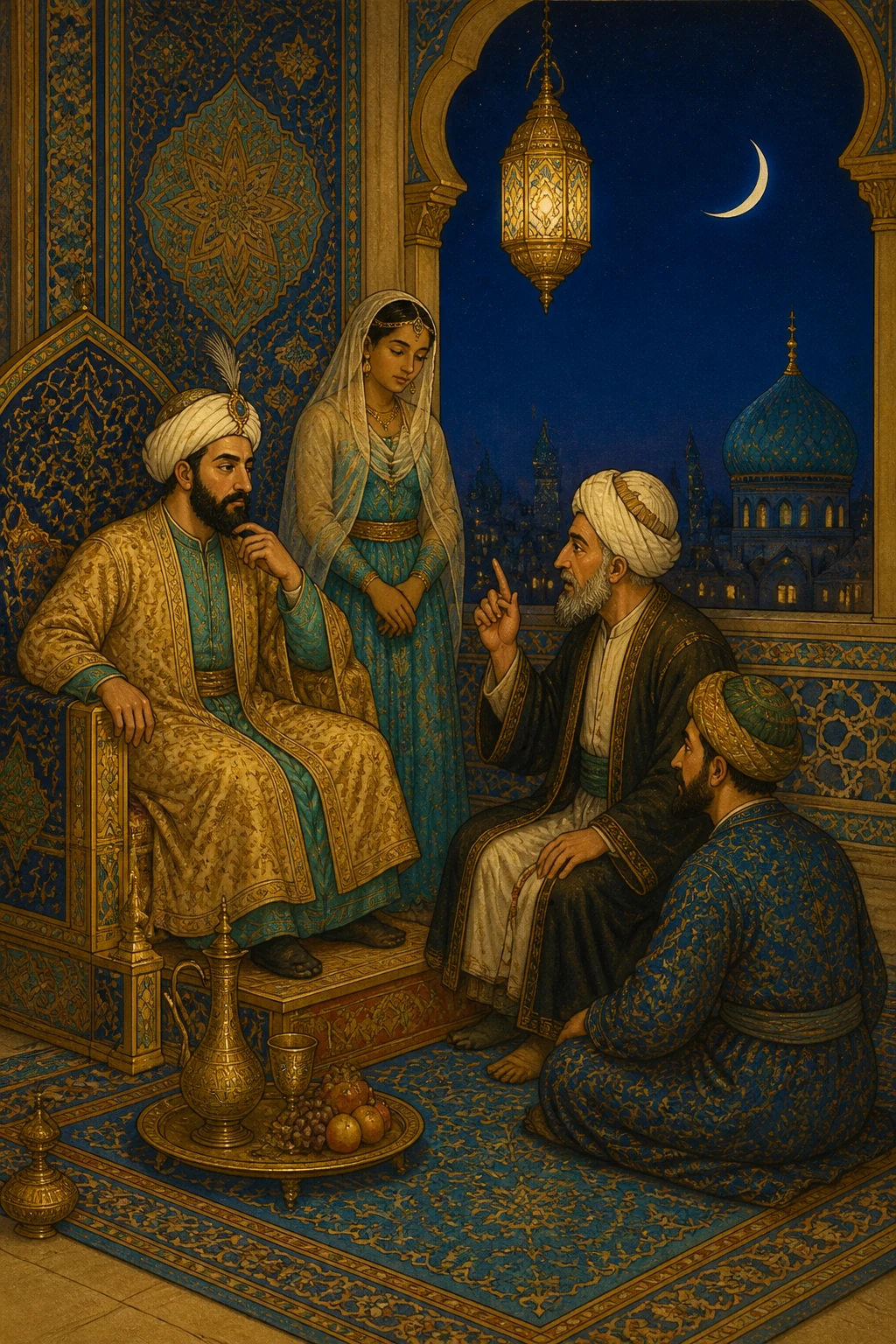
Harun al Rašid in Abu Jusuf
It is also told that Ja‘far al-Barmaki was drinking with al-Rashid one night when al-Rashid said, “Ja‘far, I hear that you have bought a certain slave girl whom I have long been seeking. She is supremely beautiful, and love of her has filled my heart. Sell her to me.” “I will not sell her, Commander of the Faithful,” he replied. “Then give her to me.” “I will not give her to you.” Al-Rashid said, “Zubayda shall be thrice divorced if you do not sell her to me or give her to me.” Ja‘far said, “My wife shall be thrice divorced if I sell her or give her to you.” Then, when they had recovered from their intoxication, they realized that they had fallen into a grave predicament, and could find no way out of it. Al-Rashid said, “This is a matter for none but Abu Yusuf.” So they sent for him at midnight. When the messenger arrived, he rose in alarm and said to himself, “I can only have been summoned at such an hour because some calamity has befallen Islam.” He hurried out and mounted his mule, saying to his servant, “Bring the mule’s nosebag with you, for she may not have finished her feed. When we enter the caliph’s palace, put it on her so that she can eat what remains of tonight’s ration while I am inside.” “I hear and obey,” said the servant. When he entered al-Rashid’s presence, the caliph rose to greet him and seated him beside him on his couch, an honor he granted to no one else. He said, “We have summoned you at this hour only because of an important matter. Such and such has happened, and we have been unable to devise a way out.” “Commander of the Faithful,” he replied, “nothing could be easier.” Then he said, “Ja‘far, sell the Commander of the Faithful half of her, and give him the other half. In this way you will both be clear of your oaths.” The Commander of the Faithful was delighted, and the two men did as he had instructed. Then al-Rashid said, “Bring the girl here at once…” But morning overtook Shahrazad, and she fell silent, leaving her tale untold.
When it was the two hundred and ninety-seventh night
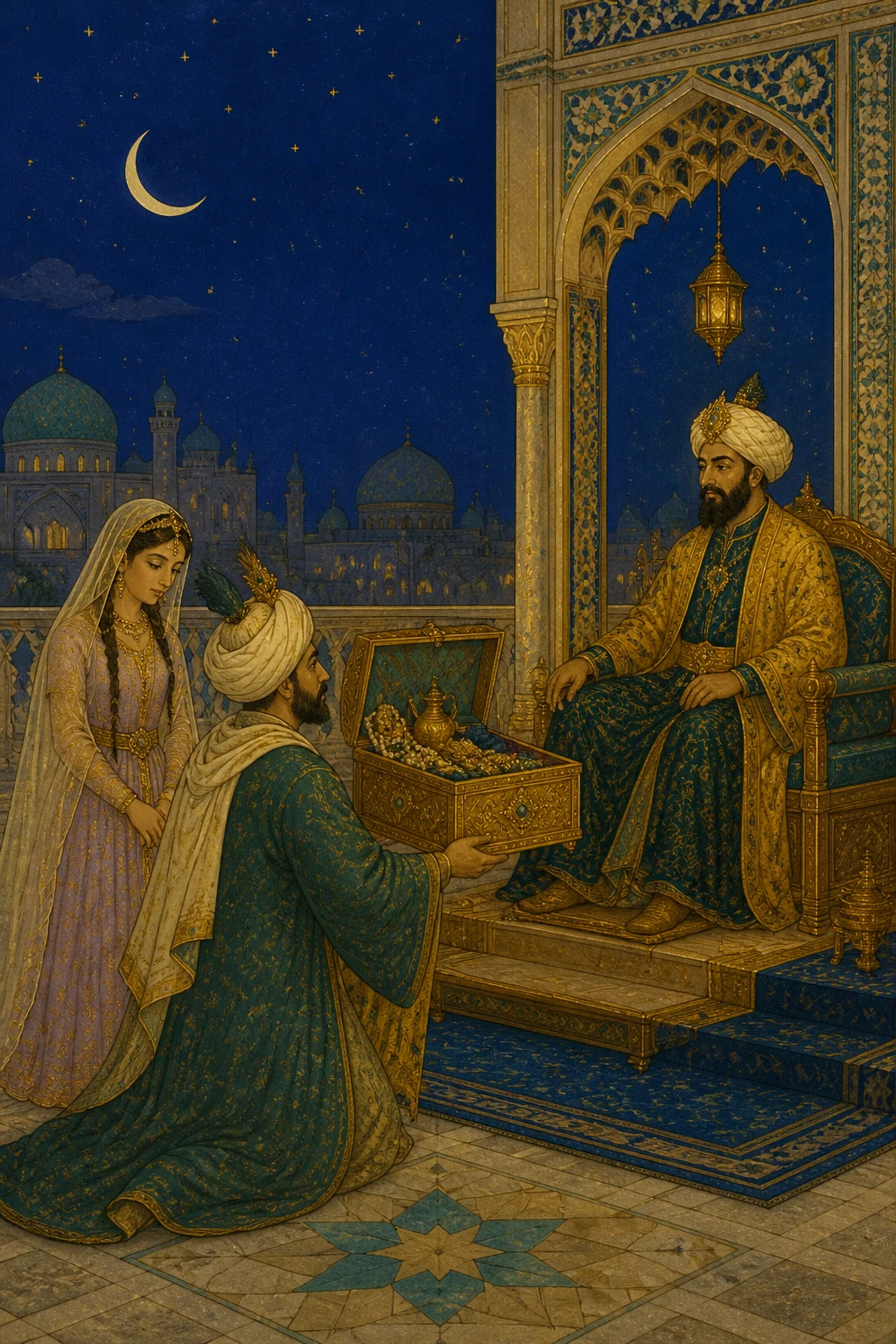
She said: It has reached me, O fortunate king, that the caliph Harun al-Rashid said, “Bring the girl here at once, for I am consumed with longing for her.” So they brought her, and he said to the judge Abu Yusuf, “I wish to lie with her now, for I cannot bear to wait until the period for ascertaining that she is not pregnant has passed. What way is there around this?” Abu Yusuf said, “Bring me one of the Commander of the Faithful’s male slaves who has not been granted his freedom.” They brought a slave, and Abu Yusuf said, “Give me leave to marry her to him. Then he can divorce her before consummating the marriage, and it will be lawful for you to lie with her at once, without any waiting period.” This pleased al-Rashid even more than the first solution. When the slave appeared, the caliph said to the judge, “I authorize you to conclude the marriage.” The judge pronounced the marriage offer, and the slave accepted it. Then the judge said to him, “Divorce her, and you shall have a hundred dinars.” “I will not,” he replied. The judge kept raising the sum, but the slave continued to refuse, until he had offered him a thousand dinars. Then the slave asked the judge, “Does the right to divorce her belong to me, to you, or to the Commander of the Faithful?” “To you,” he replied. “By God, then, I shall never do it.” The Commander of the Faithful grew furious and said, “What can be done, Abu Yusuf?” Judge Abu Yusuf replied, “Commander of the Faithful, do not be troubled. The matter is simple: make this slave the girl’s property.” “I have given him to her,” he said. The judge told her, “Say, ‘I accept.’” “I accept,” she said. Then the judge declared, “I rule that the two are separated, for he has become her property, and the marriage is therefore dissolved.” The Commander of the Faithful sprang to his feet and said, “It is men like you who should be judges in my reign!” He called for trays of gold, which were emptied before the judge, and asked him, “Have you anything to put it in?” Remembering the mule’s nosebag, he sent for it, and it was filled with gold for him. He took it and went home. When morning came, he said to his companions, “There is no easier or shorter road to the blessings of this world and the next than the pursuit of learning. For answering two or three questions, I have been given this great fortune.” Consider, then, gentle reader, the charm of this incident and the many fine qualities it reveals: the vizier’s easy familiarity with al-Rashid, the caliph’s learning, and the judge’s still greater learning. May God Most High have mercy on all their souls.
Izvirnik
حكاية هارون الرشيد وأبي يوسف - الليالي ٢٩٦ إلى ٢٩٧
Naslednje strani prikazujejo izvirno besedilo za primerjavo.
فلما كانت الليلة ٢٩٦
ومما يُحكَى أن جعفر البرمكي نادم الرشيد ليلةً، فقال الرشيد: يا جعفر، بلغني أنك اشتريت الجارية الفلانية، ولي مدة أتطلبها؛ فإنها على غاية من الجمال، وقلبي بحبها في اشتغال، فبعها لي. فقال: لا أبيعها يا أمير المؤمنين. فقال: هبها لي. فقال: لا أهبها. فقال الرشيد: زبيدة طالق ثلاثًا إن لم تبعها لي أو تهبها لي. قال جعفر: زوجتي طالق ثلاثًا إن بعتها أو وهبتها لك. ثم أفاقا من نشوتهما، وعلما أنهما وقعَا في أمر عظيم، وعجزَا عن تدبير الحيلة، فقال الرشيد: هذه واقعة ليس لها غير أبي يوسف. فطلبوه، وكان ذلك في نصف الليل، فلما جاء الرسول قام فزعًا وقال في نفسه: ما طُلِبت في هذا الوقت إلا لأمر حدث في الإسلام. ثم خرج مسرعًا وركب بغلته، وقال لغلامه: خذ معك مخلاة البغلة لعلها لم تستوف عليقها، فإذا دخلنا دار الخلافة فضع لها المخلاة حتى تأكل ما بقي من عليقها إلى حين خروجي إذا لم تستوفِ عليقها في هذه الليلة. فقال الغلام: سمعًا وطاعة. فلما دخل على الرشيد قام له، وأجلسه على سريره بجانبه، وكان لا يُجلِس معه أحدًا غيره، وقال له: ما طلبناك في هذا الوقت إلا لأمر مهم وهو كذا وكذا، وقد عجزنا في تدبير الحيلة. فقال: يا أمير المؤمنين، إن هذا الأمر أسهل ما يكون. ثم قال: يا جعفر، بِعْ لأمير المؤمنين نصفها، وهَبْ له نصفها، وتبرآن في يمينكما بذلك. فانسرَّ أمير المؤمنين بذلك، وفعلَا ما أمرهما به. ثم قال الرشيد: أحضروا الجارية في هذا الوقت … وأدرك شهرزاد الصباح فسكتَتْ عن الكلام المباح.
فلما كانت الليلة ٢٩٧
قالت: بلغني أيها الملك السعيد، أن الخليفة هارون الرشيد قال: أحضروا الجارية في هذا الوقت؛ فإني شديد الشوق إليها. فأحضروها، وقال للقاضي أبي يوسف: أريد وطأها في هذا الوقت؛ فإني لا أطيق الصبر عنها إلى مضي مدة الاستبراء، وما الحيلة في ذلك؟ فقال أبو يوسف: ائتوني بمملوك من مماليك أمير المؤمنين الذين لم يجر عليهم العتق. فأحضروا مملوكًا، فقال أبو يوسف: ائذن لي أن أزوجها منه، ثم يطلقها قبل الدخول، فيحل وطؤها في هذا الوقت من غير استبراء. فأعجب الرشيد ذلك أكثر من الأول، فلما حضر المملوك قال الخليفة للقاضي: أذنت لك في العقد. فأوجب القاضي النكاح، ثم قبله المملوك، وبعد ذلك قال له القاضي: طلقها ولك مائة دينار. فقال: لا أفعل. ولم يزل يزيده وهو يمتنع إلى أن عرض عليه ألف دينار، ثم قال للقاضي: هل الطلاق بيدي أم بيدك أم بيد أمير المؤمنين؟ قال: بل بيدك. قال: والله لا أفعل أبدًا. فاشتدَّ غضب أمير المؤمنين، وقال: ما الحيلة يا أبا يوسف؟ قال القاضي أبو يوسف: يا أمير المؤمنين لا تجزع؛ فإن الأمر هيِّن، ملِّك هذا المملوك للجارية. قال: ملَّكته لها. قال لها القاضي: قولي قبلت. فقالت: قبلت. فقال القاضي: حكمتُ بينهما بالتفريق؛ لأنه دخل في ملكها فانفسخ النكاح. فقام أمير المؤمنين على قدمَيْه وقال: مثلك مَن يكون قاضيًا في زماني. واستدعى أطباق الذهب فأُفرِغت بين يدَيْه، وقال للقاضي: هل معك شيء تضعه فيه؟ فتذكَّرَ مخلاة البغلة فاستدعاها، فمُلِئت له ذهبًا، فأخذها وانصرف إلى بيته. فلما أصبح الصباح قال لأصحابه: لا طريق إلى الدين والدنيا أسهل وأقرب من طريق العلم؛ فإني أُعطِيت هذا المال العظيم في مسألتين أو ثلاث. فانظر أيها المتأدب إلى لطف هذه الواقعة؛ فإنها اشتملت على محاسن، منها: دلال الوزير على الرشيد، وعلم الخليفة، وزيادة علم القاضي، فرحم الله تعالى أرواحهم أجمعين.
Nadaljuj z branjem