Waltey
Kralj Nasir in njegov vezir
Tisoč in ena noč · arabska pripovedna tradicijaO besedilu
Kralj Nasir in njegov vezir
- Vir
- Tisoč in ena noč
- Avtor
- arabska pripovedna tradicija
- Jezik branja
- English
- Jezik izvirnika
- Arabic
- Čas branja
- 4 min branja
- Obseg
- 3 strani
- Naslov izvirnika
- حكاية الملك الناصر ووزيره - الليالي ٦٩٧ إلى ٦٩٨
O izvirniku
Tisoč in ena noč
Zgodbe v zgodbah, polne trgovcev, dvorov, preoblek in nočnih zapletov. Bralni jezik je English, izvirnik pa prihaja iz vira Tisoč in ena noč v jeziku Arabic.
Besedilo
Kralj Nasir in njegov vezir
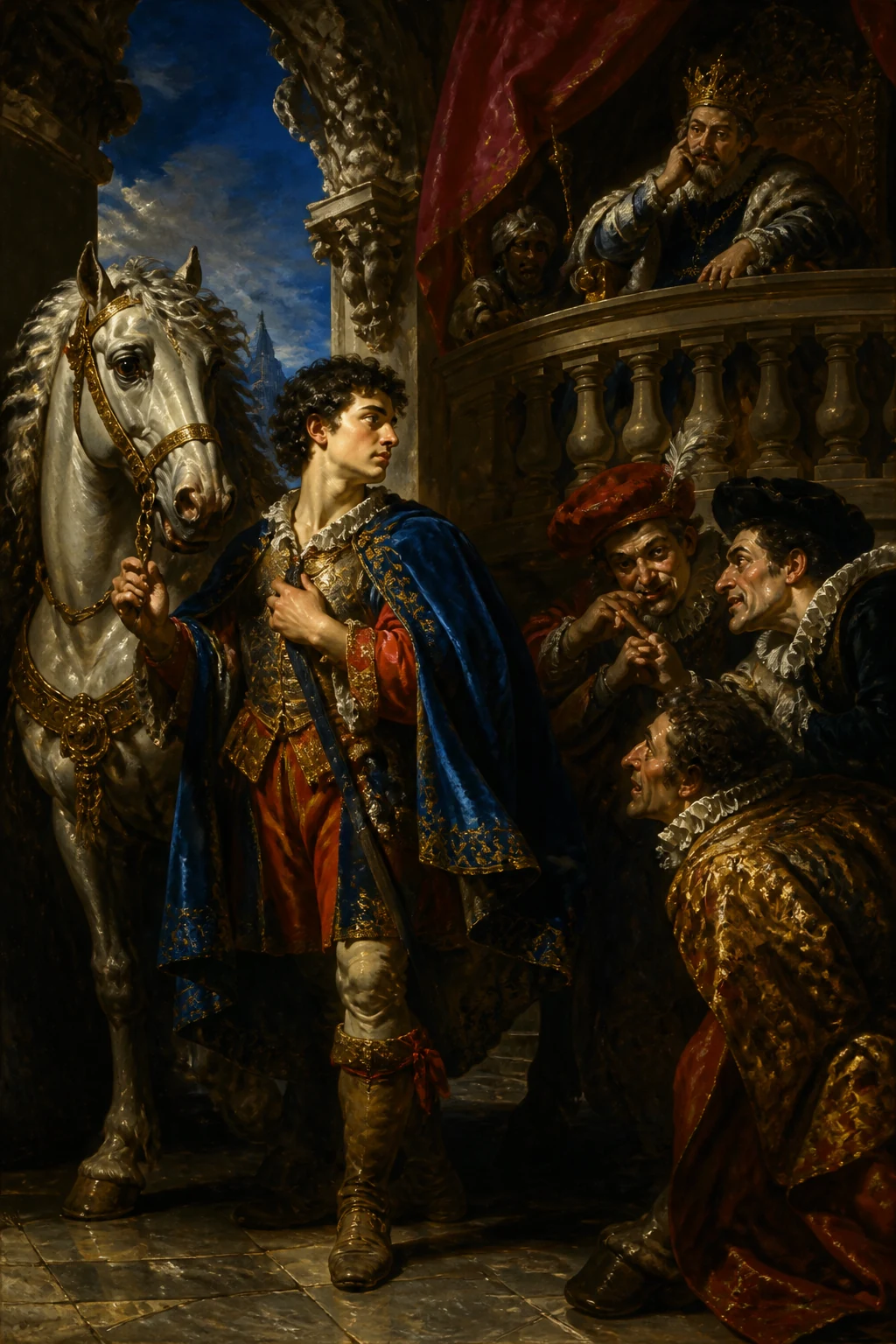
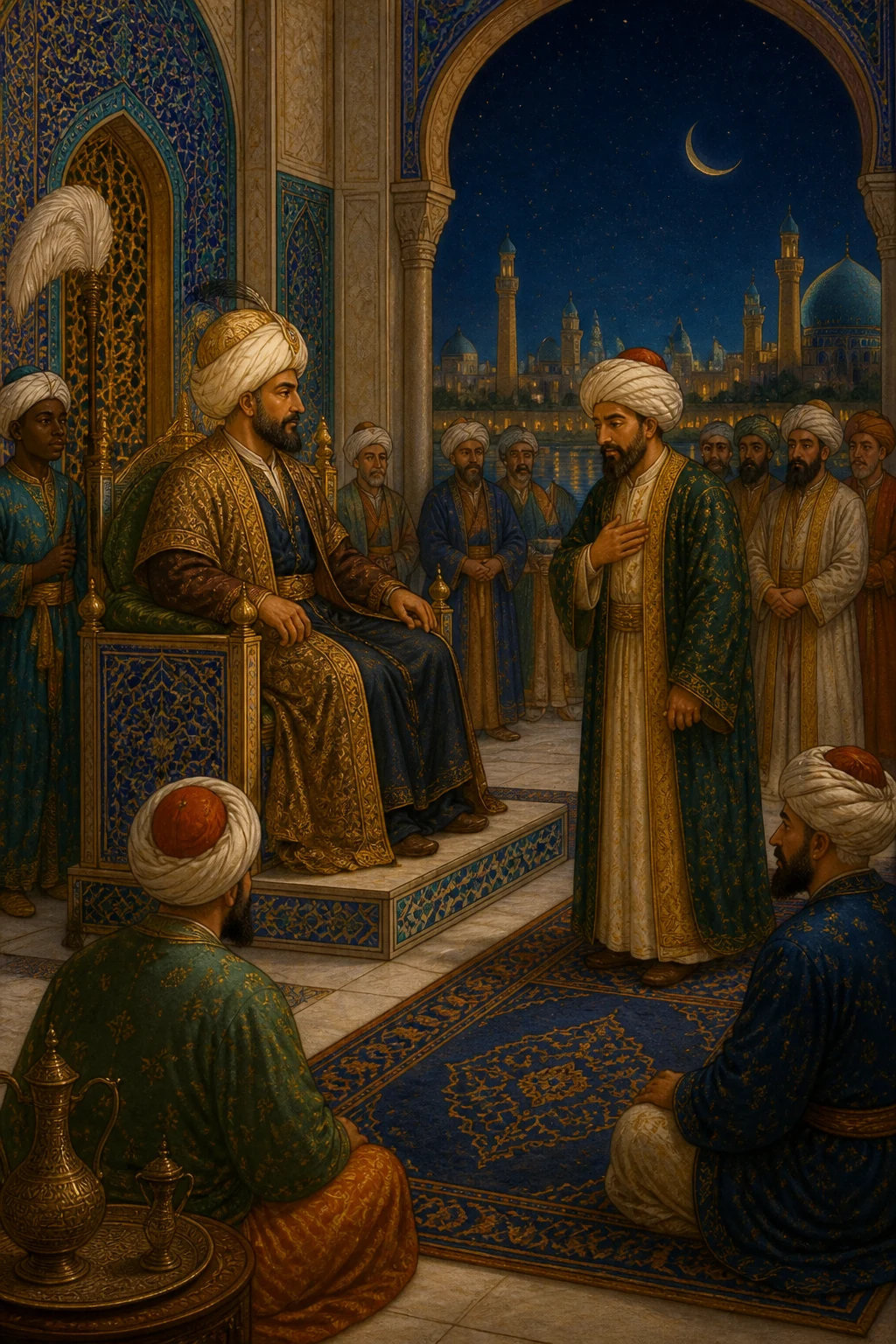
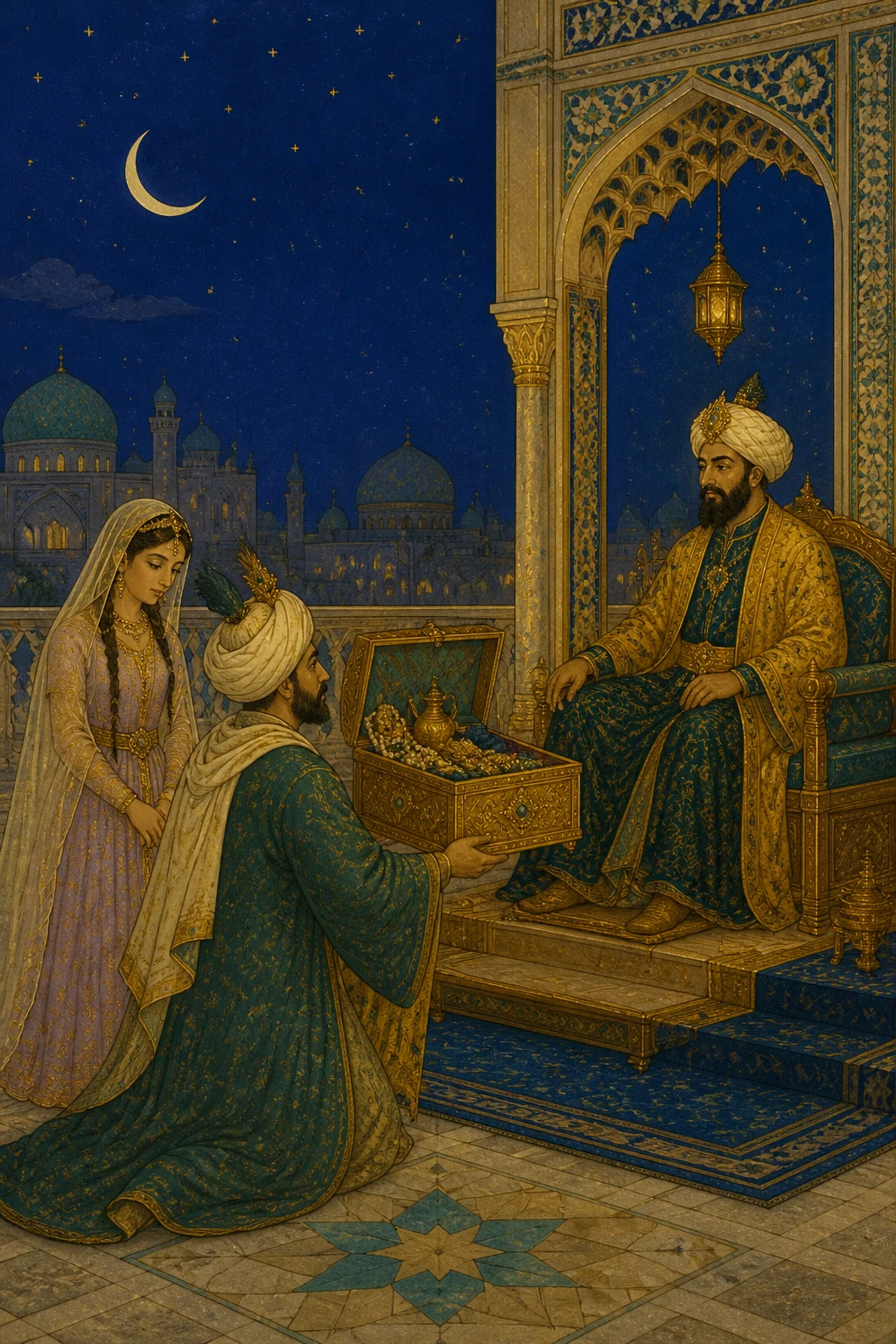
It is also related, O fortunate King, that the vizier Abu Amir ibn Marwan was once presented with a Christian youth more beautiful than any eye had ever beheld. King al-Nasir caught sight of him and asked his master, “Where is this youth from?” “He is a gift from God,” he replied. The king said, “Would you overawe us with stars and take us captive with moons?” The vizier offered his apologies, then assembled a magnificent gift and sent it to the king with the youth, saying to him, “You must be part of the gift. Were I not compelled, my heart would never let you go.” With him he sent these two verses:
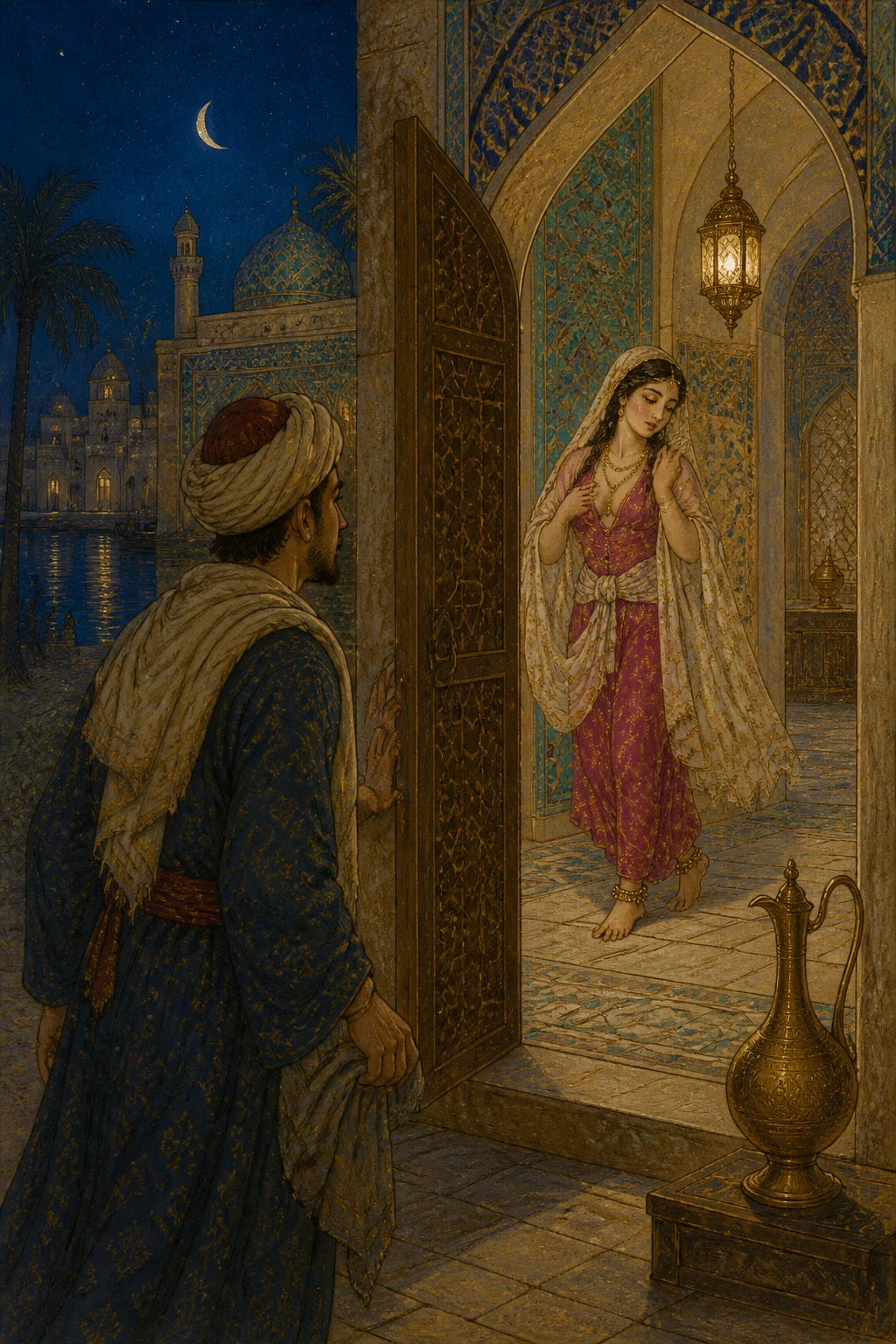
My lord, this full moon journeys to your sky, for moons belong to heaven, not to earth. To please you, I bestow my very soul, precious though it is; before me, none has sought another’s pleasure with his own heart’s blood. Al-Nasir was delighted by this, rewarded him with a great sum of money, and held him in high favor. Afterward, the vizier was presented with a slave girl, one of the most splendid women in the world. Fearing that news of her would reach al-Nasir, who would demand her, and that the youth’s story would be repeated, he assembled a gift still more magnificent than the first and sent it with the girl. But morning overtook Shahrazad, and she fell silent, ceasing her permitted tale.
Then, when it was the six hundred and ninety-eighth night,
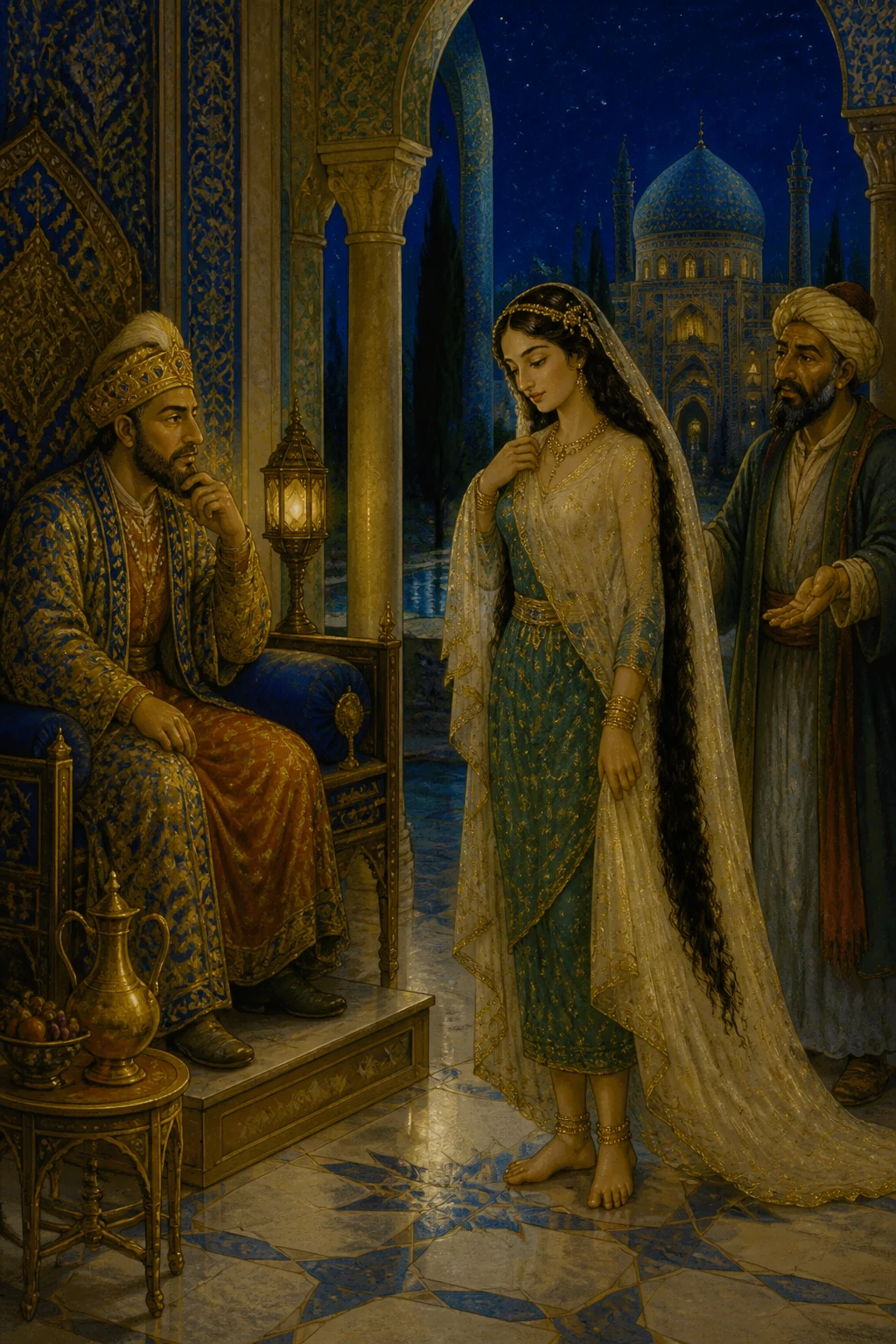
She said: It has reached me, O fortunate King, that when the vizier Abu Amir was presented with the slave girl, he feared that news of her would reach King al-Nasir and that her story would be like the youth’s. So he assembled a gift more magnificent than the first and sent it with the girl, together with these verses:
My lord, here is the sun; the full moon went before her, and now the two bright orbs shall meet. A conjunction, by my life, that foretells good fortune: may you dwell through them forever amid heavenly rivers and gardens. By God, no third can rival them in beauty, and none can rival you in sovereignty over mankind. His standing with the king was thus redoubled. Then one of his enemies slandered him to al-Nasir, saying that some embers of his passion for the youth still glowed, and that whenever wine stirred him, he could not cease speaking of the boy and bitterly regretted having given him away. Al-Nasir said, “Do not speak another word against him, or I shall strike off your head.” Then he wrote a letter in the youth’s name, saying: “My lord, you know that you once were mine alone, and that my life with you was unbroken bliss. Though I am now with the sultan, I long to be alone with you again, but I fear the king’s wrath. Devise some means of asking him to send me to you.” He entrusted the letter to a young servant, instructing him to say, “It is from so-and-so,” and to declare that the king had never so much as spoken to the youth. When Abu Amir read it and the servant tried to deceive him, he sensed the trap and wrote these verses on the back of the letter:
After experience has taught its lessons well, should a prudent man venture into the lion’s thicket? I am not one whose love overcomes his reason, nor am I blind to what the envious allege. Though you were my soul, I gave you freely; and how can a soul return once it has left the body? When al-Nasir read the reply, he marveled at the vizier’s discernment and never again listened to anyone who slandered him. Later he asked him, “How did you escape the snare?” He replied, “Because my reason is not ensnared by passion.” And God knows best.
Izvirnik
حكاية الملك الناصر ووزيره - الليالي ٦٩٧ إلى ٦٩٨
Naslednje strani prikazujejo izvirno besedilo za primerjavo.
فلما كانت الليلة ٦٩٧
وحُكِي أيضًا أيها الملك السعيد، أن الوزير أبا عامر بن مروان كان قد أُهدِي إليه غلامٌ من النصارى، لا تقع العيون على أحسن منه؛ فلمحه الملك الناصر فقال لسيده: من أين هذا؟ قال: هو من عند الله. فقال له: أتخوفنا بالنجوم وتأسرنا بالأقمار؟ فاعتذر إليه ثم احتفل في هدية بعثها إليه مع الغلام وقال له: كُنْ داخلًا في جملة الهدية، ولولا الضرورة ما سمحت بك نفسي. وكتب معه هذين البيتين:
أَمَوْلَايَ هَذَا الْبَدْرُ سَارَ لِأُفْقِكُمْ أَرَى الْأُفْقَ أَوْلَى بِالْبُدُورِ مِنَ الْأَرْضِ
فَأُرْضِيكُمُ بِالنَّفْسِ وَهْيَ نَفِيسَةٌ وَلَمْ أَرَ قَبْلِي مَنْ بِمُهْجَتِهِ يُرْضِي
فحَسُن ذلك عند الناصر وأتحفه بمال جزيل وتمكَّن عنده. ثم بعد ذلك أُهدِيت للوزير جارية من أجلاء نساء الدنيا، فخاف أن يَنمي ذلك إلى الناصر فيطلبها فتكون كقصة الغلام؛ فاحتفل في هدية أعظم من الأولى وأرسلها مع الجارية. وأدرك شهرزاد الصباح فسكتَتْ عن الكلام المباح.
فلما كانت الليلة ٦٩٨
قالت: بلغني أيها الملك السعيد، أن الوزير أبا عامر لما أُهدِيت إليه الجارية، خاف أن يصل خبرها إلى الملك الناصر وتكون قصتها مثل قصة الغلام؛ فاحتفل في هدية أعظم من الأولى وأرسلها وصحبتها الجارية، وكتب معها هذه الأبيات:
أَمَوْلَايَ هَذِي الشَّمْسُ وَالْبَدْرُ أَوَّلًا تَقَدَّم إِلَيْهَا يَلْتَقِي الْقَمَرَانِ
قِرَانٌ لَعَمْرِي بِالسِّعَادَةِ نَاطِقٌ فَدُمْ مِنْهُمَا فِي كَوْثَرٍ وَجِنَانِ
فَمَا لَهُمَا وَاللهِ فِي الْحُسْنِ ثَالِثٌ وَمَا لَكَ فِي مُلْكِ الْبَرِيَّةِ ثَانِ
فتضاعفت مكانته عنده، ثم وشى به بعض أعدائه عند الناصر بأن عنده من الغلام بقية حرارة، وأنه لا يزال يلهج بذِكْره حين تحركه الشمول، فيقرع السن على إهداء الغلام. فقال الناصر: لا تحرك به لسانك وإلا أطرتُ رأسك. وكتب إليه على لسان الغلام ورقةً فيها: يا مولاي، أنت تعلم أنك كنتَ لي على الانفراد، ولم أزل معك في نعيم، وأنا وإنْ كنتُ عند السلطان فإني أحب انفرادي بك، ولكنني أخشى من سطوة الملك؛ فتحيَّلْ في استدعائي منه. ثم بعثها مع غلام صغير وأوصاه أن يقول: هي من عند فلان، وإن الملك لم يكلمه قطُّ. فلما أوقف عليها أبو عامر ودلَّس عليه الخادم أحس بالشربة، فكتب على ظهر الورقة هذه الأبيات:
أَمِنْ بَعْدِ إِحْكَامِ التَّجَارِبِ يَنْبَغِي لِذِي الْحَزْمِ أَنْ يَسْعَى إِلَى غَابَةِ الْأَسَدْ
وَلَا أَنَا مِمَّنْ يَغْلُبُ الْحُبُّ عَقْلَهُ وَلَا جَاهِلٌ مَا يَدَّعِيهِ أُولُو الْحَسَدْ
فَإِنْ كُنْتَ رُوحِي قَدْ وَهَبْتُكَ طَائِعًا وَكَيْفَ تُرَدُّ الرُّوحُ إِنْ فَارَقَتْ جَسَدْ
فلما وقف الناصر على الجواب، تعجَّب من فطنته ولم يَعُدْ إلى استماع واشٍ فيه بعد ذلك. ثم قال له: كيف خلصت من الشَّرَك؟ قال: لأن عقلي بالهوى غير مشترك. والله أعلم.
Nadaljuj z branjem