Prevod
Dan po odhodu Jegulj prebivalci ribnika niso govorili o ničemer drugem. Ne da bi jih tako zelo pogrešali, kajti Jegulje, veste, podnevi ne plavajo naokrog. Mirno ležijo v blatu in spijo ali se pogovarjajo. Šele ponoči zares oživijo. Pa vendar, kakor je rekla Mati blatna želva: »Vedeli smo, da so tam, in brez njih se je blato zdelo prazno.«
Večjim prebivalcem je bilo žal, da so odšle, in nekateri so menili, da ribnik ponoči ni več prav varen kraj, če v njem ni budnih Jegulj, ki bi se gibale naokrog.
»Meni se zdi precej varnejši,« je pripomnila Pisanka, ki je navadno povedala, kar je mislila. »Od nekdaj sem verjela, da Jegulje vedo, kaj se je zgodilo z nekaterimi mojimi brati in sestrami, čeprav tega seveda ne vem zagotovo.«
»Zakaj pa jih nisi vprašala?« je rekel Zet. »Zakaj?« je odvrnila Pisanka. »Če bi šla k Jeguljam in jih to vprašala, bi se moji drugi bratje in sestre kaj kmalu spraševali, kaj se je zgodilo z menoj.«
»Tudi sam sem slišal nekaj čudnih reči o Jeguljah,« je rekel Zet, »a se jih nikoli nisem posebno bal. Najbrž sem pogumnejši zato, ker toliko svojih kosti nosim na zunanji strani.«
Prav tedaj je mimo prišel Modri stari rak, ki je hodil postrani. »Kaj pa ti misliš o Jeguljah?« ga je vprašal Zet in se nenadoma obrnil k njemu.
Rak je zaril rep v blato. To je pogosto storil, kadar ga je kaj presenetilo. Zdelo se je, da mu pomaga pri razmišljanju. Ko je nekaj časa premišljeval, je pomahal z velikimi kleščami in rekel: »Bolje bo, da ne povem, kaj mislim. Nekoč sem živel blizu njih.«
To je kazalo, da je bil Modri stari rak lepo vzgojen in je vedel, da o drugih ne sme govoriti neprijetnih reči, če se temu le lahko izogne. Kadar je bilo treba, pa je znal povedati tudi neprijetno resnico, in še istega večera je res povedal, kaj si misli o Jeguljah. To je bilo takrat, ko je poučeval mlade Rake, svoje učence. Njihova mati je vzredila veliko družino in ni bila pri močeh. Pravkar je odvrgla oklep, ki ga je nosila leto dni, in zdaj je bila šibka in nebogljena, dokler ji novi ne bi otrdel. »Prava nadloga je,« je rekla, »takole nenehno menjavati oklep, a v tolažbo mi je misel, da bo novi, ko ga dobim, zdržal celo leto.«
Dokler je bila njihova mati tako šibka, je Modri stari rak zabaval otroke in jih učil stvari, ki bi jih morali poznati vsi Raki. Vsak večer so se zbrali okoli njega; nekateri so priplavali, drugi so prišli naravnost, tretji postrani, četrti pa vzvratno. Prav nič jim ni bilo mar, kako so prišli. Bili so nemirni učenci in učitelj jim nikakor ni mogel preprečiti, da bi se ozirali za seboj. Vsak je imel toliko oči, da je lahko z nekaj očmi gledal učitelja, z nekaj drugimi male Rake, pa mu jih je še vedno ostalo precej za opazovanje Paglavcev. Te oči so bile razporejene v dva velika skupka in če jih nisi pogledal prav od blizu, bi si lahko mislil, da imajo le po dve očesi. Dobro so slišali, iz glav pa so jim rasle tudi tanke vohalne ščetine. Modri stari rak je včasih rekel, da bi moral vsak njegov učenec sedeti sredi kroga šestih učiteljev, da bi ga lahko poučevali z vseh strani hkrati.
»Tako bi se morali otroci učiti,« je dejal, »z vseh strani naenkrat. A trudim se po svojih najboljših močeh in vsakega poučujem vsaj z ene strani.«
Tisti večer je bil Modri stari rak zelo zaspan. Čez dan je bilo toliko govorjenja in vznemirjenja, da ni spal toliko kot navadno; zdaj pa, ko bi moral biti povsem buden, je bil strašno otopel in počasnih misli. Ko je poskusil hoditi, se je njegovih osem nog zapletalo druga ob drugo, in po slabotnem mahanju z nogama, ki sta nosili klešče, se je videlo, kako utrujen je.
Ko je učencem povedal, kako naj s kleščami najbolje držijo hrano, in jim pojasnil, kako jo prežvečijo zobje v njihovih želodcih, je neki navihanček zaklical: »Jaz bi rad izvedel kaj o Jeguljah. Mama mi nikoli ni dovolila, da bi šel blizu njih, zdaj pa so se odselile in jih nikoli ne bom videl, in to se mi zdi prav grozno.«
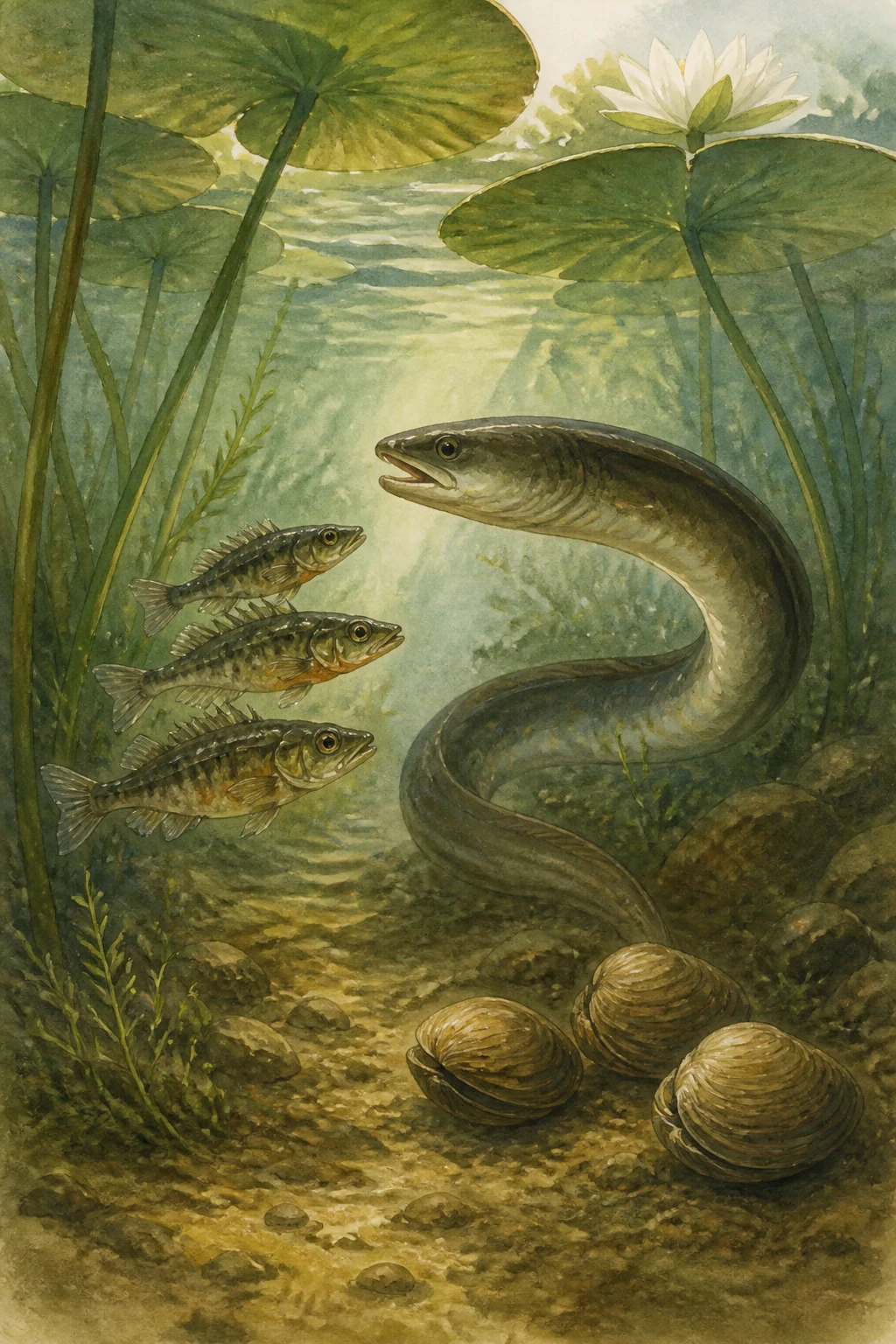
»Jegulje, otroci moji,« je rekel njihov učitelj, »so dolga, vitka, spolzka bitja s koničastimi nosovi, z robom plavuti vzdolž hrbta in še enim vzdolž trebuha. Dihajo skozi zelo majhne škržne odprtine na zadnji strani glave. Imajo velika usta in v njih zobe, spodnje čeljusti pa jim ves čas štrlijo naprej.«
»In kako …« je začel Največji mali rak. »To me vprašaj jutri,« je rekel učitelj ter pretegnil svojih osem hodilnih nog, dve nogi s kleščami in repne veslače, »zapomnite pa si tole: če kdaj zagledate Jeguljo, se ji umaknite s poti. Ne ustavljajte se, da bi jo gledali.«
»Saj se ne bomo,« je rekel mali Rak, ki se mu je zdelo imenitno biti predrzen. »Gledali jo bomo, da bi se ustavili.« To ni pomenilo prav ničesar in je bilo izrečeno samo zato, da bi jezilo učitelja.
Razkropili so se po dnu ribnika, prevračali Polže, stresali mlade Školjke in tekmovali med seboj tam, kjer je bilo dno gladko. »Vzvratno te premagam!« je Predrzni rak zaklical Največjemu malemu raku in v mesečini sta oddrvela vzvratno skozi vodo. Na dnu ribnika je ležalo staro deblo in sedla sta nanj, da bi se spočila. Zmagal je Največji mali rak. »Rad bi videl Jeguljo,« je rekel.
»Jaz bi jih rad videl teči po kopnem,« je rekel predrznež. »Pih!« je rekel največji. »Toliko ti veš! Po kopnem ne tečejo.« »Pa že tečejo,« je odvrnil predrznež. »O tem vem prav toliko kot ti!«
»Jegulje plavajo. Ne tečejo,« je rekel največji. »Menda že vem!« »No, po zraku ne plavajo,« je rekel predrznež. »To je tisto, kar leži nad vodo in zemljo, in v njem se ne da plavati. Tako!«
»Jaz pa sem videl Divje race plavati v njem! Z nogami plavajo po vodi, s perutmi pa po zraku,« je rekel največji. »Ne verjamem,« je rekel predrznež. »Kakorkoli že, Jegulje po kopnem tečejo.«
»Jegulje po kopnem plavajo,« je rekel največji. »Jegulje tečejo!« »Jegulje plavajo!« »Tečejo!« »Plavajo!« Nato sta mala Raka, ki sta govorila vse glasneje in postajala vse bolj jezna, srdito strmela drug v drugega, trzala s tipalkami in prav grdo, grdo mahala s kleščami.
Nista opazila velikega zeleno-rumenega bitja, ki je počasi plavalo proti njima, in nista vedela, da so se Jegulje vrnile v stari ribnik. Mati Jegulja je na široko razprla svoja velika usta. »Po kopnem,« je odločno rekla, medtem ko je pogoltnila Največjega malega raka, »se Jegulje zvijajo.« Potem je pogoltnila še Predrznega raka.
»Tako!« je rekla. »Pa sem končala ta grozni prepir.« In z zadovoljnim nasmehom se je ozrla naokrog.
Izvirnik
The day after the Eels left, the pond people talked of nothing else. It was not that they were so much missed, for the Eels, you know, do not swim around in the daytime. They lie quietly in the mud and sleep or talk. It is only at night that they are really lively. Still, as the Mother Mud Turtle said, "They had known that they were there, and the mud seemed empty without them."
The larger people had been sorry to have them go, and some of them felt that without the Eels awake and stirring, the pond was hardly a safe place at night.
"I think it is a good deal safer," remarked a Minnow, who usually said what she thought. "I have always believed that the Eels knew what became of some of my brothers and sisters, although, of course, I do not know."
"Why didn't you ask them?" said a Stickleback.
"Why?" replied the Minnow. "If I had gone to the Eels and asked them that, my other brothers and sisters would soon be wondering what had become of me."
"I have heard some queer things about the Eels myself," said the Stickleback, "but I have never felt much afraid of them. I suppose I am braver because I wear so many of my bones on the outside."
Just then a Wise Old Crayfish came along walking sidewise. "What do you think about the Eels?" asked the Stickleback, turning suddenly to him.
The Crayfish stuck his tail into the mud. He often did this when he was surprised. It seemed to help him think. When he had thought for a while, he waved his big pinching-claws and said, "It would be better for me not to tell what I think. I used to live near them."
This showed that the Wise Old Crayfish had been well brought up, and knew he should not say unpleasant things about people if he could help it. When there was need of it, he could tell unpleasant truths, and indeed that very evening he did say what he thought of the Eels. That was when he was teaching some young Crayfishes, his pupils. Their mother had brought up a large family, and was not strong. She had just cast the shell which she had worn for a year, and now she was weak and helpless until the new one should harden on her. "It is such a bother," she said, "to keep changing one's shell in this way, but it is a comfort to think that the new one will last a year when I do get it."
While their mother was so weak, the Wise Old Crayfish amused the children, and taught them things which all Crayfishes should know. Every evening they gathered around him, some of them swimming to him, some walking forward, some sidewise, and some backward. It made no difference to them which way they came. They were restless pupils, and their teacher could not keep them from looking behind them. Each one had so many eyes that he could look at the teacher with a few, and at the other little Crayfishes with a few more, and still have a good many eyes left with which to watch the Tadpoles. These eyes were arranged in two big bunches, and, unless you looked very closely, you might think that they had only two eyes apiece. They had good ears, and there were also fine smelling-bristles growing from their heads. The Wise Old Crayfish sometimes said that each of his pupils should sit in a circle of six teachers, so that he might be taught on all sides at once.
"That is the way in which children should learn," he said, "all around at once. But I do the best I can, and I at least teach one side of each."
This evening the Wise Old Crayfish was very sleepy. There had been so much talking and excitement during the day that he had not slept so much as usual; and now, when he should have been wide awake, he felt exceedingly dull and stupid. When he tried to walk, his eight legs stumbled over each other, and the weak way in which he waved his pinching-claw legs showed how tired he was.
After he had told his pupils the best way to hold their food with their pinching-claws, and had explained to them how it was chewed by the teeth in their stomachs, one mischievous little fellow called out, "I want to know about the Eels. My mother would never let me go near them, and now they've moved away, and I won't ever see them, and I think it's just horrid."
"Eels, my children," said their teacher, "are long, slender, sharp-nosed, slippery people, with a fringe of fins along their backs, and another fringe along their bellies. They breathe through very small gill-openings in the backs of their heads. They have large mouths, and teeth in their mouths, and they are always sticking out their lower jaws."
"And how do--" began the Biggest Little Crayfish.
"Ask me that to-morrow," said their teacher, stretching his eight walking legs and his two pinching-claw legs and his tail paddles, "but remember this one thing:--if you ever see an Eel, get out of his way. Don't stop to look at him."
"We won't," said one little Crayfish, who thought it smart to be saucy. "We'll look to stop at him." All of which meant nothing at all and was only said to annoy his teacher.
They scrambled away over the pond-bottom, upsetting Snails, jiggling the young Clams, and racing with each other where the bottom was smooth. "Beat you running backward!" cried the Saucy Crayfish to the Biggest Little Crayfish, and they scampered along backward in the moonlit water. There was an old log on the bottom of the pond, and they sat on that to rest. The Biggest Little Crayfish had beaten. "I would like to see an Eel," said he.
"I'd like to see them running on the land," said the saucy one.
"Pooh!" said the biggest one. "That's all you know! They don't run on land."
"Well, I guess they do," replied the saucy one. "I know as much about it as you do!"
"Eels swim. They don't run," said the biggest one. "Guess I know!"
"Well, they don't swim in air," said the saucy one. "That's the stuff that lies on top of the water and the ground, and people can't swim in it. So there!"
"Well, I've seen the Wild Ducks swim in it! They swim with their legs in the water, and with their wings in the air," said the biggest one.
"I don't believe it," said the saucy one. "Anyhow, Eels run on land."
"Eels swim on land," said the biggest one.
"Eels run!"
"Eels swim!"
"Run!"
"Swim!"
Then the two little Crayfishes, who had been talking louder and louder and becoming more and more angry, glared at each other, and jerked their feelers, and waved their pinching-claws in a very, very ugly way.
They did not notice a great green and yellow person swimming gently toward them, and they did not know that the Eels had come back to live in the old pond again. Mother Eel opened her big mouth very wide. "On land," she said decidedly, as she swallowed the Biggest Little Crayfish, "Eels wriggle." Then she swallowed the Saucy Crayfish.
"There!" said she. "I've stopped that dreadful quarrel." And she looked around with a satisfied smile.