Prevod
Bogastvo Astorjev komajda presega zaklade, ki naj bi bili skriti tu in tam po deželi, in na tisoče dolarjev so že porabili za prekopavanje rečnih strug in plitvih morij ter za razstreljevanje jam in kleti. Nekateri pobudniki teh načrtov so kot vodilni uslužbenci delniških družb, ustanovljenih za njihovo izvedbo, prejemali plače in bili edini, ki so od takšnih podvigov imeli oprijemljivo korist.
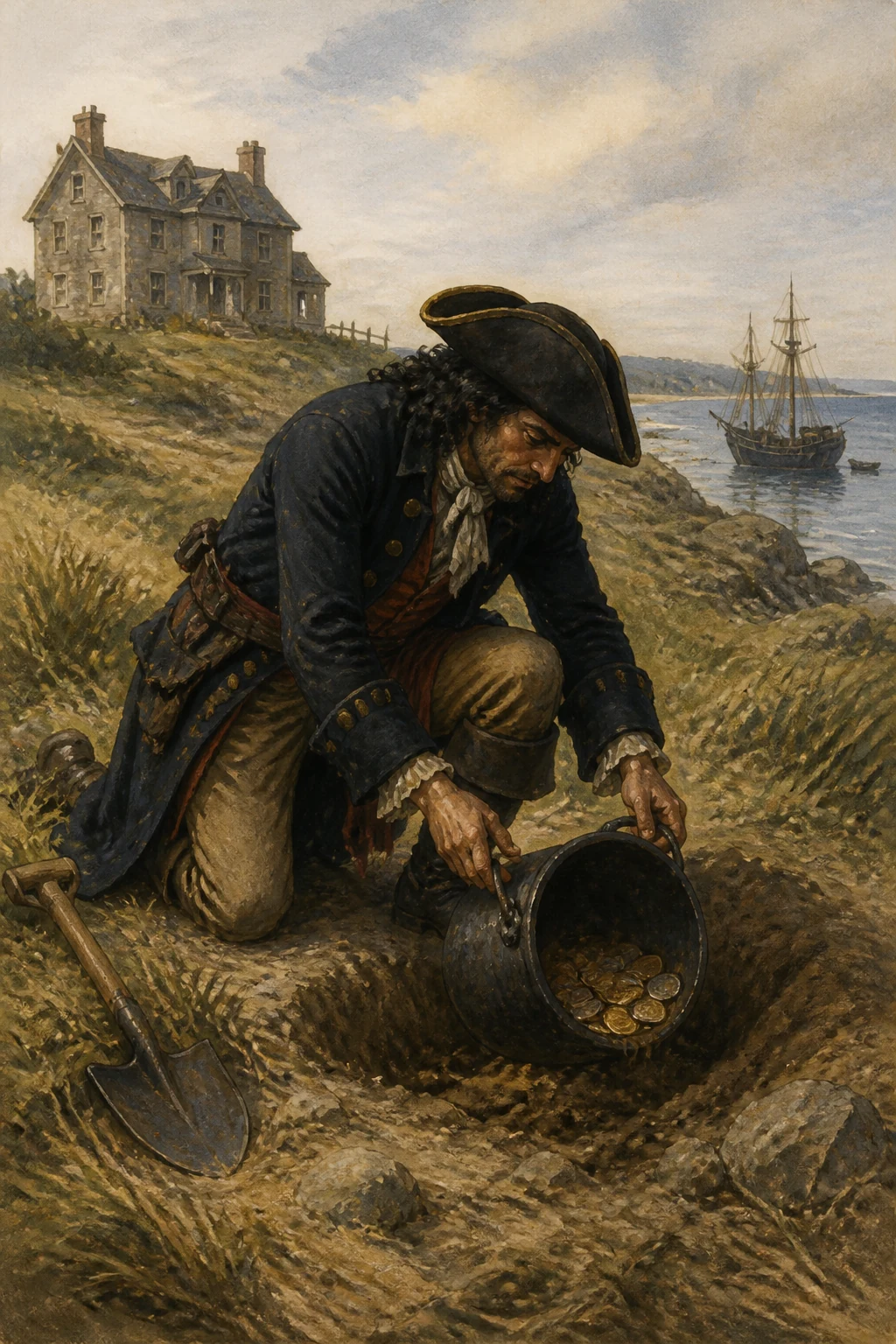
Nekega poletnega večera sredi sedemnajstega stoletja je bark zasidral ob ustju reke Saugus v Massachusettsu. Štirje člani posadke so odveslali do gozdov, ki obrobljajo njene bregove, in se izkrcali. Naslednje jutro je ladja izginila, v kovačnici naselja pa so našli list, na katerem je pisalo, da bodo, če izdelajo določeno število okovov in lisic ter jih skrivaj odložijo na označenem kraju v gozdu, naslednji dan namesto njih našli vsoto denarja, enako njihovi vrednosti. Naročilo so izpolnili in srebrnike res našli, kakor je bilo obljubljeno, toda čeprav so postavili stražo, o možeh in ladji več mesecev ni bilo ne duha ne sluha.
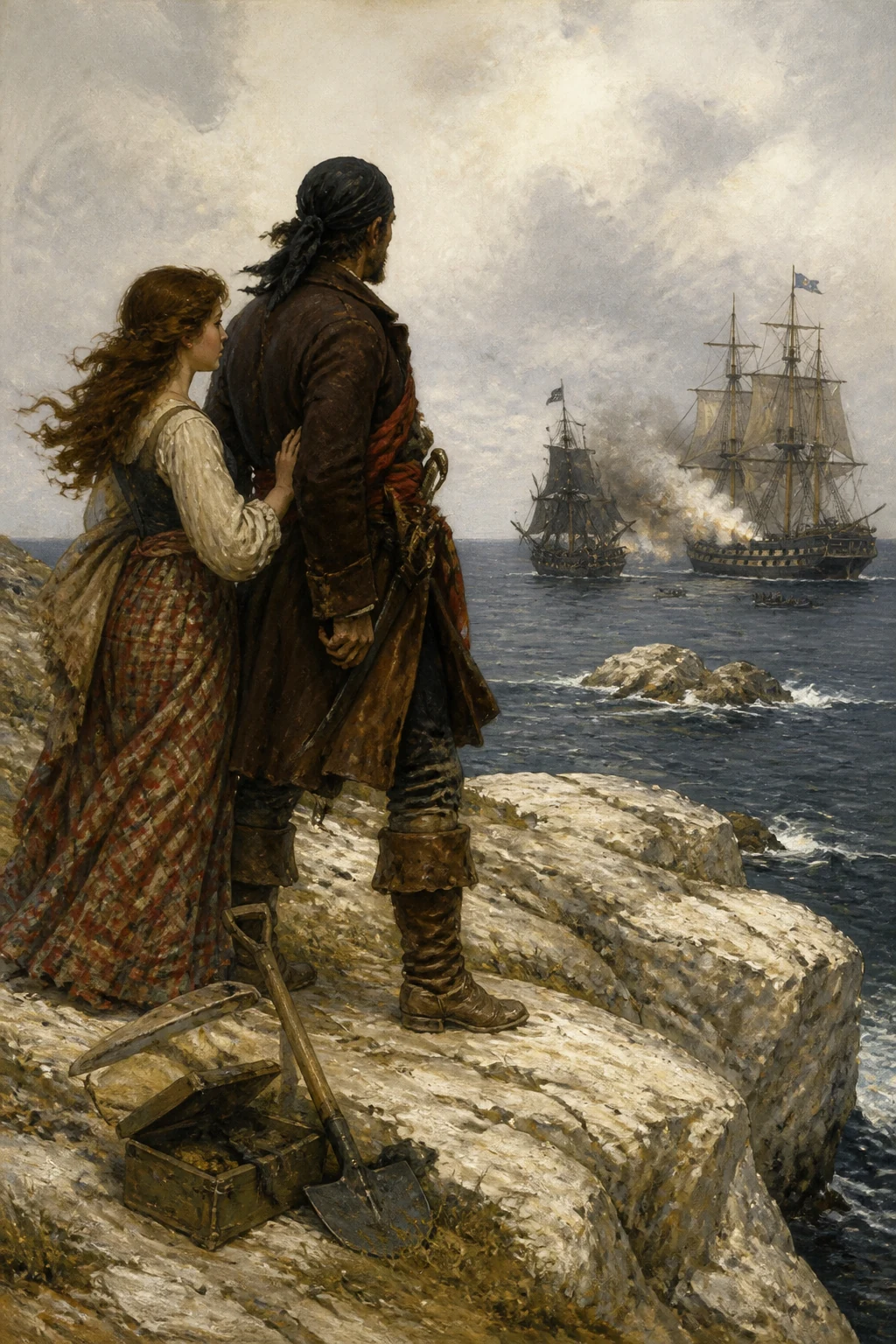
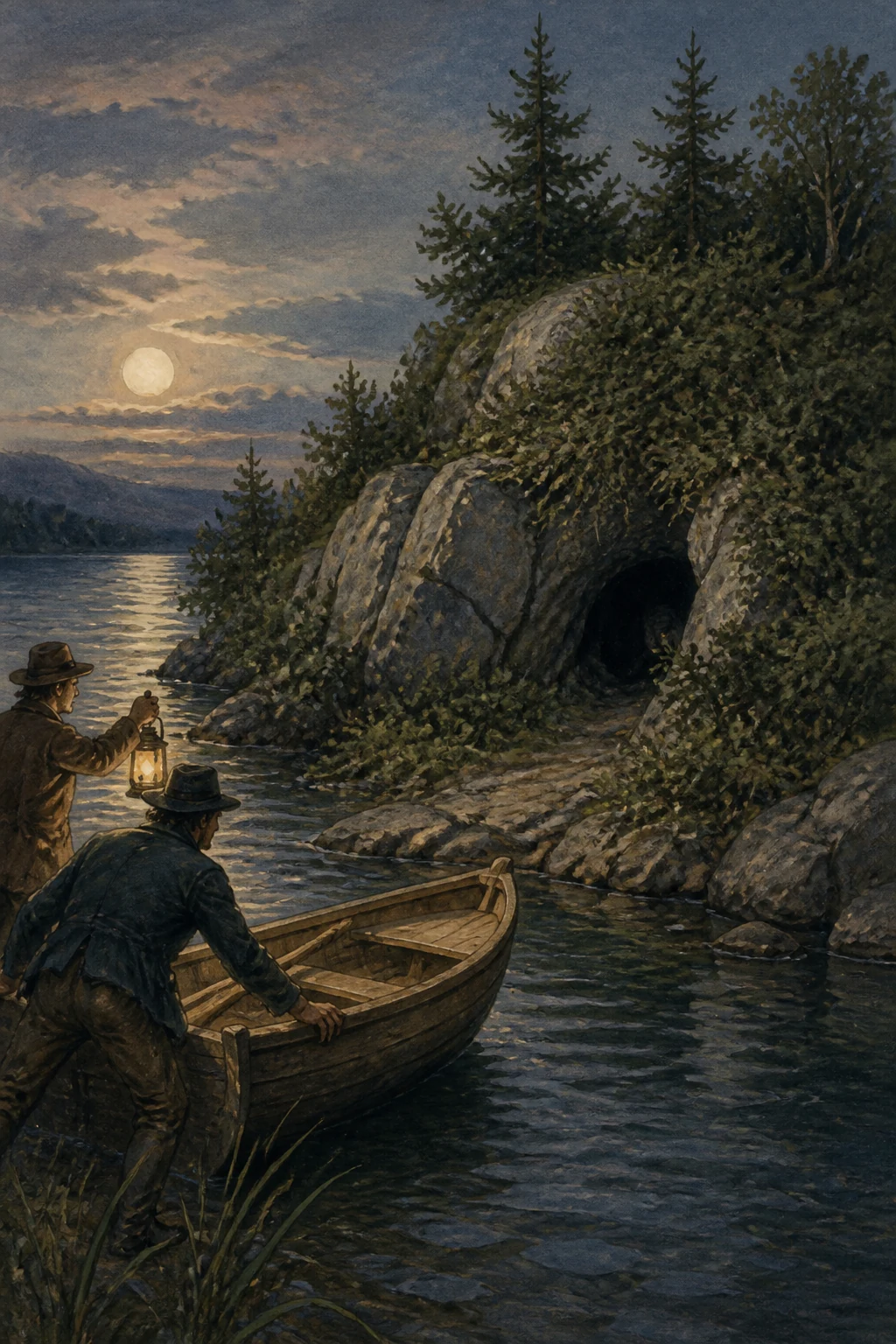
Četverica se je vendarle vrnila in živela zase v gozdovih ob Saugusu. Opravljivci so pripovedovali, da so v njihovi družbi videli lepo žensko — ljubico piratskega poglavarja, kajti skrivnostni štirje možje so se seveda ukvarjali z ropanjem na odprtem morju. Tri so ujeli, odpeljali v Anglijo in obesili, četrti, Thomas Veale, pa je pobegnil v votlino v gozdu, kjer naj bi bili skriti veliki zakladi. Tam je živel do potresa leta 1658, ko se je s stropa jame odlomila skala, zaprla vhod in grešnika pokopala v grobnici, v kateri je, kakor domnevajo, umrl od žeje in lakote. Kraj pri Lynnu odtlej nosi ime Dungeon Rock.
Leta 1852 je Hiram Marble oznanil, da so ga obiskali duhovi, ki mu niso le povedali, da piratski plen še vedno leži v starem skrivališču, temveč so mu tudi pokazali kraj, kjer naj začne kopati. S sinovo pomočjo je v trden granit izdolbel sto petintrideset čevljev dolg rov, visok in širok po sedem čevljev. Kadar je opešal, so mu »mediji«, pri katerih je iskal nasvet, veleli, naj koplje na desno ali levo, in ob vsakem novem malodušju so mu našli novo delo. Trideset let je trajalo to početje; oče in sin sta umrla, ne da bi dosegla kakršen koli stvaren uspeh, razen najdbe starodavne nožnice v skalni razpoki. Le dedinja Marbleove hiše je imela korist od njunega truda, saj je — ko je v skromnejšem obsegu spet uvedla dajatve prvih prebivalcev skale — na vhod v rove predrzno obesila napis: »Vi, ki vstopate, pustite tu petindvajset centov.«
V več primerih so za skrivališča veljale razpoke, ki jih je povzročilo dolbenje vode ali silovito delovanje narave in katerih nasprotni steni sta se prilegali druga drugi. V starih časih pa so v Novi Angliji verjeli, da je vse takšne razpoke povzročil potres ob križanju — pričevanje o Božji moči, da pretrese grešnike.
Srce Greylocka imenujejo kraterju podobno kotanjo, tisoč čevljev globoko, na najvišjem vrhu Berkshira. Nekdaj pa je bila bolj znana kot Denarna jama, potok, ki teče skoznjo, pa kot Denarni potok, saj je v tej kotanji delovala tolpa ponarejevalcev in utegne biti tam še vedno skrit kak ponarejen kovanec. Potok poznajo tudi kot Potok prikazni, kajti lovci, ki so pozno tavali tod okoli, in vojaki na izvidnici so ponarejevalce, ko so jih videli hoditi sem ter tja ob pečeh, imeli za duhove.
Na otoku Province v jezeru Memphremagog v Vermontu naj bi bil skrit del dobička obsežne tihotapske dejavnosti, ki je več let potekala v bližini jezera.
V začetku prejšnjega stoletja je majhna družba španskih pustolovcev potovala ob vznožju Zelenega gorovja. Nameravali so se vrniti, potem ko bi opravili nekaj poslov s trgovskimi postajami ob reki sv. Lovrenca, zato so del svojega zlata spravili na gori Ludlow v Vermontu, drug lonec zlata pa na gori Camel's Hump. Dogovorili so se, da se nihče ne bo vrnil brez tovarišev, a na severu so se zadržali in razšli, nekateri pa so odšli domov v Španijo. Edini preživeli iz družbe se je na stara leta odpravil na Camel's Hump in si skušal priklicati v spomin, kje so skrili zaklad, vendar zaman.
Ko je kraljevi guverner Wentworth bežal pred ljudstvom, katerega razglasitev neodvisnosti je bila pri Concordu že zapisana s krvjo kraljevih vojakov, sta mu bili v breme žena in skrinja z zakladom. Zapustil je svoj dvorec ob Smith's Pondu v New Hampshiru in se odpravil proti Portsmouthu, kjer naj bi našel zavetje britanskega ladjevja. Toda dežela je bila vsa na nogah, čas je bil dragocen, in ker njegovi utrujeni konji brez razbremenitve niso mogli naprej, je moral za seboj pustiti bodisi lady Wentworth bodisi svoje drugo bogastvo. Ker je gospa povsem upravičeno nasprotovala vsakršnemu ogrožanju svoje varnosti, so skrinjo zakopali na neznanem kraju v gozdu. Že več kot stoletje ljudje iščejo in ugibajo, kje so Wentworthova srebrnina in mošnje denarja.
Ko so hessenske čete po Burgoynovi predaji korakale iz Saratoge v Boston, da bi se vkrcale na ladje, so bile v bednem stanju — izčrpane od vojne, razcapane in slabo hranjene. Ker so imele s seboj precej srebrnine in draguljev, ki so jim jih zmagovalci pustili, pa tudi nekaj denarja, poslanega iz Anglije za njihovo plačilo, so se nenehno bale napadov kmetov, ki so nanje kljub njihovemu porazu še vedno gledali sovražno. Ko so prišli v Dalton v Massachusettsu, so se Hessenci med seboj dogovorili, da dragocenosti spravijo v havbico in jo zakopljejo v gozdu, po koncu vojne pa naj bi se nekateri izmed njih vrnili ponjo. Neki Indijanec jim je dolgo tiho sledil, da bi pobiral prezrte drobnarije, ki bi jih utegnili pustiti v svojih taborih, in si pot označeval z zarezami na drevesih. A četudi je videl, kako so zakopali to nenavadno zakladnico, mu to ni nič pomenilo in skrivnost njenega nahajališča se je izgubila. Prebivalci so več let oprezali za vsemi tujci, ki so prišli v mesto, in jim sledili, če so se odpravili v gozd, vendar brez uspeha. Okoli leta 1800 so domnevno skrivališče temeljito pregledali in tam kopali, toda kakor prej tudi tokrat iskanje ni bilo poplačano.
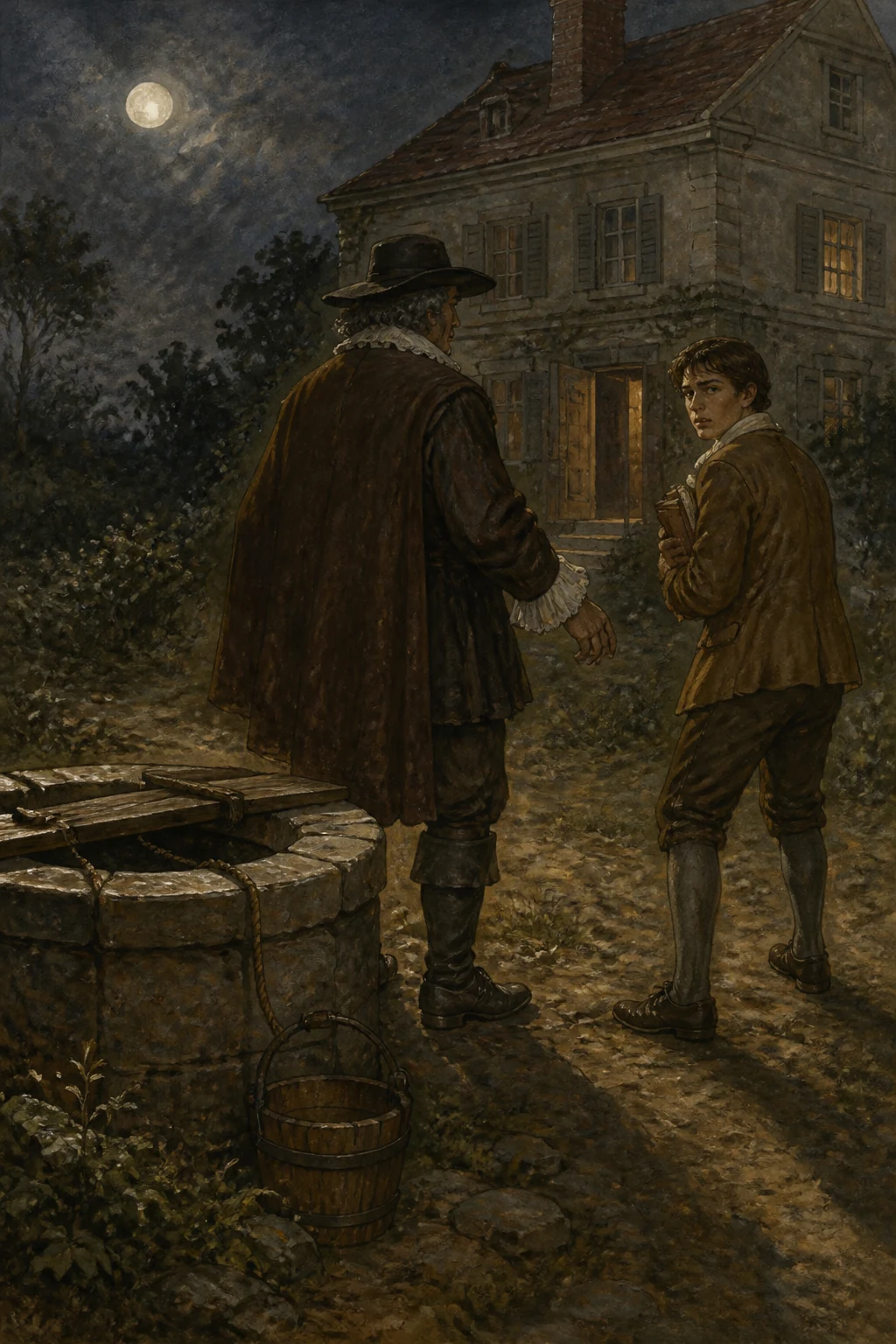
Na bostonskem javnem parku Common je še pred nekaj leti stal brest neznane starosti — Stari brest. Ta veteran, ki so ga številni viharji in udarci strele razcefrali in polomili, je v prejšnjem stoletju služil za vislice, v času čarovniških procesov pa je z njega visela Goody Glover. Govorilo se je, da je mogoče v viharnih nočeh, ko veje škripajo druga ob drugi, videti temne postave, ki se zvijajo na vejah in v peklenskem veselju poskakujejo po trati pod drevesom. Nekega vetrovnega jesenskega večera leta 1776 se je v sobi Mika Wilda nenapovedano pojavila zavita postava. Ko si je ta razvpiti skopuh dovolj opomogel od strahu, ki ga je vzbudila njena navzočnost, da je lahko razumel njene besede, je spoznal, da mu pripoveduje o nečem, kar je za življenja zakopala ob vznožju Starega bresta. Po dolgem omahovanju se je Mike odpravil s svojim prikazenskim vodnikom, saj bi za denar tvegal tudi svojo dušo; ko pa je prispel na cilj, je osupel ugotovil, da je sam. Ni se pustil prestrašiti, odložil je svetilko in začel kopati. Čeprav je prekopal dobršen kos zemlje in z lopato tipal za vrečami in skrinjami zlata, ni našel ničesar. Nenavadni zvoki nad njegovo glavo — veter je namreč močno pihal in vejice so se ob drgnjenju druga ob drugo srhljivo hihitale — so mu tu in tam pognali mravljince po hrbtu. Prav ko se je hotel napol jezen, napol prestrašen vrniti domov, je njegov duhovni obiskovalec stopil izza drevesa in obstal pred njim. Njegov videz je bil grozeč, nos je pordel in se podaljšal, lasje so bili razmršeni, čelo namrščeno. Mrki izraz zlate pošasti je postajal vse strašnejši, srepeči pogled njenih oči v zvezdni svetlobi vse bolj neznosen, in počepala je ter se plazila naprej, kakor da se pripravlja na skok. Mike ni mogel več zdržati. Omedlel je in se zjutraj prebudil v svoji sobi, kjer je sosedu, ki ga je zgodaj obiskal, povedal — z olepšavami — zgodbo o srečanju. Toda še preden je prišel do konca pripovedi, je obiskovalec planil v krohot in priznal, da je sam igral nadnaravnega gosta: s krčmarjem iz gostilne Pri merjaščevi glavi je namreč stavil ducat steklenic vina, da bo ukanil Mika Wilda. Kljub vsemu se je starega drevesa še dolga leta držal slab sloves.
Špansko galejo Saints Joseph and Helena, ki je leta 1753 plula iz Havane v Cádiz, so nasprotni vetrovi zanesli s smeri in jo vrgli ob čer blizu New Londona v Connecticutu. Poškodbe so jo prisilile, da je zaradi popravil zaplula v tamkajšnje pristanišče. Da bi laže prišli do njenih polomljenih reber, so tovor zložili na obalo in ga zaupali pristaniškemu cariniku, ko pa so ga hoteli spet natovoriti, glej čudo! Četrtina ga je izginila, nihče ni znal povedati kako. Zaradi tega ropa je New London prišel na slab glas, guverner pa, čeprav ga je skupščina pozvala, naj povrne primanjkljaj, tega ni storil in je na naslednjih volitvah izgubil položaj. Govorilo se je, da so roparji del zaklada zakopali na obali. Leta 1827 je ženska, ki naj bi imela dar jasnovidnosti, dvema mladima gizdalinoma za plačilo razodela videnje, po katerem naj bi bil pod enim izmed s travo poraslih pomolov skrit zaboj dolarjev. To zares dragoceno vest je dobila s pomočjo kristalnega kamenčka, toda kamenček ni bil dovolj jasen, da bi razkril natančno mesto zaboja. Videla pa je, da so dolarji zloženi na rob. Ko je New London trdno spal, sta se mladeniča skrivaj odpravila ven in ob svetlobi svetilke začela kopati. Prišla sta že do gladine vode, ko sta naletela na železno skrinjo, in se sklonila, da bi jo dvignila — toda na njuno začudenje je bilo železo prevroče, da bi se ga dotaknila! Tedaj sta zaslišala globoko renčanje in z roba jame je vanju gledal velikanski pes; iz teme so ju prebliskavale rdeče oči; nad njima je lebdela in kričala divja gos z žareče zelenimi očmi. Čeprav jima je čarovnica obljubila varnost, ni nič odganjalo fantastičnih prikazni, ki so se začele zgrinjati okoli njiju. Preveč prestrašena, da bi še delala, sta skočila iz jame in jo popihala. Ko sta naslednji dan, opogumljena od sončne svetlobe, spet začela iskati, je železna skrinja izginila.
Na Crown Pointu ob jezeru Champlain stoji razvalina utrdbe, ki jo je lord Amherst zgradil nad mestom francoske utrdbe, postavljene leta 1731 za obrambo danes izginulega glavnega naselja s tisoč petsto prebivalci. Trdili so, da so Francozi ob umiku iz pokrajine zakopali denar in plemenite kovine v devetdeset čevljev globok vodnjak v severozahodnem vogalu bastiona, trdno prepričani, da jih bodo spet dobili. Pred pol stoletja se je to prepričanje tako razširilo, da se je petdeset mož lotilo čiščenja vodnjaka, preiskovanje pa so razširili na različne dele obzidanega prostora in okoliška polja. Našli so obilico svinca in železa, zlata pa nič.
Follingsby's Pond v Adirondackih je dobil ime po samotarju, ki je v začetku tega stoletja tam prebival v osamljeni, a dobro zavarovani koči. Pozneje so menili, da je bil angleški vojaški častnik plemiškega rodu, ki je z gnusom zapustil domovino, potem ko je odkril ljubezensko zvezo med svojo ženo in enim svojih tovarišev častnikov. Umrl je v vročici in v blodnjah govoril o skriti skrinji. Lovec s pastmi, ki je edini bedel ob njem v njegovih zadnjih trenutkih, je prekopal zemljena tla koče in našel zaboj, v katerem so bili z dragulji okrašen meč, dragocene drobnarije in pisma, ki so potrjevala domnevo o Follingsbyjevem plemiškem izvoru. Kaj se je po izkopu zgodilo s temi dragocenostmi, ni znano, domnevali pa so, da jih je skritih še več.
Pravijo, da je tolpa piratov Coney Island uporabljala kot prvo narodno peščeno banko, in ker so te lopove ujeli ter po kratkem postopku obesili, menda plen še vedno čaka — na tistega, ki ga bo našel. Toda hotelirji in prevaranti, ki vodijo igro s tremi kartami, za svoje bogatenje ne čakajo na to odkritje.
V dolini Shandaken v Catskillih so zatrjevali, da je skupina britanskih častnikov nekje zakopala denar, ko so jih obkolili tamkajšnji kmetje in lovci, in ga nikoli več ni izkopala.
Na otoku Tea v jezeru George ostajajo zakopani zakladi lorda Abercrombieja še dandanes uspešno skriti. Najstarejša hiša v Fort Necku na Long Islandu je bila dolga leta znana kot hiša strahov, grobu njenega lastnika — kapitana Jonesa — pa so rekli piratov grob, saj so Jonesa v prejšnjem stoletju obtoževali piratstva in tihotapstva, nekateri pa so sumili še kaj hujšega. Upanje, da bodo na posestvu našli zlato in srebro, je iz leta v leto bolj bledelo. Tik pred Jonesovo smrtjo, ki ga je tu doletela po naravni poti, je skozi okno priletela vrana, tako velika, da so jo vsi imeli za demona, in lebdela nad posteljo umirajočega, dokler ni izdihnil; tedaj je z zmagoslavnim krikom odletela skozi zahodno steno hiše. Luknje, ki jo je prebila v zidu, ni bilo nikoli mogoče zamašiti, saj sta kamenje in malta vselej znova izpadla, naj so jo še tolikokrat popravili. Skoznjo je vel veter s takšnim mrazom in takšnim tuljenjem, da so morali hišo zapustiti.
Lastnik posestva na Lloyd's Necku na Long Islandu je imel več bogastva, kot se mu je zdelo varno ali lahko prepeljati, ko so se leta 1775 kolonije dvignile proti Britaniji in je moral nujno zbežati, saj so sosedje vedeli, da je torijec. Srebrnino, kovance in drugo premično imetje je zbral v tri sode ter svojim trem sužnjem naročil, naj jih zakopljejo v jame, ki so jih izkopali pod njegovo hišo. Potem je, ko so zasipavali zemljo, vse tri ustrelil in jih pokopal, vsakega na enem sodu. K zločinu ga je morda gnala bojazen, da bi sužnji v bližajočem se spopadu pomagali Američanom ali da bi se vrnili, izkopali bogastvo oziroma skrivališče izdali kraljevim sovražnikom. Nato je pobegnil v Novo Škotsko, čeprav bi prav tako lahko ostal doma, saj so Britanci zasedli Long Island in njegova hiša je postala zbirališče rdečesuknjičnikov in lojalistov. Po prelomu stoletja je nekega večera v zalivu Cold Spring pristal čoln, naslednje jutro pa so prebivalci našli stopinje, ki so vodile do kraja, kjer so otroci odkrili iz zemlje štrlečo zavozlano vrv, in nazaj. Nekaj so odnesli, saj je bil na dnu jame viden odtis velikega zaboja. Iskalci zakladov so nato prekopali cele akre okoliške zemlje in našli zaboj grobo kovanih dolarjev ter več sodčkov. Vsebina teh sodčkov, čeprav dragocena in stara, ni bila trdna; ko se je razlila po telesih več prebivalcev Long Islanda, jim je vlila žgan in domoljuben žar — mar niso s tem, ko so uničevali skrite zaloge kraljevega privrženca, potrjevali zmagoslavja demokratičnih načel?
Glinene strmine pri Pottery Beachu v Brooklynu so bile prepredene z umetnimi jamami, v katerih so v nemirnih prvih letih republike našli zavetje brezpravneži. Tu je dolga leta trohnela razbitina, ki naj bi bila ogrodje ladje, ki so jo ti možje z lažnimi svetilnimi znamenji zvabili na obalo. Na krovu je imela dragocen tovor, zjutraj po nasedanju pa sta izginila tako posadka kot tovor. Verjeli so, da je velik del plena zakopan v glini ob robu vode. V zgodnjih kolonialnih časih je na otoku Grand Island v reki Niagari prebival Francoz Clairieux, izgnanec ali begunec, ki mu je stregel črnski služabnik. Nekega poletja je otok pogosto obiskovala enojambornica, ob vsakem prihodu natovorjena s skrinjami, ki jih nihče ni nikoli videl odpeljati in za katere danes domnevajo, da so zakopane blizu kraja, kjer je stala Francozova koča. Govorilo se je, da so bili ti zaboji polni denarja, toda ali je bil pridobljen pošteno ali nepošteno, ni znal povedati nihče razen Francoza, ta pa o tem ni hotel ničesar reči. Jeseni po teh obiskih enojambornice je Clairieux izginil. Ko so na otoku pristali lovci, so našli njegovo kočo požgano, veliko okostje, očitno črnčevo, pa priklenjeno k tlom sredi prostora, kjer je stala hiša. Domnevali so, da so sužnja ubili zato, da bi njegov duh čuval zaklad in odganjal vsiljivce; toda Francoza je usoda doletela drugje in njegova skrivnost je, kakor skrivnost marsikaterega drugega skopuha, umrla z njim. Leta 1888, ko je severovzhodni vihar odgnal rečno vodo, je kmet, ki je živel na otoku, tik pod površjem odkril kamnite temelje v obliki kroga, kakor da bi na njih nekoč stal stolp. V blatu znotraj tega kroga je našel več francoskih zlatih in srebrnih kovancev, enega izkovanega leta 1537. V bližini so našli še druge kovance poznejšega datuma in predlagali so sistematičen pregled celotne struge, saj so prav tako govorili, da pod otokom v pesku ležita dve francoski fregati, potopljeni zato, da ne bi padli v roke Angležem; ena od njiju naj bi imela na krovu skrinjo mornariškega blagajnika.
Na obali jezera Oneida je Indijančev grob, nad katerim se rada ziblje in poplesuje svetlobna krogla. Kmet po imenu Belknap je večkrat sanjal o zakopanem zakladu na tem kraju in v videnju mu je bilo povedano, da si ga lahko prilasti, če tam koplje ob polnoči. Poskusil je in njegov kramp je zadel ob lončeno posodo, ki je zazvenela, kakor bi bilo v njej zlato. Tisti trenutek bi se moral trikrat obrniti okoli sebe, kakor so mu naročile sanje, vendar je bil tako vznemirjen, da je pozabil. Blisk je razparal zrak in ga nezavestnega zvrnil na travo. Ko je prišel k sebi, posode ni bilo več, jama je bila zasuta in odtlej svetloba lebdi okoli tistega kraja. Nekateri pravijo, da ni to nič drugega kot blodni ogenj: duša hudobneža, obsojena na tavanje po pustih krajih, ker mu Peter po smrti ni dovolil vstopiti v nebesa, hudič pa ga ni pustil na drugi kraj, da ne bi mali hudiči zaradi njega postali neukrotljivi; dovoljeno pa mu je, da na svojih potepanjih nosi luč.
V Indian Gapu blizu Wernersvilla v Pensilvaniji je Doanova tolpa torijcev in teroristov skrila skrinjo zlata, izkupiček številnih ropov. Čuvajo jo čarovnice in čeprav so jo že videli, si je nihče ni mogel prilastiti. Iskalce vselej oslepi moder plamen in jih prežene bobneč hrup. Nemški kmetje iz okolice bodo kljub temu kopali zanjo, saj pravijo, da se straža zlih duhov konča opolnoči, le datuma ne vedo. Na kraju, ki jim ga je v videnju razkril »odganjalec urokov« — videnje jih je stalo petdeset centov — bodo čakali, dokler ne pride noč brez modrih plamenov.
Tudi v južnem delu okrožja Chester v Pensilvaniji je skrit denar, le da nihče ne ve natanko kje. Samoten, čemeren mož, ki je tam po revoluciji umrl v revni koči, je priznal, da je Britancem služil kot vohun, vendar je dejal, da ni porabil nič zlata, ki ga je dobil od njih. Bodisi je svoja dejanja preveč obžaloval bodisi je bil preveč skop, da bi ga zapravil. Spravil ga je v lončeno posodo in zakopal, na smrtni postelji, kjer je to povedal, pa je prosil, naj ga izkopljejo in porabijo za kak dober namen. Ravno je hotel povedati, kje leži, ko mu je smrtno hropenje zadušilo besede.
Indijanci so verjeli, da je Otok rumenega peska v Gornjem jezeru iz zlatega prahu, toda varovali so ga jastrebi, ki so odbijali vsakogar, ki se je približal, ali ga raztrgali, če je vztrajal pri izkrcanju. Indijanskemu dekletu, ki se je skrivaj odpravilo iz tabora, da bi si priskrbelo nekaj tega zaklada, je sledil njen ljubi. Prestrašen zaradi nevarnosti, ki ji je pretila od jastrebov, je njen beg ustavil tako, da je prebil bok njenega kanuja. Zato se je morala zateči v njegovega in odveslal je z njo domov, še preden so ptice napadle.
Stari Francois Fontenoy, trgovec z Indijanci, je pri Presque Islu blizu Detroita zakopal medeninast kotliček, poln zlata, ki še vedno leži v zemlji. Na bregovih Cumberlanda v Tennesseeju je vzpetina, kjer so iskalca zlata zgrabili nevidni branilci in ga vrgli pod pečino, pri čemer se je smrtno poškodoval.
Španci naj bi blizu Natcheza zakopali tristo tisoč dolarjev v zlatu. Mož, ki je podedoval to skrivnost, jo je ponudil razkriti, a ker je bil zapornik, so se njegovi ponudbi smejali. Pozneje so tam, kjer je rekel, da bo, našli prazen podzemni obok. Nekdo ga je po naključju odprl in odnesel zaklad.
Jame so pogosto uporabljali za skrivališča stvari večje ali manjše vrednosti — navadno manjše. Saltpetre Cave v Georgii je bila denimo med državljansko vojno delavnica in skladišče solitra, smodnika ter drugega vojaškega materiala. Severnjaški vojaki so uničili obrat za pepeliko in odlomili na tone skalovja, da bi bila vrnitev nevarna. Tu so našli tudi človeške kosti, vendar menijo, da pripadajo vojakom, ki so vstopili v jamo v zasledovanju indijanskega poglavarja, ki je v štiridesetih letih kljuboval državi. Pobegnil je skozi odprtino v stropu, obšel zasledovalce, pri vhodu zažgal kup suhega listja in lesa ter z dimom zadušil belce.
Španci so pred dvesto leti kopali v rudnikih Ozarkskega gričevja v Missouriju. V enem izmed rudnikov svinca in srebra, osemnajst milj jugozahodno od Galene, je delalo sedem mož, ki se niso mogli sporazumeti o delitvi izkupička. V prepirih so se drug za drugim pobijali, dokler ni ostal en sam, tega pa so nato napadle oživele žrtve in ga s svojimi mrzlimi prsti zadavile. Leta 1873 je tja prišel Vermončan po imenu Johnson in dejal, da bo našel, kar so Španci skrivali, navkljub hudiču in njegovim škratom. Tam je res delal en dan, nato pa so ga našli mrtvega ob vhodu v stari jašek, s sledovi koščenih prstov na vratu.
Sedem mest Cibole, ki so jih Coronado in drugi španski pustolovci iskali v prostranih puščavah jugozahoda, so bili puebli. Izdajalski vodnik, ki je upal, da bo Coronada zvabil na brezvodno planjavo in ga tam pogubil, a je prej sam izgubil glavo, mu je pripovedoval zgodbo o Quivirih, plemenu z obilico zlata. Ti Indijanci še zdaleč niso imeli zlata, temveč te snovi sploh niso poznali, vendar se je mit, da so ga nakopičili velike količine, ohranil do današnjega dne in povzročil izgubo življenj in denarja. Mesta v Novi Mehiki, ki ležijo v razvalinah od leta 1670, ko so Apači poklali njihove prebivalce — dobro zgrajena mesta, nad katerimi so kraljevale trdne stare cerkve in samostani, ki so jih postavili španski misijonarji —, so pogosto prekopavali. Razdejano stanje Aba, Curarija in Tabire je deloma posledica tega nespametnega kopanja rovov in razstreljevanja.
Nekega dne leta 1841 se je španski bark zasidral, da bi se oskrbel z vodo, pred krajem, kjer danes stoji Columbia City v Oregonu. Na krovu je imel surovo posadko in častniki so morali mornarje skrbno nadzorovati, vse odkar so ti odkrili, da ladja prevaža dragocen tovor. Komaj so spustili sidrne verige, že so mornarji planili na kapitana, ga ubili, pograbili vse dragocenosti, ki so jih mogli zbrati, in jih odnesli na obalo. Kaj se je zgodilo zatem, ni jasno, vendar je verjetno, da je bilo v prepiru, ki je izbruhnil, ker je vsak zase terjal največji delež plena, ubitih več udeležencev. Težave so jim povzročali tudi Indijanci, zato so presodili, da bo najbolje večino blaga zakopati, in to so storili na zemljišču, znanem kot kmetija Heza Copierja. Komaj so opravili delo, že so se Indijanci pojavili v velikem številu in postavili svoje tipije ter s tem pokazali, da nameravajo ostati. Uporniki so odveslali nazaj na ladjo in po več dneh zaman čakali na priložnost, da bi se spet izkrcali, nazadnje pa odpluli. Sledili sta dve leti potepanja, bojev in popivanja, preden se je ostanek posadke vrnil v Oregon. Indijancev ni bilo več in možje so se vneto lotili iskanja denarja — a zaman. Bilo je, kakor da zemlje nikoli ne bi prekopali. Mož, ki je nadzoroval zakopavanje, je bil z njimi vse do trenutka, ko so se uporniki vrnili k čolnom; tedaj so ugotovili, da je skrivnostno izginil.
Več kot štirideset let po teh dogodkih so se v Columbia Cityju zbrali spiritisti in neka »medijka« je naznanila, da ji je bilo razodeto natančno mesto, kjer je bilo blago skrito. Skupina se je odpravila tja in po večdnevnem iskanju pod približno tridesetimi centimetri prsti našla precej razbitega kamenja. Med odstranjevanjem teh kosov se je eden izmed njih zgrudil mrtev. Medijka je pojasnila, da ga je terjal duh oropanega in umorjenega kapitana. Ta nesreča je povzročila tolikšen strah, da so iskanje znova opustili vse do marca 1890, ko je druga skupina nadaljevala kopanje. Ko so odstranili preostalo kamenje, so naleteli na več človeških okostij. Med pregledovanjem teh ostankov — morda kosti upornikov, ki so bili ubiti v boju na obali — je nekega moža popadel napad divje blaznosti in iskanje so spet opustili, saj se zdaj govori, da nad zakladom visi prekletstvo, ki ga ni mogoče odpraviti.
Izvirnik
The wealth of the Astors hardly exceeds the treasure that is supposed to be secreted here and there about the country, and thousands of dollars have been expended in dredging rivers and shallow seas, and in blasting caves and cellars. Certain promoters of these schemes have enjoyed salaries as officers in the stock companies organized for their furtherance, and they have seen the only tangible results from such enterprises.
One summer evening, in the middle of the seventeenth century, a bark dropped anchor at the mouth of Saugus River, Massachusetts, and four of the crew rowed to the woods that skirt its banks and made a landing. The vessel had disappeared on the following morning, but in the forge at the settlement was found a paper stating that if a certain number of shackles and handcuffs were made and secretly deposited at a specified place in the forest, a sum of money equal to their value would be found in their stead on the next day. The order was filled and the silver was found, as promised, but, though a watch was set, nothing further was seen of men or ship for several months.
The four men did return, however, and lived by themselves amid the woods of Saugus, the gossips reporting that a beautiful woman had been seen in their company--the mistress of the pirate chief, for, of course, the mysterious quartette had followed the trade of robbery on the high seas. Three of these men were captured, taken to England, and hanged, but the fourth-Thomas Veale--escaped to a cavern in the wood, where, it was reputed, great treasures were concealed, and there he lived until the earthquake of 1658, when a rock fell from the roof of the cave, closing the entrance and burying the guilty man in a tomb where, it is presumed, he perished of thirst and hunger. Dungeon Rock, of Lynn, is the name that the place has borne ever since.
In 1852 Hiram Marble announced that he had been visited by spirits, who not only told him that the pirates' spoils were still in their olden hiding-place, but pointed out the spot where the work of excavation should begin. Aided by his son he tunnelled the solid granite for a distance of one hundred and thirty-five feet, the passage being seven feet high and seven wide. Whenever he was wearied the “mediums” that he consulted would tell him to make cuttings to the right or left, and for every fresh discouragement they found fresh work. For thirty years this task was carried on, both father and son dying without gaining any practical result, other than the discovery of an ancient scabbard in a rift. The heiress of the house of Marble alone reaped benefit from their labors, for-resuming on a petty scale the levies of the first dwellers in the rock--she boldly placarded the entrance to the workings “Ye who enter here leave twenty-five cents behind.”
In several cases the chasms that have been caused by wear of water or convulsions of nature (their opposite sides being matched) were believed to have been hiding-places, but, in the old days in New England, it was believed that all such fractures were caused by the earthquake at the time of the crucifixion--a testimony of the power of God to shake sinners.
The Heart of Greylock is the name given to the crater-like recess, a thousand feet deep, in the tallest of the Berkshire peaks, but it was formerly best known as Money Hole, and the stream that courses through it as Money Brook, for a gang of counterfeiters worked in that recess, and there some spurious coinage may still be concealed. The stream is also known as Spectre Brook, for late wandering hunters and scouting soldiers, seeing the forgers moving to and fro about their furnaces, took them for ghosts.
Province Island, in Lake Memphremagog, Vermont, is believed to contain some of the profits of an extensive smuggling enterprise that was carried on near the lake for several years.
A little company of Spanish adventurers passed along the base of the Green Mountains early in the last century, expecting to return after having some dealings with the trading stations on the St. Lawrence; so they deposited a part of their gold on Ludlow Mountain, Vermont, and another pot of it on Camel's Hump. They agreed that none should return without his companions, but they were detained in the north and separated, some of them going home to Spain. Late in life the sole survivor of the company went to Camel's Hump and tried to recall where the treasure had been hidden, but in vain.
While flying from the people whose declaration of independence had already been written in the blood of the king's troops at Concord, the royal governor--Wentworth--was embarrassed by a wife and a treasure-chest. He had left his mansion, at Smith's Pond, New Hampshire, and was making toward Portsmouth, where he was to enjoy the protection of the British fleet, but the country was up in arms, time was important, and as his wearied horses could not go on without a lightening of the burden, he was forced to leave behind either Lady Wentworth or his other riches. As the lady properly objected to any risk of her own safety, the chest was buried at an unknown spot in the forest, and for a century and more the whereabouts of the Wentworth plate and money-bags have been a matter of search and conjecture.
When the Hessian troops marched from Saratoga to Boston, to take ship after Burgoyne's surrender, they were in wretched condition-war-worn, ragged, and ill fed,--and having much with them in the form of plate and jewels that had been spared by their conquerors, together with some of the money sent from England for their hire, they were in constant fear of attack from the farmers, who, though they had been beaten, continued to regard them with an unfavorable eye. On reaching Dalton, Massachusetts, the Hessians agreed among themselves to put their valuables into a howitzer, which they buried in the woods, intending that some of their number should come back at the close of the war and recover it. An Indian had silently followed them for a long distance, to gather up any unconsidered trifles that might be left in their bivouacs, and he marked the route by blazes on the trees; but if he saw the burial of this novel treasury it meant nothing to him, and the knowledge of the hiding-place was lost. For years the populace kept watch of all strangers that came to town, and shadowed them if they went to the woods, but without result. In about the year 1800 the supposed hiding-place was examined closely and excavations were made, but, as before, nothing rewarded the search.
A tree of unknown age--the Old Elm--stood on Boston Common until within a few years. This veteran, torn and broken by many a gale and lightning-stroke, was a gallows in the last century, and Goody Glover had swung from it in witch-times. On tempestuous nights, when the boughs creaked together, it was said that dark shapes might be seen writhing on the branches and capering about the sward below in hellish glee. On a gusty autumn evening in 1776 a muffled form presented itself, unannounced, at the chamber of Mike Wild, and, after that notorious miser had enough recovered from the fear created by the presence to understand what it said to him, he realized that it was telling him of something that in life it had buried at the foot of the Old Elm. After much hesitancy Mike set forth with his ghostly guide, for he would have risked his soul for money, but on arriving at his destination he was startled to find himself alone. Nothing daunted, he set down his lantern and began to dig. Though he turned up many a rood of soil and sounded with his spade for bags and chests of gold, he found nothing. Strange noises overhead--for the wind was high and the twigs seemed to snicker eerily as they crossed each other-sent thrills along his back from time to time, and he was about to return, half in anger, half in fear, when his spirit visitor emerged from behind the tree and stood before him. The mien was threatening, the nose had reddened and extended, the hair was rumpled, and the brow was scowling. The frown of the gold monster grew more awful, the stare of his eye in the starlight more unbearable, and he was crouching and creeping as if for a spring. Mike could endure no more. He fainted, and awakened in the morning in his own chamber, where, to a neighbor who made an early call, he told--with embellishments--the story of the encounter; but before he had come to the end of the narrative the visitor burst into a roar of laughter and confessed that he had personated the supernatural visitant, having wagered a dozen bottles of wine with the landlord of the Boar's Head that he could get the better of Mike Wild. For all this the old tree bore, for many years, an evil reputation.
A Spanish galleon, the Saints Joseph and Helena, making from Havana to Cadiz in 1753 was carried from her course by adverse winds and tossed against a reef, near New London, Connecticut, receiving injuries that compelled her to run into that port for repairs. To reach her broken ribs more easily her freight was put on shore in charge of the collector of the port, but when it was desired to ship the cargo again, behold! the quarter part of it had disappeared, none could say how. New London got a bad name from this robbery, and the governor, though besought by the assembly to make good the shortage, failed to do so, and lost his place at the next election. It was reputed that some of the treasure was buried on the shore by the robbers. In 1827 a woman who was understood to have the power of seership published a vision to a couple of young blades, who had paid for it, to the effect that hidden under one of the grass-grown wharves was a box of dollars. By the aid of a crystal pebble she received this really valuable information, but the pebble was not clear enough to reveal the exact place of the box. She could see, however, that the dollars were packed edgewise. When New London was sound asleep the young men stole out and by lantern-light began their work. They had dug to water-level when they reached an iron chest, and they stooped to lift it-but, to their amazement, the iron was too hot to handle! Now they heard deep growls, and a giant dog peered at them from the pit-mouth; red eyes flashed at them from the darkness; a wild-goose, with eyes of blazing green, hovered and screamed above them. Though the witch had promised them safety, nothing appeared to ward off the fantastic shapes that began to crowd about them. Too terrified to work longer they sprang out and made away, and when-taking courage from the sunshine--they renewed the search, next day, the iron chest had vanished.
On Crown Point, Lake Champlain, is the ruin of a fort erected by Lord Amherst above the site of a French work that had been thrown up in 1731 to guard a now vanished capital of fifteen hundred people. It was declared that when the French evacuated the region they buried money and bullion in a well, in the northwest corner of the bastion, ninety feet deep, in the full expectancy of regaining it, and half a century ago this belief had grown to such proportions that fifty men undertook to clear the well, pushing their investigations into various parts of the enclosure and over surrounding fields. They found quantities of lead and iron and no gold.
Follingsby's Pond, in the Adirondacks, was named for a recluse, who, in the early part of this century, occupied a lonely but strongly guarded cabin there. It was believed afterward that he was an English army officer, of noble birth, who had left his own country in disgust at having discovered an attachment between his wife and one of his fellow-officers. He died in a fever, and while raving in a delirium spoke of a concealed chest. A trapper, who was his only attendant in his last moments, dug over the ground floor of the hut and found a box containing a jewelled sword, costly trinkets, and letters that bore out the presumption of Follingsby's aristocratic origin. What became of these valuables after their exhumation is not known, and the existence of more has been suspected.
Coney Island is declared to have been used by a band of pirates as the first national sand bank, and, as these rascals were caught and swung off with short shrift, they do say that the plunder is still to be had--by the man who finds it. But the hotel-keepers and three-card-monte men are not waiting for that discovery to grow rich.
In Shandaken Valley, in the Catskills, it was affirmed that a party of British officers buried money somewhere, when they were beset by the farmers and hunters of that region, and never got it out of the earth again.
On Tea Island, Lake George, the buried treasures of Lord Abercrombie have remained successfully hidden until this day.
The oldest house at Fort Neck, Long Island, was known for years as the haunted house, and the grave of its owner--Captain Jones--was called the pirate's grave, for, in the last century, Jones was accused of piracy and smuggling, and there have been those who suspected worse. A hope of finding gold and silver about the premises has been yearly growing fainter. Just before the death of Jones, which occurred here in an orderly manner, a crow, so big that everybody believed it to be a demon, flew in at the window and hovered over the bed of the dying man until he had drawn his last breath, when, with a triumphant cry, it flew through the west end of the house. The hole that it broke through the masonry could never be stopped, for, no matter how often it was repaired, the stone and cement fell out again, and the wind came through with such a chill and such shriekings that the house had to be abandoned.
The owner of an estate on Lloyd's Neck, Long Island, had more wealth than he thought it was safe or easy to transport when he found the colonies rising against Britain in 1775, and flight was imperative, for he was known by his neighbors to be a Tory. Massing his plate, coin, and other movables into three barrels, he caused his three slaves to bury them in pits that they had dug beneath his house. Then, as they were shovelling back the earth, he shot them dead, all three, and buried them, one on each barrel. His motive for the crime may have been a fear that the slaves would aid the Americans in the approaching struggle, or that they might return and dig up the wealth or reveal the hiding-place to the enemies of the king. Then he made his escape to Nova Scotia, though he might as well have stayed at home, for the British possessed themselves of Long Island, and his house became a place of resort for red-coats and loyalists. It was after the turn of the century when a boat put in, one evening, at Cold Spring Bay, and next morning the inhabitants found footprints leading to and from a spot where some children had discovered a knotted rope projecting from the soil. Something had been removed, for the mould of a large box was visible at the bottom of a pit. Acres of the neighborhood were then dug over by treasure hunters, who found a box of cob dollars and a number of casks. The contents of the latter, though rich and old, were not solid, and when diffused through the systems of several Long Islanders imparted to them a spirituous and patriotic glow--for in thus destroying the secreted stores of a royalist were they not asserting the triumph of democratic principles?
The clay bluffs at Pottery Beach, Brooklyn, were pierced with artificial caves where lawless men found shelter in the unsettled first years of the republic. A wreck lay rotting here for many years, and it was said to be the skeleton of a ship that these fellows had beached by false beacons. She had costly freight aboard, and on the morning after she went ashore crew and freight had vanished. It was believed that much of the plunder was buried in the clay near the water's edge. In the early colonial days, Grand Island, in Niagara River, was the home of a Frenchman, Clairieux, an exile or refugee who was attended by a negro servant. During one summer a sloop visited the island frequently, laden on each trip with chests that never were taken away in the sight of men, and that are now supposed to be buried near the site of the Frenchman's cabin. Report had it that these boxes were filled with money, but if well or ill procured none could say, unless it were the Frenchman, and he had no remarks to offer on the subject. In the fall, after these visits of the sloop, Clairieux disappeared, and when some hunters landed on the island they found that his cabin had been burned and that a large skeleton, evidently that of the negro, was chained to the earth in the centre of the place where the house had stood. The slave had been killed, it was surmised, that his spirit might watch the hoard and drive away intruders; but the Frenchman met his fate elsewhere, and his secret, like that of many another miser, perished with him. In 1888, when a northeast gale had blown back the water of the river, a farmer living on the island discovered, just under the surface, a stone foundation built in circular form, as if it had once supported a tower. In the mud within this circle he found a number of French gold and silver coins, one of them minted in 1537. Close by, other coins of later date were found, and a systematic examination of the whole channel has been proposed, as it was also said that two French frigates, scuttled to keep them out of the hands of the English, lie bedded in sand below the island, one of them with a naval paymaster's chest on board.
On the shore of Oneida Lake is an Indian's grave, where a ball of light is wont to swing and dance. A farmer named Belknap dreamed several times of a buried treasure at this point, and he was told, in his vision, that if he would dig there at midnight he could make it his own. He made the attempt, and his pick struck a crock that gave a chink, as of gold. He should, at that moment, have turned around three times, as his dream directed, but he was so excited that he forgot to. A flash of lightning rent the air and stretched him senseless on the grass. When he recovered the crock was gone, the hole filled in, and ever since then the light has hovered about the place. Some say that this is but the will-o'-the-wisp: the soul of a bad fellow who is doomed to wander in desolate regions because, after dying, Peter would not allow him to enter heaven, and the devil would not let him go into the other place, lest he should make the little devils unmanageable; but he is allowed to carry a light in his wanderings.
In Indian Gap, near Wernersville, Pennsylvania, the Doane band of Tories and terrorists hid a chest of gold, the proceeds of many robberies. It is guarded by witches, and, although it has been seen, no one has been able to lay hands on it. The seekers are always blinded by blue flame, and frightened away by roaring noises. The Dutch farmers of the vicinity are going to dig for it, all the same, for it is said that the watch of evil spirits will be given over at midnight, but they do not know of what date. They will be on hand at the spot revealed to them through the vision of a “hex layer” (a vision that cost them fifty cents), until the night arrives when there are no blue flames.
In the southern part of Chester County, Pennsylvania, is money, too, but just where nobody knows. A lonely, crabbed man, who died there in a poor hut after the Revolution, owned that he had served the British as a spy, but said that he had spent none of the gold that he had taken from them. He was either too sorry for his deeds, or too mean to do so. He had put it in a crock and buried it, and, on his death-bed, where he made his statement, he asked that it might be exhumed and spent for some good purpose. He was about to tell where it was when the death-rattle choked his words.
The Isle of the Yellow Sands, in Lake Superior, was supposed by Indians to be made of the dust of gold, but it was protected by vultures that beat back those who approached, or tore them to pieces if they insisted on landing. An Indian girl who stole away from her camp to procure a quantity of this treasure was pursued by her lover, who, frightened at the risk she was about to run from the vultures, stopped her flight by staving in the side of her canoe, so that she was compelled to take refuge in his, and he rowed home with her before the birds had come to the attack.
Old Francois Fontenoy, an Indian trader, buried a brass kettle full of gold at Presque Isle, near Detroit, that is still in the earth.
On the banks of the Cumberland, in Tennessee, is a height where a searcher for gold was seized by invisible defenders and hurled to the bottom of the cliff, receiving a mortal hurt.
The Spaniards were said to have entombed three hundred thousand dollars in gold near Natchez. A man to whom the secret had descended offered to reveal it, but, as he was a prisoner, his offer was laughed at. Afterward an empty vault was found where he said it would be. Somebody had accidentally opened it and had removed the treasure.
Caverns have frequently been used as hiding-places for things of more or less value--generally less. Saltpetre Cave, in Georgia, for instance, was a factory and magazine for saltpetre, gunpowder, and other military stores during the Civil War. The Northern soldiers wrecked the potash works and broke away tons of rock, so as to make it dangerous to return. Human bones have been found here, too, but they are thought to be those of soldiers that entered the cave in pursuit of an Indian chief who had defied the State in the '40's. He escaped through a hole in the roof, doubled on his pursuers, fired a pile of dead leaves and wood at the mouth, and suffocated the white men with the smoke.
Spaniards worked the mines in the Ozark Hills of Missouri two hundred years ago. One of the mines containing lead and silver, eighteen miles southwest of Galena, was worked by seven men, who could not agree as to a division of the yield. One by one they were killed in quarrels until but a single man was left, and he, in turn, was set upon by the resurrected victims and choked to death by their cold fingers. In 1873 a Vermonter named Johnson went there and said he would find what it was the Spaniards had been hiding, in spite of the devil and his imps. He did work there for one day, and was then found dead at the mouth of the old shaft with marks of bony fingers on his throat.
The seven cities of Cibola, that Coronado and other Spanish adventurers sought in the vast deserts of the Southwest, were pueblos. A treacherous guide who had hoped to take Coronado into the waterless plain and lose him, but who first lost his own head, had told him a tale of the Quivira, a tribe that had much gold. So far from having gold these Indians did not know the stuff, but the myth that they had hoarded quantities of it has survived to this day and has caused waste of lives and money. Towns in New Mexico that have lain in ruins since 1670, when the Apaches butchered their people--towns that were well built and were lorded by solid old churches and monasteries erected by the Spanish missionaries--these towns have often been dug over, and the ruinous state of Abo, Curari, and Tabira is due, in part, to their foolish tunnelling and blasting.
A Spanish bark, one day in 1841, put in for water off the spot where Columbia City, Oregon, now stands. She had a rough crew on board, and it had been necessary for her officers to watch the men closely from the time the latter discovered that she was carrying a costly cargo. Hardly had the anchorchains run out before the sailors fell upon the captain, killed him, seized all of value that they could gather, and took it to the shore. What happened after is not clear, but it is probable that in a quarrel, arising over the demands of each man to have most of the plunder, several of the claimants were slain. Indians were troublesome, likewise, so that it was thought best to put most of the goods into the ground, and this was done on the tract known as Hez Copier's farm. Hardly was the task completed before the Indians appeared in large numbers and set up their tepees, showing that they meant to remain. The mutineers rowed back to the ship, and, after vainly waiting for several days for a chance to go on shore again, they sailed away. Two years of wandering, fighting, and carousal ensued before the remnant of the crew returned to Oregon. The Indians were gone, and an earnest search was made for the money--but in vain. It was as if the ground had never been disturbed. The man who had supervised its burial was present until the mutineers went back to their boats, when it was discovered that he was mysteriously missing.
More than forty years after these events a meeting of Spiritualists was held in Columbia City, and a “medium” announced that she had received a revelation of the exact spot where the goods had been concealed. A company went to the place, and, after a search of several days, found, under a foot of soil, a quantity of broken stone. While throwing out these fragments one of the party fell dead. The spirit of the defrauded and murdered captain had claimed him, the medium explained. So great was the fright caused by this accident that the search was again abandoned until March, 1890, when another party resumed the digging, and after taking out the remainder of the stone they came on a number of human skeletons. During the examination of these relics--possibly the bones of mutineers who had been killed in the fight on shore--a man fell into a fit of raving madness, and again the search was abandoned, for it is now said that an immutable curse rests on the treasure.