Waltey
Božična zgodba
Cuentos de Navidad y Reyes
Cuentos de Navidad, de la patria y antiguos · Emilia Pardo BazánO besedilu
Božična zgodba
- Vir
- Cuentos de Navidad, de la patria y antiguos
- Avtor
- Emilia Pardo Bazán
- Jezik branja
- English
- Jezik izvirnika
- Español
- Čas branja
- 10 min branja
- Obseg
- 8 strani
- Naslov izvirnika
- 006 De Navidad
O izvirniku
Cuentos de Navidad, de la patria y antiguos
Sedemintrideset avtorskih zgodb v treh zgodovinskih knjižnih skupinah. Bralni jezik je English, izvirnik pa prihaja iz vira Cuentos de Navidad, de la patria y antiguos v jeziku Español.
Besedilo
Božična zgodba
This story takes place in the sixteenth century, in one of those Italian cities ruled by a tyrant. Let us call the city Montenero, if you like, and its tyrant Orso Amadei.
Orso was a man of his age: fierce, ruthless, secretive in his rancor, implacable in revenge. Brave in battle, lavish in his generosity, and exquisite in his artistic tastes, he entertained painters and poets in his palace, as the Medici did, and received in his private chamber the dubious alchemists of the day, who, though they never managed to manufacture gold, knew well enough how to distill potent poisons.
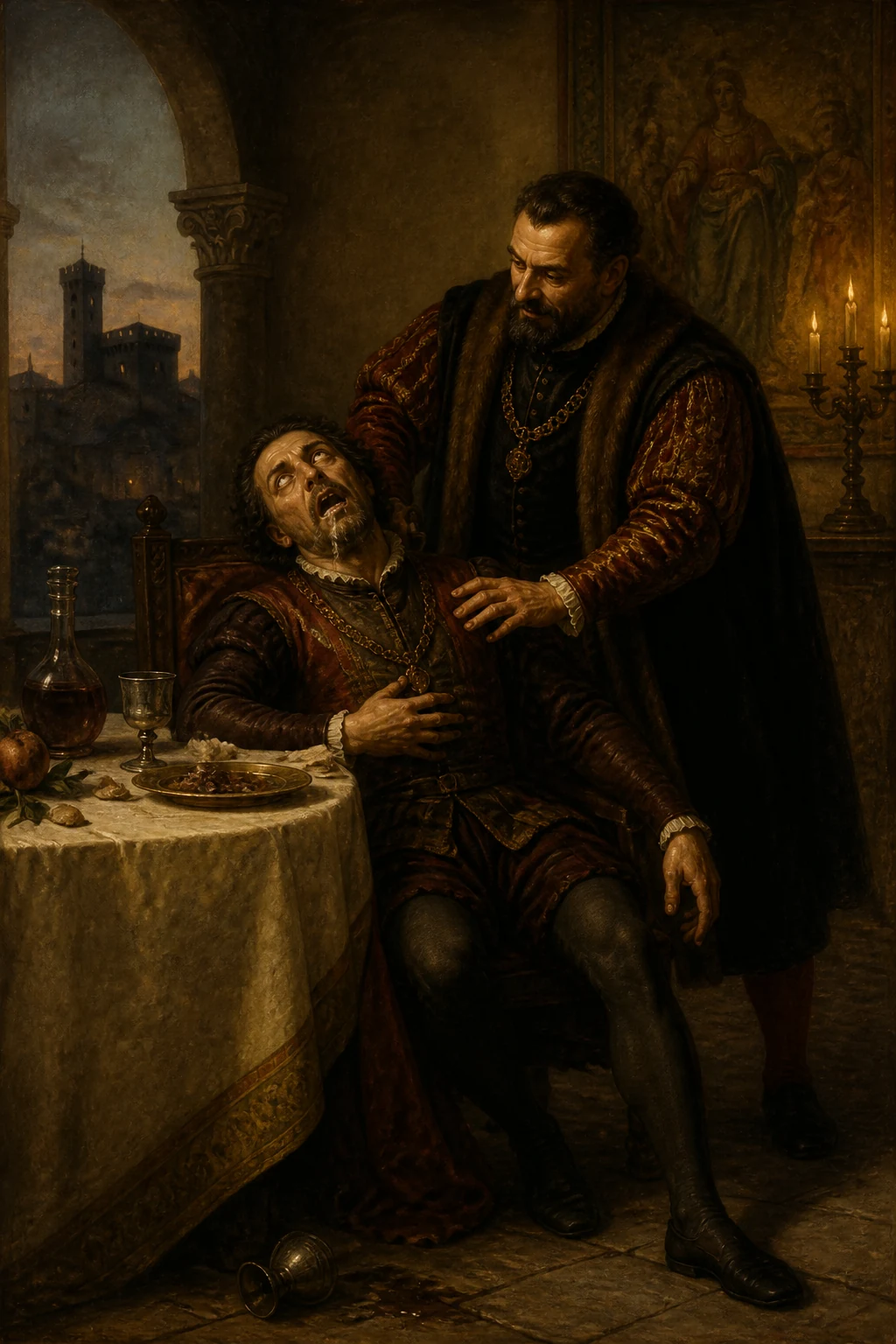
When some nobleman stood in Orso’s way, he would entice him into his company, swear friendship, share communion with him—horrible sacrilege!—from the same host, and seat him at his table... Then, in the midst of the banquet, the guest would rise, his eyes wild and his mouth foaming, and fall back, writhing... while his host, with hypocritical concern, felt his body to make certain that the ice of death was already coursing through his veins.
Orso wasted no such ceremony on commoners: he had them crippled with blows or left them to waste away from hunger in a dungeon. Orso had been widowed twice: he had dispatched his first wife with a dagger thrust, out of jealousy; the second, the only woman he ever loved, had been killed in revenge by Landolfo dei Fiori, the first wife’s brother. The first had left no children; the second had borne him a daughter and two sons. The boys perished in an obscure military encounter, an ambush perhaps laid by Landolfo himself, and the girl Lucía was left to carry on the accursed family of Amadei.
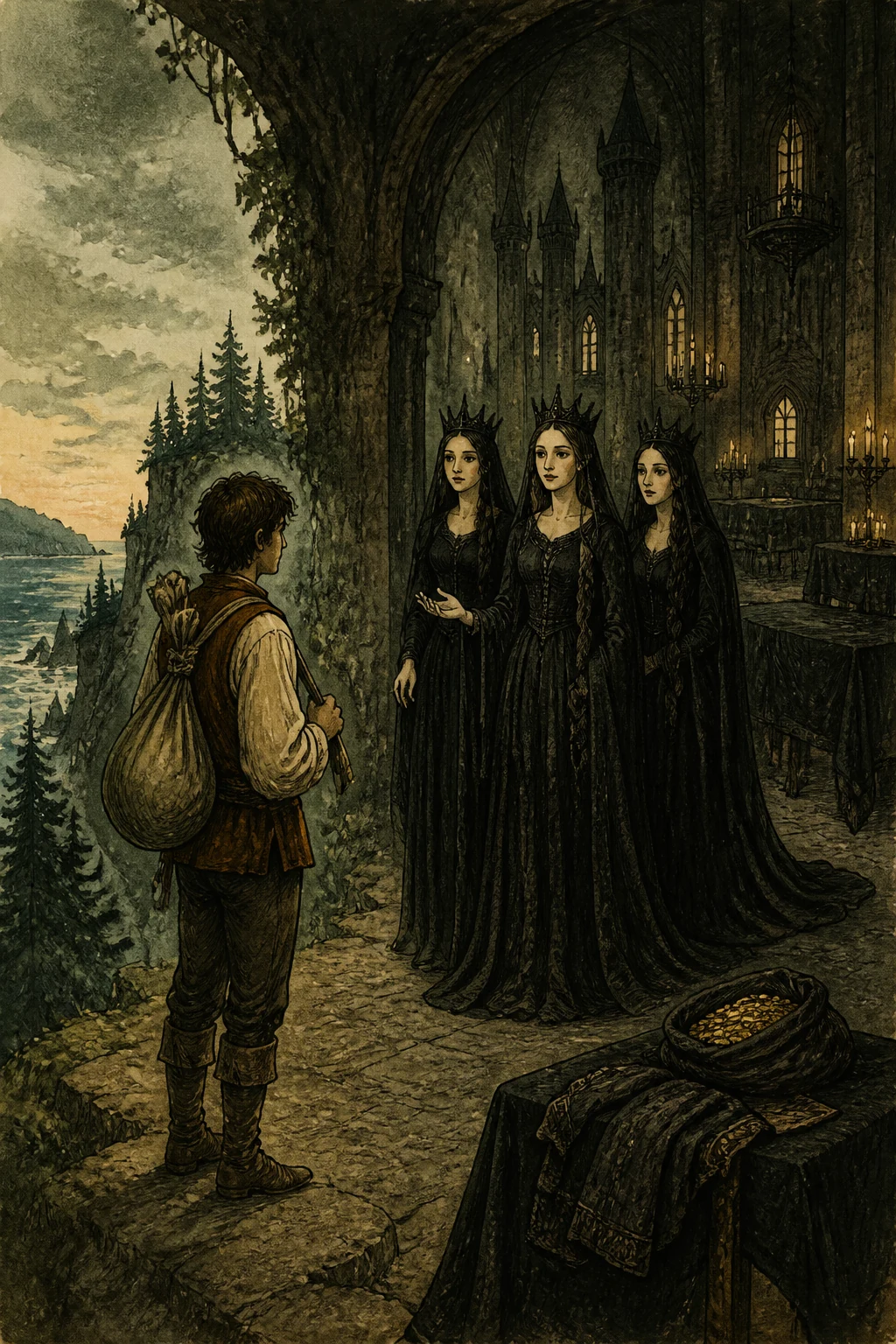
Her father the Prince was already considering whom she should marry when Lucía declared that she wished to take the veil. Orso was in despair, for in his own way he adored this last shoot of his line; but there was no help for it. Lucía’s will prevailed, and the girl entered a convent of the Order of Saint Dominic, in which Catherine, called Euphrosyne, whom the world now venerates as Saint Catherine of Siena, had flourished.
The tender youth, innocent beauty, and illustrious birth of the tyrant’s daughter made her penance all the more astonishing. In an age already pagan, she revived the harsh austerities of more fervent times.
Her food was a handful of boiled greens; her bed, two sacks without straw; her undergarment, a coarse fabric of Cilicia that left sores on her delicate skin. And when she rose to pray on January nights, after taking an hour’s rest on the damp flagstones that racked every bone in her body, she could scarcely stand from weakness, and the words of her prayers grew confused upon her lips.
For Lucía, a daughter of the Amadei after all, had not been born for mortification and suffering, but to drink the pleasures of life to the full: to delight in the sweet sound of the mandolin, in the harmonious rhythm of the poets’ stanzas, in the magic of color, in the sweet and mysterious stillness of gardens where the eternal beauty of Greek statues smiled—and only the burden of others’ sins and her longing for atonement had driven her, trembling with anguish and terror, to the foot of the altars, where at every moment her thoughts strayed unbidden to the world and its delights.
Like Catherine of Siena, she found herself assailed more than once by impure temptations and deceptive, mocking visions; but clinging to the cross, she resisted heroically. She wept, wounded her flesh, and at last knew she had triumphed by the peace that descended upon her spirit. Raptures and ineffable sweetness followed her faintness, and Lucía felt consoled.
Christmas came, the anniversary of her profession. Christmas Eve arrived with heavy snow; yet the thicker the shroud that covered the convent garden, the greater the warmth Lucía felt in her solitary cell. A strange illusion showed her, through the leaded panes, not snowflakes but thousands of pure white lilies raining down upon the branches of the trees and the hard earth, delicate as feathers plucked from angels’ wings.
Everything was strewn with lilies, and the whiteness of the garden gave off a radiance that lit the cell with moonbeams brighter and more lustrous than silver itself. Suddenly, wrapped in waves of gentle light, Lucía saw a beautiful Child, a little creature who smiled and held out his tiny arms, and whom the nun received into her own in an ecstasy of joy.
“Tonight,” said the Child lovingly, “I have chosen to bestow a favor upon you, Lucía, and instead of being born in the manger, I shall be born in the cell where you have called upon me so often.”
For a few moments Lucía remained beside herself; the favor was extraordinary, and in her humility she did not believe herself worthy of it. As soon as she could recover herself, she clasped her hands and fell prostrate, pleading with the Child.
“If you wish your servant to be happy, Child, beloved Child of my soul... grant what I am about to ask you. Ah! It is a great and difficult thing—but if you cannot accomplish the impossible, who can? Remember how I have struggled, remember my sufferings... and instead of being born here, deign to be born in another place, dark, horrible, desolate... The heart of my father, Orso Amadei.”
Stroking the penitent’s face with his little hands, the Child looked at her sorrowfully. “Do you know what you are asking, Lucía? Do you know that this heart in which you wish me to be born is harder than stone, bloodier than the scaffold, fouler than the grave? Do you know that to enter it I shall have to push aside thorns, briars, and poisonous weeds with my naked body, and feel vipers coil about my neck and cold reptiles crawl up my legs? I have endured the most shameful of deaths; but when it came to being born, I sought tenderness and love. I was born among simple shepherds, not ravening wolves! Yet, Lucía, since you have fought for me, I shall not deny you what you desire... Tonight my stable in Bethlehem shall be your father’s savage heart!”
On hearing the Child’s promise, Lucía felt a joy so great that she could not bear it. She fell motionless upon the flagstones. The light, the vision, the fragrance of the lilies all vanished, and through the leaded panes nothing could be seen but the garden shrouded in snow.
At that very hour, Orso Amadei was holding a feast in his palace—or rather, an orgy. It was no supper where witty sayings and merry tales made the hours fly, and the presence of ladies, encouraging gallantry, restrained brutality. Orso had given many such suppers, but he also enjoyed wilder gatherings, attended only by his half-bandit captains, his jesters, and his intimates, cynical and vicious men.
If any woman found herself among them, she was some unfortunate strolling performer seized in the public square, who, after serving as the guests’ plaything, would turn up the next day bruised and half dead, dumped in some alley of the city. That night Ridolfi, one of Orso’s captains, had announced better prey: he had just caught a very pretty young woman—so much the worse for her if she was out in the street at such an hour! The drinkers grew boisterous. Roaring with laughter, Orso ordered the girl brought in. She entered, pushed forward by the soldiers, trembling, her fair hair disheveled, and the men swelled with satisfaction at the sight of her, for she was indeed supremely beautiful.
Orso fixed his lustful eyes upon her, reached out his hand, brushed aside her golden curls... and recoiled in astonishment. In the helpless girl placed there for him to violate, he saw the face of his daughter Lucía: the same features, the cheeks, the brow, flushed with shame.
“Release that woman!” Orso shouted. “Have her escorted home with the utmost respect. Let no one harm her... Woe to anyone who touches a hair of her head! Let her be treated as you would treat me...”
The drunken men, astonished, obeyed without understanding. The feast continued, but Orso, troubled and brooding, no longer drained his cup. Eager to cheer him, Ridolfi made a sign, instantly understood, and a few minutes later a prisoner dying of hunger was brought into the banqueting hall. They often amused themselves by taking one of these men from his dungeon, after depriving him of food for days, seating him at the table, and offering him some exquisite delicacy; then, just as he was about to gulp it down, sobbing and howling with delight, they would snatch it from his mouth and pour into it the burning wax from the torches that lit the orgy.
The prisoner was young, and Orso, jesting, held out to him a plate of steaming roast meat and a cup of Lacrima wine; but on seeing him close at hand, he uttered a curse. The eyes that gazed at him with painful reproach from that wasted martyr’s face, the mouth that thanked him, were Lucía’s mouth and eyes, her very gaze, which her father could not fail to recognize: a gaze reflecting affection, the light of a soul seeking another light like its own.
“Set this man free,” Orso ordered. “First give him plenty to eat, as much as he wishes. And make him a gift of two golden pitchers, and as much wine as he wants... Let him be treated as you would treat me... Do you hear? As you would treat me!”
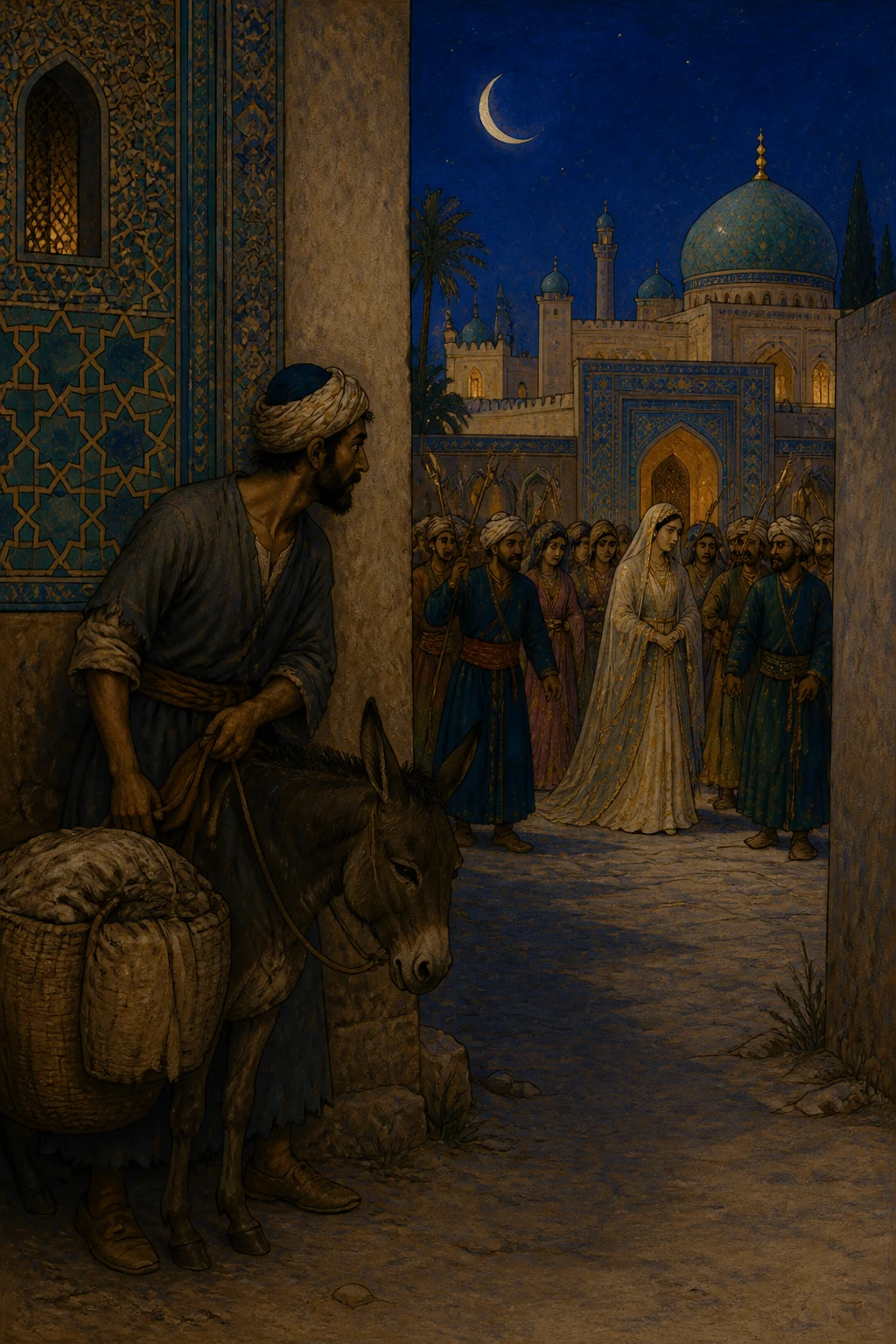
Grumbling, Ridolfi carried out the order. Almost at the very moment the prisoner was leaving, an old woman appeared in the banqueting hall with a little child in her arms. “Mercy, great lord!” she cried. “Mercy for the child you see here. This little one is the son of your brother-in-law Landolfo dei Fiori, whom you hate, and some soldiers, on your orders, they say, mean to dash him against a wall. You cannot have given so cruel an order, and I place him under your protection.” At the hated name of Landolfo, Orso shook with fury, and drawing his dagger, was about to plunge it into the little one’s throat... But the child smiled serenely at him, and his smile was Lucía’s enchanting, unforgettable smile when her father caressed her in the days of her childhood. Overcome, Orso fell to his knees and, beating his breast, began to confess his sins aloud; for Jesus, faithful to his promise, had just been born in that heart darker than the abyss of hell...
The following morning, Orso received word that his daughter had breathed her last at the stroke of midnight. The tyrant tied a rope about his neck, walked barefoot through the city streets begging the inhabitants’ forgiveness, and, leaning on a staff, slowly departed. He was never heard of again. Blessed are those in whose hearts the Child is born!
Izvirnik
006 De Navidad
Naslednje strani prikazujejo izvirno besedilo za primerjavo.
Este cuento pasa en el siglo XVI, en una de esas ciudades de Italia que gobernaba un tirano. Llamémosle á la ciudad, si queréis, Montenero, y á su tirano Orso Amadei.
Orso era un hombre de su época, feroz, desalmado, disimulado en el rencor, implacable en la venganza. Valiente en el combate, magnífico en sus larguezas y exquisito en sus aficiones artísticas, como los Médicis, festejaba en su palacio á pintores y poetas y recibía en su cámara privada á los sospechosos alquimistas de entonces, que si no consiguieron fabricar oro, no ignoraban la fórmula de destilar activos venenos.
Cuando á Orso le estorbaba un señor, le atraía, jurábale amistad, comulgaba con él--¡horrible sacrilegio!--de la misma hostia, le sentaba á su mesa... y en mitad del banquete el convidado se levantaba con los ojos extraviados y espumante la boca, volvía á caer retorciéndose... mientras el anfitrión, con hipócrita solicitud, le palpaba para asegurarse de que el hielo de la muerte corría ya por sus venas.
Con los villanos no gastaba Orso tantas ceremonias: los derrengaba á palos, ó los dejaba consumirse de hambre en un calabozo.
Orso era viudo dos veces: á su primera mujer la había despachado de una puñalada, por celos; á la segunda, la única que amó, se la mató en venganza Landolfo dei Fiori, hermano de la primera. Esta no había dejado hijos: la segunda sí, una hembra y dos varones. Perecieron los varones en un oscuro lance militar, una emboscada que tal vez preparó el mismo Landolfo, y quedó la niña Lucía, para continuar la maldita familia de Amadei.
Discurría ya su padre el Príncipe con quien desposarla, cuando Lucía declaró que deseaba tomar el velo. Orso se desesperó, porque, á su manera, adoraba á aquel último retoño de su raza; mas no hubo remedio; la voluntad de Lucía se impuso, y la niña entró en un monasterio de la Orden de Santo Domingo, en que había florecido Catalina, llamada Eufrosina, á quien el mundo venera hoy con el nombre de Santa Catalina de Sena.
La tierna juventud, la cándida belleza y la ilustre cuna de la hija del tirano, aumentaron el asombro de su penitencia. En un siglo ya pagano, renovó las duras penitencias de edades más fervorosas.
Su alimento era un puñado de hierbas cocidas; su cama dos quilmas sin paja; su ropa interior un burdo tejido de Cilicia, que llagaba la delicada piel; y cuando se levantaba á orar, en las noches de Enero, después de tomar una hora de descanso sobre las losas húmedas, que quebrantaban sus huesos todos, apenas podía sostenerse de debilidad y las palabras del rezo se confundían en su boca.
Porque Lucía, hija al fin de los Amadei, no había nacido para la mortificación y el dolor, sino para agotar las alegrías de la vida, para recrearse en el grato sonido del bandolín, en el armonioso ritmo de las estancias de los poetas, en la magia del color, en la dulce y misteriosa calma de los jardines, donde sonreía la eterna hermosura de las estatuas griegas,--y sólo el peso de ajenas culpas y el anhelo de la expiación la habían arrojado palpitante de angustia y de terror al pie de los altares, donde á cada minuto recordaba involuntariamente el mundo y sus goces.
Como Catalina de Sena, más de una vez se vió asaltada por tentaciones impuras y por imágenes engañadoras y burlonas; pero abrazada á la cruz, resistió heroicamente; lloró, se hirió las carnes y, al fin, conoció su victoria en la paz que descendía á su espíritu. Arrobos y dulzuras inexplicables sucedieron á los desfallecimientos, y Lucía se sintió consolada.
Llegó la Navidad, aniversario de su profesión. Vino la Nochebuena, acompañada de mucha nieve; pero cuanto más espeso era el sudario que cubría el huerto del convento, más calor notaba Lucía en su celda solitaria; una ilusión singular le mostraba, al través de los emplomados vidrios, que en lugar de copos de nieve llovían sobre las ramas de los árboles y sobre la dura tierra millares de azucenas nítidas, finas como plumas arrancadas del ala de los ángeles.
Sembrado de azucenas estaba todo, y la blancura del jardín despedía una claridad que alumbraba la celda con rayos de luna, más vivos y lucientes que la misma plata. De pronto, envuelto en olas de luz apacible, Lucía vió á un precioso Niño; una criatura que sonreía, que tendía los bracitos, y á quien la monja recibió enajenada en ellos.
--Esta noche--dijo el Niño amorosamente--he querido favorecerte, Lucía, y en vez de nacer en el pesebre, naceré en la celda donde tantas veces me has invocado.
Lucía permaneció algunos instantes fuera de sí; el favor era extraordinario y, en su humildad, no se creía digna de él. Apenas pudo recobrarse, juntó las manos y se postró implorando al Niño.
--Si quieres que sea dichosa tu sierva, Niño, mi Niño del alma... concédeme lo que voy á pedirte. ¡Ah! Es cosa grande y difícil,--pero si tú no puedes realizar imposibles, ¿quién los realizará? Acuérdate de lo que he luchado, acuérdate de mis sufrimientos... y en vez de nacer aquí, dígnate nacer en otro lugar oscuro, horrible, desolado... El corazón de mi padre, Orso Amadei.
Halagando el Niño con sus manecitas el rostro de la penitente, la miró lleno de tristeza.
--¿Sabes lo que pides, Lucía? ¿Sabes que ese corazón donde pretendes que yo nazca es más duro que la piedra, más sangriento que el cadalso, más fétido que el sepulcro? ¿Sabes que para entrar allí tendré que apartar con mi cuerpo desnudo los espinos, los abrojos y las ponzoñosas hierbas, y sentir cómo se enroscan á mi cuello las víboras y cómo trepan por mis piernas los fríos reptiles? ¡Yo he sabido morir del modo más afrentoso; pero al tratarse de nacer, busqué dulzura y amor; nací entre sencillos pastores, no entre lobos carniceros! En fin, Lucía, ya que has combatido por mí, no he de negarte lo que deseas... ¡Esta noche mi establo de Belén será el corazón de fiera de tu padre!
Al oir la promesa del Niño, Lucía experimentó tan subido gozo, que no lo pudo resistir. Cayó inerte sobre las losas. La luz, la visión, el perfume de las azucenas, todo desapareció, y al través de los emplomados vidrios sólo se vió el huerto amortajado en nieve.
A aquella misma hora, Orso Amadei celebraba un festín en su palacio; mejor que festín hay que decir orgía. No era una cena donde los dichos agudos y las alegres historietas hiciesen volar las horas y en que la presencia de las damas, incitando á la galantería, contuviese á la brutalidad. De estas cenas había dado muchas Orso; pero también gustaba de otras más desenfrenadas, á que sólo asistían sus capitanes semi-bandidos, sus bufones y sus familiares, gente cínica y perversa.
Si se mezclaba con ellos alguna mujer, era la infeliz juglaresa sorprendida en la plaza pública, y que, después de servir de ludibrio á los convidados, aparecía al día siguiente con el cuerpo acardenalado, medio muerta, arrojada en cualquier callejuela de la ciudad. Aquella noche, Ridolfi, uno de los capitanes de Orso, había anunciado mejor presa: justamente acababa de cazar á una joven muy linda, ¡peor para ella si andaba á tales horas por la calle! Alborotáronse los bebedores; Orso, riendo á carcajadas, ordenó que trajesen á la jovencita, que entró, empujada por los soldados, temblorosa, desgreñado el rubio pelo, y los hombres se engrieron al verla, porque era en verdad soberanamente hermosa.
Orso clavó en ella sus ojos impúdicos; tendió la mano, apartó los rizos de oro... y asombrado se echó atrás; en la niña desvalida, dispuesta allí para ultrajarla, veía el rostro de su hija Lucía, las mismas facciones, las mejillas, la frente, sonrojada de vergüenza.
--Soltad á esa mujer--gritó Orso.--Que la acompañen á su casa con el mayor respeto. Que nadie la haga daño... ¡Ay del que toque á un cabello de su cabeza! Que se la trate como á mi persona...
Los beodos, atónitos, obedecieron sin comprender. Continuó el festín; pero Orso, preocupado y sombrío, no apuraba la copa. Deseoso Ridolfi de animarle, hizo una seña, entendida al vuelo, y pocos minutos después, un preso moribundo de hambre fué traído á la sala del banquete. Solían divertirse en sacar de su mazmorra á uno de éstos, á quienes desde días antes privaban de alimento; sentarle á la mesa, ofrecerle algún exquisito manjar, y, cuando iba á engullirlo sollozando y aullando de contento, se lo quitaban de la boca y le vertían en ella la ardiente cera de los hachones que alumbraban la orgía.
El preso era joven, y Orso, bromeando, le tendió un plato de asado, humeante, y una copa de Lácrima; mas al verle de cerca, profirió una imprecación. Los ojos, que le fijaban con doloroso reproche desde aquella extenuada faz de mártir, la boca que le daba gracias, eran la boca y los ojos de Lucía, su propia mirada, que el padre no podía desconocer, mirada de reflejo cariñoso, luz del alma que busca otra luz igual.
--Que suelten á éste--mandó Orso.--Antes dadle bien de comer, cuanto desee. Y regaladle dos jarros de oro, y vino á discreción... Que se le trate como á mi persona... ¿lo oís? ¡como á mi persona!
Ridolfi, gruñendo, cumplió la orden. Casi al punto mismo en que salía el preso, se presentó en la sala del festín una mujer vieja, con un chiquitín en brazos:--«Piedad, gran señor--exclamaba,--piedad de la criatura que aquí ves. Este pequeño es el hijo de tu cuñado Landolfo dei Fiori, á quien aborreces, y unos soldados, por orden tuya, según dicen, le quieren estrellar contra el muro. Tú no puedes haber dado tan cruel orden, y yo le pongo bajo tu amparo.»--Al nombre odiado de Landolfo, Orso se estremeció de furor, y desnudando el puñal, iba á atravesar la garganta del pequeño... pero éste, apacible, le sonreía, y su sonrisa era la sonrisa encantadora, inolvidable, de Lucía, cuando su padre la acariciaba, en los días de la niñez.--Orso, vencido, cayó de rodillas, y golpeándose el pecho empezó á acusarse en voz alta de sus pecados; porque Jesús, fiel á su promesa, acababa de nacer en aquel corazón más oscuro que el abismo infernal...
A la mañana siguiente, Orso recibió la noticia de que su hija había espirado á las doce en punto de la noche.
El tirano se ató una soga al cuello, recorrió descalzo las calles de la ciudad pidiendo perdón á los habitantes y, apoyado en un bastón, se alejó lentamente. Nunca se volvió á saber de él. ¡Dichosos aquellos en cuyo corazón nace el Niño!
Nadaljuj z branjem