O besedilu
Zlata ptica
- Vir
- Grimmove pravljice
- Avtor
- Jacob in Wilhelm Grimm
- Jezik branja
- English
- Jezik izvirnika
- Deutsch
- Čas branja
- 15 min branja
- Obseg
- 12 strani
- Naslov izvirnika
- Der goldene Vogel
O izvirniku
Grimmove pravljice
Gozdovi, čarobni predmeti in ljudska logika evropske pripovedne tradicije. Bralni jezik je English, izvirnik pa prihaja iz vira Grimmove pravljice v jeziku Deutsch.
Besedilo
Zlata ptica
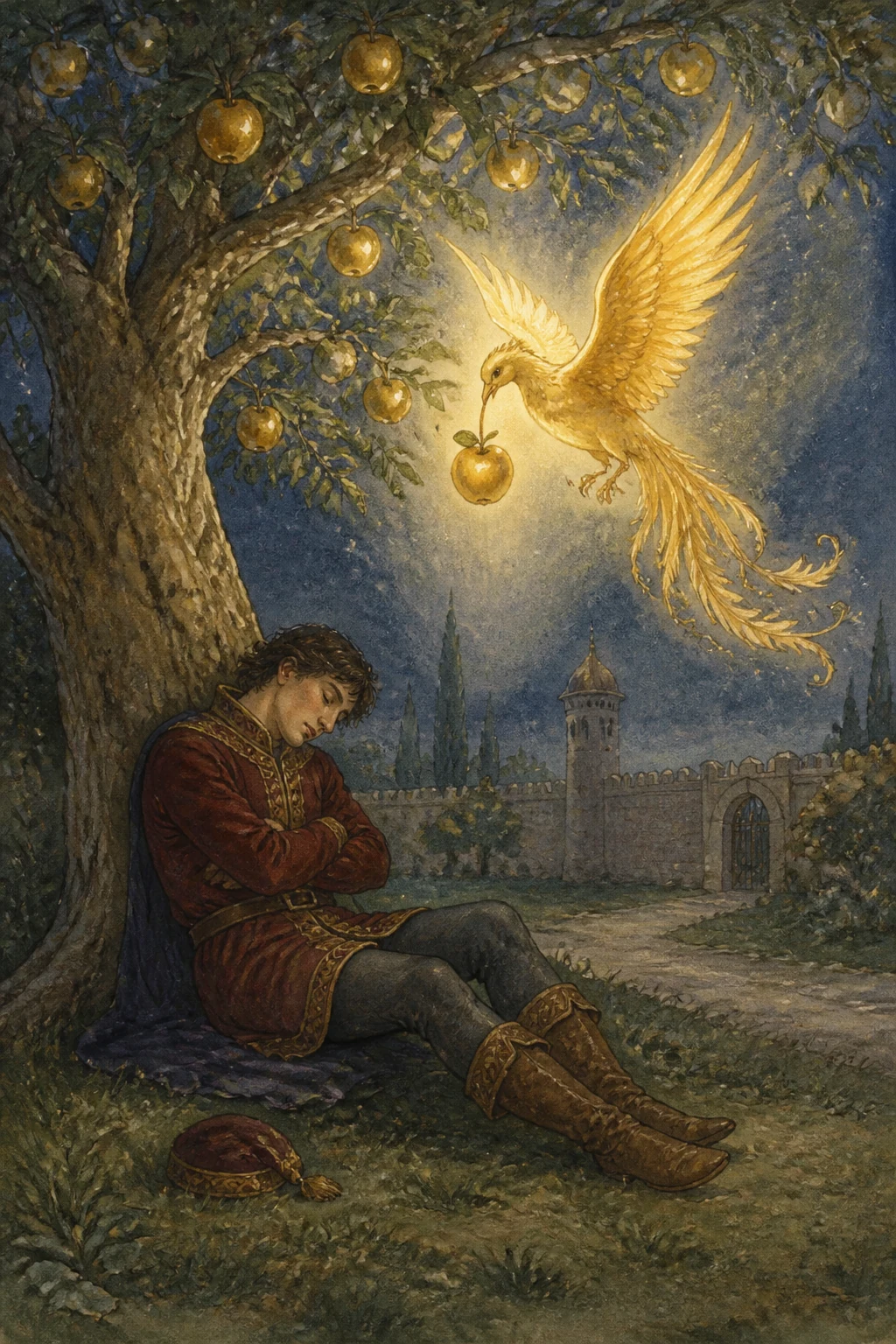
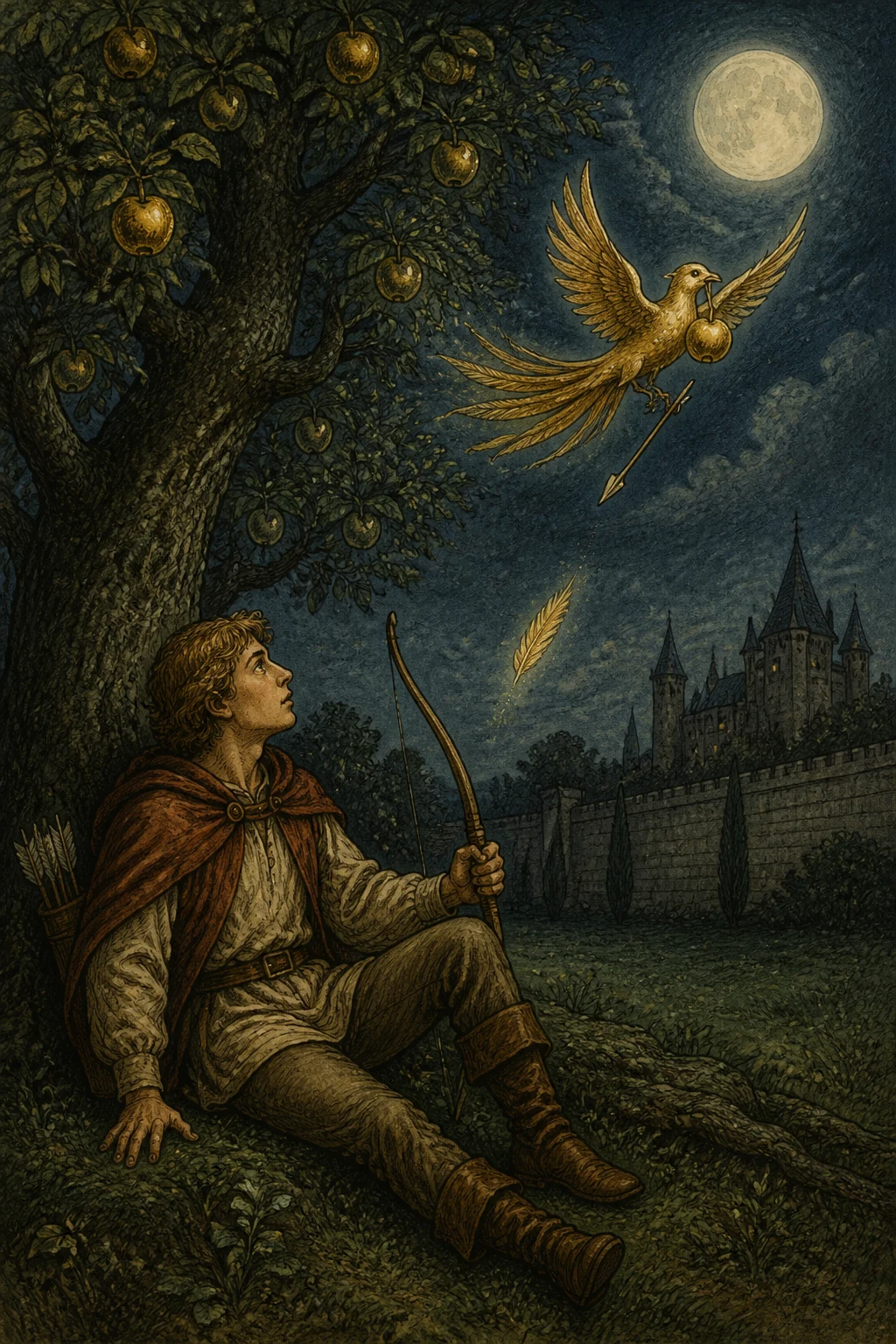
Once upon a time there was a king who had a beautiful pleasure garden behind his castle, and in it stood a tree that bore golden apples. When the apples ripened, they were counted, but the very next morning one was missing. This was reported to the king, and he ordered that a watch be kept beneath the tree every night. The king had three sons, and at nightfall he sent the eldest into the garden. But when midnight came, the prince could no longer fight off sleep, and the next morning another apple was missing. The following night the second son had to keep watch, but he fared no better. When the clock struck twelve, he fell asleep, and in the morning an apple was missing. Now it was the third son's turn to keep watch. He was willing enough, but the king had little faith in him and thought he would accomplish even less than his brothers. At last, however, he gave his consent. So the young prince lay down beneath the tree, kept watch, and would not let sleep overcome him. As the clock struck twelve, something rustled through the air, and in the moonlight he saw a bird flying towards him, its plumage gleaming all over with gold. The bird alighted in the tree and had just pecked off an apple when the young prince shot an arrow at it. The bird flew away, but the arrow had struck its plumage, and one of its golden feathers fell to the ground. The young prince picked it up, brought it to the king the next morning, and told him what he had seen during the night. The king assembled his council, and everyone declared that a feather like this was worth more than the whole kingdom. "If the feather is so precious," declared the king, "then one alone is of no use to me. I must and shall have the whole bird."
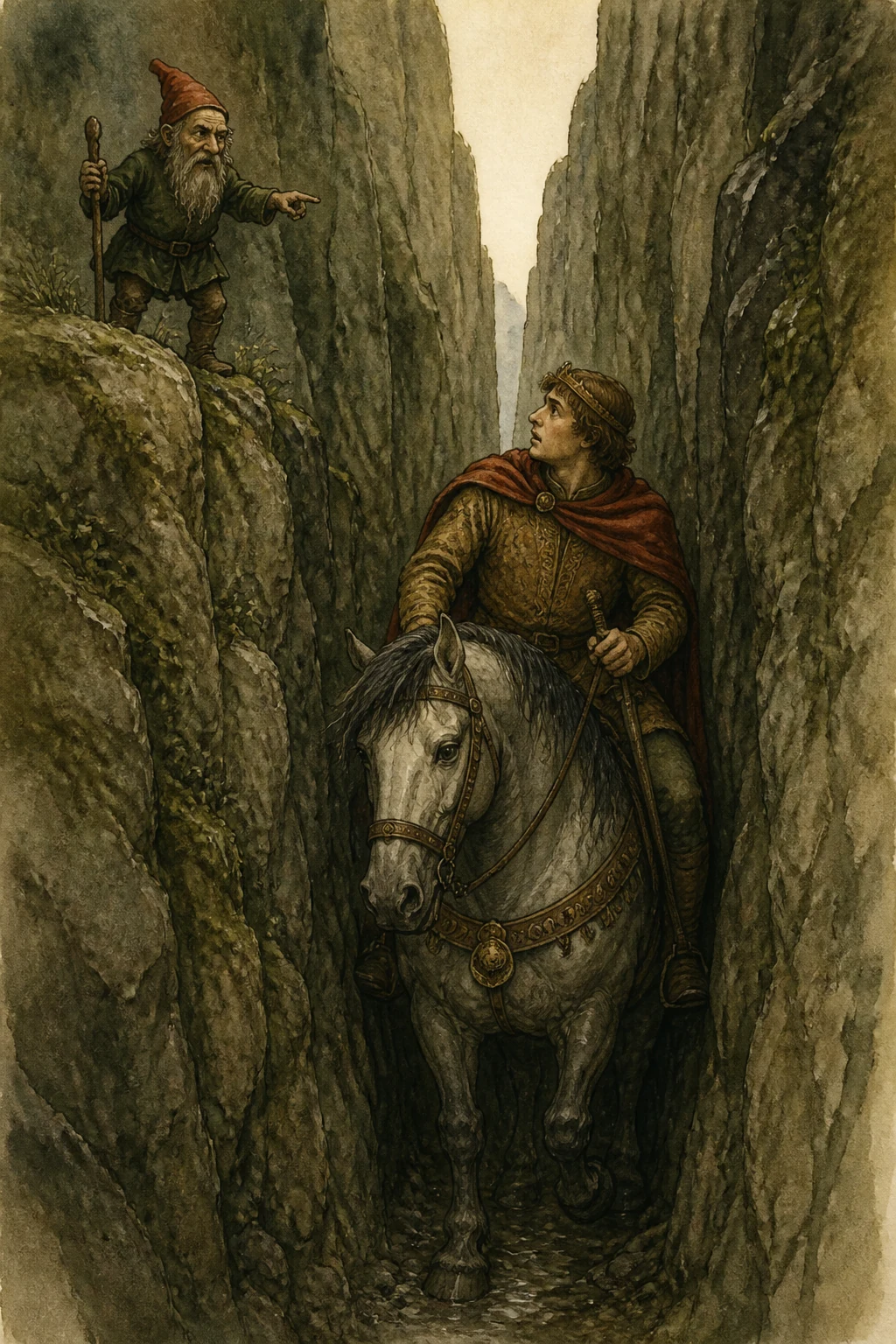
The eldest son set out, trusting in his own cleverness and certain that he would find the golden bird. When he had gone some distance, he saw a fox sitting at the edge of a forest, raised his gun, and took aim. The fox called out, "Do not shoot me, and in return I will give you some good advice. You are on your way to find the golden bird, and this evening you will come to a village where two inns stand opposite each other. One is brightly lit, with much merrymaking inside, but do not go in there. Go to the other, however shabby it may look." How could such a foolish animal possibly give me sensible advice? thought the prince, and fired. But he missed the fox, which stretched out its tail and ran swiftly into the forest. The prince continued on his way and towards evening came to the village where the two inns stood. In one there was singing and dancing; the other looked poor and dreary. I should be a fool, he thought, to go into that wretched inn and pass the fine one by. So he went into the merry inn, lived there in luxury and revelry, and forgot the bird, his father, and all good counsel.
Some time passed, and still the eldest son did not come home. Then the second son set out to search for the golden bird. Like his elder brother, he met the fox and was given the same good advice, which he ignored. He came to the two inns, and his brother, who was standing at the window of the one from which the sounds of merriment rang out, called to him. He could not resist, went inside, and lived only for his own pleasures.
More time passed, and now the youngest prince wished to set out and try his luck, but his father would not allow it. "It is no use," he said. "He is even less likely to find the golden bird than his brothers, and if any misfortune befalls him, he will not know how to help himself. He lacks good sense." At last, however, when the prince would give him no peace, he let him go. Once again the fox was sitting at the edge of the forest, begged for its life, and offered its good advice. The young prince was kindhearted and said, "Do not worry, little fox. I will do you no harm!" "You will not regret it," replied the fox, "and so that you may travel faster, climb onto my tail." Scarcely had he seated himself when the fox began to run, racing over stock and stone so fast that the wind whistled through their hair. When they reached the village, the young prince dismounted, followed the good advice, and went straight into the humble inn without looking about him. There he spent a peaceful night. The next morning, when he came out into the fields, the fox was already sitting there and said, "Now I will tell you what to do next. Keep going straight ahead, and at last you will come to a castle with a whole troop of soldiers lying in front of it. But pay no heed to them, for they will all be sleeping and snoring. Walk right through their midst and straight into the castle, then pass through all the rooms. At last you will come to a chamber where a golden bird hangs in a wooden cage. Beside it stands an empty golden cage for show, but take care not to take the bird out of its shabby cage and put it into the splendid one, or things may go badly for you." With these words the fox stretched out its tail again, and the prince seated himself upon it. Away they raced over stock and stone, so fast that the wind whistled through their hair. When he reached the castle, he found everything just as the fox had said. The prince entered the chamber where the golden bird was in a wooden cage, with a golden cage standing beside it; the three golden apples lay scattered about the room. He thought it would be absurd to leave such a beautiful bird in so plain and ugly a cage, so he opened the door, caught the bird, and put it into the golden one. At that very moment, however, the bird gave a piercing cry. The soldiers awoke, rushed in, and led him away to prison. The next morning he was brought before a court, and since he confessed everything, he was sentenced to death. But the king said he would spare his life on one condition: he must bring him the golden horse, which could run faster than the wind. Then he would receive the golden bird as a reward into the bargain.
The prince set out, but he sighed and was sad, for where was he to find the golden horse? Suddenly he saw his old friend the fox sitting by the road. "You see," said the fox, "this is what comes of not listening to me! But take heart. I will help you and tell you how to get the golden horse. You must go straight on, and you will come to a castle where the horse stands in the stable. The grooms will be lying in front of the stable, but they will be sleeping and snoring, and you can lead the golden horse out without a care. Only one thing you must remember: put the shabby saddle of wood and leather on it, and on no account the golden saddle hanging beside it, or things will go badly for you." Then the fox stretched out its tail, the prince seated himself upon it, and away they raced over stock and stone, so fast that the wind whistled through their hair. Everything was just as the fox had said, and he came to the stable where the golden horse stood. But as he was about to put the shabby saddle on it, he thought, Such a beautiful creature would be disgraced if I did not give it the fine saddle it deserves. Yet scarcely had the golden saddle touched the horse when it began to neigh loudly. The grooms awoke, seized the young prince, and threw him into prison. The next morning the court sentenced him to death, but the king promised to spare his life and give him the golden horse as well if he could bring back the beautiful princess from the golden castle.
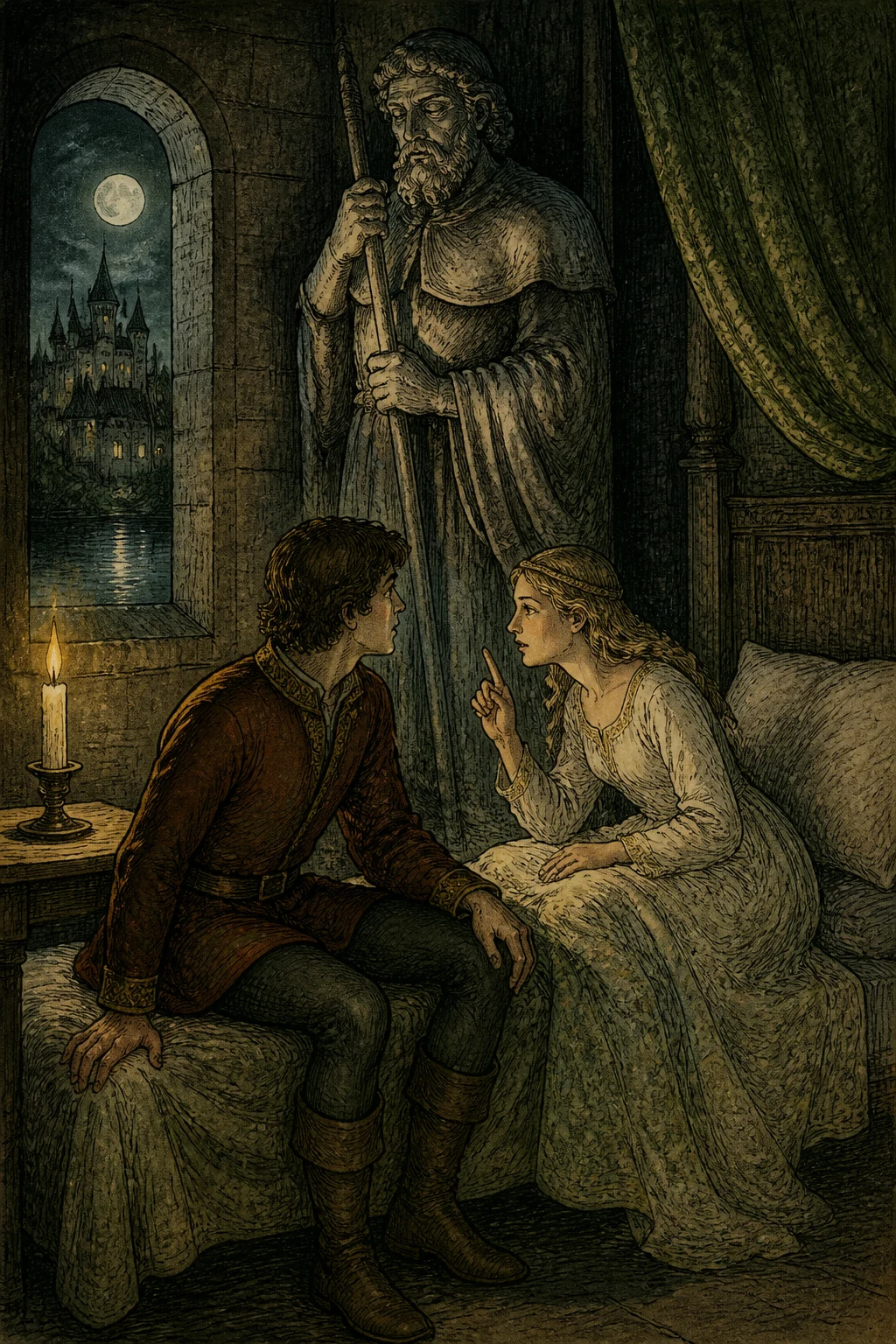
With a heavy heart the young prince set out, but luckily he soon found the faithful fox. "I ought to leave you to your misfortune," said the fox, "but I pity you and will help you out of your trouble once more. Your road leads straight to the golden castle. You will arrive in the evening, and at night, when all is quiet, the beautiful princess goes to the bathhouse to bathe. As she goes in, spring forward and give her a kiss. Then she will follow you, and you can lead her away. Only do not let her say goodbye to her parents first, or things may go badly for you." Then the fox stretched out its tail, the prince seated himself upon it, and away they raced over stock and stone, so fast that the wind whistled through their hair. When he reached the golden castle, everything was as the fox had said. He waited until midnight, when everyone was fast asleep and the beautiful maiden went to the bathhouse, then sprang out and gave her a kiss. She said she would gladly go with him, but with tears in her eyes she begged him to let her say goodbye to her parents first. At first he resisted her pleas, but when she wept all the more and fell at his feet, he gave in at last. Scarcely had the maiden approached her father's bed when he and everyone else in the castle awoke, and the young prince was seized and put in prison.
The next morning the king said to him, "Your life is forfeit, and you can find mercy only if you remove the mountain that stands before my windows and blocks my view. You must accomplish this within eight days. If you succeed, you shall have my daughter as your reward." The prince began to dig and shovel without ceasing, but when, after seven days, he saw how little he had accomplished and that all his work amounted to almost nothing, he fell into deep sorrow and gave up all hope. On the evening of the seventh day, however, the fox appeared and said, "You do not deserve my help, but go and lie down to sleep. I will do the work for you." The next morning, when he awoke and looked out of the window, the mountain had vanished. Full of joy, the young prince hurried to the king and told him that the task was done. Whether the king liked it or not, he had to keep his word and give him his daughter.
Now the two set off together, and before long the faithful fox joined them. "You have the best prize, to be sure," it said, "but the golden horse belongs with the maiden from the golden castle." "How am I to get it?" asked the young prince. "I will tell you," replied the fox. "First take the beautiful maiden to the king who sent you to the golden castle. There will be boundless rejoicing, and they will gladly give you the golden horse and lead it out for you. Mount it at once and reach down to shake everyone's hand in farewell, leaving the beautiful maiden until last. When you have taken her hand, swing her up behind you and gallop away. No one will be able to catch you, for the horse runs faster than the wind."
Everything went well, and the prince carried the beautiful maiden away on the golden horse. The fox kept pace with them and said to the young prince, "Now I will help you get the golden bird as well. When you are near the castle where the bird is kept, let the maiden dismount, and I will take her into my care. Then ride the golden horse into the castle courtyard. There will be great rejoicing at the sight of it, and they will bring out the golden bird for you. As soon as you have the cage in your hand, gallop back to us and collect the maiden." When the plan had succeeded and the prince was ready to ride home with his treasures, the fox said, "Now you must reward me for my help." "What do you ask in return?" said the young prince. "When we reach the forest over there, shoot me dead and cut off my head and paws." "A fine way to show my gratitude!" said the prince. "I could never grant you that." Then the fox said, "If you will not do it, I must leave you. But before I go, I will give you one more piece of good advice. Beware of two things: buy no gallows-flesh, and do not sit on the edge of a well!" With that, it ran into the forest.
The young prince thought, "What a strange creature, with such odd fancies. Who would buy gallows-flesh? And I have never yet felt the slightest desire to sit on the edge of a well." He rode on with the beautiful maiden, and his road took him once more through the village where his two brothers had remained. There was a great crowd and much commotion, and when he asked what was happening, he was told that two men were to be hanged. When he came closer, he saw that they were his brothers, who had committed all manner of wicked deeds and squandered everything they owned. He asked whether they could be set free. "If you are willing to pay for them," the people replied, "but why would you waste your money buying such wicked men their freedom?" He did not hesitate, but paid for them, and once they were released, they all continued their journey together.
They came to the forest where they had first met the fox, and since it was cool and pleasant there while the sun was burning hot, the two brothers said, "Let us rest here by the well for a while and have something to eat and drink!" He agreed, and as they talked he forgot himself and sat down on the edge of the well, suspecting no harm. But the two brothers pushed him backwards into the well, took the maiden, the horse, and the bird, and went home to their father. "We have brought you not only the golden bird," they said, "but we have also won the golden horse and the maiden from the golden castle." There was great rejoicing, but the horse would not eat, the bird would not sing, and the maiden sat and wept.
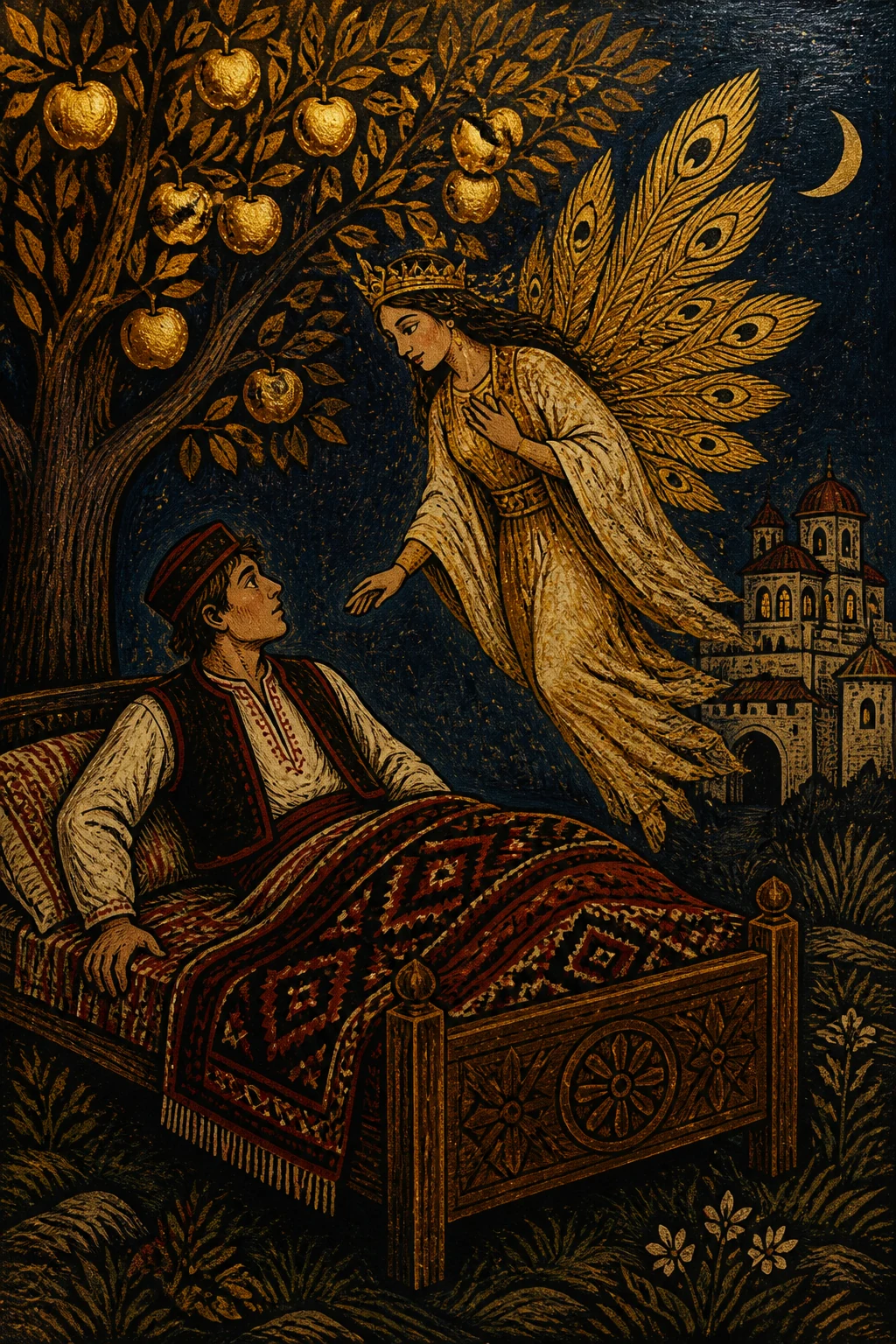
The youngest brother, however, had not perished. Fortunately the well was dry, and he landed unharmed on soft moss, but he could not climb out again. Even in this distress the faithful fox did not desert him. It leaped down to him and scolded him for forgetting its advice. "But I cannot help myself," it said. "I will bring you back into the daylight once more." It told him to grasp its tail and hold on tightly, then pulled him up. "You are not out of danger yet," said the fox. "Your brothers were not certain you were dead, and they have posted guards all around the forest, with orders to kill you if you show yourself." A poor man was sitting by the road, and the young prince exchanged clothes with him and in this way reached the king's court. No one recognized him, but the bird began to sing, the horse began to eat, and the beautiful maiden stopped weeping. The king asked in wonder, "What does this mean?" The maiden said, "I do not know, but I was so sad, and now I am so happy. It is as though my true bridegroom had come." She told him everything that had happened, although the other brothers had threatened to kill her if she revealed anything. The king ordered everyone in the castle to be brought before him, and the young prince came too, dressed as a poor man in his ragged clothes. But the maiden recognized him at once and threw her arms around his neck. The wicked brothers were seized and executed, while he was married to the beautiful maiden and named the king's heir.
But what became of the poor fox? Long afterwards, the prince went into the forest again one day. There the fox met him and said, "You now have everything you could wish for, but there is no end to my misfortune, though it lies within your power to release me." Once again it begged him to shoot it dead and cut off its head and paws. So he did, and scarcely was it done when the fox turned into a man, who was none other than the beautiful princess's brother, freed at last from the spell that had bound him. And now nothing was wanting to their happiness for as long as they lived.
Izvirnik
Der goldene Vogel
Naslednje strani prikazujejo izvirno besedilo za primerjavo.
Ein Märchen der Brüder Grimm
Es war vor Zeiten ein König, der hatte einen schönen Lustgarten hinter seinem Schloß, darin stand ein Baum, der goldene Äpfel trug. Als die Äpfel reiften, wurden sie gezählt, aber gleich den nächsten Morgen fehlte einer. Das ward dem König gemeldet, und er befahl, daß alle Nächte unter dem Baume Wache sollte gehalten werden. Der König hatte drei Söhne, davon schickte er den ältesten bei einbrechender Nacht in den Garten. Wie es aber Mitternacht war, konnte er sich des Schlafes nicht erwehren, und am nächsten Morgen fehlte wieder ein Apfel. In der folgenden Nacht mußte der zweite Sohn wachen, aber dem erging es nicht besser. Als es zwölf Uhr geschlagen hatte, schlief er ein, und morgens fehlte ein Apfel. Jetzt kam die Reihe zu wachen an den dritten Sohn; der war auch bereit, aber der König traute ihm nicht viel zu und meinte, er würde noch weniger ausrichten als seine Brüder; endlich aber gestattete er es doch. Der Jüngling legte sich also unter den Baum, wachte und ließ den Schlaf nicht Herr werden. Als es zwölf schlug, so rauschte etwas durch die Luft, und er sah im Mondschein einen Vogel daherfliegen, dessen Gefieder ganz von Gold glänzte. Der Vogel ließ sich auf dem Baume nieder und hatte eben einen Apfel abgepickt, als der Jüngling einen Pfeil nach ihm abschoß. Der Vogel entfloh, aber der Pfeil hatte sein Gefieder getroffen, und eine seiner goldenen Federn fiel herab. Der Jüngling hob sie auf, brachte sie am andern Morgen dem König und erzählte ihm, was er in der Nacht gesehen hatte. Der König versammelte seinen Rat, und jedermann erklärte, eine Feder wie diese sei mehr wert als das gesamte Königreich. "Ist die Feder so kostbar," erklärte der König, "so hilft mir die eine auch nichts, sondern ich will und muß den ganzen Vogel haben."
Der älteste Sohn machte sich auf den Weg, verließ sich auf seine Klugheit und meinte den goldenen Vogel schon zu finden. Wie er eine Strecke gegangen war, sah er an dem Rande eines Waldes einen Fuchs sitzen, legte seine Flinte an und zielte auf ihn. Der Fuchs rief: "Schieß mich nicht, ich will dir dafür einen guten Rat geben. Du bist auf dem Weg nach dem goldenen Vogel und wirst heute abend in ein Dorf kommen, wo zwei Wirtshäuser einander gegenüberstehen. Eins ist hell erleuchtet, und es geht darin lustig her; da kehr aber nicht ein, sondern geh ins andere, wenn es dich auch schlecht ansieht." Wie kann mir wohl so ein albernes Tier einen vernünftigen Rat erteilen! dachte der Königssohn und drückte los, aber er fehlte den Fuchs, der den Schwanz streckte und schnell in den Wald lief. Darauf setzte er seinen Weg fort und kam abends in das Dorf, wo die beiden Wirtshäuser standen. In dem einen ward gesungen und gesprungen, das andere hatte ein armseliges betrübtes Ansehen. Ich wäre wohl ein Narr, dachte er, wenn ich in das lumpige Wirtshaus ginge und das schöne liegen ließ. Also ging er in das lustige ein, lebte da in Saus und Braus und vergaß den Vogel, seinen Vater und alle guten Lehren.
Als eine Zeit verstrichen und der älteste Sohn immer und immer nicht nach Haus gekommen war, so machte sich der zweite auf den Weg und wollte den goldenen Vogel suchen. Wie dem Ältesten begegnete ihm der Fuchs und gab ihm den guten Rat, den er nicht achtete. Er kam zu den beiden Wirtshäusern, wo sein Bruder am Fenster des einen stand, aus dem der Jubel erschallte, und ihn anrief. Er konnte nicht widerstehen, ging hinein und lebte nur seinen Lüsten.
Wiederum verstrich eine Zeit, da wollte der jüngste Königssohn ausziehen und sein Heil versuchen, der Vater aber wollte es nicht zulassen. "Es ist vergeblich," sprach er, "der wird den goldenen Vogel noch weniger finden als seine Brüder, und wenn ihm ein Unglück zustößt, so weiß er sich nicht zu helfen, es fehlt ihm am Besten." Doch endlich, wie keine Ruhe mehr da war, ließ er ihn ziehen. Vor dem Walde saß wieder der Fuchs, bat um sein Leben und erteilte den guten Rat. Der Jüngling war gutmütig und sagte: "Sei ruhig, Füchslein, ich tue dir nichts zuleid!" - "Es soll dich nicht gereuen," antwortete der Fuchs, "und damit du schneller fortkommst, so steig hinten auf meinen Schwanz." Und kaum hat er sich aufgesetzt, so fing der Fuchs an zu laufen und ging's über Stock und Stein, daß die Haare im Winde pfiffen. Als sie zu dem Dorf kamen, stieg der Jüngling ab, befolgte den guten Rat und kehrte, ohne sich umzusehen, in das geringe Wirtshaus ein, wo er ruhig übernachtete. Am andern Morgen, wie er auf das Feld kam, saß da schon der Fuchs und sagte: "Ich will dir weiter sagen, was du zu tun hast. Geh du immer gerade aus, endlich wirst du an ein Schloß kommen, vor dem eine ganze Schar Soldaten liegt; aber kümmre dich nicht darum, denn sie werden alle schlafen und schnarchen: geh mittendurch und geradewegs in das Schloß hinein, und geh durch alle Stuben. Zuletzt wirst du in eine Kammer kommen, wo ein goldener Vogel in einem hölzernen Käfig hängt. Nebenan steht ein leerer Goldkäfig zum Prunk, aber hüte dich, daß du den Vogel nicht aus seinem schlechten Käfig herausnimmst und in den prächtigen tust, sonst möchte es dir schlimm ergehen." Nach diesen Worten streckte der Fuchs wieder seinen Schwanz aus, und der Königssohn setzte sich auf. Da ging's über Stock und Stein, daß die Haare im Winde pfiffen. Als er bei dem Schloß angelangt war, fand er alles so, wie der Fuchs gesagt hatte. Der Königssohn kam in die Kammer, wo der goldene Vogel in einem hölzernen Käfig stand, und ein goldener stand daneben; die drei goldenen Äpfel aber lagen in der Stube umher. Da dachte er, es wäre lächerlich, wenn er den schönen Vogel in dem gemeinen und häßlichen Käfig lassen wollte, öffnete die Türe, packte ihn und setzte ihn in den goldenen. In dem Augenblick aber tat der Vogel einen durchdringenden Schrei. Die Soldaten erwachten, stürzten herein und führten ihn ins Gefängnis. Den andern Morgen wurde er vor ein Gericht gestellt und, da er alles bekannte, zum Tode verurteilt. Doch sagte der König, er wollte ihm unter einer Bedingung das Leben schenken, wenn er ihm nämlich das goldene Pferd brächte, welches noch schneller liefe als der Wind, und dann sollte er obendrein zur Belohnung den goldenen Vogel erhalten.
Der Königssohn machte sich auf den Weg, seufzte aber und war traurig, denn wo sollte er das goldene Pferd finden? Da sah er auf einmal seinen alten Freund, den Fuchs, an dem Wege sitzen. "Siehst du," sprach der Fuchs, "so ist es gekommen, weil du mir nicht gehört hast! Doch sei guten Mutes, ich will mich deiner annehmen und dir sagen, wie du zu dem goldenen Pferd gelangst. Du mußt gerades Weges fortgehen, so wirst du zu einem Schloß kommen, wo das Pferd im Stalle steht. Vor dem Stall werden die Stallknechte liegen, aber sie werden schlafen und schnarchen, und du kannst geruhig das goldene Pferd herausführen. Aber eins mußt du in acht nehmen: leg ihm den schlechten Sattel von Holz und Leder auf und ja nicht den goldenen, der dabeihängt, sonst wird es dir schlimm ergehen." Dann streckte der Fuchs seinen Schwanz aus, der Königssohn setzte sich auf, und es ging über Stock und Stein, daß die Haare im Winde pfiffen. Alles traf so ein, wie der Fuchs gesagt hatte, er kam in den Stall, wo das goldene Pferd stand. Als er ihm aber den schlechten Sattel auflegen wollte, so dachte er: Ein so schönes Tier wird verschändet, wenn ich ihm nicht den guten Sattel auflege, der ihm gebührt. Kaum aber berührte der goldene Sattel das Pferd, so fing es an laut zu wiehern. Die Stallknechte erwachten, ergriffen den Jüngling und warfen ihn ins Gefängnis. Am andern Morgen wurde er vom Gerichte zum Tode verurteilt, doch versprach ihm der König das Leben zu schenken und dazu das goldene Pferd, wenn er die schöne Königstochter vom goldenen Schlosse herbeischaffen könnte.
Mit schwerem Herzen machte sich der Jüngling auf den Weg, doch zu seinem Glück fand er bald den treuen Fuchs. "Ich sollte dich nur deinem Unglück überlassen," sagte der Fuchs, "aber ich habe Mitleiden mit dir und will dir noch einmal aus deiner Not helfen. Dein Weg führt dich gerade zu dem goldenen Schlosse. Abends wirst du anlangen, und nachts, wenn alles still ist, dann geht die schöne Königstochter ins Badehaus, um da zu baden. Und wenn sie hineingeht, so spring auf sie zu und gib ihr einen Kuß, dann folgt sie dir, und kannst sie mit dir fortführen; nur dulde nicht, daß sie vorher von ihren Eltern Abschied nimmt, sonst kann es dir schlimm ergehen." Dann streckte der Fuchs seinen Schwanz, der Königssohn setzte sich auf, und so ging es über Stock und Stein, daß die Haare im Winde pfiffen. Als er beim goldenen Schloß ankam, war es so, wie der Fuchs gesagt hatte. Er wartete bis um Mitternacht, als alles in tiefem Schlaf lag und die schöne Jungfrau ins Badehaus ging, da sprang er hervor und gab ihr einen Kuß. Sie sagte, sie wollte gerne mit ihm gehen, sie bat ihn aber flehentlich und mit Tränen, er möchte ihr erlauben, vorher von ihren Eltern Abschied zu nehmen. Er widerstand anfangs ihren Bitten, als sie aber immer mehr weinte und ihm zu Füßen fiel, so gab er endlich nach. Kaum war die Jungfrau zu dem Bette ihres Vaters getreten, so wachte er und alle andern, die im Schlosse waren, auf, und der Jüngling ward festgehalten und ins Gefängnis gesetzt.
Am andern Morgen sprach der König zu ihm: "Dein Leben ist verwirkt, und du kannst bloß Gnade finden, wenn du den Berg abträgst, der vor meinen Fenstern liegt und über welchen ich nicht hinaussehen kann, und das mußt du binnen acht Tagen zustande bringen. Gelingt dir das, so sollst du meine Tochter zur Belohnung haben." Der Königssohn fing an, grub und schaufelte ohne abzulassen, als er aber nach sieben Tagen sah, wie wenig er ausgerichtet hatte und alle seine Arbeit so gut wie nichts war, so fiel er in große Traurigkeit und gab alle Hoffnung auf. Am Abend des siebenten Tages aber erschien der Fuchs und sagte: "Du verdienst nicht, daß ich mich deiner annehme, aber geh nur hin und lege dich schlafen, ich will die Arbeit für dich tun." Am andern Morgen, als er erwachte und zum Fenster hinaussah, so war der Berg verschwunden. Der Jüngling eilte voll Freude zum König und meldete ihm, daß die Bedingung erfüllt wäre, und der König mochte wollen oder nicht, er mußte Wort halten und ihm seine Tochter geben.
Nun zogen die beiden zusammen fort, und es währte nicht lange, so kam der treue Fuchs zu ihnen. "Das Beste hast du zwar," sagte er, "aber zu der Jungfrau aus dem goldenen Schloß gehört auch das goldene Pferd." - "Wie soll ich das bekommen?" fragte der Jüngling. "Das will ich dir sagen," antwortete der Fuchs, "zuerst bring dem Könige, der dich nach dem goldenen Schlosse geschickt hat, die schöne Jungfrau. Da wird unerhörte Freude sein, sie werden dir das goldene Pferd gerne geben und werden dir's vorführen. Setz dich alsbald auf und reiche allen zum Abschied die Hand herab, zuletzt der schönen Jungfrau, und wenn du sie gefaßt hast, so zieh sie mit einem Schwung hinauf und jage davon, und niemand ist imstande, dich einzuholen, denn das Pferd läuft schneller als der Wind."
Alles wurde glücklich vollbracht, und der Königssohn führte die schöne Jungfrau auf dem goldenen Pferde fort. Der Fuchs blieb nicht zurück und sprach zu dem Jüngling: "Jetzt will ich dir auch zu dem goldenen Vogel verhelfen. Wenn du nahe bei dem Schlosse bist, wo sich der Vogel befindet, so laß die Jungfrau absitzen, und ich will sie in meine Obhut nehmen. Dann reit mit dem goldenen Pferd in den Schloßhof; bei dem Anblick wird große Freude sein, und sie werden dir den goldenen Vogel herausbringen. Wie du den Käfig in der Hand hast, so jage zu uns zurück und hole dir die Jungfrau wieder ab." Als der Anschlag geglückt war und der Königssohn mit seinen Schätzen heimreiten wollte, so sagte der Fuchs: "Nun sollst du mich für meinen Beistand belohnen." - "Was verlangst du dafür?" fragte der Jüngling. "Wenn wir dort in den Wald kommen, so schieß mich tot und hau mir Kopf und Pfoten ab." - "Das wäre eine schöne Dankbarkeit!" sagte der Königssohn, "das kann ich dir unmöglich gewähren." Sprach der Fuchs: "Wenn du es nicht tun willst, so muß ich dich verlassen; ehe ich aber fortgehe, will ich dir noch einen guten Rat geben. Vor zwei Stücken hüte dich, kauf kein Galgenfleisch und setze dich an keinen Brunnenrand!" Damit lief er in den Wald.
Der Jüngling dachte: "Das ist ein wunderliches Tier, das seltsame Grillen hat. Wer wird Galgenfleisch kaufen! Und die Lust, mich an einen Brunnenrand zu setzen, ist mir noch niemals gekommen." Er ritt mit der schönen Jungfrau weiter, und sein Weg führte ihn wieder durch das Dorf, in welchem seine beiden Brüder geblieben waren. Da war großer Auflauf und Lärmen, und als er fragte, was da los wäre, hieß es, es sollten zwei Leute aufgehängt werden. Als er näher hinzukam, sah er, daß es seine Brüder waren, die allerhand schlimme Streiche verübt und all ihr Gut vertan hatten. Er fragte, ob sie nicht könnten freigemacht werden. "Wenn Ihr für sie bezahlen wollt," antworteten die Leute, "aber was wollt Ihr an die schlechten Menschen Euer Geld hängen und sie loskaufen." Er besann sich aber nicht, zahlte für sie, und als sie freigegeben waren, so setzten sie die Reise gemeinschaftlich fort.
Sie kamen in den Wald, wo ihnen der Fuchs zuerst begegnet war, und da es darin kühl und lieblich war und die Sonne heiß brannte, so sagten die beiden Brüder: "Laßt uns hier an dem Brunnen ein wenig ausruhen, essen und trinken!" Er willigte ein, und während des Gespräches vergaß er sich, setzte sich an den Brunnenrand und versah sich nichts Arges. Aber die beiden Brüder warfen ihn rückwärts in den Brunnen, nahmen die Jungfrau, das Pferd und den Vogel, und zogen heim zu ihrem Vater. "Da bringen wir nicht bloß den goldenen Vogel," sagten sie, "wir haben auch das goldene Pferd und die Jungfrau von dem goldenen Schlosse erbeutet." Da war große Freude, aber das Pferd fraß nicht, der Vogel pfiff nicht, und die Jungfrau, die saß und weinte.
Der jüngste Bruder aber war nicht umgekommen. Der Brunnen war zum Glück trocken, und er fiel auf weiches Moos, ohne Schaden zu nehmen, konnte aber nicht wieder heraus. Auch in dieser Not verließ ihn der treue Fuchs nicht, kam zu ihm herabgesprungen und schalt ihn, daß er seinen Rat vergessen hätte. "Ich kann's aber doch nicht lassen," sagte er, "ich will dir wieder an das Tageslicht helfen." Er sagte ihm, er sollte seinen Schwanz anpacken und sich fest daran halten, und zog ihn dann in die Höhe. "Noch bist du nicht aus aller Gefahr," sagte der Fuchs, "deine Brüder waren deines Todes nicht gewiß und haben den Wald mit Wächtern umstellt, die sollen dich töten, wenn du dich sehen ließest." Da saß ein armer Mann am Weg, mit dem vertauschte der Jüngling die Kleider und gelangte auf diese Weise an des Königs Hof. Niemand erkannte ihn, aber der Vogel fing an zu pfeifen, das Pferd fing an zu fressen, und die schöne Jungfrau hörte Weinens auf. Der König fragte verwundert: "Was hat das zu bedeuten?" Da sprach die Jungfrau: "Ich weiß es nicht, aber ich war so traurig und nun bin ich so fröhlich. Es ist mir, als wäre mein rechter Bräutigam gekommen." Sie erzählte ihm alles, was geschehen war, obgleich die andern Brüder ihr den Tod angedroht hatten, wenn sie etwas verraten würde. Der König hieß alle Leute vor sich bringen, die in seinem Schlosse waren, da kam auch der Jüngling als ein armer Mann in seinen Lumpenkleidern, aber die Jungfrau erkannte ihn gleich und fiel ihm um den Hals. Die gottlosen Brüder wurden ergriffen und hingerichtet, er aber ward mit der schönen Jungfrau vermählt und zum Erben des Königs bestimmt.
Aber wie ist es dem armen Fuchs ergangen? Lange danach ging der Königssohn einmal wieder in den Wald. Da begegnete ihm der Fuchs und sagte: "Du hast nun alles, was du dir wünschen kannst, aber mit meinem Unglück will es kein Ende nehmen, und es steht doch in deiner Macht, mich zu erlösen," und abermals bat er flehentlich, er möchte ihn totschießen und ihm Kopf und Pfoten abhauen. Also tat er's, und kaum war es geschehen, so verwandelte sich der Fuchs in einen Menschen und war niemand anders als der Bruder der schönen Königstochter, der endlich von dem Zauber, der auf ihm lag, erlöst war. Und nun fehlte nichts mehr zu ihrem Glück, solange sie lebten.
Nadaljuj z branjem