Prevod
Grandmother is so old, she has so many wrinkles and such white hair, but her eyes shine like two stars—indeed, they are much lovelier, so gentle, so blessed to look into. And she knows the most wonderful stories, and she has a dress with great, great flowers on it, made of a thick silk that rustles. Grandmother knows so much, for she was alive long before Father and Mother—that is quite certain! Grandmother has a hymnbook with thick silver clasps, and she often reads in it; in the middle lies a rose, quite flat and dry. It is not as beautiful as the roses she keeps in the glass, and yet she gives it her kindest smile; yes, tears come into her eyes. Why does Grandmother look like that at the withered rose in the old book? Do you know? Whenever Grandmother’s tears fall on the flower, its colour grows fresh again, the rose swells, and the whole room fills with fragrance. The walls fade away as though they were only mist, and all around is the lovely green forest, where sunlight shines between the leaves, and Grandmother—why, she is quite young, a lovely girl with golden curls and round, rosy cheeks, beautiful and sweet, fresher than any rose. Yet her eyes, those gentle, blessed eyes—yes, they are still Grandmother’s. Beside her sits a man, so young, strong, and handsome; he offers her the rose, and she smiles—but surely Grandmother does not smile like that!—yes, the smile comes. He is gone; many thoughts and many figures pass by; the handsome man is gone, the rose lies in the hymnbook, and Grandmother—yes, there she sits again, an old woman, gazing at the withered rose that lies in the book.
Now Grandmother is dead. She was sitting in her armchair, telling a long, long, lovely story. “And now it is over,” she said, “and I am so tired. Let me sleep a little now.” Then she leaned back, breathing softly; she was asleep. But all grew quieter and quieter, and her face was so full of peace and happiness, it was as though sunshine were passing over it, and then they said she was dead.
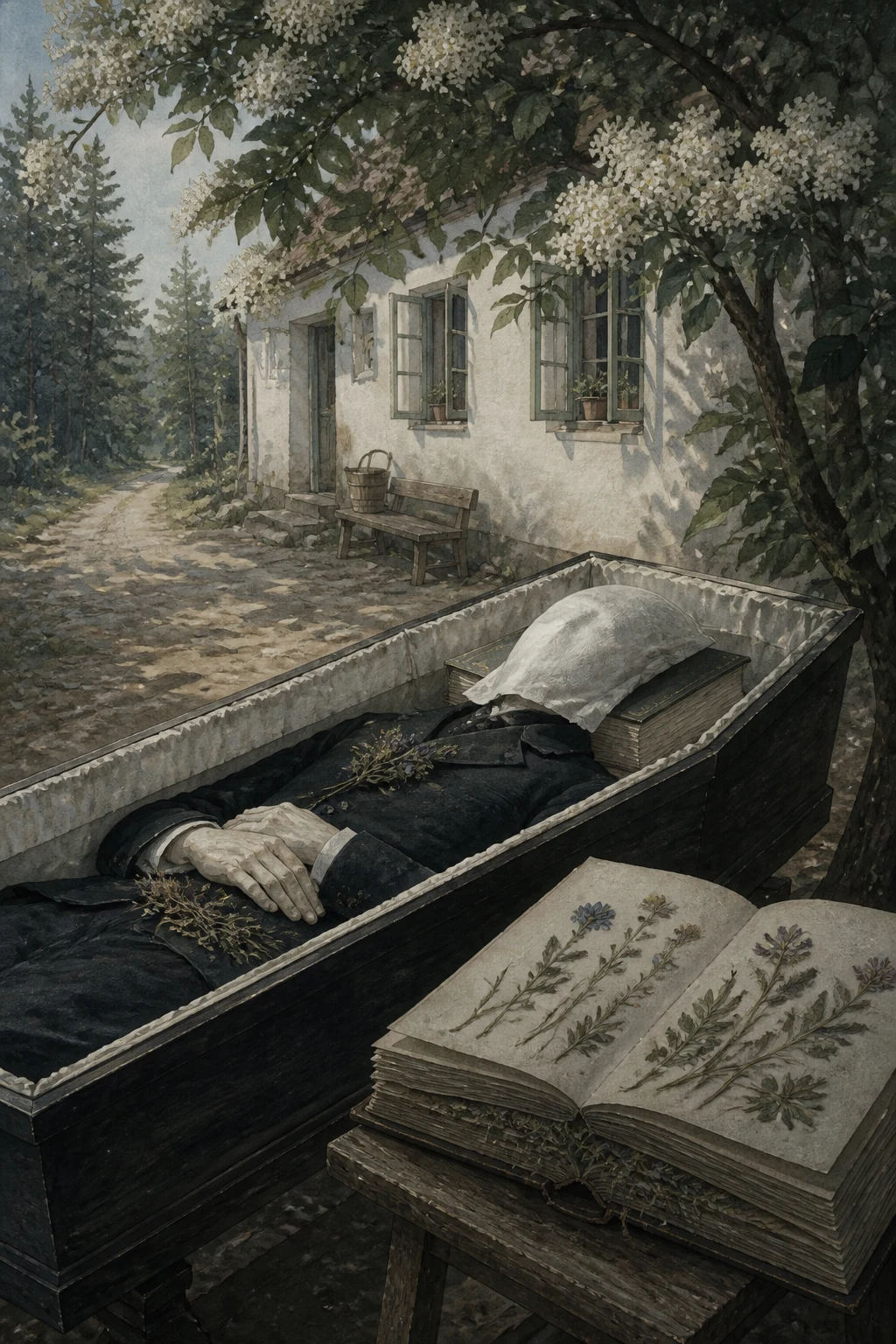
She was laid in the black coffin, wrapped in white linen. She was so beautiful, and though her eyes were closed, all her wrinkles were gone, and a smile rested on her lips. Her hair was so silvery white, so venerable; there was nothing at all frightening about looking at the dead woman, for she was dear, kindhearted Grandmother. And the hymnbook was laid beneath her head, as she herself had asked, and the rose lay in the old book; and then they buried Grandmother.
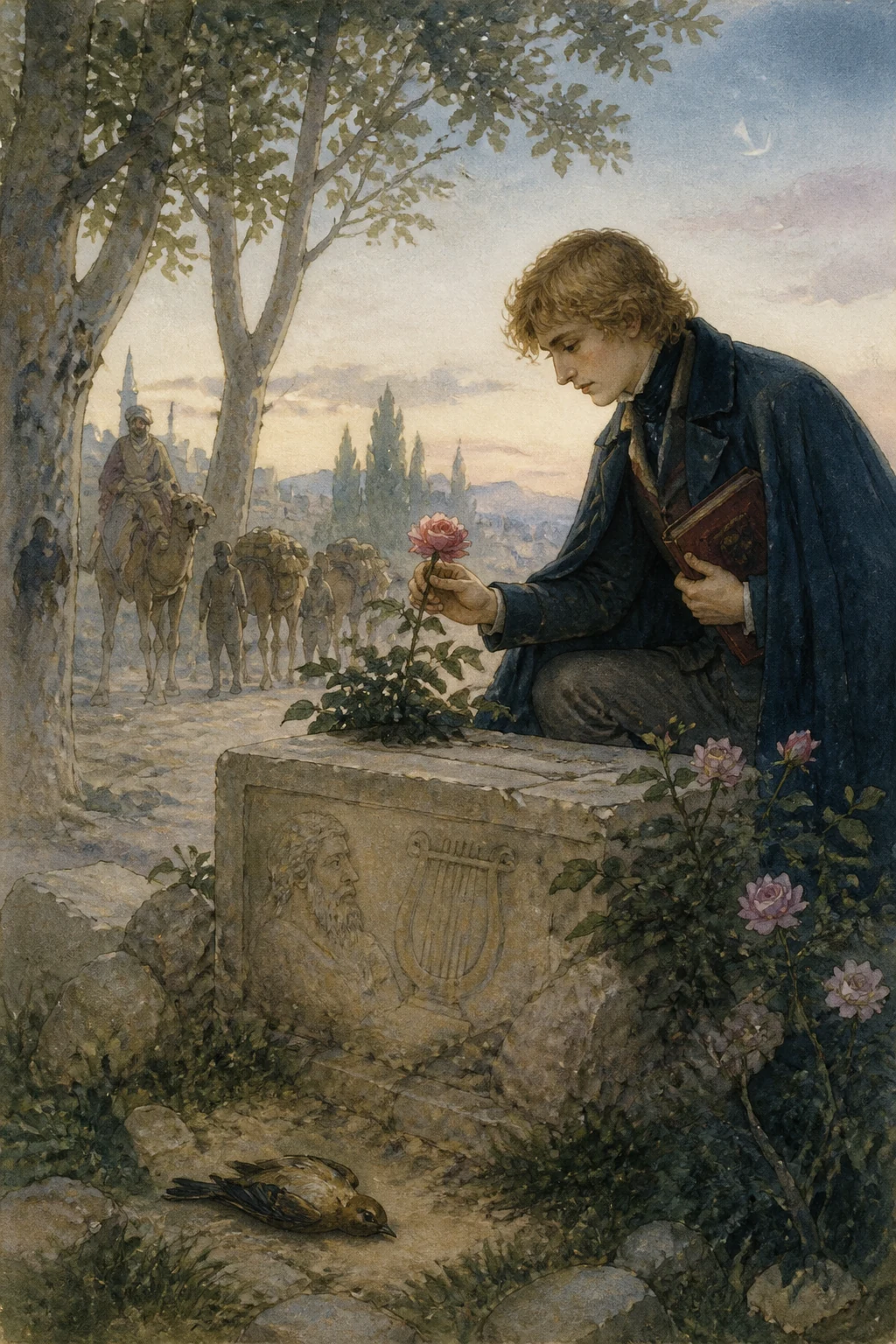
On her grave, close beneath the church wall, they planted a rosebush, and it was covered with flowers, and the nightingale sang above it, and from inside the church the organ played the loveliest hymns from the book beneath the dead woman’s head. And the moon shone straight down upon the grave; but the dead woman was not there. Any child could go there at night without fear and pick a rose beside the churchyard wall. The dead know more than all of us who are living; they know the dread we would feel at anything so strange as their coming to us. The dead are better than any of us, and so they do not come. There is earth above the coffin, there is earth within it. The hymnbook and its pages are dust; the rose, with all its memories, has crumbled to dust. But above, new roses bloom; above, the nightingale sings, and the organ plays. We think of old Grandmother with her gentle, ever-young eyes. Eyes can never die! One day ours will see her, young and beautiful, as she was when she first kissed the fresh red rose that is now dust in the grave.