O besedilu
Ajzak
- Vir
- Ovidove preobrazbe
- Avtor
- Ovid
- Jezik branja
- English
- Jezik izvirnika
- Latin
- Čas branja
- 3 min branja
- Obseg
- 2 strani
- Naslov izvirnika
- Aesacus
O izvirniku
Ovidove preobrazbe
Pesniški tok antičnih preobrazb, kjer bogovi, ljudje in narava stalno menjavajo obliko. Bralni jezik je English, izvirnik pa prihaja iz vira Ovidove preobrazbe v jeziku Latin.
Besedilo
Ajzak
An old man watches them flying together across the broad sea and praises their love, faithful to the end. Someone nearby—or perhaps the same man—said, “This bird too, which you see skimming the sea with its legs drawn up” (pointing to a long-necked diver), “is of royal blood. If you wish to trace his descent through an unbroken line down to himself, his ancestors are Ilus and Assaracus, and Ganymede, carried off for Jupiter, and old Laomedon, and Priam, whose lot it was to witness Troy’s final days. This bird was Hector’s brother: had he not met so strange a fate in early youth, perhaps his fame would have been no less than Hector’s,
though Hector’s mother was the daughter of Dymas, while Aesacus, they say, was secretly born beneath shady Ida to Alexirhoe, daughter of the two-horned Granicus. He hated cities and, far from the glittering court, made his home in lonely mountains and the unpretentious countryside, seldom joining the gatherings at Troy. Yet his heart was neither uncouth nor proof against love.
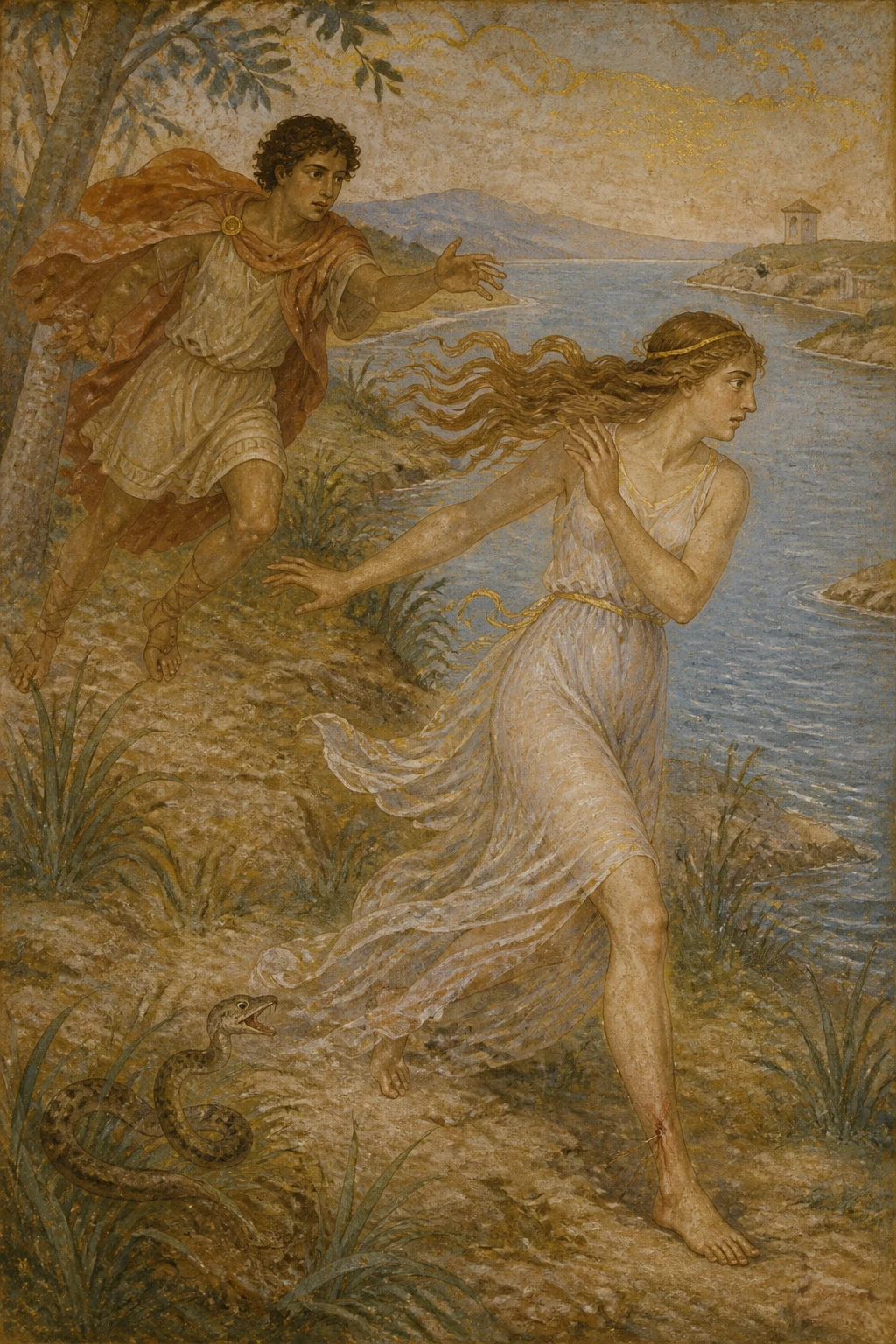
One day he saw Hesperie, whom he had often sought through all the woods, on the banks of her father Cebren, drying in the sun the hair that lay across her shoulders. The nymph caught sight of him and fled, like a frightened doe fleeing a tawny wolf, or a river duck surprised by a hawk far from the lake it has left behind. The Trojan hero pursued her, swift with love as she was swift with fear.
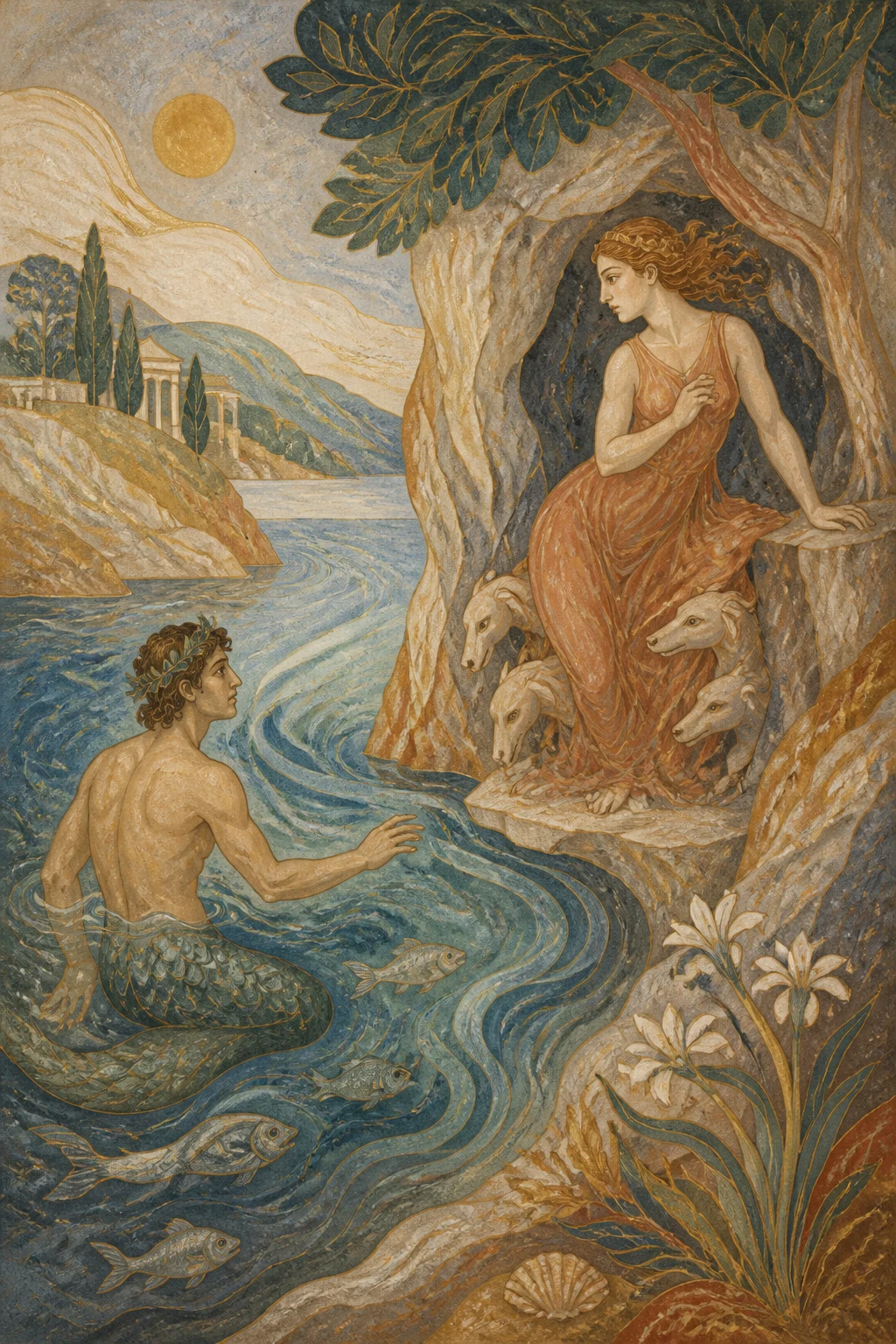
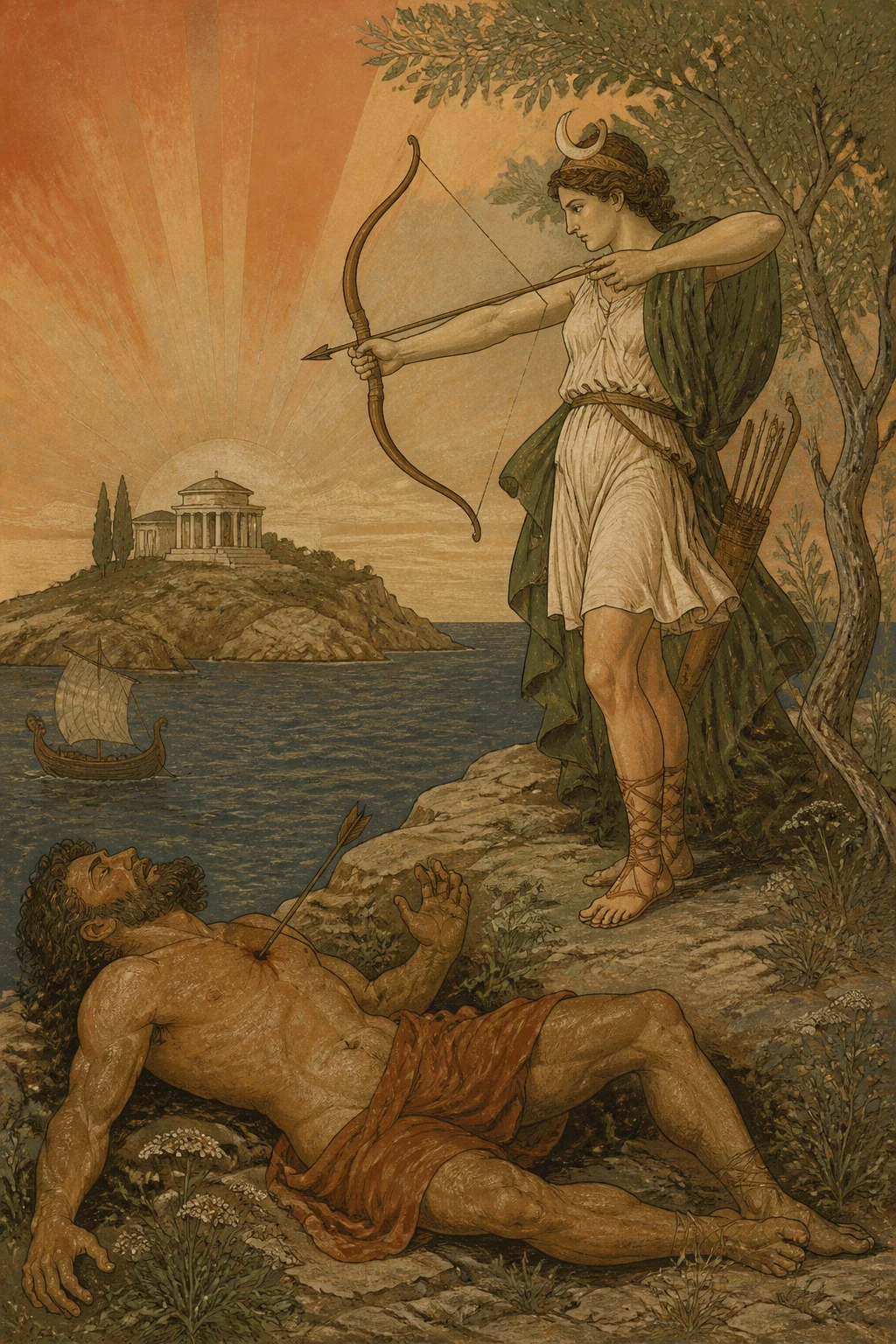
But a snake lurking in the grass grazed the fleeing girl’s foot with its curved fang and left its venom in her body. Her flight and life ended together. Distraught, he clasped her lifeless body and cried, ‘I wish, I wish I had not followed! This was not what I feared, nor was winning you worth such a price. We two have destroyed you, poor girl: the snake dealt the wound, but I supplied the cause. I am more guilty than he, and by my death I shall send you solace for your own.’ He spoke, and from a cliff undercut by the roaring waves flung himself into the sea. Tethys pitied him as he fell and caught him gently; as he floated on the water, she clothed him in feathers, denying him the death he longed for.
The lover raged at being forced to live against his will, his soul prevented from leaving the wretched dwelling it longed to escape. With the new wings his shoulders bore, he soared, then hurled his body down upon the sea once more. His feathers broke his fall. Aesacus raged and plunged headlong into the depths, endlessly seeking a way to die. Love made him lean: his legs grew long between the joints, his neck remained long, his head far from his body.
He loves the sea, and because he dives, he still bears the name ‘diver.’”
Izvirnik
Aesacus
Naslednje strani prikazujejo izvirno besedilo za primerjavo.
Source ID: ovid_metamorphoses_story_080 Citation: Ovid, Metamorphoses 11.749-11.795 Original language: Latin Source: PerseusDL canonical-latinLit Source URL: https://github.com/PerseusDL/canonical-latinLit/blob/master/data/phi0959/phi006/phi0959.phi006.perseus-lat2.xml Segmentation certainty: medium 749: Hos aliquis senior iunctim freta lata volantes 750: spectat et ad finem servatos laudat amores; 751: proximus, aut idem, si fors tulit, “hic quoque,” dixit 752: “quem mare carpentem substrictaque crura gerentem 753: adspicis” (ostendens spatiosum in guttura mergum), 754: “regia progenies: sunt si descendere ad ipsum
755: ordine perpetuo quaeris, sunt huius origo 756: Ilus et Assaracus raptusque Iovi Ganymedes 757: Laomedonque senex Priamusque novissima Troiae 758: tempora sortitus. Frater fuit Hectoris iste: 759: qui nisi sensisset prima nova fata iuventa, 760: forsitan inferius non Hectore nomen haberet, 761: quamvis est illum proles enixa Dymantis, 762: Aesacon umbrosa furtim peperisse sub Ida 763: fertur Alexirhoe, Granico nata bicorni.
764: Oderat hic urbes nitidaque remotus ab aula 765: secretos montes et inambitiosa colebat 766: rura nec Iliacos coetus nisi rarus adibat. 767: Non agreste tamen nec inexpugnabile amori 768: pectus habens silvas captatam saepe per omnes 769: adspicit Hesperien patria Cebrenida ripa 770: iniectos umeris siccantem sole capillos. 771: Visa fugit nymphe, veluti perterrita fulvum 772: cerva lupum longeque lacu deprensa relicto 773: accipitrem fluvialis anas; quam Troius heros 774: insequitur celeremque metu celer urget amore: 775: ecce latens herba coluber fugientis adunco
776: dente pedem strinxit virusque in corpore liquit; 777: cum vita suppressa fuga est: amplectitur amens 778: exanimem clamatque “piget, piget esse secutum! 779: Sed non hoc timui, neque erat mihi vincere tanti. 780: Perdidimus miseram nos te duo: vulnus ab angue, 781: a me causa data est. Ego sum sceleratior illo, 782: qui tibi morte mea mortis solacia mittam.” 783: Dixit et e scopulo, quem rauca subederat unda, 784: decidit in pontum. Tethys miserata cadentem 785: molliter excepit nantemque per aequora pennis 786: texit, et optatae non est data copia mortis.
787: Indignatur amans invitum vivere cogi 788: obstarique animae misera de sede volenti 789: exire. Utque novas umeris adsumpserat alas, 790: subvolat atque iterum corpus super aequora mittit. 791: Pluma levat casus: furit Aesacos inque profundum 792: pronus abit letique viam sine fine retemptat. 793: Fecit amor maciem: longa internodia crurum, 794: longa manet cervix, caput est a corpore longe; 795: aequor amat nomenque manet, quia mergitur, illi.”
Nadaljuj z branjem