Prevod
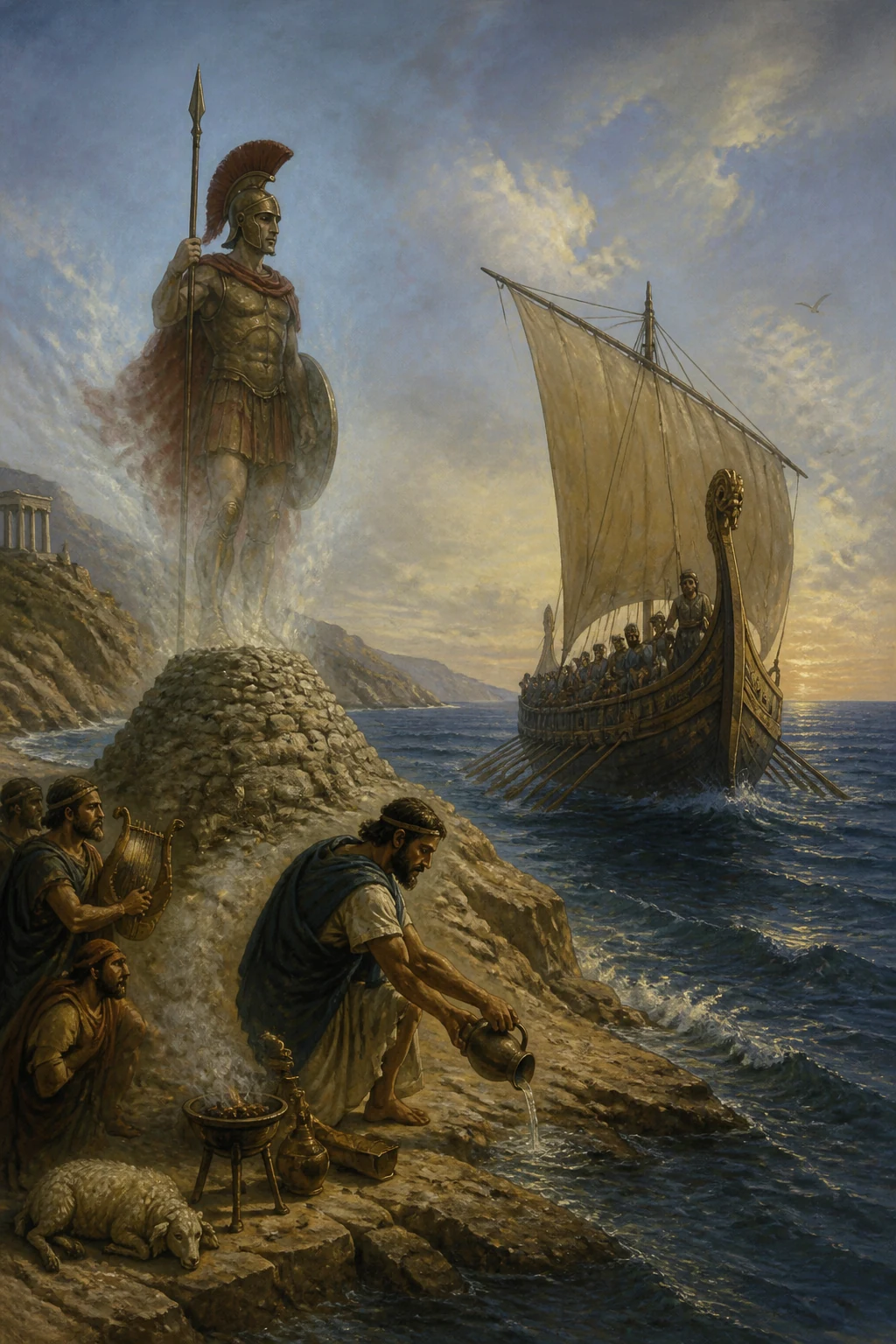
This struggle, this battle brought a respite of many days, and both sides laid down their arms and rested. While watchful sentries guarded the Phrygian walls and watchful sentries guarded the Argive trenches, a feast day came, when Achilles, conqueror of Cygnus, appeased Pallas with the blood of a slaughtered heifer. When he had laid its butchered portions on the blazing altars and the savoury smoke, welcome to the gods, had risen into heaven, the sacrifice received its share; the rest was served at table.
The chieftains reclined on couches, filled their bodies with roasted meat, and soothed their cares and thirst with wine. No lyres delighted them, no songs of human voices, nor the long boxwood flute with its many holes; instead, they passed the night in talk, and valour was their theme: they recounted battles, their enemies’ and their own, and delighted in recalling, each in turn, the dangers they had faced and overcome—for what else would Achilles speak of, or what would others rather speak of before great Achilles?
Above all, they spoke of the latest victory, the defeat of Cygnus. All thought it marvellous that the young man’s body could be pierced by no weapon, was proof against wounds, and blunted steel. The grandson of Aeacus himself and all the Greeks marvelled, when Nestor spoke: “In your generation, Cygnus alone could scorn the sword, impervious to every blow. But long ago I myself saw Perrhaebian Caeneus withstand a thousand blows without a wound upon his body— Caeneus of Perrhaebia, famed for his deeds, who dwelt on Othrys; and, to make his case more marvellous still, he had been born a woman.” All those present were stirred
by this unheard-of wonder and begged him to tell the tale. Achilles said: “Come, tell us! We are all equally eager to hear, eloquent old man, the wisdom of our age: who was Caeneus, why was his sex transformed, on what campaign, in what battle’s clash did you meet him, and who defeated him, if anyone did?” Then the old man replied: “Though slow old age encumbers me, and much I witnessed in my earliest years escapes me, I still remember more. Of all the many things I have seen in war and peace, none clings more firmly to my heart. And if a long old age could ever make a man a witness to many deeds, I have lived
two hundred years; my third century is passing now. Caenis, the daughter of Elatus, was famed for her beauty, the loveliest maiden in Thessaly, sought in vain by many suitors throughout the neighbouring cities and your own—for she was your countrywoman, Achilles. Peleus too might perhaps have sought her hand, but he had already married your mother, or she had been promised to him. Caenis married no one, but while walking on a lonely shore she was raped by the sea god—so the story went.
When Neptune had enjoyed this new embrace, he said, ‘You may make your wishes without fear of refusal: choose what you desire!’—so that same story went. ‘This outrage,’ Caenis said, ‘makes my wish a great one: never to suffer such a thing again. Grant that I am no woman, and you will have granted everything.’ Her final words came in a deeper tone and might have seemed a man’s voice, as indeed they were: already the god of the deep sea had granted her wish, and had granted besides that no wound could ever harm him, nor could he fall by the sword.
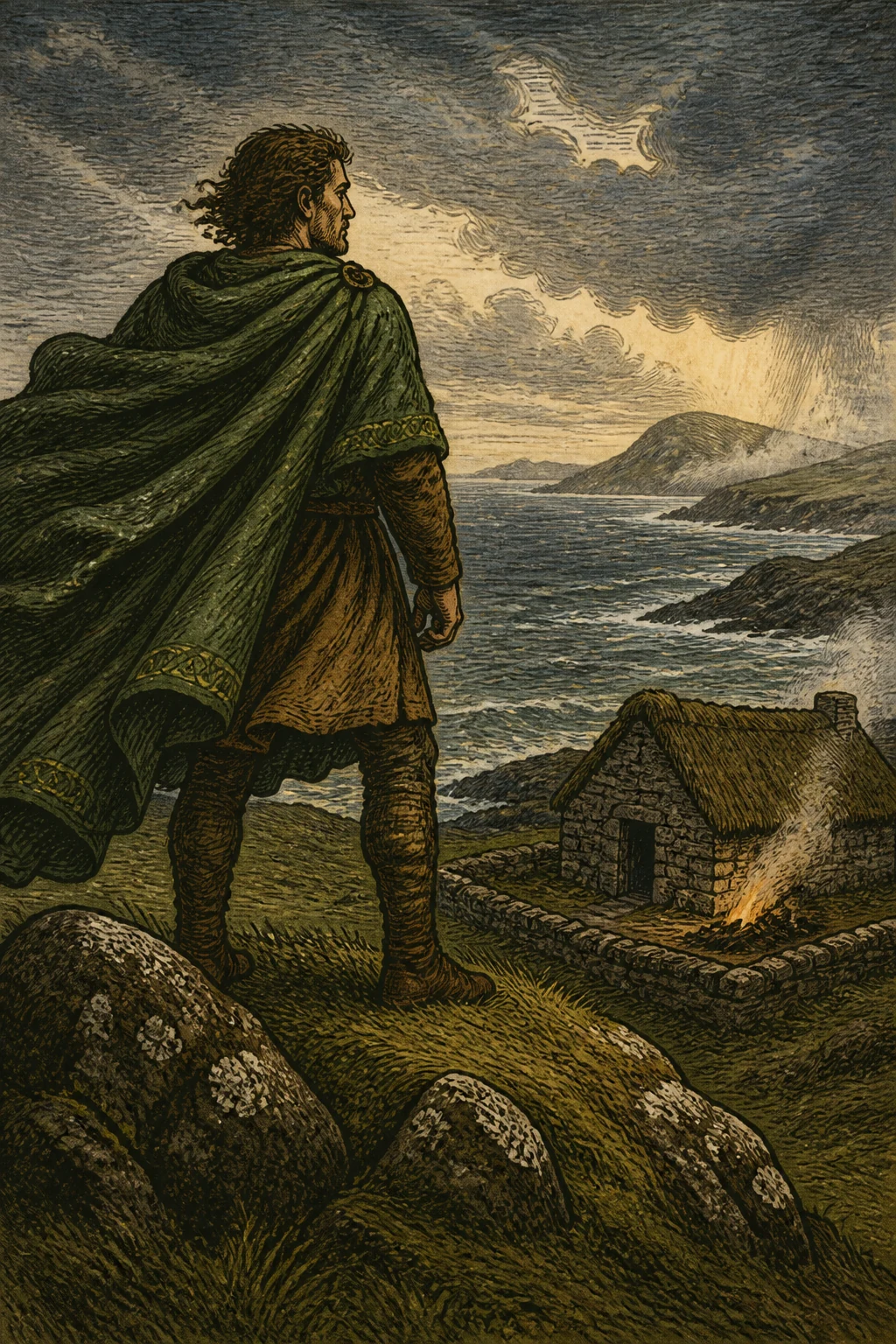
Delighted with his gift, the son of Atrax went away, devoting his life to manly pursuits and roaming the fields beside the Peneus.
Izvirnik
Source ID: ovid_metamorphoses_story_082 Citation: Ovid, Metamorphoses 12.146-12.209 Original language: Latin Source: PerseusDL canonical-latinLit Source URL: https://github.com/PerseusDL/canonical-latinLit/blob/master/data/phi0959/phi006/phi0959.phi006.perseus-lat2.xml Segmentation certainty: medium 146: Hic labor, haec requiem multorum pugna dierum 147: attulit, et positis pars utraque substitit armis.
148: Dumque vigil Phrygios servat custodia muros 149: et vigil Argolicas servat custodia fossas, 150: festa dies aderat, qua Cygni victor Achilles 151: Pallada mactatae placabat sanguine vaccae. 152: Cuius ut inposuit prosecta calentibus aris 153: et dis acceptus penetravit in aethera nidor, 154: sacra tulere suam, pars est data cetera mensis. 155: Discubuere toris proceres et corpora tosta 156: carne replent vinoque levant curasque sitimque.
157: Non illos citharae, non illos carmina vocum 158: longave multifori delectat tibia buxi, 159: sed noctem sermone trahunt, virtusque loquendi 160: materia est: pugnas referunt hostisque suasque, 161: inque vices adita atque exhausta pericula saepe 162: commemorare iuvat,— quid enim loqueretur Achilles, 163: aut quid apud magnum potius loquerentur Achillem? 164: Proxima praecipue domito victoria Cygno 165: in sermone fuit. Visum mirabile cunctis, 166: quod iuvenis corpus nullo penetrabile telo 167: invictumque a vulnere erat ferrumque terebat.
168: Hoc ipse Aeacides, hoc mirabantur Achivi, 169: cum sic Nestor ait: “Vestro fuit unicus aevo 170: contemptor ferri nulloque forabilis ictu 171: Cygnus. At ipse olim patientem vulnera mille 172: corpore non laeso Perrhaebum Caenea vidi, 173: Caenea Perrhaebum, qui factis inclitus Othryn 174: incoluit; quoque id mirum magis esset in illo, 175: femina natus erat.” Monstri novitate feruntur 176: quisquis adest, narretque rogant. Quos inter Achilles: 177: “Dic age! nam cunctis eadem est audire voluntas, 178: o facunde senex, aevi prudentia nostri, 179: quis fuerit Caeneus, cur in contraria versus,
180: qua tibi militia, cuius certamine pugnae 181: cognitus, a quo sit victus, si victus ab ullo est.” 182: Tum senior: “Quamvis obstet mihi tarda vetustas, 183: multaque me fugiant primis spectata sub annis, 184: plura tamen memini. Nec, quae magis haereat ulla 185: pectore res nostro est inter bellique domique 186: acta tot. Ac siquem potuit spatiosa senectus 187: spectatorem operum multorum reddere, vixi 188: annos bis centum; nunc tertia vivitur aetas.
189: Clara decore fuit proles Elateia Caenis, 190: Thessalidum virgo pulcherrima, perque propinquas 191: perque tuas urbes (tibi enim popularis, Achille), 192: multorum frustra votis optata procorum. 193: Temptasset Peleus thalamos quoque forsitan illos, 194: sed iam aut contigerant illi conubia matris, 195: aut fuerant promissa, tuae. Nec Caenis in ullos 196: denupsit thalamos secretaque litora carpens 197: aequorei vim passa dei est (ita fama ferebat), 198: utque novae Veneris Neptunus gaudia cepit, 199: “sint tua vota licet” dixit “secura repulsae: 200: elige, quid voveas!” (eadem hoc quoque fama ferebat).
201: “Magnum” Caenis ait “facit haec iniuria votum; 202: tale pati iam posse nihil; da, femina ne sim: 203: omnia praestiteris.” Graviore novissima dixit 204: verba sono, poteratque viri vox illa videri, 205: sicut erat; nam iam voto deus aequoris alti 206: adnuerat dederatque super, ne saucius ullis 207: vulneribus fieri ferrove occumbere posset. 208: Munere laetus abit studiisque virilibus aevum 209: exigit Atracides Peneiaque arva pererrat.