O besedilu
Polidevk in Amik
- Vir
- Argonavtika
- Avtor
- Apolonij Rodoški
- Jezik branja
- English
- Jezik izvirnika
- Ancient Greek
- Čas branja
- 8 min branja
- Obseg
- 7 strani
- Naslov izvirnika
- Polydeuces and Amycus
O izvirniku
Argonavtika
Morska odprava za zlatim runom, med junaštvom, čarovnijo in Medejino odločitvijo. Bralni jezik je English, izvirnik pa prihaja iz vira Argonavtika v jeziku Ancient Greek.
Besedilo
Polidevk in Amik
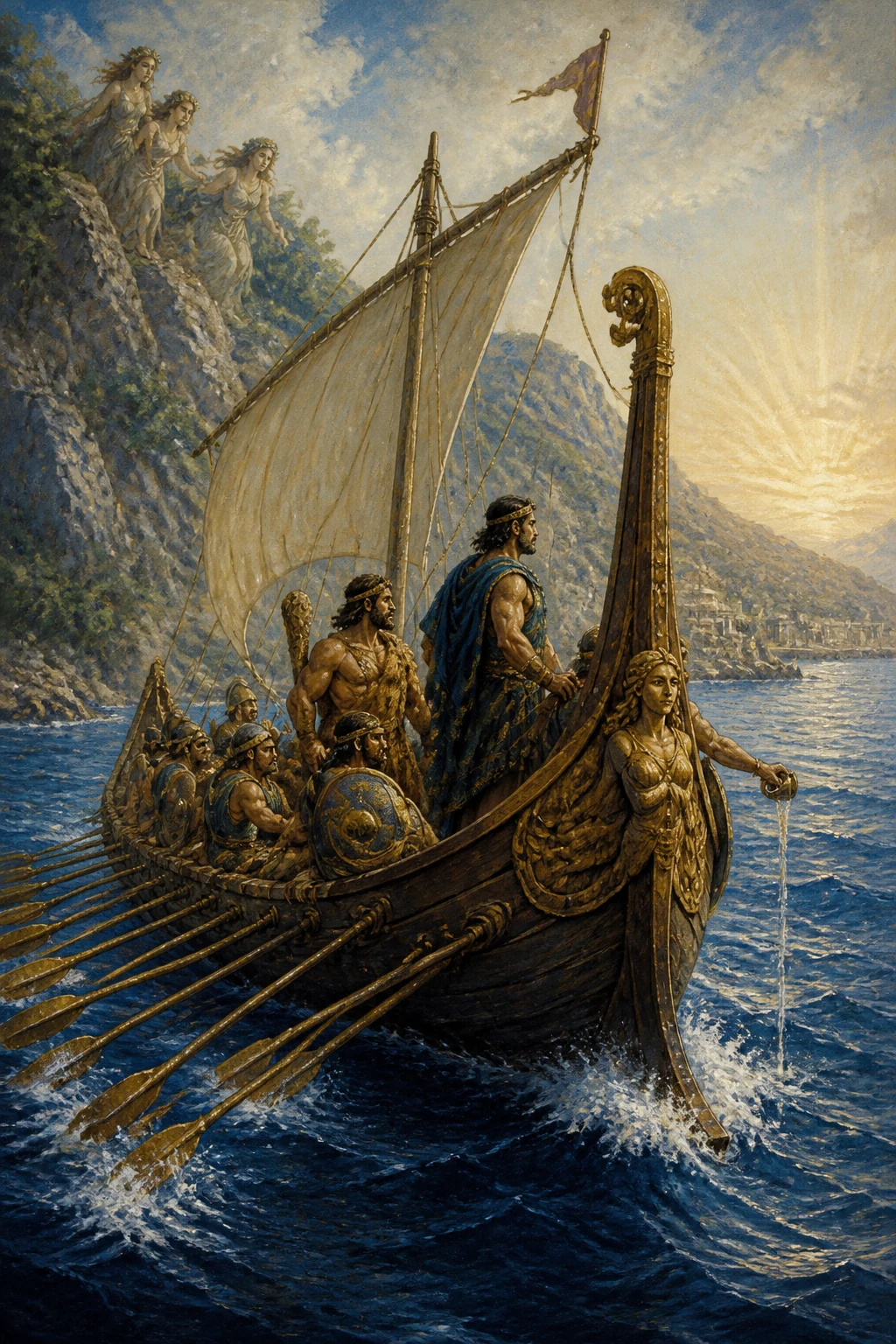
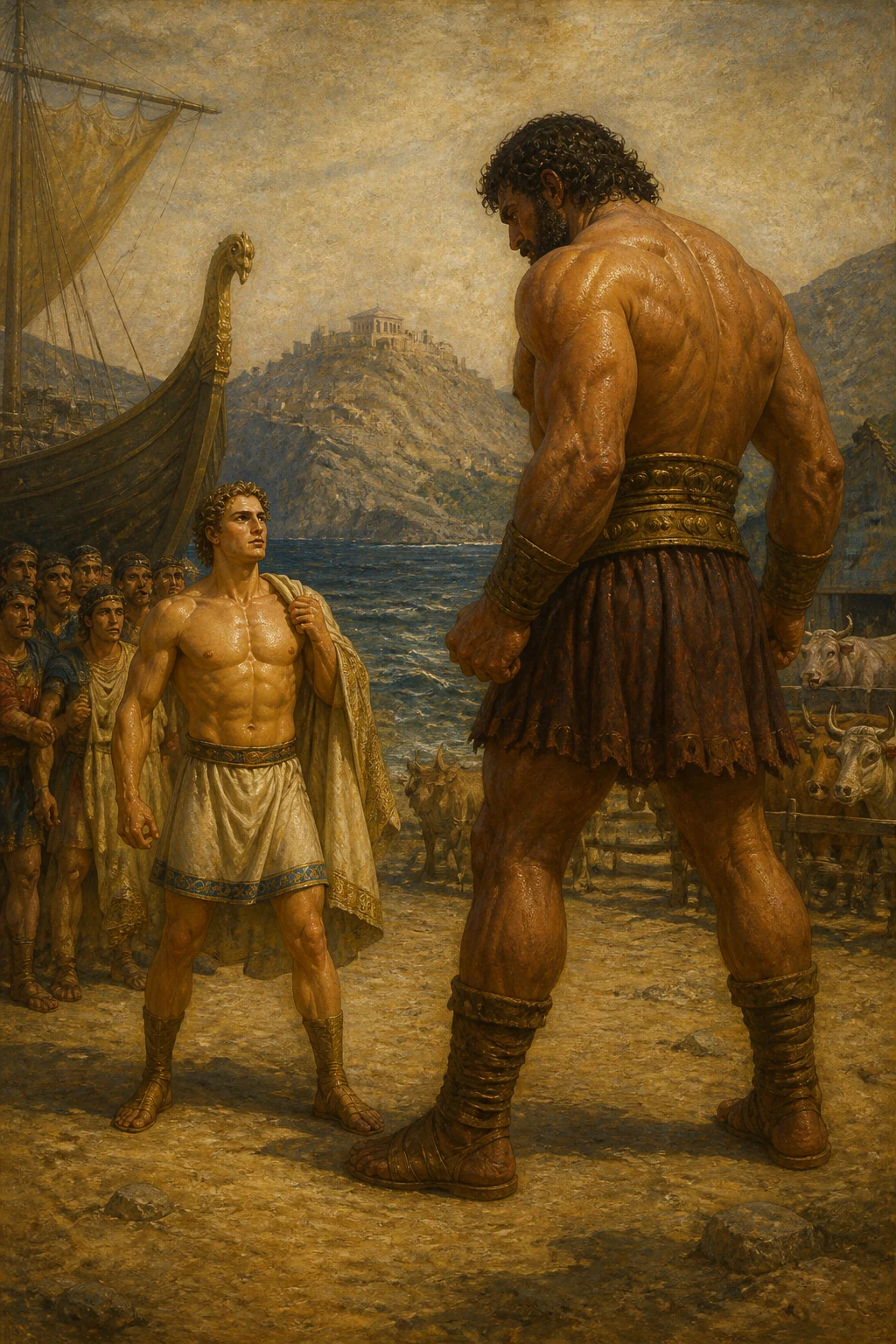
There stood the cattle stalls and dwelling of Amycus, the proud king of the Bebrycians, whom the Bithynian nymph Melia had borne to Poseidon the Begetter after lying with him—the most overbearing of men. He had imposed a cruel law even upon strangers: none might depart before testing his strength against him with his fists. Many of his neighbors he had slain.
Now he came down to the ship and, instead of asking the reason for their voyage or who they were, greeted them with insolence. Standing close beside them, he addressed them all: “Listen, you wanderers of the sea, to what you ought to know.
“No foreigner who comes among the Bebrycians is permitted to leave again until he has raised his hands against mine. So choose the best man from your company and set him here before me, alone, to fight me with his fists.
“But if you scorn my laws and trample them underfoot, bitter compulsion will surely overtake you.” So he spoke in his arrogance. Fierce anger seized them as they listened, and his challenge struck Polydeuces most deeply.
At once he stepped out before his comrades and said: “Restrain yourself, whoever you claim to be, and do not threaten us with brutal violence. We shall submit to your law, as you command.
“I freely offer myself to face you now.” So he spoke without flinching. Amycus rolled his eyes and glared at him, like a lion struck by a spear when hunters close about him in the mountains: though hemmed in by the crowd, he pays the others no heed, but singles out with his gaze the one man who first struck him and failed to kill him.
Then the son of Tyndareus laid aside his fine, closely woven cloak, which one of the women of Lemnos had given him as a guest-gift. Amycus flung down his dark, double-folded mantle, clasps and all, together with the rough staff of mountain-grown wild olive that he carried.
At once they looked about for a suitable place nearby and seated all their comrades in separate groups upon the sand. In build and bearing the two men were utterly unlike. One seemed a monstrous son of deadly Typhoeus, or of Earth herself, such as she had borne long ago in her anger against Zeus. But the son of Tyndareus was like a star in heaven, whose rays shine loveliest through the gathering night.
Such was the son of Zeus, with the first soft down still springing upon his cheeks and brightness still in his eyes. Yet his strength and spirit were swelling like a wild beast’s. He swung his arms to test whether they moved as freely as before, and whether toil at the oars had made them heavy. Amycus, however, made no trial of himself. He stood silently at a distance, keeping his eyes fixed upon his opponent, his heart surging with the desire to spatter the blood from his breast.
Between them Amycus’ servant Lycoreus laid two pairs of thongs at their feet, one on either side: strips of raw hide, dried and stiffened throughout. Then Amycus addressed Polydeuces with arrogant words: “Whichever of these you wish, I freely grant you, without drawing lots, so that afterward you cannot find fault with me.
“Bind them about your hands. Once you have learned your lesson, you can tell another man how far I excel at cutting strips of dry oxhide—and at smearing men’s cheeks with blood.” So he spoke, but Polydeuces did not answer taunt with taunt.
With a slight smile he simply took up the thongs lying at his feet. Castor and mighty Talaus, the son of Bias, came to his side and quickly bound them about his hands, encouraging him with many words to show his strength.
Meanwhile Aretus and Ornytus bound the thongs for Amycus, little knowing, poor fools, that they were binding them for the last time, to his doom. When the two men, standing apart, had equipped themselves with their thongs, they at once raised their heavy fists before their faces and advanced upon each other in fury.
Then the king of the Bebrycians pressed hard upon the son of Tyndareus, giving him no respite, like a rough sea-wave rearing against a swift ship, which narrowly escapes through the skill of its wary helmsman as he strives to carry her clear of the wall of water. But Polydeuces, by his cunning, kept springing aside unharmed. Soon he understood his opponent’s brutal style of fighting, where his strength was unassailable and where he was weaker; then he stood his ground without yielding and met fist with fist.
As shipwrights drive the timbers of a ship together upon sharp pegs, striking blow after blow with their hammers until the noise rises ceaselessly, so their cheeks and jaws resounded on either side. A terrible grinding of teeth arose, and they stood close, striking without pause, until at last exhausting breathlessness overcame them both.
Standing a little apart, they wiped the streaming sweat from their brows and panted heavily with fatigue. Then once more they rushed together, like two bulls fighting in fury over a grazing heifer.
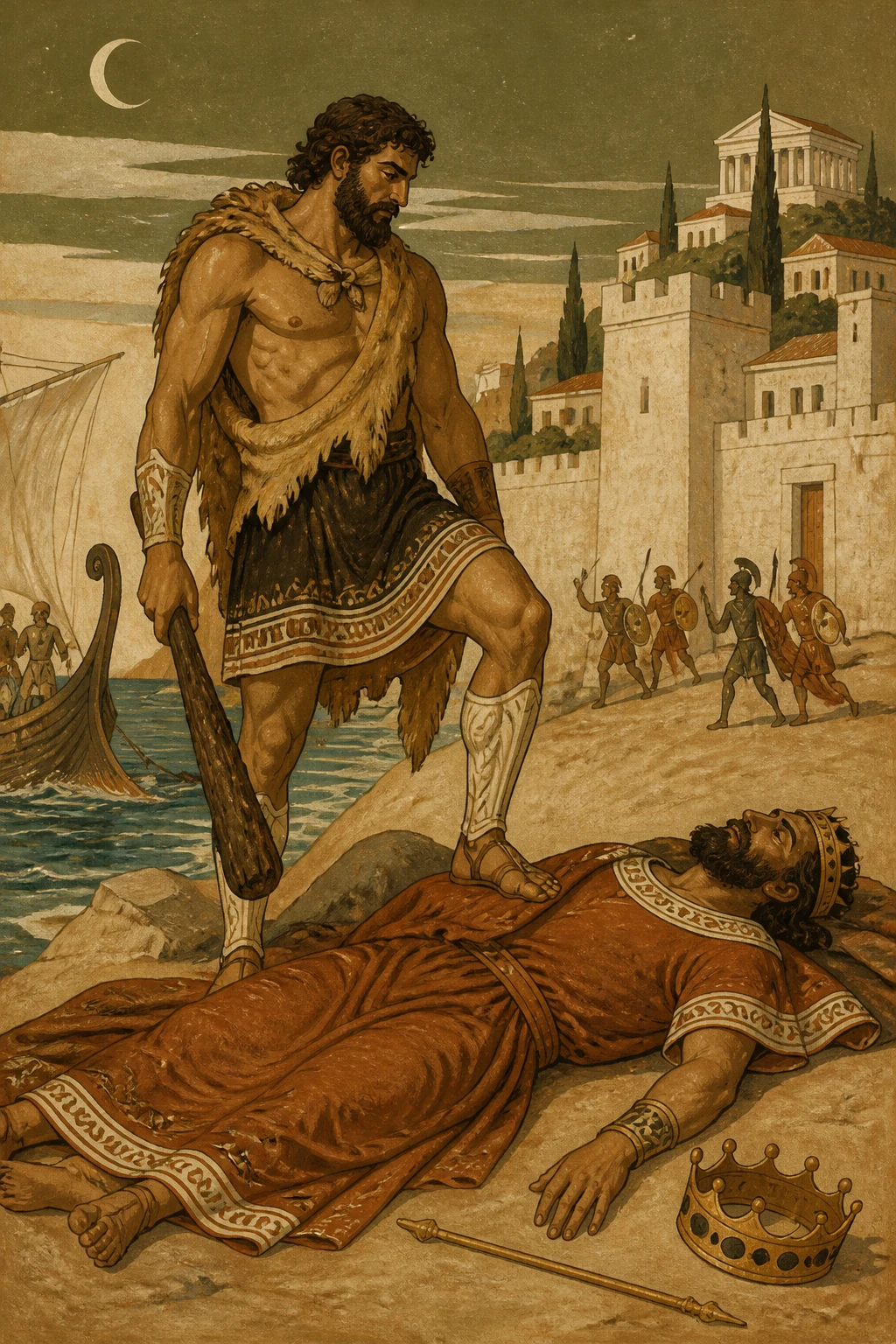
Then Amycus rose high on tiptoe, stretching himself up like a man about to fell an ox, and swung his heavy fist down upon his opponent. Polydeuces slipped beneath the blow, tilting his head aside, and caught the forearm lightly on his shoulder. Stepping close past him, knee beside knee, he struck upward above his ear and shattered the bones within. Amycus fell to his knees in agony. The Minyan heroes shouted, and his life poured out all at once.
But the Bebrycian men did not abandon their king. Together they raised their stout clubs and javelins and rushed straight at Polydeuces. His comrades drew their sharp swords from their sheaths and stood before him. Castor was the first to strike, cleaving the head of a man who charged him; split in two, it fell to either side upon his shoulders.
Polydeuces himself dealt with huge Itymoneus and Mimas. Springing forward, he struck one beneath the chest with a swift kick and hurled him into the dust. As the other came close, he struck him with his right fist above the left eyebrow, tearing away the eyelid and leaving the eyeball bare.
Meanwhile the son of Oreus, a powerful attendant of mighty Amycus, stabbed Talaus, the son of Bias, in the flank. But he did not kill him: the bronze merely pierced the skin beneath his belt without touching his entrails.
Likewise Aretus struck the steadfast Iphitus, son of Eurytus, with his hard wooden club and staggered him; but Iphitus was not yet fated to a cruel death. Aretus himself, indeed, was soon to be slain by the sword of Clytius.
Then bold Ancaeus, son of Lycurgus, swiftly lifted his great axe and, holding a black bearskin before him in his left hand, leaped fiercely into the midst of the Bebrycians. With him charged the sons of Aeacus, and warlike Jason rushed forward at their side.
As gray wolves on a winter’s day fall upon countless sheep in their folds, unseen by the keen-scented dogs and the shepherds themselves, and seek which victim first to seize, darting fierce glances all together, while the flock tumbles and crowds helplessly about them on every side—so the heroes drove the arrogant Bebrycians in miserable flight.
And as shepherds or beekeepers smoke out a great swarm of bees within a rock, and at first the bees throng buzzing in their hive, but then, choked by the sooty smoke, dart far away from the rock, so the Bebrycians no longer stood their ground, but scattered inland through Bebrycia to announce the death of Amycus. Poor fools, they did not perceive the other unseen calamity already close upon them. For in their king’s absence their fields and villages were being ravaged by the hostile spears of Lycus and the Mariandynians.
They were forever at war over the iron-bearing land. Meanwhile the heroes plundered the cattle stalls and farmsteads, and drove off countless sheep, turning the flocks about. Then one of them spoke among his comrades: “Think what these cowards would have done if some god had brought Heracles here as well!
“For my part, I believe that, had he been present, there would have been no settling the matter with fists. No sooner had Amycus come to proclaim his laws than the club would have made him forget his pride—and the very laws he was proclaiming.
“Yet we left him behind on land, without a thought, and sailed away across the sea. Every one of us will learn the full cost of that disastrous folly now that he is far away.” So he spoke; but all these things had come to pass by the will of Zeus.
They remained there through the darkness, tending the wounds of the injured men, and after making sacrifices to the immortals they prepared a great feast. Beside the mixing bowl and the burning offerings, sleep overcame none of them.
They crowned their fair brows with laurel from the shore, the very tree to which they had fastened the stern cables, and sang a song in harmony to the music of Orpheus’ lyre. The windless shore grew glad about them as they sang, celebrating the son of Zeus from Therapne.
Izvirnik
Polydeuces and Amycus
Naslednje strani prikazujejo izvirno besedilo za primerjavo.
ἔνθα δʼ ἔσαν σταθμοί τε βοῶν αὖλίς τʼ Ἀμύκοιο, Βεβρύκων βασιλῆος ἀγήνορος, ὅν ποτε νύμφη τίκτε Ποσειδάωνι Γενεθλίῳ εὐνηθεῖσα Βιθυνὶς Μελίη, ὑπεροπληέστατον ἀνδρῶν· ὅς τʼ ἐπὶ καὶ ξείνοισιν ἀεικέα θεσμὸν ἔθηκεν, μήτινʼ ἀποστείχειν, πρὶν πειρήσασθαι ἑοῖο πυγμαχίης· πολέας δὲ περικτιόνων ἐδάιξεν. καὶ δὲ τότε προτὶ νῆα κιών, χρειώ μιν ἐρέσθαι ναυτιλίης, οἵ τʼ εἶεν, ὑπερβασίῃσιν ἄτισσεν, τοῖον δʼ ἐν πάντεσσι παρασχεδὸν ἔκφατο μῦθον· Κέκλυθʼ, ἁλίπλαγκτοι, τάπερ ἴδμεναι ὔμμιν ἔοικεν.
οὔτινα θέσμιόν ἐστιν ἀφορμηθέντα νέεσθαι ἀνδρῶν ὀθνείων, ὅς κεν Βέβρυξι πελάσσῃ, πρὶν χείρεσσιν ἐμῇσιν ἑὰς ἀνὰ χεῖρας ἀεῖραι. τῶ καί μοι τὸν ἄριστον ἀποκριδὸν οἶον ὁμίλου πυγμαχίῃ στήσασθε καταυτόθι δηρινθῆναι. εἰ δʼ ἂν ἀπηλεγέοντες ἐμὰς πατέοιτε θέμιστας, ἦ κέν τις στυγερῶς κρατερὴ ἐπιέψετʼ ἀνάγκη. ἦ ῥα μέγα φρονέων· τοὺς δʼ ἄγριος εἰσαΐοντας εἷλε χόλος· περὶ δʼ αὖ Πολυδεύκεα τύψεν ὁμοκλή.
αἶψα δʼ ἑῶν ἑτάρων πρόμος ἵστατο, φώνησέν τε· ἴσχεο νῦν, μηδʼ ἄμμι κακήν, ὅτις εὔχεαι εἶναι, φαῖνε βίην· θεσμοῖς γὰρ ὑπείξομεν, ὡς ἀγορεύεις. αὐτὸς ἑκὼν ἤδη τοι ὑπίσχομαι ἀντιάασθαι. ὧς φάτʼ ἀπηλεγέως· ὁ δʼ ἐσέδρακεν ὄμμαθʼ ἑλίξας, ὥστε λέων ὑπʼ ἄκοντι τετυμμένος, ὅν τʼ ἐν ὄρεσσιν ἀνέρες ἀμφιπένονται· ὁ δʼ ἰλλόμενός περ ὁμίλῳ τῶν μὲν ἔτʼ οὐκ ἀλέγει, ἐπὶ δʼ ὄσσεται οἰόθεν οἶον ἄνδρα τόν, ὅς μιν ἔτυψε παροίτατος, οὐδʼ ἐδάμασσεν.
ἔνθʼ ἀπὸ Τυνδαρίδης μὲν ἐύστιπτον θέτο φᾶρος λεπταλέον, τό ῥά οἵ τις ἑὸν ξεινήιον εἶναι ὤπασε Λημνιάδων· ὁ δʼ ἐρεμνὴν δίπτυχα λώπην αὐτῇσιν περόνῃσι καλαύροπά τε τρηχεῖαν κάββαλε, τὴν φορέεσκεν, ὀριτρεφέος κοτίνοιο. αὐτίκα δʼ ἐγγύθι χῶρον ἑαδότα παπτήναντες ἷζον ἑοὺς δίχα πάντας ἐνὶ ψαμάθοισιν ἑταίρους, οὐ δέμας, οὐδὲ φυὴν ἐναλίγκιοι εἰσοράασθαι. ἀλλʼ ὁ μὲν ἢ ὀλοοῖο Τυφωέος, ἠὲ καὶ αὐτῆς Γαίης εἶναι ἔικτο πέλωρ τέκος, οἷα πάροιθεν χωομένη Διὶ τίκτεν· ὁ δʼ οὐρανίῳ ἀτάλαντος ἀστέρι Τυνδαρίδης, οὗπερ κάλλισται ἔασιν
ἑσπερίην διὰ νύκτα φαεινομένου ἀμαρυγαί. τοῖος ἔην Διὸς υἱός, ἔτι χνοάοντας ἰούλους ἀντέλλων, ἔτι φαιδρὸς ἐν ὄμμασιν. ἀλλά οἱ ἀλκὴ καὶ μένος ἠύτε θηρὸς ἀέξετο· πῆλε δὲ χεῖρας πειράζων, εἴθʼ ὡς πρὶν ἐυτρόχαλοι φορέονται, μηδʼ ἄμυδις καμάτῳ τε καὶ εἰρεσίῃ βαρύθοιεν οὐ μὰν αὖτʼ Ἄμυκος πειρήσατο· σῖγα δʼ ἄπωθεν ἑστηὼς εἰς αὐτὸν ἔχʼ ὄμματα, καί οἱ ὀρέχθει θυμὸς ἐελδομένῳ στηθέων ἐξ αἷμα κεδάσσαι.
τοῖσι δὲ μεσσηγὺς θεράπων Ἀμύκοιο Λυκωρεὺς θῆκε πάροιθε ποδῶν δοιοὺς ἑκάτερθεν ἱμάντας ὠμούς, ἀζαλέους, περὶ δʼ οἵγʼ ἔσαν ἐσκληῶτες. αὐτὰρ ὁ τόνγʼ ἐπέεσσιν ὑπερφιάλοισι μετηύδα· τῶνδέ τοι ὅν κʼ ἐθέλῃσθα, πάλου ἄτερ ἐγγυαλίξω αὐτὸς ἑκών, ἵνα μή μοι ἀτέμβηαι μετόπισθεν. ἀλλὰ βάλευ περὶ χειρί· δαεὶς δέ κεν ἄλλῳ ἐνίσποις, ὅσσον ἐγὼ ῥινούς τε βοῶν περίειμι ταμέσθαι ἀζαλέας, ἀνδρῶν τε παρηίδας αἵματι φύρσαι.
ὧς ἔφατʼ· αὐτὰρ ὅγʼ οὔτι παραβλήδην ἐρίδηνεν. ἦκα δὲ μειδήσας, οἵ οἱ παρὰ ποσσὶν ἔκειντο, τοὺς ἕλεν ἀπροφάτως· τοῦ δʼ ἀντίος ἤλυθε Κάστωρ ἠδὲ Βιαντιάδης Ταλαὸς μέγας· ὦκα δʼ ἱμάντας ἀμφέδεον, μάλα πολλὰ παρηγορέοντες ἐς ἀλκήν. τῷ δʼ αὖτʼ Ἄρητός τε καὶ Ὄρνυτος, οὐδέ τι ᾔδειν νήπιοι ὕστατα κεῖνα κακῇ δήσαντες ἐν αἴσῃ. οἱ δʼ ἐπεὶ οὖν ἱμᾶσι διασταδὸν ἠρτύναντο, αὐτίκʼ ἀνασχόμενοι ῥεθέων προπάροιθε βαρείας χεῖρας, ἐπʼ ἀλλήλοισι μένος φέρον ἀντιόωντες.
ἔνθα δὲ Βεβρύκων μὲν ἄναξ, ἅ τε κῦμα θαλάσσης τρηχὺ θοὴν ἐπὶ νῆα κορύσσεται, ἡ δʼ ὑπὸ τυτθὸν ἰδρείῃ πυκινοῖο κυβερνητῆρος ἀλύσκει, ἱεμένου φορέεσθαι ἔσω τοίχοιο κλύδωνος, ὧς ὅγε Τυνδαρίδην φοβέων ἕπετʼ, οὐδέ μιν εἴα δηθύνειν. ὁ δʼ ἄρʼ αἰὲν ἀνούτατος ἣν διὰ μῆτιν ἀίσσοντʼ ἀλέεινεν· ἀπηνέα δʼ αἶψα νοήσας πυγμαχίην, ᾗ κάρτος ἀάατος, ᾗ τε χερείων, στῆ ῥʼ ἄμοτον καὶ χερσὶν ἐναντία χεῖρας ἔμιξεν.
ὡς δʼ ὅτε νήια δοῦρα θοοῖς ἀντίξοα γόμφοις ἀνέρες ὑληουργοὶ ἐπιβλήδην ἐλάοντες θείνωσι σφύρῃσιν, ἐπʼ ἄλλῳ δʼ ἄλλος ἄηται δοῦπος ἄδην· ὧς τοῖσι παρήιά τʼ ἀμφοτέρωθεν καὶ γένυες κτύπεον· βρυχὴ δʼ ὑπετέλλετʼ ὀδόντων ἄσπετος, οὐδʼ ἔλληξαν ἐπισταδὸν οὐτάζοντες, ἔστε περ οὐλοὸν ἆσθμα καὶ ἀμφοτέρους ἐδάμασσεν. στάντε δὲ βαιὸν ἄπωθεν ἀπωμόρξαντο μετώπων ἱδρῶ ἅλις, καματηρὸν ἀυτμένα φυσιόωντε.
ἂψ δʼ αὖτις συνόρουσαν ἐναντίοι, ἠύτε ταύρω φορβάδος ἀμφὶ βοὸς κεκοτηότε δηριάασθον. ἔνθα δʼ ἔπειτʼ Ἄμυκος μὲν ἐπʼ ἀκροτάτοισιν ἀερθείς, βουτύπος οἷα, πόδεσσι τανύσσατο, κὰδ δὲ βαρεῖαν χεῖρʼ ἐπὶ οἷ πελέμιξεν· ὁ δʼ ἀίξαντος ὑπέστη, κρᾶτα παρακλίνας, ὤμῳ δʼ ἀνεδέξατο πῆχυν τυτθόν· ὁ δʼ ἄγχʼ αὐτοῖο παρὲκ γόνυ γουνὸς ἀμείβων κόψε μεταΐγδην ὑπὲρ οὔατος, ὀστέα δʼ εἴσω ῥῆξεν· ὁ δʼ ἀμφʼ ὀδύνῃ γνὺξ ἤριπεν· οἱ δʼ ἰάχησαν ἥρωες Μινύαι· τοῦ δʼ ἀθρόος ἔκχυτο θυμός.
οὐδʼ ἄρα Βέβρυκες ἄνδρες ἀφείδησαν βασιλῆος· ἀλλʼ ἄμυδις κορύνας ἀζηχέας ἠδὲ σιγύννους ἰθὺς ἀνασχόμενοι Πολυδεύκεος ἀντιάασκον. τοῦ δὲ πάρος κολεῶν εὐήκεα φάσγανʼ ἑταῖροι ἔσταν ἐρυσσάμενοι. πρῶτός γε μὲν ἀνέρα Κάστωρ ἤλασʼ ἐπεσσύμενον κεφαλῆς ὕπερ· ἡ δʼ ἑκάτερθεν ἔνθα καὶ ἔνθʼ ὤμοισιν ἐπʼ ἀμφοτέροις ἐκεάσθη. αὐτὸς δʼ Ἰτυμονῆα πελώριον ἠδὲ Μίμαντα, τὸν μὲν ὑπὸ στέρνοιο θοῷ ποδὶ λὰξ ἐπορούσας πλῆξε, καὶ ἐν κονίῃσι βάλεν· τοῦ δʼ ἆσσον ἰόντος δεξιτερῇ σκαιῆς ὑπὲρ ὀφρύος ἤλασε χειρί, δρύψε δέ οἱ βλέφαρον, γυμνὴ δʼ ὑπελείπετʼ ὀπωπή.
Ὠρεΐδης δʼ Ἀμύκοιο βίην ὑπέροπλος ὀπάων οὖτα Βιαντιάδαο κατὰ λαπάρην Ταλαοῖο, ἀλλά μιν οὐ κατέπεφνεν, ὅσον δʼ ἐπὶ δέρματι μοῦνον νηδυίων ἄψαυστος ὑπὸ ζώνην θόρε χαλκός. αὔτως δʼ Ἄρητος μενεδήιον Εὐρύτου υἷα Ἴφιτον ἀζαλέῃ κορύνῃ στυφέλιξεν ἐλάσσας, οὔπω κηρὶ κακῇ πεπρωμένον· ἦ τάχʼ ἔμελλεν αὐτὸς δῃώσεσθαι ὑπὸ ξίφεϊ Κλυτίοιο. καὶ τότʼ ἄρʼ Ἀγκαῖος Λυκοόργοιο θρασὺς υἱὸς αἶψα μάλʼ ἀντεταγὼν πέλεκυν μέγαν ἠδὲ κελαινὸν ἄρκτου προσχόμενος σκαιῇ δέρος ἔνθορε μέσσῳ ἐμμεμαὼς Βέβρυξιν· ὁμοῦ δέ οἱ ἐσσεύοντο
Αἰακίδαι, σὺν δέ σφιν ἀρήιος ὤρνυτʼ Ἰήσων. ὡς δʼ ὅτʼ ἐνὶ σταθμοῖσιν ἀπείρονα μῆλʼ ἐφόβησαν ἤματι χειμερίῳ πολιοὶ λύκοι ὁρμηθέντες λάθρῃ ἐυρρίνων τε κυνῶν αὐτῶν τε νομήων, μαίονται δʼ ὅ τι πρῶτον ἐπαΐξαντες ἕλωσιν, πόλλʼ ἐπιπαμφαλόωντες ὁμοῦ· τὰ δὲ πάντοθεν αὔτως στείνονται πίπτοντα περὶ σφίσιν· ὧς ἄρα τοίγε λευγαλέως Βέβρυκας ὑπερφιάλους ἐφόβησαν. ὡς δὲ μελισσάων σμῆνος μέγα μηλοβοτῆρες ἠὲ μελισσοκόμοι πέτρῃ ἔνι καπνιόωσιν, αἱ δʼ ἤτοι τείως μὲν ἀολλέες ᾧ ἐνὶ σίμβλῳ βομβηδὸν κλονέονται, ἐπιπρὸ δὲ λιγνυόεντι
καπνῷ τυφόμεναι πέτρης ἑκὰς ἀίσσουσιν· ὧς οἵγʼ οὐκέτι δὴν μένον ἔμπεδον, ἀλλʼ ἐκέδασθεν εἴσω Βεβρυκίης, Ἀμύκου μόρον ἀγγελέοντες· νήπιοι, οὐδʼ ἐνόησαν ὃ δή σφισιν ἐγγύθεν ἄλλο πῆμʼ ἀίδηλον ἔην. πέρθοντο γὰρ ἠμὲν ἀλωαὶ ἠδʼ οἶαι τῆμος δῄῳ ὑπὸ δουρὶ Λύκοιο καὶ Μαριανδυνῶν ἀνδρῶν, ἀπεόντος ἄνακτος. αἰεὶ γὰρ μάρναντο σιδηροφόρου περὶ γαίης. οἱ δʼ ἤδη σταθμούς τε καὶ αὔλια δηιάασκον· ἤδη δʼ ἄσπετα μῆλα περιτροπάδην ἐτάμοντο ἥρωες, καὶ δή τις ἔπος μετὰ τοῖσιν ἔειπεν· Φράζεσθʼ ὅττι κεν ᾗσιν ἀναλκείῃσιν ἔρεξαν,
εἴ πως Ἡρακλῆα θεὸς καὶ δεῦρʼ ἐκόμισσεν. ἤτοι μὲν γὰρ ἐγὼ κείνου παρεόντος ἔολπα οὐδʼ ἂν πυγμαχίῃ κρινθήμεναι· ἀλλʼ ὅτε θεσμοὺς ἤλυθεν ἐξερέων, αὐτοῖς ἄφαρ οἷς ἀγόρευεν θεσμοῖσιν ῥοπάλῳ μιν ἀγηνορίης λελαθέσθαι. ναὶ μὲν ἀκήδεστον γαίῃ ἔνι τόνγε λιπόντες πόντον ἐπέπλωμεν· μάλα δʼ ἡμέων αὐτὸς ἕκαστος εἴσεται οὐλομένην ἄτην, ἀπάνευθεν ἐόντος. ὧς ἄρʼ ἔφη· τὰ δὲ πάντα Διὸς βουλῇς ἐτέτυκτο.
καὶ τότε μὲν μένον αὖθι διὰ κνέφας, ἕλκεά τʼ ἀνδρῶν οὐταμένων ἀκέοντο, καὶ ἀθανάτοισι θυηλὰς ῥέξαντες μέγα δόρπον ἐφώπλισαν· οὐδέ τινʼ ὕπνος εἷλε παρὰ κρητῆρι καὶ αἰθομένοις ἱεροῖσιν. ξανθὰ δʼ ἐρεψάμενοι δάφνῃ καθύπερθε μέτωπα ἀγχιάλῳ, τῇ, ἀκτῇ ἔπι, πρυμνήσιʼ ἀνῆπτο, Ὀρφείῃ φόρμιγγι συνοίμιον ὕμνον ἄειδον ἐμμελέως· περὶ δέ σφιν ἰαίνετο νήνεμος ἀκτὴ μελπομένοις· κλεῖον δὲ Θεραπναῖον Διὸς υἷα.
Nadaljuj z branjem