Prevod
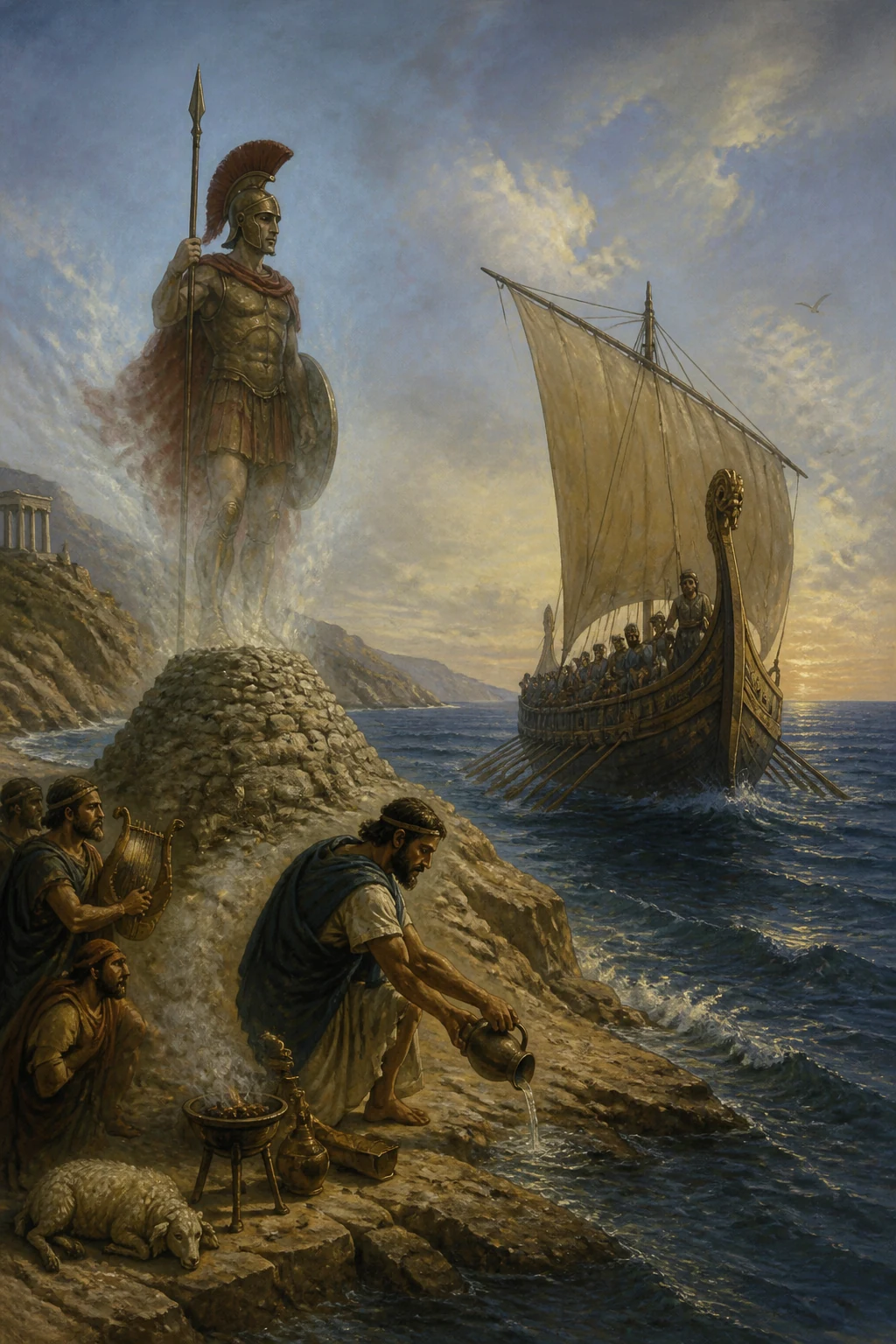
This struggle, this battle brought a respite of many days, and both sides laid down their arms and rested. While watchful sentries guarded the Phrygian walls and watchful sentries guarded the Argive trenches, a feast day came, when Achilles, conqueror of Cygnus, appeased Pallas with the blood of a slaughtered heifer. When he had laid its butchered portions on the blazing altars and the savoury smoke, welcome to the gods, had risen into heaven, the sacrifice received its share; the rest was served at table.
The chieftains reclined on couches, filled their bodies with roasted meat, and soothed their cares and thirst with wine. No lyres delighted them, no songs of human voices, nor the long boxwood flute with its many holes; instead, they passed the night in talk, and valour was their theme: they recounted battles, their enemies’ and their own, and delighted in recalling, each in turn, the dangers they had faced and overcome—for what else would Achilles speak of, or what would others rather speak of before great Achilles?
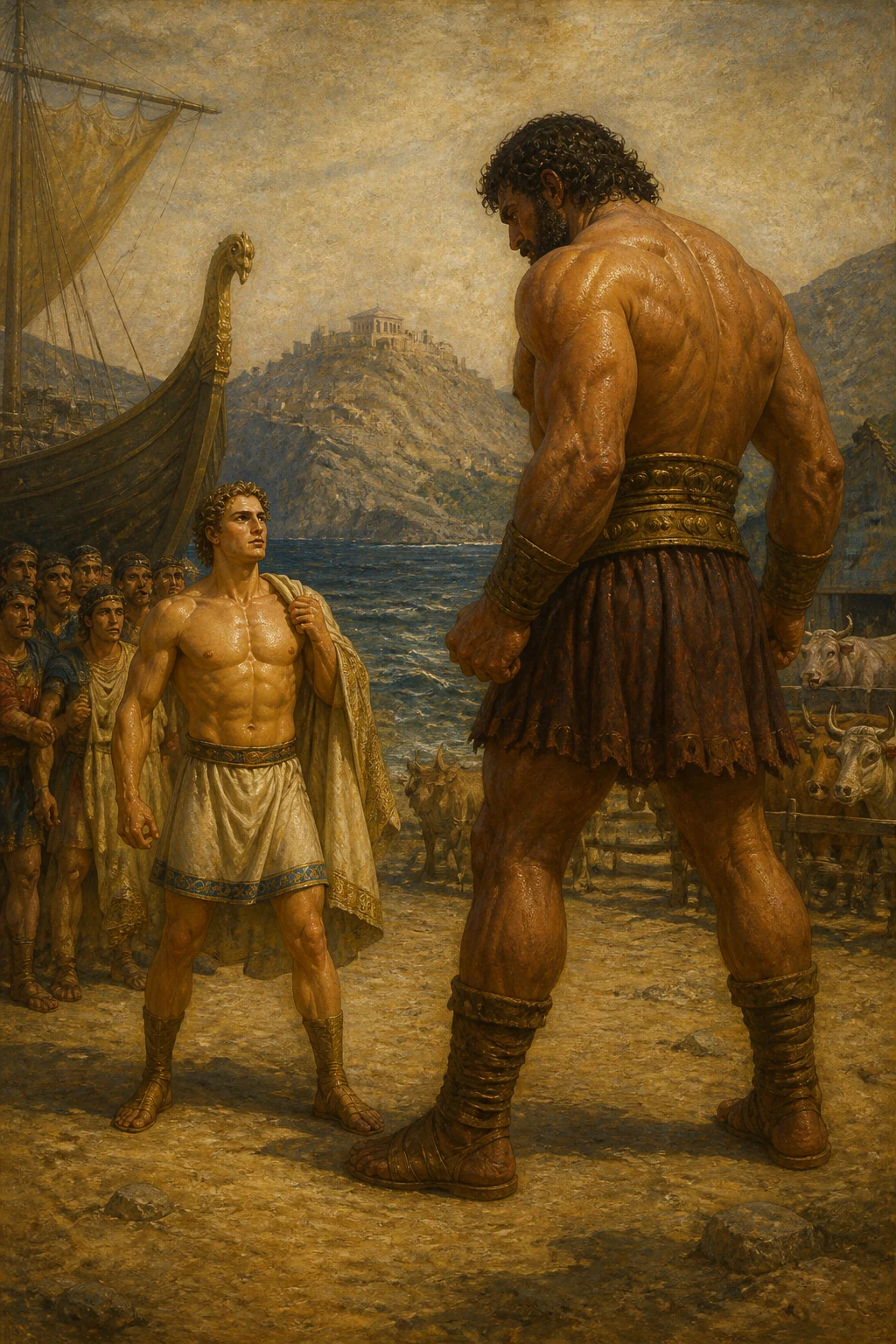
Above all, they spoke of the latest victory, the defeat of Cygnus. All thought it marvellous that the young man’s body could be pierced by no weapon, was proof against wounds, and blunted steel. The grandson of Aeacus himself and all the Greeks marvelled, when Nestor spoke: “In your generation, Cygnus alone could scorn the sword, impervious to every blow. But long ago I myself saw Perrhaebian Caeneus withstand a thousand blows without a wound upon his body— Caeneus of Perrhaebia, famed for his deeds, who dwelt on Othrys; and, to make his case more marvellous still, he had been born a woman.” All those present were stirred
by this unheard-of wonder and begged him to tell the tale. Achilles said: “Come, tell us! We are all equally eager to hear, eloquent old man, the wisdom of our age: who was Caeneus, why was his sex transformed, on what campaign, in what battle’s clash did you meet him, and who defeated him, if anyone did?” Then the old man replied: “Though slow old age encumbers me, and much I witnessed in my earliest years escapes me, I still remember more. Of all the many things I have seen in war and peace, none clings more firmly to my heart. And if a long old age could ever make a man a witness to many deeds, I have lived
two hundred years; my third century is passing now. Caenis, the daughter of Elatus, was famed for her beauty, the loveliest maiden in Thessaly, sought in vain by many suitors throughout the neighbouring cities and your own—for she was your countrywoman, Achilles. Peleus too might perhaps have sought her hand, but he had already married your mother, or she had been promised to him. Caenis married no one, but while walking on a lonely shore she was raped by the sea god—so the story went.
When Neptune had enjoyed this new embrace, he said, ‘You may make your wishes without fear of refusal: choose what you desire!’—so that same story went. ‘This outrage,’ Caenis said, ‘makes my wish a great one: never to suffer such a thing again. Grant that I am no woman, and you will have granted everything.’ Her final words came in a deeper tone and might have seemed a man’s voice, as indeed they were: already the god of the deep sea had granted her wish, and had granted besides that no wound could ever harm him, nor could he fall by the sword.
Delighted with his gift, the son of Atrax went away, devoting his life to manly pursuits and roaming the fields beside the Peneus.