Prevod
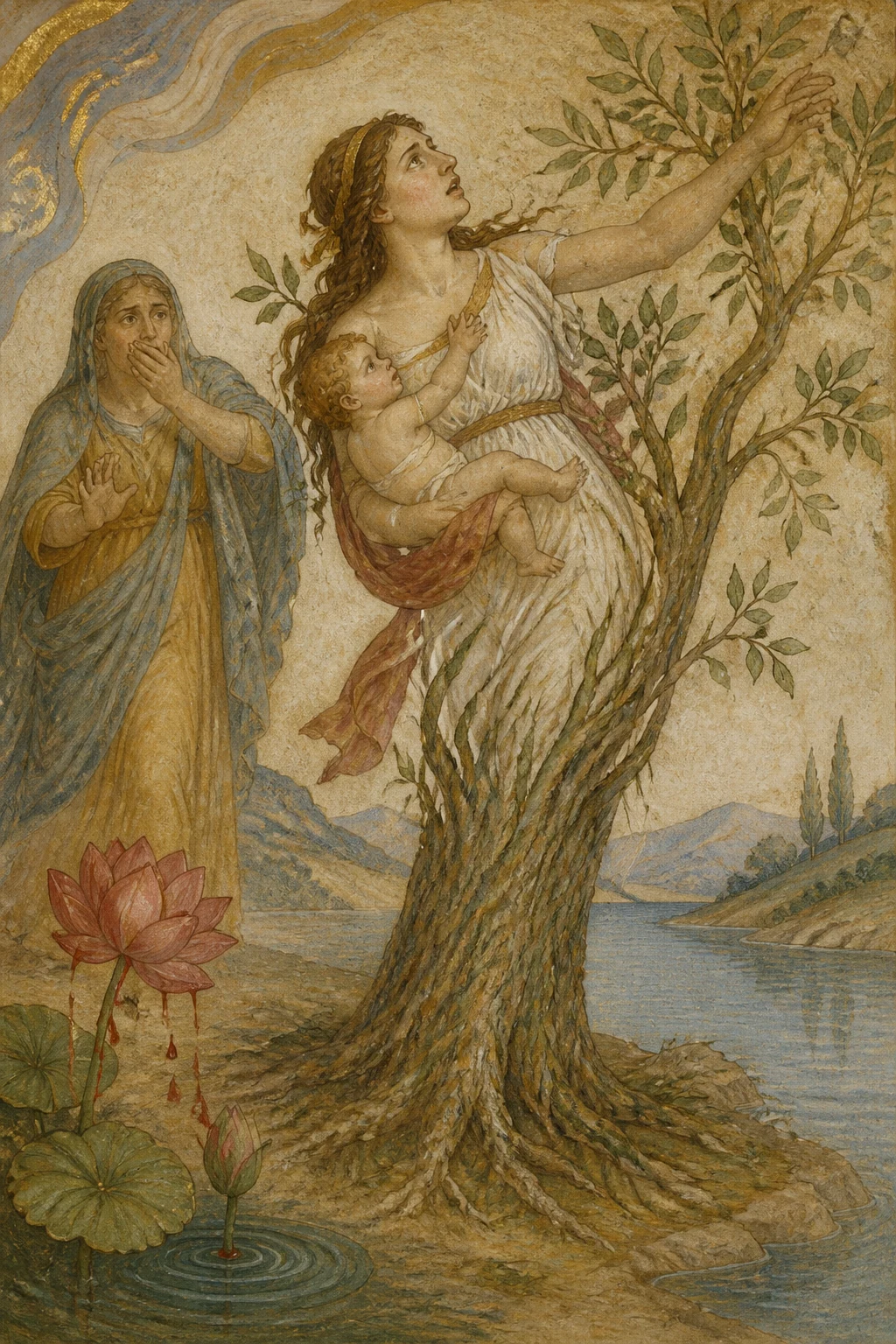
But the child, conceived in sin, had grown beneath the wood and sought a way to leave his mother and emerge: the pregnant belly swelled within the tree. Her burden strained the mother, but her anguish had no words, nor could her voice call on Lucina as she gave birth. Yet the tree seemed to strain in labor, and, bending, gave frequent groans and grew wet with falling tears.
Gentle Lucina stood beside the suffering branches, laid her hands upon them, and spoke the words that aid childbirth. The tree split open, and through its broken bark released its living burden. The boy cried out; the naiads laid him on soft grass and anointed him with his mother’s tears. Even Envy would have praised his beauty. For just as naked Cupids are painted in a picture, so he appeared; but lest their trappings set them apart, give him a light quiver, or take theirs away.
Time glides unseen, its flight escaping notice, and nothing is swifter than the years. That boy, born of his own sister and grandfather, so lately hidden in a tree, so lately born, only just the loveliest of infants, was now a youth, now a man, now more beautiful than ever. Now even Venus loved him, and he avenged his mother’s passion. For while her quiver-bearing boy was kissing his mother, he unwittingly grazed her breast with a projecting arrow.
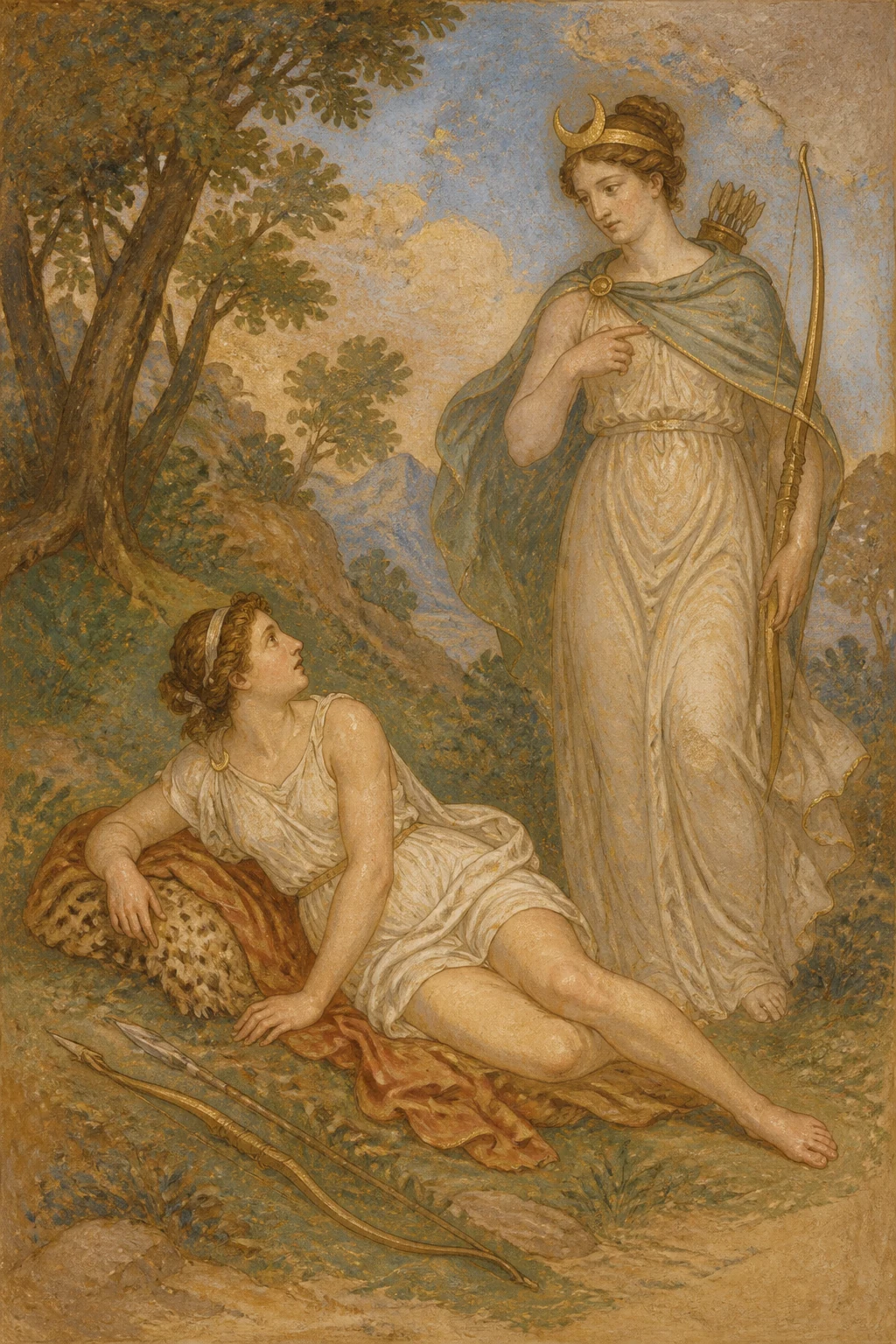
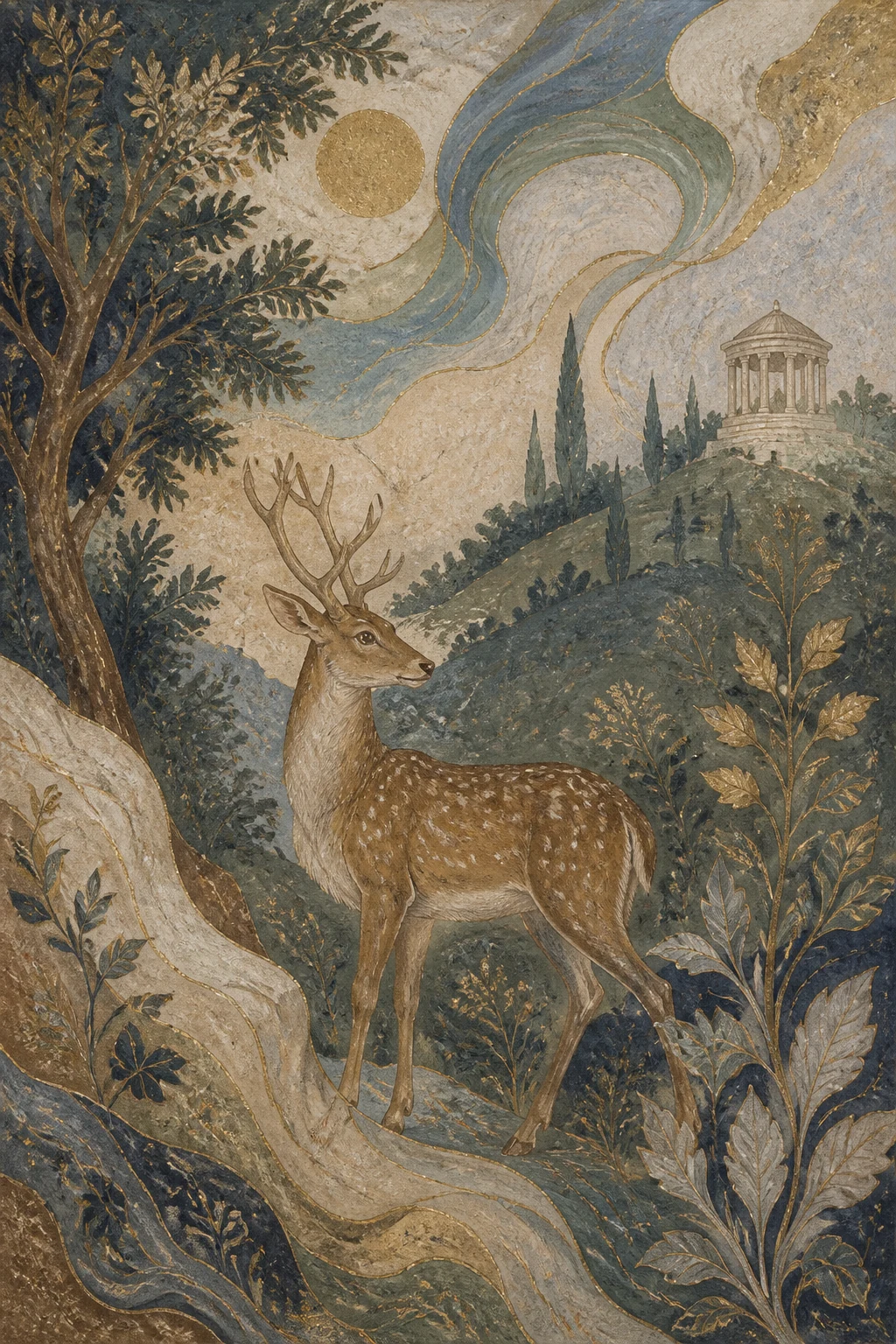
Wounded, the goddess pushed her son away. The wound had gone deeper than it seemed and at first deceived even her. Captivated by the young man’s beauty, she no longer cared for Cytherea’s shores, nor returned to Paphos, ringed by the deep sea, or fish-rich Cnidos, or Amathus, laden with metals. She shunned even heaven: Adonis was dearer than heaven. She clung to him and went with him; though always accustomed to indulge herself in the shade and enhance her beauty with care, she roamed over ridges, through woods and bramble-covered rocks, her dress tucked up to her knees in Diana’s fashion, and urged on the hounds. She hunted creatures safe to pursue: hares that race low to the ground, stags with lofty antlers,
or fleeing does. She kept away from fierce boars, and avoided ravening wolves, bears armed with claws, and lions glutted with the slaughter of cattle. She warned you too, Adonis, to fear these beasts, if any good could come of warning. “Be bold with creatures that flee,” she said. “Against the bold, boldness is not safe. Spare me, dear youth: your recklessness puts me in danger.
Do not provoke the beasts that nature has armed, lest your glory cost me dearly. Neither your youth nor your beauty, nor the charms that moved Venus, can move the eyes or hearts of lions, bristling boars, or other savage beasts. Fierce boars carry thunderbolts in their curved tusks; tawny lions have their headlong charge and boundless rage, and theirs is a race I hate.” When he asked why, she said, “I shall tell you, and you will marvel at the monstrous fruit of an ancient sin.
But this unfamiliar exertion has tired me now, and look: a poplar invites us with its welcome shade, and the turf offers a couch. I should like to rest here with you on the ground”—and she rested, pressing both the grass and him. Reclining with her head upon the young man’s lap, she told this tale, weaving kisses among her words: