Prevod
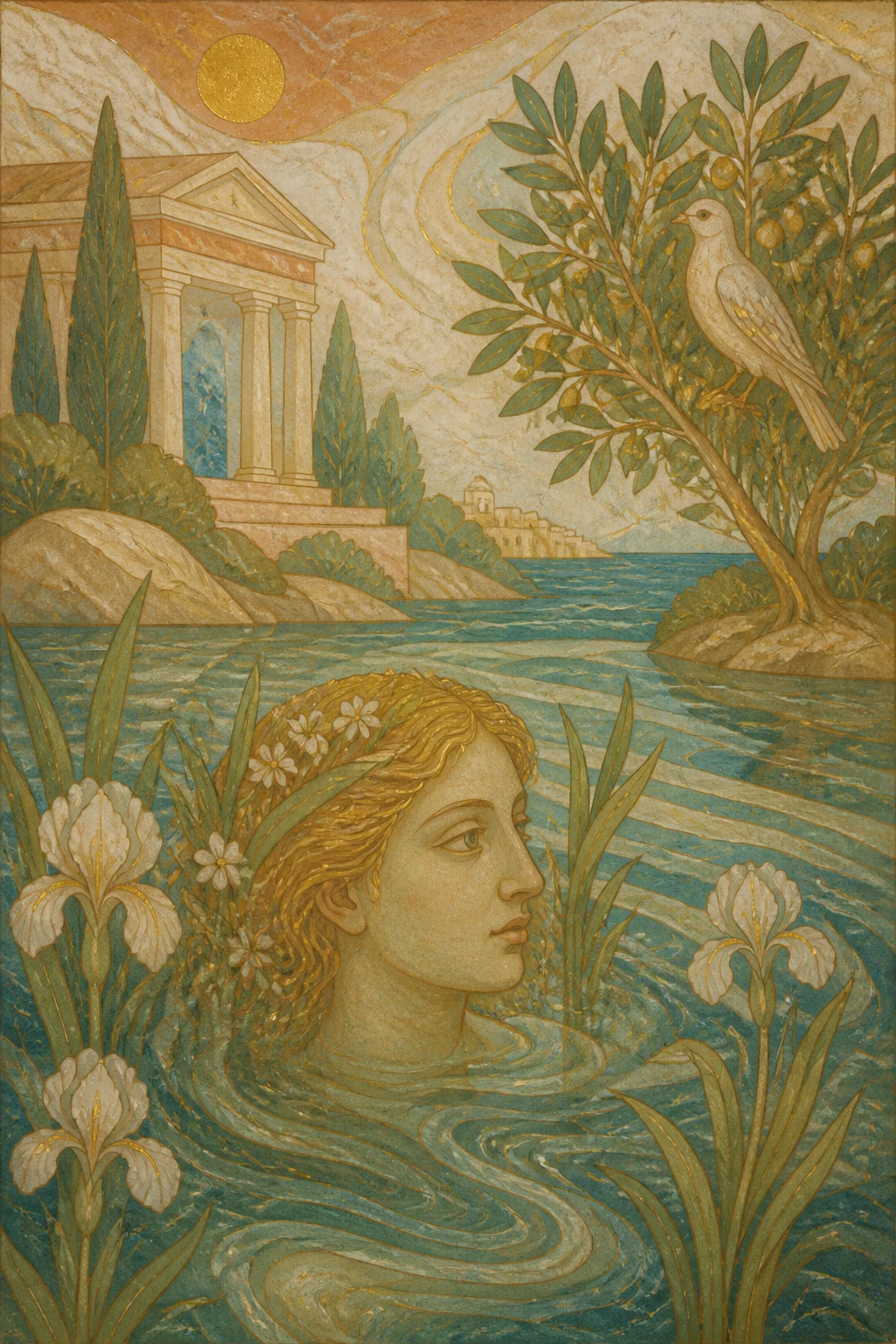
In the land of Wu, south of Yuhang County, lay Upper Lake, with a causeway running through its middle. A man once rode out to see a performance, taking three or four attendants with him. They stopped to drink at Cen Village, and he became a little tipsy. On the way home toward evening, the heat was so oppressive that he dismounted, waded into the water, and fell asleep with his head resting on a stone. His horse broke loose and ran home. All his attendants went after it, and by evening none had returned. When he awoke, the sun was already sinking, and neither men nor horse were anywhere to be seen. Then a young woman of sixteen or seventeen approached and said, “My young mistress sends her respectful greetings. It is growing late, and this is a very dangerous place. What do you intend to do?” He asked, “What is your mistress’s surname? Why has she suddenly sent me this message?” Then a boy of thirteen or fourteen, bright and quick-witted, arrived in a new carriage, with twenty men following behind. He called to the man to get in, saying, “My master would like to see you for a moment.” The carriage turned and drove away. Along the road, people passed to and fro in an unbroken stream, and by torchlight he could make out city walls and dwellings. Once inside the city, he was led into a reception hall. Above it hung a banner of authority bearing the words “Credentials of the River Lord.” Presently a man of about thirty appeared, his features as lovely as a painting, with a great many guards and attendants about him. He greeted his guest warmly and ordered wine to be served. Then he said with a smile, “I have a young daughter who is quite intelligent. I should like to give her to you to tend your dustpan and broom.” Realizing that his host was a god, the man dared not refuse. The River Lord at once ordered preparations for the wedding feast, and was told that everything was ready. The man was given unlined robes of silk and cloth, a lined gauze robe, a silk skirt, a gauze tunic, trousers, shoes, and wooden clogs, all exquisitely made. He was also given ten young serving men and several dozen maids in blue. The bride was about eighteen or nineteen, graceful and charming, and the marriage was duly consummated. On the third day there was a great gathering of guests, with ceremonial visits to the bridal chamber. On the fourth day, the River Lord said, “The rites have their appointed limits. It is time to send you home.” At their parting, his wife gave him a golden bowl and a sachet of musk, and they separated in tears. He was also given a hundred thousand coins and three scrolls of medical prescriptions, with the words, “With these you may do good and spread kindness.” He was further told, “In ten years we shall come to fetch you.” When the man returned home, he refused to marry anyone else. He took leave of his family, left home, and became a Daoist. Of the three scrolls he had received, one was a treatise on the pulse, one contained prescriptions for decoctions, and one prescriptions for pills. He traveled far and wide, healing the sick, and his treatments invariably worked with miraculous efficacy. Later, when his mother had grown old and his elder brother had died, he returned home, married, and entered official service.