Waltey
Čarovnica s Poslikanih skal
197 The Witch of Pictured Rocks
Myths and Legends of Our Own Land · Charles M. SkinnerO besedilu
Čarovnica s Poslikanih skal
- Vir
- Myths and Legends of Our Own Land
- Avtor
- Charles M. Skinner
- Jezik branja
- Slovenščina
- Jezik izvirnika
- English
- Čas branja
- 3 min branja
- Obseg
- 2 strani
- Naslov izvirnika
- 197 The Witch of Pictured Rocks
O izvirniku
Myths and Legends of Our Own Land
Obsežna zgodovinska zbirka ameriških legend, ki jih je Skinner zbral in avtorsko rekonstruiral. Bralni jezik je Slovenščina, izvirnik pa prihaja iz vira Myths and Legends of Our Own Land v jeziku English.
Besedilo
Čarovnica s Poslikanih skal
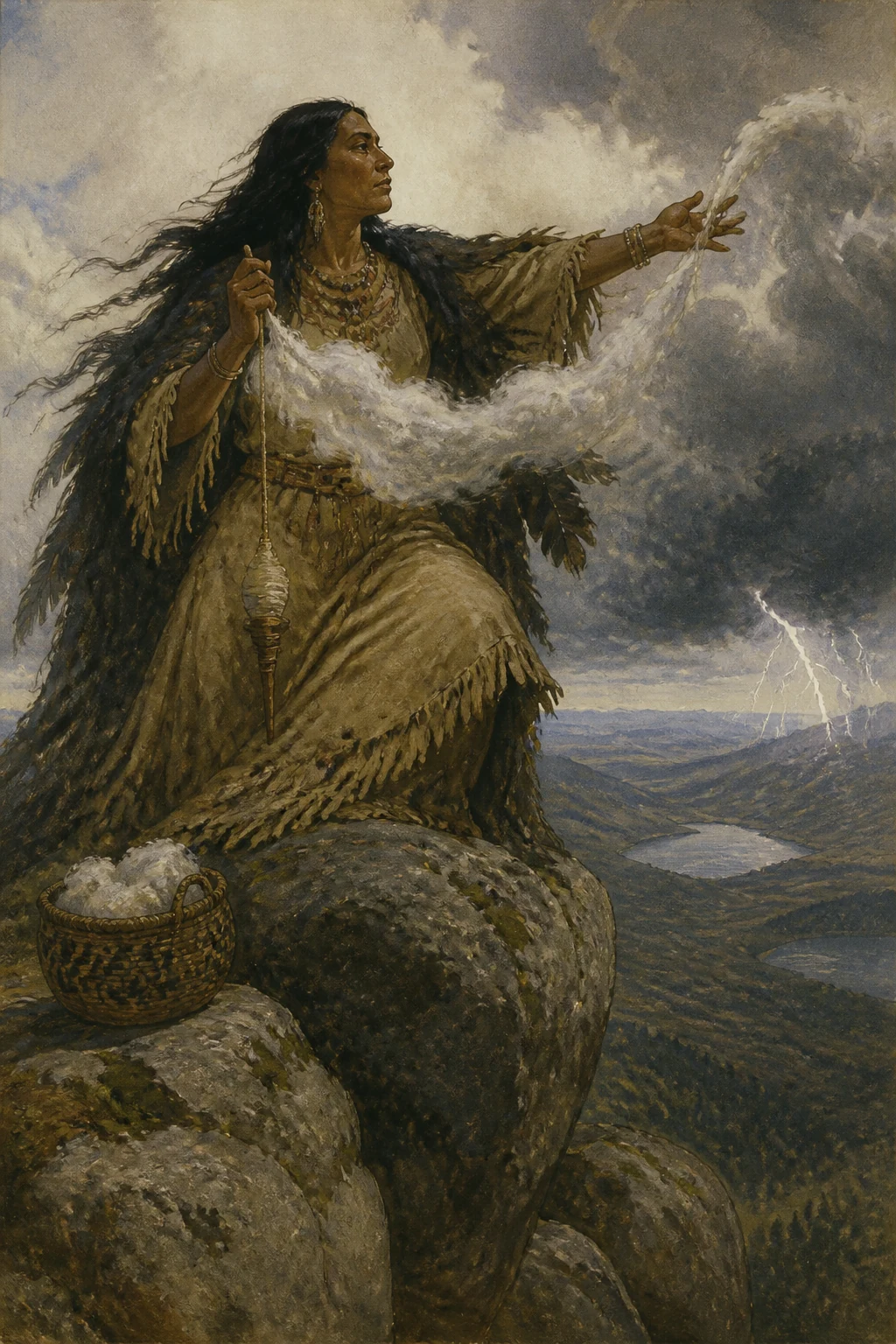
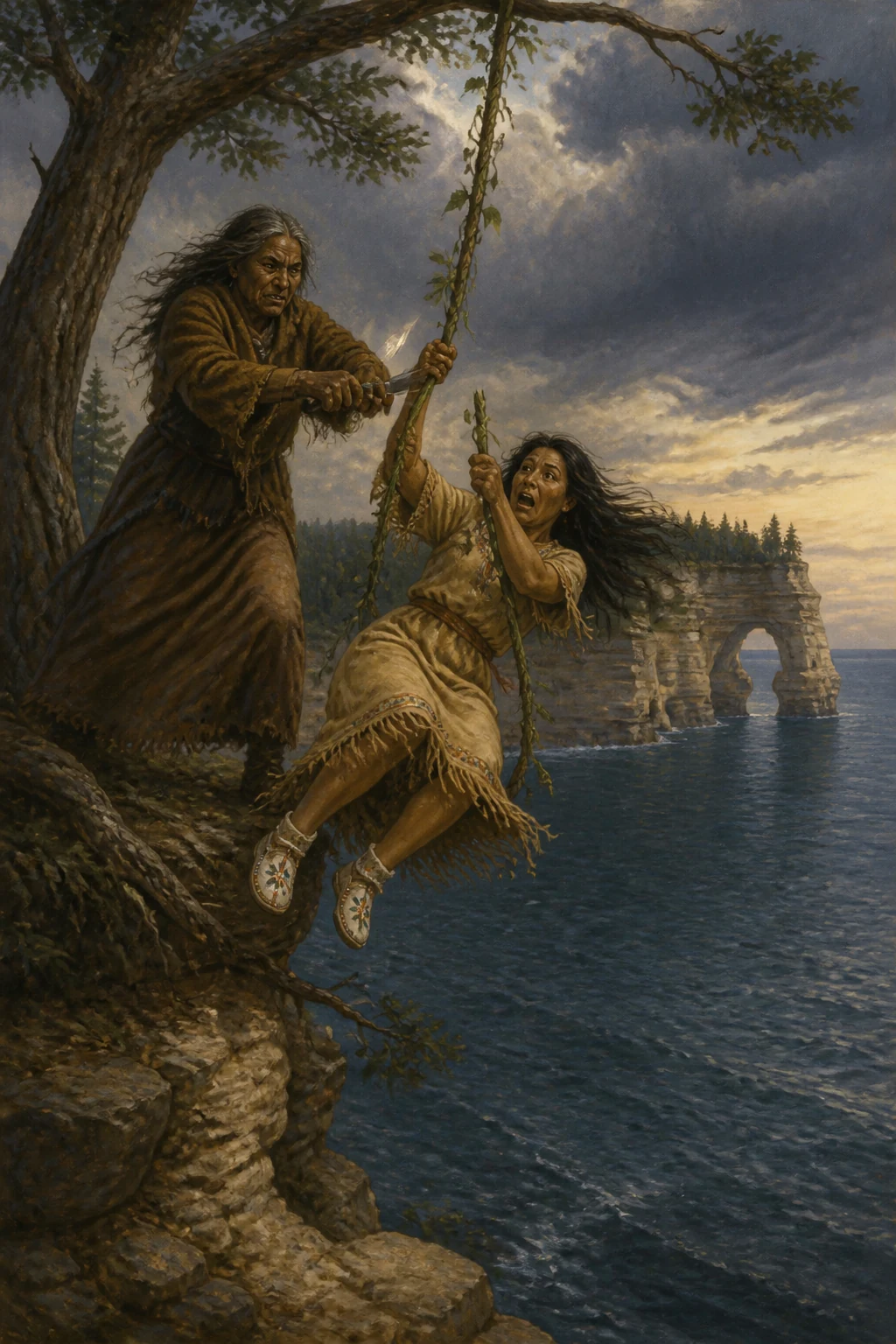
Na skalovju Pictured Rocks ob Gornjem jezeru je živela Ojibvejka, vdova, za katero je skrbel sorodnik. Ta je bil lovec, mož prijetne žene in oče dveh bistrih otrok. Vdova je bila zlobna in ljubosumna ter je lovčevi ženi zavidala vsako moževo pozornost — kože, ki ji jih je prinašal za oblačila, losovo ustnico ali kak drug slasten grižljaj, ki ga je prihranil zanjo. Nekega dne se je starka, hlinijoč veliko dobrodušnost, ponudila, da bo mlajšo žensko zazibala na ovijalki, ki je visela z drevesa, nagnjenega nad jezero.
Žena je privolila, sedla na ovijalko in se pustila zibati sem ter tja. Lovila je sapo, a se obenem smejala, ko je zanihala daleč nad vodo. Ko je bil zamah najmočnejši, je starka prerezala steblo. Zaslišal se je pljusk — nato je vse utihnilo. Hudobnica se je vrnila v kočo, se preoblekla v obleko izginule žene, sedla v senco in se pretvarjala, da doji njenega dojenčka. Ko se je lovec vrnil, ga je nekoliko presenetilo, da žena obrača obraz proč od njega, še bolj pa, da starke ni bilo po njen delež hrane, ki jo je prinesel. Po jedi je otroka odpeljal k jezeru, da bi uživali v večerni sapici. Tedaj je starejši planil v jok in zatrdil, da ženska v koči ni njegova mati ter da se boji, da je njegova prava mati mrtva ali izgubljena.
Lovec je zalučal sulico v zemljo in molil, da bi, če je njegova žena mrtva, našel njeno telo, da bi lahko žaloval ob njem in ga pokopal. V hipu je iz oblaka, ki je plul mimo, švignila strela in udarila v jezero, grom, ki ji je sledil, pa je stresel skale, na katerih je stal. Razburkal je tudi vodo in kmalu se je pokazalo nekaj, kar se je dvigalo skoznjo. Mož je stopil v goščavo in opazoval. Čez nekaj trenutkov se je iz jezera dvignil galeb in poletel tja, kjer sta sedela otroka. Okoli telesa je imel usnjen pas, izvezen s kroglicami in bodicami ježevca, ki ga je lovec prepoznal. Tiho se je približal in ujel ptico — ta pa se je nemudoma spremenila v izginulo ženo. Družina se je odpravila domov, in ko so vstopili v kočo, je čarovnica — kajti to je bila — sunkovito dvignila pogled, nato pa obupano zakričala. Globoko se je sklonila in mahala z rokami, kot bi hkrati preklinjala in rotila. Trenutek pozneje je iz vigvama poletela črna, okorna ptica in izginila med drevjem. Čarovnica se ni nikoli več vrnila, da bi jih nadlegovala.
Izvirnik
197 The Witch of Pictured Rocks
Naslednje strani prikazujejo izvirno besedilo za primerjavo.
On the Pictured Rocks of Lake Superior dwelt an Ojibway woman, a widow, who was cared for by a relative. This relative was a hunter, the husband of an agreeable wife, the father of two bright children. Being of a mean and jealous nature, the widow begrudged every kindness that the hunter showed to his wife--the skins he brought for her clothing, the moose's lip or other dainty that he saved for her; and one day, in a pretence of fine good-nature, the old woman offered to give the younger a swing in a vine pendent from a tree that overhung the lake.
The wife accepted, and, seating herself on the vine, was swayed to and fro, catching her breath, yet laughing as she swept out over the water. When the momentum was greatest the old woman cut the stem. A splash was heard--then all was silent. Returning to the lodge, the hag disguised herself in a dress of the missing woman, and sitting in a shadow, pretended to nurse the infant of the household. The hunter, returning, was a little surprised that his wife should keep her face from him, and more surprised that the old woman did not appear for her share of the food that he had brought; but after their meal he took his little ones to the lake, to enjoy the evening breeze, when the elder burst into tears, declaring that the woman in the lodge was not his mother, and that he feared his own mother was dead or lost.
The hunter hurled his spear into the earth and prayed that, if his wife were dead, her body might be found, so he could mourn over it and give it burial. Instantly a bolt of lightning came from a passing cloud and shot into the lake, while the thunder-peal that followed shook the stones he stood on. It also disturbed the water and presently something was seen rising through it. The man stepped into a thicket and watched. In a few moments a gull arose from the lake and flew to the spot where the children were seated. Around its body was a leather belt, embroidered with beads and quills, which the hunter recognized, and, advancing softly, he caught the bird--that changed at once into the missing woman. The family set forth toward home, and as they entered the lodge the witch--for such she was--looked up, with a start, then uttered a cry of despair. Bending low, she moved her arms in both imprecation and appeal. A moment later a black, ungainly bird flew from the wigwam and passed from sight among the trees. The witch never came back to plague them.
Nadaljuj z branjem