Prevod
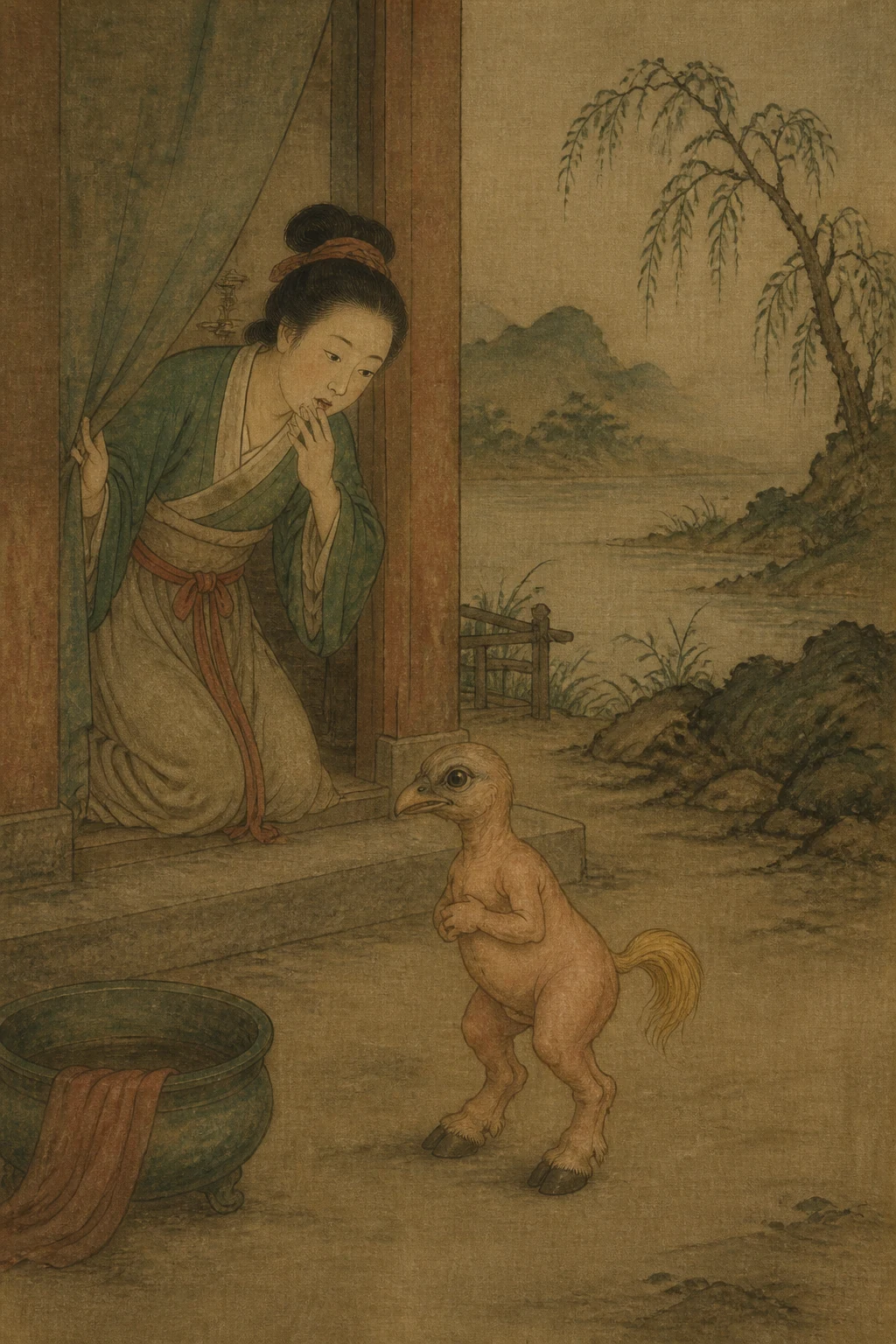
In the sixth month, during the reign of Emperor Ping of Han, a woman in Chang’an gave birth to a child with two heads and two necks, its faces turned toward one another. It had four arms, all facing forward, and a single chest. On its rump was an eye about two cun long. Jing Fang’s Commentary on the Book of Changes says: “‘Estranged and alone, he sees a pig covered in mud.’ The corresponding portent is a human born with two heads: those below contend with one another. Auspicious prodigies, too, reflect human affairs. Among the six kinds of domestic livestock, the head and eyes appear below.” This signifies the loss of authority above, and an impending change in government. Such portents arise to rebuke departures from proper rule, each taking a form that reflects the fault. Two necks signify disunity below. Too many hands signify that those entrusted with responsibility are corrupt. Too few feet signify that subordinates cannot bear their duties, or that those above fail to employ them. Whenever a part of the lower body grows on the upper body, it signifies disrespect; when a part of the upper body grows on the lower, it signifies irreverence and desecration. A creature born unlike its own kind signifies sexual disorder. A child born unusually large signifies that those above demand results too quickly; one able to speak at birth signifies a fondness for empty words. All manner of portents may be interpreted by extending these analogies. Unless the faults are corrected, disaster will follow.