Waltey
Boj bogov z giganti in Tifonom
Apolodorjeva knjižnica · ApolodorO besedilu
Boj bogov z giganti in Tifonom
- Vir
- Apolodorjeva knjižnica
- Avtor
- Apolodor
- Jezik branja
- English
- Jezik izvirnika
- Ancient Greek
- Čas branja
- 5 min branja
- Obseg
- 4 strani
- Naslov izvirnika
- Book 1 chapter 6
O izvirniku
Apolodorjeva knjižnica
Strnjen zemljevid grških mitov, rodov, junakov in pošasti. Bralni jezik je English, izvirnik pa prihaja iz vira Apolodorjeva knjižnica v jeziku Ancient Greek.
Besedilo
Boj bogov z giganti in Tifonom
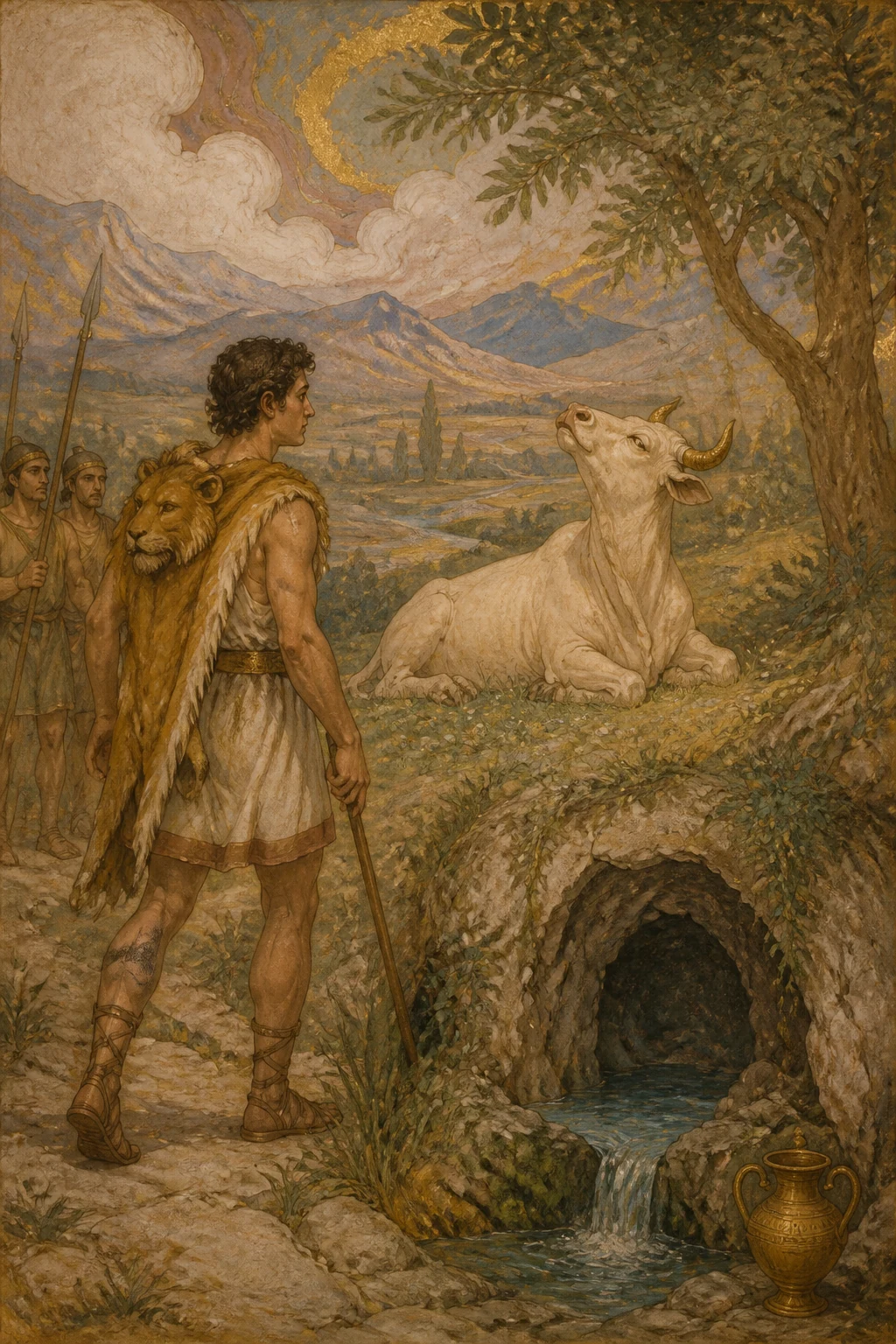
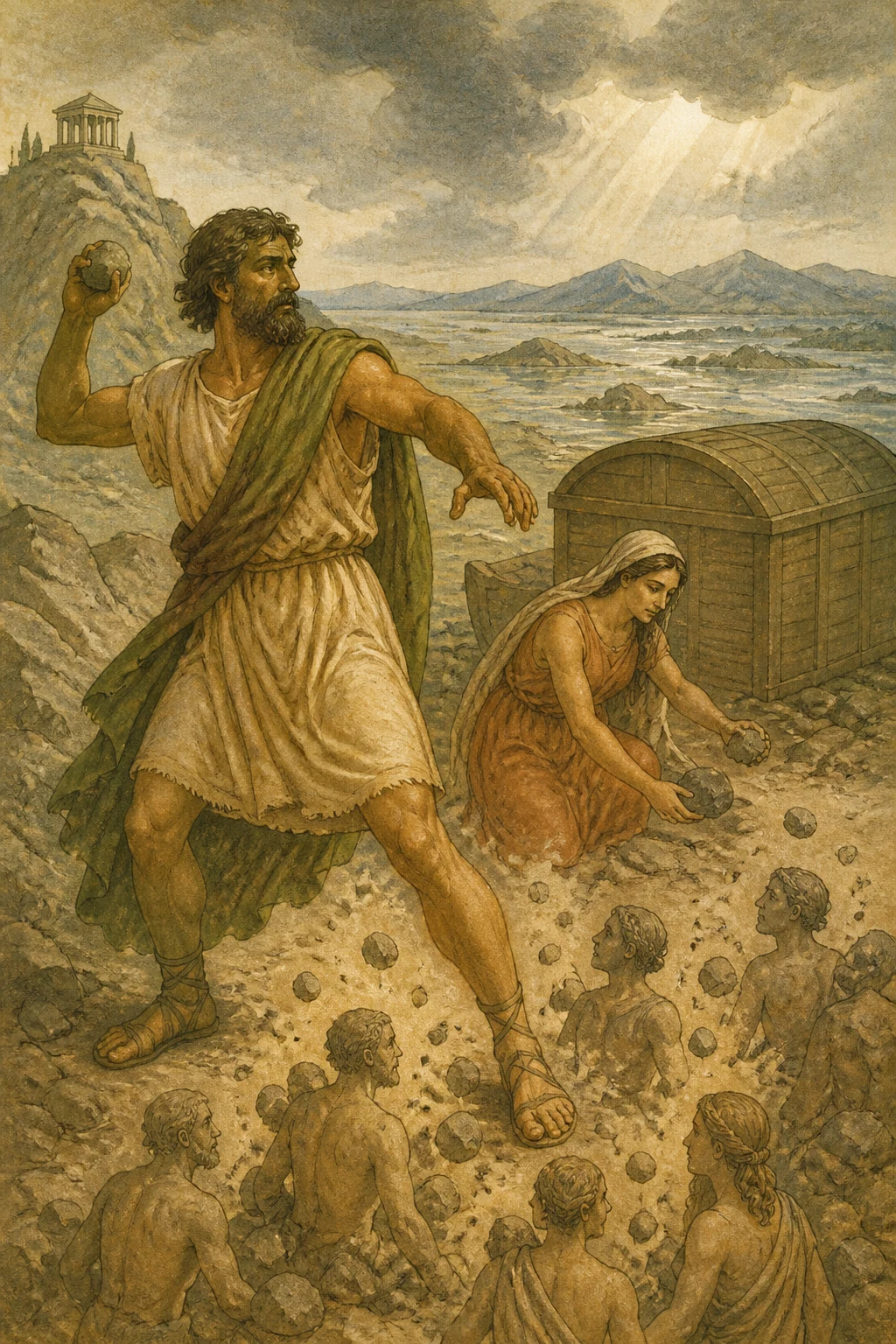
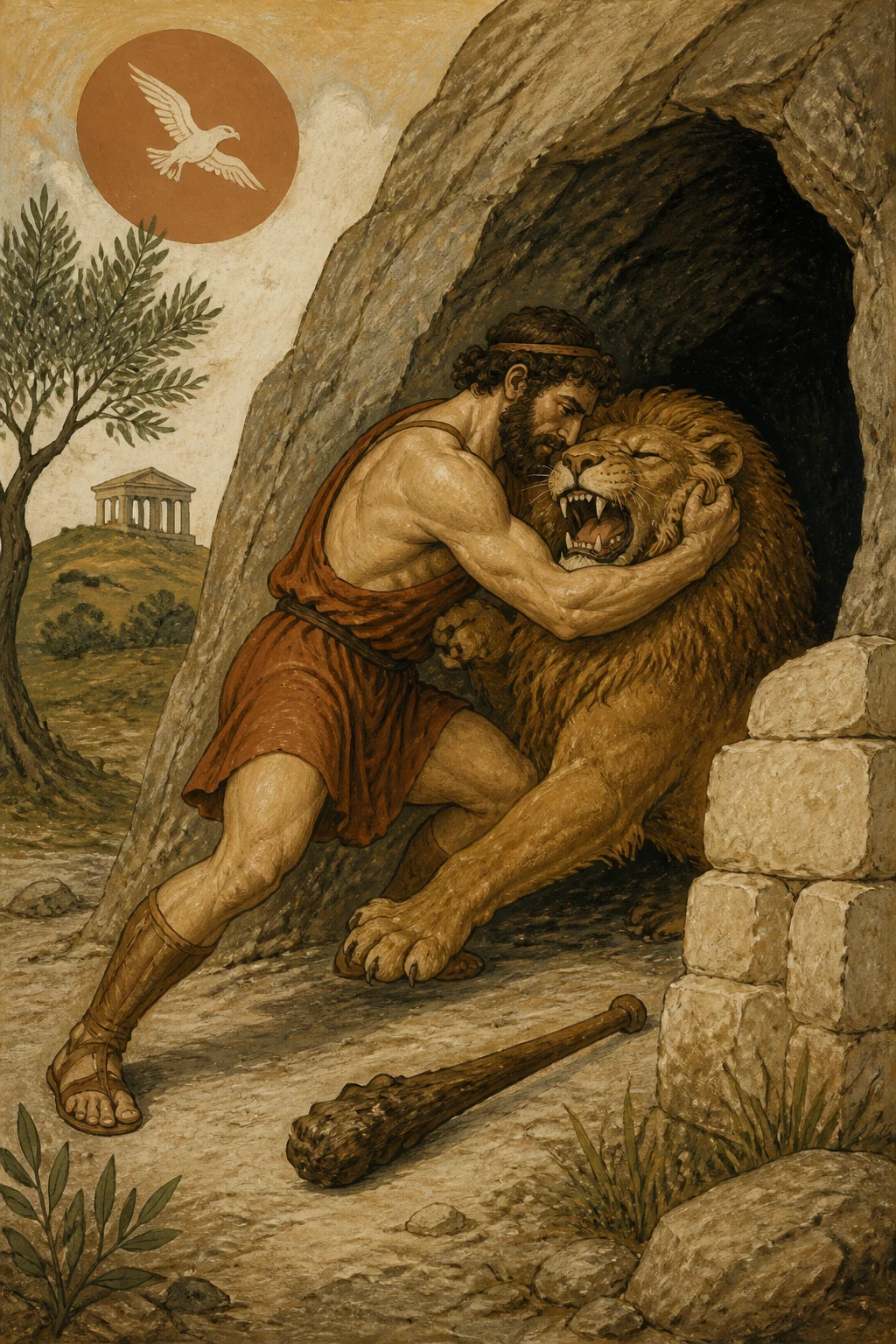
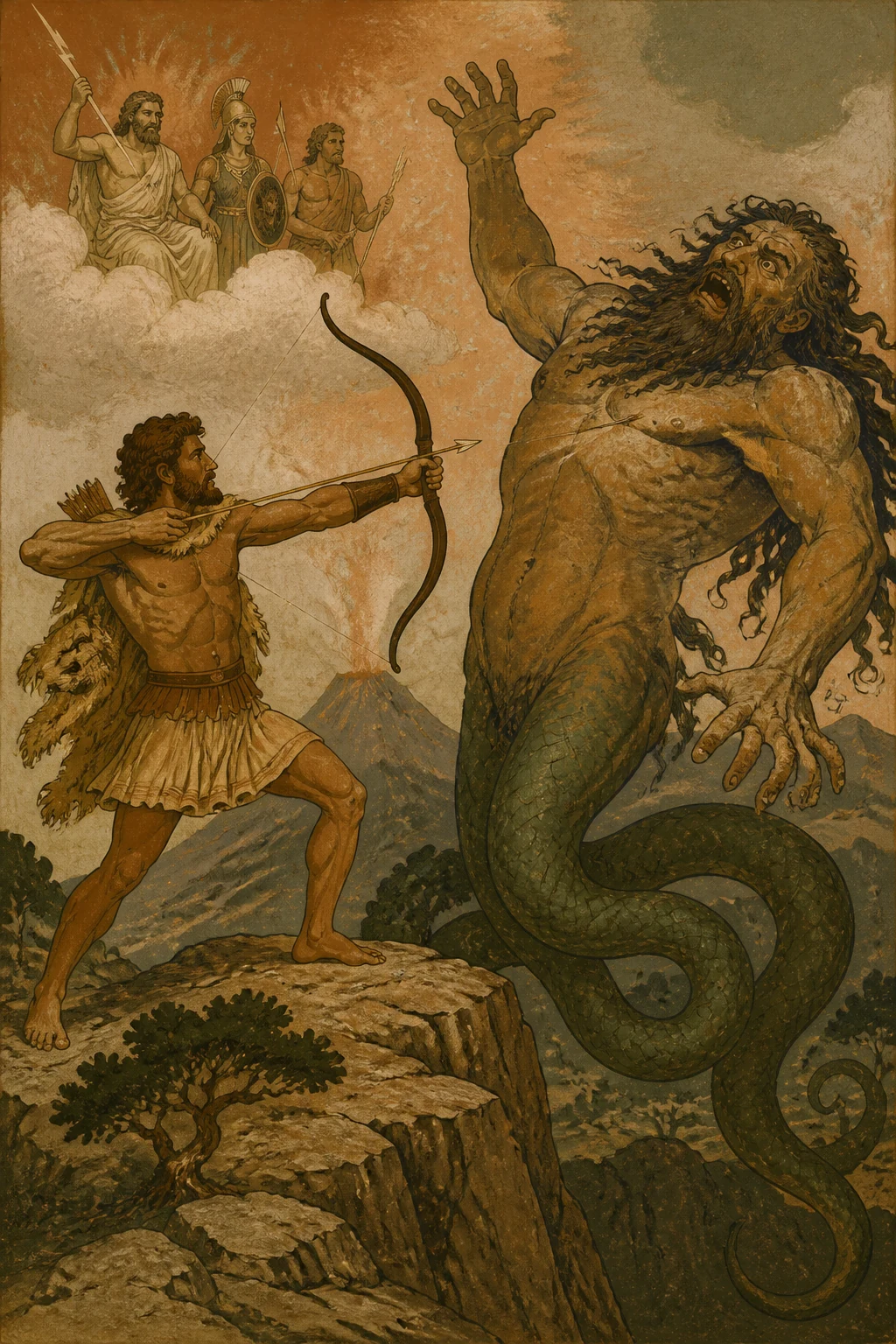
1. Such, then, are the stories told of Demeter. But Gaia, enraged over the fate of the Titans, bore the Giants to Uranus. Their bodies were unsurpassed in size and their strength invincible. Terrible to behold, they had long, thick hair hanging from their heads and chins, and their legs were covered with serpents’ scales. Some say they were born at Phlegra, others at Pallene. They hurled rocks and blazing oaks into heaven. Foremost among them were Porphyrion and Alcyoneus, who was immortal so long as he fought in the land of his birth. It was he who drove away the cattle of Helios from Erytheia. Now the gods had received an oracle declaring that none of the Giants could be killed by gods alone, but that they would perish if a mortal joined the gods in battle. When Gaia learned this, she searched for a herb that would prevent them from being killed even by a mortal. But Zeus forbade Dawn, the Moon, and the Sun to shine, and gathered the herb himself before Gaia could find it. Then, through Athena, he summoned Heracles to fight beside the gods. Heracles first shot Alcyoneus with an arrow, but when the Giant fell to the ground, his strength revived. On Athena’s advice, Heracles dragged him beyond the borders of Pallene.
2. Thus Alcyoneus died. During the battle Porphyrion attacked Heracles and Hera. But Zeus filled him with desire for Hera, and as he tore her robes and tried to rape her, she cried out for help. Zeus struck him with a thunderbolt, and Heracles shot him dead. Of the remaining Giants, Ephialtes was shot in the left eye by Apollo and in the right by Heracles. Dionysus killed Eurytus with his thyrsus, Hecate killed Clytius with torches, and Hephaestus struck Mimas with red-hot masses of metal.
Athena hurled the island of Sicily upon Enceladus as he fled, and flayed Pallas, using his skin to cover her own body during the battle. Pursued through the sea by Poseidon, Polybotes reached Cos; Poseidon tore off a piece of the island and hurled it upon him—the piece now called Nisyros. Wearing the helmet of Hades, Hermes killed Hippolytus in the battle, while Artemis killed † Gration, and the Fates fought with bronze clubs and killed Agrius and Thoon. Zeus struck the others with thunderbolts and destroyed them, and Heracles shot every one of them as they lay dying.
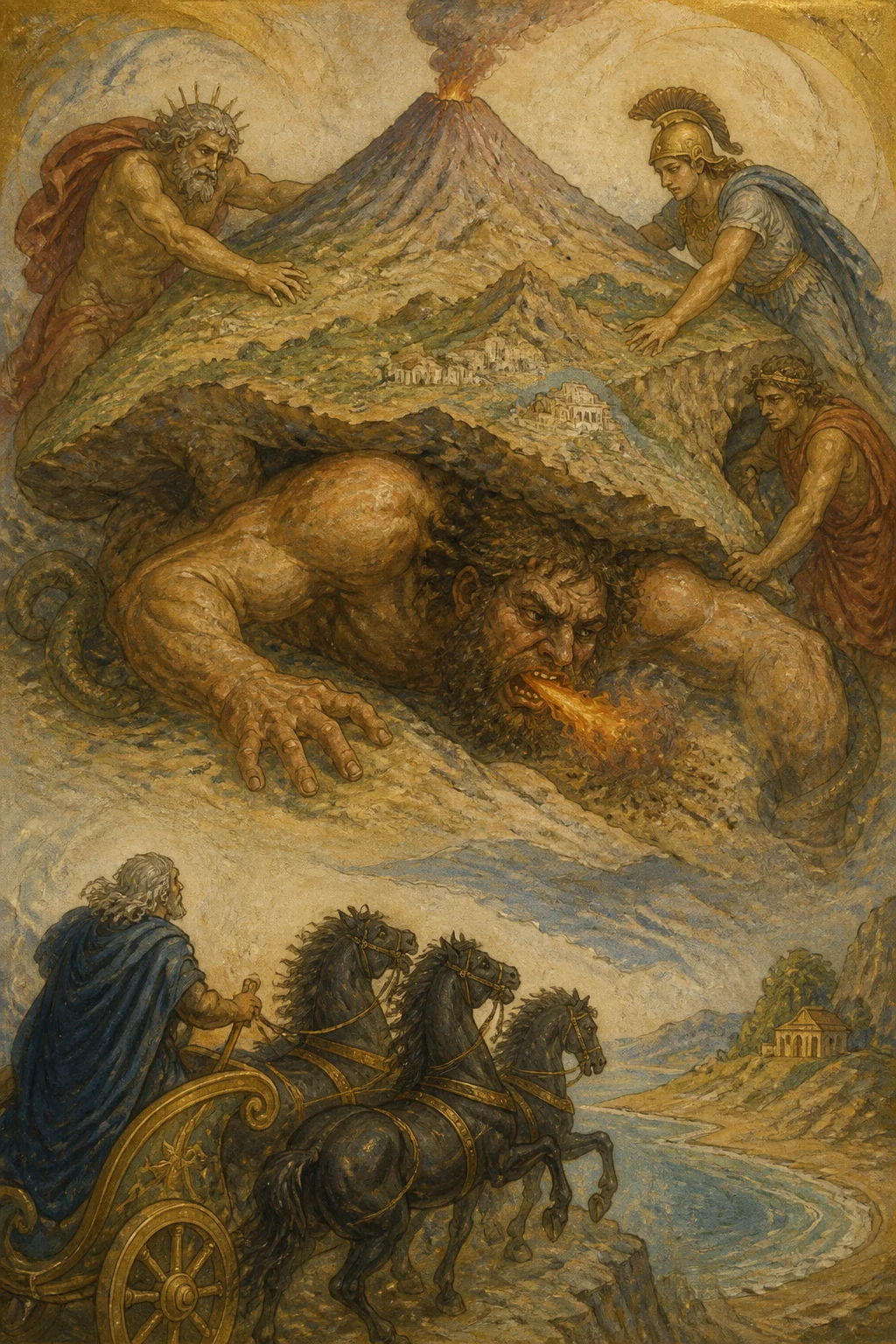
3. When the gods had overcome the Giants, Gaia, still more enraged, coupled with Tartarus and bore Typhon in Cilicia, a creature whose nature mingled man and beast. In both size and strength he surpassed all the offspring of Gaia. Down to his thighs he had a human form of such enormous size that he towered above every mountain, and his head often brushed the stars. One hand stretched out to the west and the other to the east, and from them sprang a hundred serpents’ heads. Below his thighs were immense coils of vipers, whose bodies stretched up to his very head and gave out a great hissing. His whole body was winged, shaggy hair streamed in the wind from his head and cheeks, and fire flashed from his eyes. Such was Typhon’s nature and size as he rushed at heaven itself, hurling blazing rocks amid hisses and roars, while a great whirlwind of flame poured from his mouth. When the gods saw him charging at heaven, they fled to Egypt, and as he pursued them, they changed their forms into animals. While Typhon was still far away, Zeus hurled thunderbolts at him; when he drew near, Zeus struck him with an adamantine sickle and pursued him as he fled as far as Mount Casius, which rises above Syria. There, seeing him badly wounded, Zeus closed with him in hand-to-hand combat. But Typhon wound his coils around Zeus and held him fast, wrested away the sickle, and cut the sinews of his hands and feet. Then he lifted Zeus onto his shoulders, carried him across the sea to Cilicia, and laid him in the Corycian cave. He also hid the sinews there, wrapped in a bearskin, and set the she-dragon Delphyne to guard them; this maiden was half beast. But Hermes and Aegipan stole the sinews and secretly fitted them back into Zeus. With his strength restored, Zeus suddenly swept down from heaven in a chariot drawn by winged horses, and, hurling thunderbolts, pursued Typhon to the mountain called Nysa. There the Fates deceived the fugitive: persuaded that he would gain greater strength, he tasted the short-lived fruits. Pursued once more, he came to Thrace, and in the fighting around Mount Haemus he hurled whole mountains. But the thunderbolt drove them back upon him, and he spilled a great flood of blood upon the mountain. From this, they say, the mountain was named Haemus. As he set out to flee across the Sicilian Sea, Zeus hurled Mount Etna in Sicily upon him. This mountain is immense, and to this day, they say, the thunderbolts hurled against him cause it to belch fire. But let this be enough of these matters.
Izvirnik
Book 1 chapter 6
Naslednje strani prikazujejo izvirno besedilo za primerjavo.
Source ID: apollodorus_bib_1_6 Citation: Apollodorus, Bibliotheca 1.6 1. περὶ μὲν οὖν Δήμητρος ταῦτα λέγεται· Γῆ δὲ περὶ Τιτάνων ἀγανακτοῦσα γεννᾷ Γίγαντας ἐξ Οὐρανοῦ, μεγέθει μὲν σωμάτων ἀνυπερβλήτους, δυνάμει δὲ ἀκαταγωνίστους, οἳ φοβεροὶ μὲν ταῖς ὄψεσι κατεφαίνοντο, καθειμένοι βαθεῖαν κόμην ἐκ κεφαλῆς καὶ γενείων, εἶχον δὲ τὰς βάσεις φολίδας δρακόντων. ἐγένοντο δέ, ὡς μέν τινες λέγουσιν, ἐν Φλέγραις, ὡς δὲ ἄλλοι, ἐν Παλλήνῃ. ἠκόντιζον δὲ εἰς οὐρανὸν πέτρας καὶ δρῦς ἡμμένας. διέφερον δὲ πάντων Πορφυρίων τε καὶ Ἀλκυονεύς, ὃς δὴ καὶ ἀθάνατος ἦν ἐν ᾗπερ ἐγεννήθη γῇ μαχόμενος. οὗτος δὲ καὶ τὰς Ἡλίου βόας ἐξ Ἐρυθείας ἤλασε. τοῖς δὲ θεοῖς λόγιον ἦν ὑπὸ θεῶν μὲν μηδένα τῶν Γιγάντων ἀπολέσθαι δύνασθαι, συμμαχοῦντος δὲ θνητοῦ τινος τελευτήσειν. αἰσθομένη δὲ Γῆ τοῦτο ἐζήτει φάρμακον, ἵνα μηδʼ ὑπὸ θνητοῦ
δυνηθῶσιν ἀπολέσθαι. Ζεὺς δʼ ἀπειπὼν φαίνειν Ἠοῖ τε καὶ Σελήνῃ καὶ Ἡλίῳ τὸ μὲν φάρμακον αὐτὸς ἔτεμε φθάσας, Ἡρακλέα δὲ σύμμαχον διʼ Ἀθηνᾶς ἐπεκαλέσατο. κἀκεῖνος πρῶτον μὲν ἐτόξευσεν Ἀλκυονέα· πίπτων δὲ ἐπὶ τῆς γῆς μᾶλλον ἀνεθάλπετο· Ἀθηνᾶς δὲ ὑποθεμένης ἔξω τῆς Παλλήνης εἵλκυσεν αὐτόν. 2. κἀκεῖνος μὲν οὕτως ἐτελεύτα, Πορφυρίων δὲ Ἡρακλεῖ κατὰ τὴν μάχην ἐφώρμησε καὶ Ἥρᾳ. Ζεὺς δὲ αὐτῷ πόθον Ἥρας ἐνέβαλεν, ἥτις καὶ καταρρηγνύντος αὐτοῦ τοὺς πέπλους καὶ βιάζεσθαι θέλοντος βοηθοὺς ἐπεκαλεῖτο· καὶ Διὸς κεραυνώσαντος αὐτὸν Ἡρακλῆς τοξεύσας ἀπέκτεινε. τῶν δὲ λοιπῶν Ἀπόλλων μὲν Ἐφιάλτου τὸν ἀριστερὸν ἐτόξευσεν ὀφθαλμόν, Ἡρακλῆς δὲ τὸν δεξιόν· Εὔρυτον δὲ θύρσῳ Διόνυσος ἔκτεινε, Κλυτίον δὲ δᾳσὶν Ἑκάτη, Μίμαντα δὲ Ἥφαιστος βαλὼν μύδροις.
Ἀθηνᾶ δὲ Ἐγκελάδῳ φεύγοντι Σικελίαν ἐπέρριψε τὴν νῆσον, Πάλλαντος δὲ τὴν δορὰν ἐκτεμοῦσα ταύτῃ κατὰ τὴν μάχην τὸ ἴδιον ἐπέσκεπε σῶμα. Πολυβώτης δὲ διὰ τῆς θαλάσσης διωχθεὶς ὑπὸ τοῦ Ποσειδῶνος ἧκεν εἰς Κῶ· Ποσειδῶν δὲ τῆς νήσου μέρος ἀπορρήξας ἐπέρριψεν αὐτῷ, τὸ λεγόμενον Νίσυρον. Ἑρμῆς δὲ τὴν Ἄιδος κυνῆν ἔχων κατὰ τὴν μάχην Ἱππόλυτον ἀπέκτεινεν, Ἄρτεμις δὲ † Γρατίωνα, μοῖραι δʼ Ἄγριον καὶ Θόωνα χαλκέοις ῥοπάλοις μαχόμεναι τοὺς δὲ ἄλλους κεραυνοῖς Ζεὺς βαλὼν διέφθειρε· πάντας δὲ Ἡρακλῆς ἀπολλυμένους ἐτόξευσεν.
3. ὡς δʼ ἐκράτησαν οἱ θεοὶ τῶν Γιγάντων, Γῆ μᾶλλον χολωθεῖσα μίγνυται Ταρτάρῳ, καὶ γεννᾷ Τυφῶνα ἐν Κιλικίᾳ, μεμιγμένην ἔχοντα φύσιν ἀνδρὸς καὶ θηρίου. οὗτος μὲν καὶ μεγέθει καὶ δυνάμει πάντων διήνεγκεν ὅσους ἐγέννησε Γῆ, ἦν δὲ αὐτῷ τὰ μὲν ἄχρι μηρῶν ἄπλετον μέγεθος ἀνδρόμορφον, ὥστε ὑπερέχειν μὲν πάντων τῶν ὀρῶν, ἡ δὲ κεφαλὴ πολλάκις καὶ τῶν ἄστρων ἔψαυε· χεῖρας δὲ εἶχε τὴν μὲν ἐπὶ τὴν ἑσπέραν ἐκτεινομένην τὴν δὲ ἐπὶ τὰς ἀνατολάς· ἐκ τούτων δὲ ἐξεῖχον ἑκατὸν κεφαλαὶ δρακόντων. τὰ δὲ ἀπὸ μηρῶν σπείρας εἶχεν ὑπερμεγέθεις ἐχιδνῶν, ὧν ὁλκοὶ πρὸς αὐτὴν ἐκτεινόμενοι κορυφὴν συριγμὸν πολὺν ἐξίεσαν. πᾶν δὲ αὐτοῦ τὸ σῶμα κατεπτέρωτο, αὐχμηραὶ δὲ ἐκ κεφαλῆς καὶ γενύων τρίχες ἐξηνέμωντο, πῦρ δὲ ἐδέρκετο τοῖς ὄμμασι. τοιοῦτος ὢν ὁ Τυφὼν καὶ
τηλικοῦτος ἡμμένας βάλλων πέτρας ἐπʼ αὐτὸν τὸν οὐρανὸν μετὰ συριγμῶν ὁμοῦ καὶ βοῆς ἐφέρετο· πολλὴν δὲ ἐκ τοῦ στόματος πυρὸς ἐξέβρασσε ζάλην. θεοὶ δʼ ὡς εἶδον αὐτὸν ἐπʼ οὐρανὸν ὁρμώμενον, εἰς Αἴγυπτον φυγάδες ἐφέροντο, καὶ διωκόμενοι τὰς ἰδέας μετέβαλον εἰς ζῷα. Ζεὺς δὲ πόρρω μὲν ὄντα Τυφῶνα ἔβαλλε κεραυνοῖς, πλησίον δὲ γενόμενον ἀδαμαντίνῃ κατέπληττεν ἅρπῃ, καὶ φεύγοντα ἄχρι τοῦ Κασίου ὄρους συνεδίωξε· τοῦτο δὲ ὑπέρκειται Συρίας. κεῖθι δὲ αὐτὸν κατατετρωμένον ἰδὼν εἰς χεῖρας συνέβαλε. Τυφὼν δὲ ταῖς σπείραις περιπλεχθεὶς κατέσχεν αὐτόν, καὶ τὴν ἅρπην περιελόμενος τά τε τῶν χειρῶν καὶ ποδῶν διέτεμε νεῦρα, ἀράμενος δὲ ἐπὶ τῶν ὤμων διεκόμισεν αὐτὸν διὰ τῆς θαλάσσης εἰς Κιλικίαν καὶ παρελθὼν εἰς τὸ Κωρύκιον ἄντρον κατέθετο. ὁμοίως δὲ καὶ τὰ νεῦρα κρύψας ἐν ἄρκτου δορᾷ κεῖθι ἀπέθετο, καὶ
κατέστησε φύλακα Δελφύνην δράκαιναν· ἡμίθηρ δὲ ἦν αὕτη ἡ κόρη. Ἑρμῆς δὲ καὶ Αἰγίπαν ἐκκλέψαντες τὰ νεῦρα ἥρμοσαν τῷ Διὶ λαθόντες. Ζεὺς δὲ τὴν ἰδίαν ἀνακομισάμενος ἰσχύν, ἐξαίφνης ἐξ οὐρανοῦ ἐπὶ πτηνῶν ὀχούμενος ἵππων ἅρματι, βάλλων κεραυνοῖς ἐπʼ ὄρος ἐδίωξε Τυφῶνα τὸ λεγόμενον Νῦσαν, ὅπου μοῖραι αὐτὸν διωχθέντα ἠπάτησαν· πεισθεὶς γὰρ ὅτι ῥωσθήσεται μᾶλλον, ἐγεύσατο τῶν ἐφημέρων καρπῶν. διόπερ ἐπιδιωκόμενος αὖθις ἧκεν εἰς Θρᾴκην, καὶ μαχόμενος περὶ τὸν Αἷμον ὅλα ἔβαλλεν ὄρη. τούτων δὲ ἐπʼ αὐτὸν ὑπὸ τοῦ κεραυνοῦ πάλιν ὠθουμένων πολὺ ἐπὶ τοῦ ὄρους ἐξέκλυσεν αἷμα· καί φασιν ἐκ τούτου τὸ ὄρος κληθῆναι Αἷμον. φεύγειν δὲ ὁρμηθέντι αὐτῷ διὰ τῆς Σικελικῆς θαλάσσης Ζεὺς ἐπέρριψεν Αἴτνην ὄρος ἐν Σικελίᾳ· τοῦτο δὲ ὑπερμέγεθές ἐστιν, ἐξ οὗ μέχρι δεῦρό
φασιν ἀπὸ τῶν βληθέντων κεραυνῶν γίνεσθαι πυρὸς ἀναφυσήματα. ἀλλὰ περὶ μὲν τούτων μέχρι τοῦ δεῦρο ἡμῖν λελέχθω.
Nadaljuj z branjem